Shows
Where Parts Meet: Yu Ji’s “Origin of the Tiger”
Yu Ji
Origin of the Tiger
P.P.O.W
New York
Mar 6–April 11, 2026
Despite the near-total absence of the human body in the main room of “Origin of the Tiger,” its implied presence haunts P.P.O.W’s gallery. Amid Yu Ji’s carefully composed objects, the space feels recently vacated. A stack of paper and clusters of snail shells rest on floor mats, framing an empty area where people might have just been sitting. Nearby, voices linger from a sculpture of gently rotating hangers, as if garments have only just been lifted away.
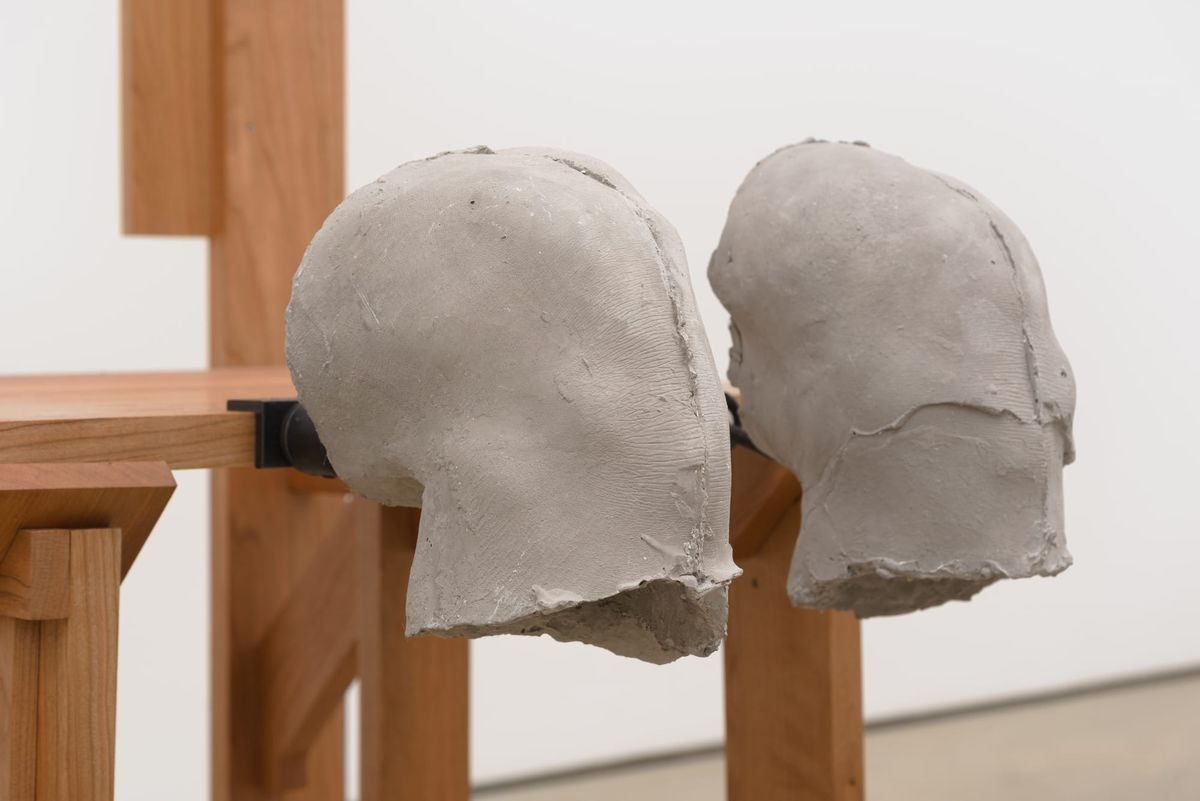
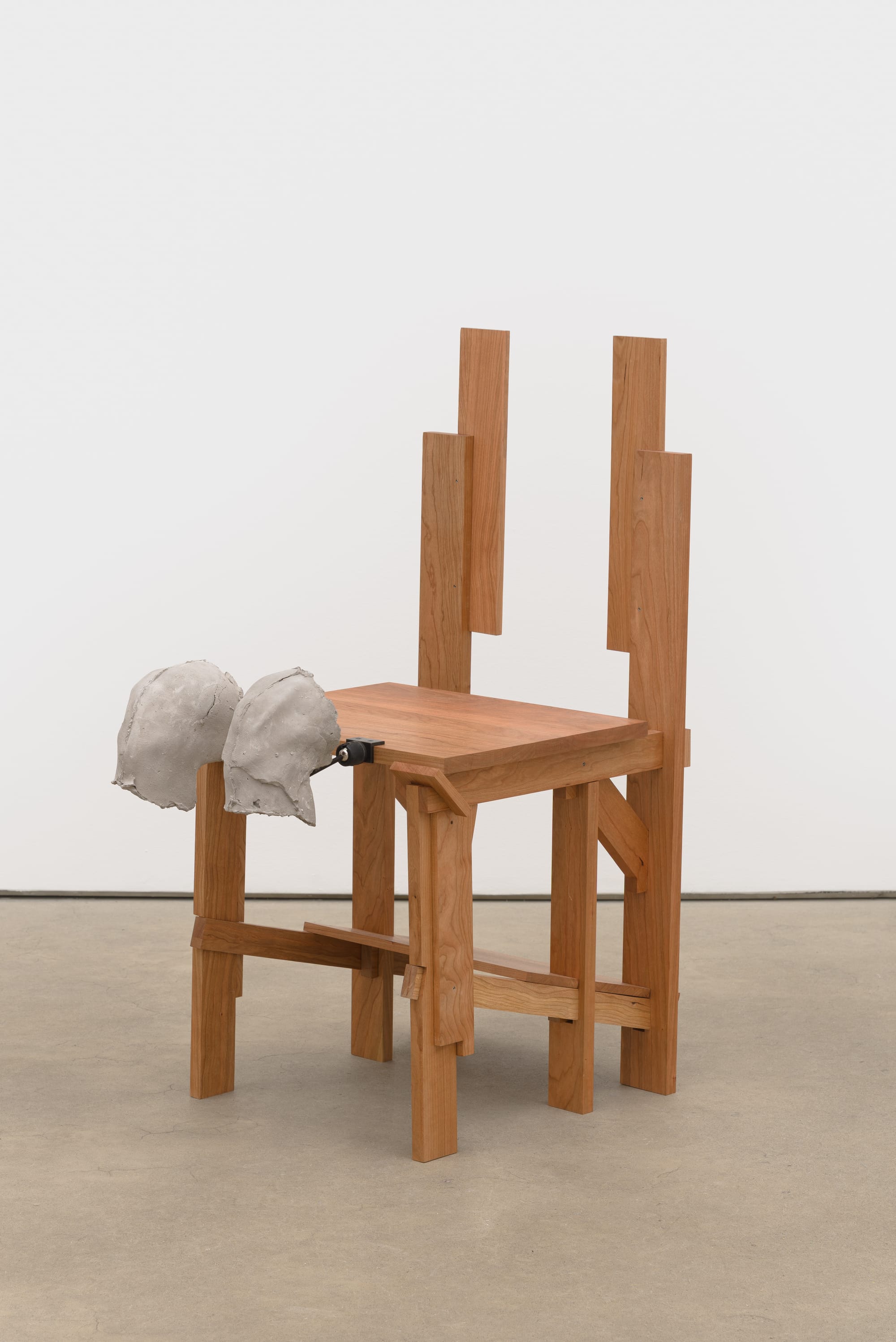
Yu is known for her corporeal concrete sculptures, yet this installation—her first solo exhibition in New York—is marked by lightness and suspension. Her multimedia objects invite identification with their many components, bringing to attention to their points of connection while also highlighting their ability to be reconfigured and disassembled. Hollow casts of knees hinge from chair edges; visible wiring binds a suspended wooden structure; iron armatures extend from the wall to support hybrid sculptures. The conspicuousness of these joints is not merely a practical byproduct of Yu’s process. They articulate both physical and literal conjoinments—of things and places—while tracing processes of gathering and release that shape people’s movement through space and time.
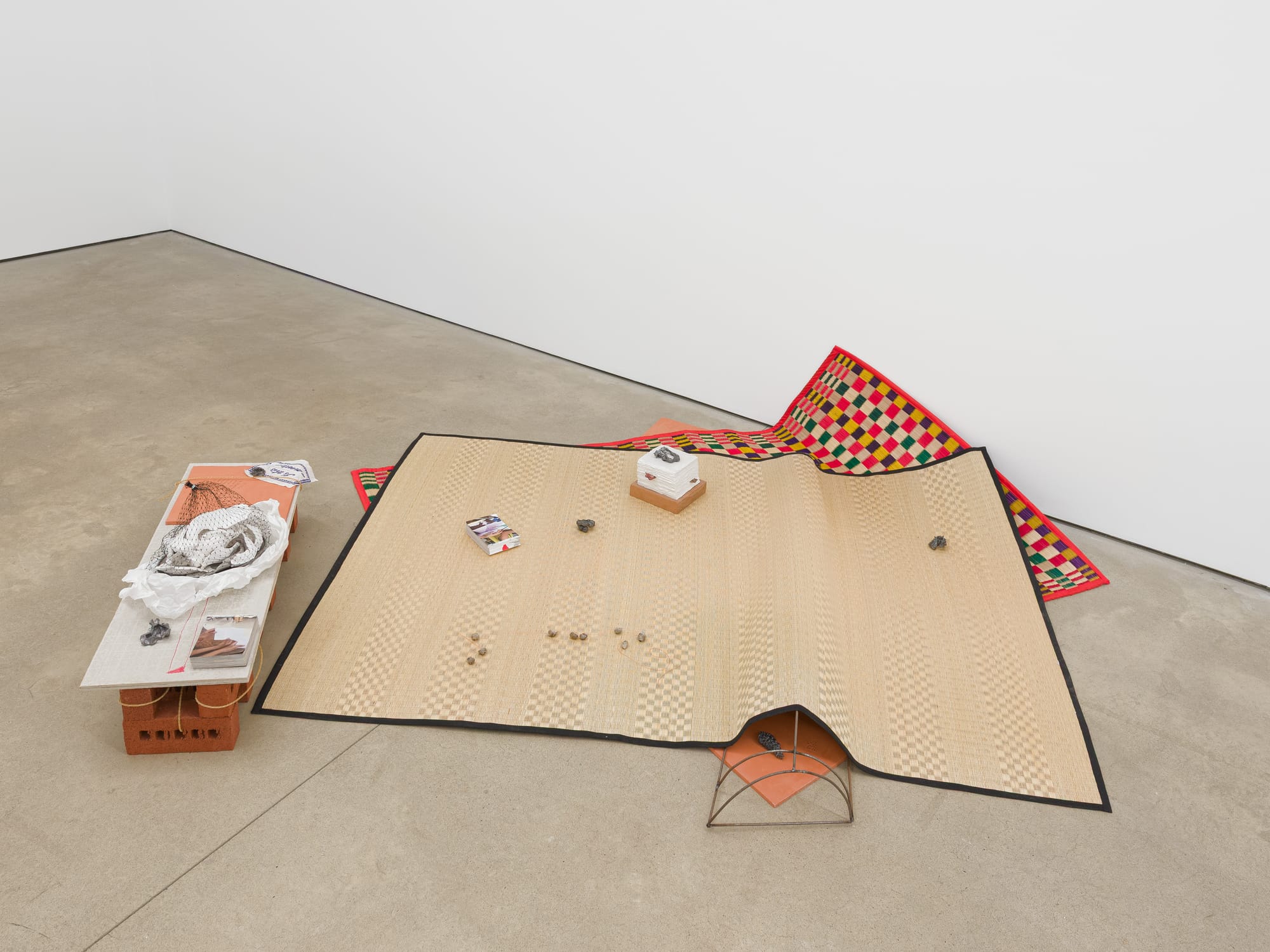
The previously Shanghai-based artist has been itinerant in recent years, and her migratory lifestyle in new localities manifests in the composite nature of the exhibition. The works were made during a self-organized six-month residency in Phnom Penh with four artist-friends, under the project PKA (PLAY KNOW ATTENTION). In partnership with the nonprofit Empowering Youth in Cambodia, they organized creative workshops with children. Many of the works in the exhibition emerged from this context, and elements too large to travel were later shipped and reassembled, reinforcing the show’s logic of fragmentation and reconstitution.
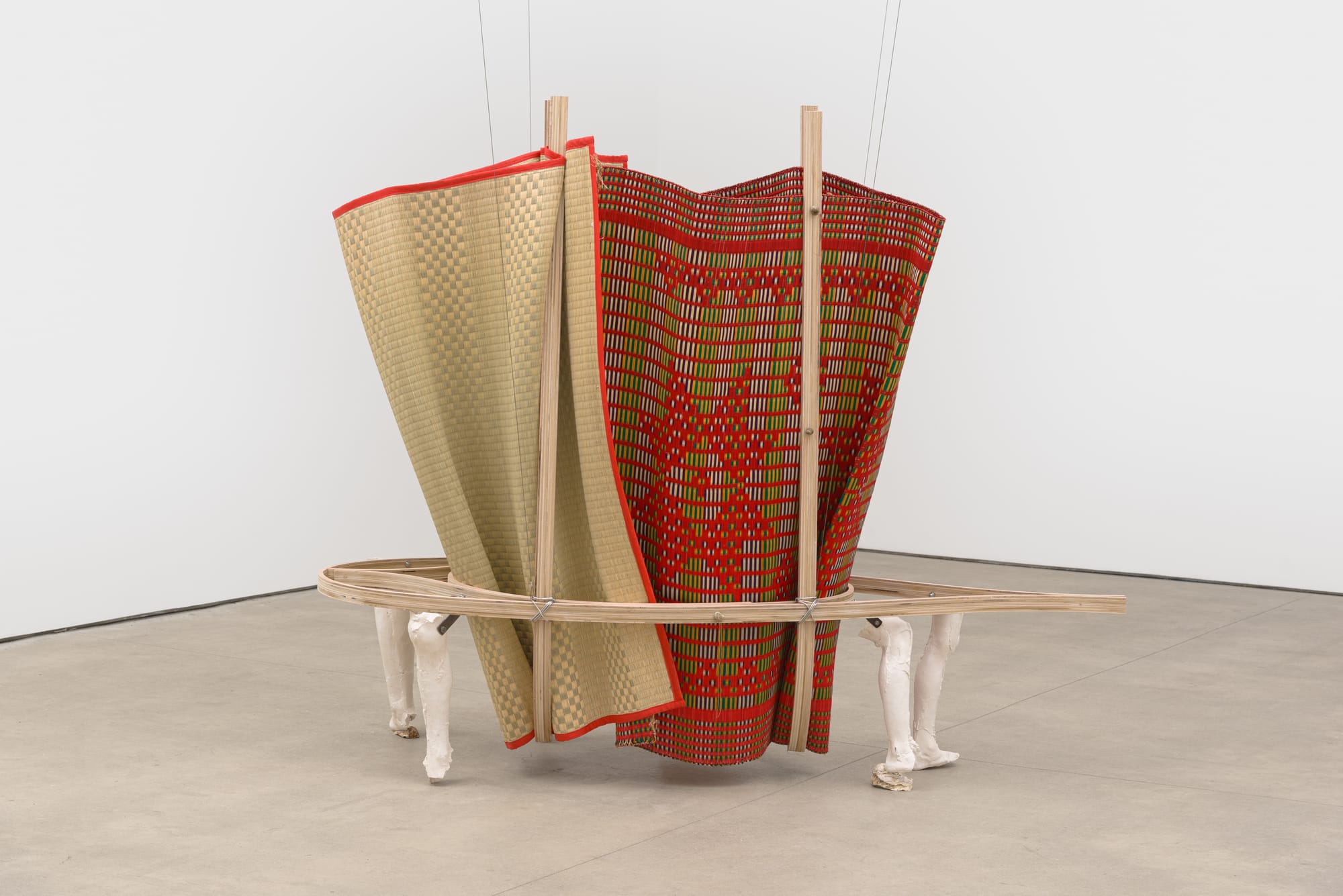
Yu’s time in Cambodia reveals a heightened emphasis on process and sociality. The two largest works consist of reed mats designed with and handwoven by Khmer artisans. Their breathable and portable qualities make them ubiquitous across Southeast Asia for sleeping, sitting, and floor covering. Woven in vibrant colors and checkerboard patterns, they introduce a sense of repose and the welcome of communal gatherings into the gallery.
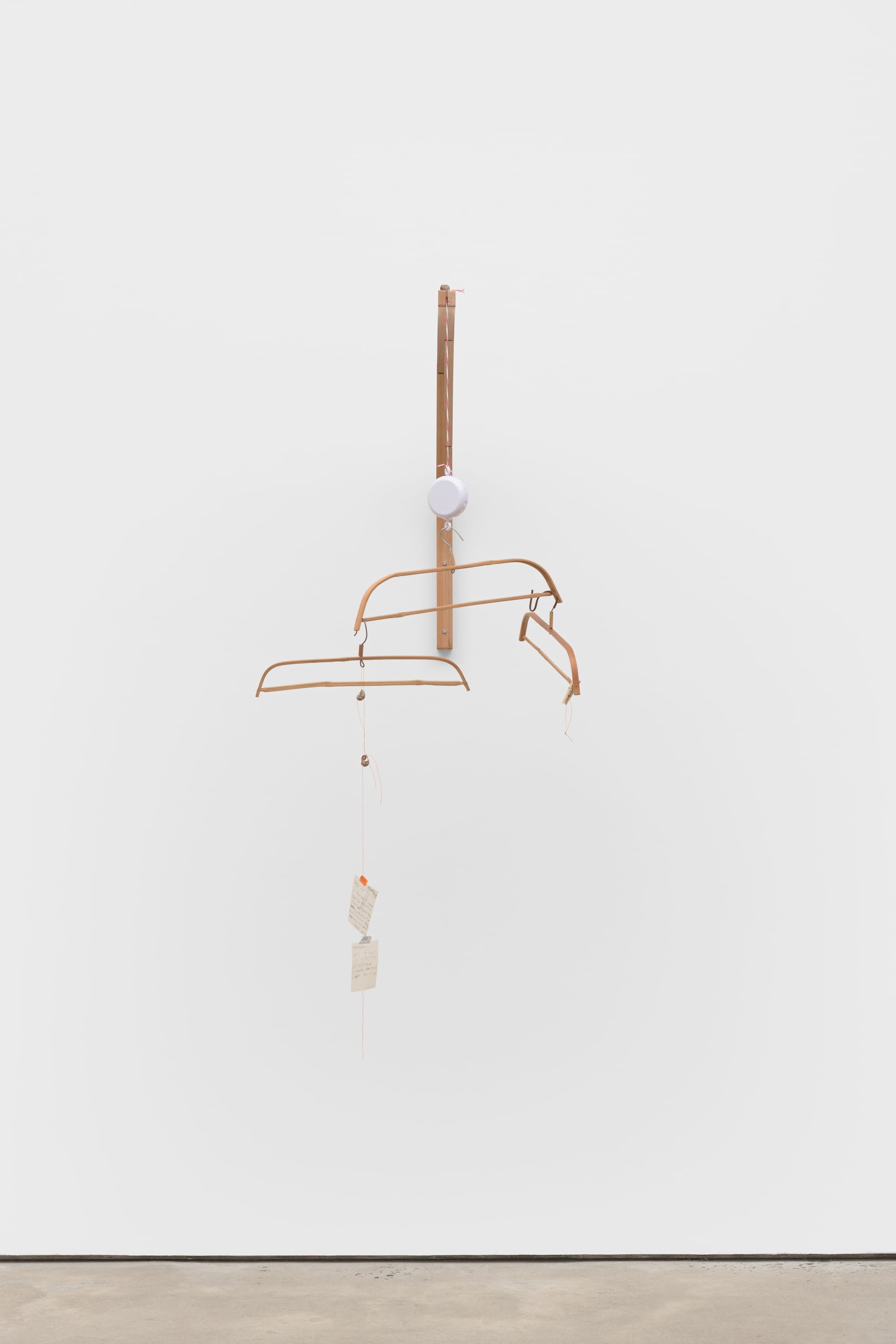
Installation views of YU JI’s PKA - lullaby, 2026, wooden arm, handmade hangers, 157.5 x 83.8 x 91.4 cm (left) and Play Know Attention - LARGE, 2026, cherry wood, metal joint, concrete, 95.9 x 67.3 x 44.5 cm, edition of four (right), at “Origin of the Tiger,” P.P.O.W, New York, 2026. Photo by Ian Edquist. Courtesy the artist and P.P.O.W.
The pursuit of rest is also conjured through four collapsible, low-to-the-ground chairs dispersed throughout the space. Yu’s attention to seating was piqued when she found herself without furniture upon arriving in Phnom Penh. By attaching concrete knees to these chairs, she transforms the human body into modular appendages, underscoring its adaptability to new environments. Elsewhere, signs of physical and social sustenance appear in lead-cast tamarind pods scattered atop PKA – Is this not a meeting (2026). Lead’s low melting point allows it to be liquefied and reshaped on a stovetop, evoking cooking processes that echo tamarind’s widespread culinary use in Cambodia.
Nearby, mats are held up by a wood structure that appears supported by five protruding plaster legs cast from children Yu worked with. This work most directly references the exhibition’s title, alluding to a Cambodian folktale in which a king, queen, ministers, and a royal astrologer survive a journey through a forest by each transforming into a different anatomical part of a tiger. Yu’s composite sculpture resembles this transfigured creature: discrete elements cohere into a mysteriously unified whole, dazzling viewers with its striped surface. Like the folktale’s tiger, it is dependent on playful stealth, cooperation, and transformation.
Adjacent is PKA – lullaby (2026), a mobile containing a music box that plays a recording of children reading “Origin of the Tiger” in Khmer. Yu’s role as a teacher and collaborator is also evident in two collage works that combine children’s drawings, handwritten notes, and photographs of PKA’s workshops. These are set within handmade frames resembling drawers—yet another reminder of how memory and lived experience are stored and transported in parts.
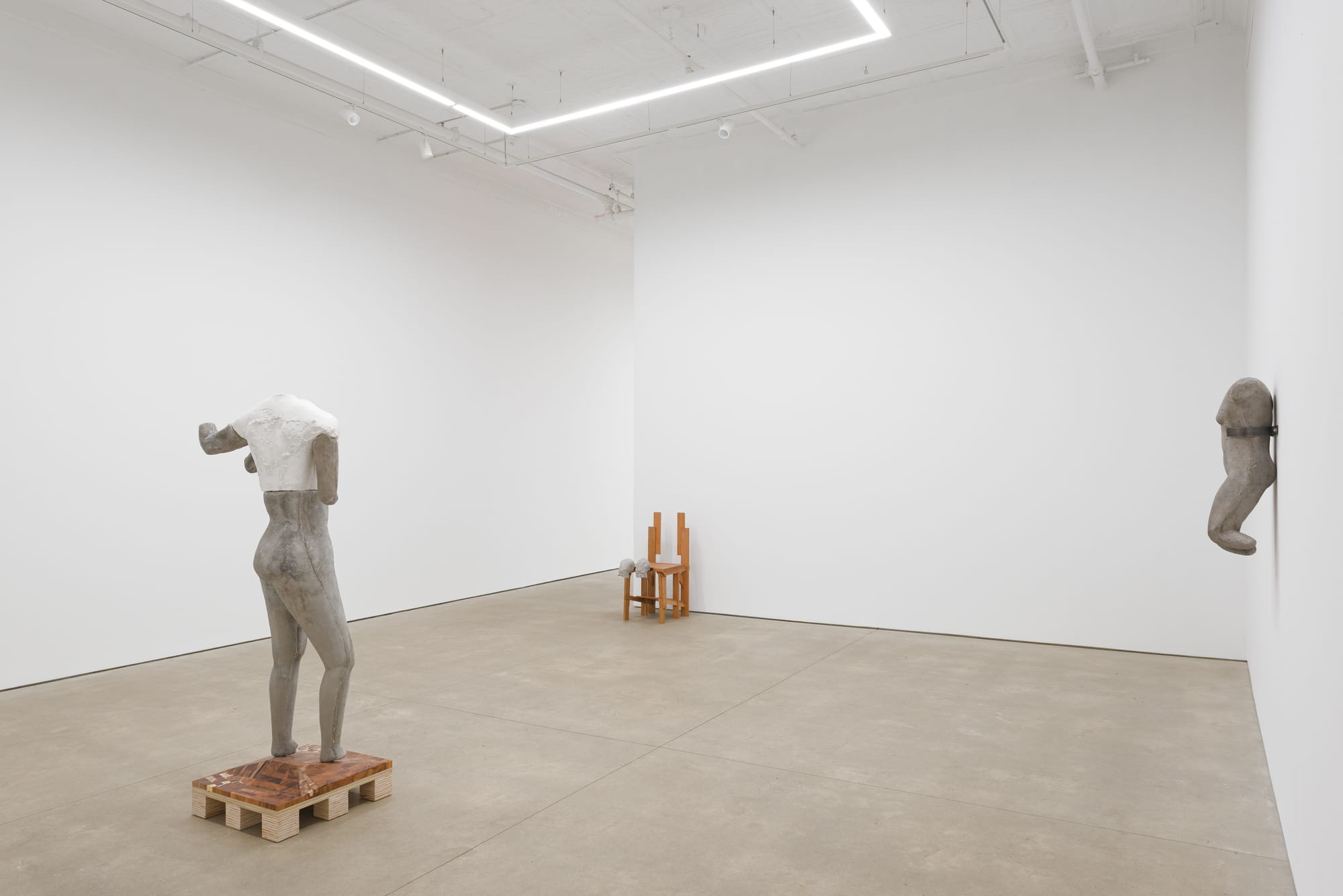
The innermost room features two sculptural bodies. Anchoring the space is Flesh in Stone – Anthropos VI (2026), a headless, life-sized figure that takes after an ancient statue of Krishna lifting Mount Govardhana, which Yu encountered at the National Museum of Cambodia. Fragments of the original had previously been misattributed to sculptures in US museums; here, Yu symbolically reunites them through recasting. This restorative gesture reaches across transnational boundaries, representing a culmination of the artist’s travels.
“Origin of the Tiger” hones in on the meeting points between disparate materials, peoples, and cultures. Rather than reconstructing a specific site, Yu’s work conveys the fleeting yet meaningful textures of lived experience—those packed away at the end of one journey and carried forward, continually reconfigured. It is a poignant and fitting beginning to her new chapter in New York.
Christina Shen is a writer and art historian from Hong Kong, currently based in New York.