Shows
Memory, Migration, Materiality: 12 Artists to Watch During Alserkal Art Month

In the lead-up to Art Dubai’s special edition, Alserkal Art Month (Apr 18–May 18)—an expanded, district-wide initiative of exhibitions and events—provides a vital platform for sustained engagement with individual practices. An important anchor of the program, “Déjà Vu” (Apr 25–May 8) at Concrete, Alserkal Avenue, curated by Kevin Jones, Nada Raza, and Zaina Zaarour, brought together more than 50 artists from 20 UAE-based galleries, centering themes of memory, displacement, and cultural inheritance.
The exhibition, explains Alserkal executive director Vilma Jurkute, “stemmed from a collective response to the current uncertainty and recalibration in the region. . . . We have learned from previous crises that they offer an opportunity to challenge the conventional and pioneer new models.”
Across the exhibition, individual practices gave concrete form to the precarious present. The following 12 artists, in particular, translate its tensions into materially inventive and conceptually rigorous work—practices that capture what Jurkute describes as “the familiarity and dissonance of the present moment,” and that set the tone for an art month unfolding amid regional tensions and global conflict.
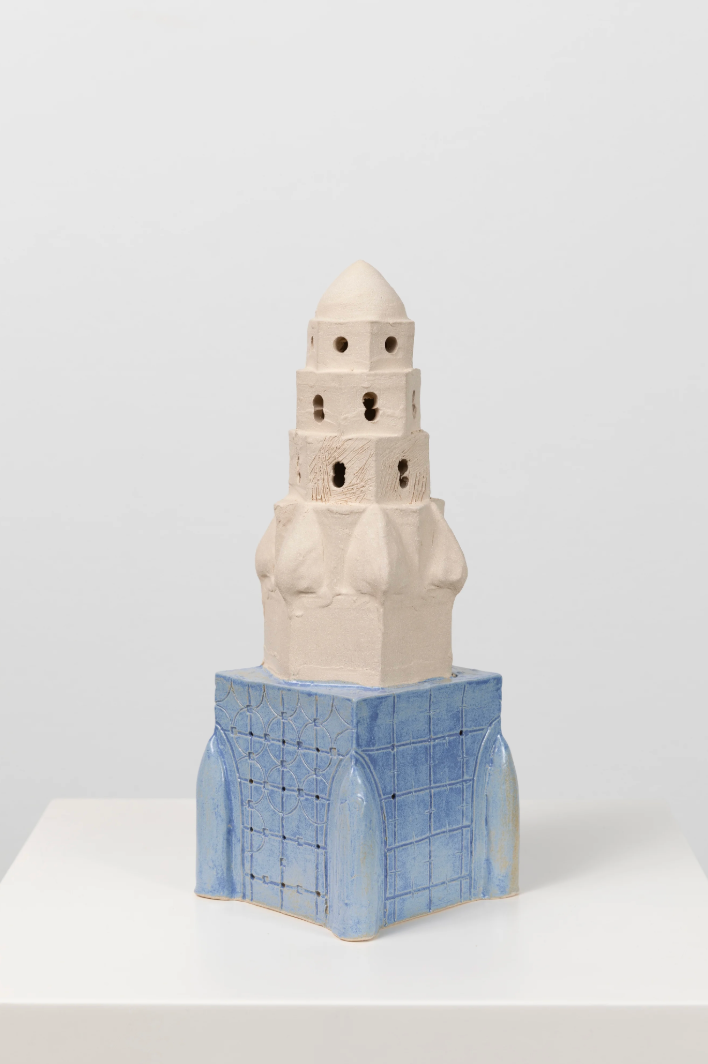
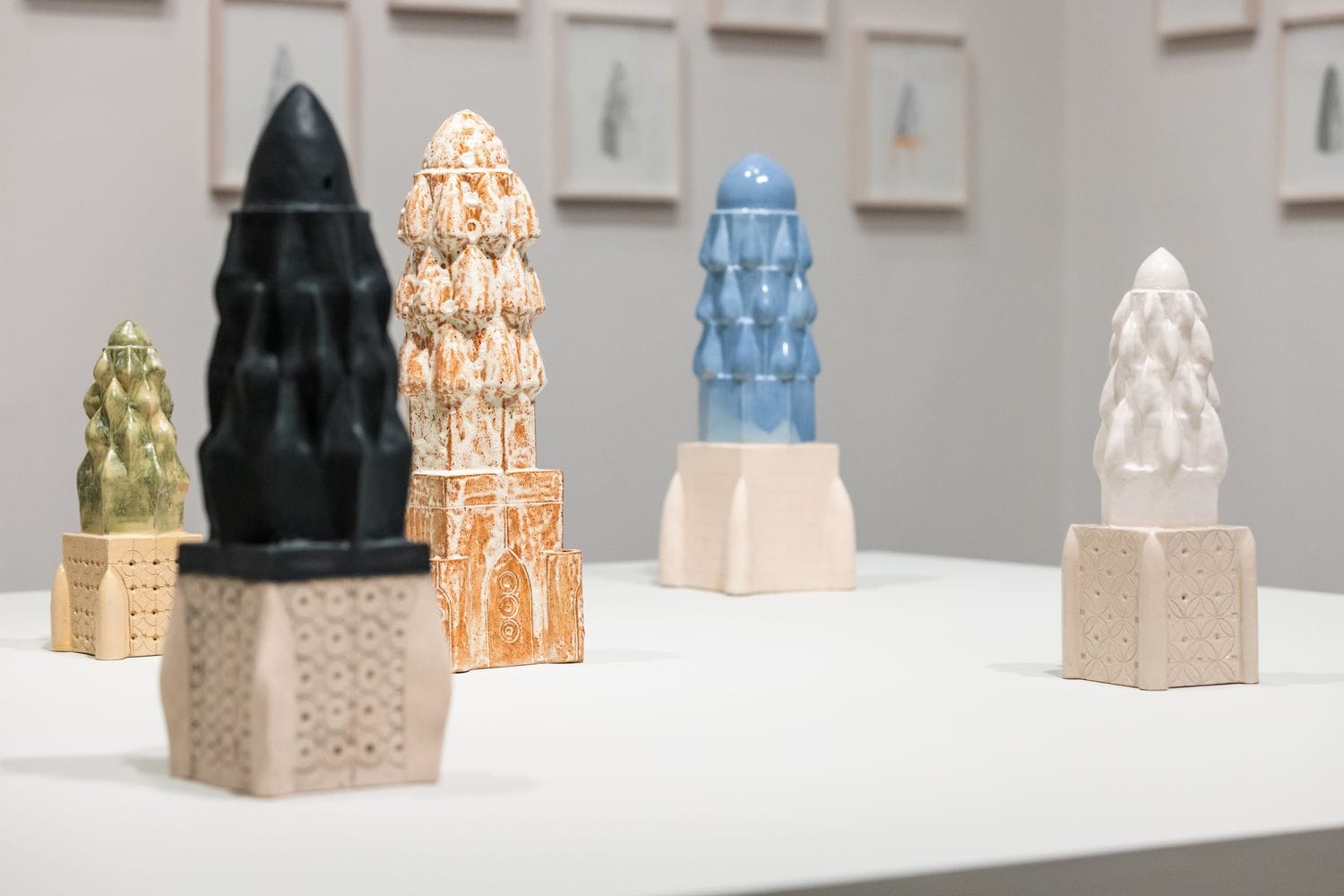
SHAHPOUR POUYAN, Monday Recollections of Muqarnas Dome 18, 2022, glazed ceramic, 35.5 x 13 x 13 cm. Courtesy Lawrie Shabibi, Dubai (left); installation view of SHAHPOUR POUYAN’s Muqarnas Dome series, 2022, at “Winter in Paradise,” Frist Art Museum, Nashville, 2024. Courtesy the artist (right).
Shahpour Pouyan, Lawrie Shabibi
Born in Isfahan in 1979, Shahpour Pouyan interrogates the politics of cultural ownership through a research-based practice spanning drawing, painting, and sculpture. Grounded in art history, architecture, philosophy, archaeology, mathematics, and physics, his work bridges disciplines to reinterpret how history is encoded in aesthetic and material traditions. He has exhibited internationally, was shortlisted for the Victoria and Albert Museum Prize, London in 2016, and in the same year received the Civitella Ranieri Fellowship for Visual Arts in Umbria. At “Déjà Vu,” he presented a selection of sculptures developed from Monday Recollection of Muqarnas Dome (2019), a series of sketches centered on the Muqarnas dome of Sharaf ad-Dawla—an 11th-century Shi’ite mausoleum near Mosul, Iraq. Pouyan had long researched the site and planned to visit, until ISIS destroyed it in October 2014. Working from accumulated knowledge, he began sketching the tomb each week for 39 consecutive weeks, with no recourse to photographs or previous drawings. These works on paper gave rise to ceramic pieces that oscillate between remembrance and loss, standing as silent reflections on political violence and the erasure of cultural memory.
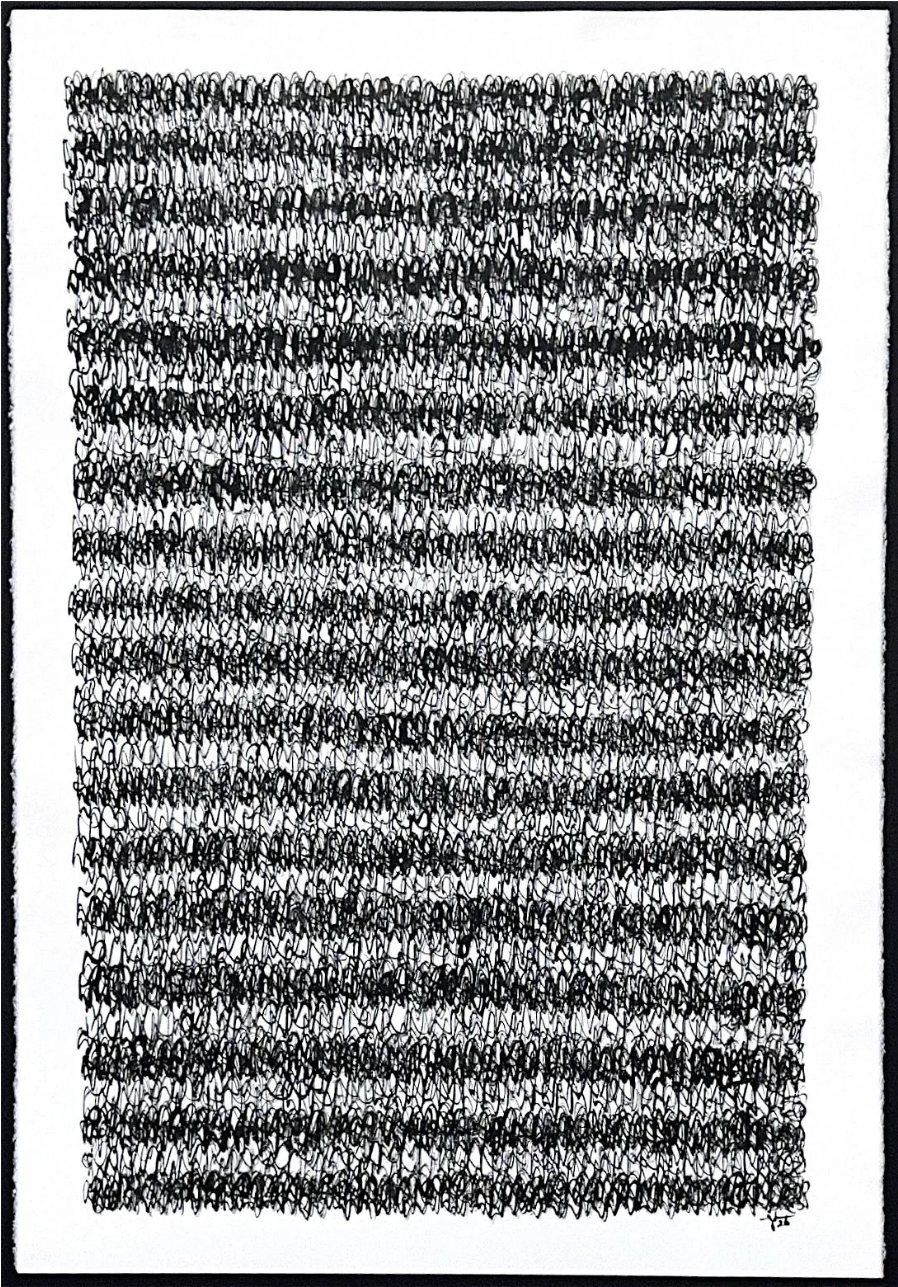
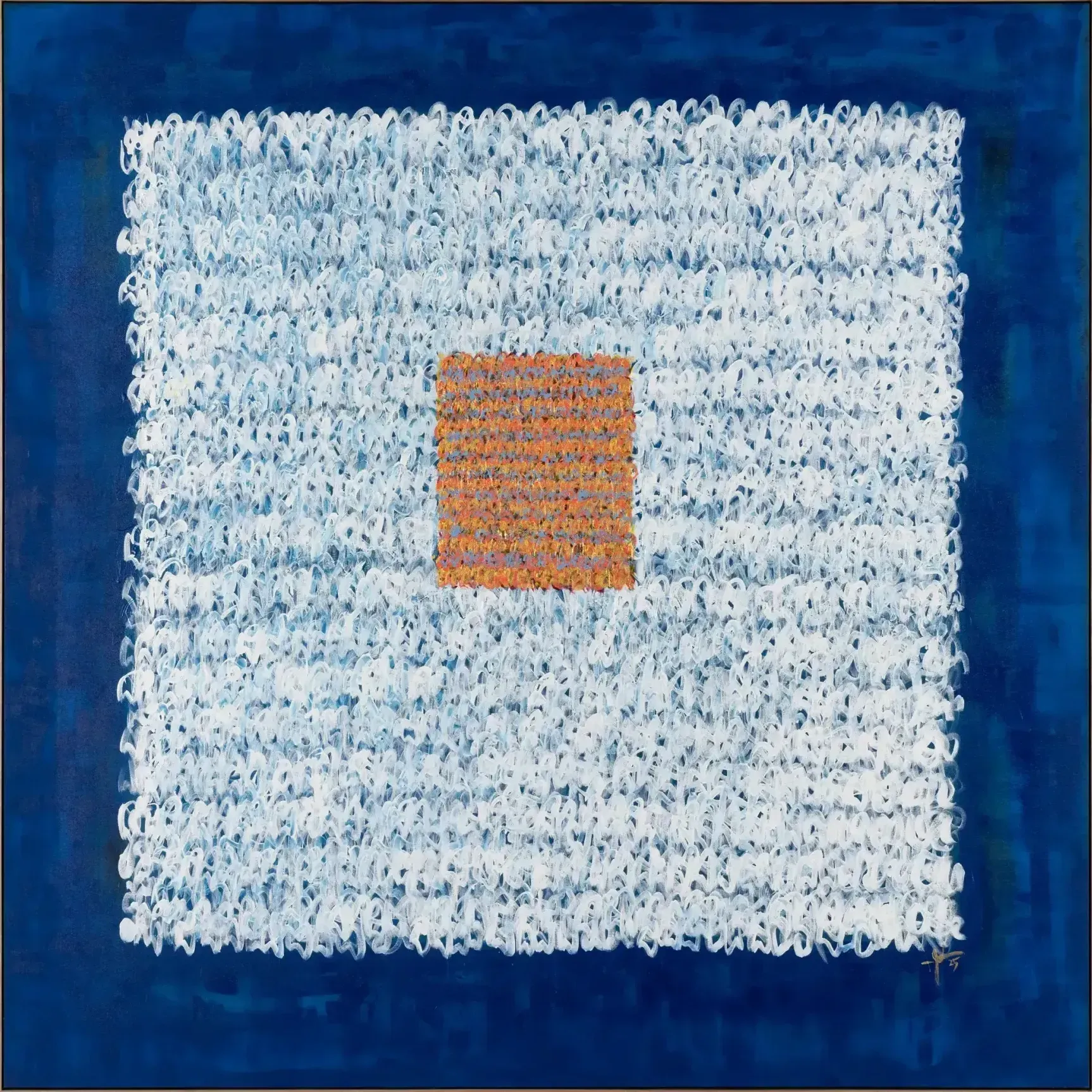
JUMA AL HAJ, Silence in repetition 1, 2026, ink on paper, 100 x 70 cm (left); and When I can't hug you, I hope my prayers do, 2025, acrylic on canvas, 220 x 220 x 3 cm. Copyright the artist (right). Courtesy Iris Projects, Dubai.
Juma Al Haj, Iris Projects
Born in 1990, Sharjah native Juma Al Haj creates abstract paintings derived from the spiritual resonance of ancient religious texts, historical references, and his personal diaries. Driven by an early fascination with words—not only for what they mean, but for the way they curve and collide across a page—he dissolves grammatical structures to leave only the conceptualization of the words they symbolize. He earned a bachelor’s degree in visual communication in 2012 from the American University of Sharjah and a master’s in international relations in 2020 from the University of Wollongong in Dubai, and it was during the Covid-19 pandemic that he began sharing paintings on social media, bringing what was previously a private practice into public view. Moving between the intimacy of handwriting and the freedom of abstract gesture, Al Haj transforms written expression into an open field of form, paying homage to Arabic calligraphy while probing interiority, identity, and belonging. At “Déjà Vu,” he presented his latest series, Silence in repetition (2026), in which dense, looping brushwork reflects the quiet power of persistence and repetition.
Rula Halawani, Ayyam Gallery
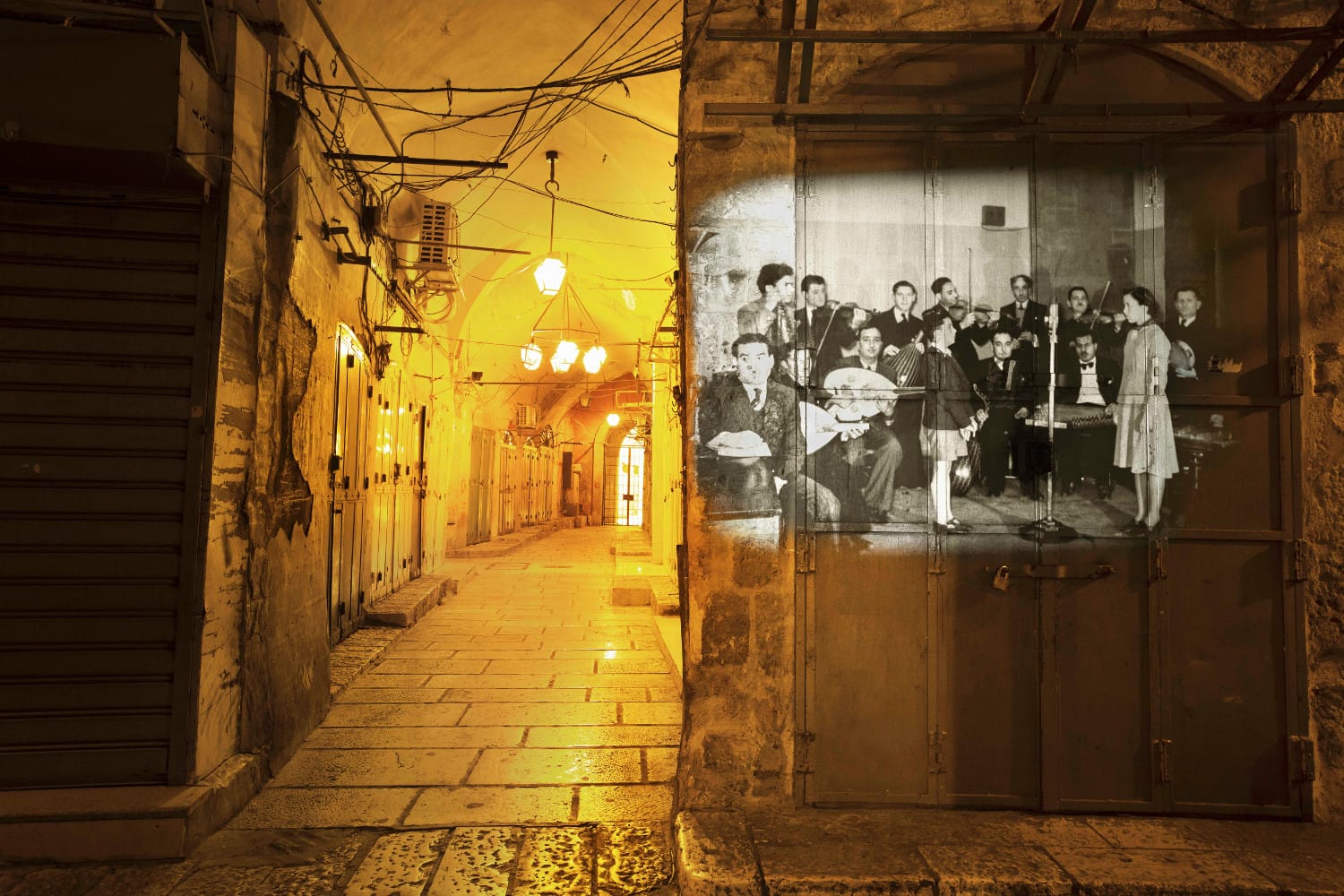
Palestinian photographer Rula Halawani has spent over three decades documenting her hometown of Jerusalem, where she was born 62 years ago and is currently based. After earning a bachelor’s degree in photography from Canada’s University of Saskatchewan, she returned to the city in 1989 and began her career as a photojournalist. A turning point came in 1997 when she witnessed the killing of a child she knew personally—an experience that led her to reconsider the limits and possibilities of the medium and shift toward a more experimental, expressive approach, including the use of filters and negatives. Halawani has taught at Palestine’s Birzeit University since 2001, and received the Luxembourg Art Prize in 2021 as well as the sixth Annual Prefix Prize in Toronto in 2026. Her archival print series Jerusalem Calling (2014–15), of which selected pieces were on view at “Déjà Vu,” draws on images and recordings from the Palestinian Broadcasting Service to evoke a Jerusalem that once thrived as a cultural capital, foregrounding forms of communal life and public expression that have been systematically eroded by ongoing occupation.
Alaa Edris, 1X1 Art Gallery
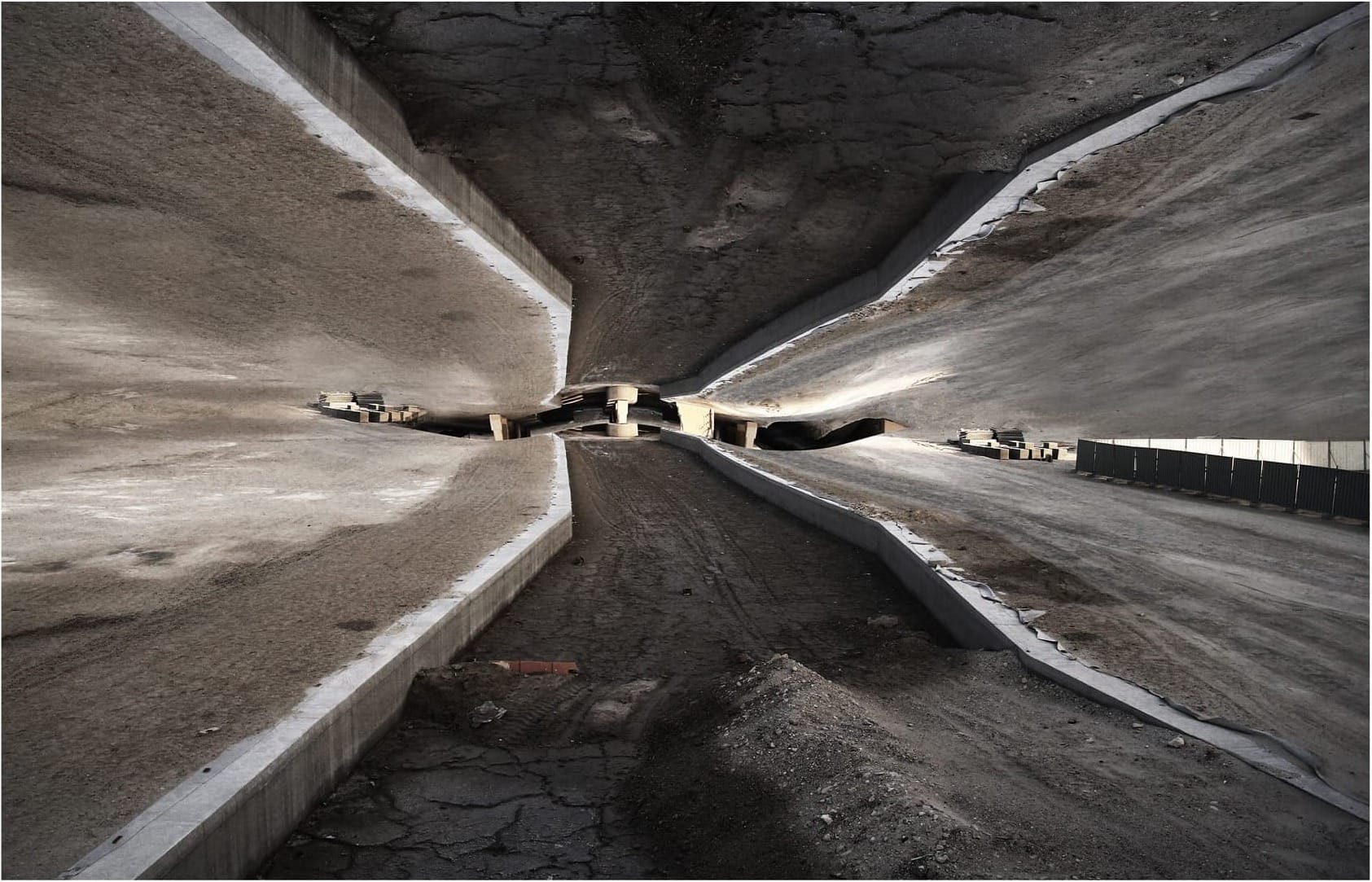
Blending anthropology, cartography, and sci-fi imagination, Alaa Edris probes the tensions between tradition and progression through photography, video, performance, and installation. Born in 1986 in Dubai and now based between Sharjah and Abu Dhabi, she works with raw footage of abandoned sites, infrastructural fragments, and unfinished urbanization projects, such as Abu Dhabi’s Al Reem Island, often transforming them into futuristic visions that oscillate between optimism and fragility. Edris is featured in “Washwasha,” the UAE Pavilion’s group exhibition at the 61st Venice Biennale, which opened on May 9. At “Déjà Vu,” Edris presented her Devourless series (2008) and Reem Dream X series (2015), where familiar topographies are reassembled into disorienting vistas. While the former, rendered in black and white, reconfigures recognizable desert landscapes into antiseptic, alienating environments, the latter moves between surreal architectural imagery and imagined realms.
Lubna Chowdhary, Gallery Isabelle
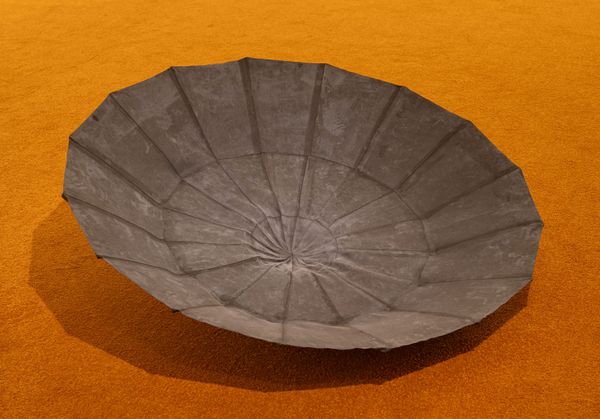
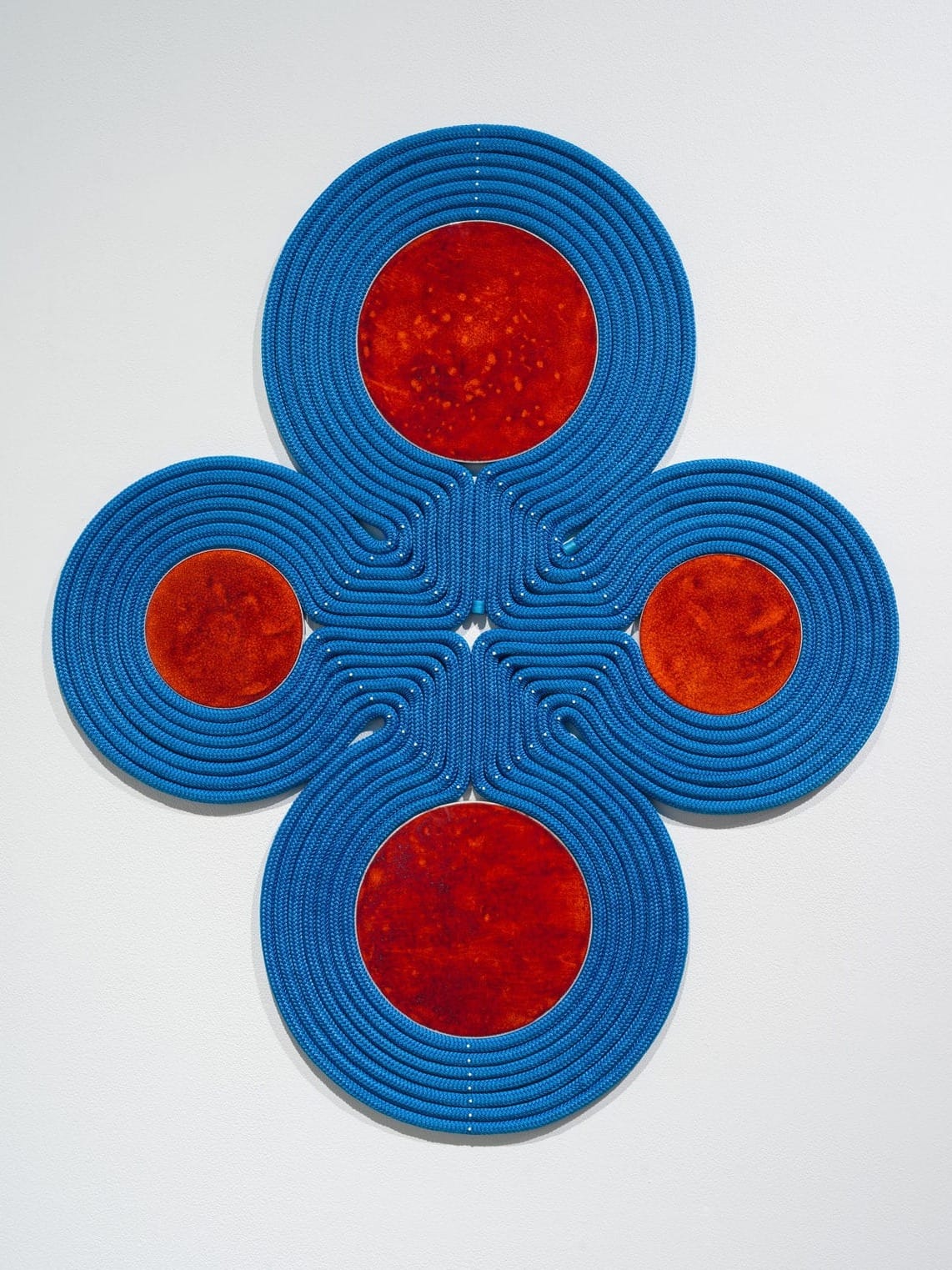
Lubna Chowdhary’s practice sits at the intersection of urbanization and material culture. Through her subversive approach to clay, her primary medium, she creates cross-cultural dialogue within the context of modernity. Born in Dodoma, Tanzania, in 1964 to Pakistani parents, Chowdhary moved to the UK in 1970, where she is now based. She received an MA from the Royal College of Art in 1991 and has since been shortlisted for several awards, including the Jerwood Prize in Ceramics (2001), the Freelands Foundation Award (2021), the Juda Foundation Award (2022), and the Paul Hamlyn Award (2022). Bind 1 (2021), exhibited at “Déjà Vu,” combines polyester rope and glazed ceramic in a geometric composition of concentric circles. Each material holds its place without compromising the other, giving form to Chowdhary’s sustained engagement with hybridity and interdisciplinary practice.
Bady Dalloul, The Third Line
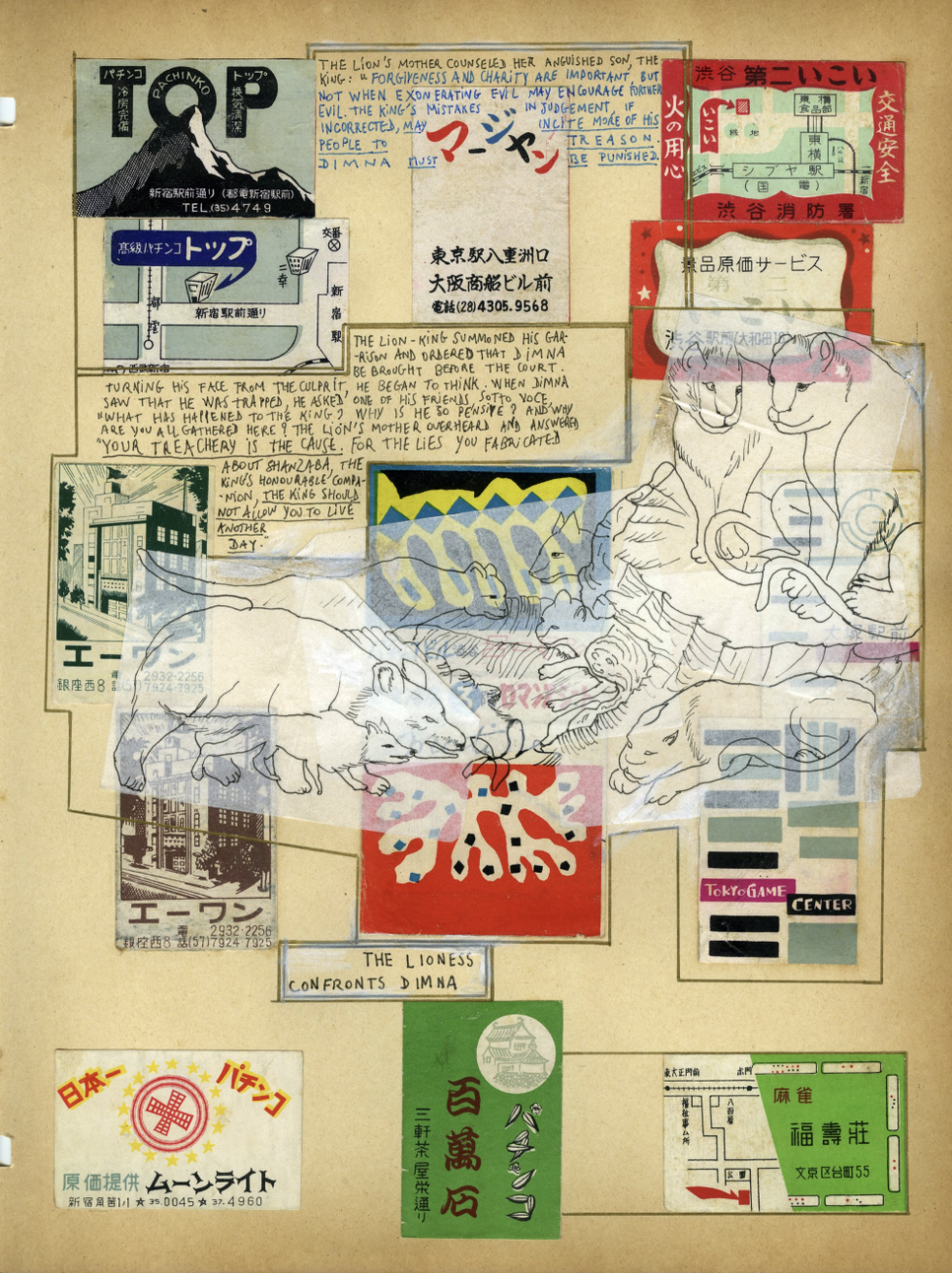
Paris-based multimedia artist Bady Dalloul presented two drawings and collages on archival paper, The Lioness Confronts Dimna and The Lion-King Receives Shanzaba (both 2016), at “Déjà Vu.” Born in Paris in 1986 to a Syrian family, Dalloul merges historical research with personal narrative to challenge Western-centric historiography. Working across drawing, video, assemblage, and film, he invites viewers into miniature worlds and sprawling installations that reveal the fragile, ordinary lives caught in the wake of empire and displacement. He holds a degree from the École Nationale Supérieure des Beaux-Arts (2015) and has held solo exhibitions at major institutions including Centro de Arte Moderna Gulbenkian, Lisbon (2026), Jameel Arts Centre, Dubai (2025), and Mori Art Museum, Tokyo (2025). He has had work acquired by the Centre Pompidou, and was awarded the Prize for Arab Contemporary Creation by the Friends of the Institut du Monde Arabe (2017) and the Sciences Po Prize for Contemporary Art (2016).
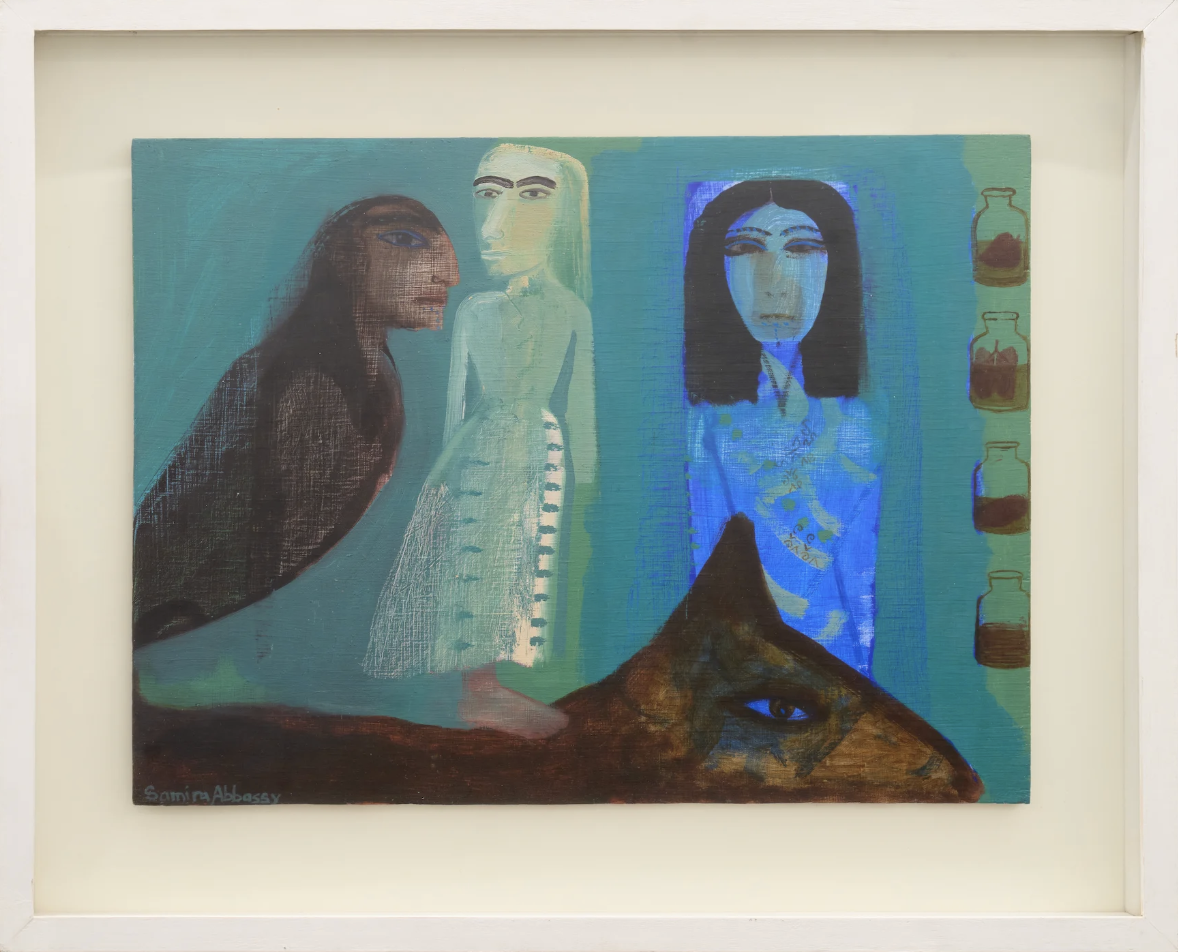
Samira Abbassy, Taymour Grahne Projects
Samira Abbassy’s Enbalmed (2003) and Pupa (2018) are two psychologically charged works that reflect the artist’s engagement with heritage, identity, and gender through figurative depictions of the female experience in relation to migration, mythology, and iconography. Born in Ahwaz, Iran, Abbassy grew up in London and has been based in New York since 1998. Trained in European art at Canterbury College of Art, she later turned to Persian and Indian material culture, establishing a bold, idiosyncratic visual language. Through drawing, painting, and sculpture, she weaves together references from Qajar court paintings, mythology, and Jungian psychoanalysis to create dreamlike—at times visceral—explorations of generational trauma and the complexities of diasporic identity. She is represented in the permanent collections of major institutions, including the Los Angeles County Museum of Art, the Metropolitan Museum of Art, the Burger Collection in Hong Kong, and the British Museum in London, among others. She has presented solo shows at 20 galleries across London, New York, and Dubai.
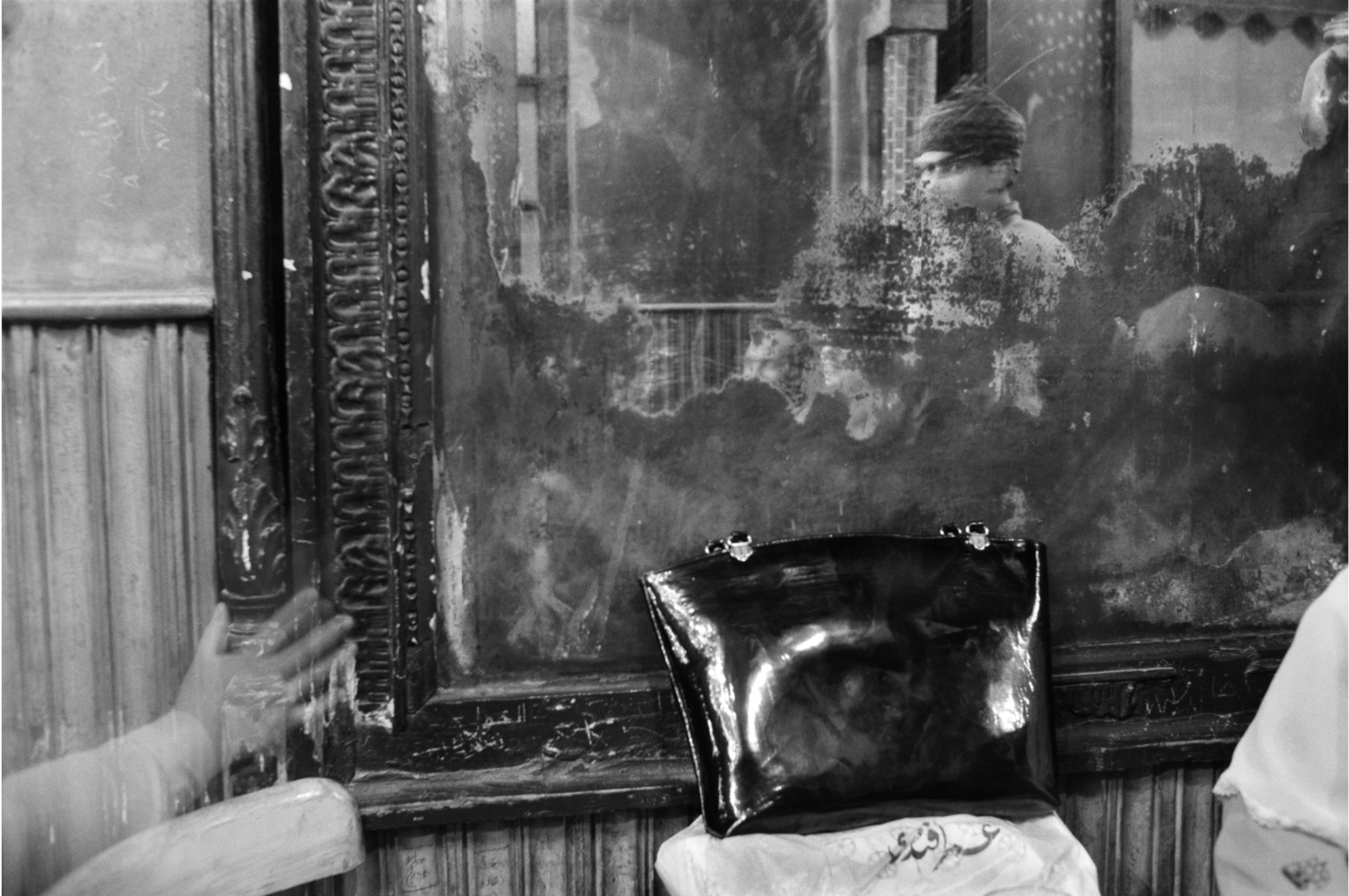
Fouad Elkoury, The Third Line
French Lebanese photographer Fouad Elkoury, born in Paris in 1952, presented his inkjet prints on aluminum, Fichawi Sac (1988) and Rue et Mannequin (1994), at “Déjà Vu.” The works stem from his Cairo series, Suite Égyptienne (1985–98), a 13-year portrait of the city encompassing daily life snapshots of partially obscured figures as well as nocturnal views of ancient monuments. By reframing conventional photographic compositions, Elkoury subverts the stereotypical image of Cairo and presents it as a bustling urban center where history and modernity coexist. Living between Paris and Beirut, he received a degree in architecture in London in 1979 before pivoting to photography in 1984 to document Lebanon during the civil war. Elkoury has since developed series on cities across Europe, Africa, and the Middle East, including Rome, Amman, and Istanbul. His works are held in the permanent collections of the Centre Pompidou and Maison Européenne de la Photographie in Paris, MAXXI in Rome, Tate Modern in London, and Saradar Collection in Beirut.
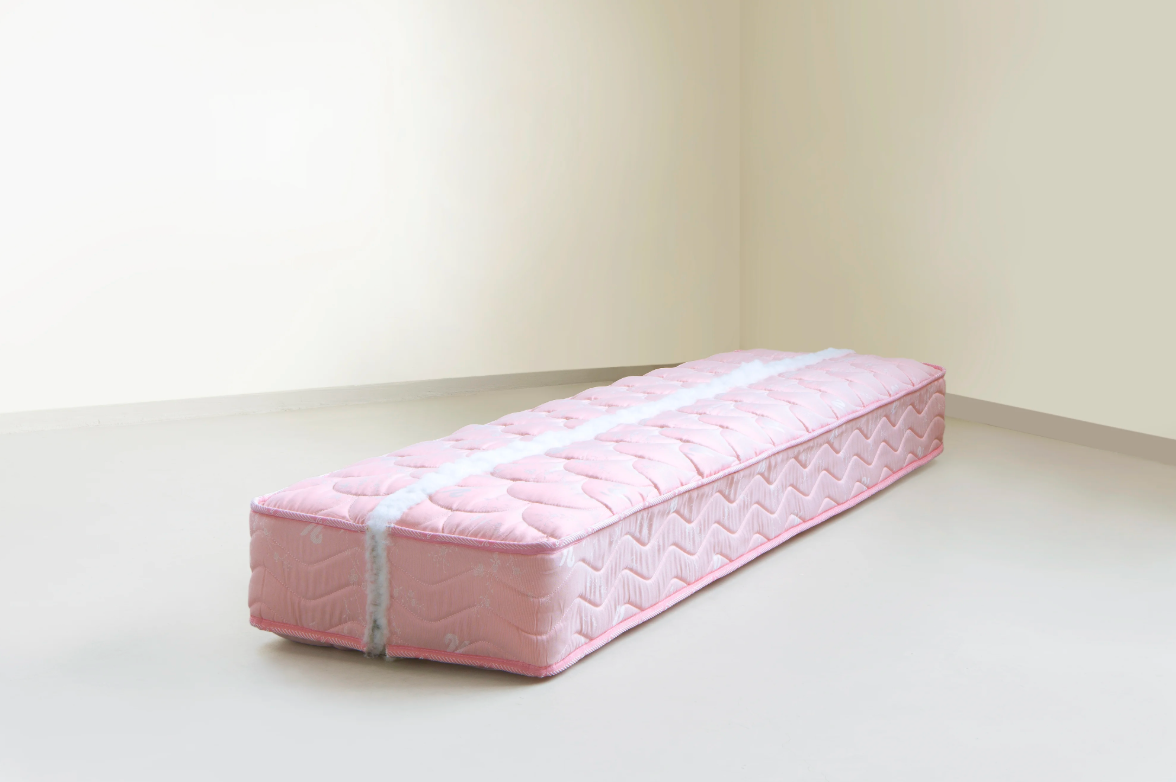
Nazgol Ansarinia, Green Art Gallery
Born in Tehran in 1979, Nazgol Ansarinia examines the objects, systems, and structures underlying daily life and their entanglement with broader socioeconomic conditions. Spanning sculpture, installation, drawing, and video, her practice investigates the tensions between private worlds and social forces, drawing on her surroundings in contemporary Iran. Ansarinia’s work has been acquired by major institutions such as London’s British Museum and the Tate Collection; Paris’s Centre Pompidou and KADIST; and Gurugram’s Devi Art Foundation. She presented two works at “Déjà Vu”: Mendings (pink mattress) (2012), which gestures toward an inwardly held trauma; and NSS book series (2008), in which she compiles a lexicon drawn from post-9/11 US policy documents, detaching words from their original syntax to expose the mechanisms of meaning-making.
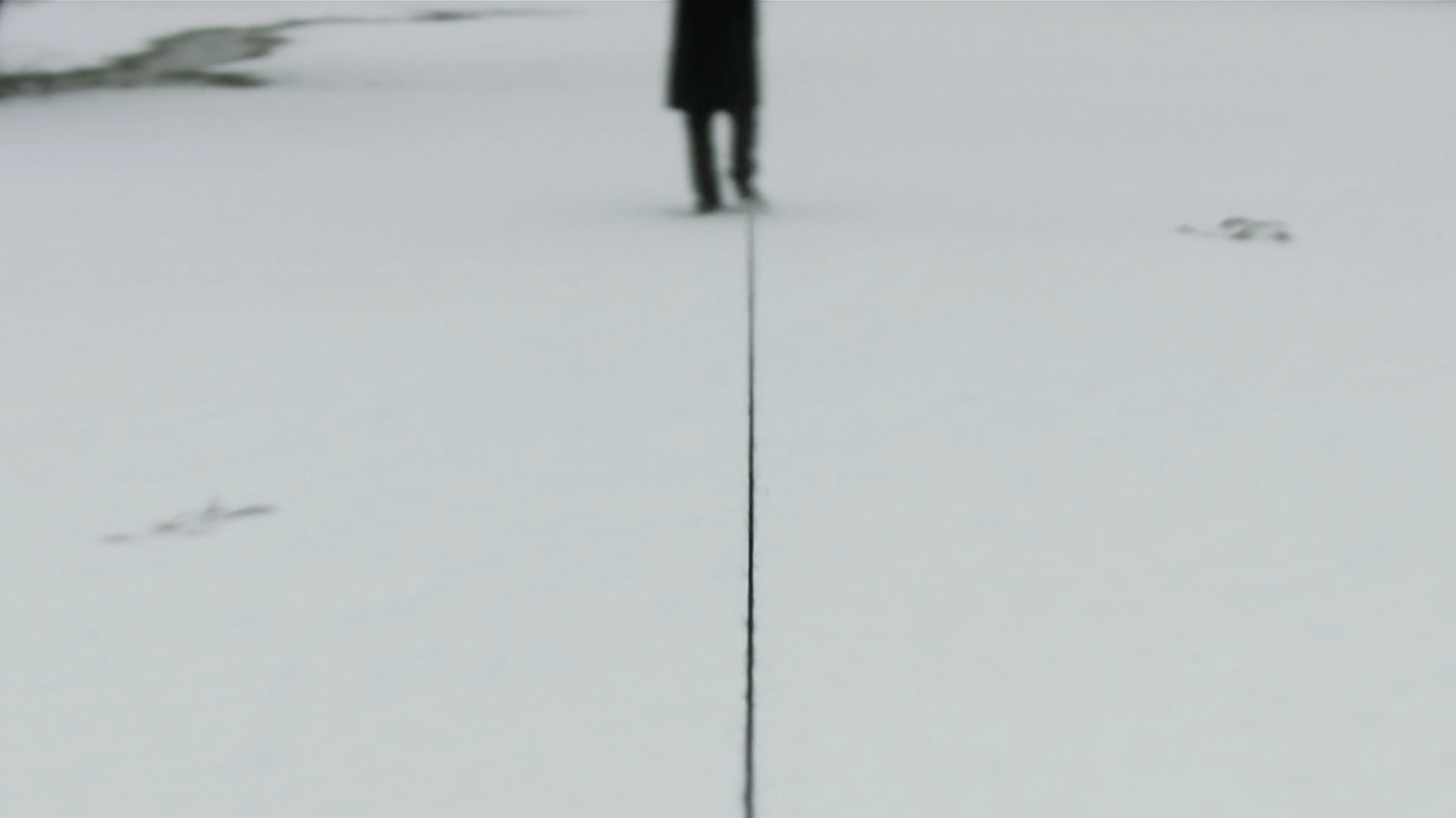
Ismaïl Bahri, Grey Noise
A visual artist and experimental filmmaker born in Tunis in 1978, Ismaïl Bahri studied at the Tunis Institute of Fine Arts from 1996 to 2000 before earning a master’s degree (2002) and a PhD in visual arts (2006) from Université Paris 1 Panthéon-Sorbonne. Working across video, drawing, sculpture, and sound, he positions himself as an observer, setting up devices to record small, repetitive gestures and empirical experiments that capture what unfolds at the edge of perception. Presented at “Déjà Vu,” the video work Dénouement (2011) continues Bahri’s ongoing investigation of motion, speed, and unforeseen encounters. What initially appears as a white field bisected by a black thread gradually resolves into a snowy landscape, where a standing figure is pulled toward the camera by a string. In the film’s final moments, the scene is overtaken by close-up movements of the person’s hands. As the frame mutates, Bahri foregrounds the deceptive potential of photosensitive surfaces and the instability of vision and meaning.
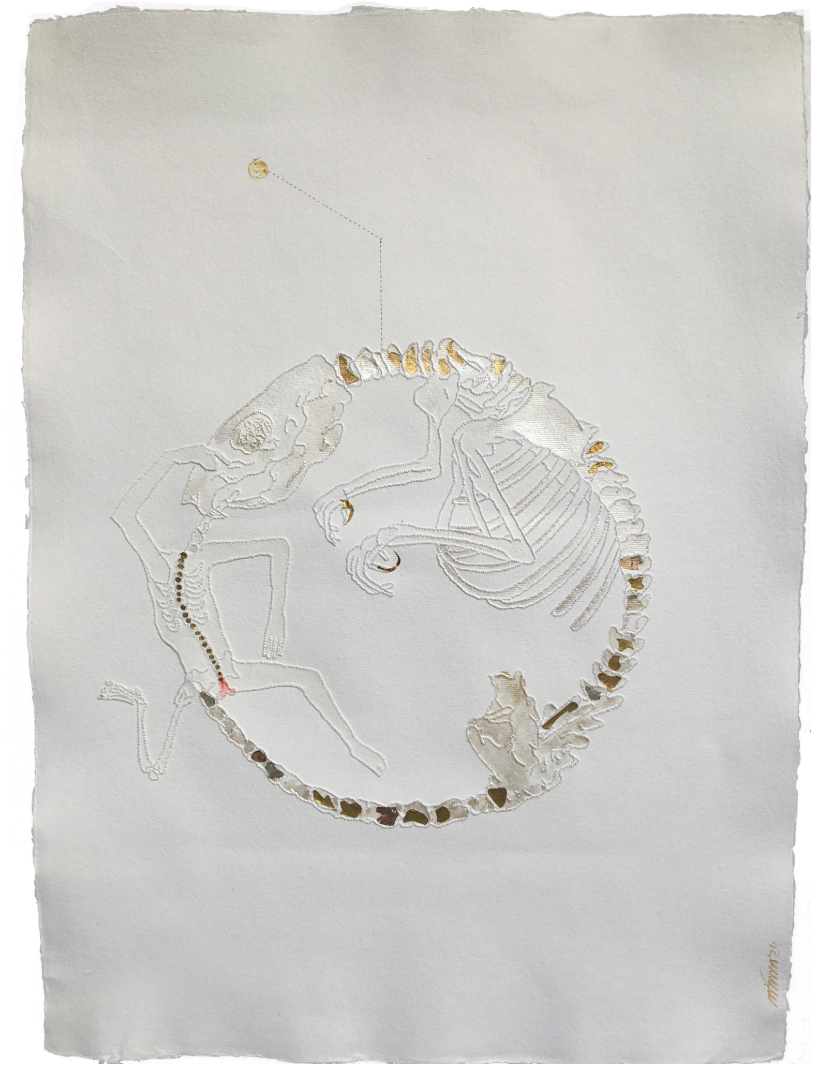
Mithu Sen, 1X1 Art Gallery
Mithu Sen, born in 1971 in West Bengal, India, is a conceptual artist whose multidisciplinary practice spans drawing, performance, poetry, film, and sculpture. Her work examines social and cultural hierarchies, focusing on the ways sexuality, linguistic norms, and market forces determine which bodies and voices are recognized or excluded. Trained in painting at Visva-Bharati University in Santiniketan (1990–97) and later at the Glasgow School of Art (2000–01), she frequently deploys what she terms “lingual anarchy”—a practice of non-language, sonic improvisation, and unreadable scripts—to contest the authority of dominant language systems. At “Déjà Vu,” two untitled drawings from 2024, executed on handmade and metallic paper, present delicate, intuitive studies that emphasize gesture and line, evoking tentative, fractured figures that hover between whimsy and unease.
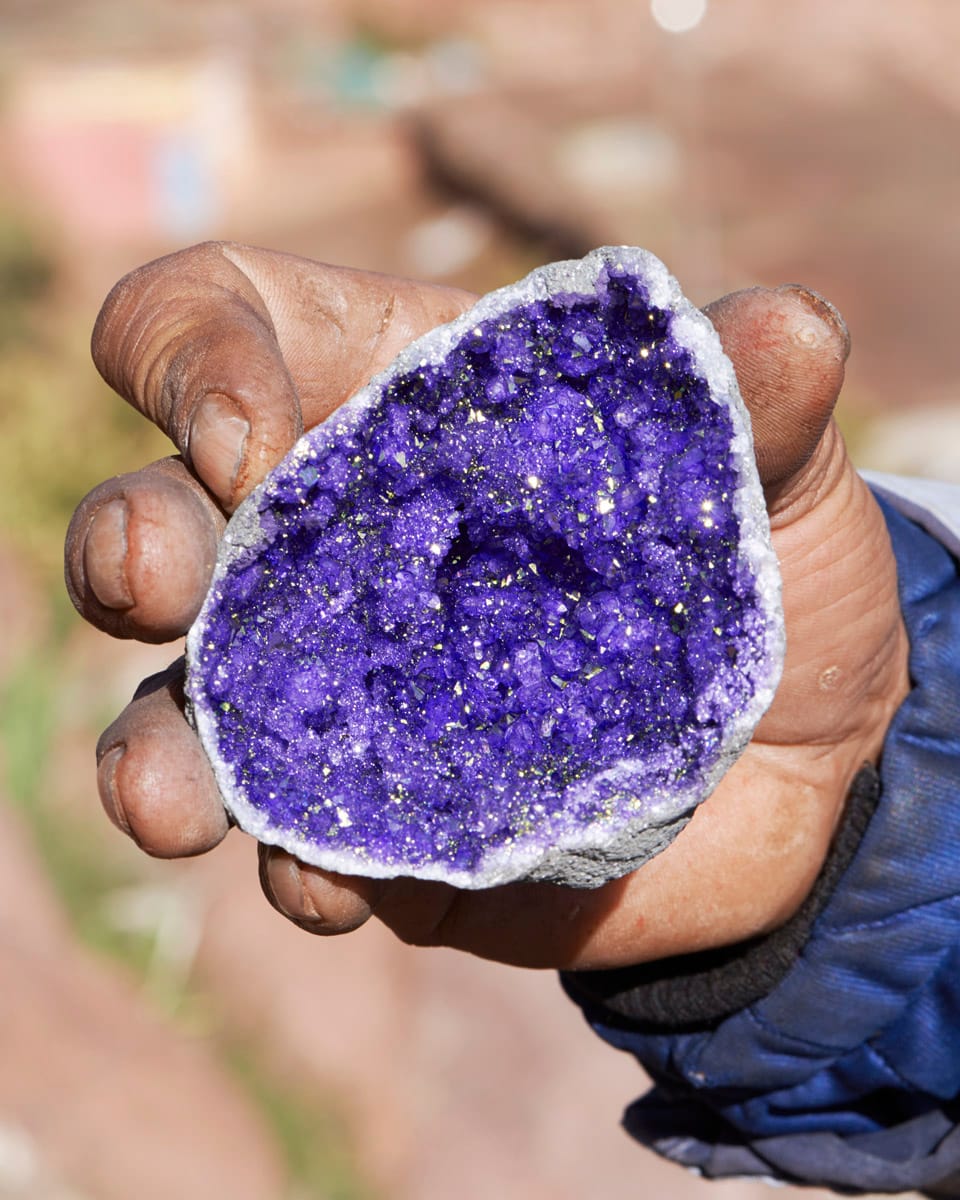
Fayçal Baghriche, Taymour Grahne Projects
Born in 1972 in Skikda and currently based in Paris, French Algerian artist Fayçal Baghriche anchors his practice in metaphysical and epistemological reflections, working across performance, sculpture, photography, and film. Raised at the intersection of Arab and European cultures, Baghriche probes the ambiguity and hybridity of images, symbols, and everyday behaviors, exposing the norms and power structures that organize social life and public space. His work has been featured at major exhibitions including the Dakar Biennale (2014), Brazil’s Triennale of Sorocaba (2014), and the Gwangju Biennale (2012). At “Déjà Vu,” Baghriche presented works from his Atlas Series (2015). Named after the mineral-rich Atlas Mountains, each print depicts a weathered hand holding a colorful piece of quartz. Ostensibly precious stones, these souvenirs are in fact valueless, dyed geodes, sold to tourists at high prices. Framing them against calloused hands, Baghriche probes how beauty, labor, and display shape what we accept as luxury and art.