Shows
Oceans and Eras: Inside LACMA’s David Geffen Galleries
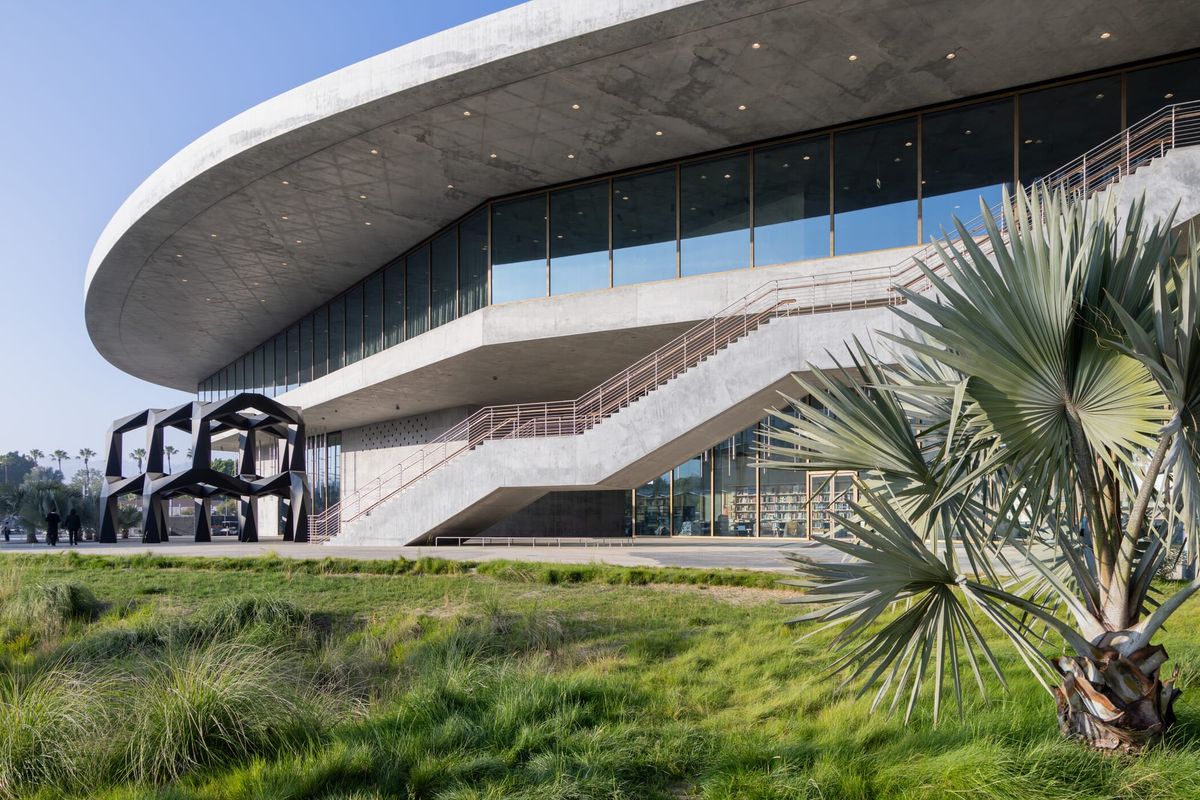
Mirroring the sinuous urban sprawl of Los Angeles, the Peter Zumthor-designed expansion of the Los Angeles County Museum of Art (LACMA) was unveiled last week to press, VIPs, major donors, and museum members. Seen from above, the undulating cast concrete structure appears like one of Henri Matisse’s famous plant cutouts. Quite fittingly, Matisse’s La Gerbe (1953)—a mid-century private commission once installed in the courtyard of an A. Quincy Jones home in LA before being cloistered within the museum’s former venues—now hangs prominently on a wall inside the new David Geffen Galleries, enveloped by a 300-yard wraparound glass façade.
Zumthor’s design (made in collaboration with Skidmore, Owings & Merrill to navigate the earthquake-prone city’s notoriously tricky building codes) extends horizontally over bustling Wilshire Boulevard—a 25-kilometer artery in LA that stretches from downtown through Koreatown and Beverly Hills and ending at the beach—ingeniously allowing LA’s famed car culture and sunshine to interplay with the collections within. The curved structure also frames the 1988 Bruce Goff-designed, Frank Lloyd Wright-inspired Pavilion for Japanese Art, which, like Matisse’s La Gerbe, was often overlooked by visitors in the past due to siloed sight lines and a lack of comprehensive planning on the museum campus—an issue that LACMA’s expansive new edifice seeks to resolve.
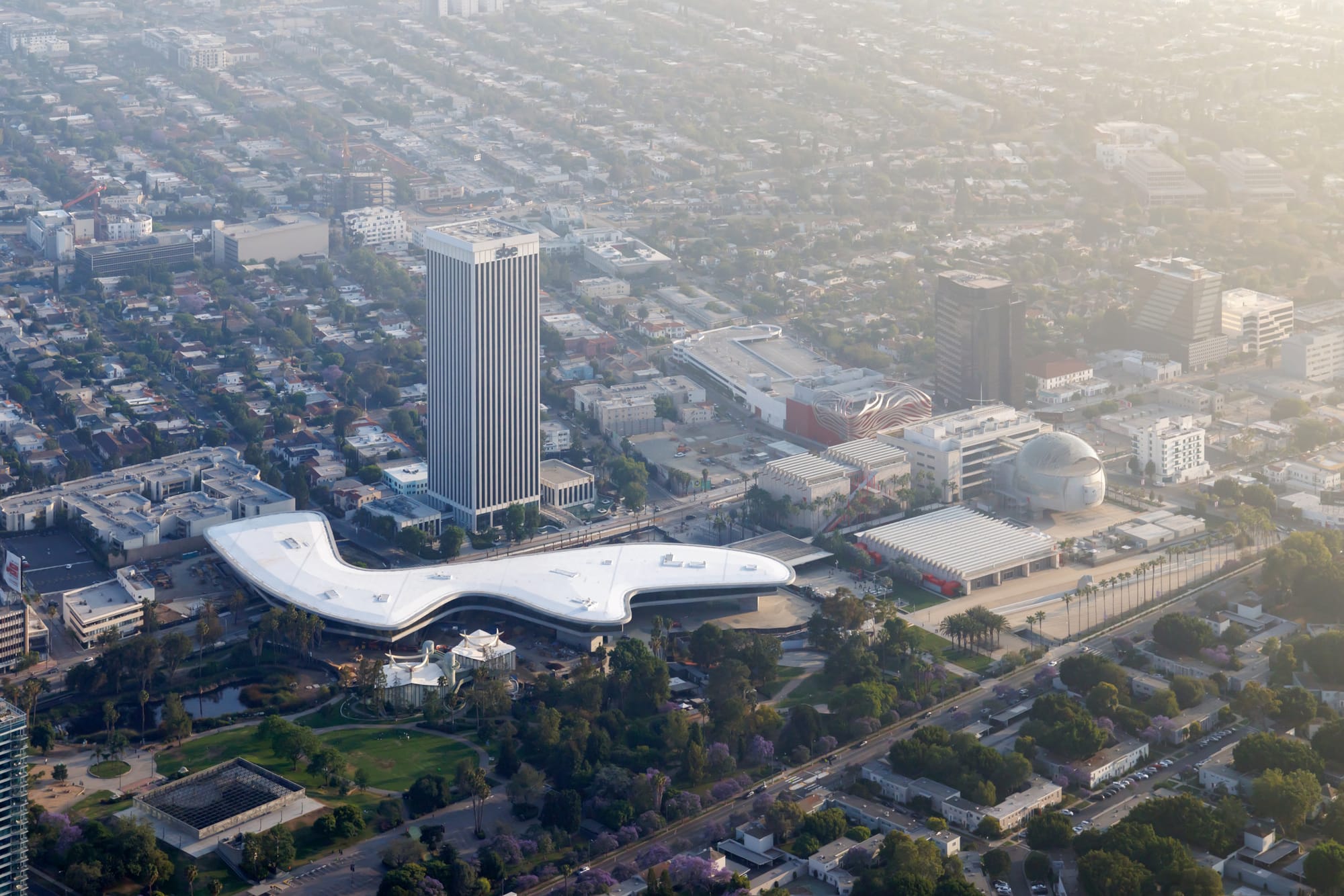
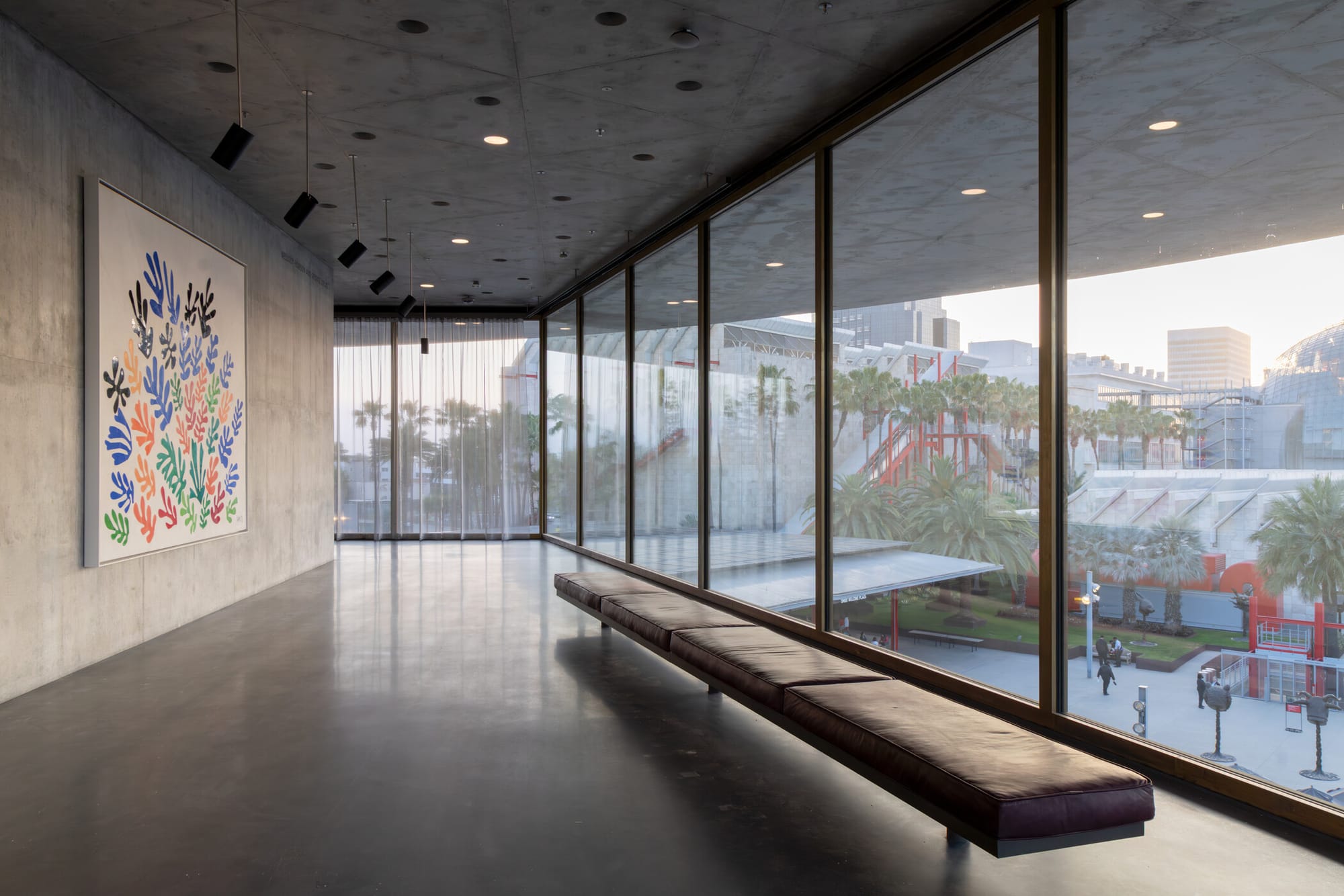
Aerial view of Los Angeles County Museum of Art (LACMA) buildings, including the David Geffen Galleries in context of Miracle Mile (left); and view southwest from exhibition level toward Resnick Pavilion and BCAM with HENRI MATISSE’s La Gerbe, 1953, on the left (copyright 2012 Succession H. Matisse/Artists Rights Society, New York) in the David Geffen Galleries at LACMA (right). Photos by and copyright Iwan Baan. Courtesy LACMA.
With its amorphic shape and largely open-plan interior, the David Geffen Galleries allow for a porosity in thematic and material discussion. The inaugural exhibition is organized around the Pacific, Indian, and Atlantic Oceans as well as the Mediterranean Sea, emphasizing the exchange and flow of goods and information. Only a handful of galleries here are fully enclosed, each filled with artifacts requiring low light. In one such room, the Ardabil Carpet (1539–1540)—widely regarded as one of the finest examples of Persian rugs in the world and whose sister carpet is in the collection of London’s Victoria and Albert Museum—is unfurled upon a platform. The walls surrounding the intricate textile are lined with pairs of 16th-century Indian and Iranian manuscripts, coupled for their shared language under the Mughal Empire and common imagery of war, hunting, cultural rituals, and mythologies.
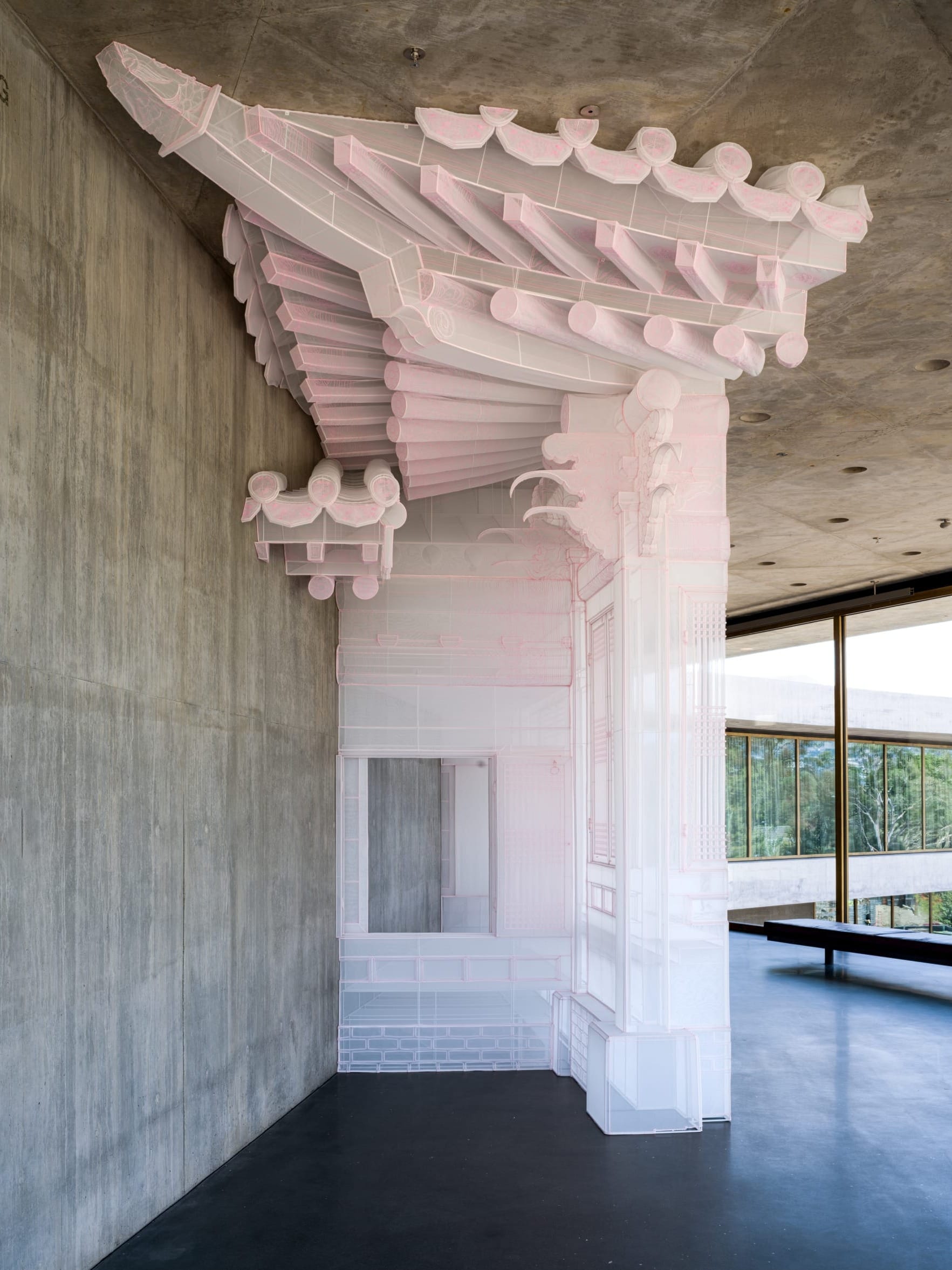
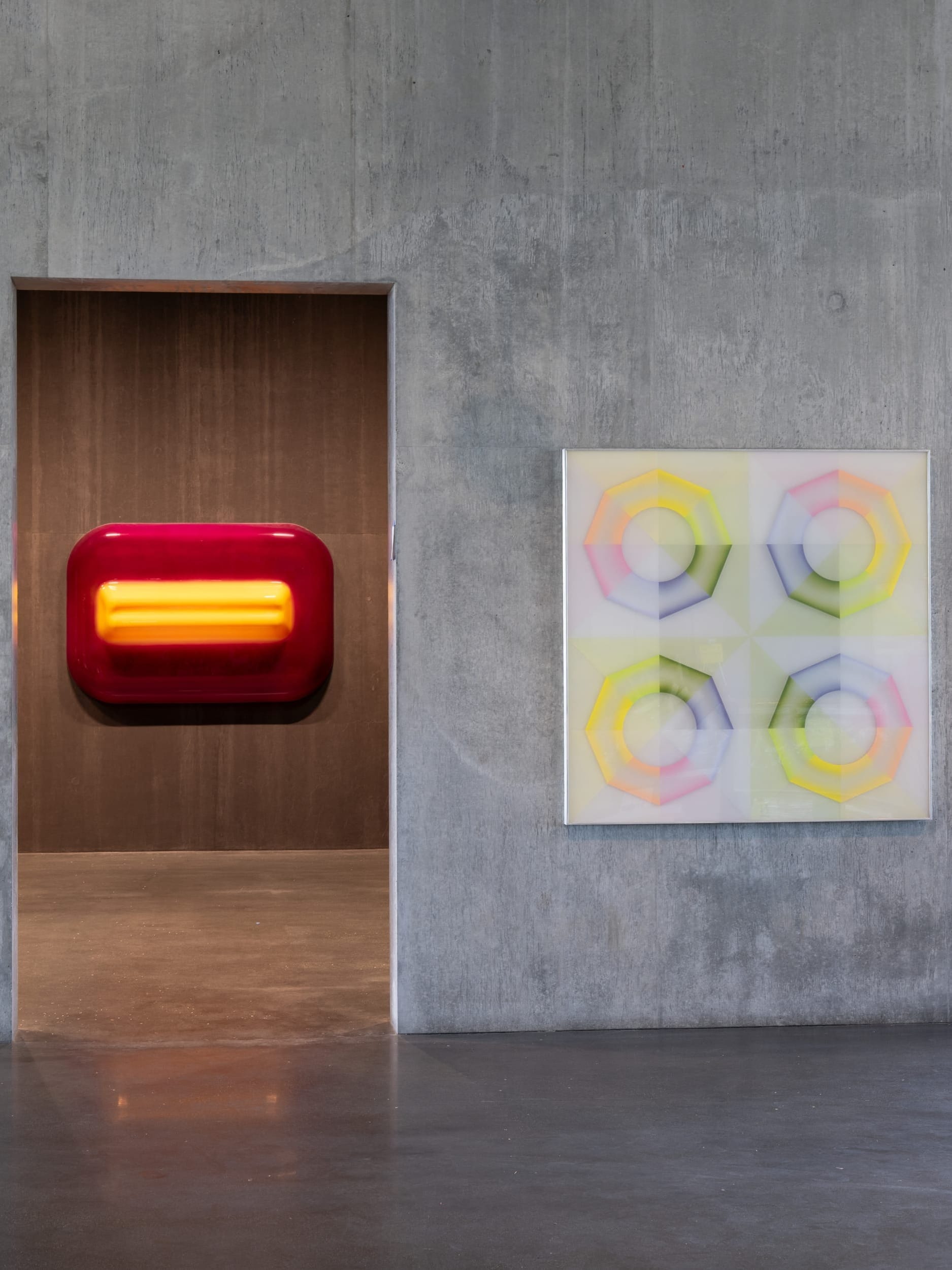
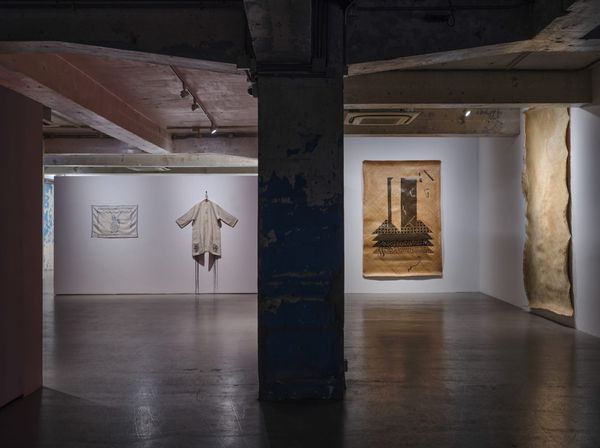
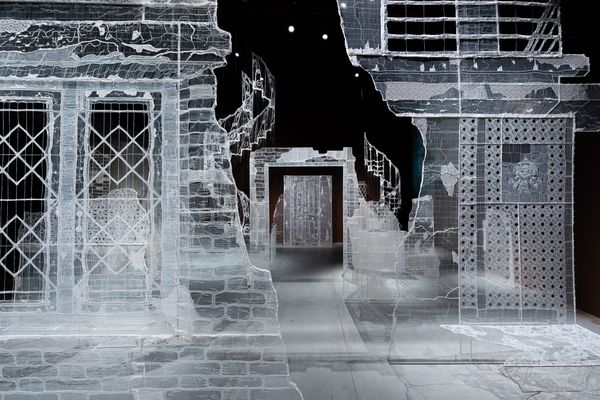
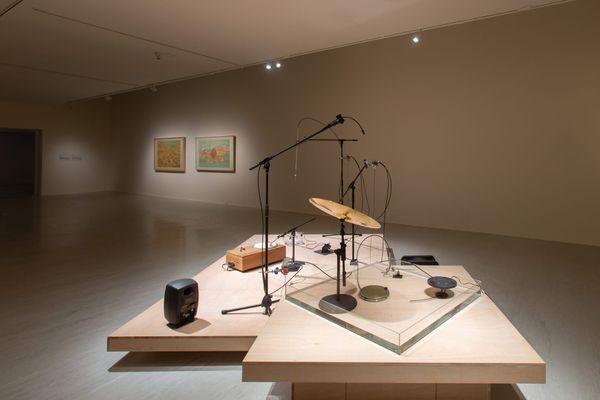
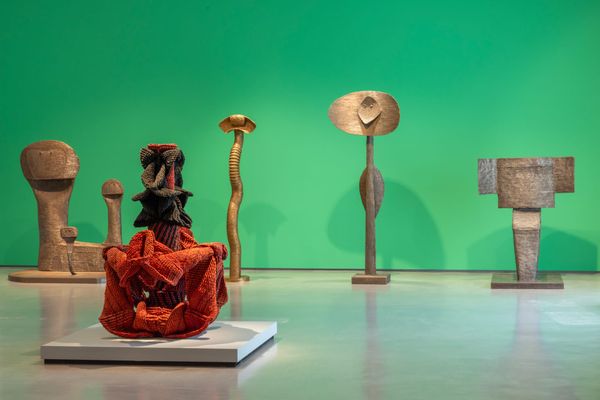
Installation views of the inaugural exhibition in the David Geffen Galleries at the Los Angeles County Museum of Art (LACMA), 2026. Copyright Museum Associates/LACMA.
Situated throughout the campus and within the building, new commissions by artists such as Mariana Castillo Deball, Shio Kusaka, Todd Gray, Pedro Reyes, and others aim to foster further connections and spark conversations with existing holdings. For instance, the 1868 Joseon dynasty Screen of Banquets for Dowager Queen Sinjeong in Gyeongbokgung Palace Eight-panel Folding Screen (1868) is placed across from Do Ho Suh’s newly commissioned Jagyeong Hall, Gyeongbok Palace (2026), an ethereal, three-dimensional fabric replica of a portion of the 1395 palace, which originally housed the screen. Further abolishing static boundaries, Suh’s piece is bisected by a gallery wall, requiring the viewer to go between a dimly lit room and the open-plan space replete with a view of LA to behold the work in its entirety. Meanwhile, a sphinx sculpture by Lauren Halsey and a bust by Tavares Strachan—both artists working in the vernacular of Afrofuturism and drawing inspiration from ancient Egypt—are appropriately nestled among actual ancient Egyptian objects.
Tino Sehgal’s boundary-breaking performative piece This entry (2023) was staged near one of the two entrances to the building. Dancers, singers, musicians, footballers, and bikers performed various tasks and feats with one another, asking the audience to consider the athleticism involved in dance, the grace required for sport, the stamina needed to play an instrument or sing, and, ultimately, the commonality of mastery and craft necessary for each.
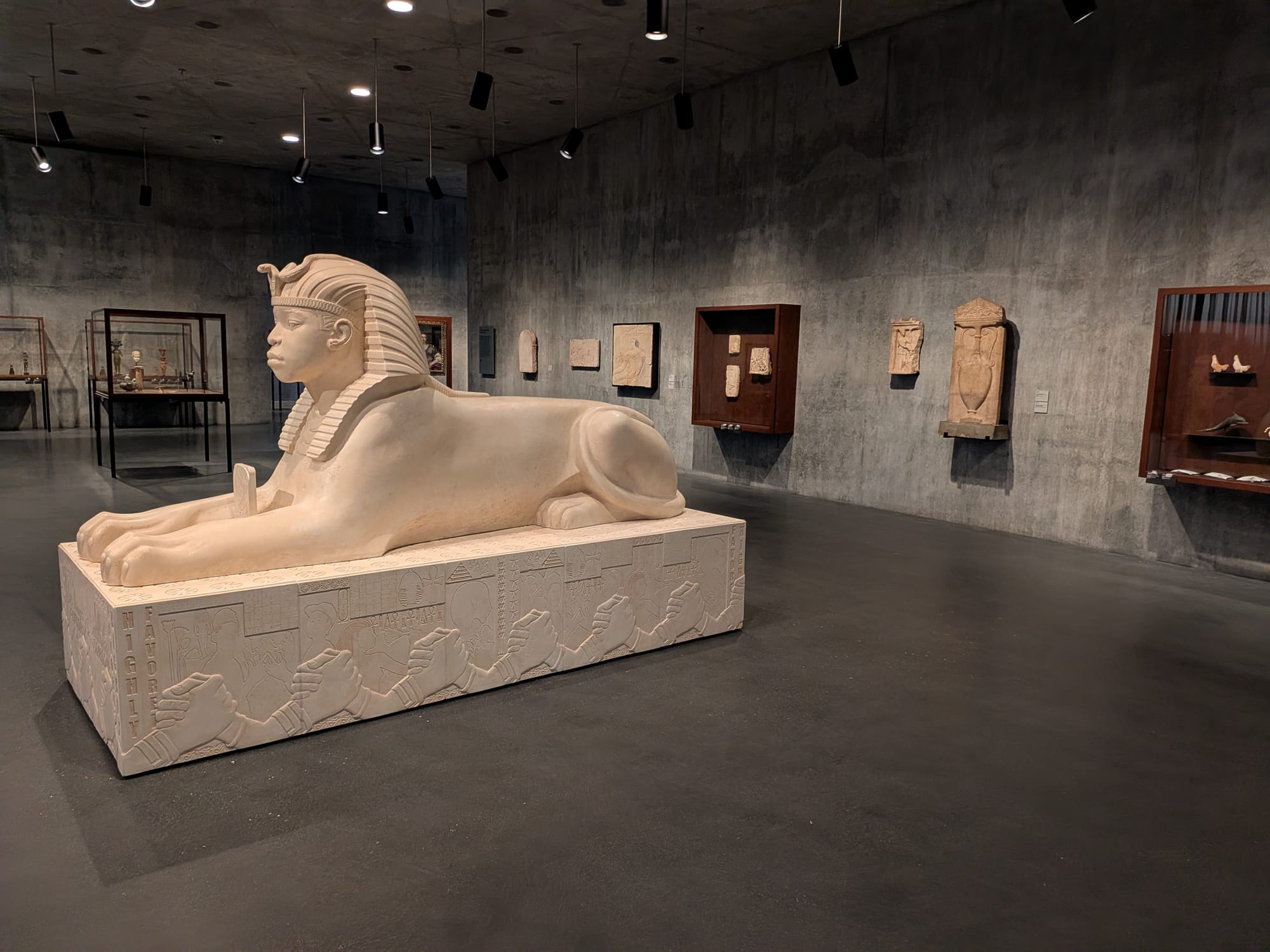
Collaboration was an underlying theme as a staff of 45 curators worked with conservation, education, and other departments to unravel histories and recontextualize different artworks. Rika Hiro, associate curator of Japanese art, was thrilled to be able to work with her colleagues in various units, mentioning to ArtAsiaPacific that this holistic purview could possibly help fill the narrative gaps in permanent holdings. Stephanie Barron, senior curator and head of the department of modern art, who has been at LACMA for over 50 years, also voiced her appreciation of alternative modes of working together, pointing out to AAP that previous exhibitions across art and design proved to be important training ground for this fresh methodology. The unorthodox architecture of the new building also inspired curators to think outside the proverbial box in terms of their conceptual approaches. Shannon Vittoria, associate curator of American art, spoke with AAP regarding her organization of one gallery of art from Europe and the Americas through the lens of ecocriticism, a late 20th-century critical theory examining the relationship between humans, nature, animals, natural resources, and the climate. The installations here veer away from white-cube displays that typically divide works by date, country, region, or material. Rather than navigating chronological timelines or clear curatorial categories, museum guests are invited to, as LACMA’s new guidebook implores in its title, “wander.”
Jennifer S. Li is a writer, art advisor, and educator based in Los Angeles. She is also ArtAsiaPacific’s Los Angeles desk editor.