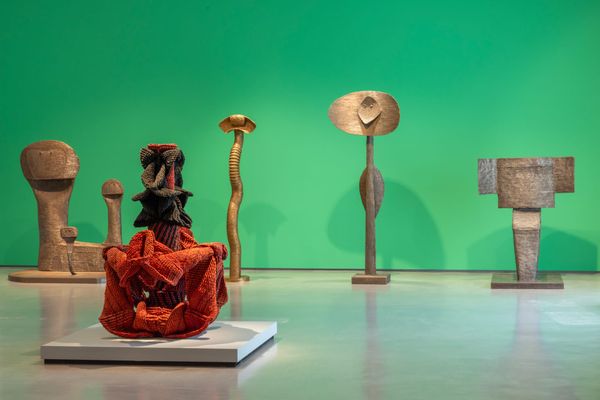
Shows
Defying Soft Power: “Proximities” at SeMA

Proximities: Contemporary Art from the United Arab Emirates
Seoul Museum of Art (SeMA)
Seoul
Dec 16, 2025–Mar 29, 2026
Such is the reach of globalized cultural diplomacy that it is nearly impossible for a contemporary museumgoer not to encounter an exhibition intended to “capture” and proselytize a nation’s artistic essence. The excellent “Bedayat: Beginnings of the Saudi Art Movement,” initiated at the Saudi National Museum in Riyadh and now traveling globally, historically distilled the foundational decades of Saudi modernism, landing key messages about creative freedom along the way. Although they may be of irreproachable scholarship and impeccable scenographic quality, such surveys share the hallmark of being digestibly flattened: predictable in form (archival documents, chronological throughlines) and stealthily didactic in delivery.
“Proximities,” cocurated by UK-based Maya El Khalil and the Seoul Museum of Art’s Eunju Kim, upends the idiom of the soft power show entirely, principally through sheer exuberance and curatorial density. As a by-product of an institutional collaboration between the Korean museum and the Abu Dhabi Music & Arts Foundation (ADMAF) in the UAE capital, the exhibition might have been a typical standard-bearer for lofty cultural diplomacy goals like “deepening cultural exchange.” Yet “Proximities” cleverly interrogates the potential overlaps between contemporary Korean and Emirati societies—both fast-tracked into prominence against a backdrop of full-throttle technological acceleration and social transformation fueled by capitalistic firepower—in a succession of highly subjective, sometimes cacophonous but consistently surprising chapters, each spearheaded by a different configuration of artist-curators.
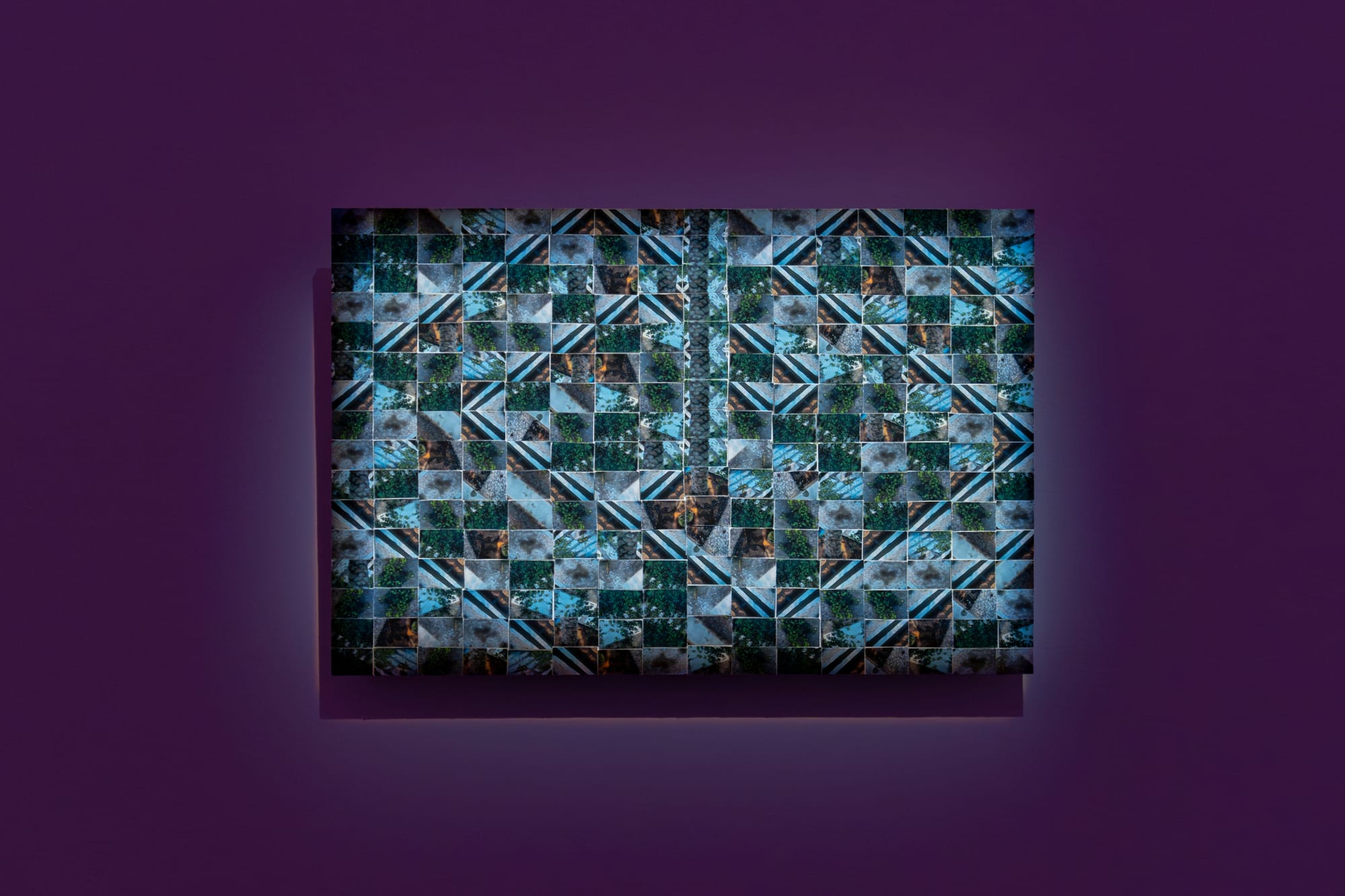
The complexity of the exhibition, uniting more than 110 works by 47 UAE-based artists of varying generations, is held in its seeming refusal to chronologize, to freeze-frame, or to instruct. Instead of offering a horizontal throughline elucidating what the nation’s artistic production might “look like,” the approach is more akin to concentric waves of distinct universes, imaginaries, and subjectivities. Collision seems to be its methodology, non-resolution its mood. One of the first works the viewer encounters, Shaikha Al Mazrou’s sculpture Balance I (2017), is emblematic of this state of suspension: a wall-bound clay sphere poised atop a diagonally placed plank is held in an obstinate balance, replete with both tension and promise.
In the hands of these artists, the very clichés that typically homogenize the UAE aesthetically (the desert, the palm tree) are thwarted. In the first section of the tripartite show, “A Place for Turning,” curated by Farah Al Qasimi, Rashed Qurwash’s video and collage Qatra Qatra (2025) uses contested palm trees to interrogate inheritance, trade, and landscape. Raja’a Khalid conflates two khaliji obsessions—cars and perfume—in the slyly critical Tesla Desert Drift (2020), an oil-slick-hued room fragrance dispenser emitting the scent of “a Tesla drifting on asphalt.” While Al Qasimi is likely to be known to international audiences, other practitioners in “Proximities” are less so; to the curators’ credit, they have engaged artists who were both pioneers in the ’90s and early 2000s (Ebtisam Abdulaziz, Cristiana de Marchi) and consistent contributors to the experimental rigor that emerged later (Khalid, but also Layan Attari, Alaa Edris, and Sara Al Haddad).
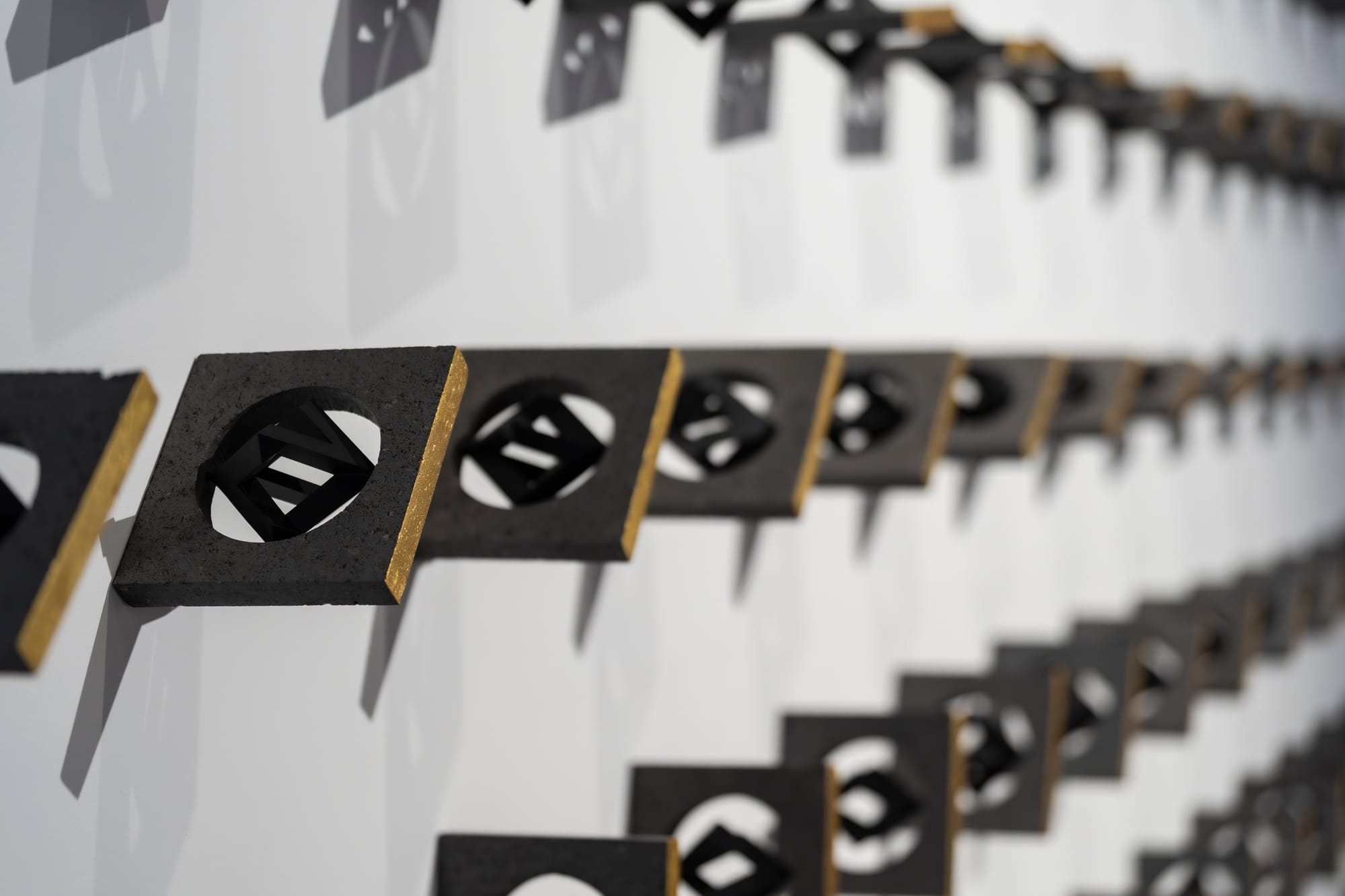
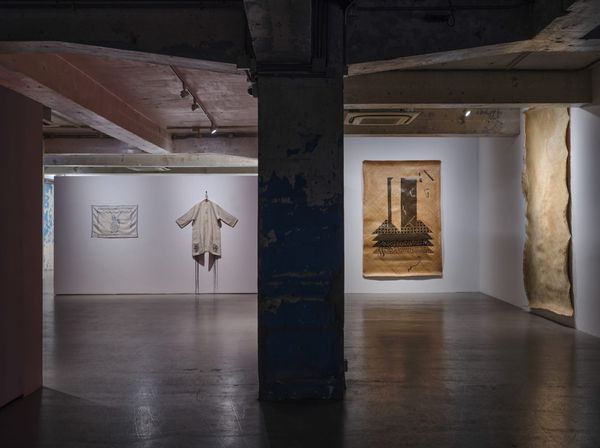
De Marchi notably paired with trailblazer artist Mohammed Kazem to curate the second chapter, “Recording Distance, Not Topography.” Works here problematize what would normally be considered lines of control, sometimes linguistic (Hassan Sharif’s Dictionary (2015)) but mainly spatial. Systems are dismantled; mapping discards the rational for the visceral. Hazem Harb’s Fragmentation #1 (2024) is a collaged map of pre-Nakba Palestine that refuses stillness, while Tarek Elkassouf’s Where Are You From? (2023) utilizes a wall of would-be navigational tools to create an “emotional topography.” If the first leg of the exhibition revels in a kind of porous clamor—all types of media exuberantly bleeding into each other—the second plays with shifting scales: the zoom-in to Abdullah Al Saadi’s intimate cartographic series Camar Cande’s Journey (2010–11) sits adjacent to de Marchi’s towering woven partition, Monument to the Falling Wall (2021–22). Most works continue in the key of non-resolution: movement is latent in Vikram Divecha’s Road Markings (2017); completion is forever forestalled in de Marchi’s two-channel video The Atlas of the Impossible (2025).
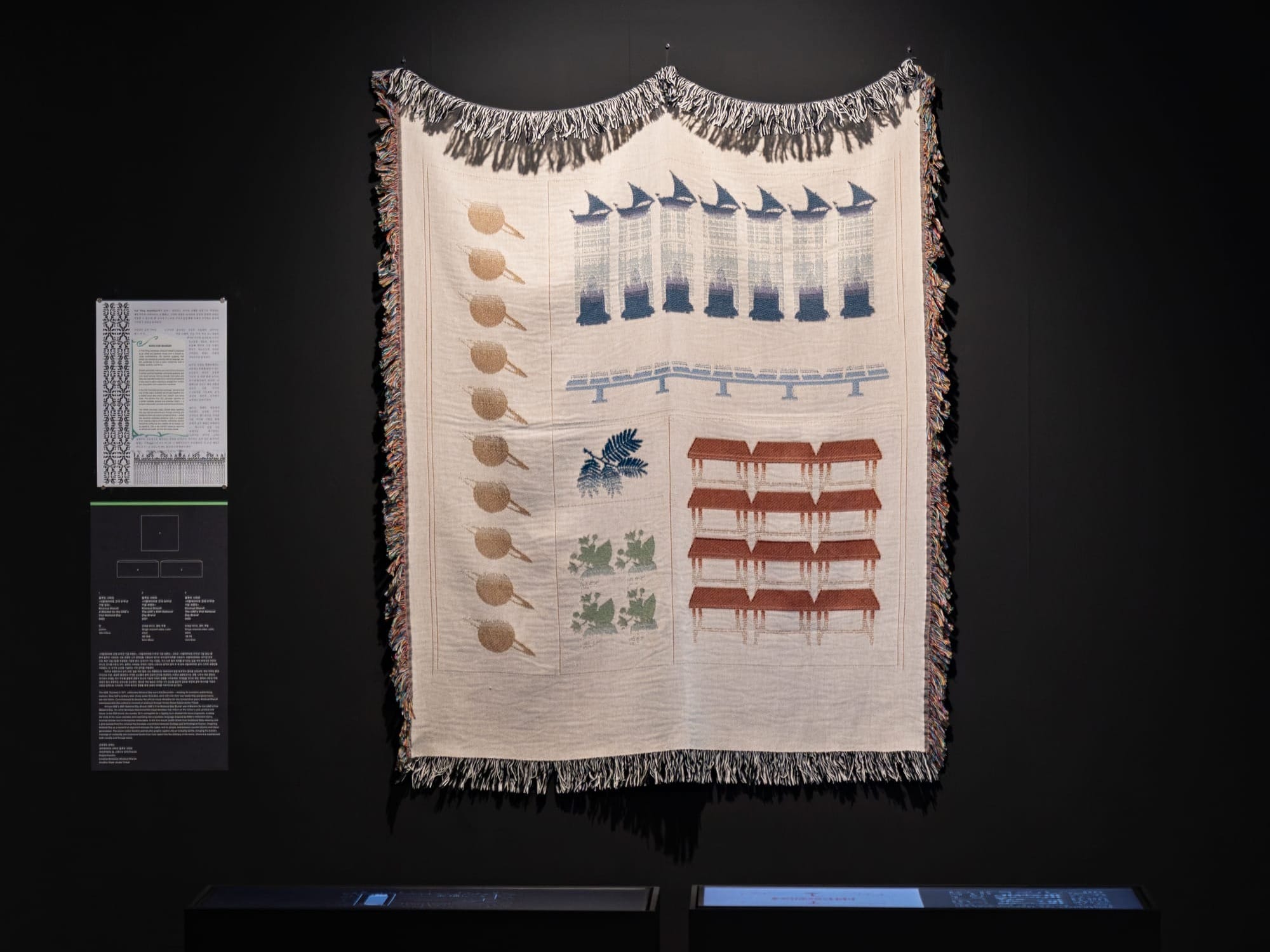
“That Thing, Amphibian,” the third chapter, anchored in the notion of hybridity—curated by the trio Ramin and Rokni Haerizadeh and Hesam Rahmanian, famous for creating (and inhabiting) immersive, nested systems—is at once profound and confounding. “When does something become art?” the wall text asks. Consider the branding campaign and related objects for the UAE’s 50th and 51st National Days in 2021 and 2022 respectively, developed by artist-designer Kholoud Sharafi who, “amphibianly” as the curators would say, works for the civic institution responsible for the national celebration’s visual identity. Sharafi, like other artists in this chapter (notably Shaikha Al Ketbi, creative director at the influential Salama bint Hamdan Al Nahyan Foundation in Abu Dhabi), is situated within the mechanisms of statecraft—engineering narratives to manifest “the nation”—yet remains distinctly outside of them, afloat on her independent practice. This brand-as-artwork is perhaps the exhibition’s most powerful critical gesture, raising the curtain on the artists who concoct the trappings of the very soft power that a show like “Proximities” might normally deploy, but here so deftly defies.
Kevin Jones is an art writer, educator, and strategist. New York-born and Paris-bred, he has lived in the Middle East since 2006, serving as ArtAsiaPacific’s UAE desk editor while contributing to other international and regional publications.