Shows
Art Time, Life Time: Tehching Hsieh at Dia Beacon
Tehching Hsieh
Lifeworks 1978–1999
Dia Beacon
New York
Oct 4, 2025–Oct 11, 2027
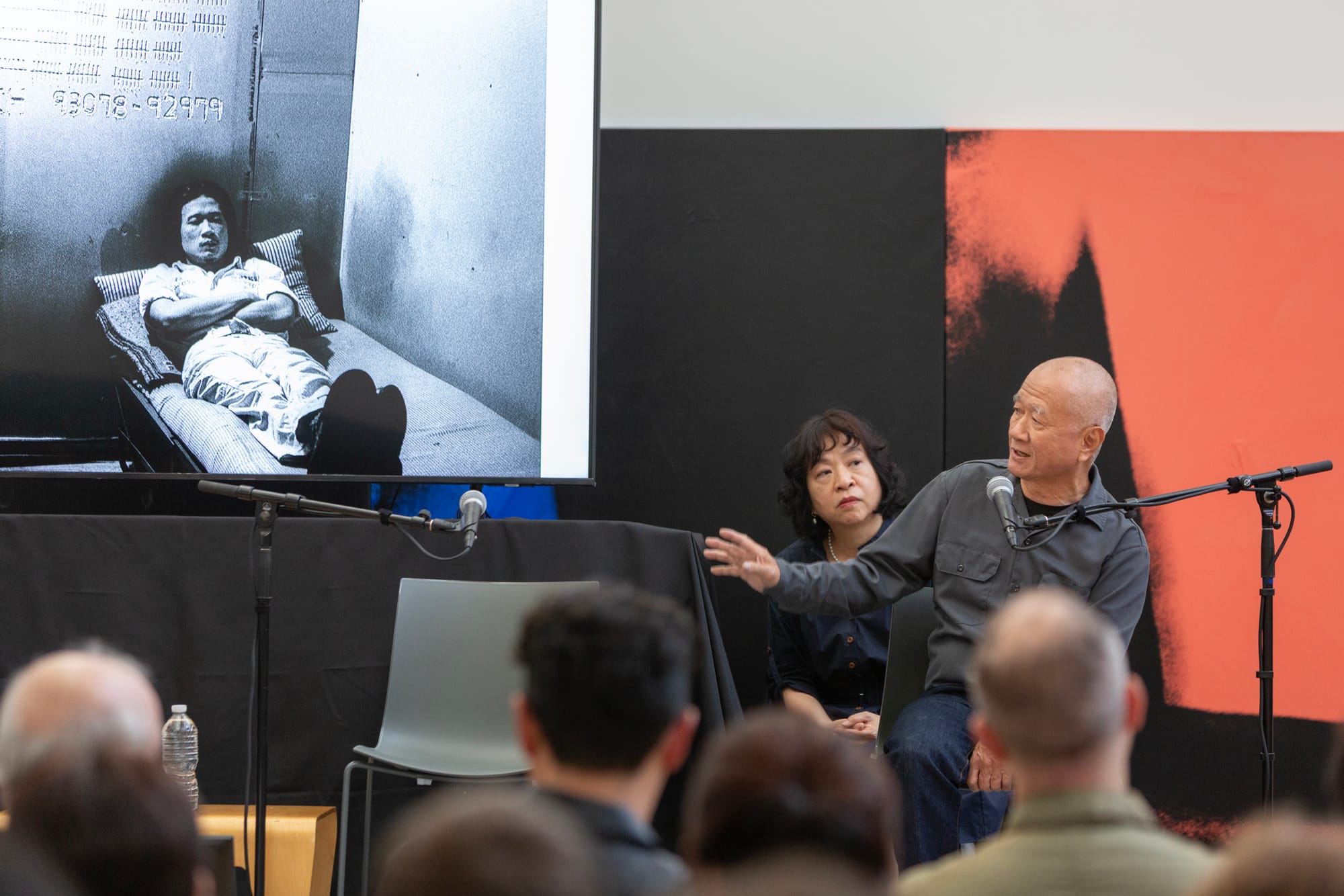
Applause erupted when Taiwanese American artist Tehching Hsieh was introduced during a panel on the opening weekend of his retrospective at Dia Beacon. The 75-year-old stood to acknowledge the welcome, turning toward a crowd of young faces that had filled up the panoramic Andy Warhol Shadows (1978–79) gallery. The prolonged applause—ecstatic, punctuated by hooting and hollering—was met with a bow. It was a moving scene, testifying to Hsieh’s renowned legacy and elusive image—one that has cultivated a devoted following while continuing to intrigue new generations—and to a collective response that signaled overdue institutional recognition.
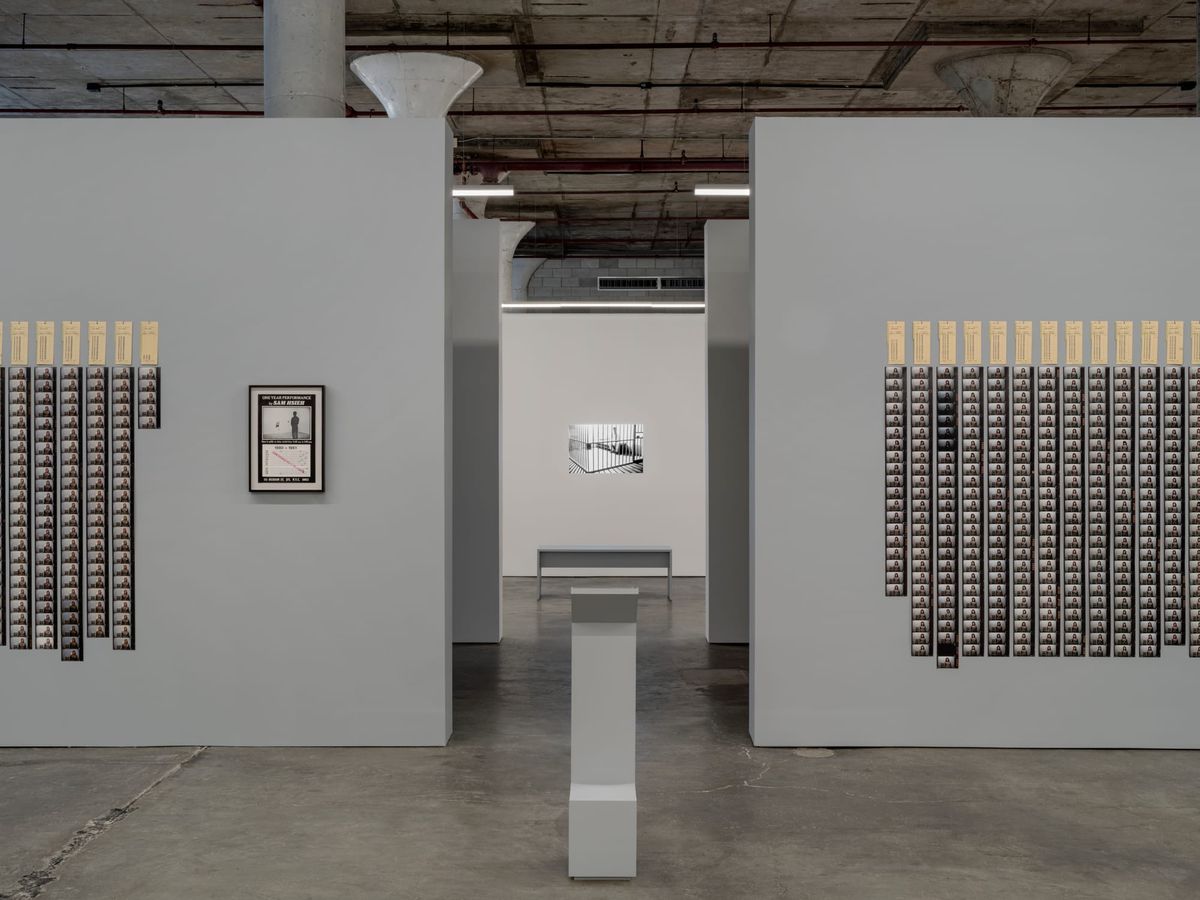
“Tehching Hsieh: Lifeworks 1978–1999” presents the artist’s five seminal One Year Performances in archival entirety, collating statements, posters, self-portraits, videos, photographs, clothing, maps, and other artifacts. The installation is both monumental and methodical, foregrounding the rigor that defines each year-long work and, cumulatively, two decades of Hsieh’s life. Hsieh conceptualized the exhibition as a sequence of five identically sized galleries arranged in a linear sequence, framing time as a narrative. Conceived and developed over a decade, the layout positions each endurance piece in relation to the others while contextualizing them within the span of Hsieh’s life, beginning four years after his undocumented arrival in New York.
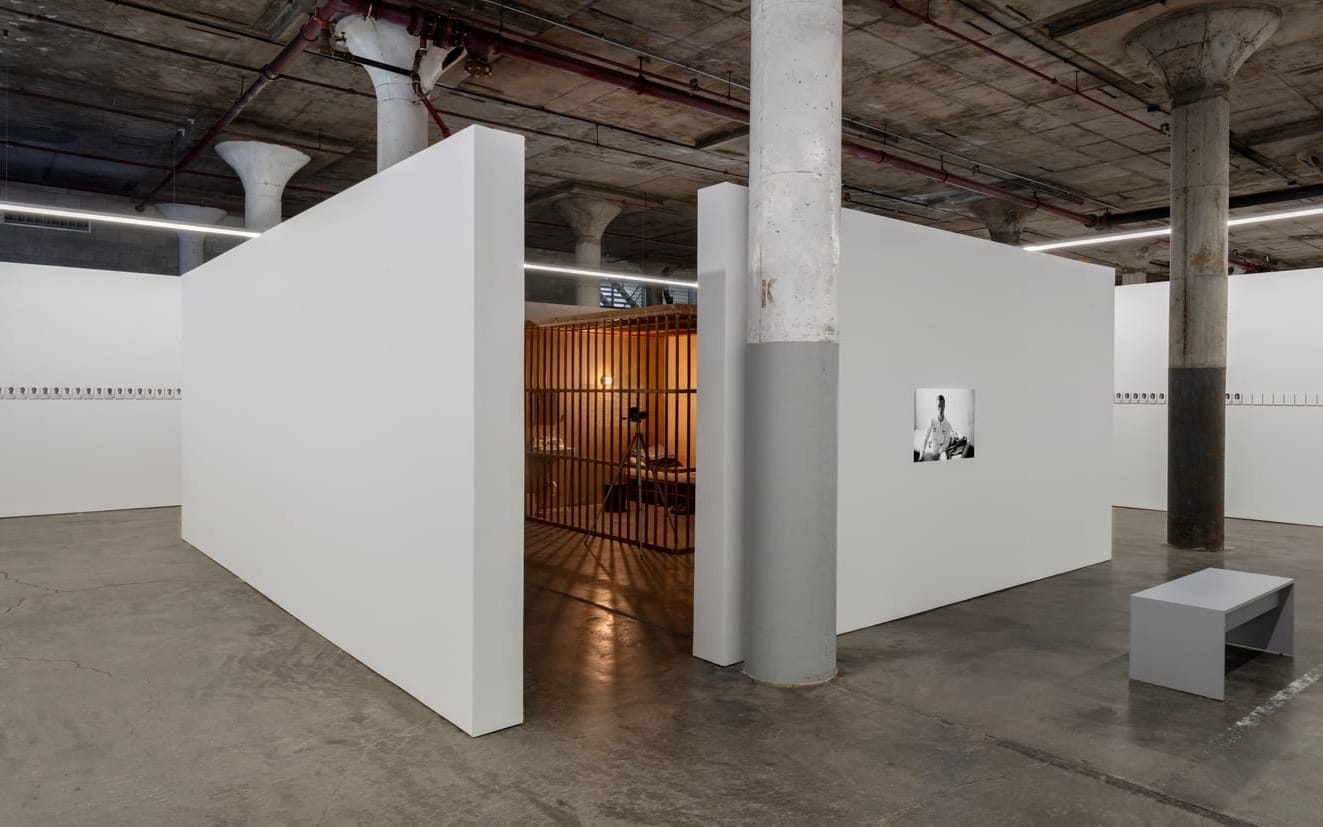
The first gallery presents One Year Performance 1978–1979 (also known as Cage Piece) (1978–79), introduced by an eye-level display of a row of 365 black-and-white, palm-sized self-portraits. Taken daily, these passport-style images document Hsieh’s confinement within a self-built makeshift cage for an entire year. The sweeping presentation offers a stark visualization of time, registering subtle bodily changes—thickening mustache, lengthening hair—as quiet evidence of duration. At the center of the gallery, the wooden cage and Hsieh’s bare living setup are restaged in full, including the wall where he marked the passing of each day. The reconstruction is striking in its completeness, revealing how meticulously Hsieh preserved the remnants of the work—an act of recordkeeping as deliberate as the piece itself.
In the subsequent gallery, One Year Performance 1980–1981 (Time Clock Piece) (1980–81) intensifies this logic of timekeeping. For one year, Hsieh punched a clock every hour, on the hour. A functioning Amano clock, displayed at waist height, emits a mechanical chime each minute. The walls are lined with 366 timecards, each dated, signed by Hsieh, and countersigned by a witness, while beneath them runs a sequence of 8,760 images—one for every hour—forming a dense field of visual evidence. The work’s punitive monotony is further underscored by a “missed punches” log detailing lapses and their causes. In the same vitrine, timecard chads are carefully organized in a pile, extending Hsieh’s meticulous approach to documentation.
One Year Performance 1981–1982 (Outdoor Piece) (1981–82), for which Hsieh lived on the streets of New York, is organized by season. A wall showcases 366 “daily maps” tracing his movements during that year, with notes on pit stops, the weather, and food expenses. Compared to prior works, this performance unfolds with greater mobility and social contact, coinciding with Hsieh’s growing visibility in the city’s art scene. Yet its discipline is equally exacting: many maps bear minute corrections in white-out, indexing a near-scientific insistence on accuracy. Relics—his weathered backpack, clothing, sleeping bag, and artist statement—are displayed as evidence of endurance and survival.
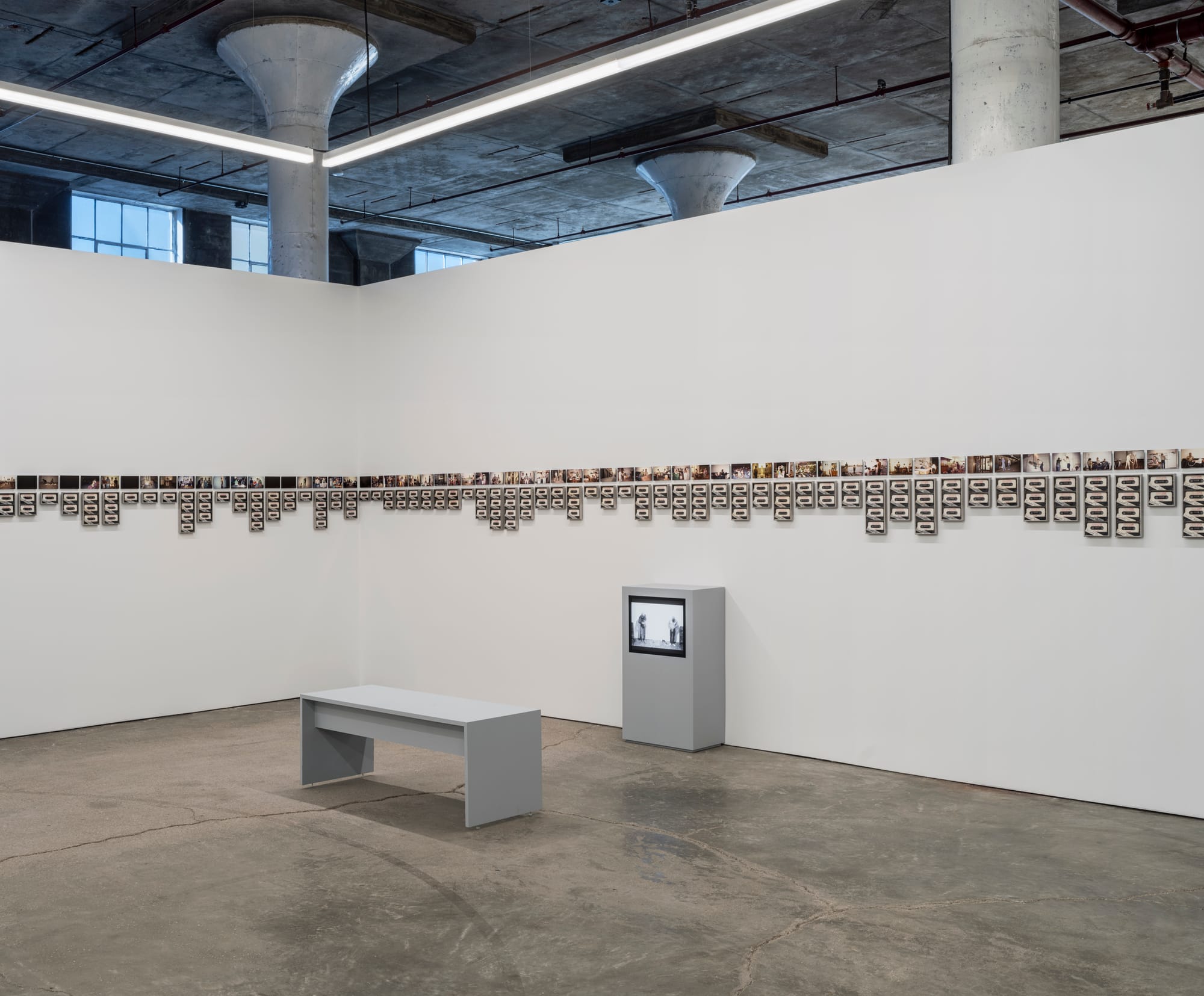
Art/Life One Year Performance 1983–1984 (Rope Piece) (1983–84), created with Linda Montano, connected the two artists with an eight-foot rope for a year, binding them together while forbidding physical contact. In the fourth gallery, 367 “life images” offer glimpses of their daily existence, accompanied by framed audio cassettes of their recorded conversations. By limiting access—one image per day, tapes sealed— the installation withholds as much as it reveals, perhaps reflecting the work’s fraught intimacy. As in Time Clock Piece, a log of infractions records each “accidental-touch,” underscoring the strictness of their self-imposed rules. A slideshow titled Rope Piece Closing documents the conclusion of the performance, showing the moment the rope was finally cut, returning the pair to their separate lives and practices.
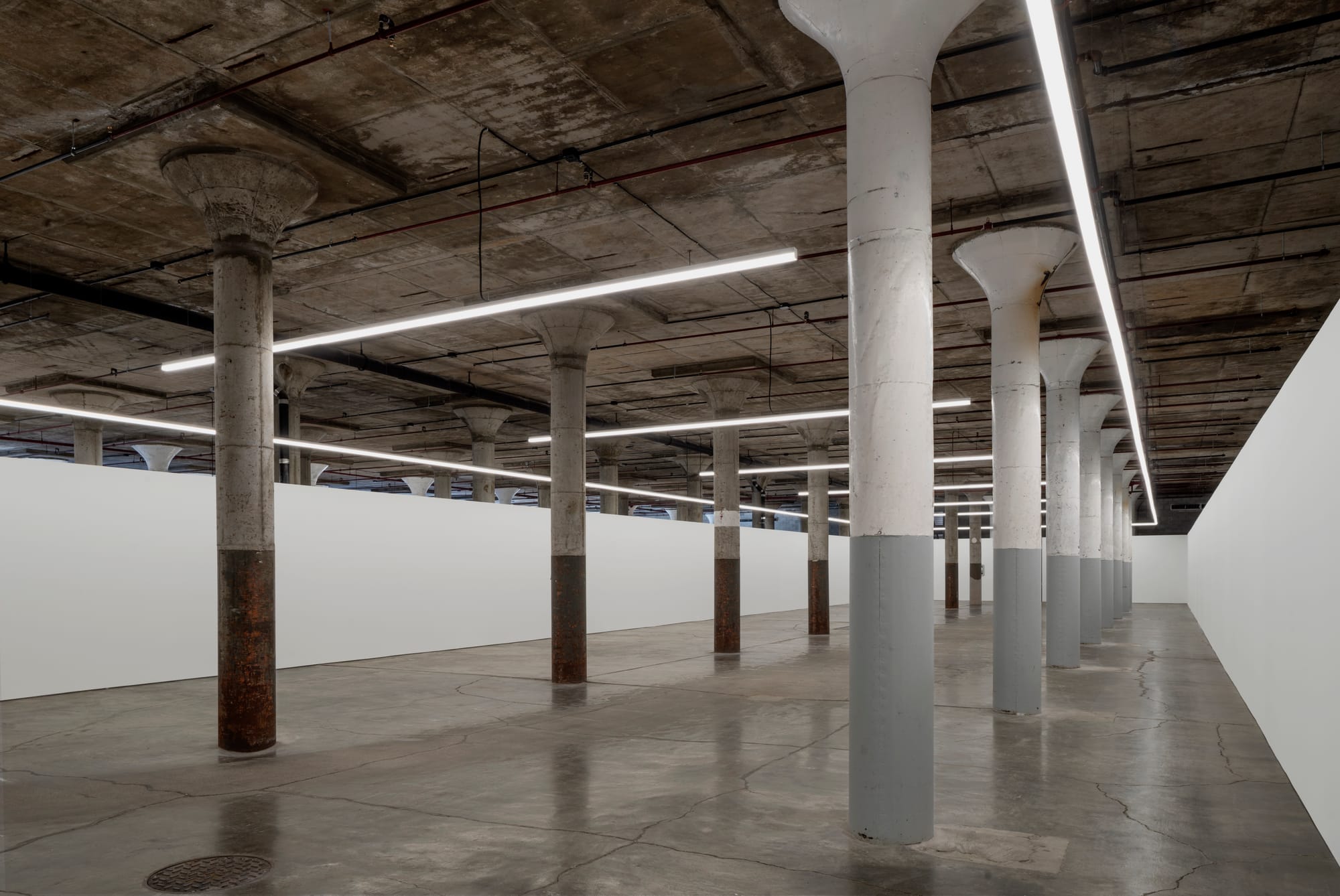
The fifth gallery, devoted to One Year Performance 1985–1986 (No Art Piece) (1985–86), is the sparsest, presenting only a statement and poster from the year that Hsieh refrained from making art entirely. The adjoining and final gallery extends this withholding: Tehching Hsieh 1986–1999 (Thirteen Year Plan) (1986–99), during which Hsieh made art but kept it from public view, occupies the longest space, stretching back toward the exhibition’s entrance to register its multiyear timeframe. A poster dated January 1, 2000, reveals his activities during the final decade of the millennium, stating that he “kept [himself] alive.” This assertion collapses distinctions across Hsieh’s oeuvre, aligning what he termed “art time” and “life time”—existential concepts inscribed together on the exhibition’s architectural model displayed outside the galleries.
In an age saturated by social media, where quotidian content circulates incessantly, it is tempting to imagine that Hsieh’s work would register differently if it were produced today. Yet the temporal distance from its making instead sharpens its force: analog timekeeping, material accumulation, and the sheer density of the archive make duration physically legible rather than merely visible, insisting on the artist’s arduous labor and exhaustion. What continues to hold true, and what Hsieh understood from 1987, is the idea of one’s lifetime as the ultimate performance—of a continuous process of endurance and relation.
Annette An-Jen Liu is a writer based in New York.