Shows
Recasting Turandot: Daughters of a Disputed Land
TURANDOT: To the Daughters of the East
ACP–Palazzo Franchetti
Venice
May 9–Oct 31, 2026
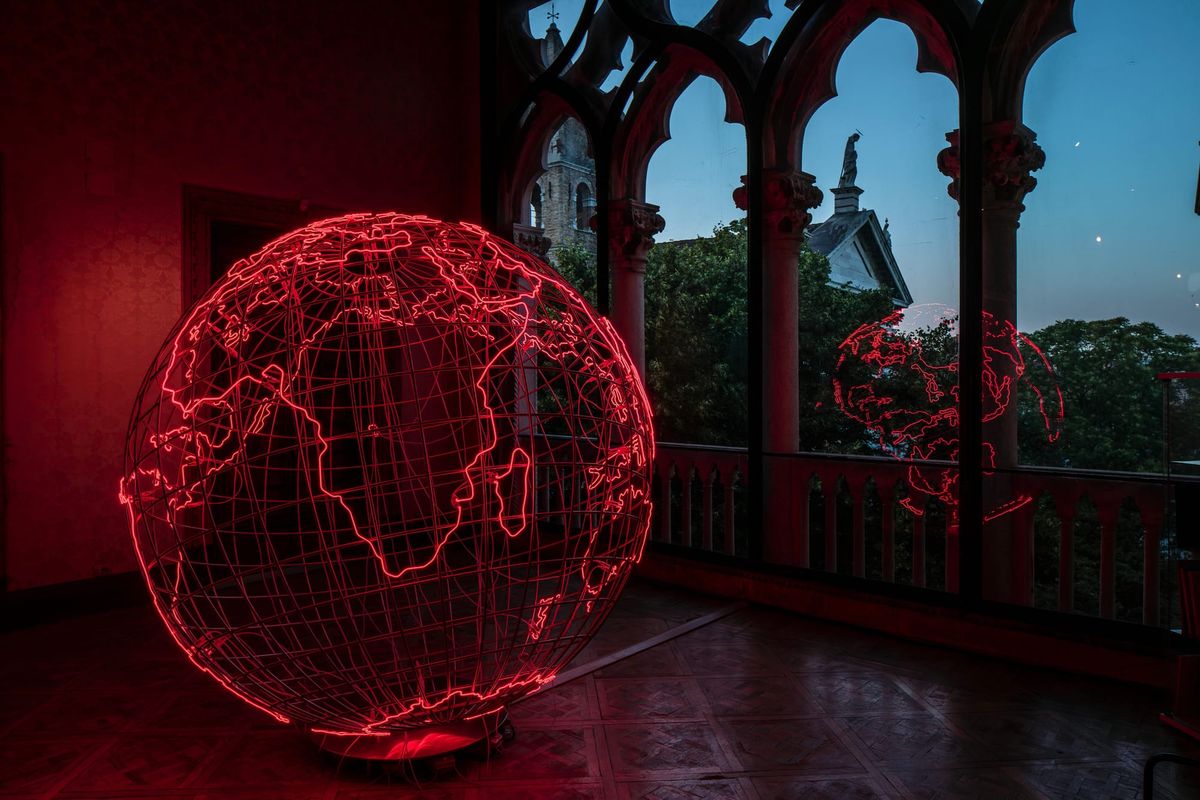
A vast metalwork globe with lines of longitude and latitude, which appears to cage in blazing red neon landmasses, lures visitors into Parasol unit’s exhibition, “TURANDOT: To the Daughters of the East.” One of Mona Hatoum’s iconic Hot Spot works, the orb is tilted on its axis, allowing, from one angle, Central Asia—formerly Turan, the show’s focus—to fall into view.
It is this region, which at times encompassed parts of Afghanistan, Pakistan, and Turkey, that became associated with the fictional heroine Turandot, translated as “daughter of Turan.” The character’s origins, however, lie in the Persian poem Haft Paykar (Seven Beauties), where she appears as a Slavic princess, Nasrin Nush. The reimagining took place in 18th-century Europe, when burgeoning Orientalism recast her as a cruel and calculating Chinese princess, later immortalized in Puccini’s opera Turandot (1926). This literary trajectory is curator Ziba Ardalan’s entry point into unspooling the history and transformation of the “land of Turan” into the independent countries—Kazakhstan, Kyrgyzstan, Tajikistan, Turkmenistan, and Uzbekistan—recognized today. The exhibition equally foregrounds Turandot’s steely resolve and formidable nature, suggesting that these attributes connect the 11 participating female artists.
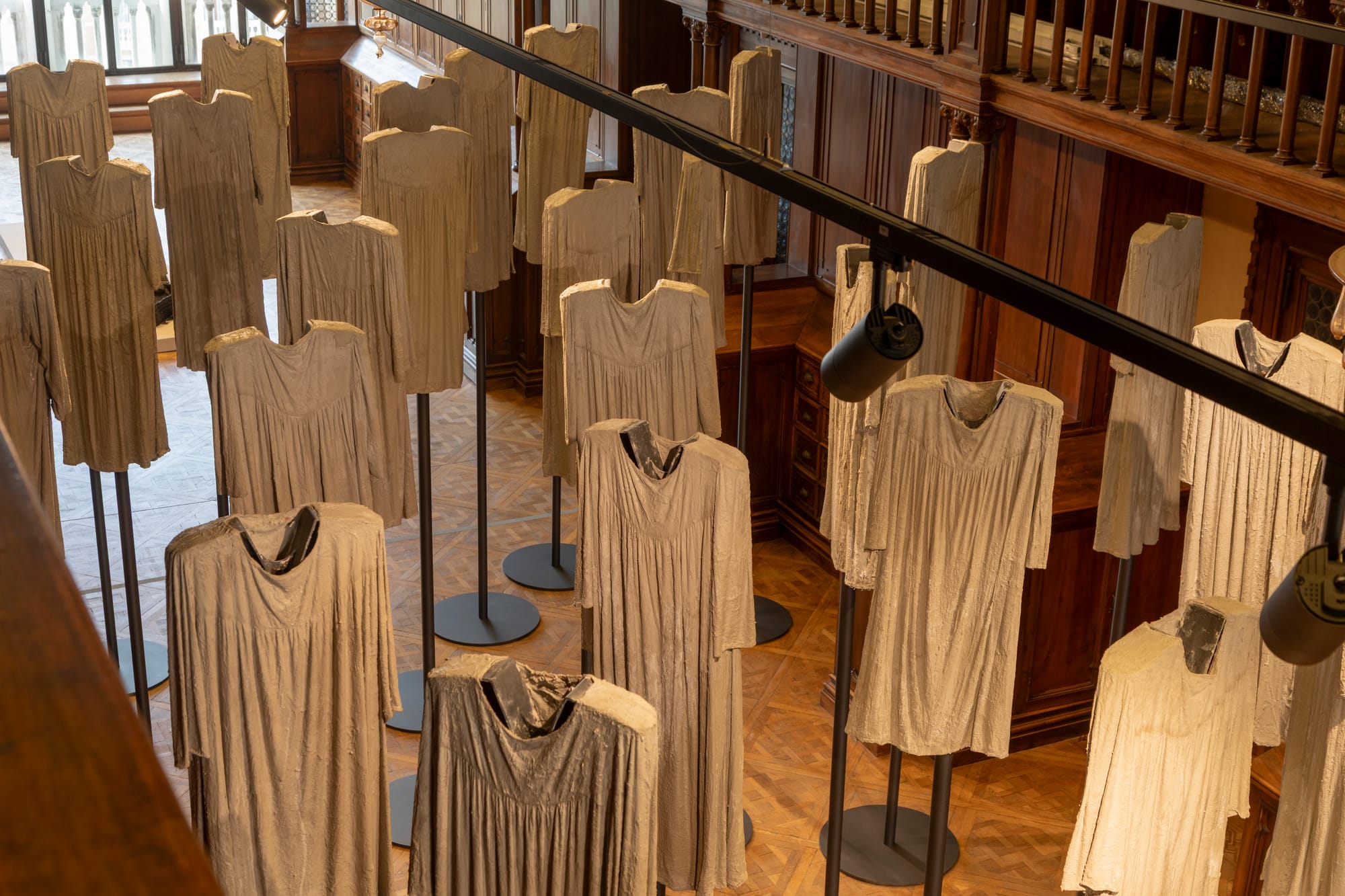
The show delves into aspects of the cultural and political histories of this nomadic region, paying close attention to the implications of its geographic position. Sandwiched between East and West, the area formed part of the Kushan, Mongol, and Timurid empires before coming under Russian influence and later the Soviet Union. Many of the works address the personal ramifications of these shifting affiliations. The formation and persistence of cultural traditions are explored in Nazira Karimi’s Return Policy (2019), a spectral installation of 40 dresses drenched in cement and arranged like a crop of tall trees. Such gowns are part of dowry practices in Tajikistan: for the first 40 days of marriage, a period known as chilla (from the Persian word for chehel, meaning 40, and linked to Sufi traditions), a new wife must wear a different dress each day. Karimi likens this to a probationary period, observing an increasing incidence of returned brides, a phenomenon that spotlights the normalization of the trading of the female body.
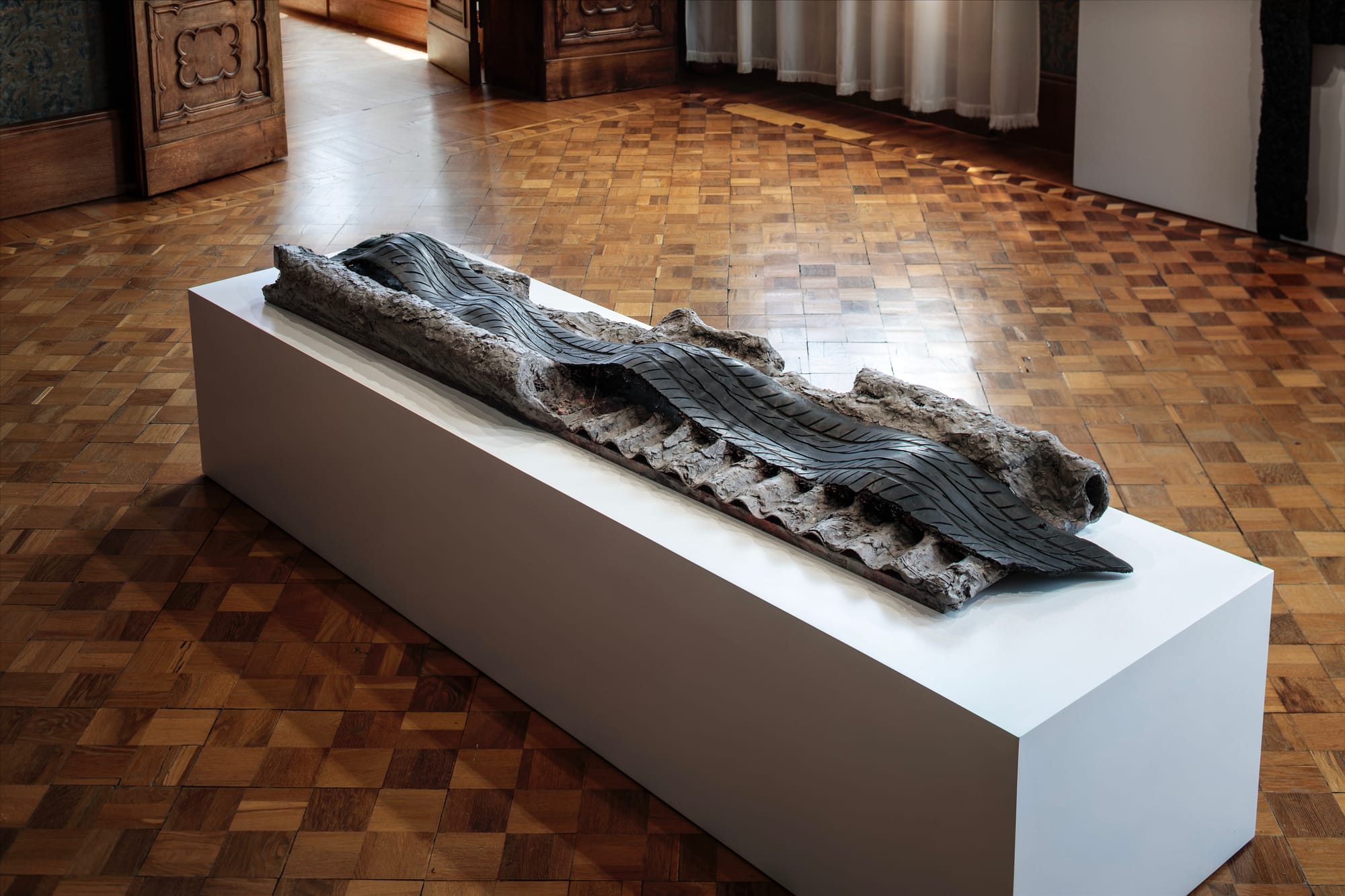
Afruz Amighi’s Opium House Tears (2024) is similarly linked to a childhood revelation. A glistening column composed of chains of tiny beads threaded with hollow plastic Bic biro casings descends from the ceiling into a shallow pool of water on the floor, surrounded by scattered clusters of crystals. These represent tears and solemnly invoke the opium trade, which ran across and depended on Turan, proving as enriching as it was devastating. The pen carcasses recall those strewn across the artist’s family home, tarnished and coated in brown residue from their use as improvised pipes. Huma Bhabha’s serpentine sculpture Road to Balkh (2015), comprising a spent tyre encased in Styrofoam, clay, and cork, and resembling a worn track, seems to reinforce the toxicity of such territorial connections.
The passage of people is emphasized in works that consider Russia’s implemention of “unifying” policies. The formation of the Soviet Union—a grand experiment in transcontinental citizenship—ostensibly cohered the Turan area and, as Daria Kim explores in 1937 (2025), led to, among other things, the influx of new communities. Kim animates historic paintings by Khristofor Kan (1934–2019) and Anatoly Ligay (1941–2001) to articulate and expose the plight of Uzbekistan’s Koryo-saram communities, who were forcefully relocated from the USSR by Stalin on suspicion of Japanese espionage.
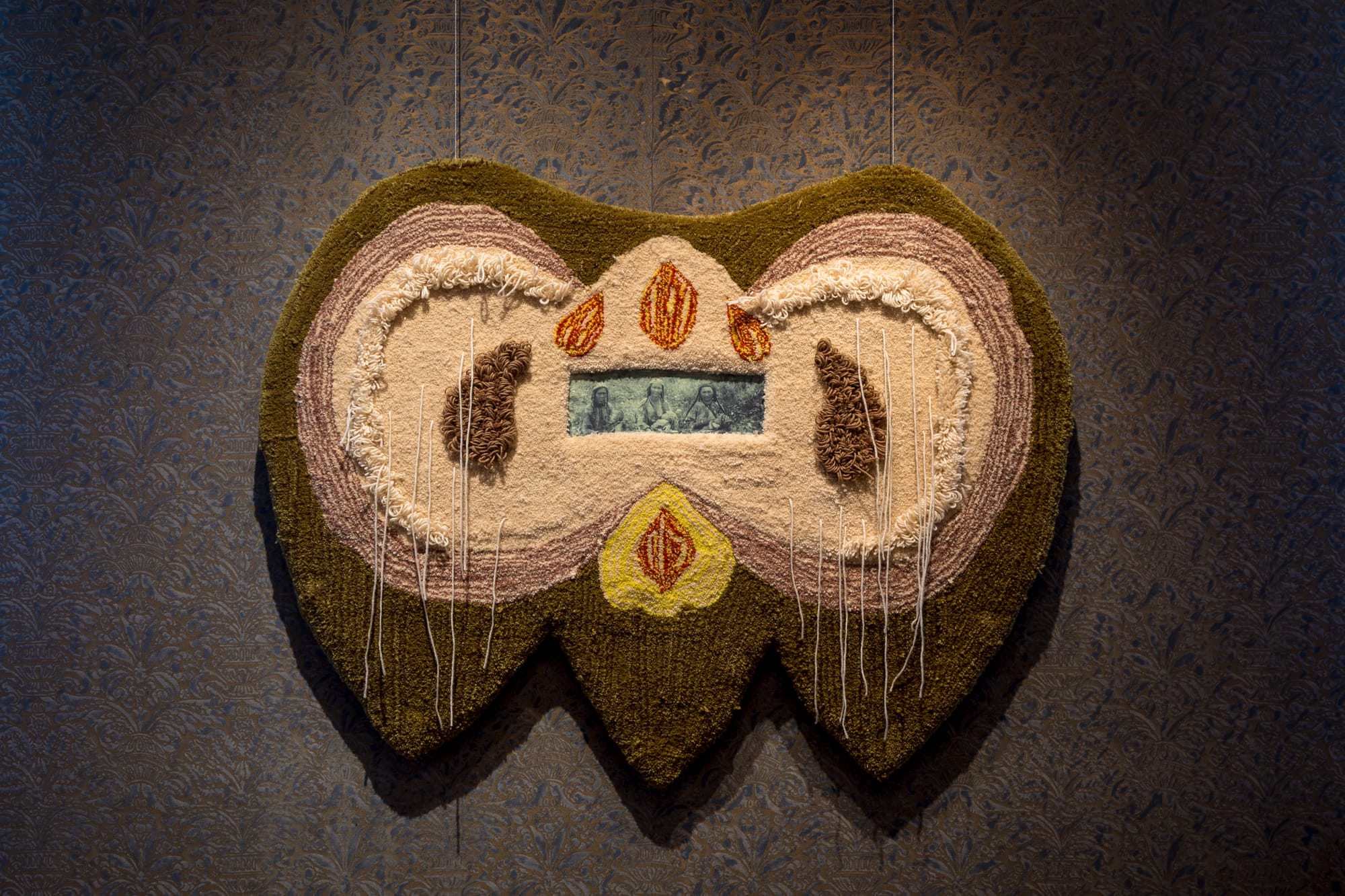
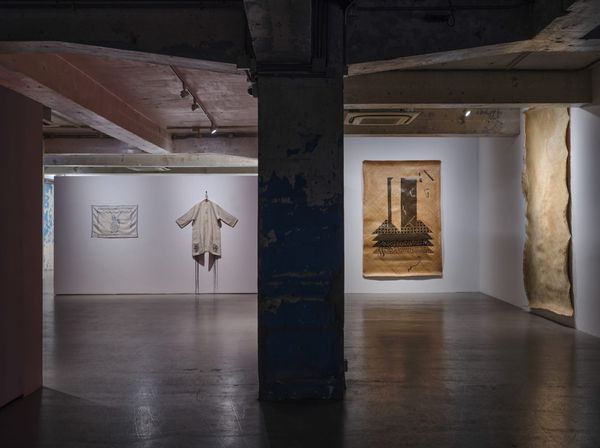
The legacy of the Communist regime is, in part, addressed by Madina Joldybek. In Milk Road (2025–26), tufted, wall-based shrines derived from the anatomy of the tulip—a flower native to Kazakhstan—are embedded with historic photographs of Kazakh women breastfeeding. These poignant images honor those whose bodies bore the pain and violence of political realignments, including women forced by Soviet authorities to unveil and abandon the traditional paranja garment in 1927, during the campaign known as the “Hujum” (assault).
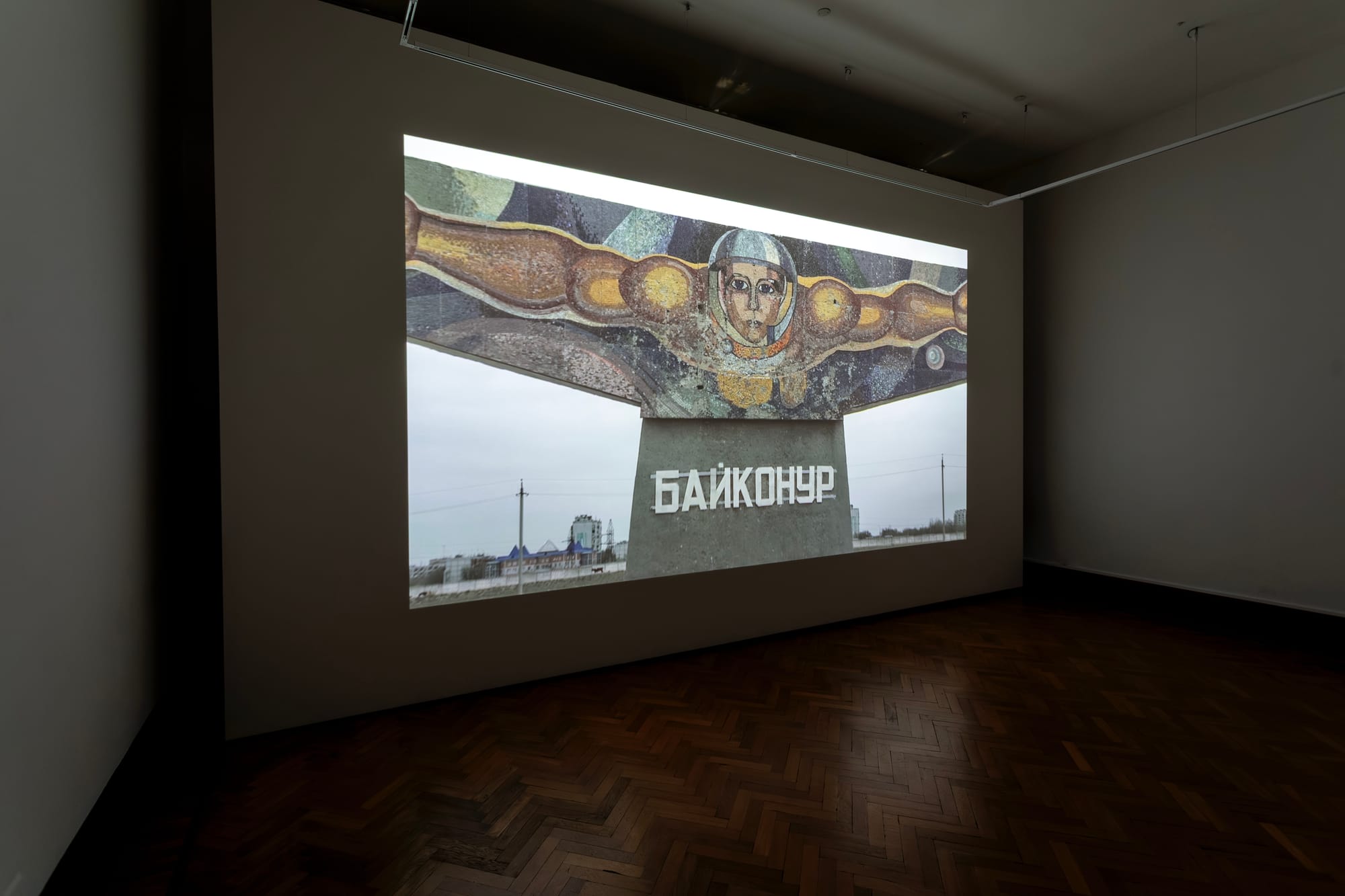
The dissolution of this regime in 1991, and the subsequent struggle to rebuild and establish new forms of governance, is reflected in Saodat Ismailova’s film 18,000 worlds (2023), which combines archival excerpts commissioned by Moscow with her own footage, including a Kazakh space station and Uzbekistan’s ancient city Bukhara, to create a disjointed montage. The work explores the question of what anchors a place and its people, and what, ultimately, is remembered.
The exhibition is edifying and, while regionally specific and rooted in Central Asian history, has broader points to make. It speaks to the persistently slippery terms of nationhood, reflects on waves of cultural assimilation and rejection, and centers the ways in which women often bear the brunt when political ideologies transmorph.
Cleo Roberts-Komireddi is a London-based art historian, broadcaster, and commentator.