Shows
The Coconut Knows: Martha Atienza at Silverlens
Martha Atienza
The Coconut Tree Methodology
Silverlens
Manila
May 30–Jul 11, 2026
A batang—an uprooted lower trunk of a coconut tree—washes ashore. Dislodged by erosion from nearby coasts or rising seas, it arrives as both casualty and witness. In the coastal belief systems of Cebu, a batang, a vessel of spirits disguised as a driftwood, is not to be touched; old fisherfolks believe it brings ill omen. Today, a batang onshore is no longer a warning, but proof that something has gone wrong on land and at sea.
For Martha Atienza, founder of GOODLand, a platform for creative and collaborative approaches to social, economic, and environmental issues, the sea has long been subject and stage. As an artist and community organizer, she creates art that runs parallel to a larger cause: protecting the seas and communities of her hometown, Bantayan Island, in the Philippines. “The Coconut Tree Methodology,” her first solo exhibition at Silverlens’s Manila space since 2020, bears witness to the climate crisis battering the island. But where her earlier works staged bodies underwater, this exhibition puts the coconut in their stead.
The coconut tree has inhabited the Southeast Asian archipelago since before Spanish contact. Antonio Pigafetta’s accounts noted with admiration how thoroughly every part of the tree could be put to use—for sustenance, shelter, and as tools. Its deep entanglement with Philippine life and identity gives it a kind of ancestral weight.
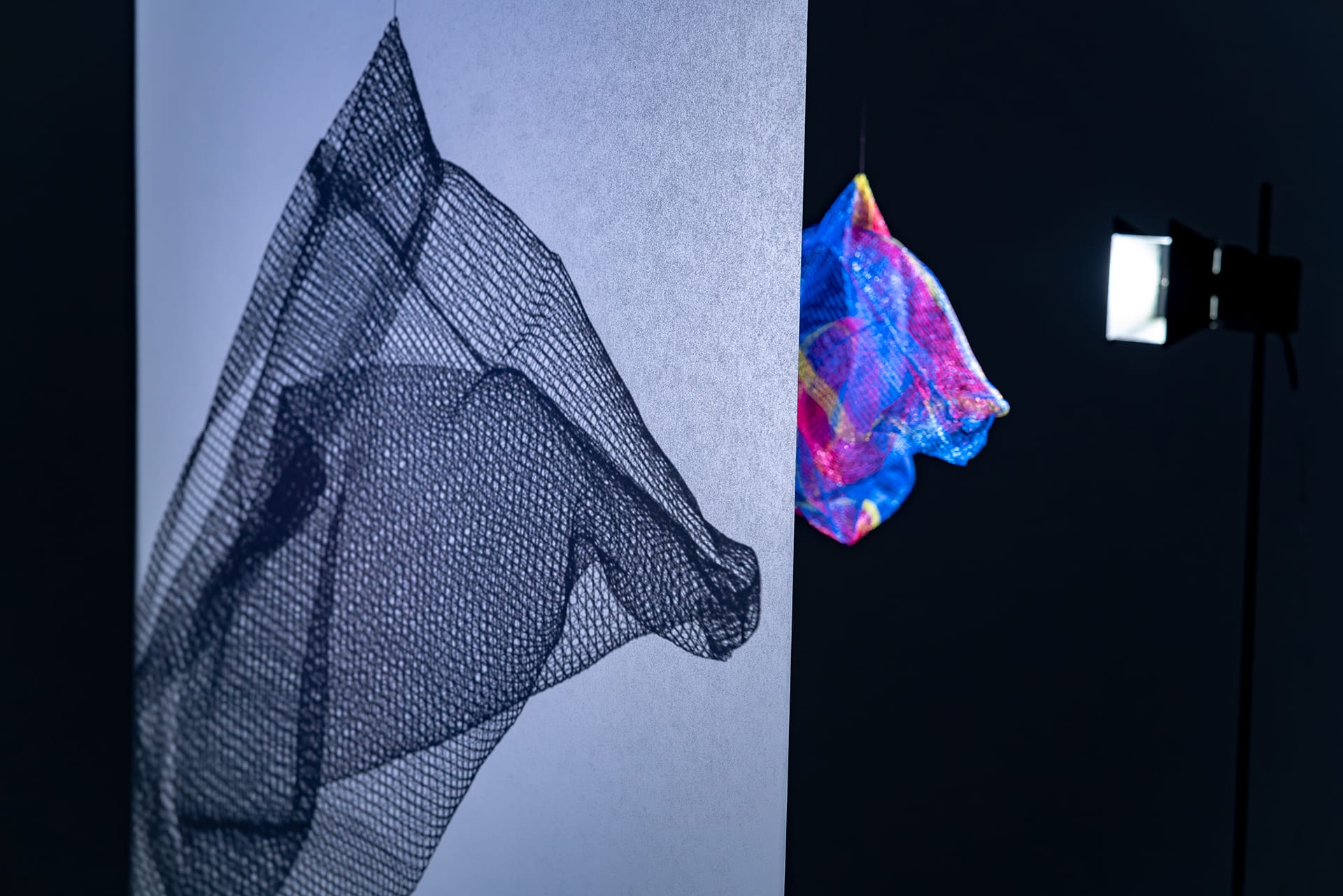
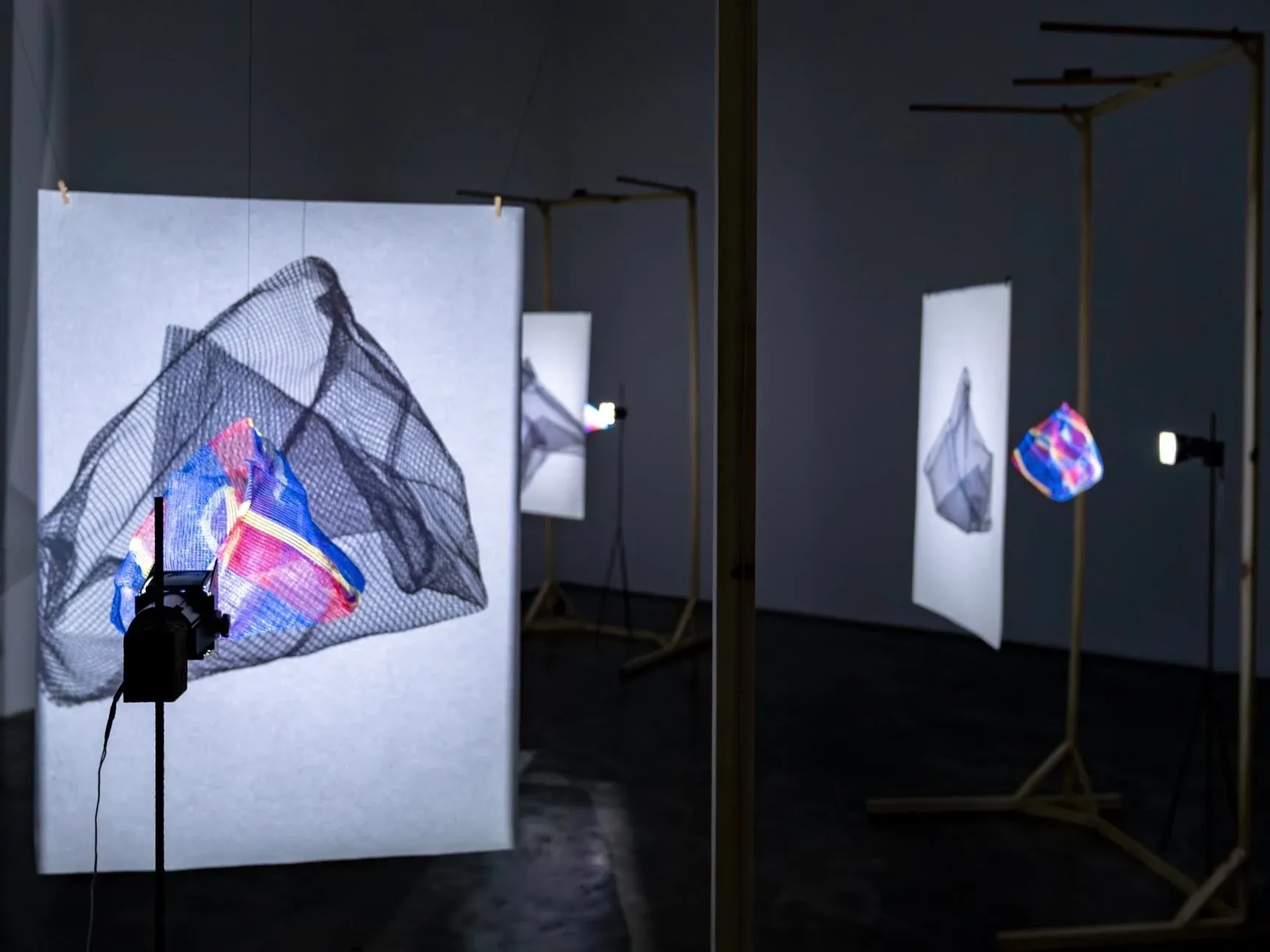
Installation views of MARTHA ATIENZA’s The Coconut Tree Methodology No. 3, 2026, installation with net bag, wooden stand, motor, light, at “The Coconut Tree Methodology,” Silverlens, Manila, 2026. Courtesy Silverlens, Manila/New York.
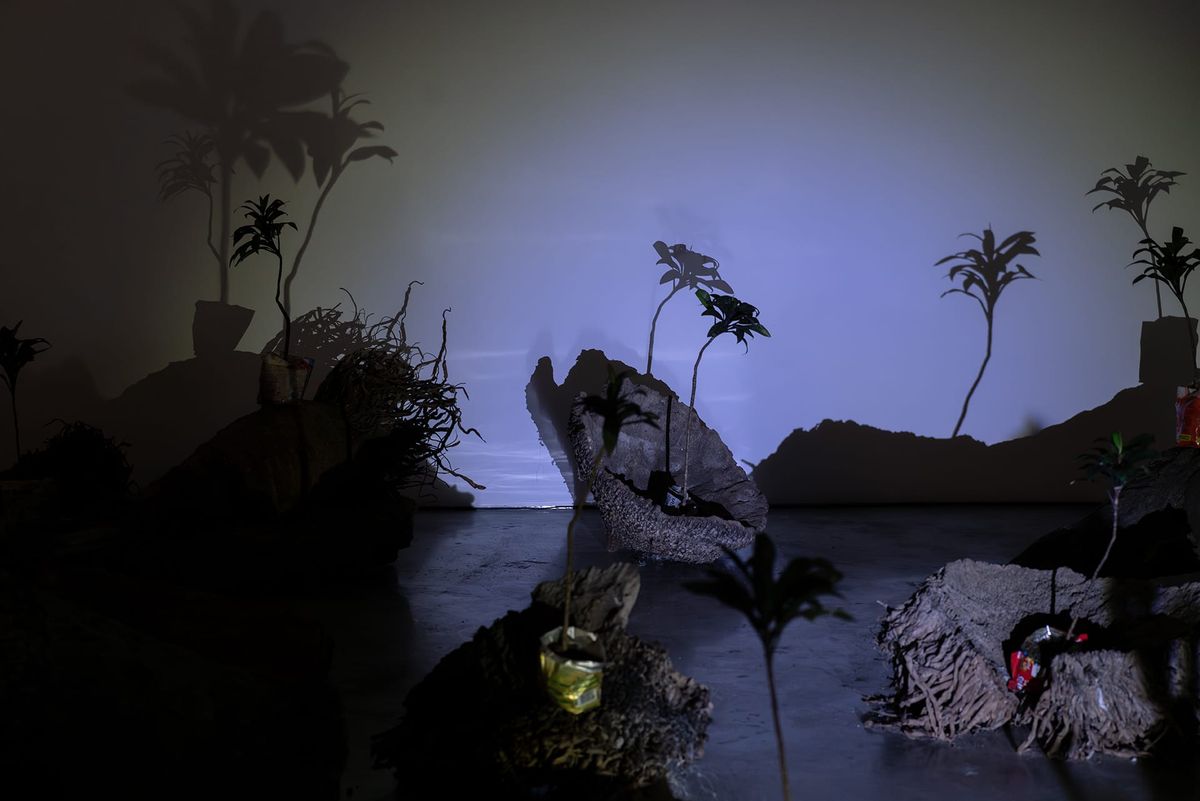
Atienza uses the coconut not as symbol but as methodology: an organic measure and record of environmental loss, rather than a mere invocation of it. The Coconut Tree Methodology No. 1 (2026) makes this legible at scale. 39 coconut root balls are arranged across the gallery’s largest space, mapping the islet formations along Bantayan’s coastline. Living Ti plants sit atop them, completing the recreated seascape, while bamboo sound devices filled with water and batad shells topple in slow succession, producing the steady rhythm of crashing waves. A sliding light mechanism sweeps the installation from left to right, recalling the flashlights of fisherfolk cutting through darkness at sea.
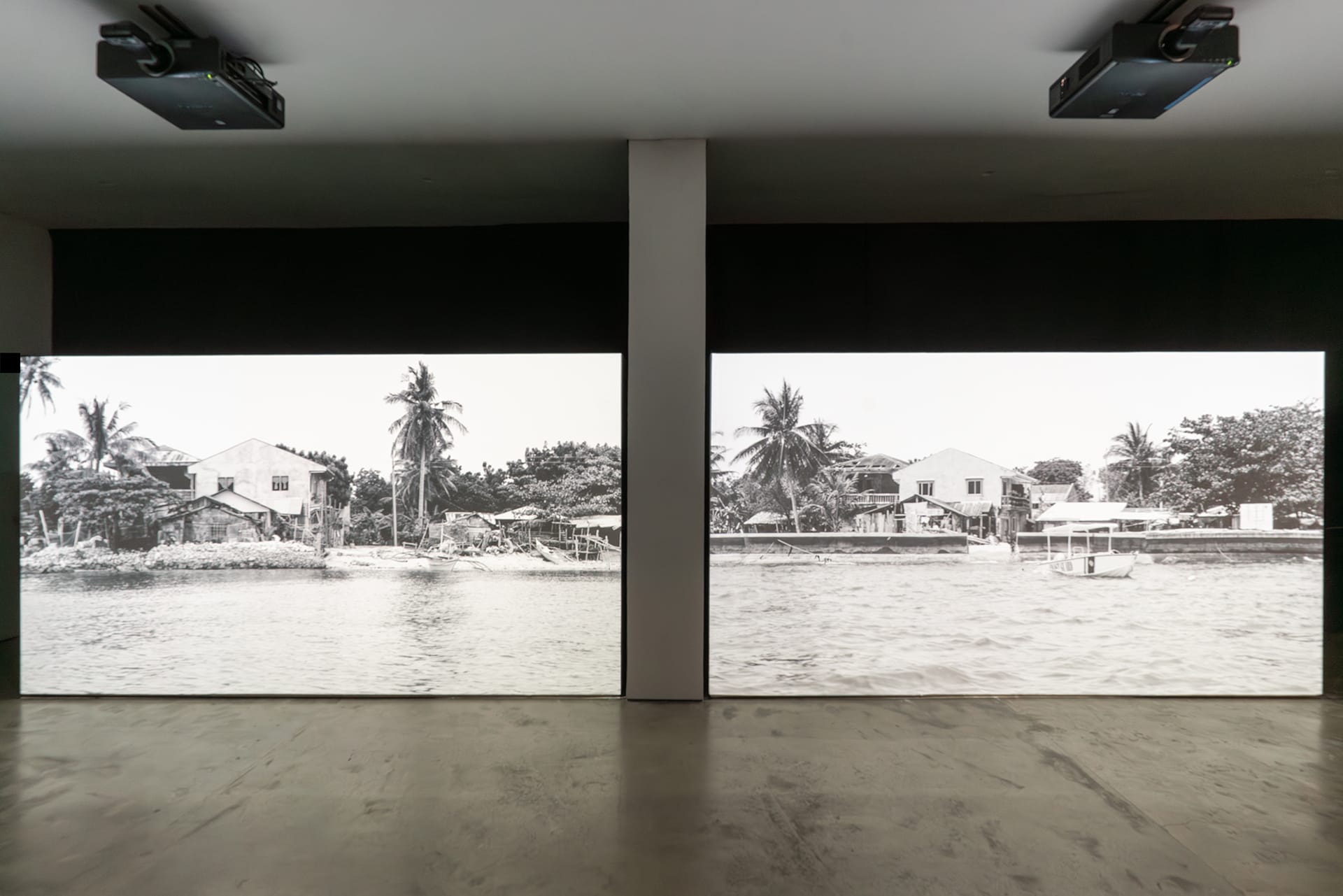
The gallery is kept dark throughout, so that every source of illumination—screen, shadow, and projection—works as both image and light fixture. In The Coconut Tree Methodology No. 3_1, 3_2, and 3_3 (all 2026), shadows projected on paper form diagrams of floating nets in deep sea, drifting along with ocean currents. The two-channel video Malbago 11°17'18.2"N 123°44'49.6"E (2019/26), positioned at the gallery’s entrance, functions as both the exhibition’s opening work and its primary light source. Tracing Bantayan’s shoreline from 2019 to the present, the work measures time through the gradual elevation of a cement boardwalk and the accumulation of new coastal infrastructures.
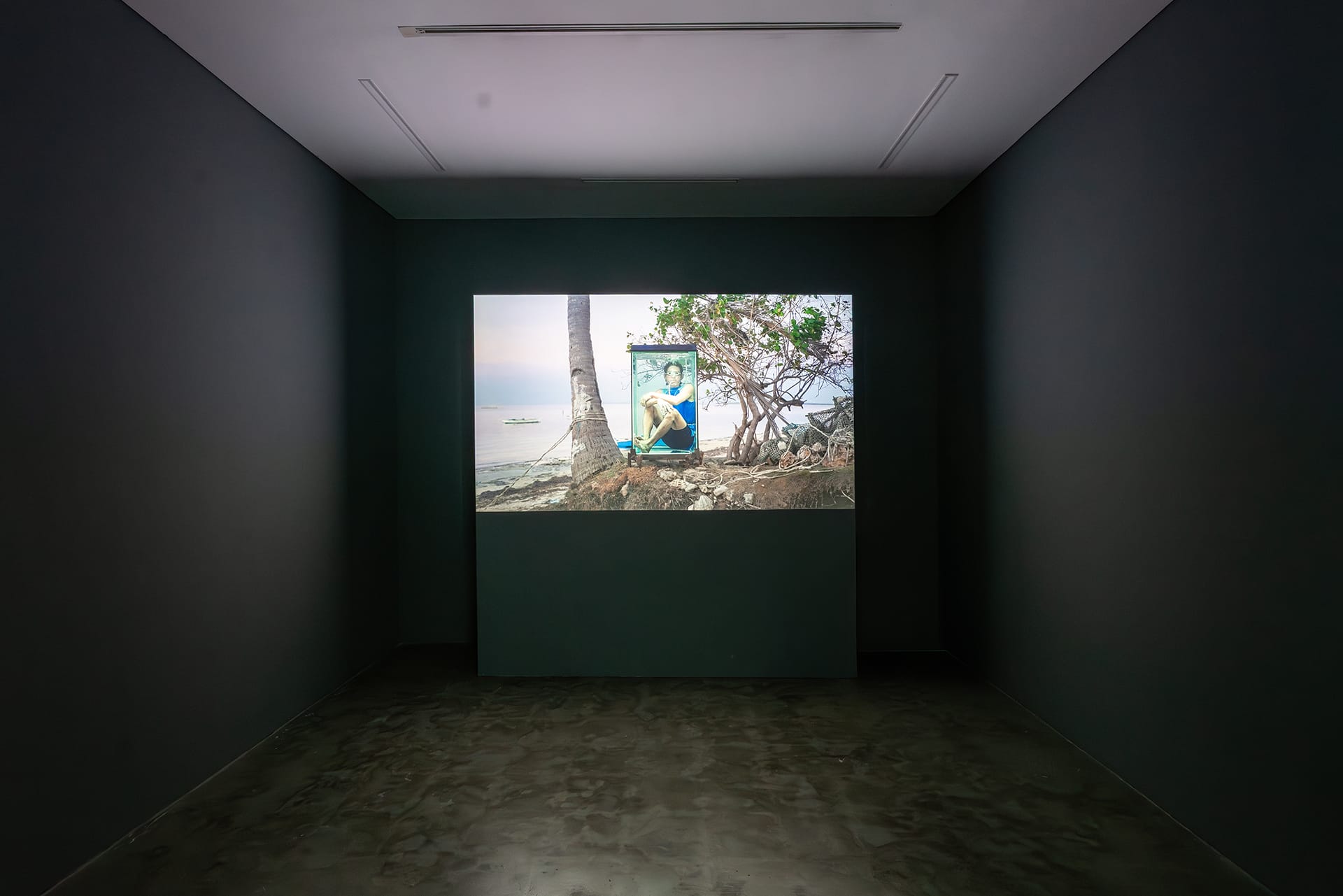
In the single-channel video Batang No. 1 (2026), a diver sits in a narrow aquarium incongruously set outdoors, against the backdrop of a coastal town. The aquarium radiates a strange, artificial glow. Breathing through a hose connected to an oxygen source, he exhales at slow, measured intervals. Luminosity here is never decorative—like the coconut’s growth or the diver’s breath, it is rationed, measured out rather than freely given. For this show, the gallery has no light of its own; every glow comes from the works, which illuminate one another until the whole space feels immersed in Bantayan’s light—something to be drawn into, not just looked at.
Breath is where the coconut tree and the diver meet. Both survive by extracting oxygen from conditions that resist it. The coconut does this through pneumatophores—specialized rootlets that enable gas exchange in waterlogged, oxygen-starved soil. The diver relies on a compressor hose, his synthetic pneumatophore, which supplies air even as it quietly accumulates harm. The work gestures toward compressor fishing, a practice common in coastal communities where poverty and dwindling fish stocks leave few alternatives. Fisherfolks descend beyond safe depths using industrial air compressors instead of proper scuba equipment, hauling nets or spearing fish in waters increasingly emptied by warming temperatures. The bends, burst eardrums, and deaths that follow are the bodily toll of ecological collapse.
If the diver’s body sustains the cost of a depleted sea, the coconut tree bears its own version of that reckoning. Atienza finds in it an apt, unsentimental witness: rooted, then uprooted, it holds the evidence of environmental neglect. Its roots register the relentless rush of tides—sand filling the fibrous structure, only to be pulled back into the ocean—until the tree loses its hold and its batang drifts toward another shore.
This is what the coconut tree has always done: bend through typhoons, withstand wind and water, absorbing every trace of environmental destruction into its being. “The Coconut Tree Methodology” reveals that the ecosystem always records what we choose to overlook. The land has been keeping score all along—and it washes the tally onshore.
Bea Belen-Ferrer is a Philippines-based artist-researcher whose work explores nostalgia, memory, and archiving. She received the 2025 Purita Kalaw-Ledesma Prize for art criticism.