Shows
What Water Carries: “The Spirits of Maritime Crossing 2026”
The Spirits of Maritime Crossing 2026
Palazzo Rocca Contarini Corfù
Venice
May 5–Aug 2, 2026
Rain pounded Venice during the Biennale’s opening week, pooling across streets and swallowing pavements—water no longer a backdrop but a protagonist. Into this charged setting comes “The Spirits of Maritime Crossing 2026,” the second iteration of the collateral event staged by the Bangkok Art Biennale Foundation. Building on its 2024 debut, the exhibition recasts the ocean as a vessel for memory, spirituality, and exchange where passage unfolds not only between shores but between worlds.
This expanded notion of crossing finds expression in The Spirits of Maritime Crossing II (2025), a film written and directed by curator Apinan Poshyananda. Functioning as a thematic overture, it follows wandering spirits portrayed by Marina Abramović, Amanda Coogan, Pichet Klunchun, and Mutmee Pimdao Panichsamai as they move between Venice and Bangkok, caught in cycles of attachment, suffering, and rebirth.
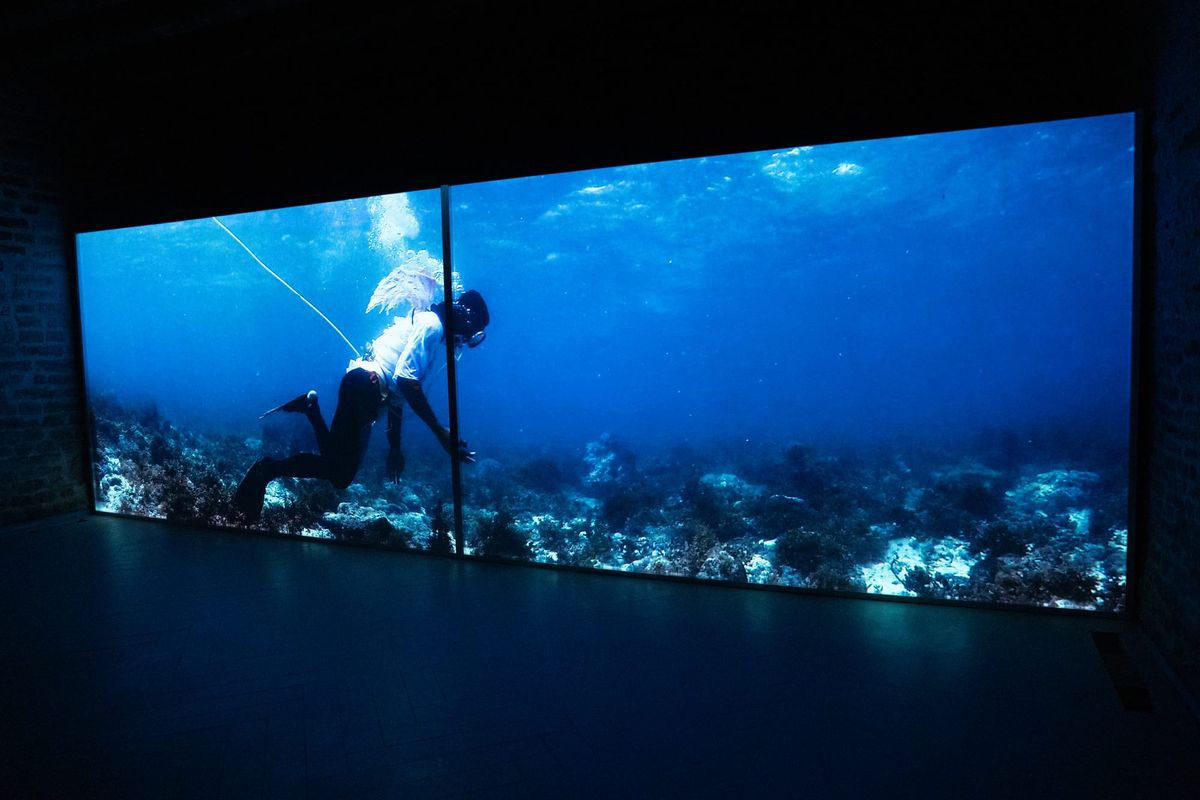
Across the exhibition, ritual becomes a vehicle for such passages. In Martha Atienza’s video Our Islands 11°16'58.4"N 123°45'07.0"E (2017), compression divers from Bantayan Island in the Philippines perform an underwater version of the Ati-Atihan procession. Breathing through thin tubes, participants drift across the ocean floor in a surreal pageant dressed as religious figures, typhoon survivors, pop-cultural icons, drug lords, and armed police officers. The tableau, at once playful and elegiac, offers a vision of collective endurance, where faith, survival, and politics converge.
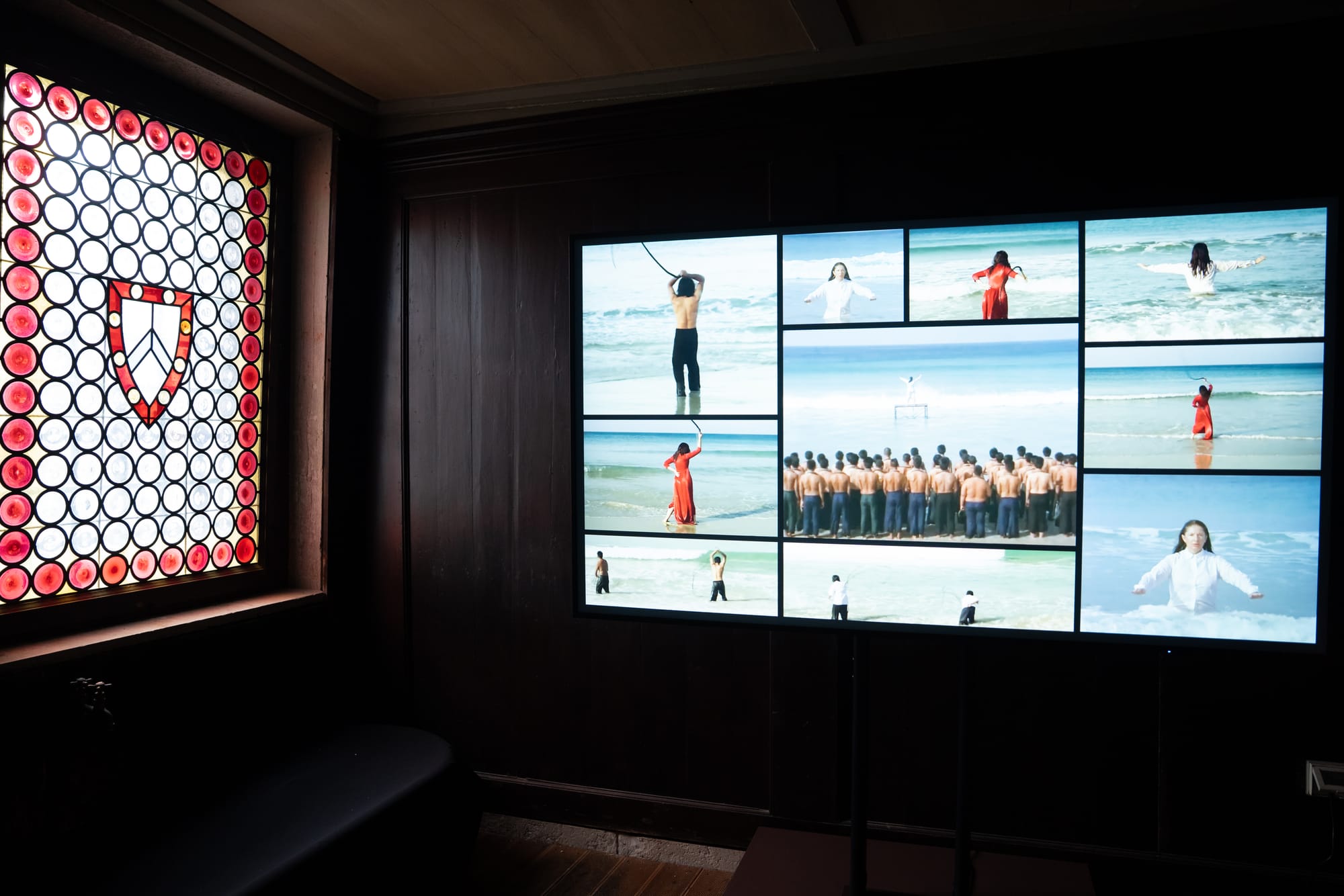
Ritual assumes a more confrontational form in Marina Abramović’s video Sea Punishing (2006), in which performers repeatedly lash the waves with whips, their gestures swallowed by the sea. Staged on the shores of Phuket commemorating the 2004 Indian Ocean earthquake and tsunami, the work transforms the story of King Xerxes punishing the sea into a meditation on grief and the limits of human agency.
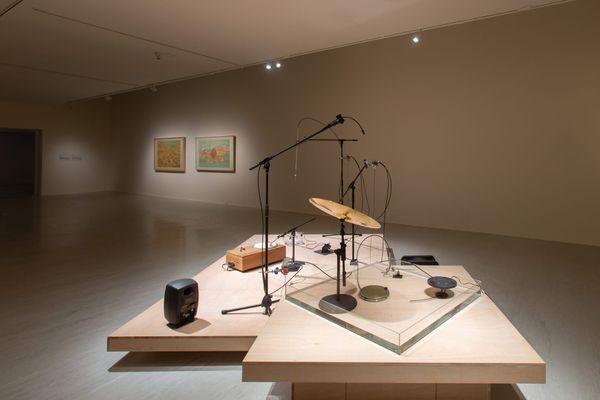
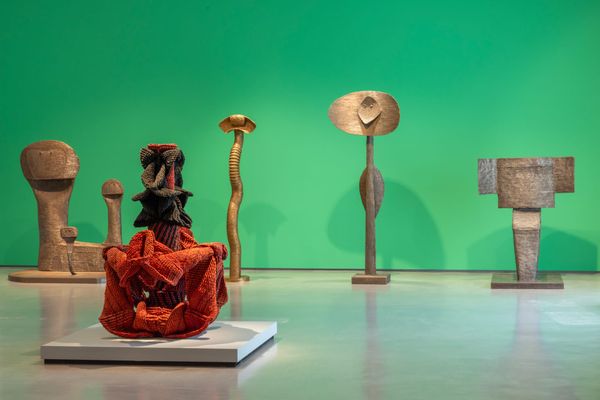
Elsewhere, rites become a means of communion across time. In Samboleap Tol’s participatory installation Dharma Songs (2023), visitors dip flowers into a water-filled gong, activating imagined conversations with ancestors. Inspired by Khmer Buddhist funeral chants, the installation uses sound to bridge the living and the dead. Tcheu Siong’s large-scale embroidered textiles similarly draw on Hmong cosmology, their vividly colored, totemic figures evoking ancestral spirits, shamanic traditions, and oral histories.
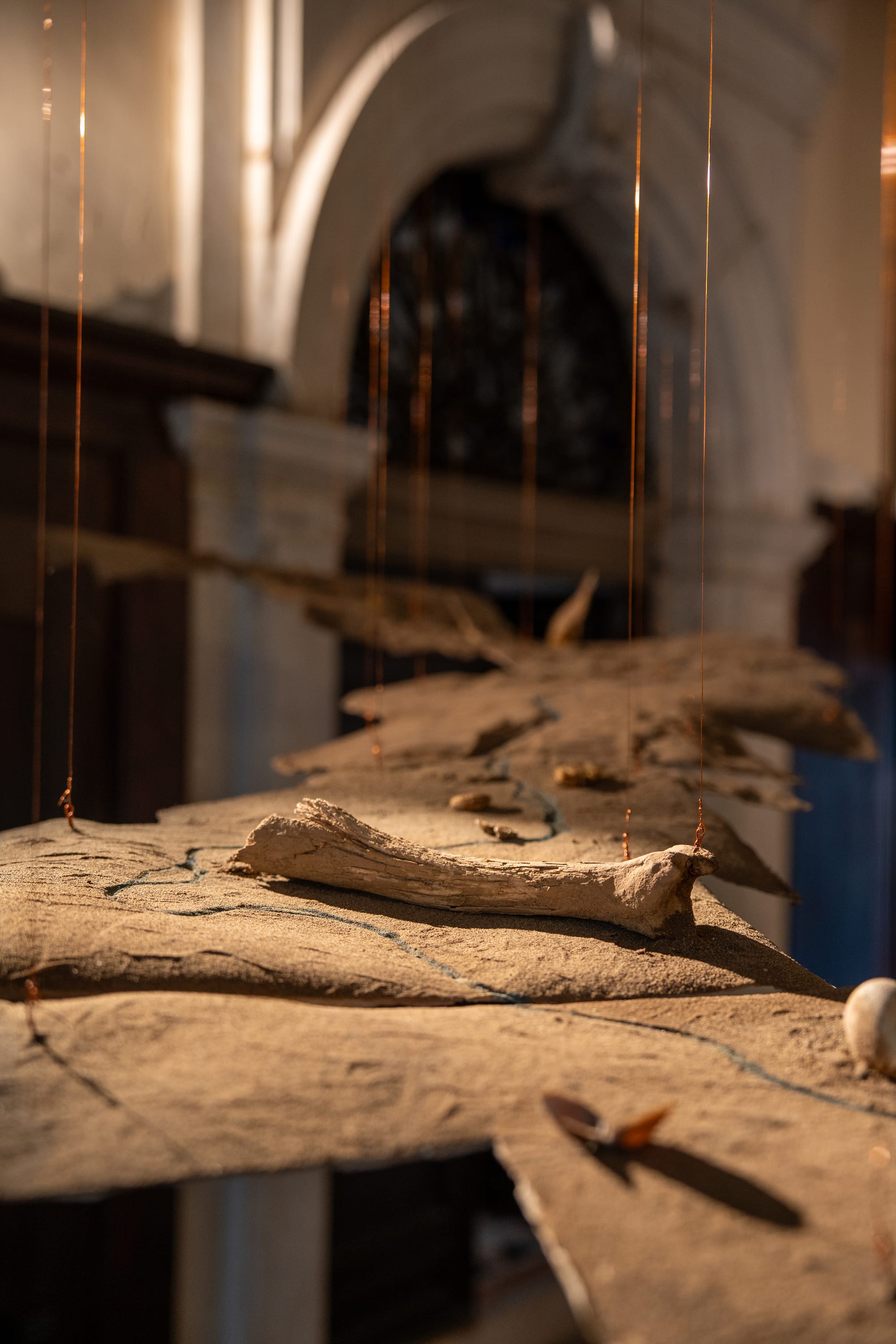
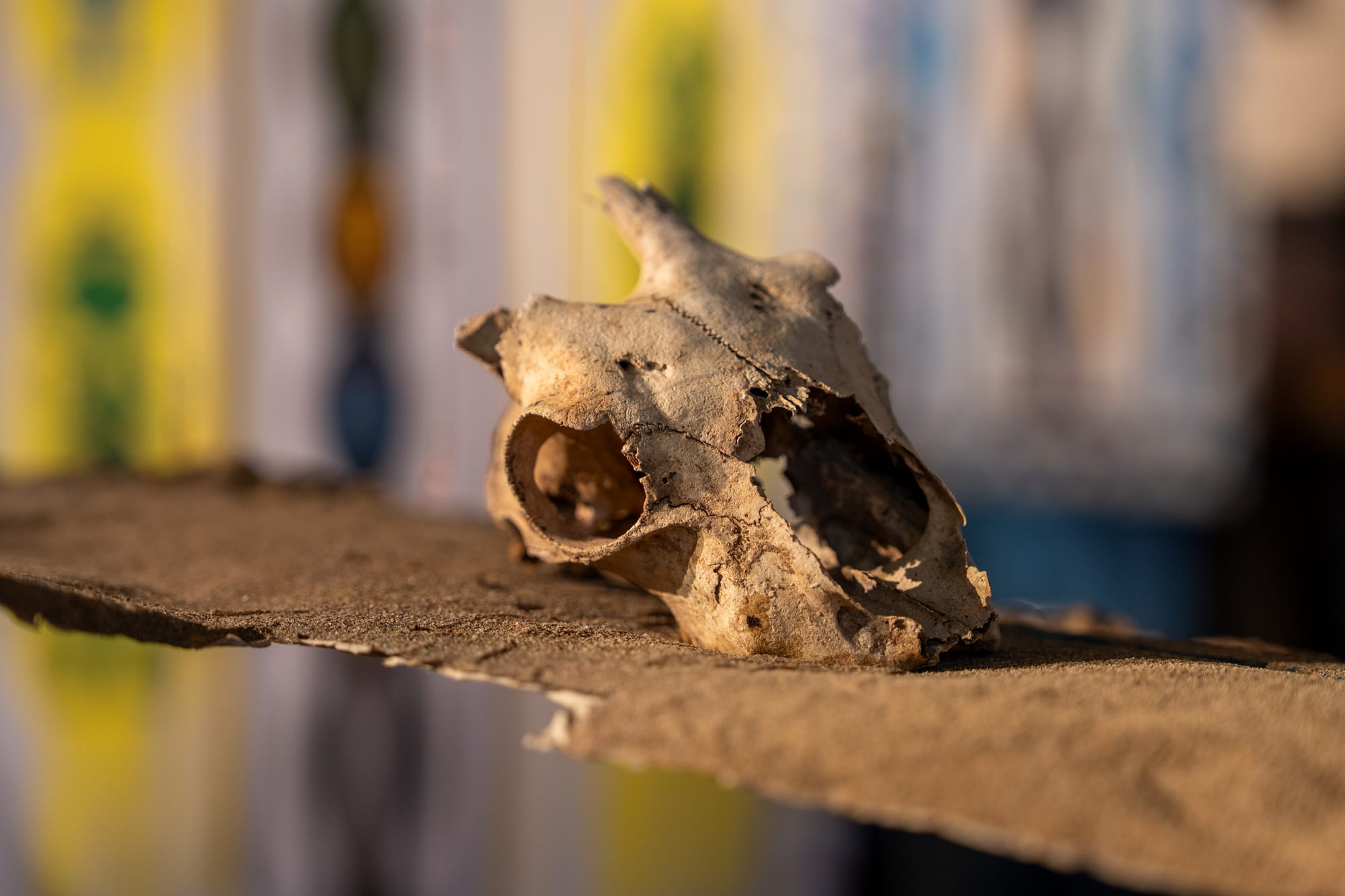
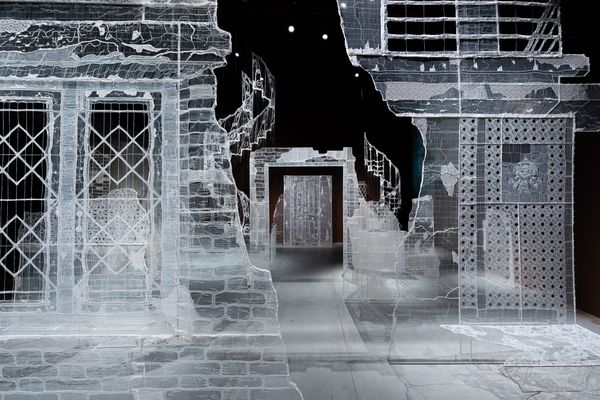
Installation views of RUANGSAK ANUWATWIMON’s Excavated Gods, 2021, mixed media, tissue paper, animal remnants, soil, and sand from Mekong River, pigment from China and northeastern Thailand, dimensions variable, at “The Spirits of Maritime Crossing 2026,” 61st Venice Biennale, 2026. Courtesy the artist and the Bangkok Art Biennale Foundation.
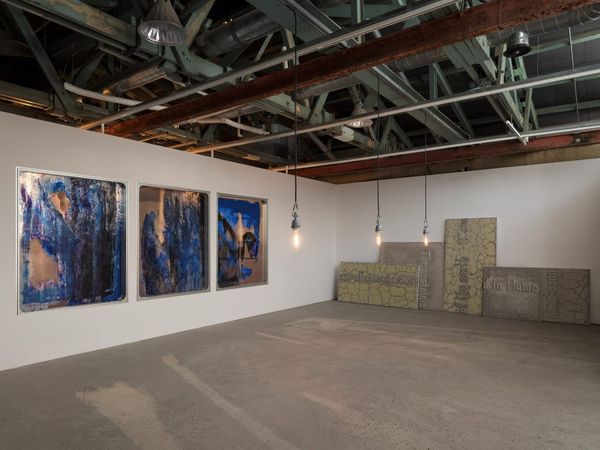
Across these works, the past persists as a living presence. In Excavated Gods (2021), Ruangsak Anuwatwimon embeds soil, sand, and animal remains sourced from the Mekong onto sheets of tissue paper, creating a delicate, suspended form that appears at once unearthed and adrift. The river becomes an archive of ecological and cultural memory, shaped as much by erosion and disappearance as by preservation.
Crossing also unfolds on a more intimate scale. In A Body On Repeat (2025), filmed beside a Bangkok lake, Swannie relentlessly peels layers of latex from her body, pushing her physique to its limits. Drawing on the artist’s experience as a trans woman, the performance becomes a metaphor for the shedding of expectations shaped by migration, gender identity, and social norms. What emerges is a private ritual of reclamation and renewal.
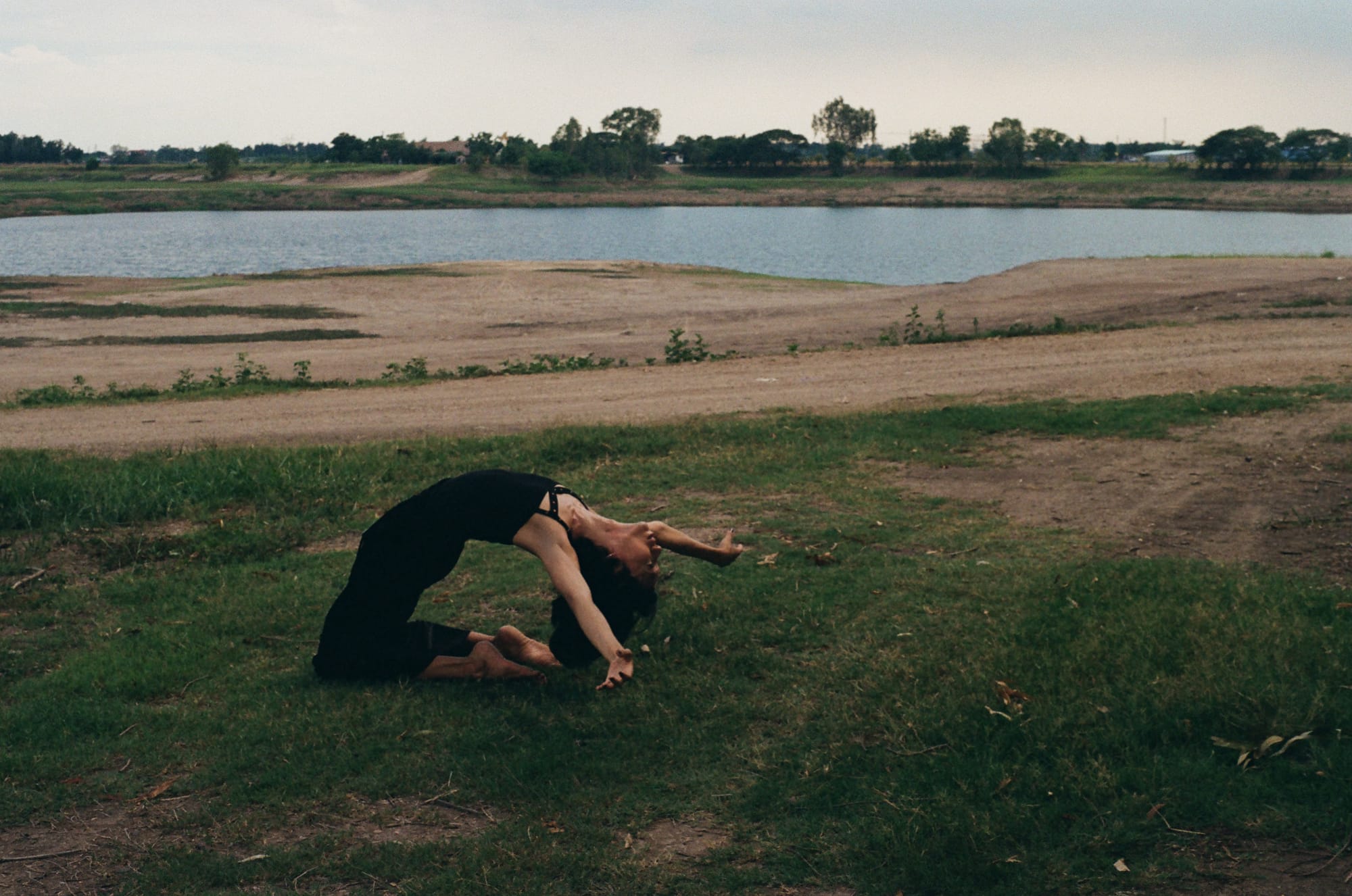
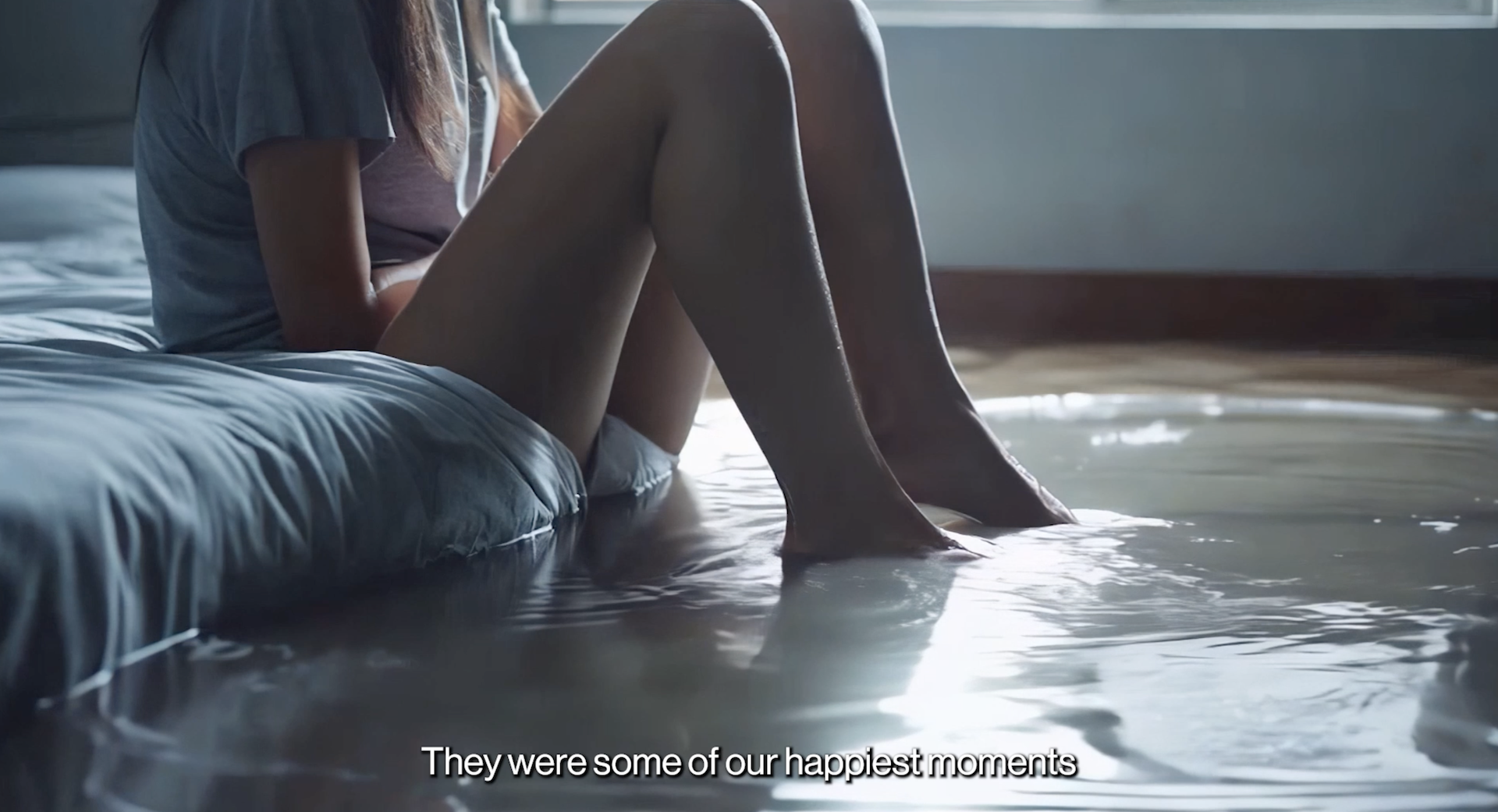
SWANNIE, A Body On Repeat, 2025, single-channel video: 14 min (left); and ONG KIAN PENG, Disaster Free, 2024, AI-generated video, 10 min (right). Courtesy the artists and the Bangkok Art Biennale Foundation.
From memory and inheritance, the exhibition turns toward less certain futures. In Ong Kian Peng’s video work Disaster Free (2024), floodwaters engulf housing estates, stairwells, and corridors, rendering Singapore’s carefully managed urban landscape strangely unfamiliar. Water unsettles the illusion of permanence, eroding the boundary between security and vulnerability. In Venice, where the threat of inundation is never far away, the work acquires an unsettling immediacy.
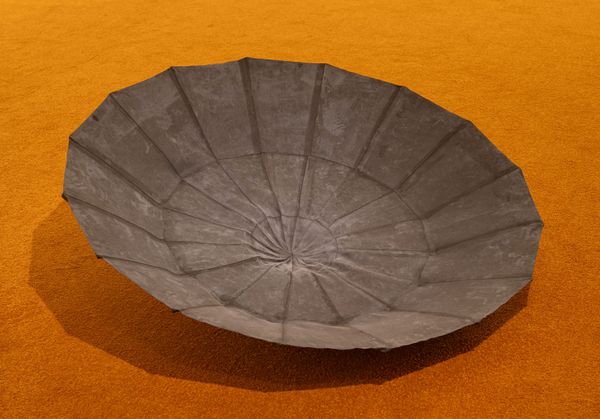
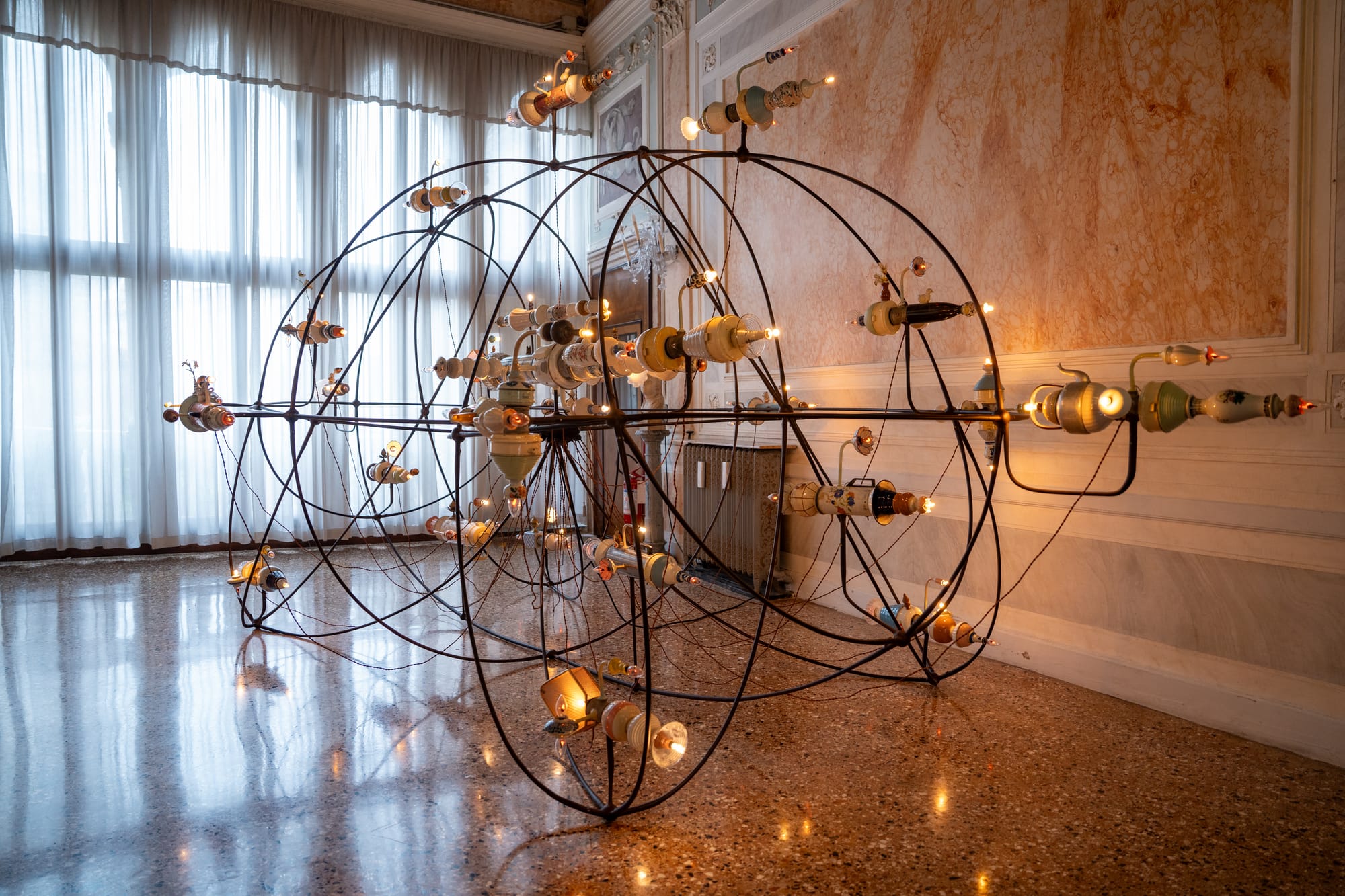
In other works, future imaginaries take shape through ritual and myth. Inspired by his grandmother’s journey from China to Thailand, Torlarp Larpjaroensook’s Spiritual Spaceship (2026) transforms domestic objects—thermos flasks, lunch boxes, bowls, and lamps—into a luminous retro-futurist installation. Resembling a constellation of spacecraft, the work recasts a family migration story into a voyage on a cosmic scale. Lê Hiền Minh’s goddess-like figures fuse Vietnamese folklore, maritime iconography, and matriarchal symbolism into relics from a fictional civilization, bringing mythic pasts into dialogue with worlds yet to be born.
While the exhibition is framed through the now-familiar language of maritime crossing that has become pervasive in contemporary art, its most compelling works are less concerned with paths and exchanges than with the relationships, memories, and transformations such crossings make possible. Here, passage occurs between ancestors and descendants, memory and forgetting, self and community. The sea, in the end, becomes less a route than a relation—a space of connection rather than transit.
Yvonne Wang is an art writer and ArtAsiaPacific’s Singapore desk editor.