Shows
Yuko Mohri: “Entanglements” at Centro Botín
Yuko Mohri
Entanglements
Centro Botín
Santander
Mar 28–Sep 6, 2026
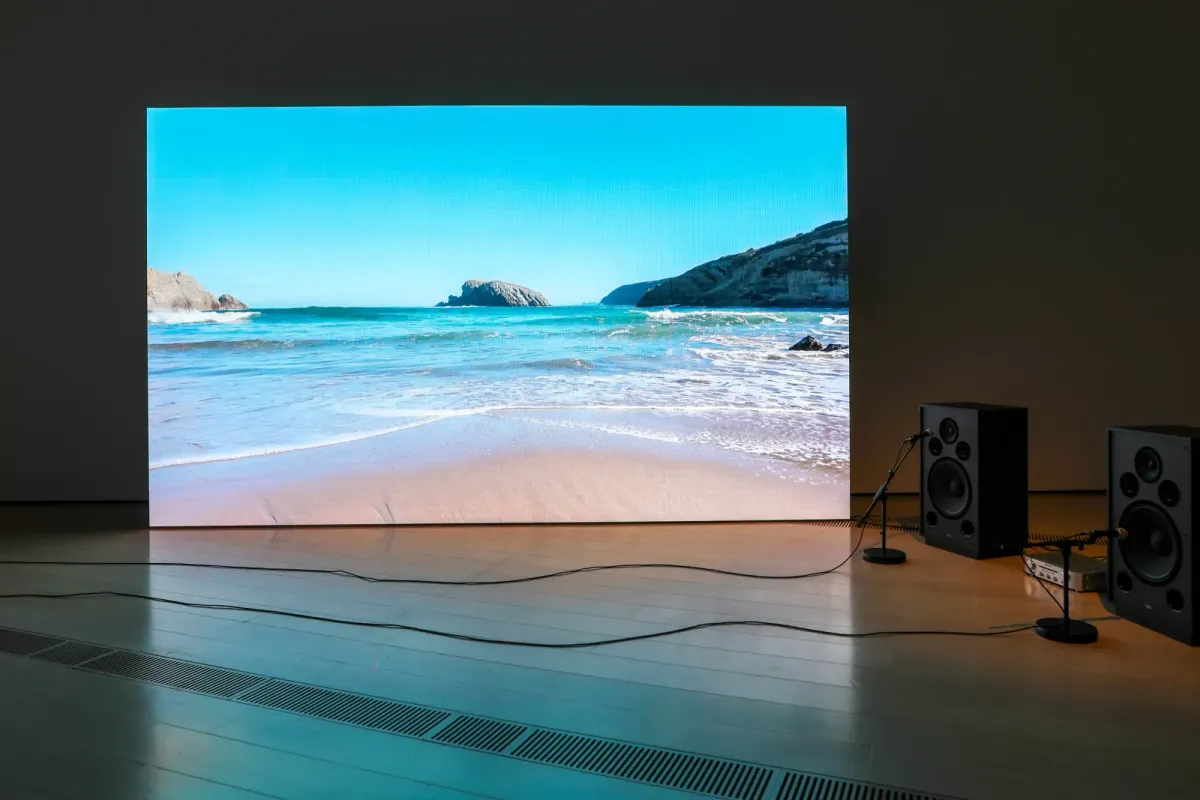
Yuko Mohri’s kinetic installations brim with possibility. Piano Solo: Costa Quebrada (2026), the first work encountered at her midcareer survey at Centro Botín, presents near life-size footage of waves coming in, their sound routed through speakers wired to a piano that responds to the surf in occasional notes. If landscape evokes music, Mohri reroutes the soundtrack. Instead of the mind, the environment is what determines it. And yet the mind still intervenes, giving a mood or even narrative to the (often chilling) chords and the vision and susurration of the sea. Technological input and output are entangled with imagination. Like waves, everything is changeable, nothing fixed.
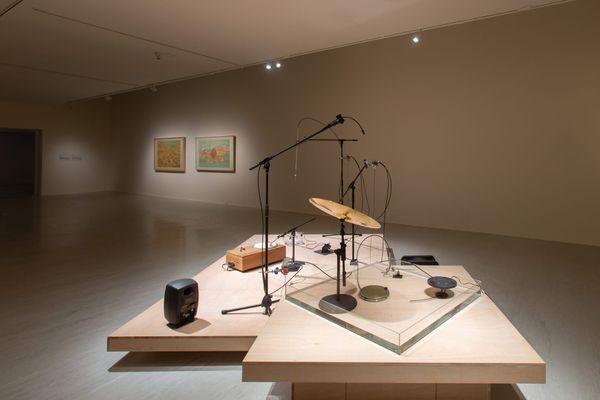
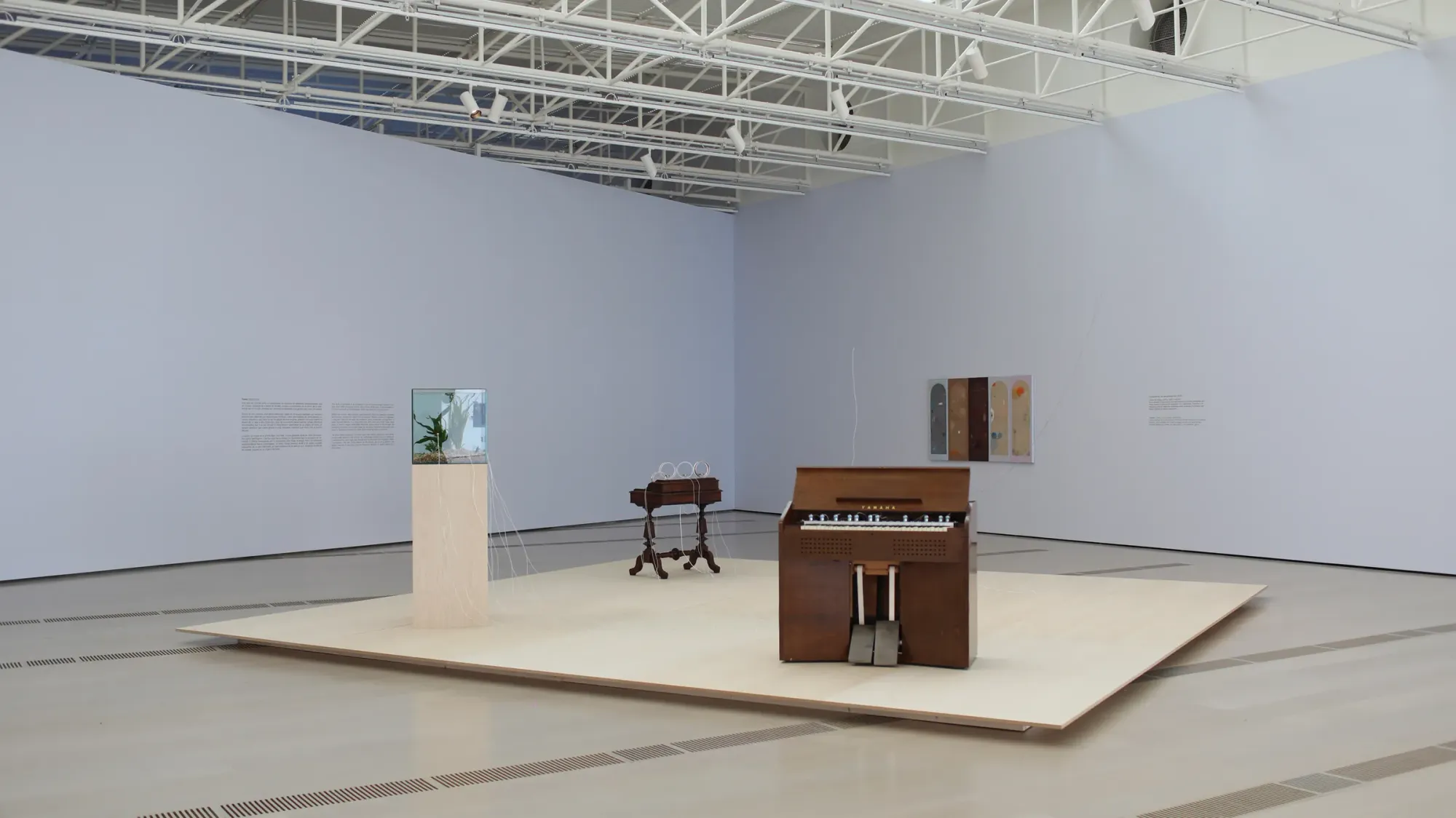
The show spans from Mohri’s 2004 graduation piece—a Calderesque sonic mobile—to the present, with variable sound threading across the installations, their intricacies animated by light streaming through glass walls and by the visible presence of Santander Bay. The porous, changeable atmosphere fits Mohri’s environmentally attuned meditations on transience. Flutter (2018/25) pairs a fish tank with an antique Yamaha reed organ: the goldfish moves, and the organ plays—whether through genuine sensor response or the viewers’ wishful projection was kept deliberately unclear. The largest work on view, I/O (2011– ), standing for “input/output,” suspends rolls of paper that collect charcoal powder, dust, and other debris from the floor, which pass through a scanner triggering the actions of various devices: a light bulb, a fan, some window blinds, a bell lyre.
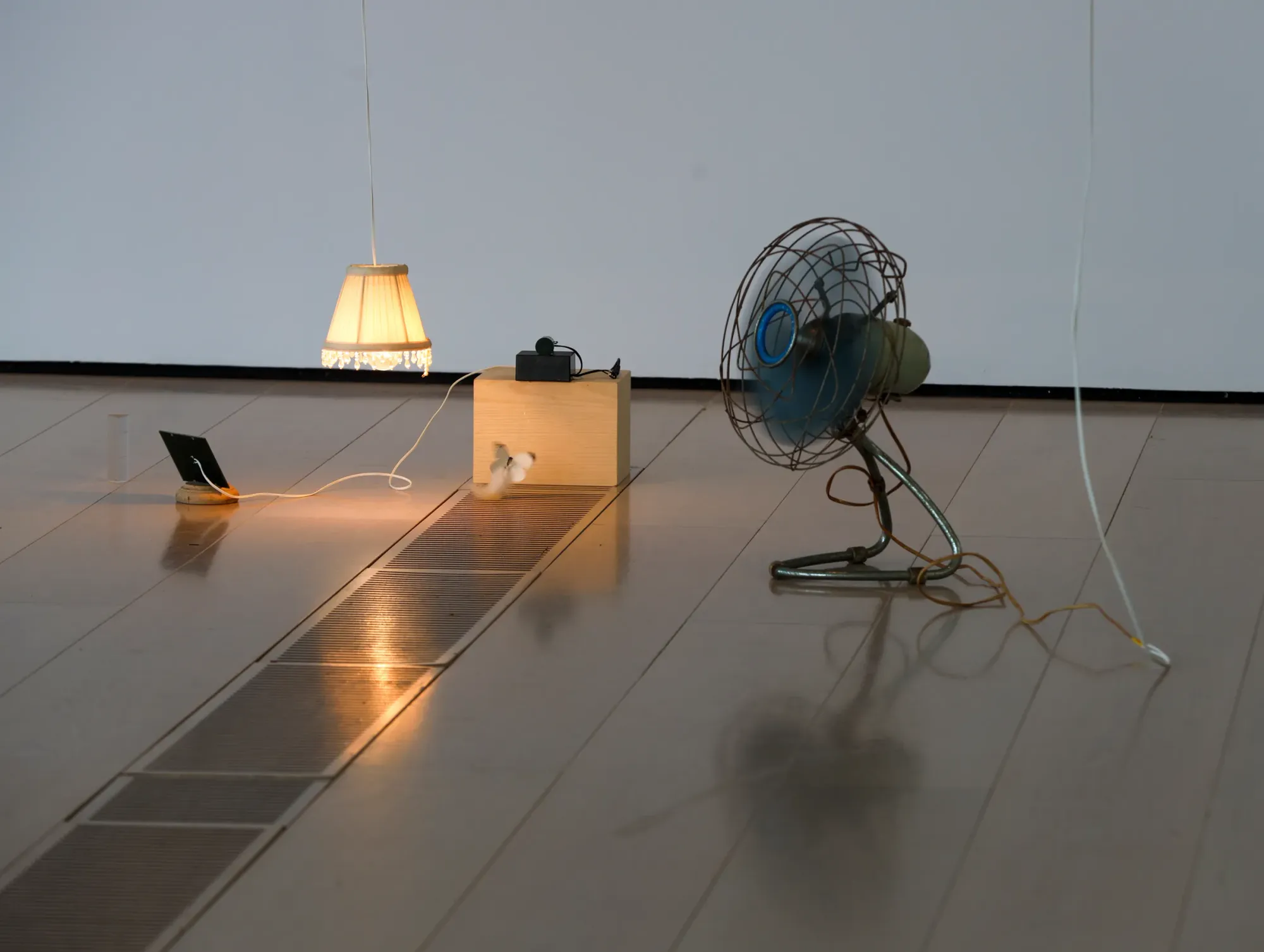
Each version of her Moré Moré (Leaky) series (2018– )—three of which are included here—acts as a vertically suspended, makeshift water pump. They are made of tubes and various surprising appendages: rubber gloves pegged to a laundry hanger, colored lights, a beating drum. The pumping mechanism sets each contraption jigging, as if to some internal rhythm. Two are hung from the square timber frames of traditional Japanese ceilings, the water’s flux evoking Zen meditation, yet their playful—if not rebellious—agitation also frees them from that interpretation. Commissioned for this show, Moré Moré (Leaky): Fountain (2025) consists of an overflowing glass boot hung high in the air. Here, in a humorous nod to Duchamp—a frequent point of reference for Mohri, evident in her idiosyncratic use of readymades and the diagrammatic similarity of the pumps to The Large Glass (1915–23)—she transforms a receptacle into a font.
In true Duchampian fashion, anything can be anything. Her “leaky” installations sidestep both the overblown thinking that attempts to link the readymade to Zen aesthetics (as seen in the Tokyo National Museum’s 2018 exhibition, “Rediscovering Japan through Duchamp”), and the pedanticism that dismisses such connections outright; Mohri’s position is closer to “why not?” than “this is.” Two new paintings on speaker cover canvas (both 2025–26), each composed of five conjoined, vertical panels with Twombly-esque abstractions within arched apertures, reflect this culturally open, spontaneous way of seeing. If Twombly borrowed from Japanese art, Mohri appears to borrow from Twombly, while also—potentially—splicing the Western multipanel altarpiece with the East Asian folding screen. What is interesting here is less the direction of influence, though, than the suggestion that art history is in flux, too.
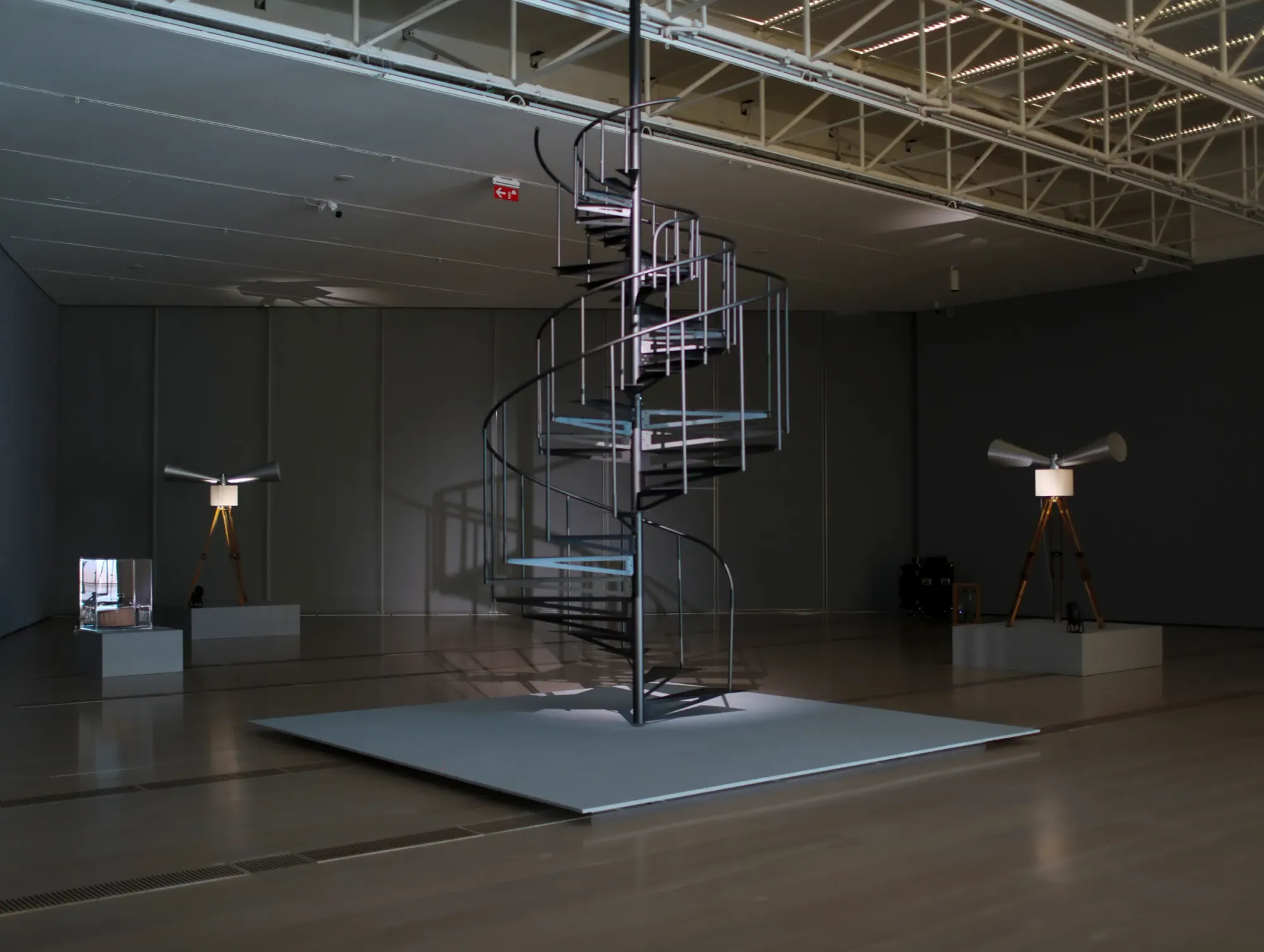
The only literal reference to politics in the survey, You Locked Me Up in a Grave, You Owe Me at Least the Peace of a Grave (2018), is, by contrast, deliberately oppressive. Three two-pronged megaphones on tripods stand sentinel around a spiral staircase. Occasionally these objects spin, the speakers emitting a whirring that harangues the head like tinnitus. According to the wall text, the spiral refers to the Soviet artist Vladimir Tatlin’s unrealized Monument to the Third International (1919–20), and the speakers recall assemblages William Kentridge built to comment on political idealism. Mohri’s revolution is not a monumental ideal—which, as the work implies, risks becoming a prison—but a persistent, mischievous change of perception.
Tom Denman is a London-based writer.