Shows
A Season of Whispers: “Washwasha” at the UAE Pavilion in Venice
UAE Pavilion
Washwasha
Arsenale – Sale d’Armi
61st Venice Biennale
May 9–Nov 22, 2026
If it succeeded, people would hear about it. If not, no one would know. *
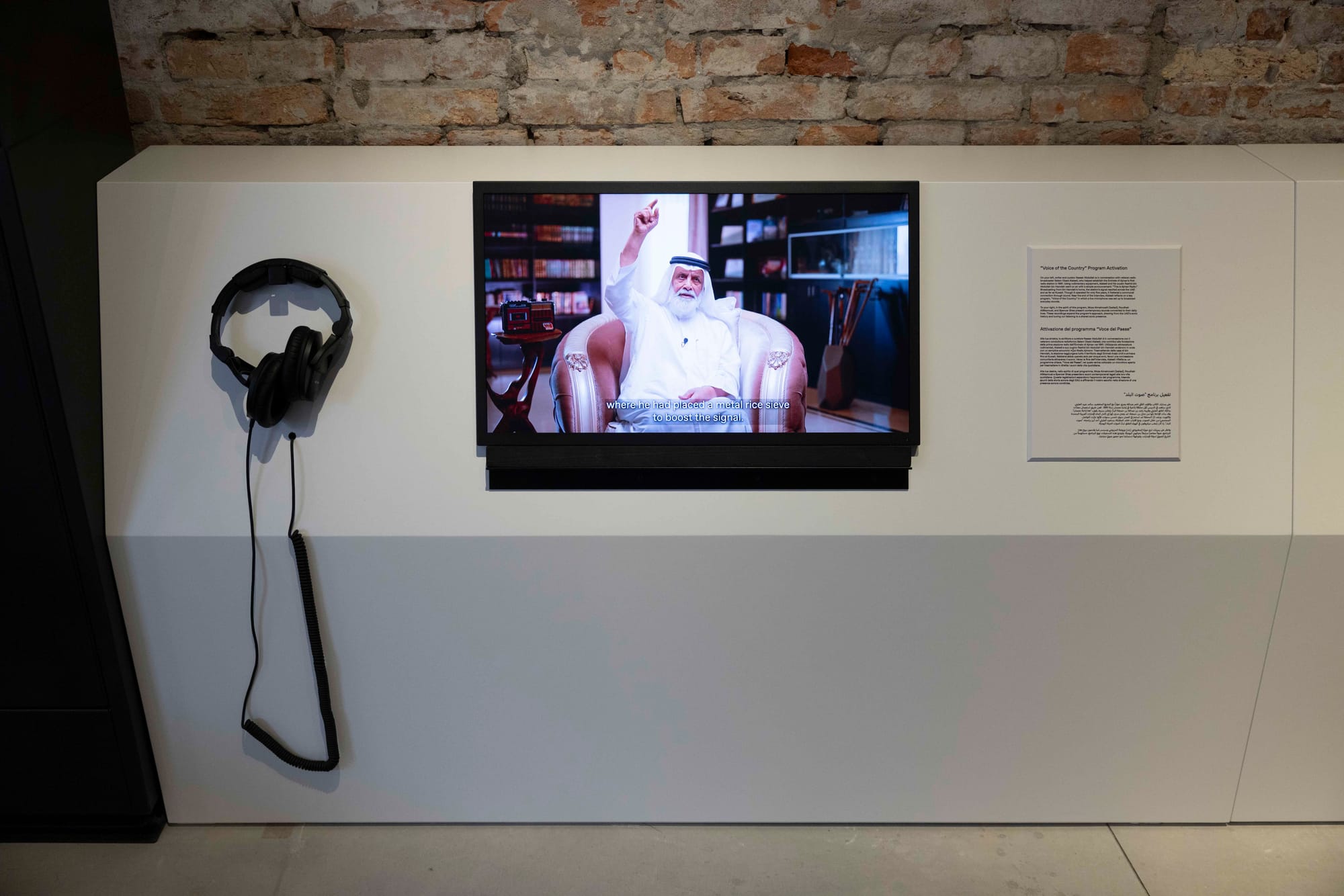
One day in 1961, a 12-year-old boy in his cousin’s bedroom went on air and announced, “This is Ajman Radio.” The Trucial States’ first pirate radio station was thus inaugurated by two youths with a microphone, transmitter, wire, and a metal sieve perched on the roof to amplify their signal. For five years, Salem Obaid Alaleeli and Rashid bin Abdullah bin Hamdah aired prayers, poetry, song requests, community appeals, and a signature “Voice of the Country” program that transmitted soundtracks of everyday life in the smallest emirate, from streets and markets to cafés and dockyards.
More than a simple symbol of nation-building, Ajman Radio connected directly to its listeners, bypassing the British station at Sharjah as well as Egyptian and Iranian broadcasts. Since its inception, radio has proved to be one of the most powerful instruments of propaganda on the Arabian Peninsula. Italy, Germany, the Soviet Union and the UK initiated Arabic-language bulletins in the 1930s. Radio Cairo, the leading broadcaster, was renowned for its “Sawt al-Arab” (“Voice of the Arabs”) segment. Although the newly oil-rich Trucial States were a critical frontline in the Cold War, they were among the last in the region to establish their own local radio stations.
This short film about Ajman’s Radio history—an uncannily prescient commission by Bana Kattan, curator of the UAE Pavilion at this year’s Venice Biennale, opens the exhibition. The show’s title, “Washwasha,” is an onomatopoeic Arabic word for “whispers,” conjuring the polyphonic channels of a postnational world: viral posts, algorithm boosts, disappearing messages, blue ticks, red herrings, status signaling, misinformation, disinformation, insider information. Kattan says, “It’s simple but not shallow. It allows you to lean in—sometimes to what you were avoiding hearing, like the noises in your head. Or the sonic subtext—those subtle sounds that could easily go unnoticed.”
“Crazy times,” “I telepathically sent you a message,” “on the move,” “jet lag territory,” “just a little manic, as always” *
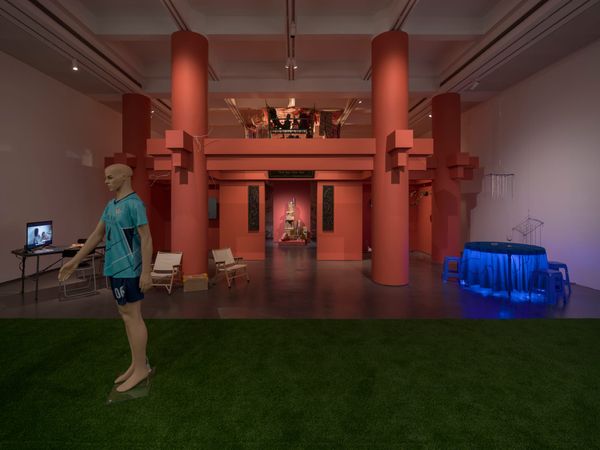
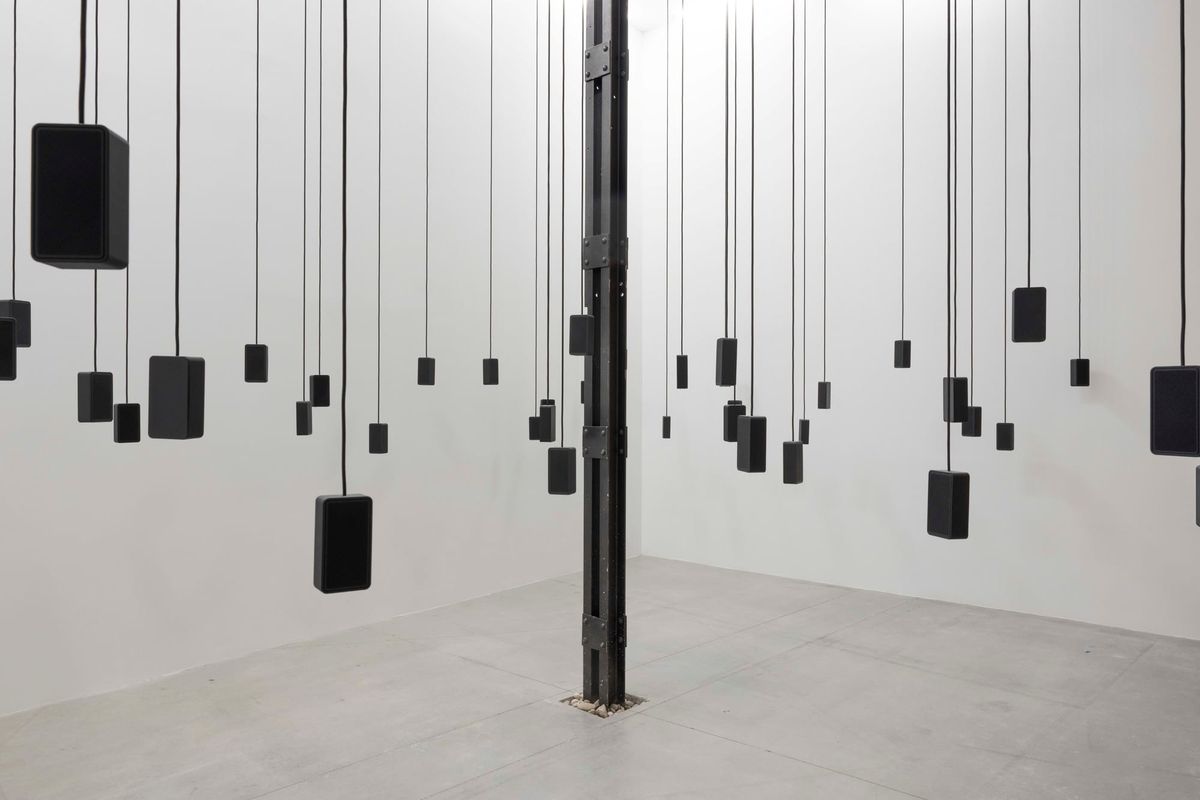
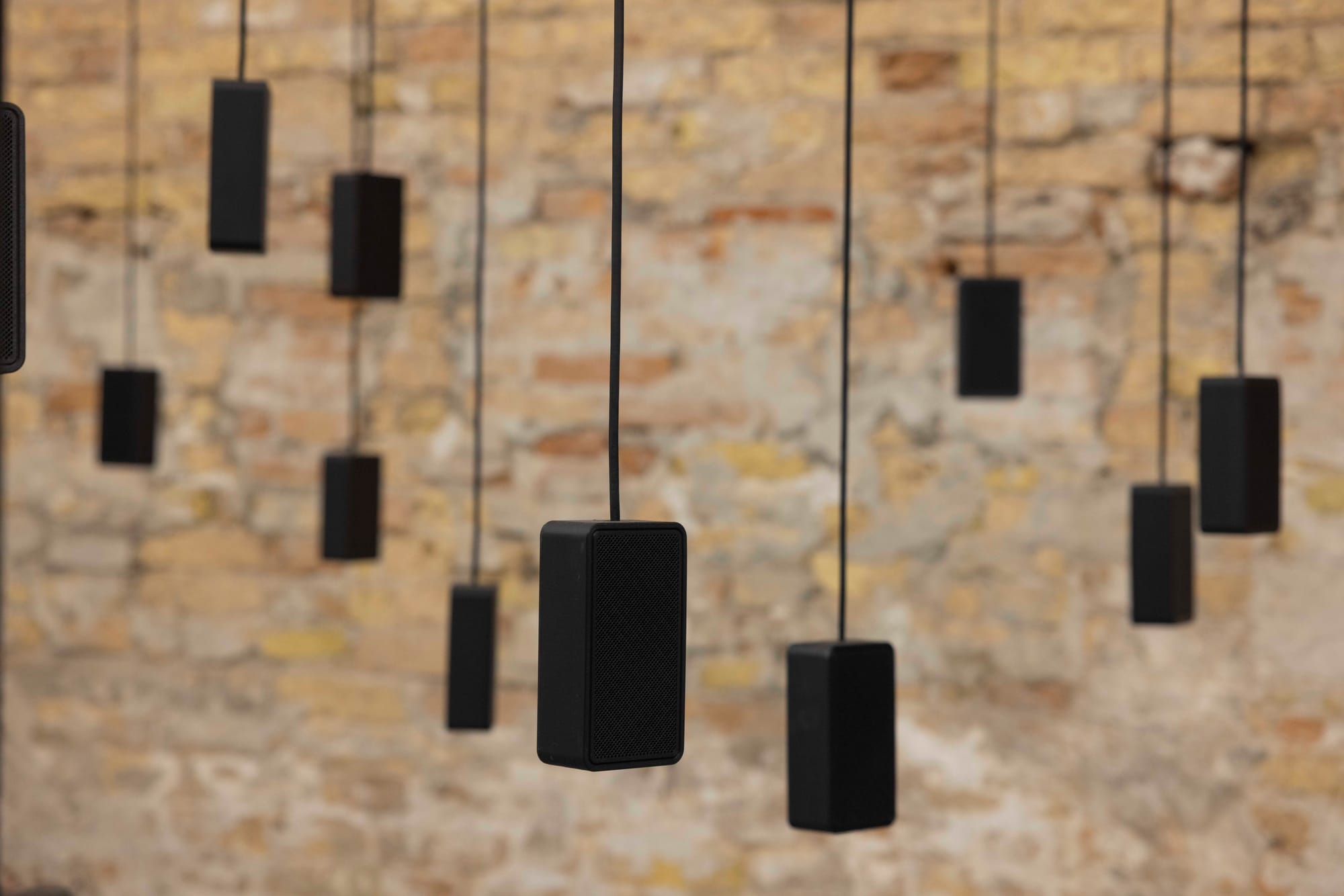
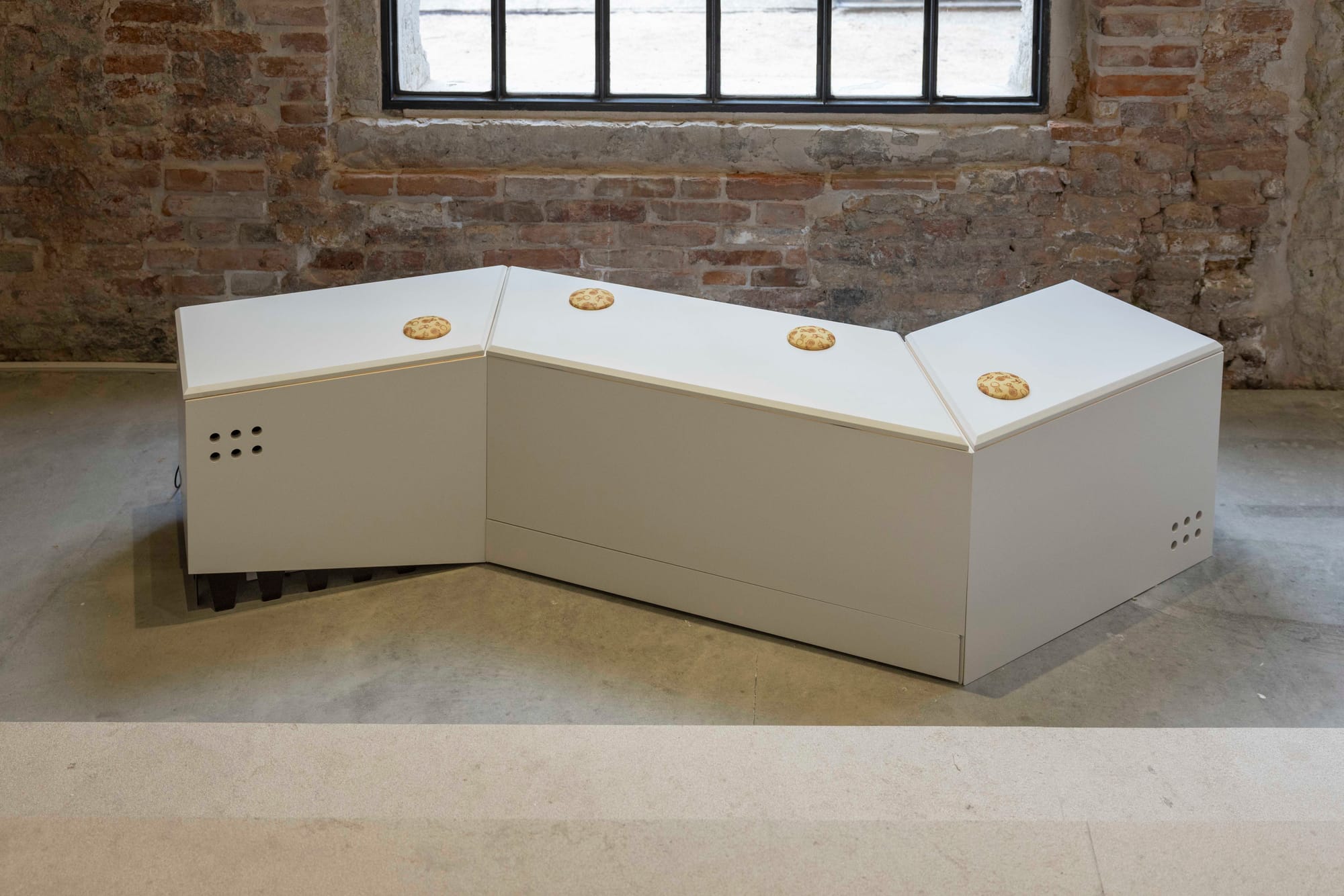
It is delightfully therapeutic to listen to Taus Makhacheva’s Dear R., R., K., S., M., A., C., S., K., I., G., L., A., A., L., P., G., E., J., D., M., C., B., O., F., F., R., D., M., E., L., I., F., L., A., M., T., K., K., L., P., F., V., A., L., L (2018/26). Makhacheva, who hails from the Russian republic of Dagestan and lived in the UK before moving to Dubai, is keenly attuned to the hierarchical functions and nuances of social communication. Her installation features 52 suspended speakers through which disembodied voices deliver a smorgasbord of apologies drawn from real emails sent during the Covid-19 pandemic, Trump’s second term, and more. The excuses range from the candid and heartfelt (“Dear, I miss you too much to write” / “Dear, apologies for my late reply. I have cancer and my homeland is burning. Time doesn’t mean the same thing anymore”) to passive-aggressiveness and borderline satire: (“Dear, my apologies, I realize I didn’t press send earlier on.”) In the guts of Venice, they evoke a wry, subversive portrait of a biennale struggling to come to life amid the unprecedented political and social upheaval of the last few years. Beyond this, however, is a familiar undercurrent of mixed vicariousness and empathy: exhaustion, resentment, and resistance against the neverending flurry of hamster wheels. Makhacheva’s other work And What Did You Say? (2026) is a literal gossip bench, placed unassumingly by the pavilion’s doorway, where visitors can sit and listen to the artist’s playful discourse on the social, historical, and even evolutionary purpose of gossiping.
God bless those days. They were beautiful days. We used to laugh from our hearts. *
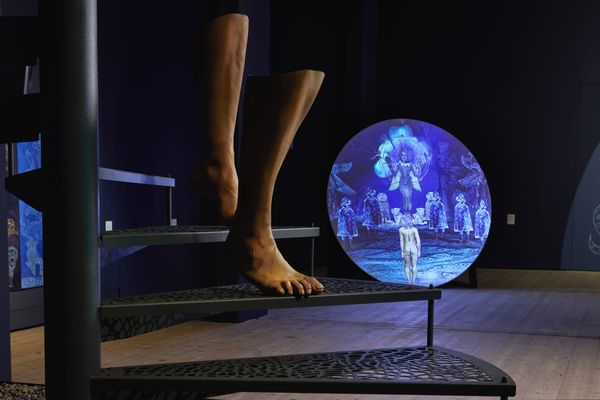
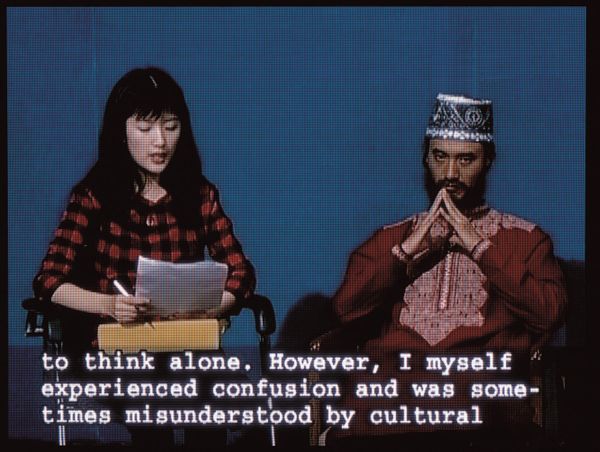
As a counterpoint to Makhacheva’s tired transcontinental apologies, Jawad Al Malhi’s Naiman (2008/26) presents five Jerusalemite men’s commentary on the social role of Jerusalem’s Hammam al-Ayn, a historic public bathhouse in the Old City. “Naiman” is an Arabic phrase for “blessings,” typically declared to cap off a shower or haircut. Al Malhi, who works between East Jerusalem and Abu Dhabi, originally exhibited Naiman in the Hammam al-Ayn itself in 2008; in the current Venice rendition, the narrators’ voices gently course through a stylized domed chamber under a starlit ceiling. The five narrators (one of whom is the artist’s father) fondly recount passages of life in the hammam: friends stayed up late during Ramadan, wedding processions kicked off with the groom’s cleansing ritual and proceeded to Al-Quds, gaily escorted by musicians and lanterns. Lost ways of life are also lamented: “Today, television, satellite dishes, and things like that have distracted people… Now everyone just wants to go home and sit alone.”
These odes, however, transcend generic sentimentality or nostalgia. A key theme of Al Malhi’s oeuvre is the Israeli occupation’s deadly vise on Palestinians’ daily existence. Hammam al-Ayn, built in 1336 by a Mamluk ruler, occupies one of the world’s most coveted pieces of real estate in Jerusalem’s Khan Tankaz archaeological complex, which has been subjected to Israeli encroachment for decades. In an unexpected twist, this year’s Israeli pavilion was temporarily relocated directly opposite the UAE’s. Its centerpiece is a formalistic, clinically precise installation of droplets falling into a black pool, which critics have likened to Israel’s irrigation technology operating upon dispossessed Palestinian land. Naiman, separated by a few steps and an immeasurable gulf, could not have asked for a better neighbor to make its point.
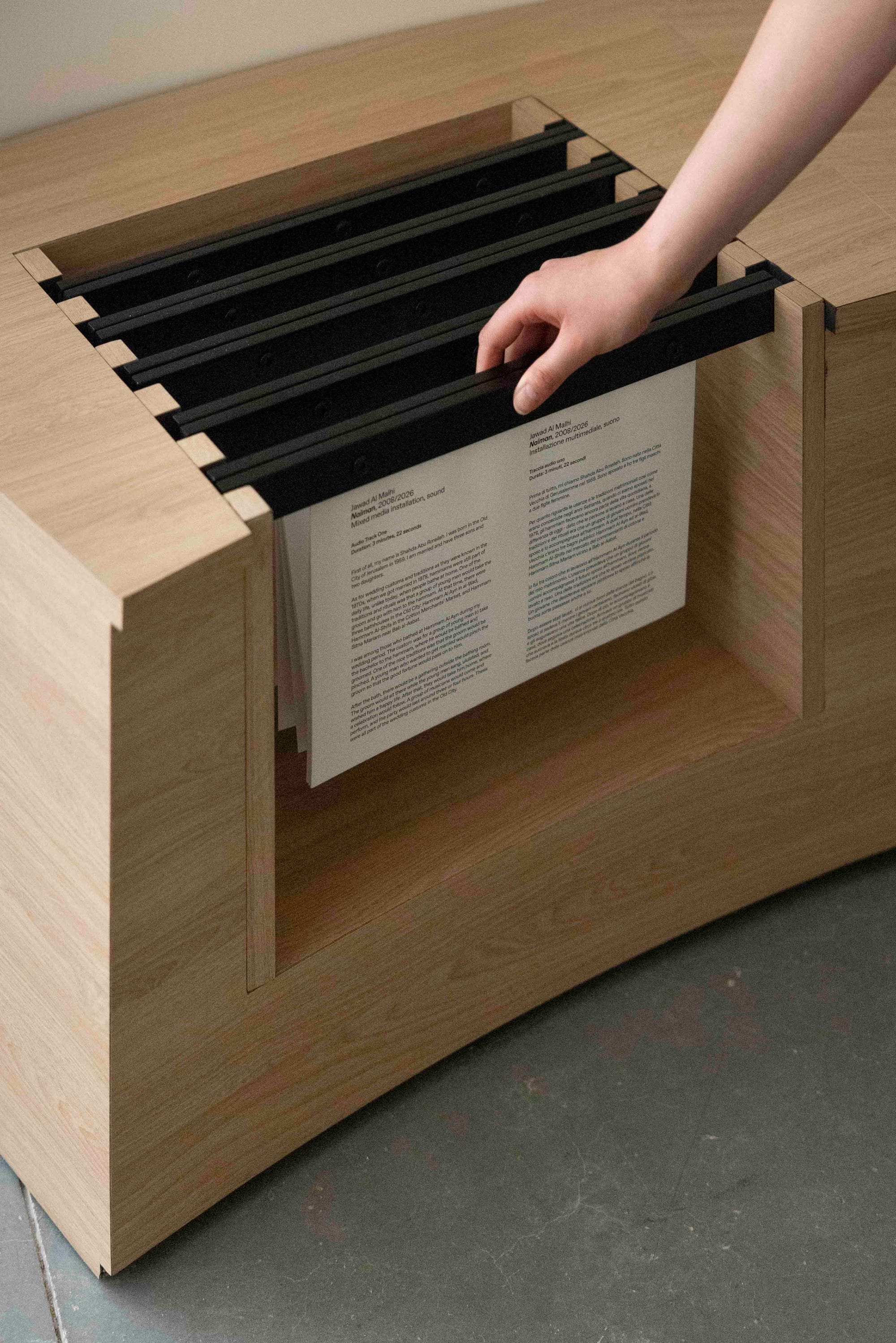
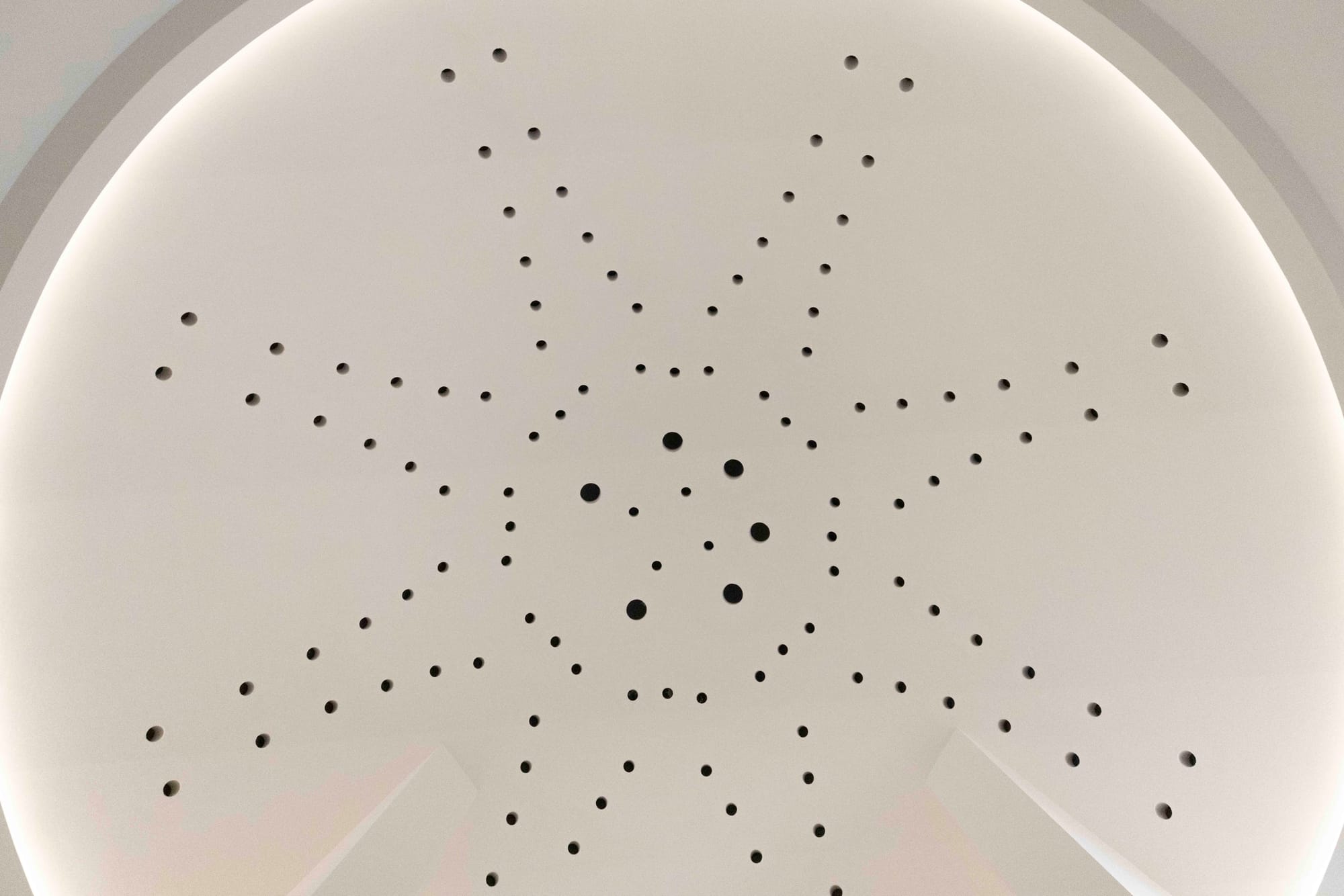
Installation views of JAWAD AL MALHI’s Naiman, 2008/26, mixed-media installation, sound, dimensions variable, at “Washwasha,” the UAE Pavilion, 61st Venice Biennale, 2026. Photo by Ismail Noor of Seeing Things. Courtesy the UAE Pavilion and La Biennale di Venezia.
The quiet times were the hardest because I had the illusion of peace. Then it occurred to me that hiding in silence would not fix my curse. I had to fight back with something louder. *
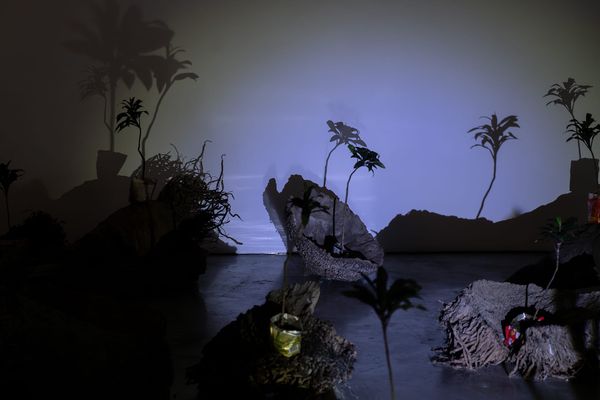
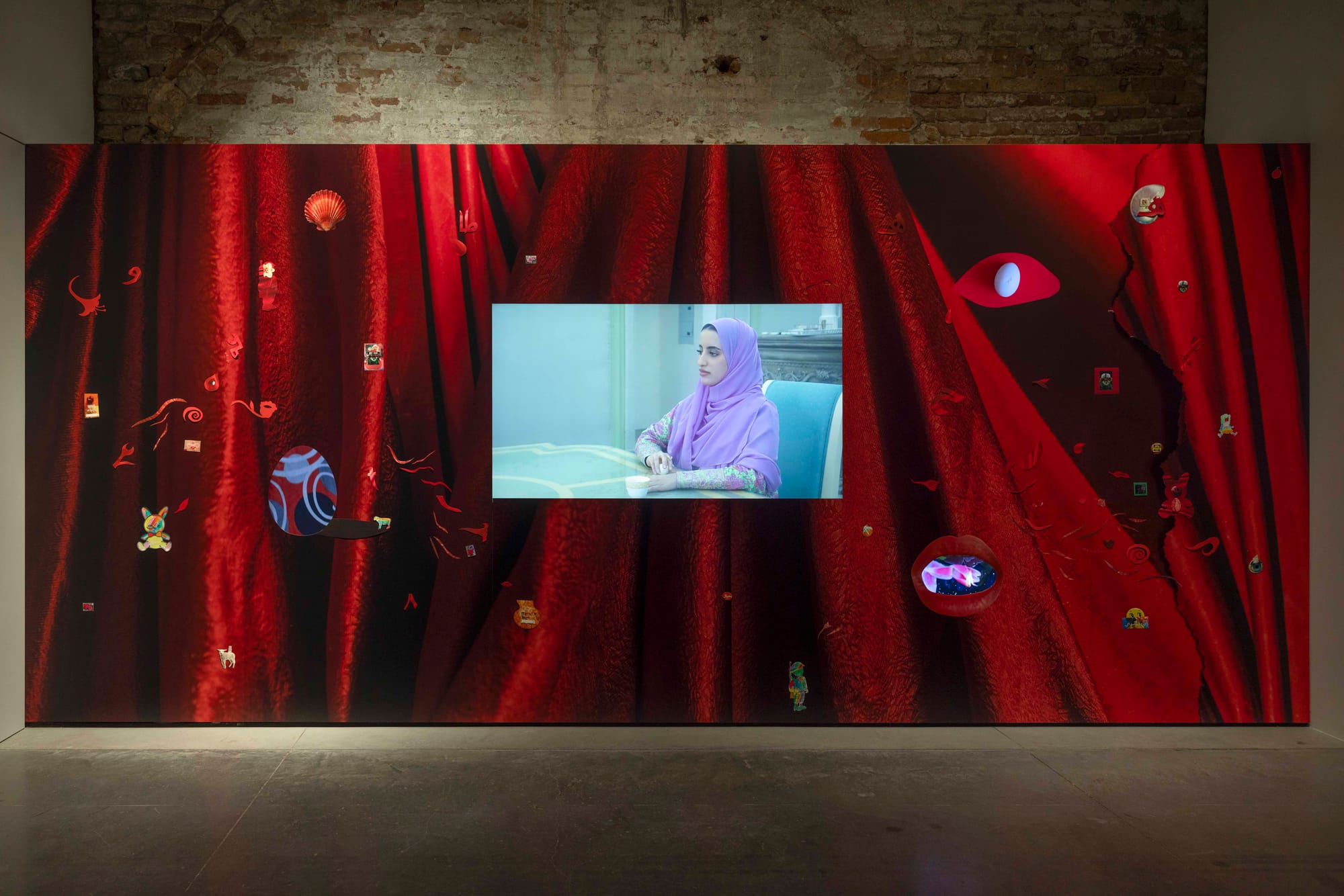
In contrast to Naiman’s forthright concept, Farah Al Qasimi and Mays Albaik, the exhibition’s youngest artists, highlight the obstacles they face in articulating inherited legacies of colonial violence. Al Qasimi grew up in Abu Dhabi and lives in New York, the descendant of both a known Emirati tribe and a Lebanese migrant who arrived on Ellis Island in 1899. Albaik is a third-generation Palestinian refugee with Syrian heritage, and an NYU Abu Dhabi alumna like Kattan and Al Malhi. Both in their mid-30s, they came of age during the rise of mega-malls and hypermarkets, when human activity increasingly migrated indoors, onscreen, and into the cloud. In her experimental multimedia installation The Curse (2026), Al Qasimi embraces these destabilizing layers of reality by using her own childhood sketches and candy-colored montages to conjure a fragmented dystopia. The exact nature of the titular curse is never spelled out: it could be the resource curse of oil, neocolonialism, social oppression, climate apocalypse, or all of the above. Al Qasimi’s artistic vocabulary is distinctly global and contemporary, deftly navigating pop culture references from Stanley Kubrick’s The Shining (1980) to images of combusting oilfields and the polar bear of Coca-Cola ads. But her chilling childhood doodles—a headless camel, an airplane falling out of the sky—need no explanation.
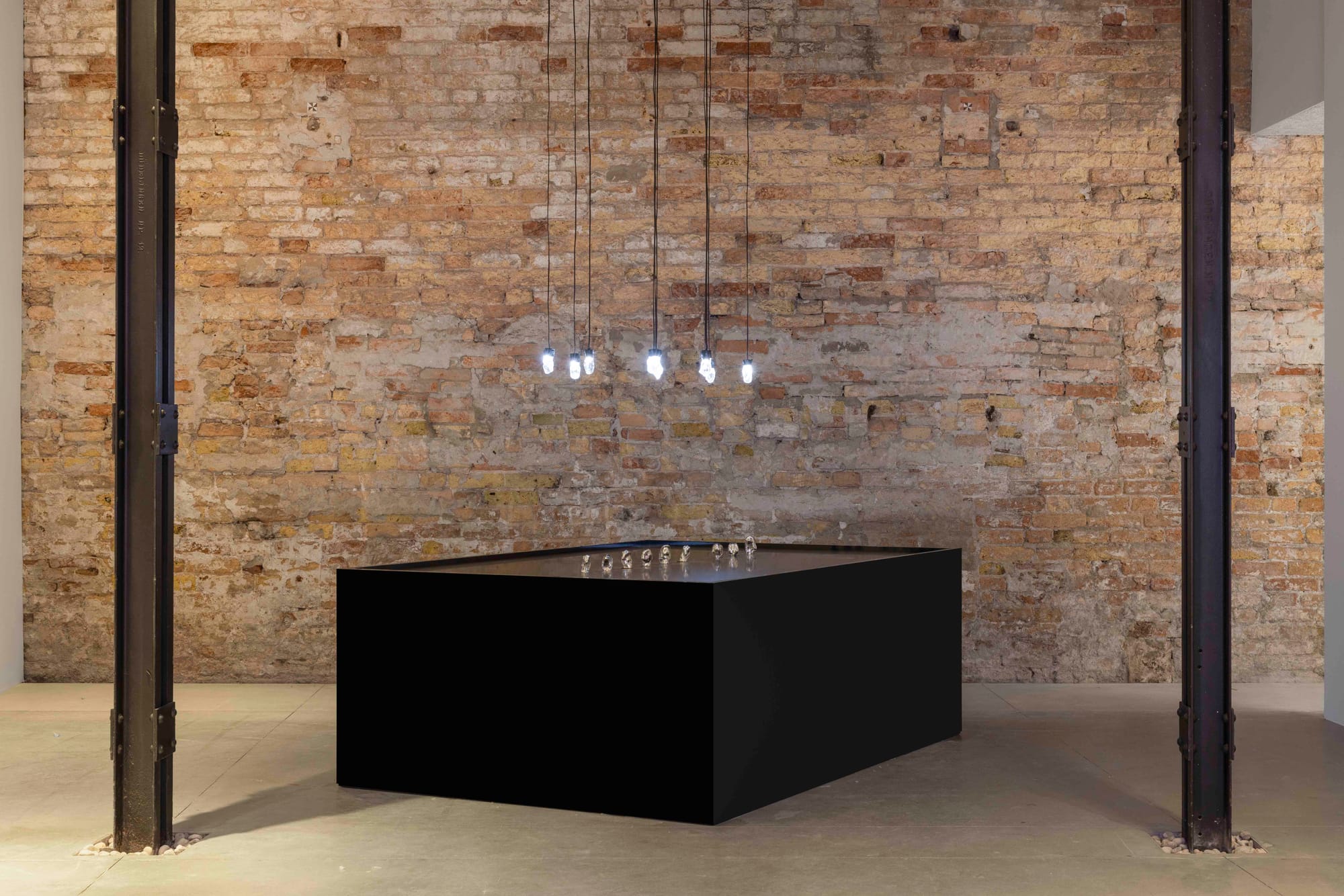
While Al Qasimi expertly deconstructs contemporary excess, Albaik pushes back against it through investigations of language and being that border on the metaphysical. Kūnī Kai Akūna Kamā Aqūl! (Be, so that I may be as I say!) (2026) is an installation of 19 small glass sculptures: 10 dangle from the ceiling like precious, wrinkled bulbs, echoing the Pleiades star cluster traditionally used as navigation and harvesting aids. They were cast from Albaik’s mouth as she began to voice the Quranic phrase “kun fa-yakūn” (“Be, and it is”). (Ironically, the Pleiades’ Arabic name, Thuraya, was adopted by the UAE’s mobile satellite communications company.) Directly below, nine sculptures on a black dais capture the arrested motion of Albaik’s mouth as she started to articulate “Ana lūgati” (“I am my language”), a line from Mahmoud Darwish’s poem Mu’Allaqat (A Rhyme for the Odes). Albaik explains how she was “trying to capture the gesture of pre-speech sound,” painstakingly immobilizing her mouth for eight minutes for each cast in “a productive kind of discomfort.” While the work might easily be perceived as a symbol of censorship, it is far more original in its attentiveness to the primordial, in-between moments of formation.
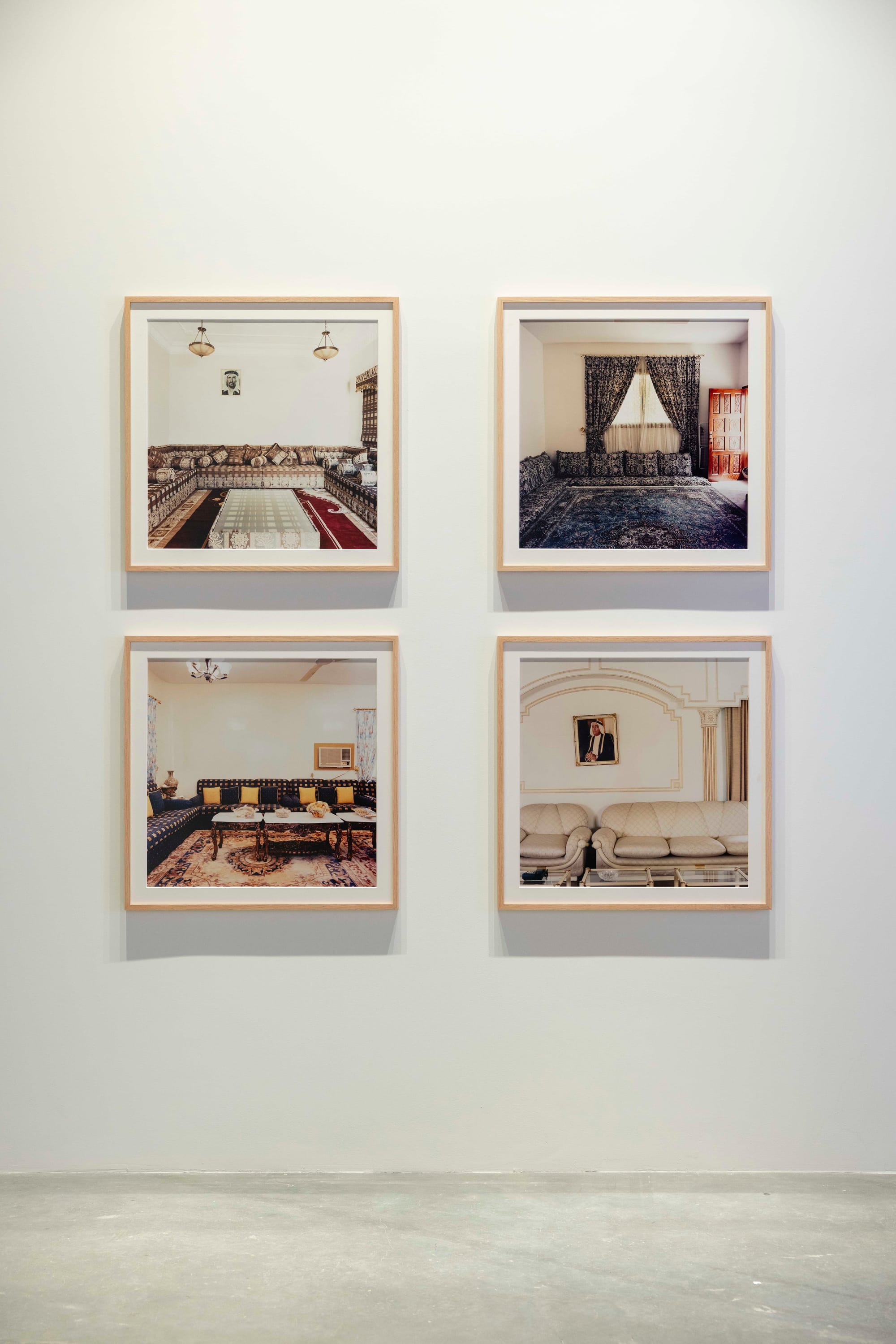
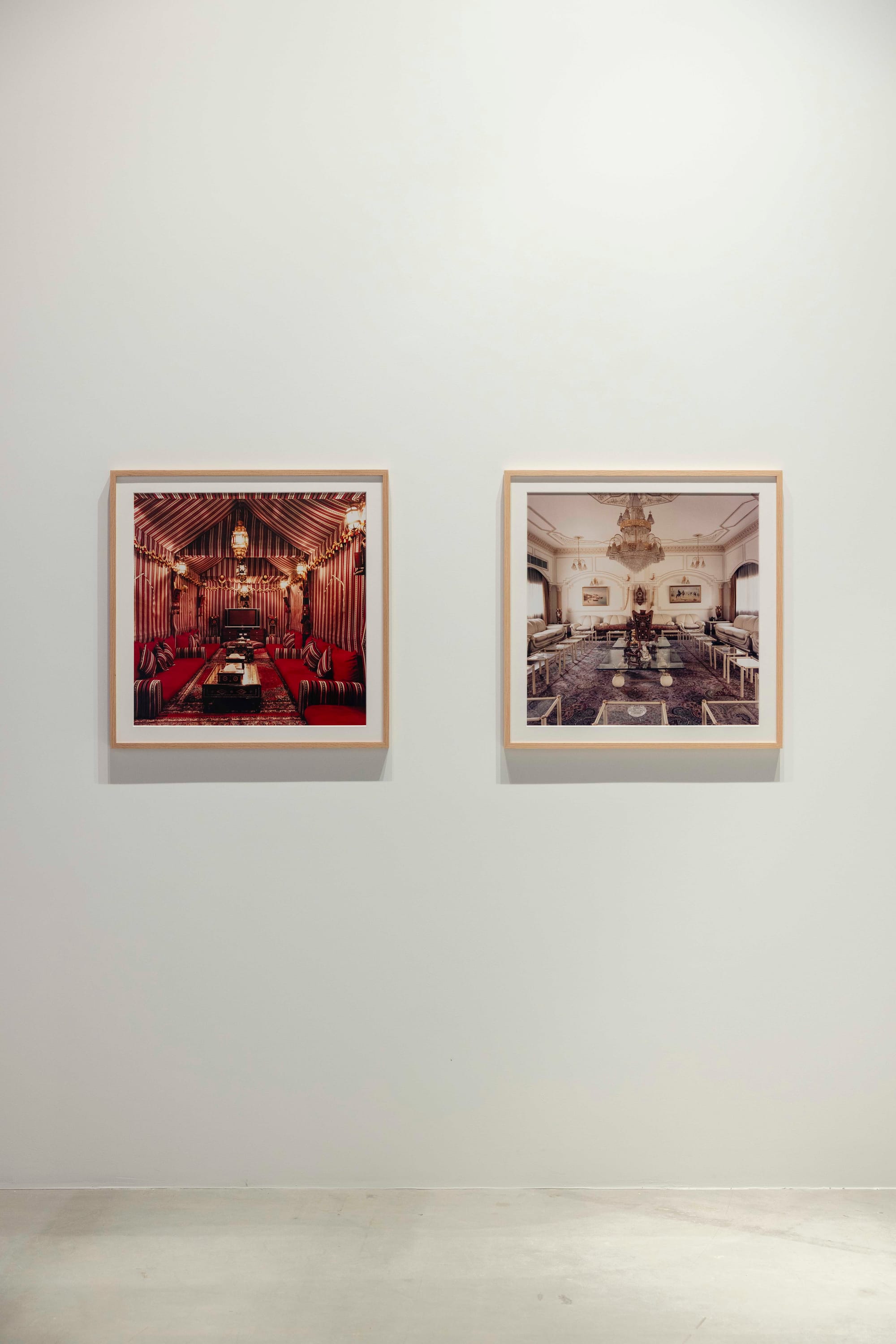
Installation views of LAMYA GARGASH’s Majlis series, 2009, C-prints, dimensions variable, at “Washwasha,” the UAE Pavilion, 61st Venice Biennale, 2026. Photo by Ismail Noor of Seeing Things. Courtesy the UAE Pavilion and La Biennale di Venezia.
It’s expected that the source will no longer recognize the message they sent out. This is part of the thrill.*
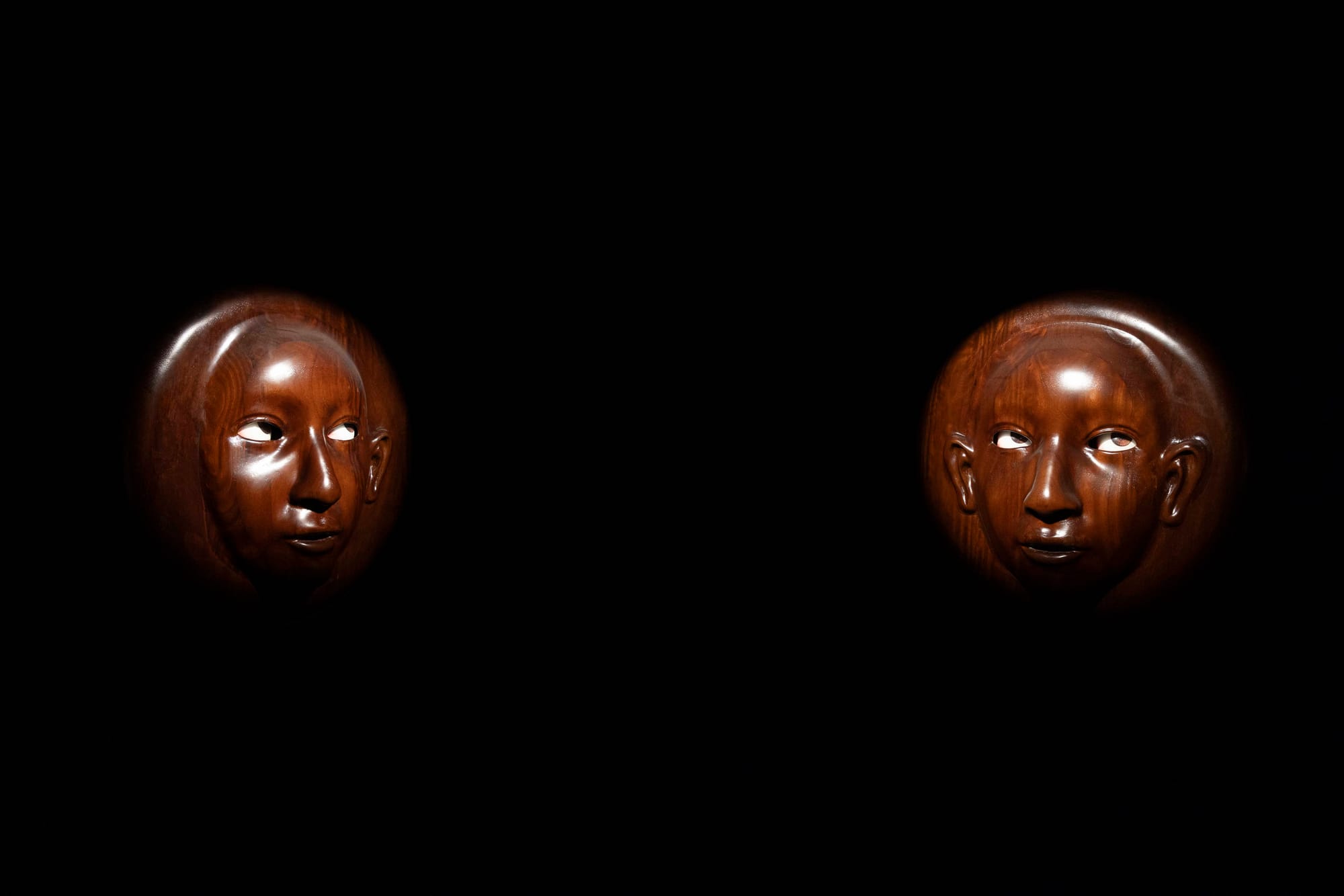
Given washwasha’s distinct feminist overtones in its intimation of informal, marginalized chatter—the minor keys writ large—it is perhaps not a coincidence that a majority of the exhibition’s curators and artists are women. In the Emirati dialect, the word is further imbued with connotations of interference and incoherence. Lamya Gargash’s Majlis (2009), comprising photographs of the formal living rooms found in many Arab residences, are literally pictures worth a thousand words. Devoid of human presence, her interiors are powerfully evocative of the Gulf’s rapid social and cultural transformations, particularly for those familiar with the region. Majlis succeeds Gargash’s earlier photographic series of budget hotels exhibited in the UAE’s inaugural pavilion in Venice in 2009, a vivid contrast to the stereotypical image of the region’s flashy five-star hotels. Now, set between Albaik and Al Qasimi’s works, the impeccable Majlis assume an uneasy cast, suggesting political and psychological space freshly sanitized from information as well as rumor. The final word belongs to Alaa Edris’s Wiswās (2026), which arrives perfectly on point. Her trio of iroko wood faces, based on Edris’s own features, centers absence as the source of both animation and apprehension. Two faces are each missing an ear, while their bulging, mechanized eyes dart in nervous synchronization to a disembodied electronic voice declaring “this is the end.”
In the spirit of Ajman Radio’s “Voice of the Country,” Kattan also commissioned three UAE-based artists—Moza Almatrooshi, Roudhah Al Mazrouei, and Spencer Shea—for programmatic activations. Each artist captured three hours of sound that are available as audio recordings in the pavilion, accompanied by artist postcards with the recording’s GPS coordinates. One is a father-daughter dialogue on a farm; another the hubbub of a favorite barbershop. During the preview days, these played on loop alongside real-time rafts of whispers about the tumultuous politics engulfing the Biennale. People quietly commiserated about freight costs and delayed shipments. Others shared notes on upcoming demonstrations. A group of Biennale participants protesting Israel’s war machine gathered each day for an action dubbed Solidarity Drone Chorus, where they collectively hummed to an ominous buzz from their phones. Their inspiration was the Drone Song by Ahmed Muin Abu Amsha, a Gazan musician who continued to play music and teach children through the genocide. Late last year, his young students were frazzled by a debilitatingly loud drone hovering over their heads. No, he said, we won’t stop. Instead, they harmonized and started to sing with the drone, a renegade choir commandeering the air.
* Quotes from Salem Obaid Alaleeli in “Nasser Abdullah in converation with Salem Obaid Alaleeli, Saturday, November 29, 2025,” commissioned by the Salama bint Hamdan Al Nahyan Foundation; Dear R., R., K., S., M., A., C., S., K., I., G., L., A., A., L., P., G., E., J., D., M., C., B., O., F., F., R., D., M., E., L., I., F., L., A., M., T., K., K., L., P., F., V., A., L., L. (2018/26) by Taus Makhacheva; Naiman (2008/26) by Jawad al Malhi; The Curse (2026) by Farah Al Qasimi; And What Did You Say? (2026) by Taus Makhacheva.
Chin-chin Yap is a Singaporean writer and filmmaker based in Lisbon and contributing editor for ArtAsiaPacific.