People
What the Land Holds: On the Zayed National Museum
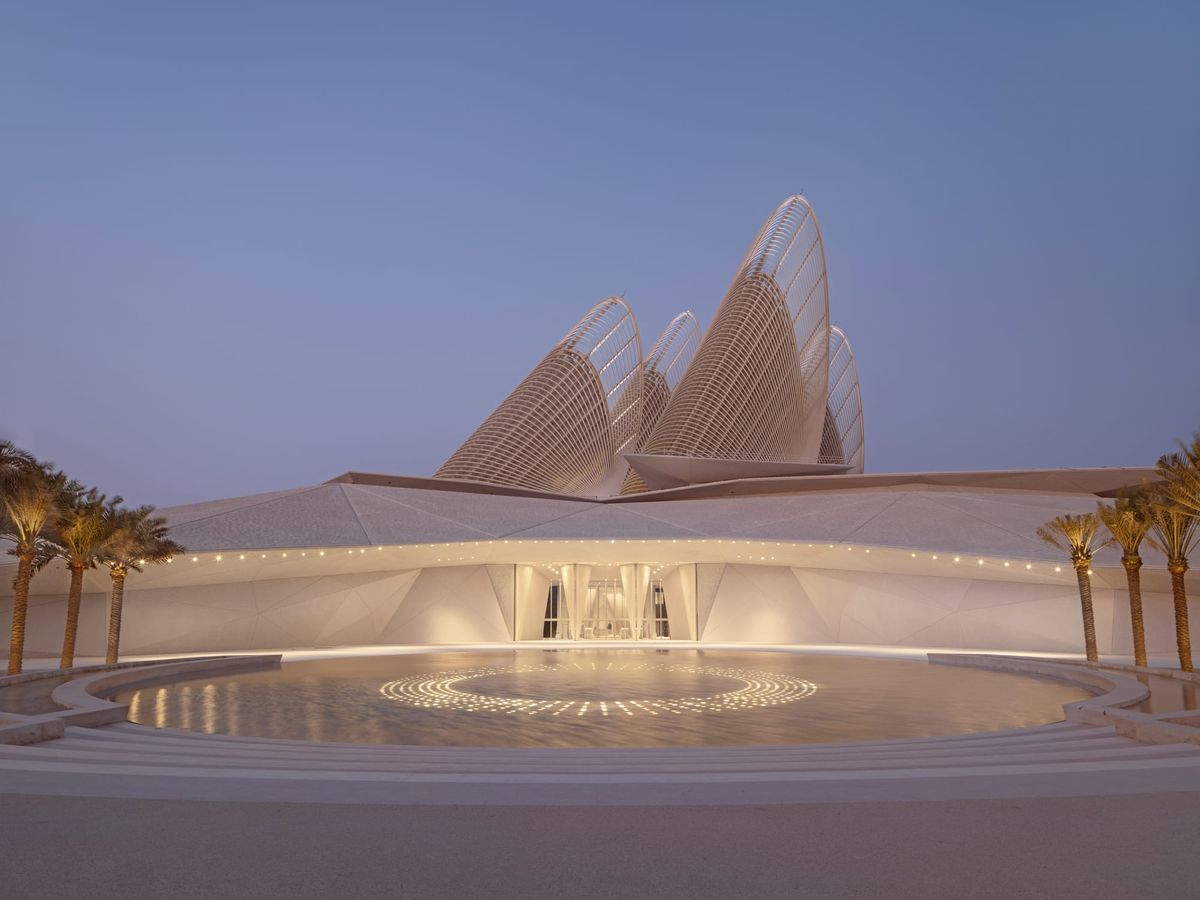
Last December, the UAE welcomed the Zayed National Museum, dedicated to the country’s founding father, Sheikh Zayed bin Sultan Al Nahyan. Designed by Foster + Partners and located on Abu Dhabi’s Saadiyat Island, the building features monumental wing-like structures that pay tribute to the revered practice of falconry while reflecting Sheikh Zayed’s commitment to environmental stewardship and cultural diplomacy.
Through exhibitions that chart 300,000 years of human history in the UAE, the institution aims to cultivate a balanced yet dynamic engagement with the nation’s past and future. In this interview, ArtAsiaPacific speaks with Mohamed Khalifa Al Mubarak—chairman of Abu Dhabi’s Department of Culture and Tourism—about how the museum’s architecture and program aim to bring Sheikh Zayed’s legacy, the UAE’s heritage, and its contemporary identity into dialogue.
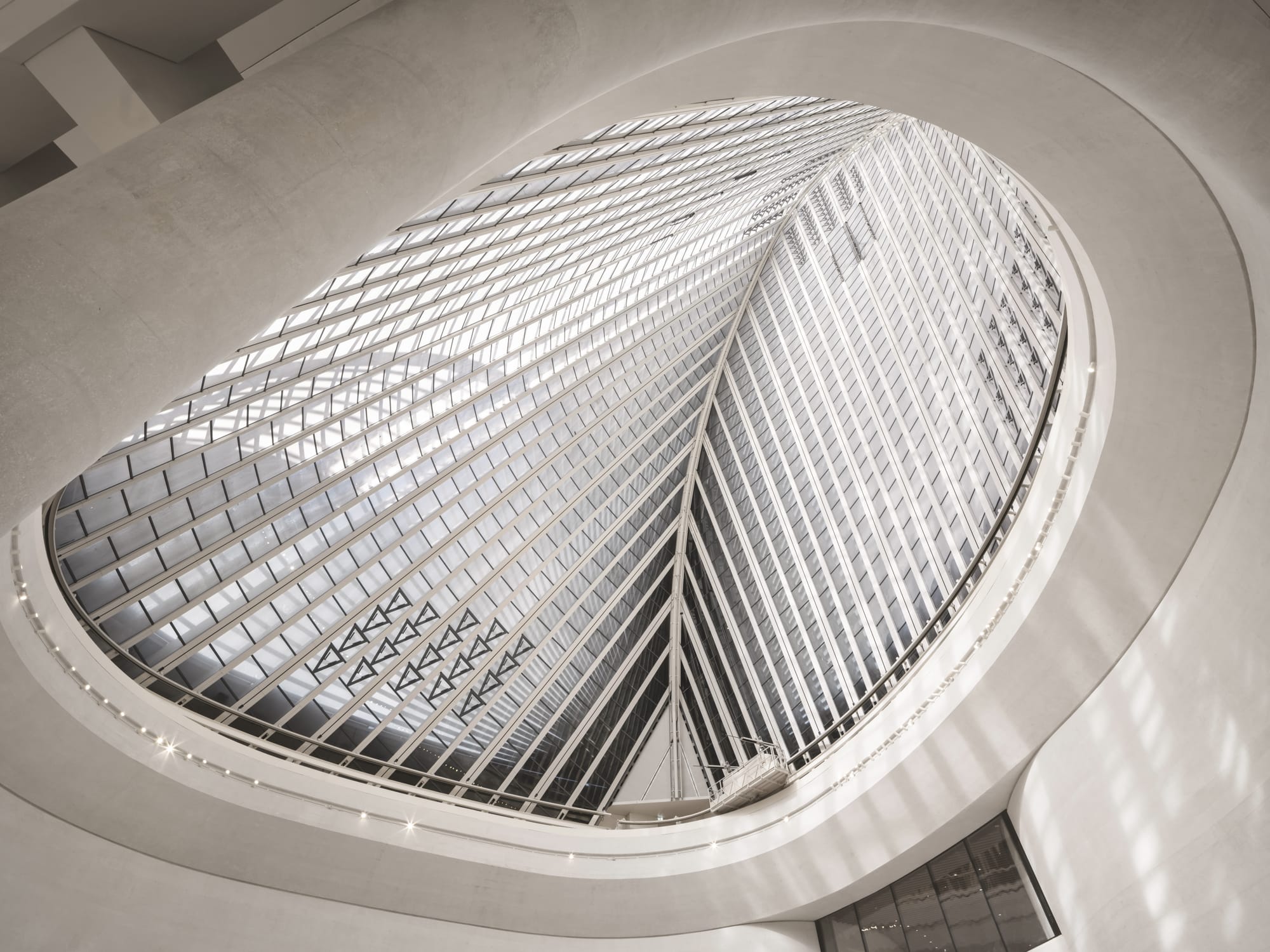
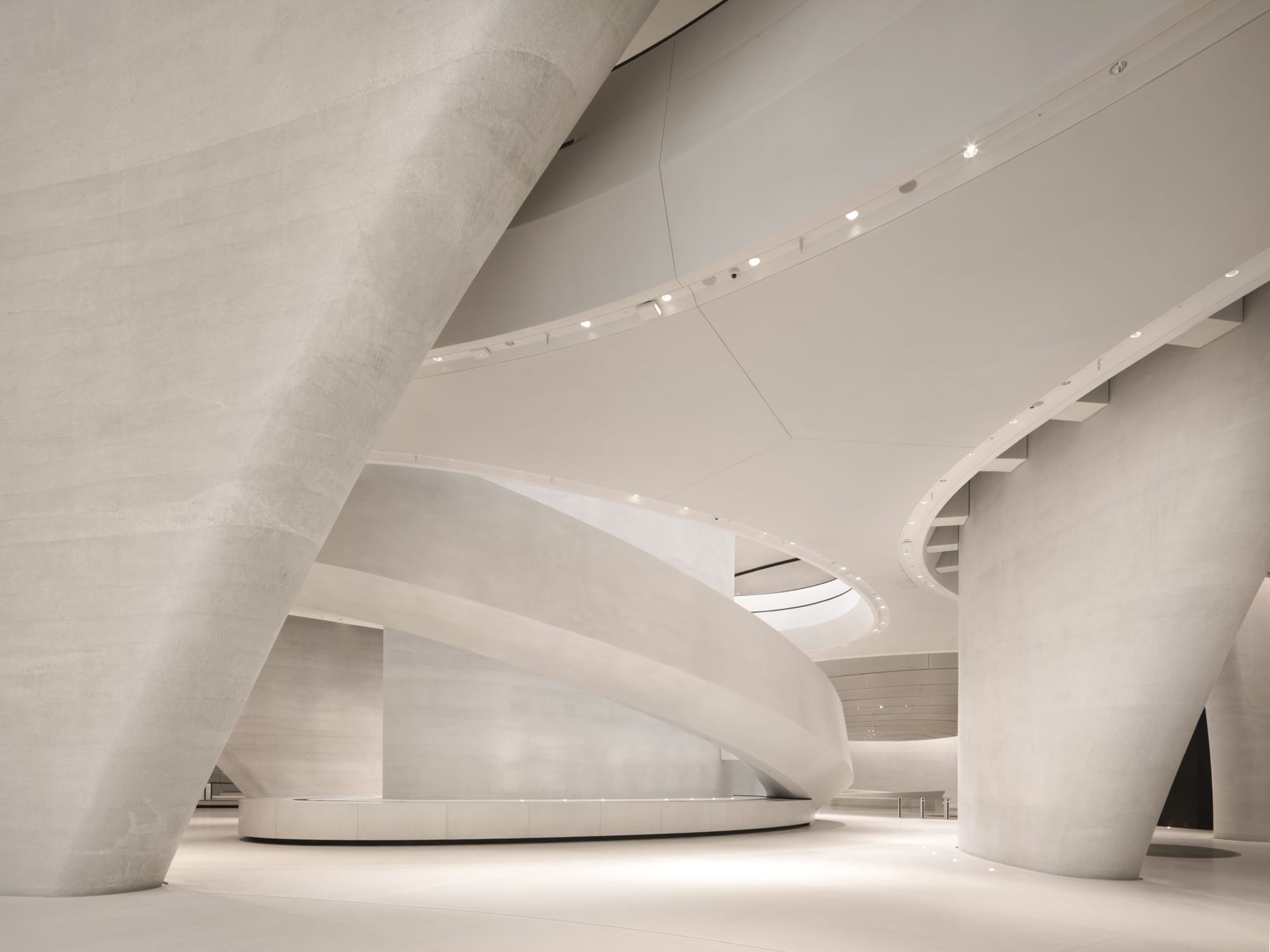
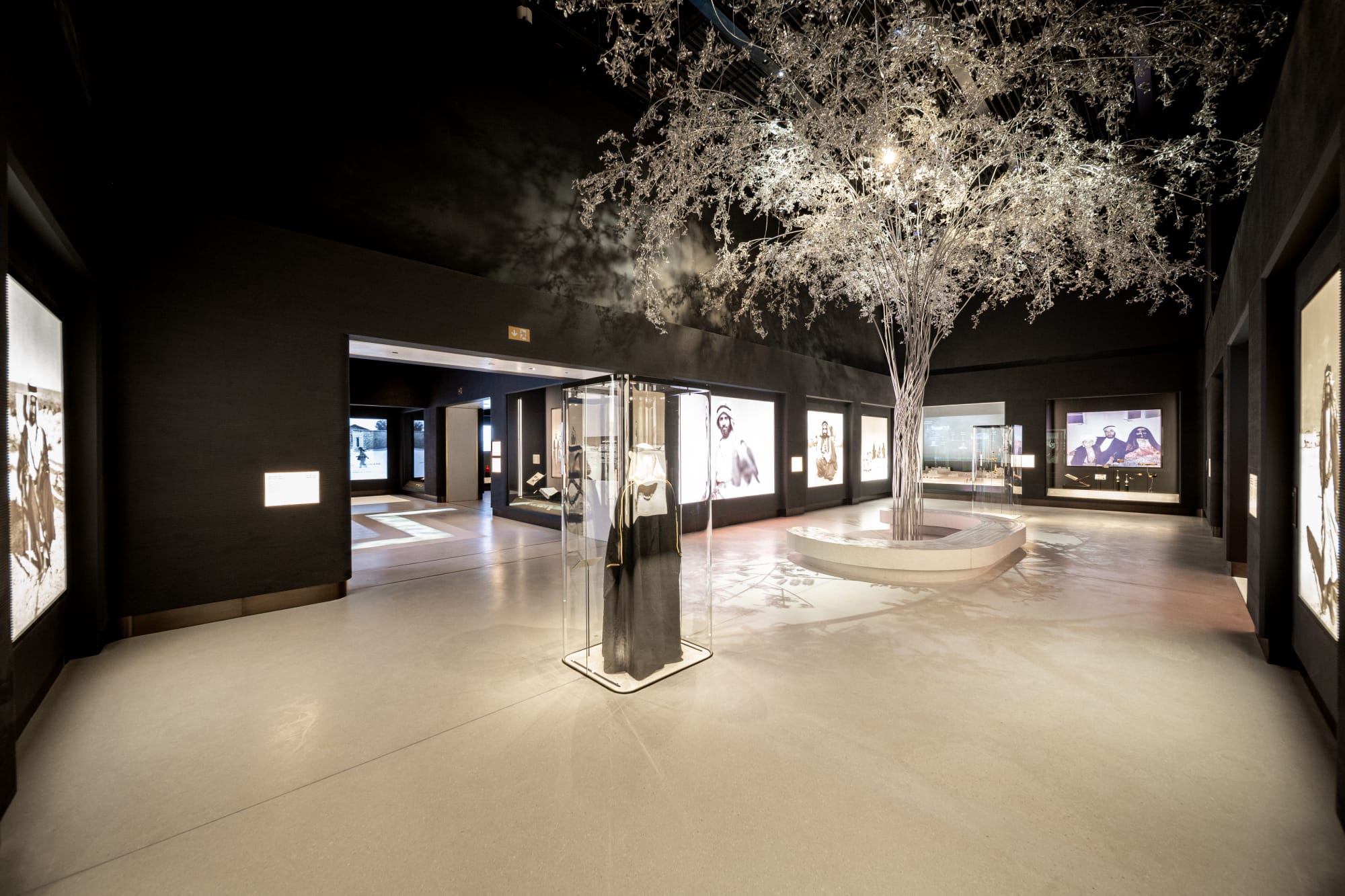
Interior views of the Zayed National Museum, Abu Dhabi. Courtesy the Zayed National Museum.
How does the museum’s architecture stage the dialogue between Sheikh Zayed’s roots and the UAE’s hypermodern present?
Zayed National Museum traces 300,000 years of human history in what is now the UAE, recounting a story that has never before been told at this scale and depth. The architecture needed to connect both Emiratis and the world to the remarkable past of this land and its people. The design balances contemporary ambition with a deep respect for tradition; rather than treating modernity as a departure from the past, it presents both as harmonious extensions of a shared narrative.
The building’s innovative design embodies the values of our founding father, the late Sheikh Zayed bin Sultan Al Nahyan, rooted in his devotion to Islamic faith and his belief in community, the power of unity, and the connection to the land. These values are reflected in the Al Masar Garden, a 600-meter outdoor gallery that guides visitors through the story of his life. The landscape draws on the environments that shaped him—deserts, oases, and urban settings—animated through sculptures, native plants, and a working falaj irrigation system. Open channels carry water through the garden, honoring the ingenuity of generations who lived on and cared for this land while creating a shared space for reflection and gathering.
The museum’s six permanent galleries are nestled within a textured mound and faceted planes that reflect the topography of the UAE. Rising above this elevation are five lightweight steel structures inspired by the wings of a falcon in flight. Falconry is far more than a mere cultural practice in the region; it is intricately woven into our national identity.
The cohesion extends into the building’s performance, where sustainability becomes the meeting point of cultural heritage and modern innovation. The steel towers open through operable panels for natural ventilation in cooler months, while underground pipes supported by a geothermal system precools incoming air—a contemporary reimagining of the traditional barjeel (wind tower). This further honors Sheikh Zayed’s forward-looking environmental stewardship through innovation grounded in tradition.
The result is a building that feels both of its time and timeless—contemporary in execution, yet growing organically from our history, our climate, and our cultural identity. Sheikh Zayed’s roots and the UAE’s present are in dialogue, each informing and enriching the other.
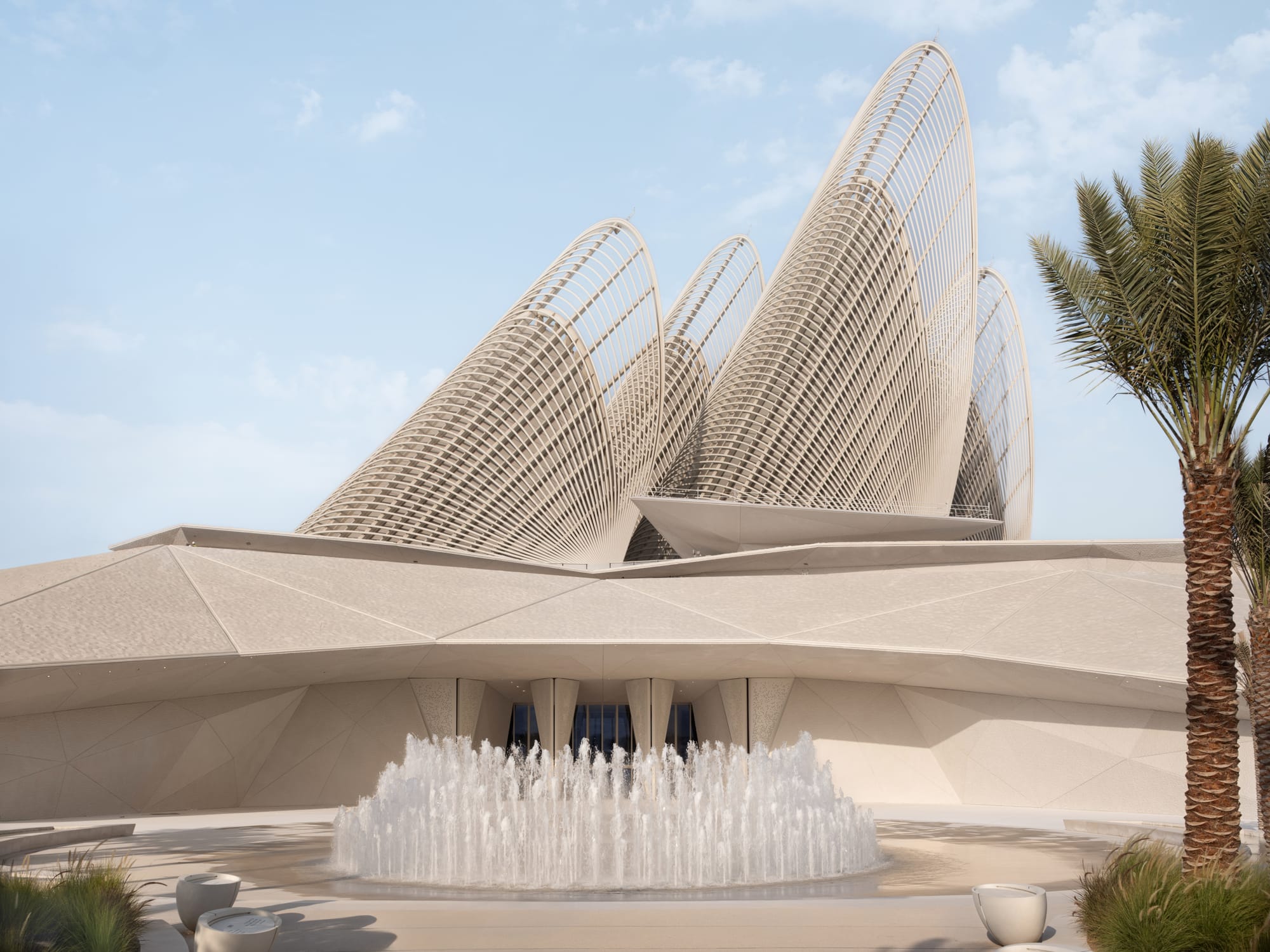
Exterior view of the Zayed National Museum, Abu Dhabi. Courtesy the Zayed National Museum.
In curating Sheikh Zayed’s personal artifacts, what object will most complicate the official narrative of the nation’s founder?
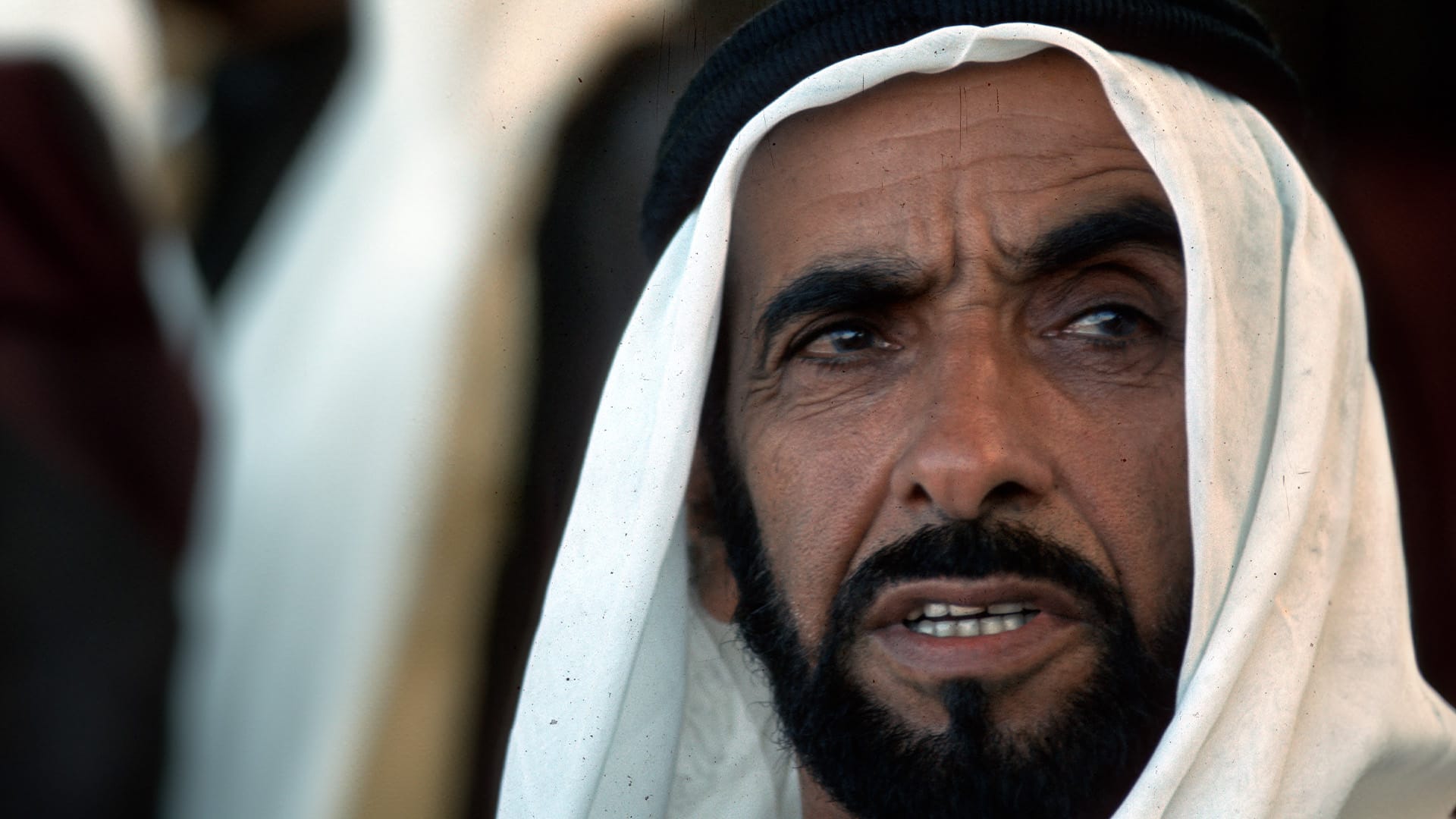
The “Our Beginning” gallery is the first indoor stop for visitors. It introduces the foundations of the UAE we see today: the leadership and ethos of the late Sheikh Zayed. The displays and artifacts offer insights into how Sheikh Zayed interacted with the people of this land. Through archival photography and oral histories, we see and hear how he traveled throughout the emirates, speaking with the people and hearing from them directly to learn what was required from him as a leader. Visitors encounter these stories through a multisensory interpretive approach that combines archival photography, film, sound, and other immersive media.
During the formative period between 1966 and 1967, Sheikh Zayed’s leadership was characterized by a hands-on approach as he prepared for comprehensive national development. Having already spent two decades as Ruler’s Representative in Al Ain, he used these years to traverse Abu Dhabi—often in his own Chrysler—to engage directly with the public. Visitors will gain a fuller understanding of this particular period within the UAE, as well as Sheikh Zayed’s legacy in the context of the UAE’s founding narrative.
A replica of the 1966 Chrysler used by Sheikh Zayed during these journeys is on display within the gallery. The vehicle stands as a powerful symbol of his leadership style, one rooted in proximity, dialogue, and an enduring connection with the people.
Another significant object on view is Sheikh Zayed’s personal Polaroid camera, dating from the late 1960s to early ’70s—a symbol of the practical and engaging nature of his leadership. He personally documented and oversaw many of the emirate’s key projects, often visiting the sites and using this very camera to capture their progress.
How do you prevent the galleries from becoming a shrine rather than an open space for exploring the nuances and complexities of Emirati identity?
The format of the museum prevents this from happening. We have six permanent galleries that trace a much larger story: 300,000 years of human history in what is now the UAE. Sheikh Zayed’s legacy is woven throughout this narrative, but it is always positioned within context, showing how his values emerged from this land and its people rather than existing in isolation.
What makes this approach effective is that Sheikh Zayed’s story becomes a central thread in a broader tapestry. The galleries deliberately move between different scales and perspectives, from intimate personal histories to vast archaeological timescales, from individual achievements to collective cultural traditions. This constant shift prevents any single narrative from dominating or becoming static. It also asks visitors to see connections and draw their own conclusions rather than presenting a single authoritative interpretation. The museum consciously encourages visitors to embark on their own journey of discovery, fostering individual reflection and nuanced understanding.
There is also a temporary exhibition gallery, which is essential for keeping the museum dynamic and responsive to contemporary cultural conversations. We are thinking about how galleries will evolve as research reveals new information—rather than maintaining a fixed presentation, we want to ensure the museum is a living institution that grows along with our knowledge.
The oral history collection is particularly important. Here, citizens and residents can share their own memories and stories, allowing diverse voices to contribute to our living heritage. By inviting multiple perspectives rather than presenting a single authoritative interpretation, the museum becomes a space for ongoing conversations about Emirati identity.
One of our curators also traveled across the UAE to collect firsthand stories about Emirati life—it is a project that will be regularly updated over the years. These narratives form a cornerstone of the museum’s mission to present a comprehensive account of our history—one that keeps up with the passage of time.
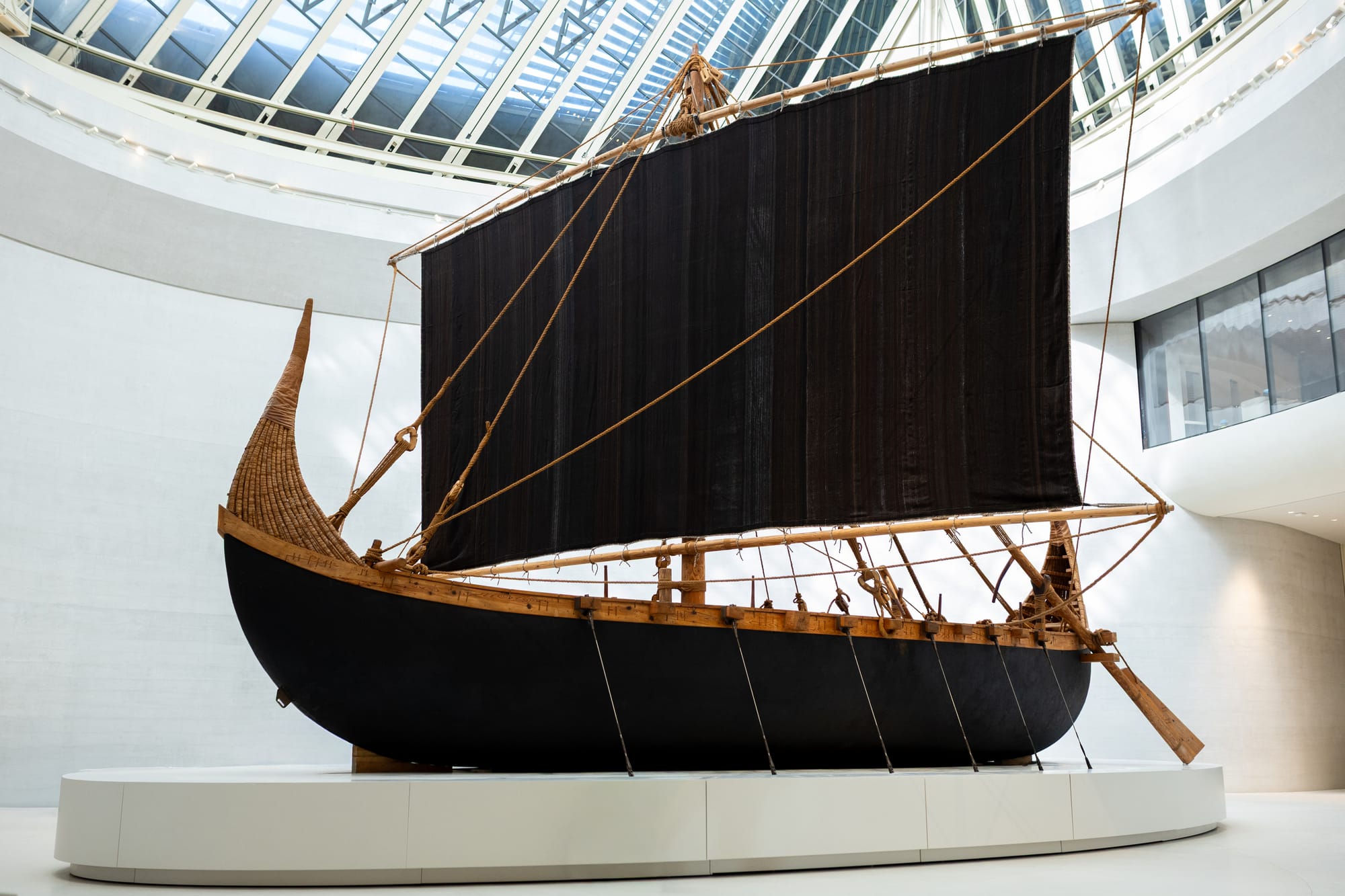
Installation view of the Magan Boat at the Zayed National Museum, Abu Dhabi. Courtesy the Zayed National Museum.
Which pre-oil-era artifact in the collection carries the strongest sensorial charge—smell, texture, sound—and how will it be displayed to preserve that presence?
The Magan Boat reconstruction carries extraordinary presence. This 18-meter vessel, the outcome of our first research partnership with Zayed University and New York University Abu Dhabi, sailed in the Arabian Gulf. It was built using raw materials described on an ancient clay tablet and techniques dating back to 2100 BCE. 15 tons of locally sourced reeds were soaked, stripped, crushed, and tied into bundles with ropes made of date palm fiber, then lashed to an internal wood structure and coated in bitumen using waterproofing techniques from ancient shipmakers.
This is active heritage in its purest form: using traditional knowledge to unlock historical understanding while inspiring contemporary innovation. The boat covered 50 nautical miles, reaching speeds of up to 5.6 knots under a goat-hair sail. It was captained by Emirati sailors, including champion sailor Marwan Abdullah Al-Marzouqi, who hails from a family with generational maritime experience.
When visitors encounter this boat, they are seeing something that both existed 4,000 years ago yet only recently sailed our waters. Through the scale, materials, and craftsmanship, it carries a physical presence that connects visitors to how Bronze Age societies actually lived and moved across these waters, creating trade connections between the UAE and communities as far away as Mesopotamia and South Asia.
The museum animates this story through multiple layers of engagement. A dedicated exhibition traces both the historical context and the boat’s meticulous reconstruction process. An accompanying documentary film captures the entire journey of assembling the vessel, giving viewers insight into how this ancient maritime technology was reborn through contemporary hands.
If you could put one quote from Sheikh Zayed on a billboard outside Zayed National Museum for all visitors to see before entering, what would it be and why?
Sheikh Zayed once said: “A nation without a past is a nation without a present or a future. . . . [O]ur nation has a flourishing civilization, deep-rooted in this land for many centuries. These roots will always flourish and bloom in the glorious present of our nation and in its anticipated future.” This understanding drove his commitment to preserving cultural heritage even before the UAE’s federation in 1971.
By tracing human presence over 300 millennia in the area of what is now the UAE, we are showing visitors that understanding this vast history is foundational to who we are and where we are headed. Sheikh Zayed recognized that a nation’s strength comes from people who understand their beginnings; who can draw wisdom and confidence from knowing the resilience, innovation, and connections that have always been a hallmark of life in this region.
This quote would prepare every kind of visitor—local, resident or international—for what they are about to experience: not just passive observation of artifacts behind glass but active engagement with history as a living force that informs contemporary identity and future aspirations.
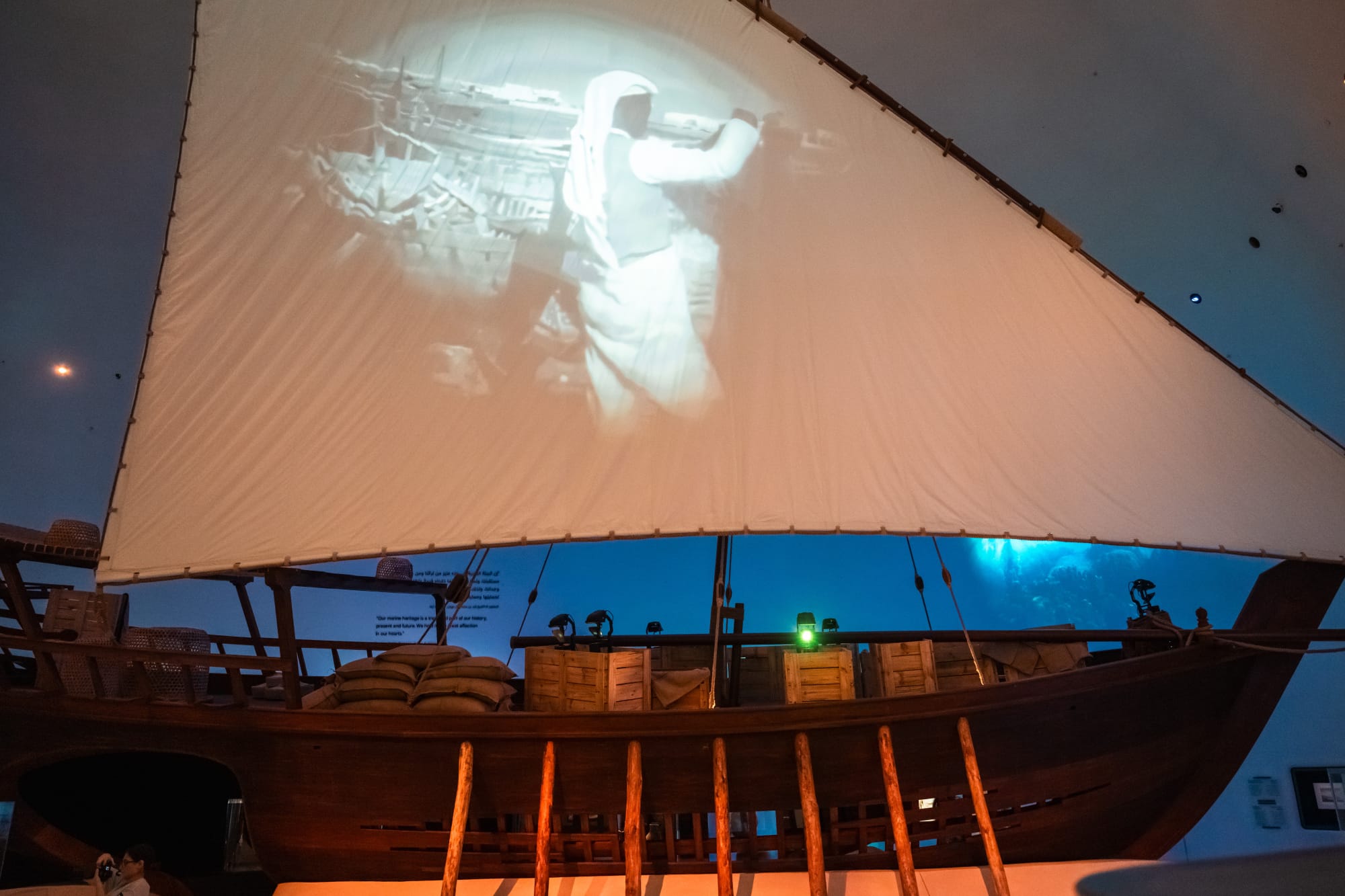
Installation view of “By Our Coasts” at the Zayed National Museum, Abu Dhabi. Courtesy the Zayed National Museum.
What is the most counterintuitive lesson you’ve learned about UAE history or culture while working on Zayed National Museum that changed how you approached your role at the museum?
One of the most striking discoveries we made through our work for Zayed National Museum has been the sophistication and international reach of Bronze Age societies in what is now the UAE. Recent archaeological work on Umm an-Nar Island, located off the coast of Abu Dhabi, reveals it was once one of the region’s largest and globally significant ancient ports. Pottery vessels found there were imported from as far away as ancient Mesopotamia and South Asia, highlighting the island’s pivotal role in long-distance trade over 4,000 years ago. This challenges assumptions that the UAE’s global connections are only a recent phenomenon. The Magan Boat was named after the Magan region, the ancient name for the UAE and a surrounding region. Ships of this size and strength allowed people living here to trade with faraway communities.
Another revelation has been the stories emerging from our oral history collection, particularly regarding women’s duties during the pearling era. While men spent months at sea on pearl diving expeditions, women shouldered the heavy work, tending date crops, digging wells, supplying pearl hunters with drinkable water, and maintaining entire communities. These accounts from Emirati pearling families unveil a more nuanced picture of historical gender roles, showing how female labor was essential to sustaining the economic and social fabric of coastal areas.
What this teaches us is that Emirati innovation, adaptation, and global engagement stretch back thousands of years. Our story of transformation started way before 1971. It is a story of continuity, of people who have always been resourceful and resilient in the harsh desert environment, connected to the wider world and deeply sophisticated in their understanding of trade and technology.
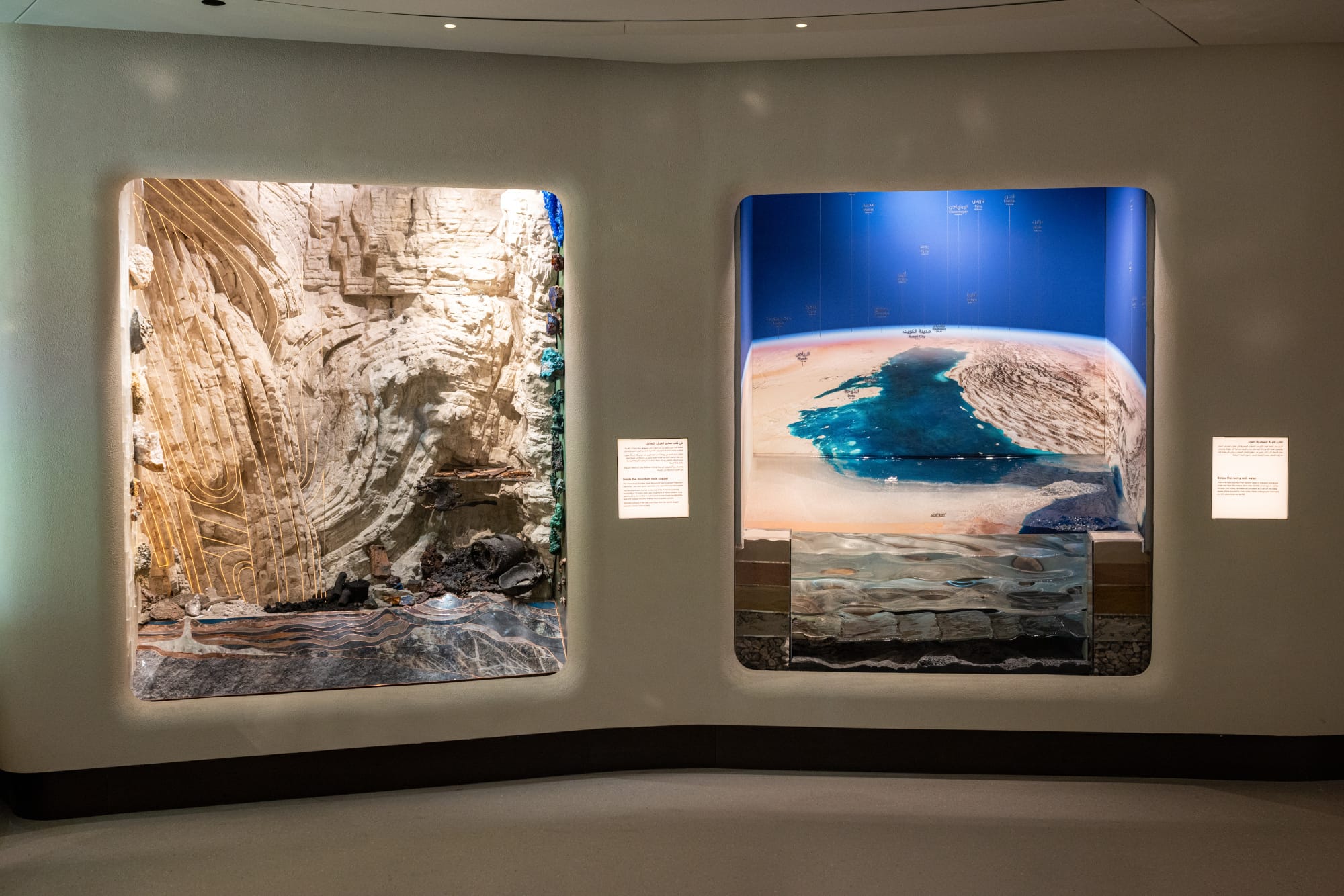
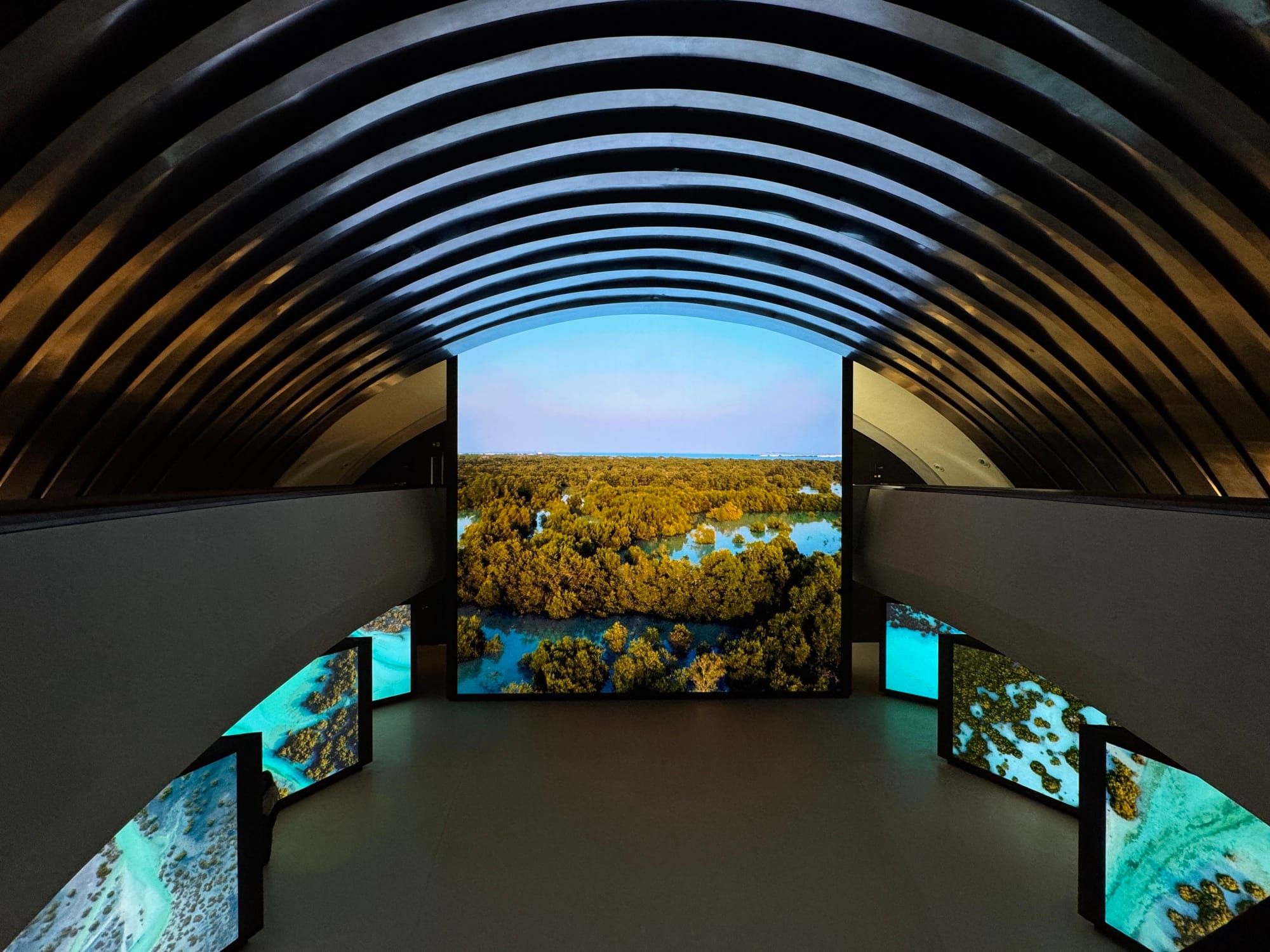
Installation view of “Through Our Nature” at the Zayed National Museum, Abu Dhabi. Courtesy the Zayed National Museum.
Looking ahead, if you could fast-forward five years after the opening, what single indicator or visitor story would make you feel the museum has truly succeeded in honoring Sheikh Zayed’s vision?
Success for us won’t be measured by visitor numbers alone, even though such statistics do matter. The real question is whether the museum helps communities understand themselves—whether children growing up in the UAE cannot picture the place without it, families return to it repeatedly because each visit reveals something new, or young people discover careers in heritage and research they did not know existed.
True success would be hearing a story that embodies this vision: a young Emirati girl visits the museum, captivated by the Abu Dhabi Pearl and the Magan Boat, uncovering the tales of ancestors who dove for pearls and navigated ancient trade routes. Years later, as a university student, she applies for our Research Fund to delve into the UAE’s maritime history. Ultimately, she becomes a curator or archaeologist, enriching our understanding of her homeland’s narrative and inspiring the next generation. Her career exists because the museum ignited her curiosity, pride, and recognition of her heritage’s global significance. Pursuing this work became both viable and valuable.
This is what Sheikh Zayed envisioned: institutions that develop people, enable capacity building across generations, that ensure knowledge and cultural identity strengthen over time rather than fade. He understood that a nation’s strength lies in its people and their ability to innovate, with confidence grounded in an understanding of where they come from.
If five years after opening, we see young Emiratis choosing careers in cultural heritage, international researchers collaborating with local scholars on UAE history, families making the museum part of their regular lives rather than a one-time visit—if the museum has become a trusted resource that citizens and residents turn to for comprehensive knowledge about the country, that is when we will know we have truly honored Sheikh Zayed’s vision. The museum will have become what we meant it to be: a living institution shaping the future.
Elaine W. Ng is editor and publisher of ArtAsiaPacific.