People
When Beauty Appears: Lee Mingwei Interviewed by Rhana Devenport
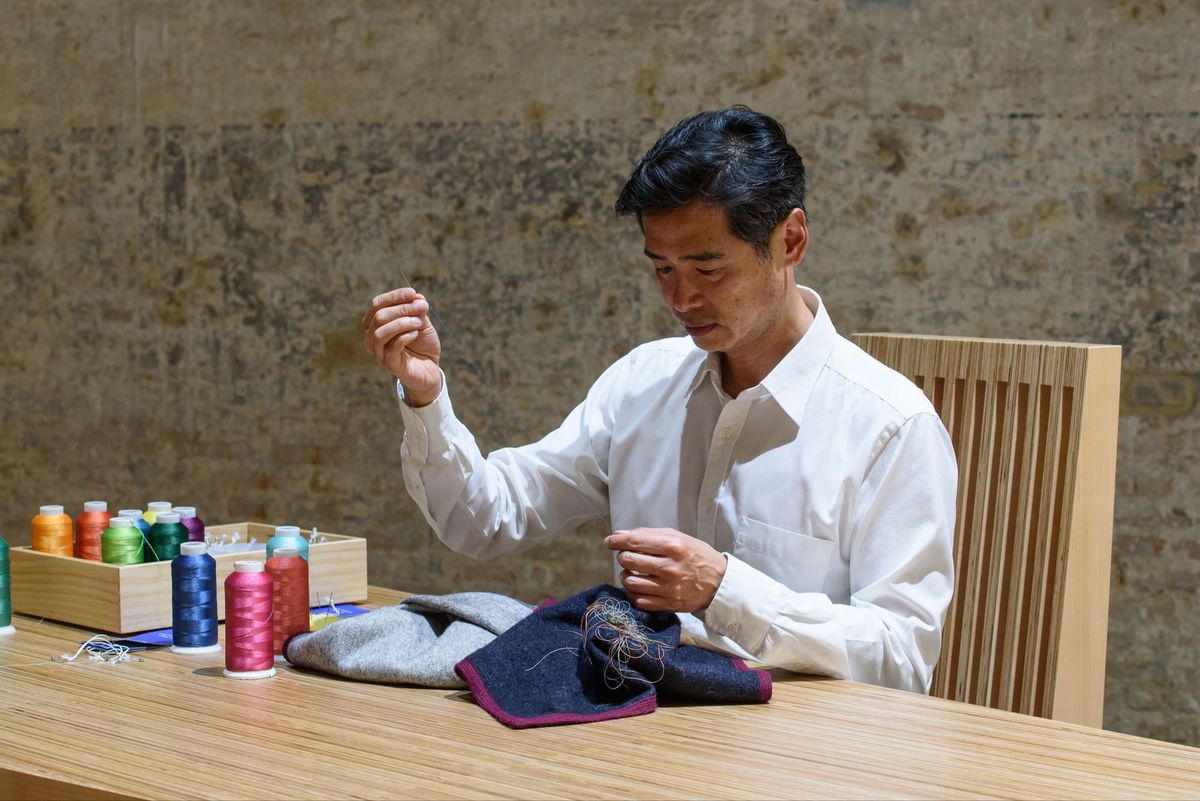
Lee Mingwei’s current show at Perrotin in Paris, “Lorsque La Beauté Paraît (When Beauty Appears),” is his largest presentation to date outside a museum, bringing seven invitational projects into coalescence. Ahead of the exhibition, Australian curator and writer Rhana Devenport sat down with the Taiwanese American artist to talk about the meaning of beauty and the restorative power of gift-giving in our troubled world.
Rhana Devenport: “Lorsque La Beauté Paraît” is curated by Thierry Raspail, co-founder of the Lyon Biennale and director of the Lyon Museum of Contemporary Art. In his essay about your exhibition at Perrotin, Raspail writes: “To posit Beauty as the all-encompassing understanding of the world, as Mingwei does today, is a categorical stance that opposes the brutality and cynicism of our world. Therefore, speaking of beauty is not an escape but a struggle. In this sense, Lee Mingwei’s work is radically political.” Do you see your work as radically political, particularly in terms of its engagement with the concept of beauty?
Lee Mingwei: For me—as a creator and the initiator of these ideas—it really depends on how you define the word “political.” In all of my works, there’s a tension that also exists in your daily activities. This tension is where fate and opportunity merge to create an encounter—so, yes, my work is political in that sense, but not in terms of the quotidian definition of “political.”
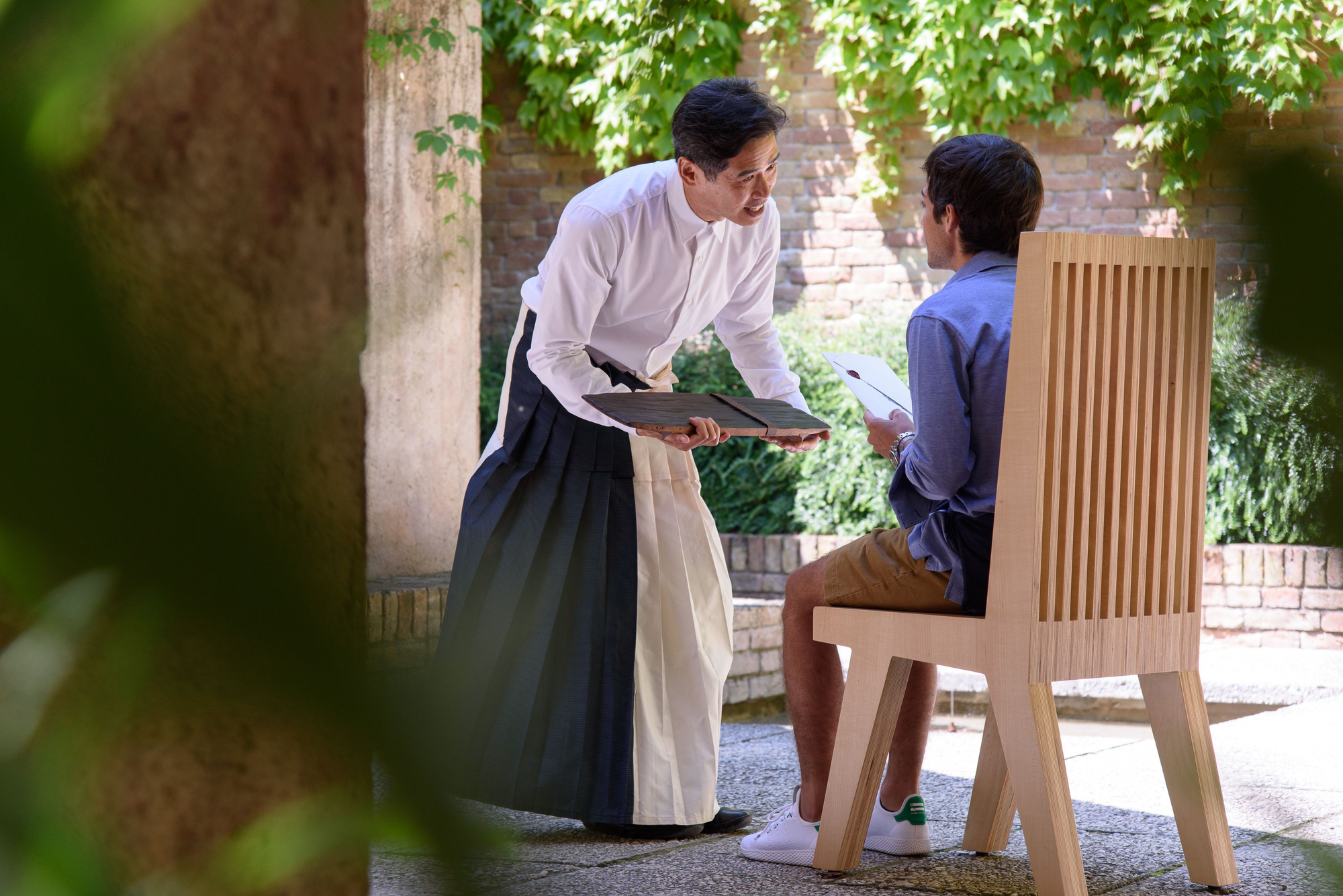
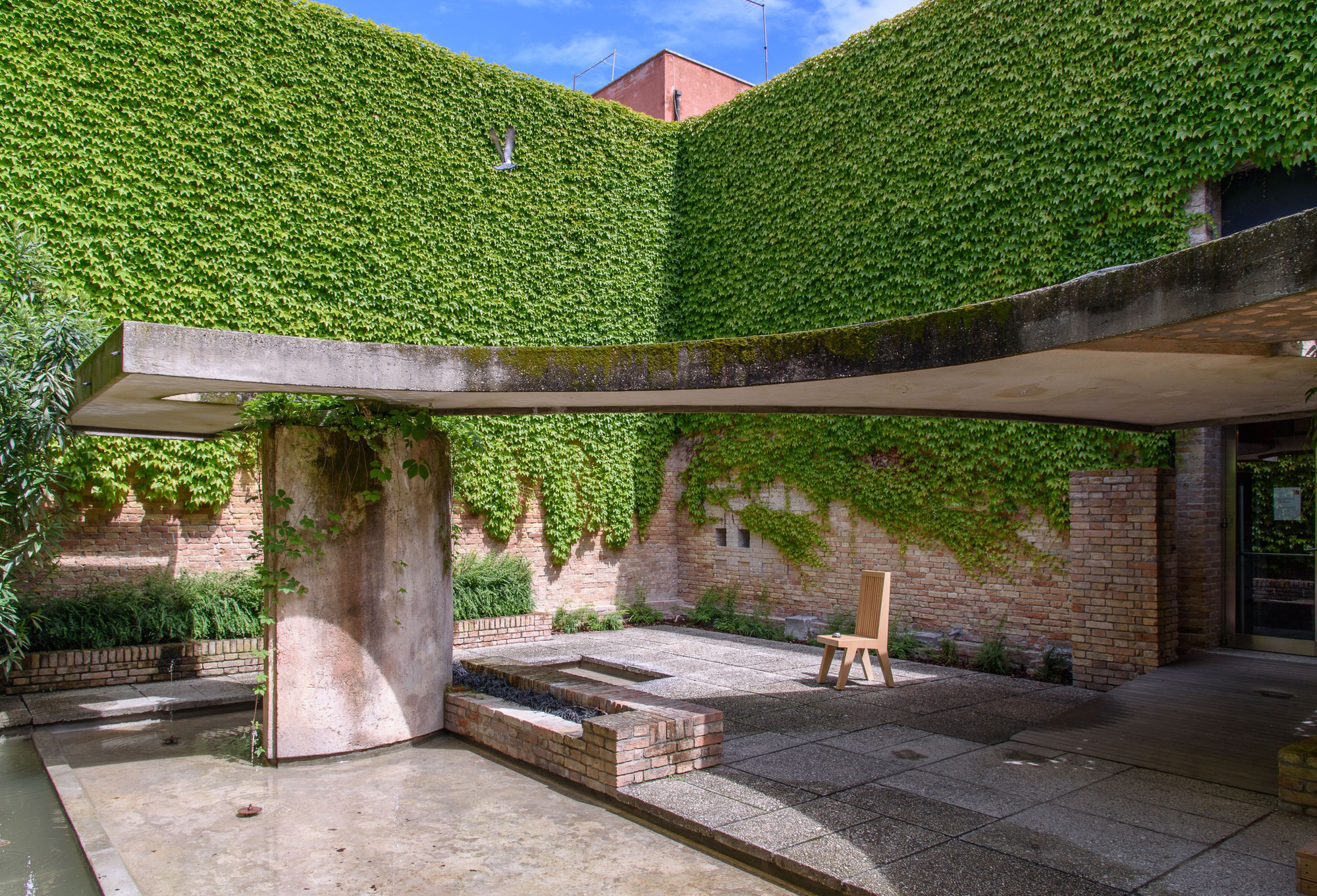
Installation views of LEE MINGWEI’s When Beauty Visits, 2017– , in the Scarpa garden of the Biennale International Pavilion, 57th Venice Biennale, 2017. Courtesy Perrotin.
The title of your Perrotin exhibition is akin to When Beauty Visits (2017– ), a project that you created for the 57th Venice Biennale in 2017. The latter was presented in Carlo Scarpa’s exquisite 1952 Sculpture Garden in the Giardini and even involved an elegant renovation of the garden itself. Why are you drawn to seeking moments of beauty for other people through your work?
My work is about beauty and grace but, in a way, I don’t actually seek beauty for others. In Japanese kanji and also in Mandarin, “art” is 美術 (měishù), “the technique of beauty,” whereby one could interpret the shaping of beauty as a magical process. When I created work in college and especially in graduate school in the late 1990s, people would say, “Oh, it's so beautiful,” but I didn’t see it as a compliment. At that time, I found it quite disturbing. Beauty is rare.
The first piece in the exhibition, La Fleur en Chemin (2009/26), relates to your installation The Moving Garden (2009– ). What ideas motivated these works?
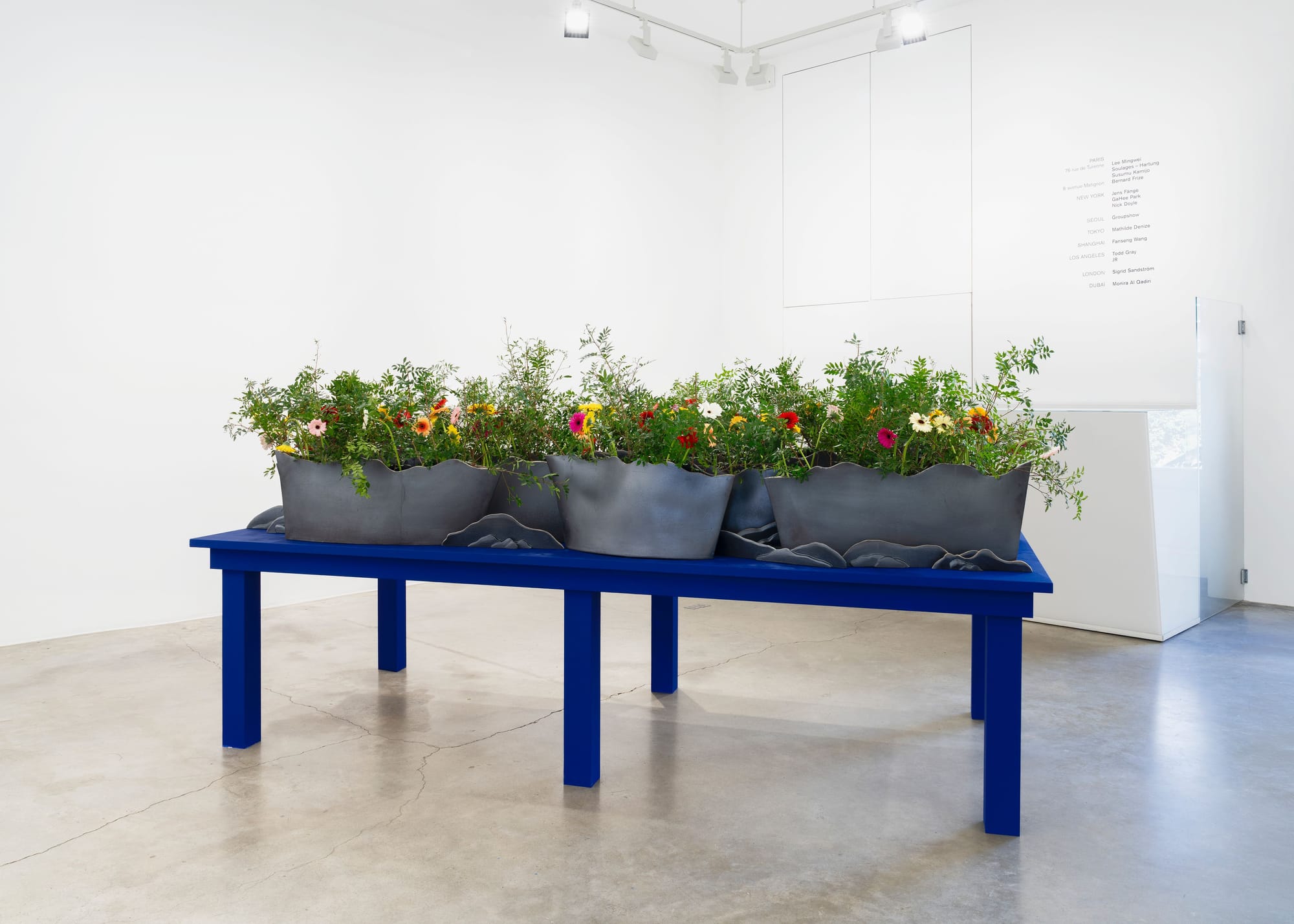
They’re both connected to the same idea: before you leave the gallery or museum, you are invited, if you wish, to take a flower. Then, as you head to your next destination, you are invited to give the flower to someone that you meet along the way. This is a small gesture, yet it takes courage. With this work, I want to open up possibilities of kindness among strangers. It’s not just the person gifting the flower—whoever receives it is also reciprocating with a gift of generosity, and of trust.
In his 1925 book The Gift, French anthropologist Marcel Mauss wrote about the transactions of giving, and how they transcend the divisions between the spiritual and the material in an almost magical way. Interestingly, you talked about magic before in terms of měishù. The giver does not merely give an object, but also part of himself, for the object is indissolubly tied to the giver. What is the place of magic and objects within your practice? Are the objects carriers of, or imbued with, an enchantment?
I don’t think the objects themselves are imbued with anything—it’s really our hearts that bring magic, or no magic, to the objects. Within that frame of thinking, my objects remain neutral. It is rather the person encountering them who brings their own particular magic.
Mauss was also part of a conversation about the gift economy beyond commodity. How do you see gift-giving as a kind of exchange?
In my works, money never enters the gift exchange between giver and receiver. Instead, there is a very lively dynamic between both parties, in the gifting and the accepting.
And you allow space for that to happen.
I hope so; it’s also a voluntary gesture. In The Mending Project (2009– ), for example, there is a mender sitting in the work, and anyone who does not wish to interact with or encounter this process can just walk away. If the exchange is forced, the hierarchy and power dynamic of the gift-giving change.
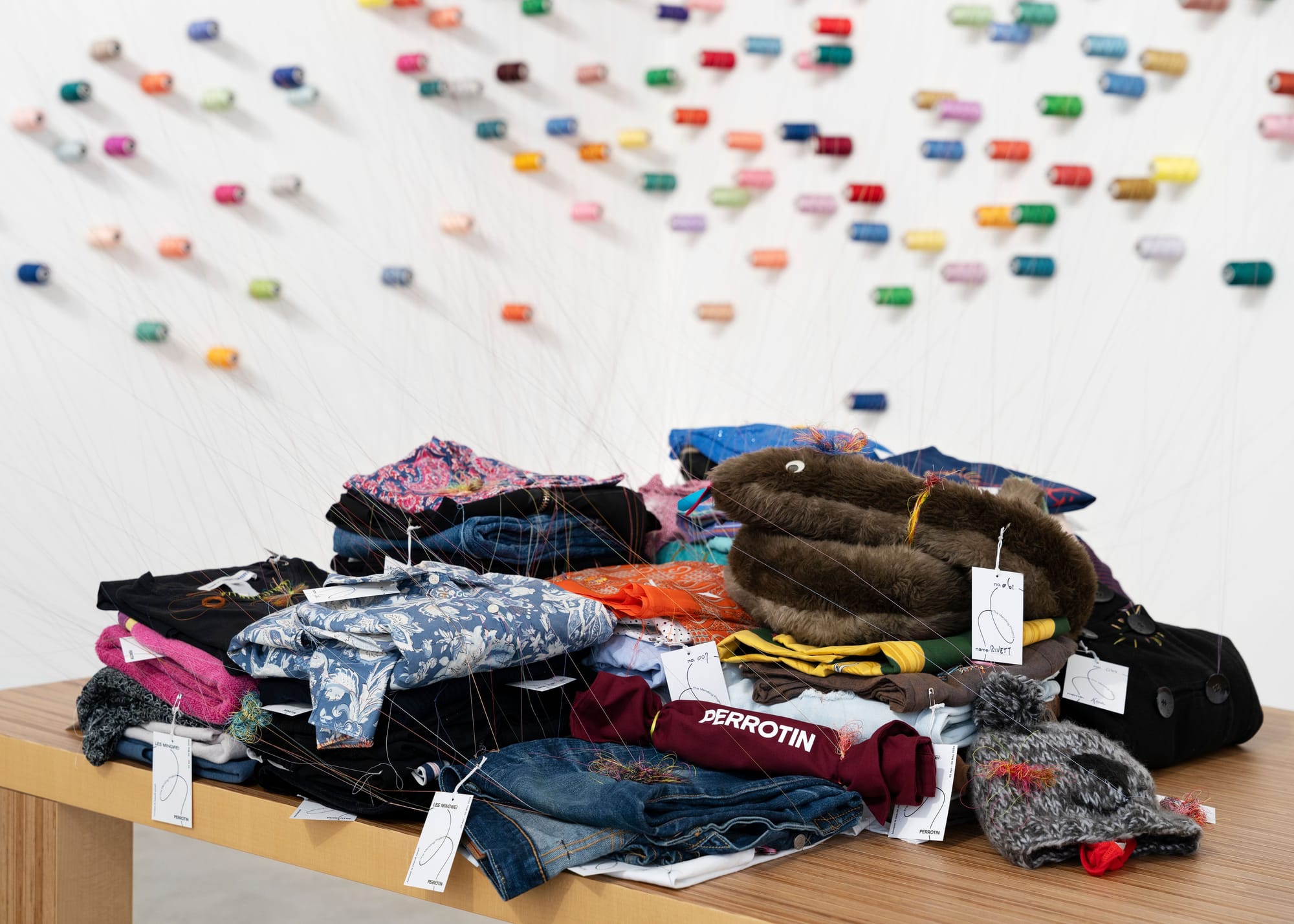
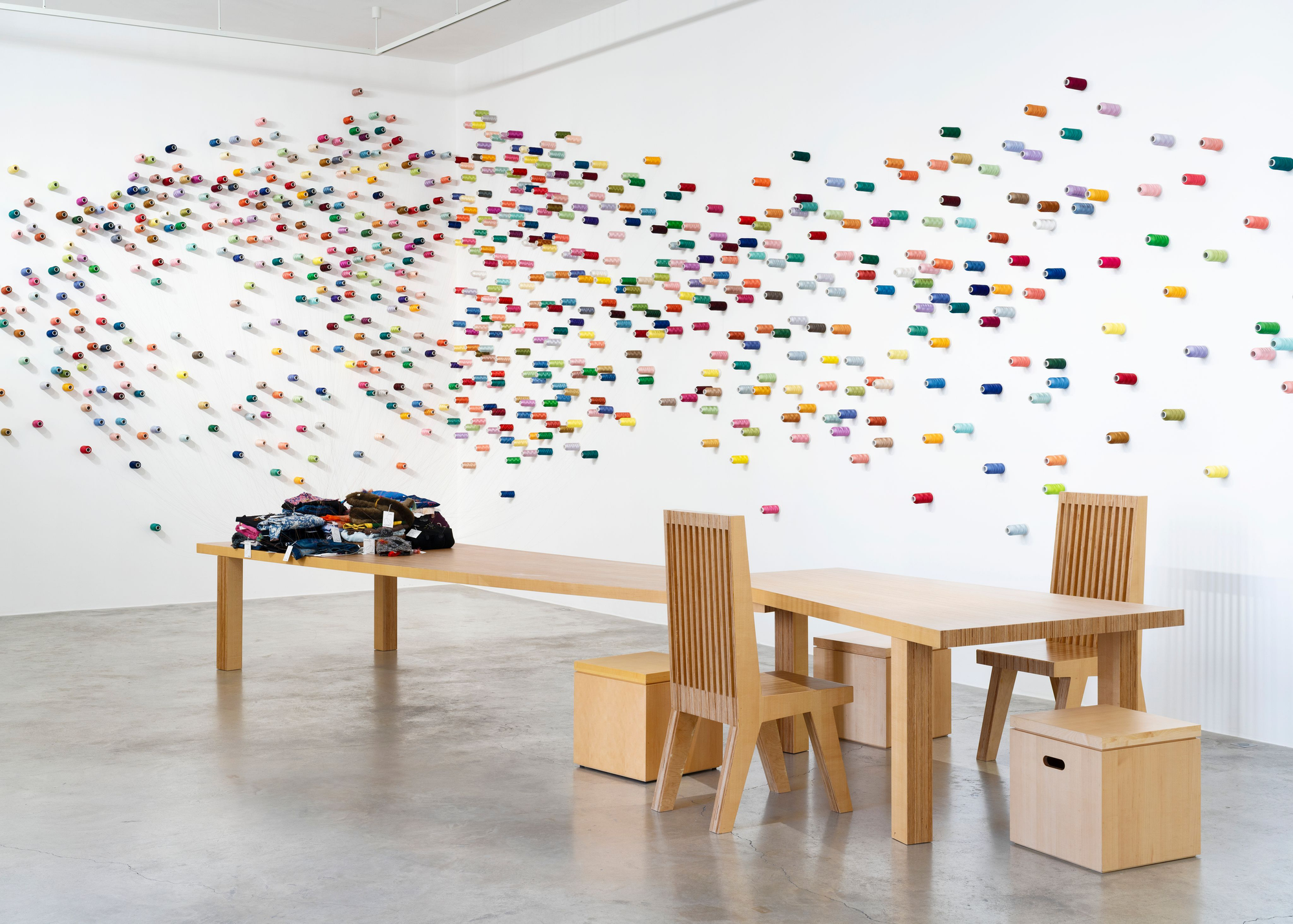
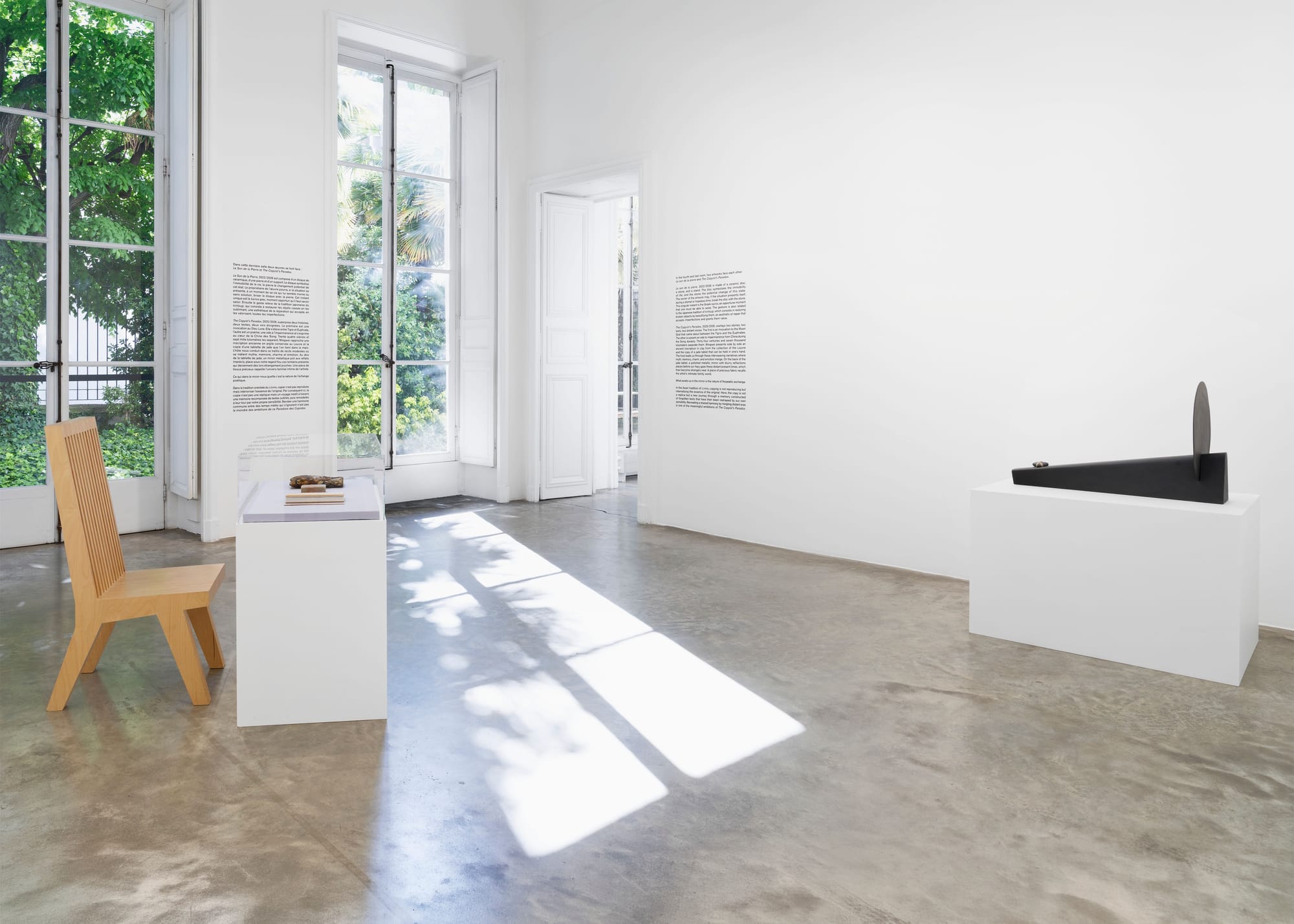
Installation views of LEE MINGWEI’s “When Beauty Appears” at Perrotin, Paris, 2026. Photo by Claire Dorn. Courtesy the artist and Perrotin.
In his essay, Raspail further writes that your work “takes an approach that is different from our common conception of art. While most artists try to impose their view on the world by enclosing it within an object, Lee Mingwei does the opposite. He questions the world and offers no answer. And this way, he questions us too. . . . Expressed through an object or a seemingly insignificant act, this question is addressed to an individual subject. The answer then belongs to us; it will always be highly personal, touching the deepest part of our being.” Generally, your work asks many questions, whether it be, “What garment would you like to have mended?,” or “Would you accept a gift of a song?,” as in the work Sonic Blossom (2013– ). Sometimes the answers are part of a live conversation within your work itself, such as in The Mending Project. At other times, the questions are answered privately, such as in When Beauty Visits. What is the role of the question within your work?
The question itself functions similarly to the Zen Buddhist idea of a 公案 (kōan): a person receives the question willingly and, if they are open to it, carries it in search of understanding. The paradoxical quality of a kōan is that it cannot be resolved through logic; rather, the one who holds it will recognize the resolution when it arises. Thus, it is both a paradox and a shift in perspective, as the one who poses the question does not offer an answer in any conventional sense. So, hopefully, my projects operate on that level. In When Beauty Visits, for example, visitors receive an envelope, which they are instructed to open when they encounter a moment of beauty. But when is that, and what is that? It really differs from one person to another, as even within the same person, the idea of beauty changes quite frequently.
Like the moment just now when the rainbow appeared and disappeared in the sky outside.
Yes!
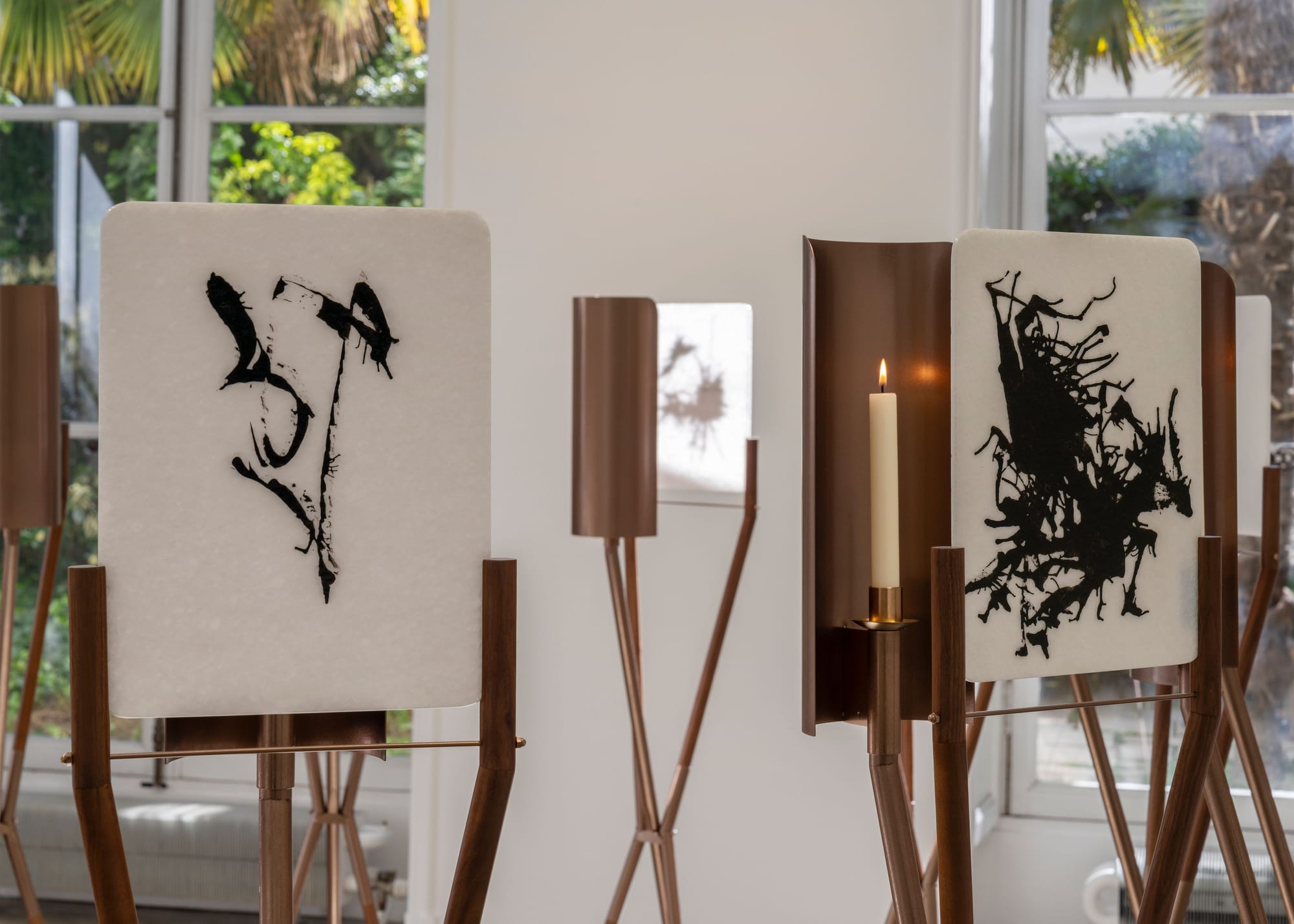
Can you speak about your recent series, The Breath Drawings and Chaque Souffle une Danse (Each Breath A Dance) (both 2024– ), which involve Sumi ink on 14 alabaster slabs.
The Breath Drawings originated through a commission from the de Young Museum in San Francisco, for my 2024 exhibition “Rituals of Care.” At that time, the war between Russia and Ukraine was raging and I felt unsettled. To calm myself down every day, I undertook a deep meditation at sunset. To conclude that daily ritual, I made Sumi ink from an ink stick, then placed the ink on a white, translucent piece of alabaster. I used my breath to create a drawing. After days of doing this, I realized I’m documenting and distilling the memory and breath of each day.
I made them in Taiwan, and I didn’t know how to present them until, one night, there was a full moon. Its light shone through the alabaster: the breath of the ink came alive because of the warm color. That’s how Each Breath A Dance came to be—the works are part of the same project. I wanted to recreate that illumination with a candle, but museums don’t like candles, so I came up with the idea of engaging a performer/dancer to light and blow out the candles. Everything unfolded quite logically in a poetic sense.
I’m interested in this role of the performer/dancer, who is also present in Guernica in Sand (2006– ) and Our Labyrinth (2015– ). In The Sleeping Project (2000– ), you, as the human presence, were pivotal in the artwork, literally sleeping through the night next to strangers. However, you seem to have moved toward a different engagement, now working with performers.
Yes, in the beginning of certain projects, I felt the need to collaborate with professionals who have a similar aesthetic and an affinity for this type of work. This is also the case in Sonic Blossom, where I allow the professional singers to activate the work. If I can be in the project gracefully and beautifully, then I’ll do it—if not, I’ll engage performers.
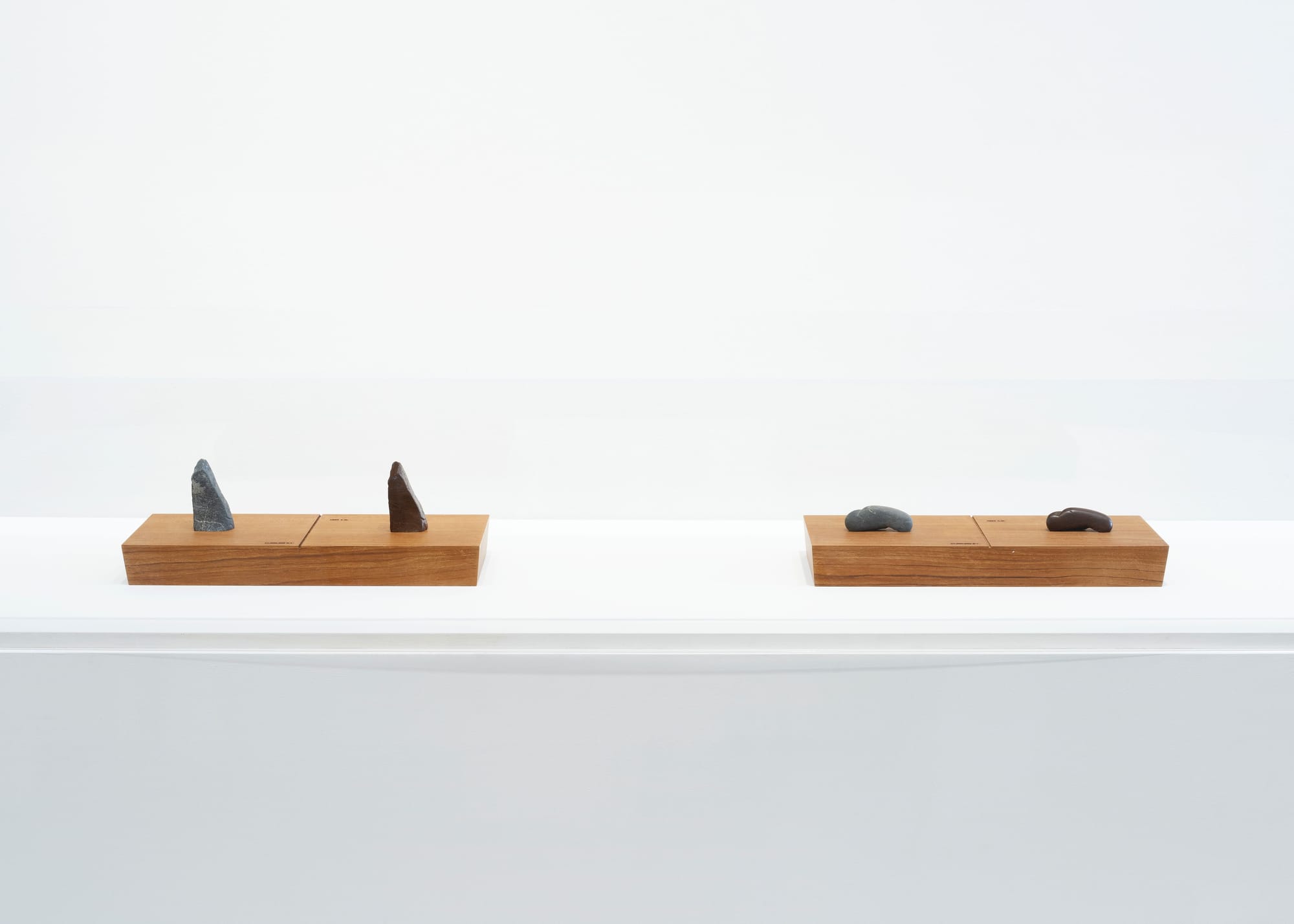
You made The Stone Journey (2010– ) in response to my invitation to create a work that was editionable to support the Govett-Brewster Art Gallery in Aotearoa New Zealand. The stones were formed by glacial movements 70 million years ago. How does the work connect to the idea of replication, doubling, value, and ownership—especially the ownership of objects from the ancient natural world—and the human obsession with collecting?
That was a very interesting challenge. Once I bent down to pick up the stones on the South Island, I realized that just by touching them and taking them away from their “birthplace,” everything changes. When do you own something? Does it happen physically or through memory? In The Stone Journey, will the person who still owns two stones—the actual and the cast bronze—really own them? Would you discard a wonderful stone? Which one is more prominent for the owner to keep? I don’t have the answer. It all leads back to the kōan again—it’s up to the person to decide.
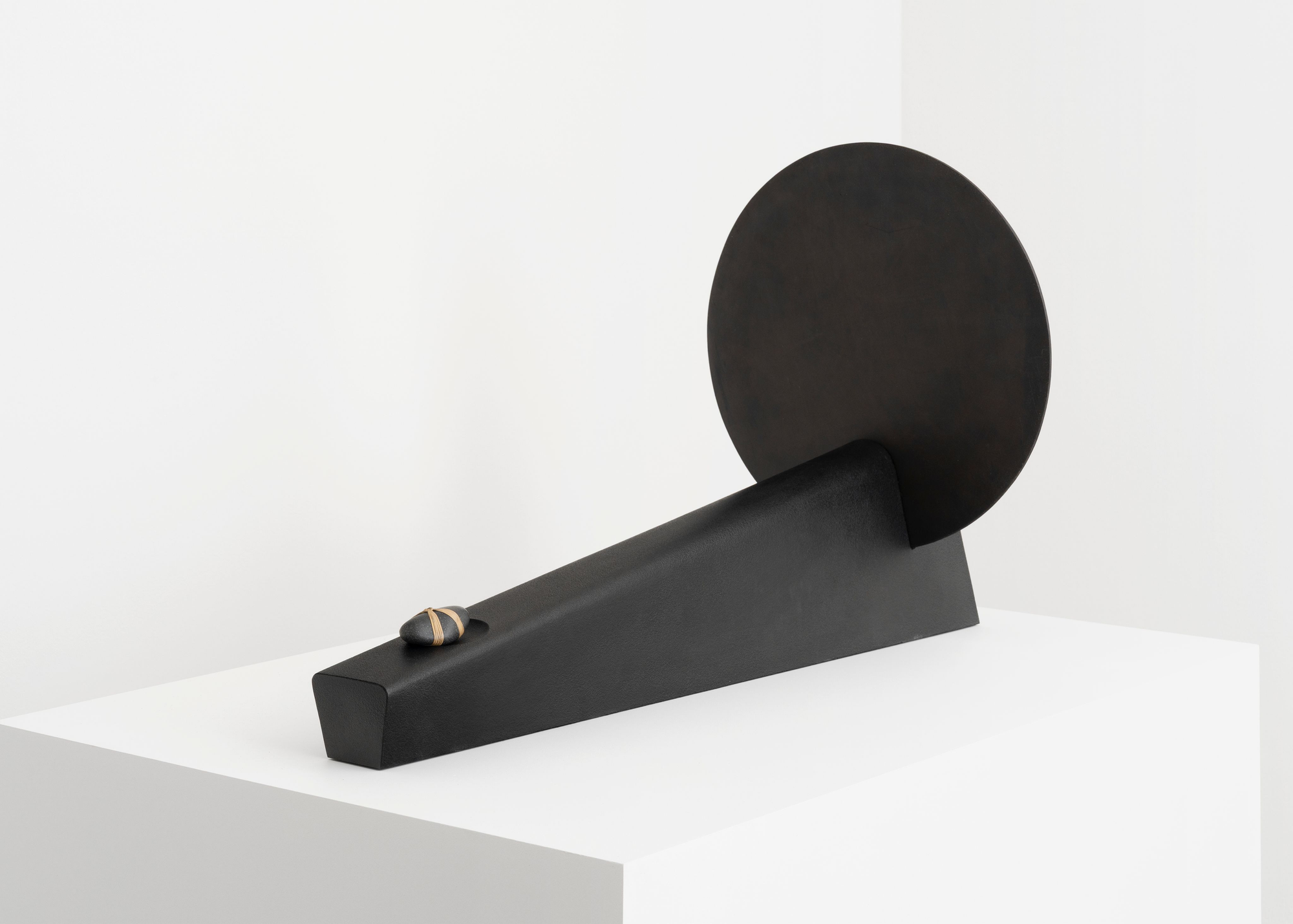
The concept is not dissimilar to Le Son de la Pierre (Sound of the Stone) (2022– ), which is composed of a ceramic disk, a stone, and a stand. The disk is to be broken by the owner at a time of questioning or despair. Can you tell me more about this work and the understanding with the owner?
This also originated from an invitation by a museum, from Davide Quadrio at the Museo d’Arte Orientale in Turin. For whoever owns this disk, if there is a blockage that they cannot move through, I ask, “Please take this disk and break it. Once it’s broken, send it back to the studio, where we will use kintsugi to fix it.” When you have this object in your environment that was put together through kintsugi, it will serve as a reminder that you were able to move forward. The sound of something breaking, and the gesture of destroying and repairing—it’s a way of becoming whole.
The seventh and final work in the exhibition, The Copyist’s Paradox (2025/26), is your most recent. Earlier, you used the word “paradoxical” when speaking about your work.
This was a co-commission by Musée du Louvre and Centre Pompidou-Metz, and it brings together two stories that are 34 centuries apart: one of a priestess in Mesopotamia, and the other of a Chinese poet from the Song Dynasty.
You have created other works that explore this phenomena of copying, such as Through Masters’ Eyes (2004– ). Can you speak to how the copies are a paradox? You have three elements: the two objects/texts, the host/performer, and the visitor. Can you explain the dynamic that occurs?
The invitation was for artists to respond to a work from the Louvre collection. There were 100 of us! I asked the curator, Donatien Grau, to show me an object that was most important to him. He showed me a cuneiform from 4,500 years ago, which featured a poem by Enheduanna, a Sumerian princess and priestess of the moon god, who is also the first-known named author in the history of world literature. When she wrote this poem, she was banished into a desert and left to die. She wrote about the harrowing experience and her prayers to the moon god. There is a very interesting “copy” in another woman, 李清照 (Li Qingzhao), who lived during the Song Dynasty in 11th-century China. At 12 to 13 years old, she was already highly educated. When the Northern Song Dynasty fell to invading forces, the court moved much of the elite southward, and she was among those who followed, but her husband died on the way and she was badly treated and lost everything. She later married a low-ranking military officer who was abusive, and she divorced him, which was new for that era. Most importantly, she and her first husband were deeply engaged in the study and collection of ancient bronzes and inscriptions; he compiled the 金石錄 (Jīnshí Lù), which she later helped preserve and complete. Later on in life, she wrote this sad yet beautiful poem when she was left alone and destitute in an old temple, where she could see geese flying north. The birds’ calls reminded her of the songs that she had heard as a young girl. So her situation is very similar to Enheduanna’s, even though they lived more than 3,000 years apart. In Through Masters’ Eyes, there is an ink copy of Enheduanna’s poem. I created the situation where you flip over the jade amulet that has the Chinese poem inscribed on it, and on the other side is a bronze mirror where you see your reflection. Therefore, you, the visitor, become the third copyist of these two great women.
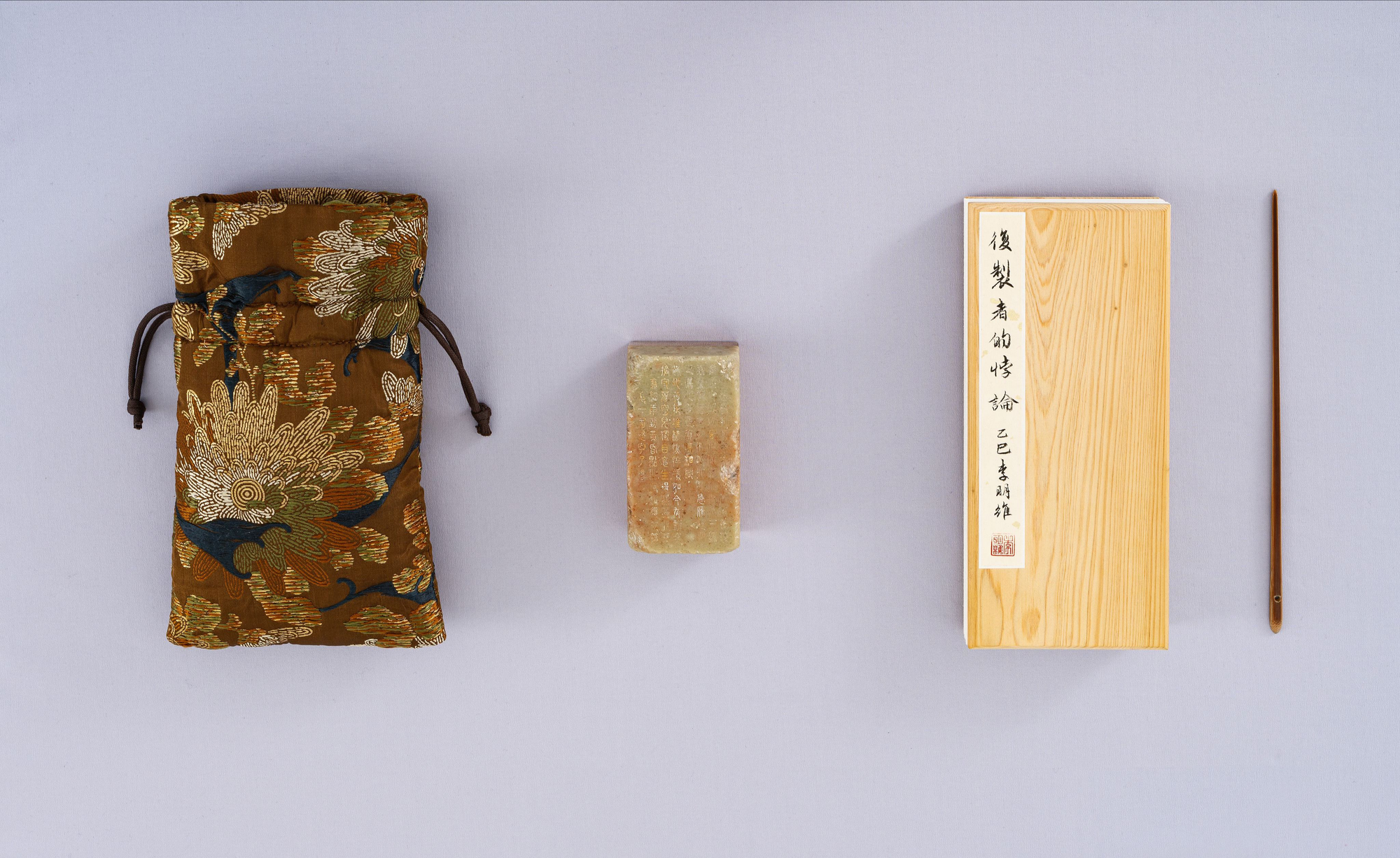
The carved jade in The Copyist’s Paradox is stored in an exquisite fabric pouch. Textiles, which you studied as your first degree, are ever-present in your oeuvre. What, to you, is the significance of textiles?
It takes time for me to consider the tactile part of a work. Textiles are our second skin, something we know intimately. At heart, I am still a weaver of social connection.
Lastly, we are speaking here in Sydney, and each day you’ve been here you’ve visited your Spirit House (2022) at the Art Gallery of New South Wales, a commission for the launch of Sydney Modern Project at Naala Badu. You were also in Brisbane a few days ago and visited your Bodhi Tree Project (2008– ), wherein a sapling descendant from the sacred Jaya Sri Maha Bodhi tree in Sri Lanka was planted at the entrance to Queensland Art Gallery | Gallery of Modern Art. Both works relate to Buddhist practices quite specifically, yet not all of your work does so in a literal sense. These two site-specific projects are your only permanently installed works. They were commissioned for new museum buildings and have evolved over many years, now having energized lives of their own, so to speak. What processes were involved in their creation? You seem to place a great deal of trust in the institution and its potential to fulfill the obligations and conditions of the work. And what have you learned over time by revisiting them?
Both works came from a long, long conversation between friends. The ideas emerged through my trust in them; then the institutions and the staff took care of these ideas in order to make them happen, and to bring out the meaning of the works through time. The beauty of revisiting a project is within the community we created together, and the community basically brings it to a very different place than when it was first conceived.
Lee Mingwei’s “Lorsque La Beauté Paraît (When Beauty Appears)” runs through May 30 at Perrotin, Paris.
Rhana Devenport ONZM is a curator, writer, and academic based in Sydney. She is the former director of Art Gallery of South Australia, Auckland Art Gallery Toi o Tāmaki, and Govett-Brewster Art Gallery | Len Lye Centre.