People
As Told By: Slavs and Tatars at Rossi & Rossi
Since 2006, Slavs and Tatars have dedicated their research-based, bibliophilic practice to the “area East of the former Berlin Wall and West of the Great Wall of China known as Eurasia,” producing books, installations, and sculptures that unravel the complexities of religion, politics, and language in each region. Delectably witty and at times unabashedly absurd, their works blend intellectual references with a low-brow approach to upend facile narratives of history and identity.
For the latest segment in our “As Told By” series, Payam Sharifi, co-founder of Slavs and Tatars, walks ArtAsiaPacific through the collective’s first solo exhibition in Hong Kong, “胡 ( هو / who) are you?,” which runs until May 9 at Rossi & Rossi. Gathering iconic projects and newly commissioned works across various media, the show playfully probes the philosophical question, “Who are you?,” to reflect on the pliable, multifaceted, and joyous conditions of belonging.
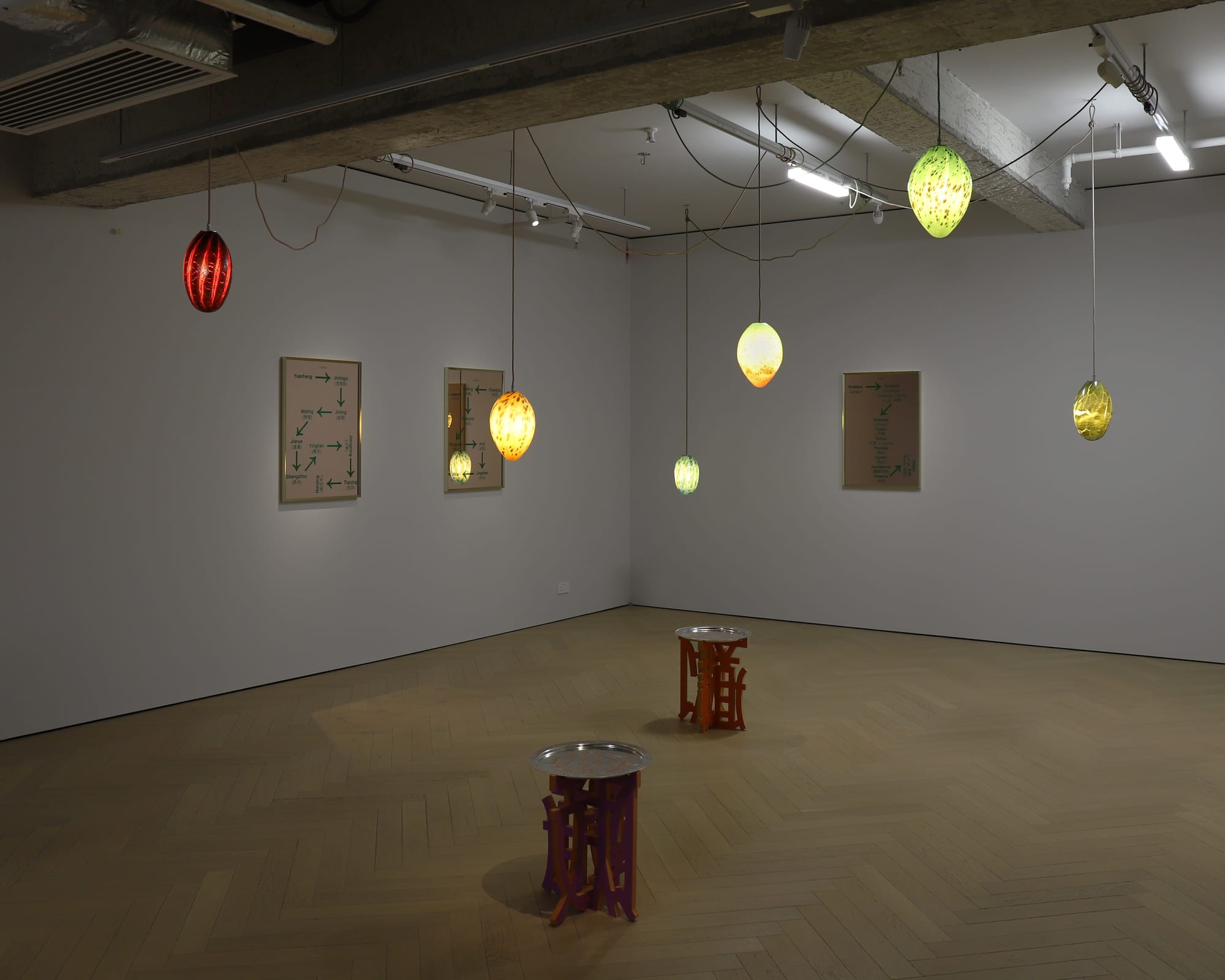
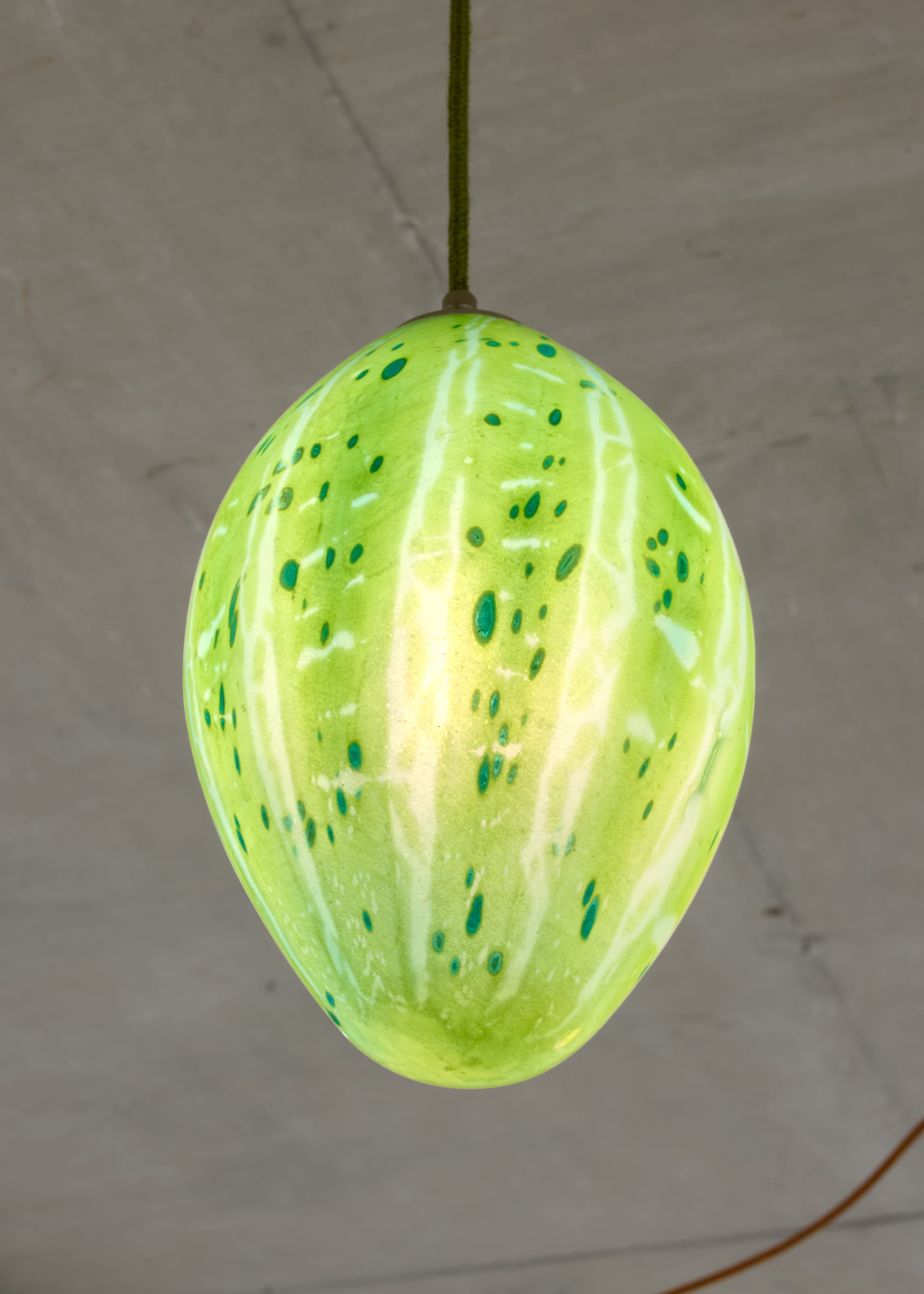
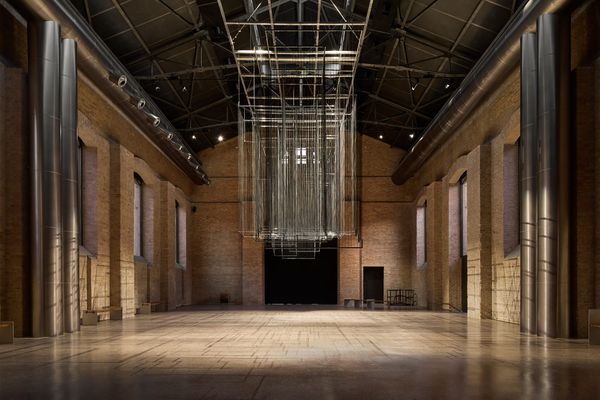
Installation view of SLAVS AND TATARS’s “胡 ( هو / who) are you?” at Rossi & Rossi, Hong Kong, 2026 (left); and detail of Dark Yelblow, 2025, handblown glass, light bulb, cable, electrical fixtures, dimensions variable (right). Courtesy Rossi & Rossi.
Dark Yelblow (2025)
Payam Sharifi: The melons are all made of handblown glass. We recently showed them in Jeddah, at last year’s Islamic Arts Biennale. The melon is a fruit that, weirdly, across many different cultures, is associated with the Other. In the US, they are used as a racist trope against African Americans. There are legends about the Chinese taking Xinjiang because they coveted the Hami melons there. In France, melons are usually sold by North Africans; in Germany by the Turks; in Russia the fruit is imported from the Caucasus region. So it’s interesting that it’s always the colonized Other selling the melons. There’s this interesting mix of high and low—something very politically charged—but also an instinctive sense of pleasure, as the melon signals the arrival of summertime and holidays.
In Uzbek mythology, the melons are a gift from the Garden of Eden. The idea was that they contained messages on their skin, which the Uzbeks couldn’t read because the alphabet had changed so many times.
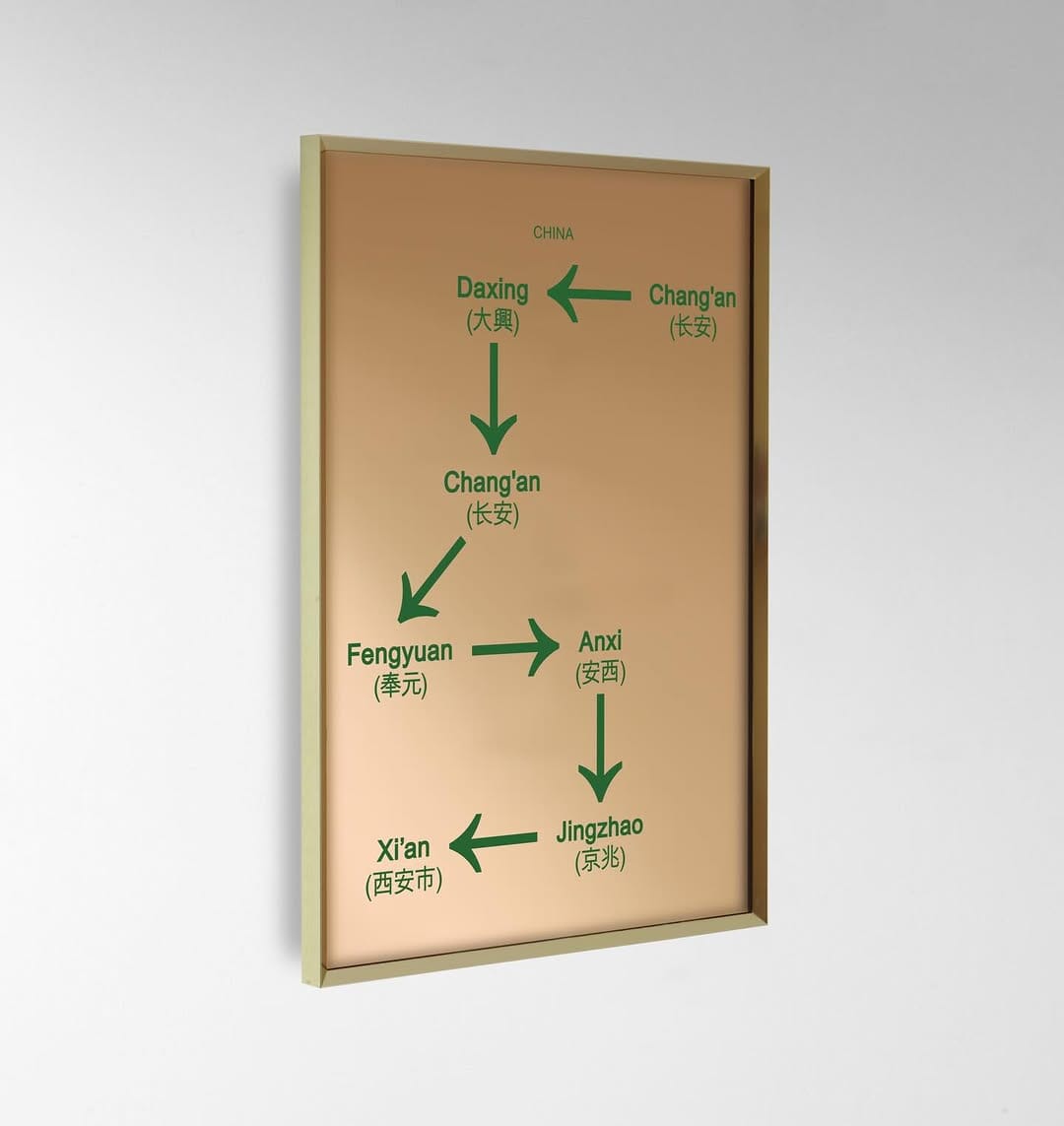
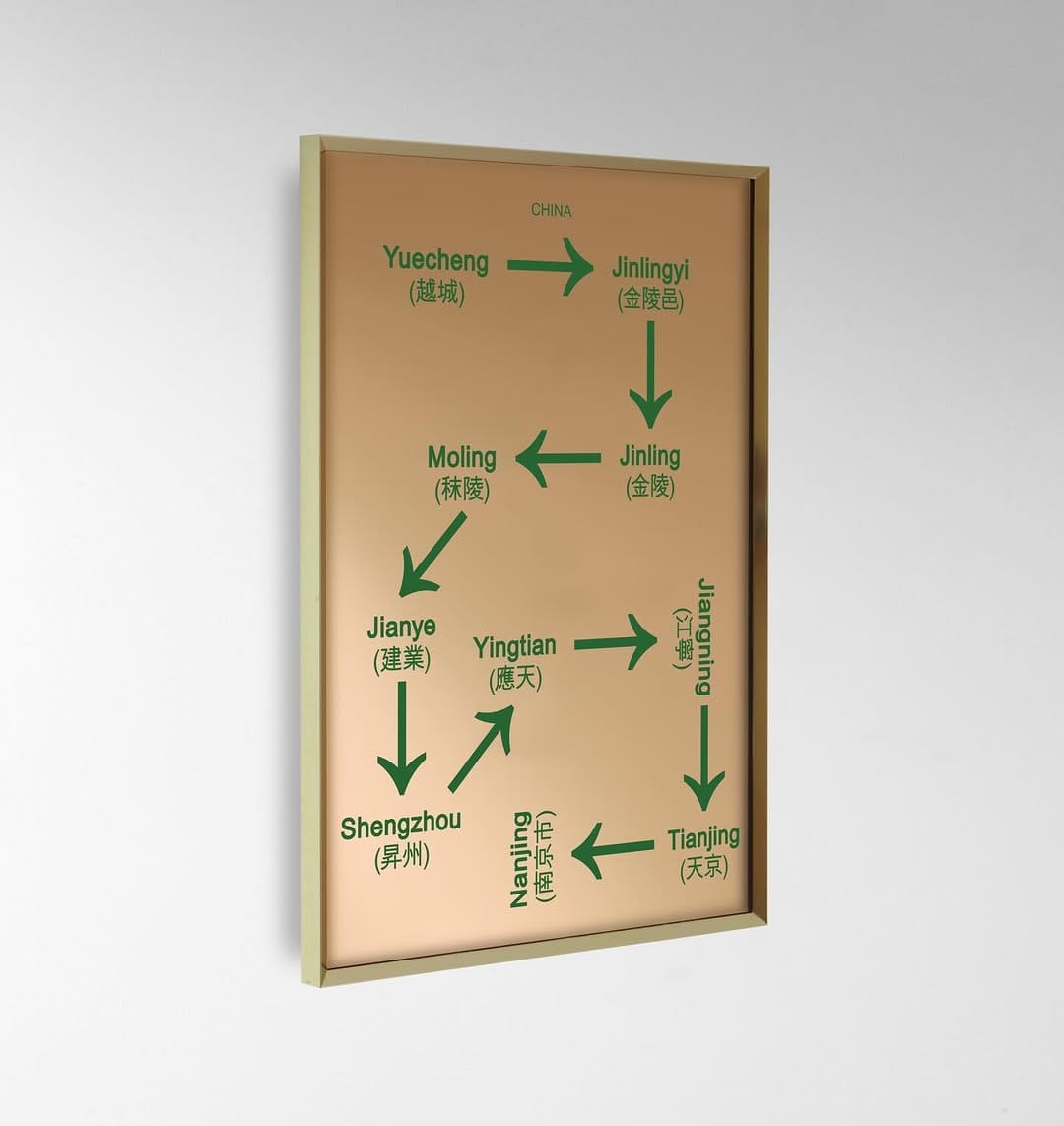
SLAVS AND TATARS, Love Me, Love Me Not (Xi’an) (left) and Love Me, Love Me Not (Nanjing) (right), both 2026, acrylic paint on mirror reverse, aluminum frame, 85 x 80 cm each. Courtesy Rossi & Rossi, Hong Kong.
Love Me, Love Me Not (2014– )
For the Love Me, Love Me Not series, what matters is not only recovering the original names of these places, but also their original scripts. This alphabetic diversity makes visible the layered complexity of empires—from the Chinese and Turkic to Sogdian and Mongol empires. This project reveals that alphabets are not innocent or neutral. In fact, alphabets are tools of empire. There’s no reason why “A” looks like “A”—well, there is a reason, but it wasn’t “destined” in that sense.
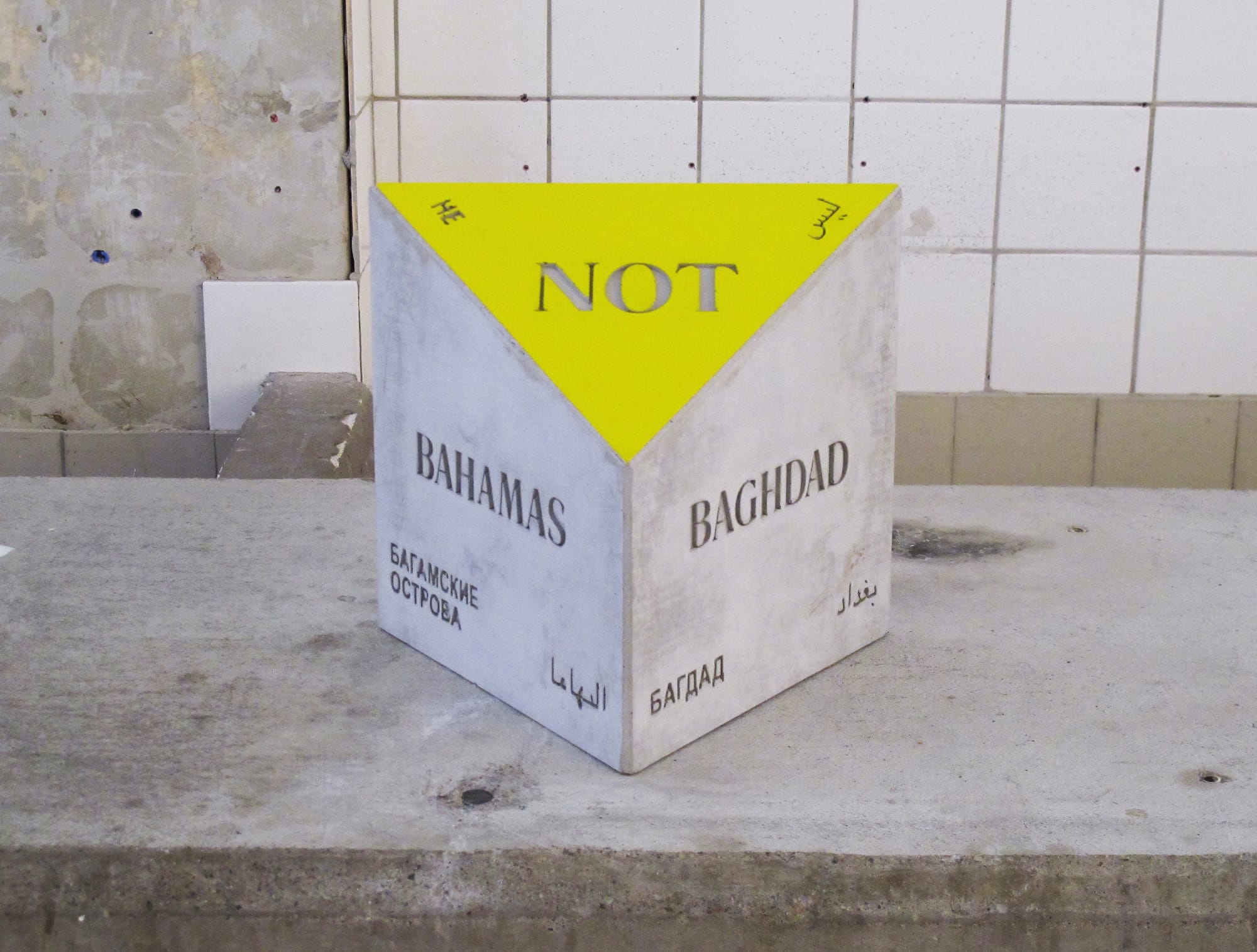
Triangulations (2011– )
These are sort of road signs, but instead of road markers that tell you how many kilometers are left until you reach the city, they tell you “neither here nor there.” Each of these concrete pieces brings together two cities: one that is quintessentially secular, and another that is quintessentially religious. The idea here is: do not choose the purely secular, and do not choose the purely religious. For instance, not Detroit, not Damascus—Detroit is the home of Motown and techno, while Damascus is an important place in the Umayyad caliphate. Then, not Bahamas, not Baghdad—the Bahamas represents beach culture and a certain superficiality, while Baghdad is central to the so-called golden age of Islam. Not Berlin, not Bukhara—Bukhara being one of the holiest places in Islam, and Berlin being a hub for politics but also Berghain.
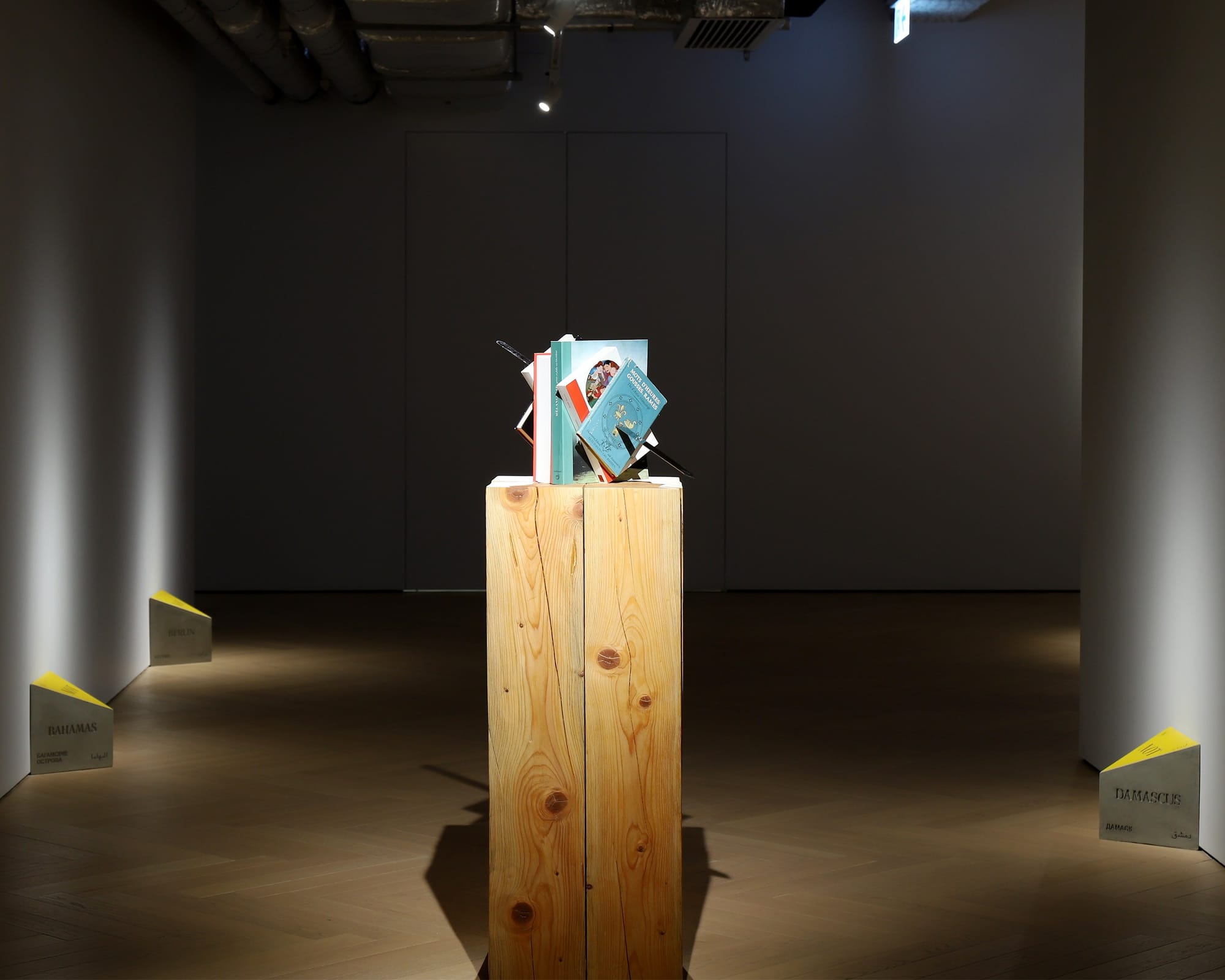
Kitab Kebab (Fatima et Marie) (2020)
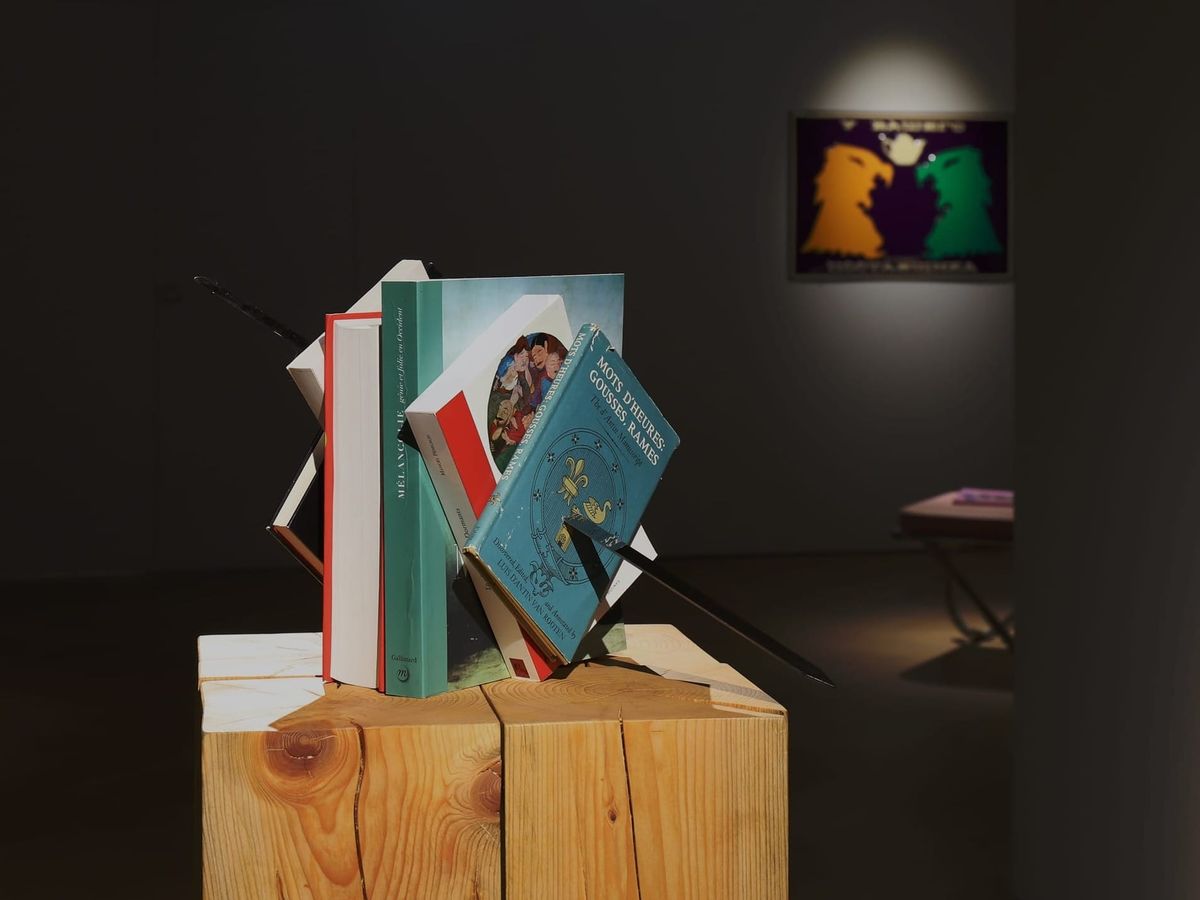
Kitab Kebab is kind of our most signature work. It really speaks to our bibliophilic practice, both in that we publish many books, and that our interests are not only geographical or geopolitical. There’s a metal kebab skewer piercing through a stack of books, and it’s actually about what our region can tell us about different forms of knowledge. If you think about it, the West has been focused on analytical knowledge—think the brain, Cartesian thinking, the legacy of the Enlightenment. We’re not against that legacy, but we believe there are as many types of knowledge as there are organs. Of course, there’s Ayurveda in India, and traditional Chinese medicine. There is digestive knowledge, metaphysical knowledge, emotional knowledge, affective knowledge—almost each organ has its own form of knowledge. This also speaks to the idea that we shouldn’t be distinguishing between intellectual nourishment and digestive nourishment. They’re not separate things; they're actually intertwined.
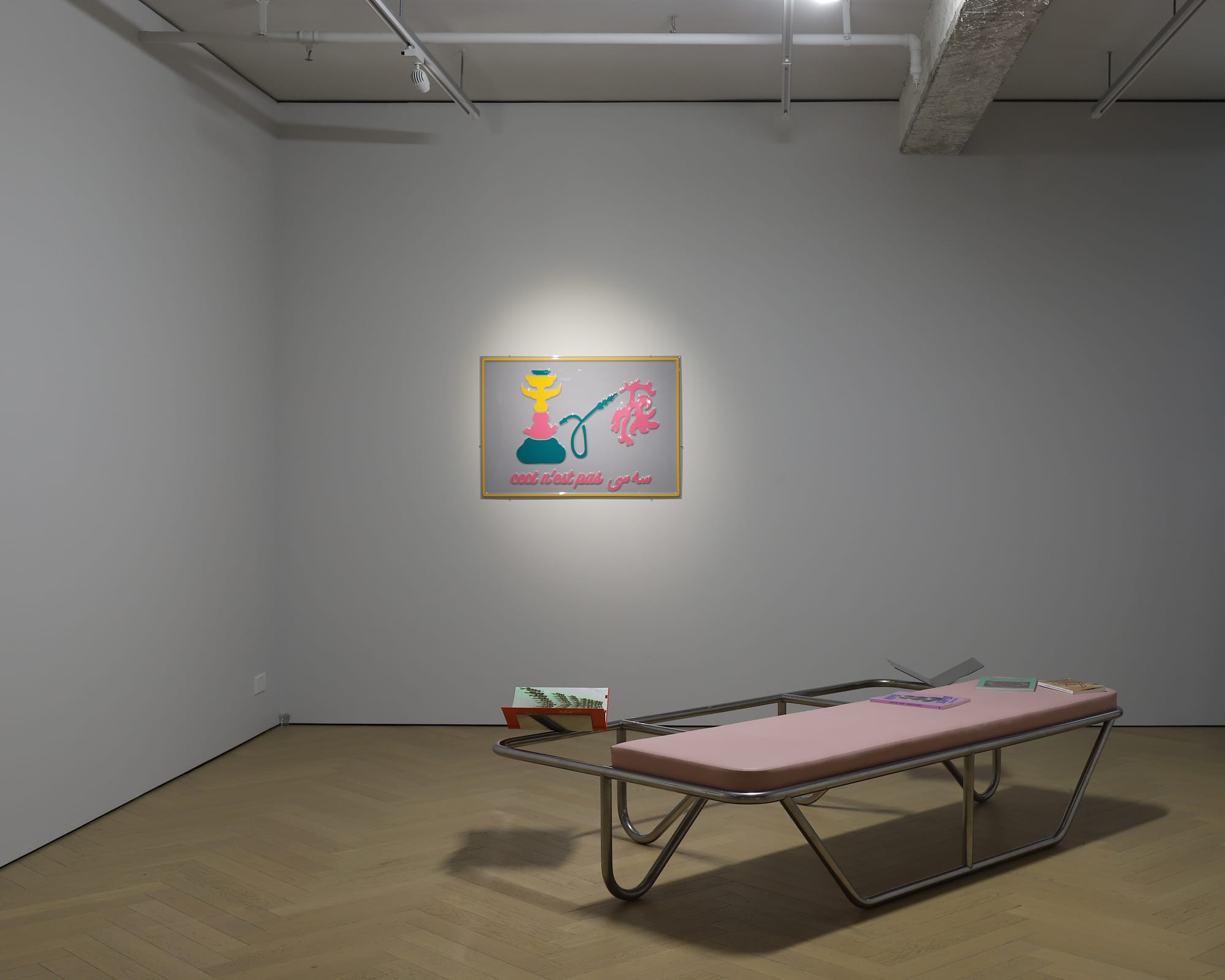
Down Low Gitter (2018)
This is a so-called Gitter, which is taken from German and is a form of barricade. You often see it at marathons or concerts, where it’s used for crowd control. We just laid it down and reupholstered it, then added these Persian and Arabic rehal (book rests), which point to the idea that for holy texts, you’re not supposed to let the book touch the ground—it should always face up toward God.
A lot of our work is about the notion of collective reading. We want to create spaces where you can occupy it by sitting down and reading, but also to acknowledge the conditioning behind reading—it is a way of controlling a population. Reading is also a form of canon; no matter how much you try to decentralize or decanonize the canon, alternative canons are still forms of formatting knowledge.
Samovar and This Not That (both 2024)
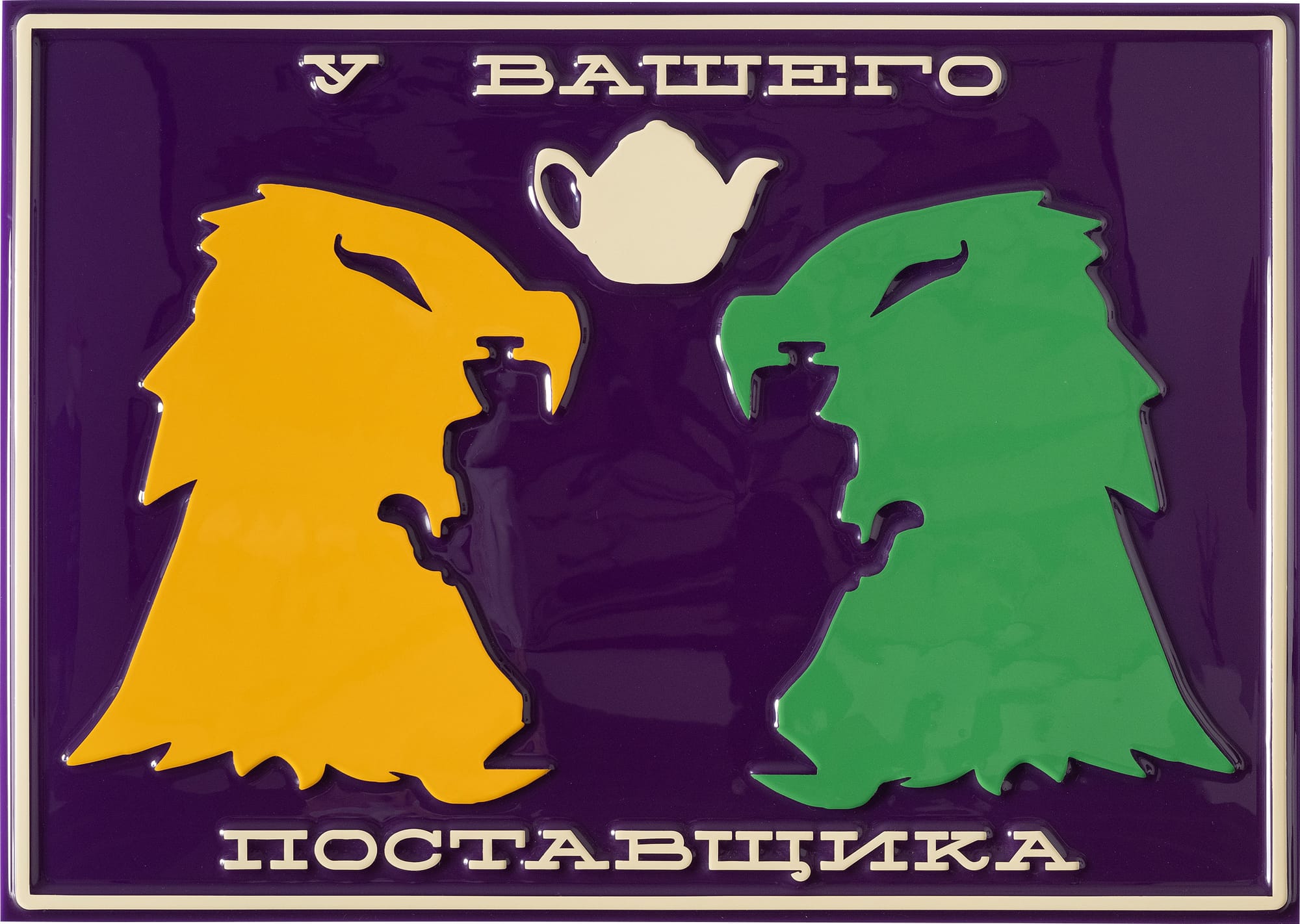
You never see a feminine eagle. More often than not, you’ll see an eagle that’s ripped, with a six-pack. In Samovar (2024), we have the Simurgh, which is a mythical bird in Sufi tradition. Unlike the eagle, which has nationalist connotations, the Simurgh is transnational. It’s gender-fluid and more visually flamboyant—as you can see, it has this flaming tail.
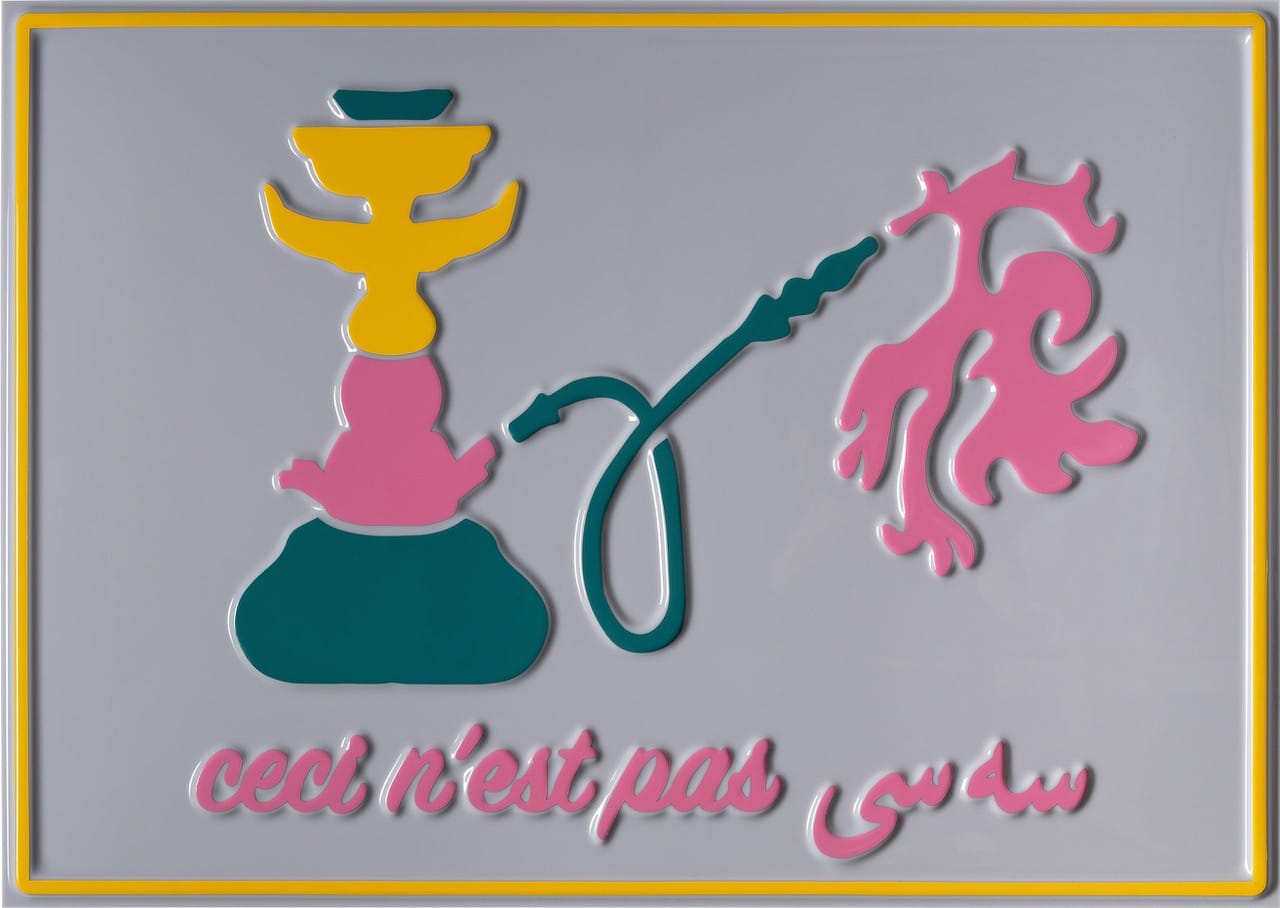
We’re interested in translation—not just in terms of language, but in translating traditions into other traditions. In This Not That (2024), we referenced Marcel Broodthaers, who was like the Duchamp of his time. He’s known for making these kinds of panels, or what he called poèmes industriels, and he also referenced Magritte, who is of course famous for his slogan, “Ceci n’est pas une pipe.” We found a way to translate the pipe: in our region, the equivalent of the pipe would be the hookah. And for Samovar (2024), because Broodthaers’s panel had two eagles with a bottle of wine, we thought, “What would be the translation of wine in our region?” Of course, it would be the samovar (tea).
The beautiful thing about the Simurgh is that it has been translated across different languages. The Simurgh for Persians is a little like Beowulf for English literature or the Iliad for Greeks—it’s a foundational text from a 12th-century mystical poem called The Conference of the Birds, written by Attar of Nishapur. It’s an allegory about all these birds looking for the Simurgh, which represents the transcendent, the divine, and something you can only see once you’ve relinquished your ego. All these birds are looking for it, and throughout their perilous journey, some of them are too lazy, some are too greedy, some are too vain. In the end, only 30 birds are left. The Simurgh is apparently reachable through a fortress, through a courtyard, but they find that there is no Simurgh. There is only a pond with the reflection of themselves. A core belief in Sufism is that the divine is not outside of yourself, but inside yourself, and only accessible in communion with others.
The great thing about this poem is that Attar made a pun: Simurgh in Persian means “30 birds.” Si means “30” and murgh means “bird.” Now, think about it: for a poet, after thousands of esoteric rhyming couplets, to land a pun at the very climax? The pun is the lowest form of humor! It would be a little bit like Homer making a fart joke at the end of the Iliad, you know? It’s an incredible flex as a poet to be metaphysical, metaphysical, metaphysical, and then ba-dum-bum—a pun.