People
The Essential Works of Rirkrit Tiravanija
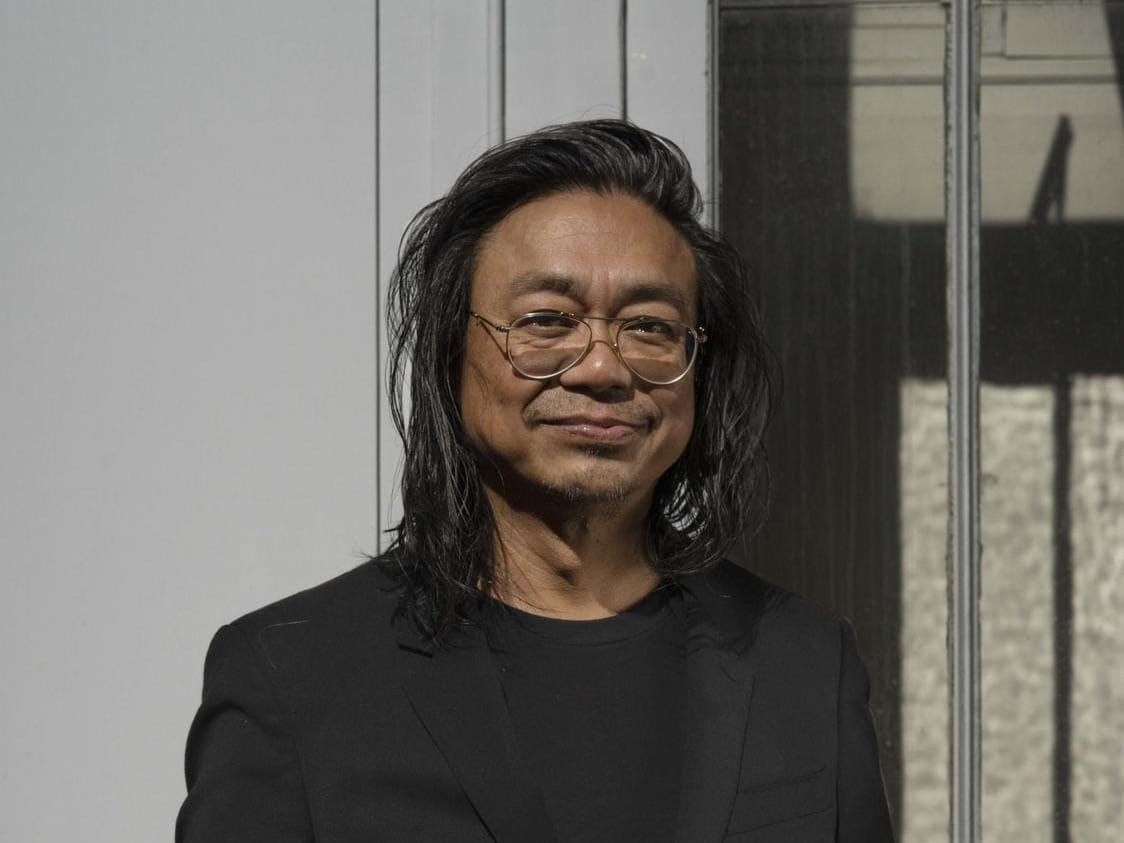
Rirkrit Tiravanija’s practice transcends borders, dissolving the thresholds between public and private, self and other, performance and reality. Best known for his participatory works that revolve around communal dining and shared rituals, he is considered a frontrunner of relational aesthetics, a movement coined by curator and art critic Nicolas Bourriaud in the 1990s that relies on human relations, site contingency, and collaboration to create meaning. Tiravanija’s influential practice probes the intersections between commercial art and daily life, redefining the parameters of the gallery space.
Born in 1961 in Buenos Aires as the son of a Thai diplomat, Tiravanija was raised across Thailand, Ethiopia, and Canada, and divides his time between New York, Berlin, and Chiangmai. His nomadic lifestyle is reflected in his work, which is ephemeral and fleeting, contingent on flux and transformation. The artist’s first solo exhibition “untitled 1990 (pad thai)” at the Paula Allen Gallery in New York established his signature experiential style as he cooked and served pad thai to visitors. “I have, more or less, used the kitchen and cooking as the base from which to conduct an assault on the cultural aesthetics of Western attitudes toward life and living,” he famously said. “In the communal act of cooking and eating together, I hope that it is possible to cross physical and imaginary boundaries.”
With a BA from Ontario College of Art and Design (1984) and an MFA from the School of the Art Institute of Chicago (1986), Tiravanija has collated an array of accolades including the Silpathorn Award by the Ministry of Culture in Thailand (2017), the Hugo Boss Prize (2004), and the Lucelia Artist Award by the Smithsonian American Art Museum (2003). Most recently, he was among the 33 medalists of the 2026 Art Basel Awards, clinching a nomination in the Established Artist category. His works have been exhibited at various institutions across the globe—such as the Museum of Modern Art (MoMA) in New York and Centre Pompidou in Paris—and he has participated multiple times in the Venice Biennale. In 2006, he cofounded Gallery VER in Bangkok, an artist-led contemporary art gallery platforming experimental work by emerging as well as established artists.
Tiravanija is currently the subject of a major retrospective at Pirelli HangarBicocca in Milan, titled “The House That Jack Built,” which runs through July 26. Featuring the largest collection of the artist’s architectural work to date, the exhibition focuses less on the notion of the house and its builder, and more on the people and interdependent relationships vitalize it.
As the artist prepares for the 2026 Venice Biennale, where he will present a tent-like structure at the Qatari pavilion accommodating contributions by Sophia Al-Maria, Tarek Atoui, Alia Farid, and Fadi Kattan, here is a look at some of Tiravanija’s most iconic works.
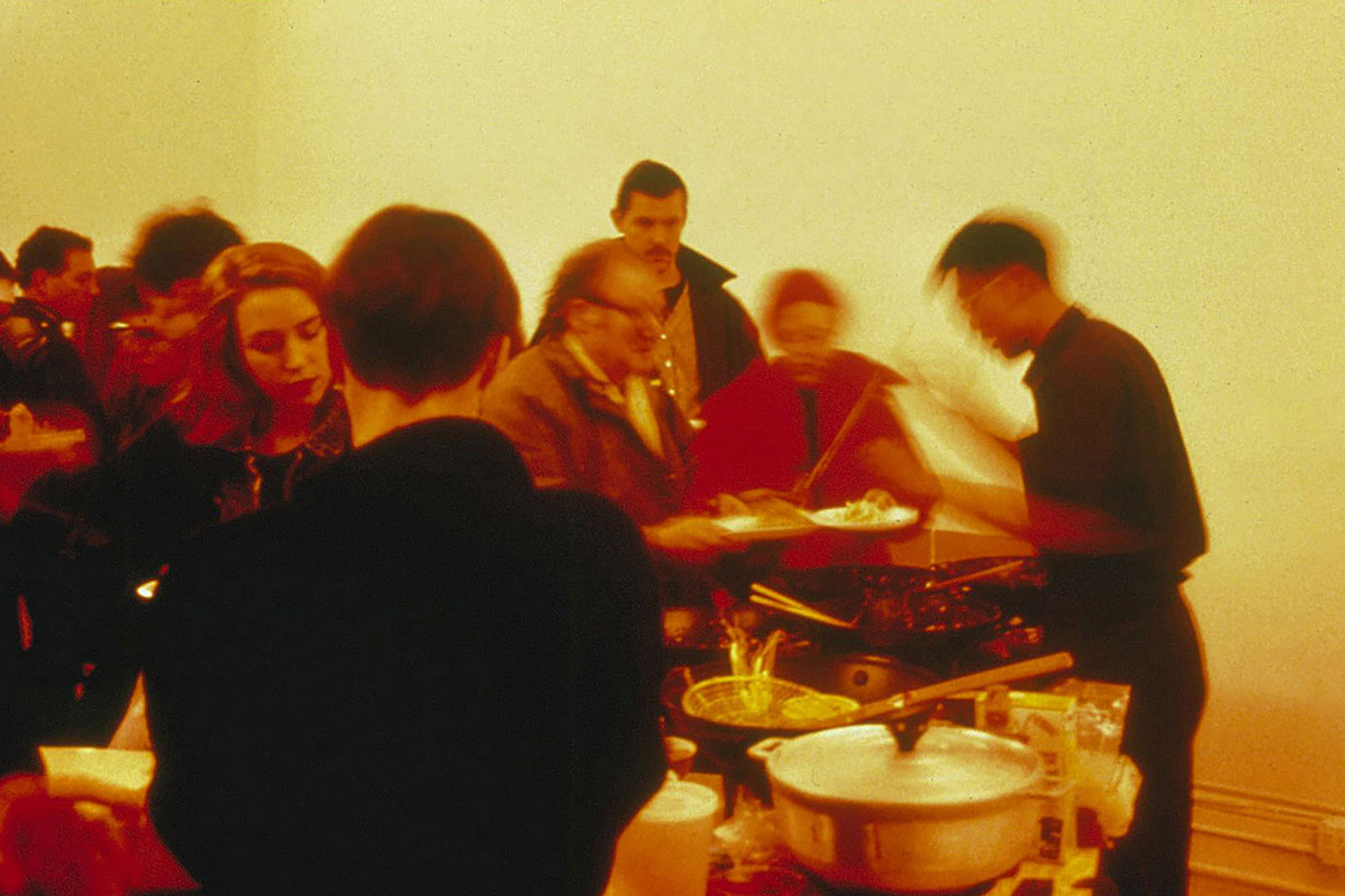
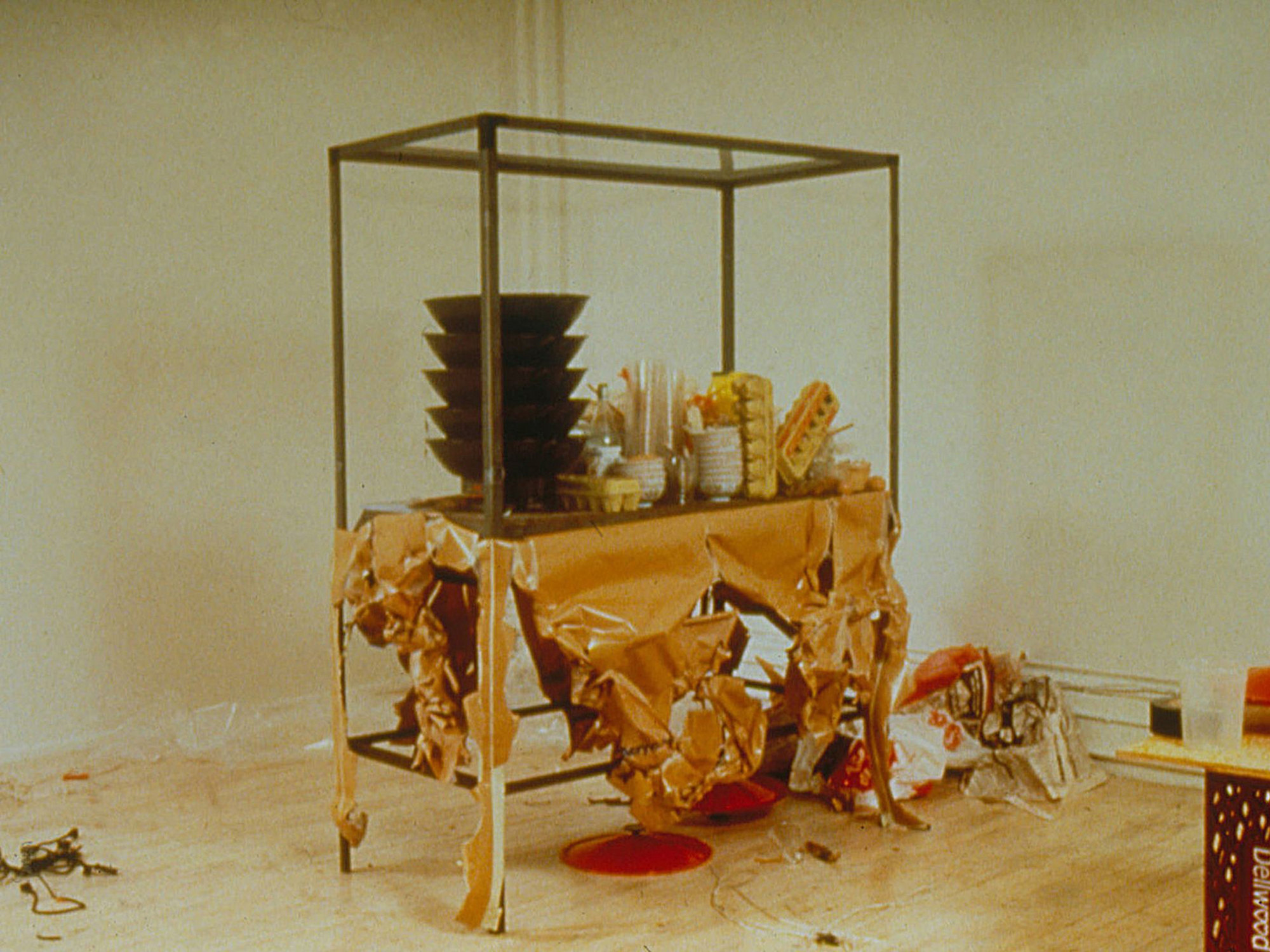
Opening event of RIRKRIT TIRAVANIJA’s “untitled (pad thai), 1990” at Paula Allen Gallery, New York, 1990. Courtesy the artist and David Zwirner.
untitled 1990 (pad thai) (1990)
For his solo debut, Tiravanija and his assistants prepared and served pad thai to visitors from a small cooking station inside Paula Allen Gallery in New York. This presentation marked the beginning of a career-spanning fascination with shared experiences, collective dining, and the ways in which slow and simple shared actions can counter the dominant, Western artistic canon. Converting the habitually sterile white cube into a dynamic space for communal engagement, Tiravanija’s practice introduced a mode of resistance against the hegemonic pillars of individualism, productivity, and efficiency. His New York exhibition rejected visual spectacle and materialism, destabilizing traditional monetary benchmarks for a successful gallery show. Since its premiere, the performance has been reactivated in different exhibition spaces globally, setting the foundation for much of Tiravanija’s work to come.
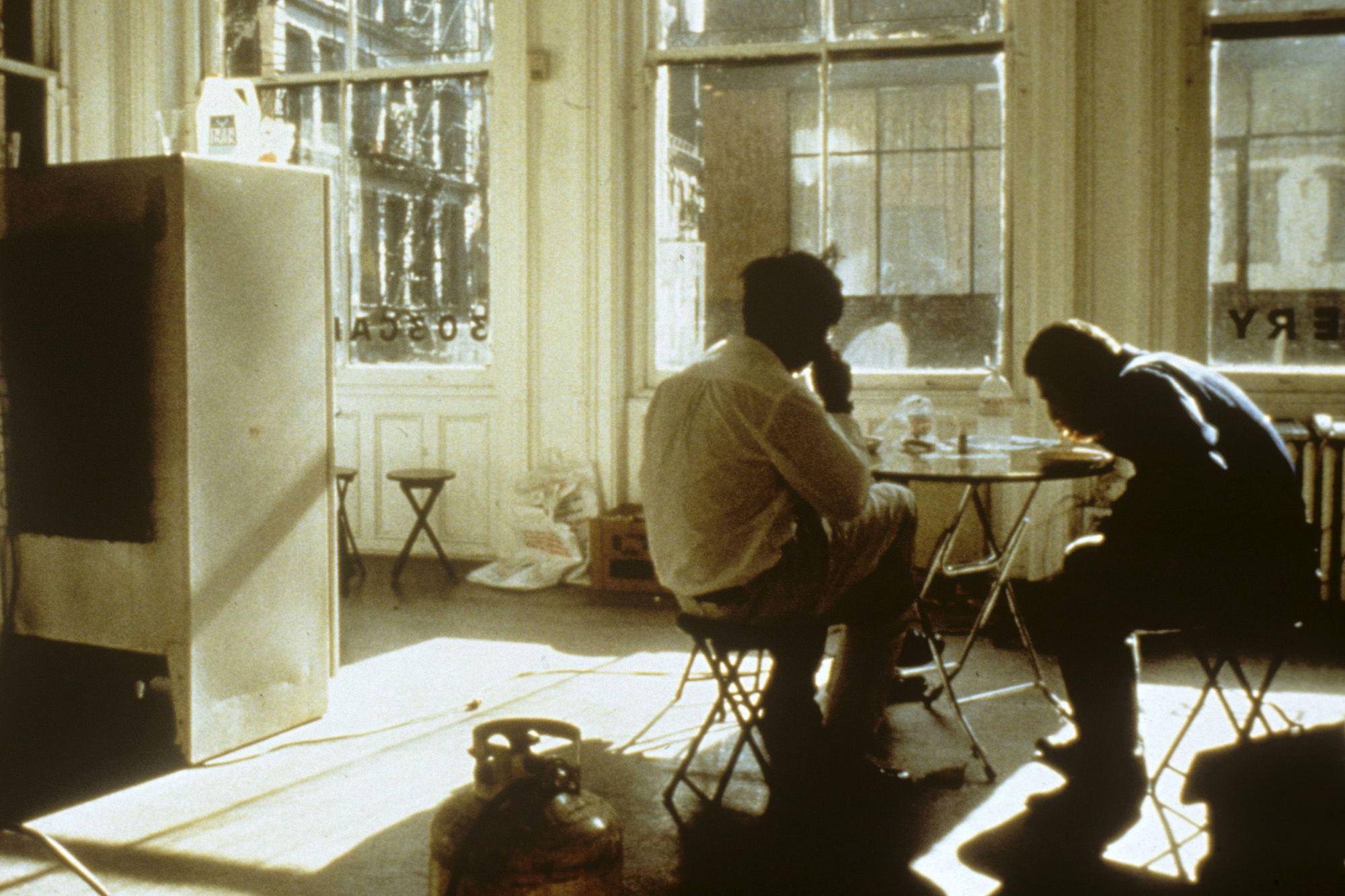
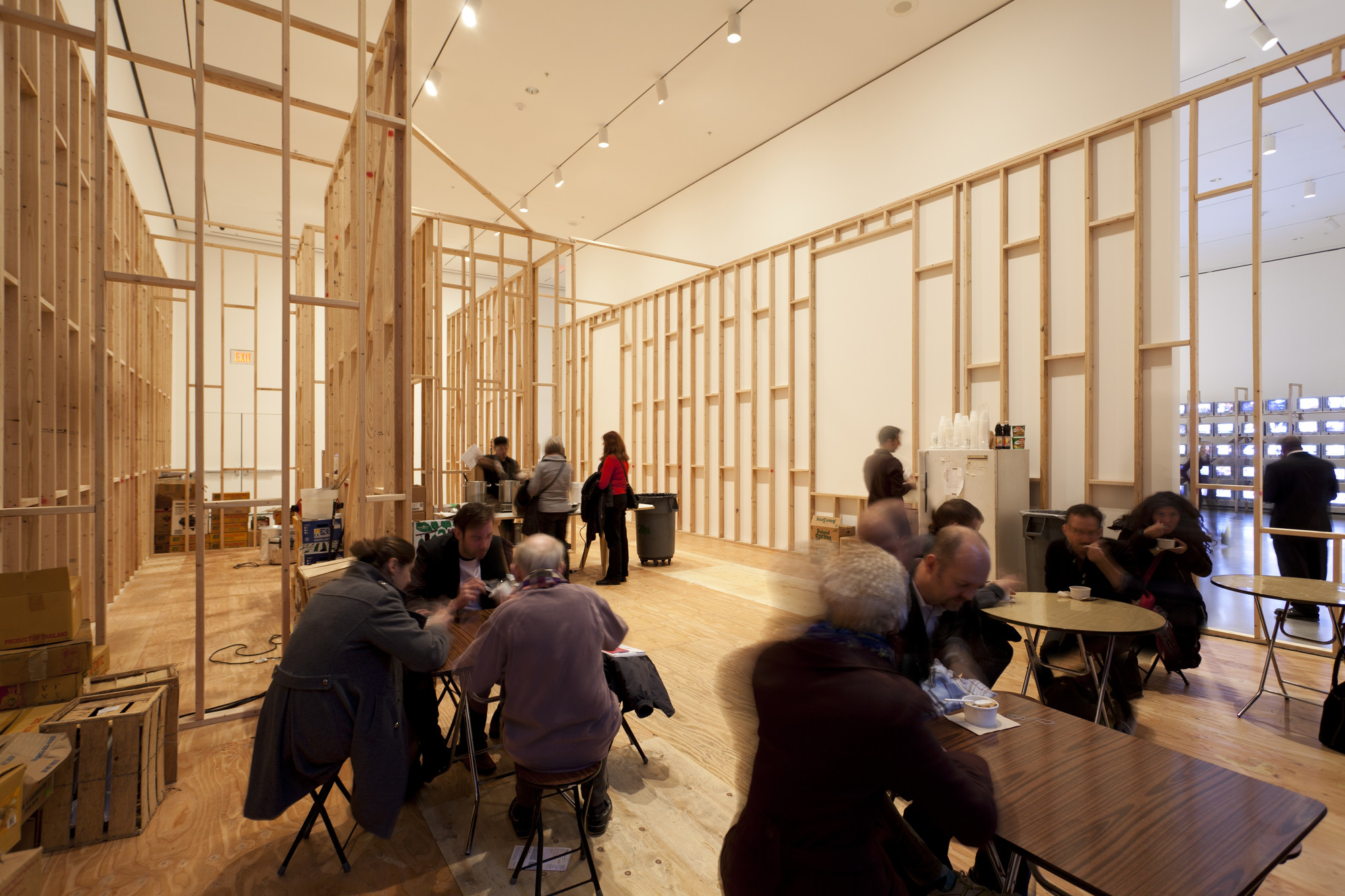
untitled 1992 (free/still) (1992)
Following his foray into culinary art, Tiravanija transformed Manhattan’s 303 Gallery into an operational kitchen from which the artist served complimentary Thai curry every day. Through this project, untitled 1992 (free) (1992), Tiravanija subtly dismantled the structural and visual integrity of the commercial art gallery, upending its exhibition space by exposing various appliances—desks, chairs, cabinets, and artworks—from the back office. Widely considered to be a seminal example of relational aesthetics, the work collapsed the distance between artist and viewer, requiring public engagement to bestow it with meaning while also hinting at the inherent contradiction of something being free of charge within a commercial milieu. Tiravanija has restaged this piece several times since its first iteration, and it is now part of MoMA’s collection in New York, where it is either displayed as a recreation of its former manifestations—reinstating leftover furnishings and foodstuffs, recalling previous lives and ghostly traces of meals past—or as a new rendition serving freshly prepared food.
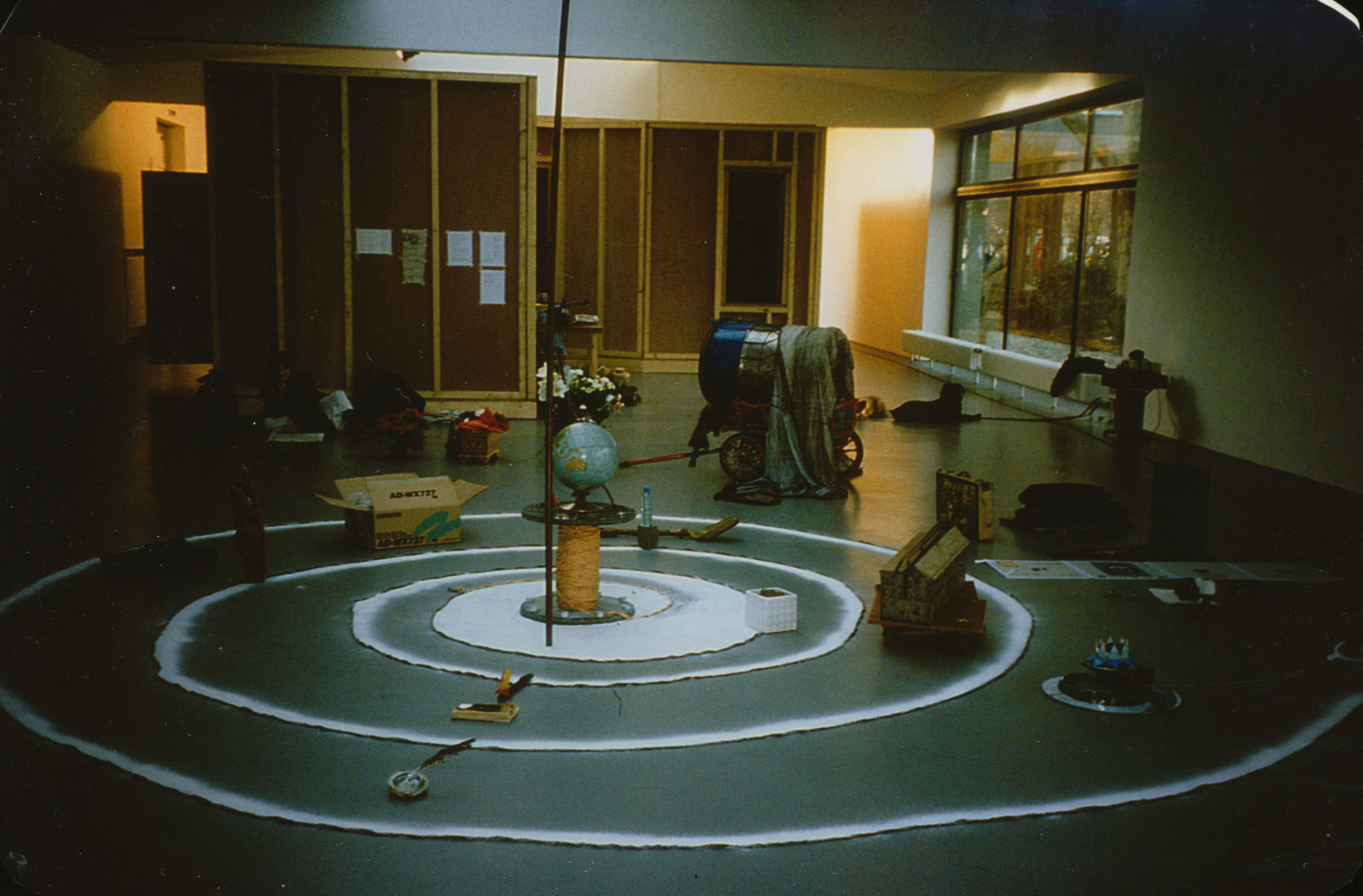
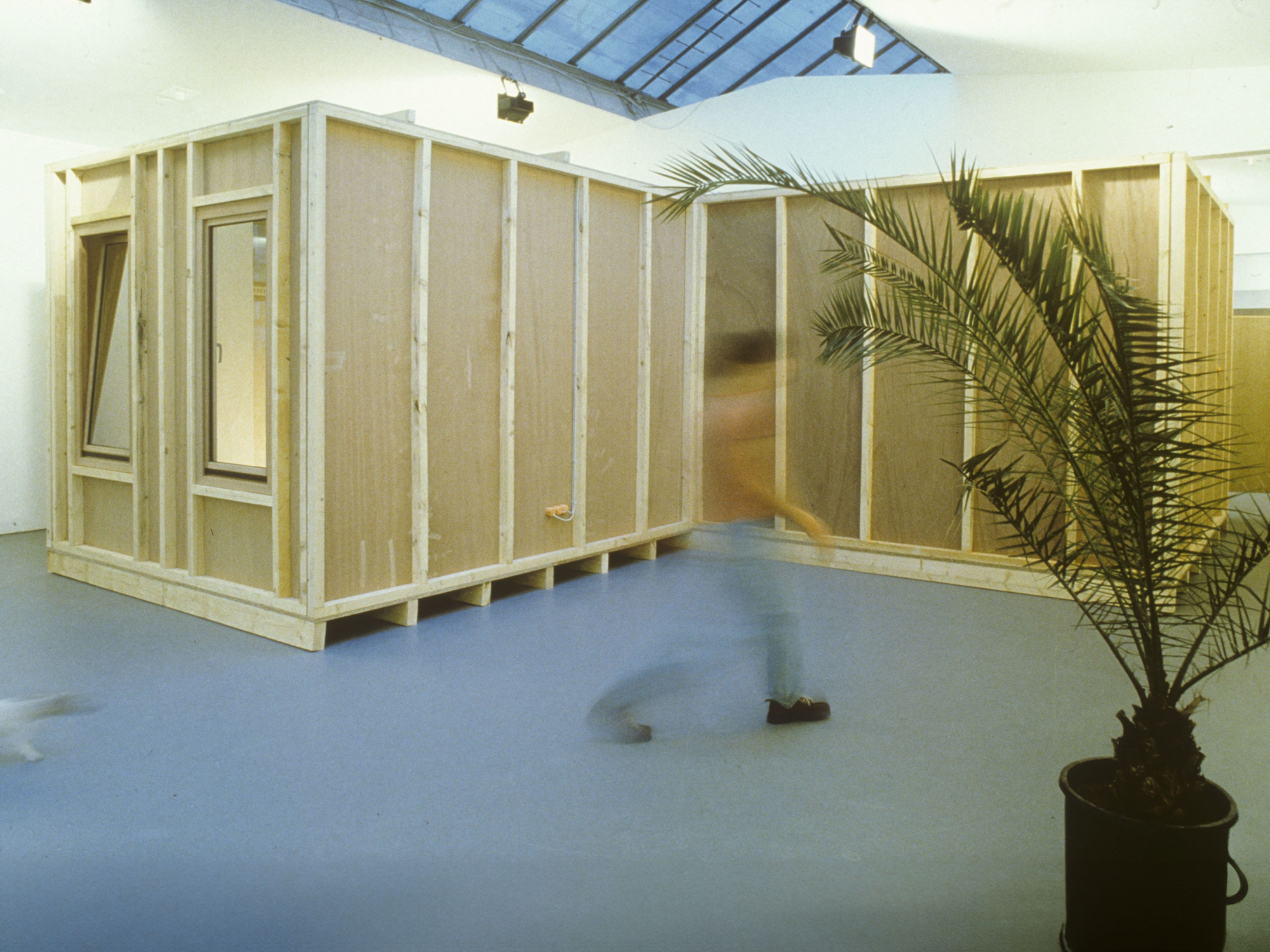
Installation view of RIRKRIT TIRAVANIJA’s untitled 1996 (tomorrow is another day), 1996, at the Kölnischer Kunstverein, Cologne, 1996. Courtesy the artist, Kölnischer Kunstverein, and David Zwirner.
untitled 1996 (tomorrow is another day) (1996)
In 1996, at the Kölnischer Kunstverein in Cologne, Tiravanija manufactured a full-scale and fully-functional model of his East Village apartment out of plywood, complete with a kitchen, toilet, living room, hallway, bedroom, and bathroom. Granting the public 24-hour access to the space over a six-week period, people were invited to sleep, cook, play, and lounge; the replica of his home became a stage on which visitors could perform the quotidian mundanities of social life. In equal parts an insight into domesticity as well as a theatrical post-utopic commune, Tiravanija’s installation became a moving tableau vivant—a lifesized, immersive dollhouse oscillating between fantasy and reality, constructedness and authenticity.
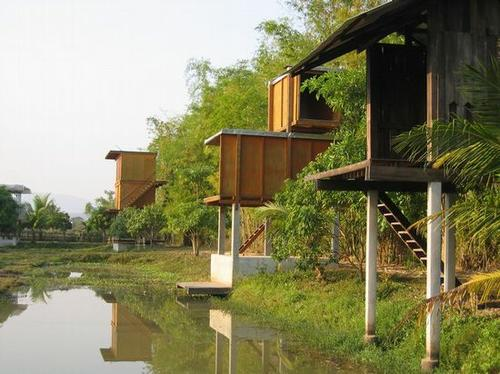
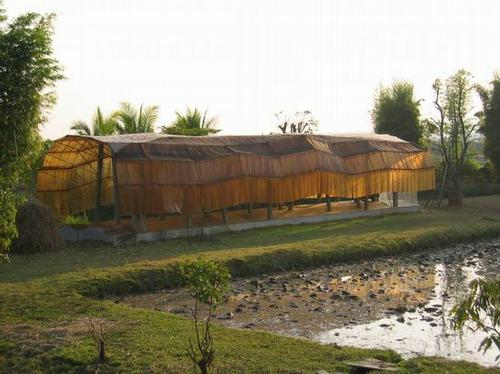
View of RIRKRIT TIRAVANIJA’s The Land in Sanpatong, 2001–02. Courtesy the artist and Galerie Chantal Crousel, Paris.
untitled 1998 (the land) (1998– )
Cofounded with fellow Thai artist Kamin Lertchaiprasert in 1998, untitled 1998 (the land), often referred to as The Land, is one of Tiravanija’s most enduring works. Undergoing continual metamorphosis, this collaborative environmental recovery project in Sanpatong, northern Thailand, invites local artists and inhabitants to cultivate and utilize a plot of land in the region as they please. Rice is harvested year-round, solar power is harnessed, and fresh produce is farmed. Various architectural structures have been built here by an international cast of artists and architects including Phillippe Parreno, Tobias Rehberger, Superflex, and Atelier Van Lieshout—a group house, a hall for gatherings and electricity generation, and a greenhouse, among others. Everything is subject to change and nothing is fixed, the natural world itself becoming an active participant in the work. The endeavor is purposefully vague, evading categorization—in a 2023 interview with Nuda, Tiravanija stated: “[W]e are not trying to make an art project or sculpture park, we were more focused on finding an alternative way to build a commons, a place of openness, a place of sharing, a place of exchange, and a place of living.”
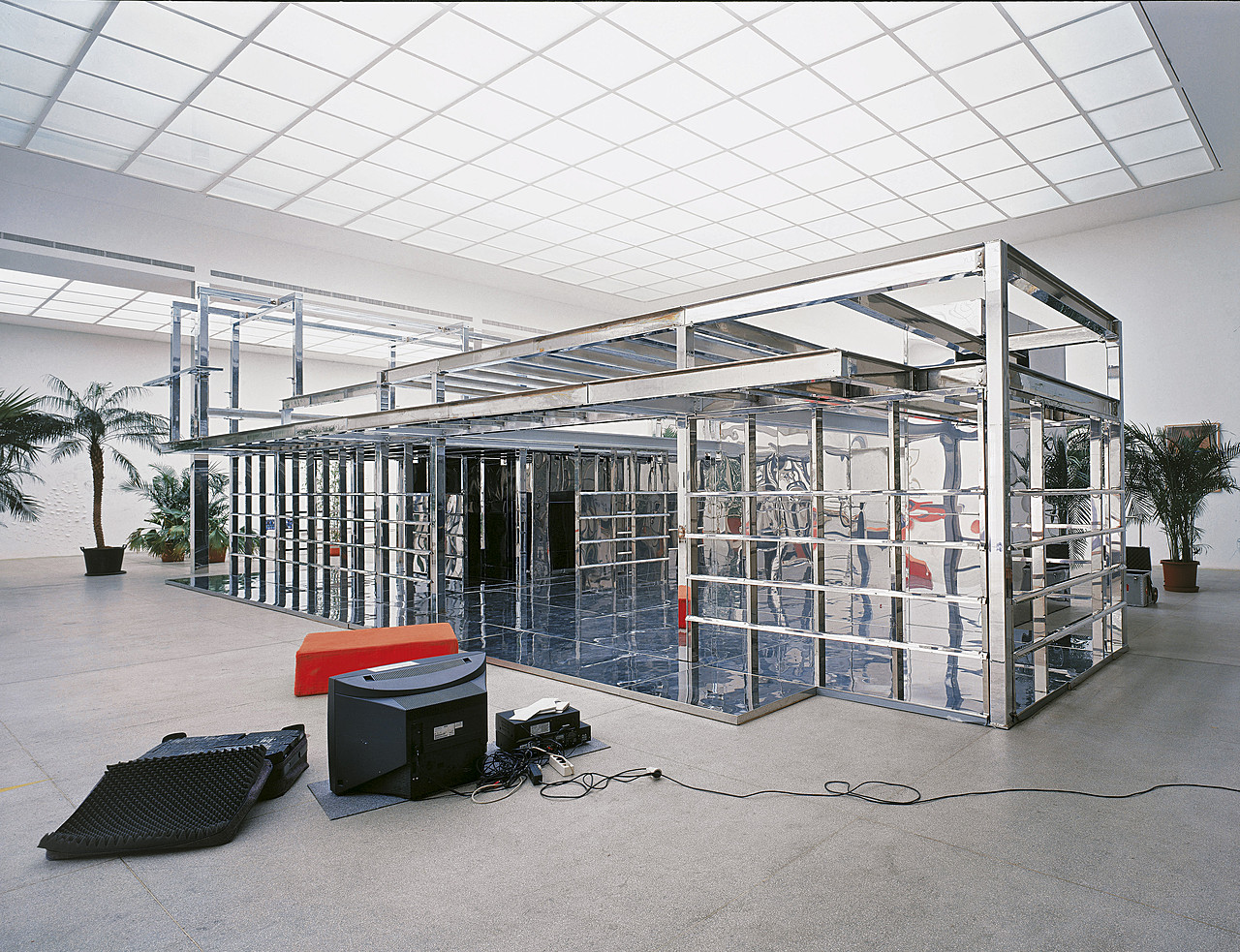
untitled 2002 (he promised) (2002)
Inspired by modernist architect Rudolf M. Schindler’s iconic Kings Road house in West Hollywood, untitled 2002 (he promised) (2002) is a monumental edifice rendered in gleaming chrome-plated steel. The installation—fitted with seating, a TV, and live plants—hosted a program of activities including DJ sessions, film screenings, and barbecues, probing the permeability of the domestic sphere and dismantling the boundary between interiority and exteriority with its open-plan, open-invite design. In eschewing the concrete and redwood of Schindler’s house for metallic surfaces that mirrored visitors’ reflections, the structure denoted “a multifaceted image of reality,” as Tiravanija put it, offering a self-reflexive social space that transmuted the gallery into a living organism, animated only by its inhabitants.
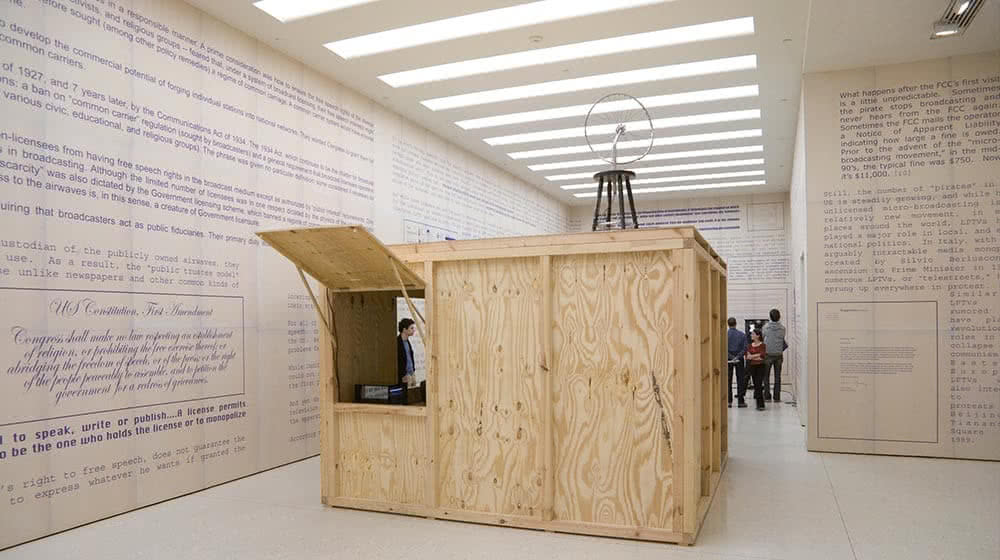
Installation view of RIRKRIT TIRAVANIJA’s Untitled 2005 (the air between the chain-link fence and the broken bicycle wheel), 2005, at the Hugo Boss Prize exhibition at the Solomon R. Guggenheim Museum, New York. Courtesy Hugo Boss and the Solomon R. Guggenheim Museum.
Untitled 2005 (the air between the chain-link fence and the broken bicycle wheel) (2005)
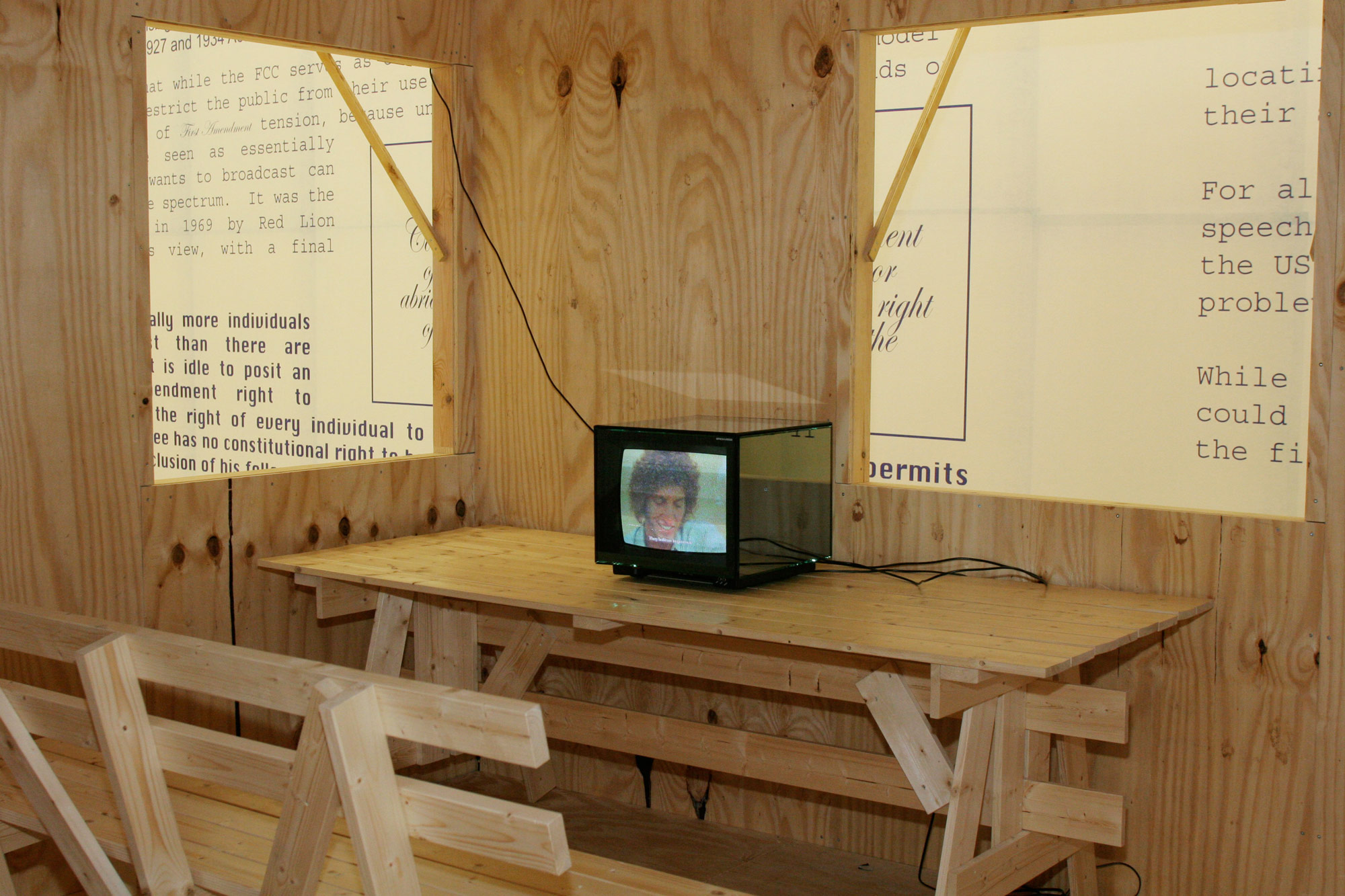
Upon winning the Hugo Boss Prize in 2004, Tiravanija presented a participatory installation at the Guggenheim Museum in New York that scrutinized the governmental monitoring of broadcast media dissemination, marking a shift to an overtly politicized practice. Blending reflective steel with plywood, the house-like configuration was basic: it had a door, windows, furniture, and an antenna shaped like Duchamp’s bicycle wheel on its roof. The dwelling, which additionally featured a glass vitrine containing an unlicensed TV transmitter, was surrounded by walls plastered with protocols from the Federal Communications Commissions (FCC)—the primary US authority on communications regulation and technological innovation—as well as texts about the political and revolutionary power of communications media. Handouts detailing instructions on how to create a DIY transmitter were provided, demystifying the broadcasting process while rejecting mainstream news censorship. Perhaps somewhat ironically, the artwork’s signal was confined within the gallery walls, restricted by the FCC to protect New Yorkers from network interference.
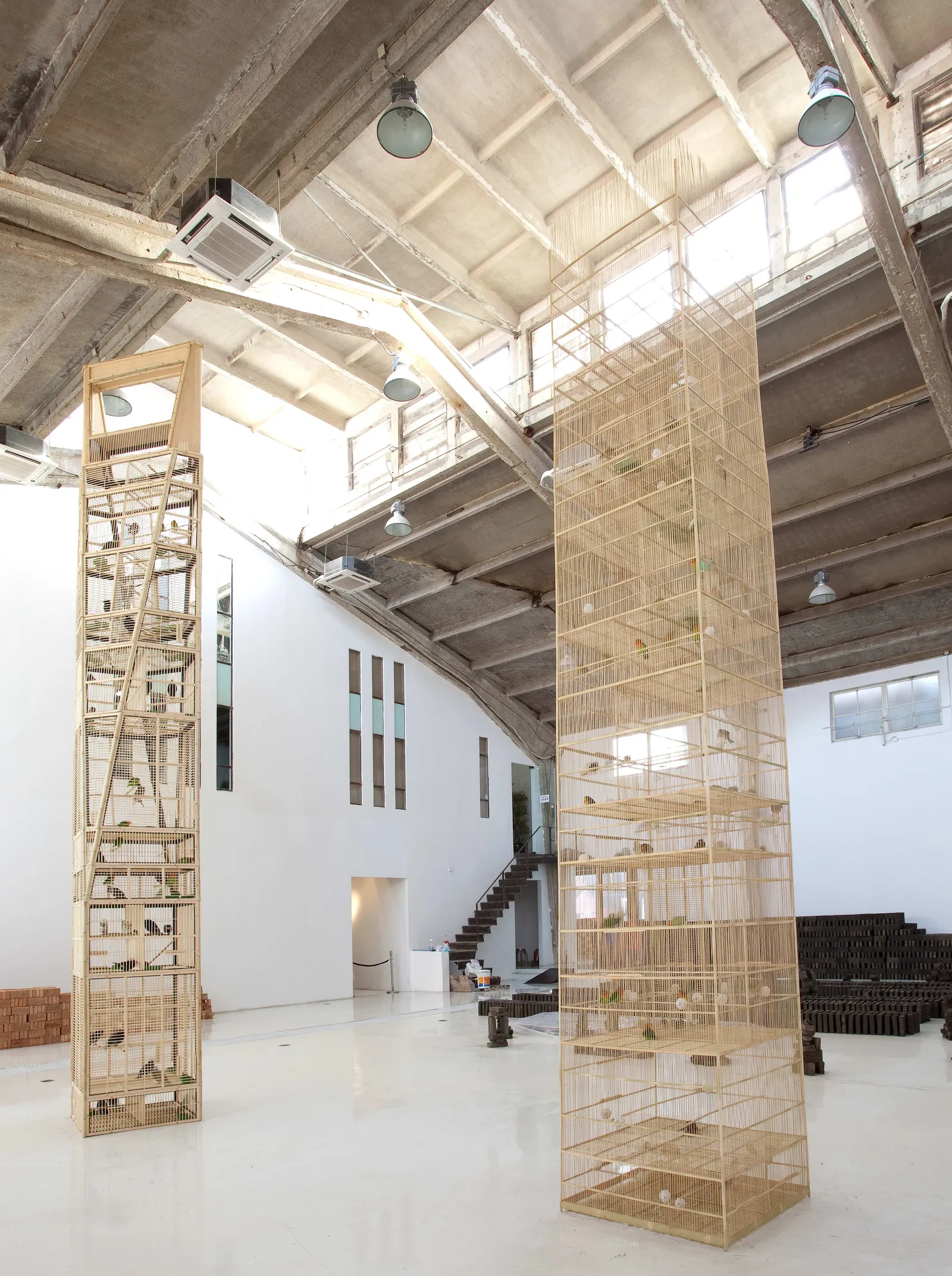
Untitled 2010 (2009–10)
For this installation, Tiravanija reproduced Beijing and Shanghai’s tallest buildings out of bamboo, housing live songbirds within their delicate, cagelike structures. Reaching up to seven-and-a-half meters in height, the models invoke the widely used, iconic bamboo scaffolding emblematic of construction sites across mainland China and Hong Kong. By enmeshing real animals within the artwork itself, its meaning and presentation come to rely on living, breathing relationships, further commenting on the unseen costs of labor and the lack of individual agency in a capitalist society, as well as the question of authorship in the creation and promulgation of contemporary art.
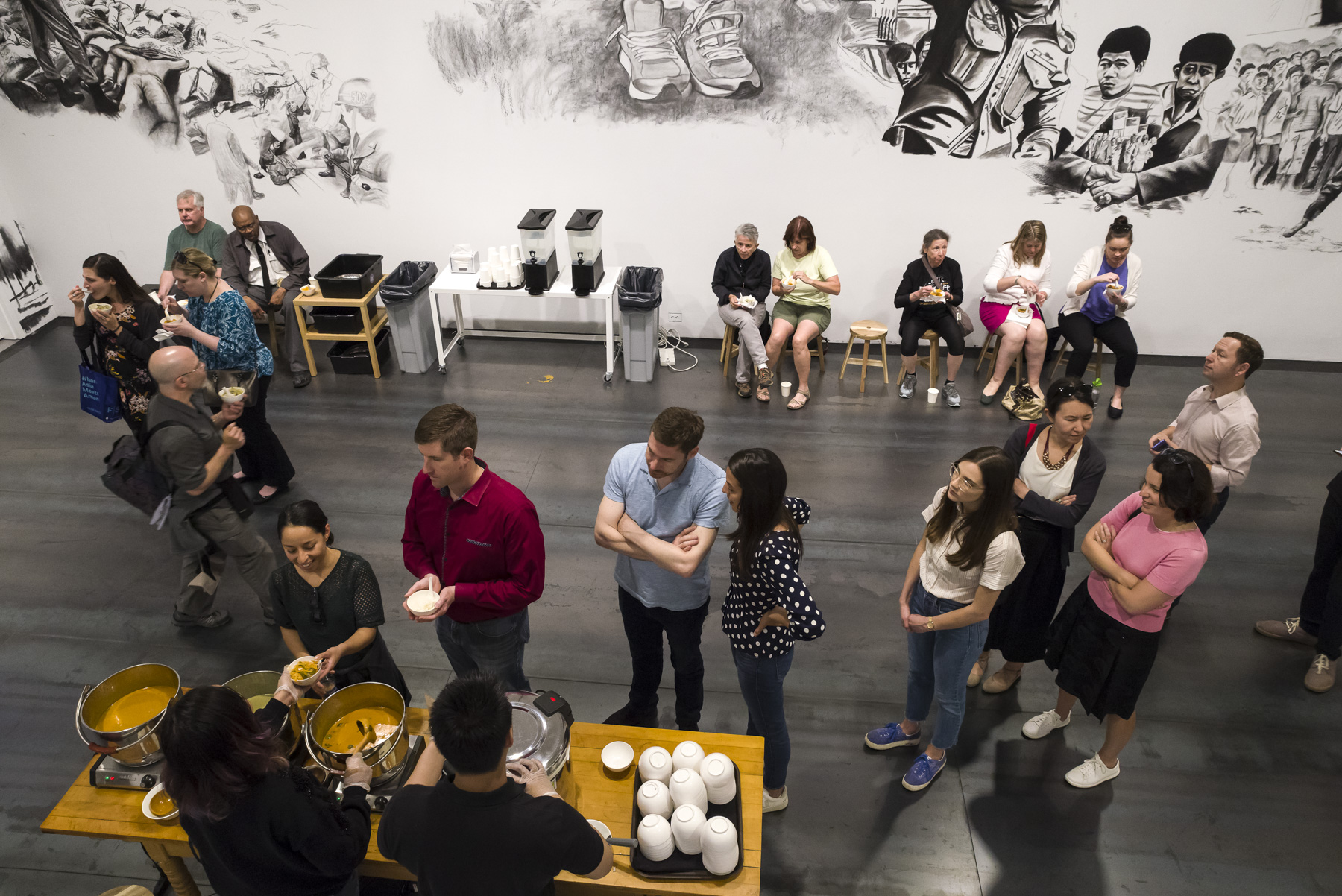
who’s afraid of red, yellow, and green (2010)
Once again coopting the art gallery as a communal dining area, this project recast the Hirshhorn Museum and Sculpture Garden in Washington, DC as a social space where visitors were served three types of Thai curry (red, yellow, and green) and watched local artists create murals thematizing political rallies. From antigovernment demonstrations in Bangkok to Black Lives Matter marches in Chicago, the large-scale charcoal drawings spanned the gallery’s whitewashed walls, uniting Tiravanija’s signature culinary practice with his ongoing series of protest artwork. Amid images of state violence and police brutality, he created a haven dedicated to fostering human connection, challenging the expectations of performance and pushing the boundaries of contemporary installation art.
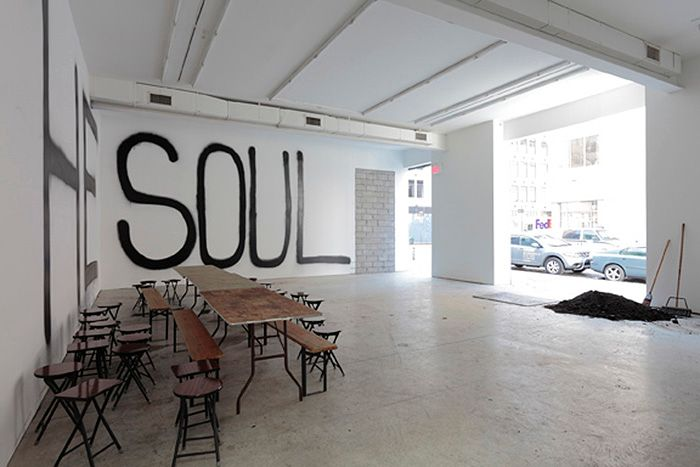
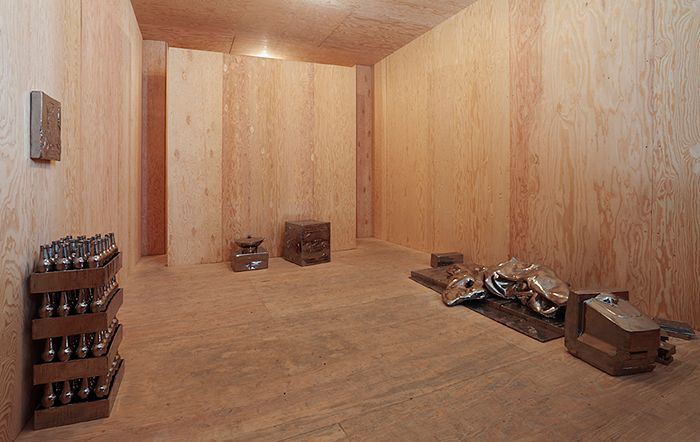
Installation views of RIRKRIT TIRAVANIJA’s “FEAR EATS THE SOUL,” at Gavin Brown’s enterprise, New York, 2011. Courtesy the artist and Gavin Brown’s enterprise.
FEAR EATS THE SOUL (2011)
Deriving its title from a 1974 film by Rainer Werner Fassbinder, Tiravanija’s FEAR EATS THE SOUL was first staged at Gavin Brown’s enterprise in New York in 2011, where Tiravanija removed the windows and doors, collapsing physical and metaphorical borders to open up the space. The project comprised a program of communal activities including a stall for screenprinting t-shirts along with a soup kitchen, as well as a recreation of the objects featured in his 1994 Gavin Brown show “Untitled 1994 (Fear Eats the Soul),” recast here as shiny chrome imitations. A manhole with the slogan “THE WAY THINGS GO” written on it—drawing on Fischli and Weiss’s 1987 absurdist short film that ponders the futility and destruction of the passage of time—was used to prepare an ancient Mayan dish of slow-roasted pork that fed guests at the opening. The installation embodies his signature relational style that refuses categorization, blending lighthearted humor with sociopolitical undertones, sentimental and human connection with pragmatic commerce.
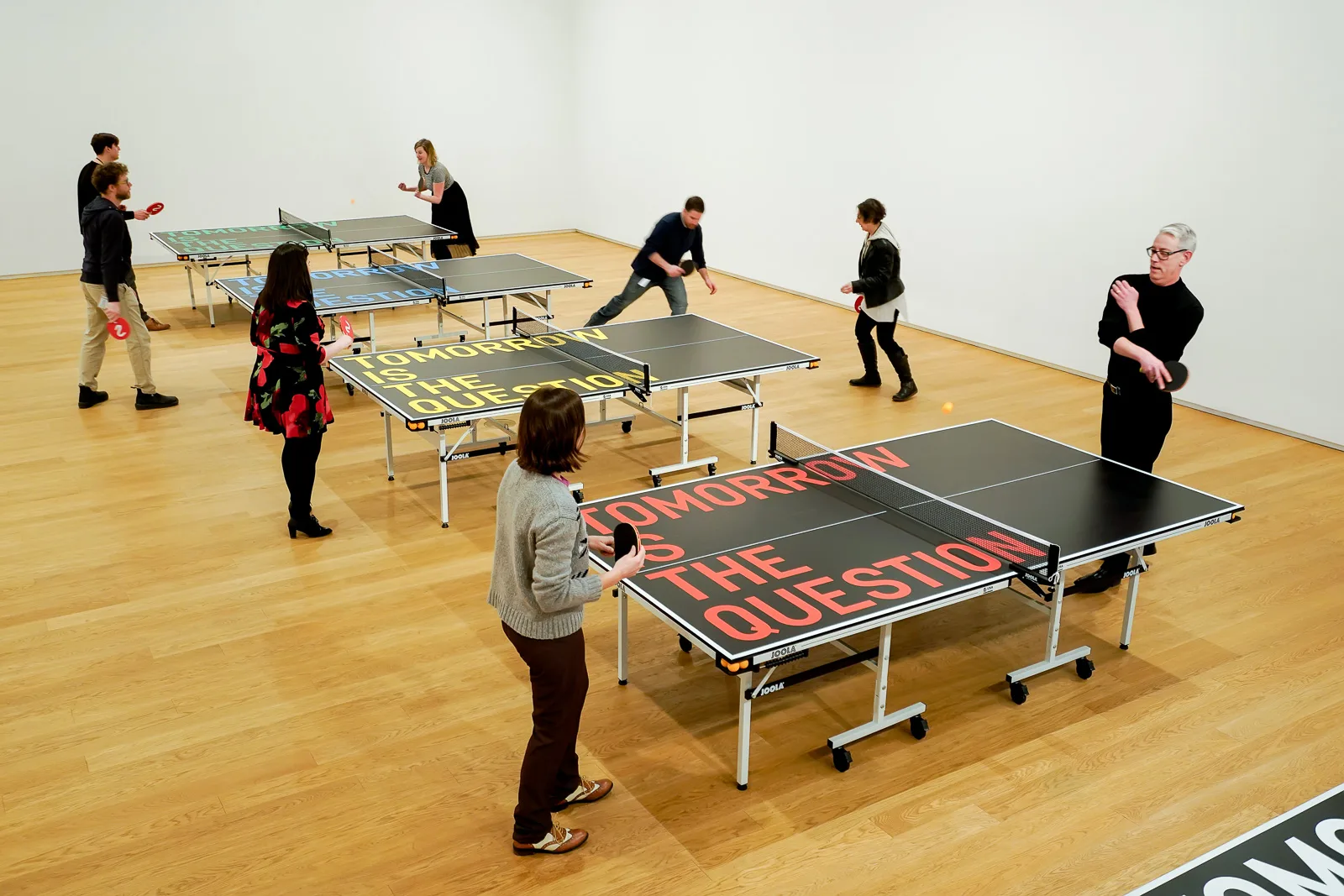
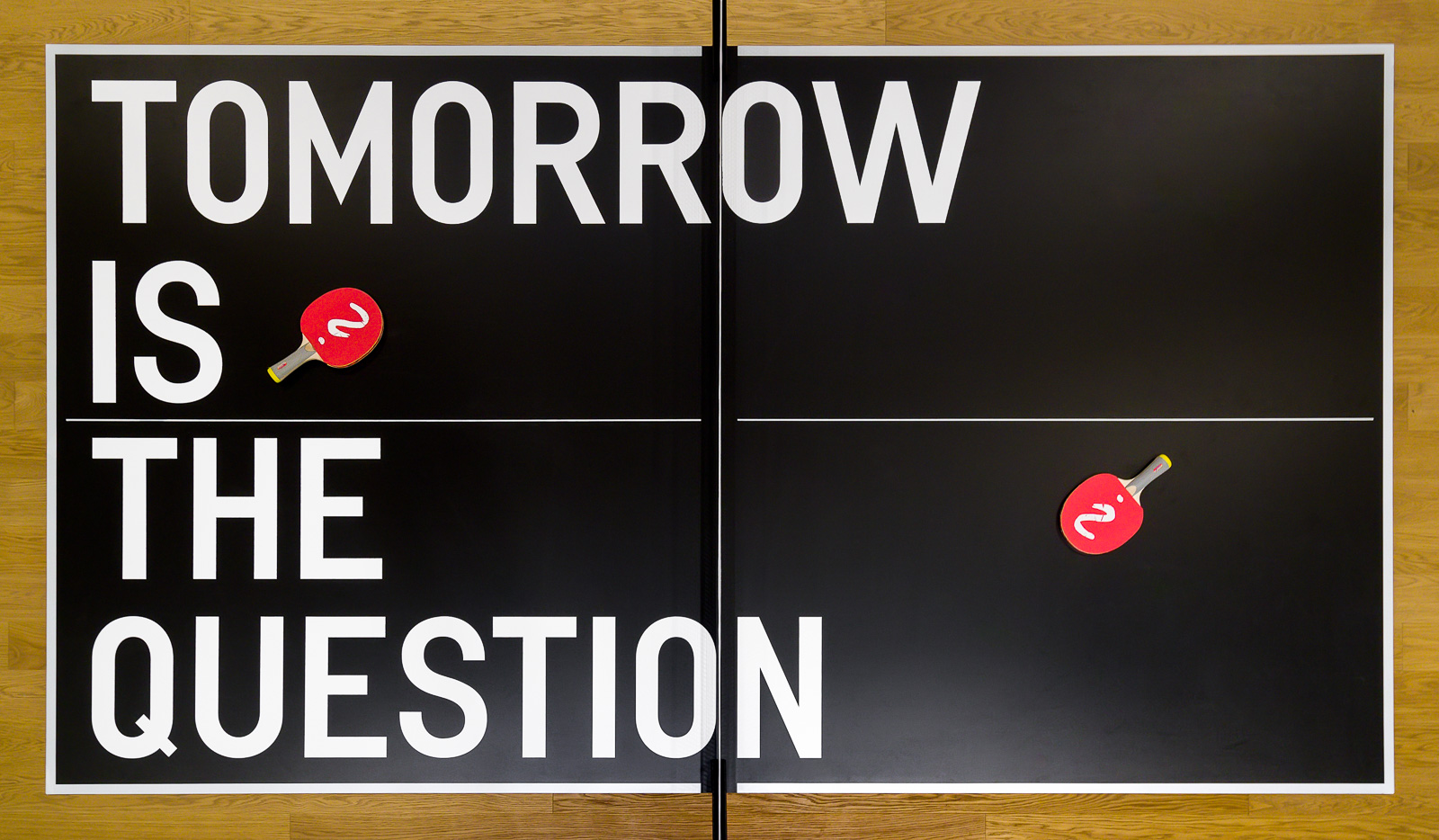
Installation views of RIRKRIT TIRAVANIJA’s “Tomorrow is the Question” at Remai Modern, Saskatoon, 2019. Photo by Blaine Campbell. Courtesy Remai Modern.
Tomorrow is the Question (2015)
Playful and collaborative, this work involves organizing public games of ping pong in cities across the globe. The tables, often chrome-cast, are stencilled with large block lettering reading “TOMORROW IS THE QUESTION” in different languages. Sharp, sloganized commentary like this is utilized throughout Tiravanija’s oeuvre with phrases such as “THE DAYS OF THIS SOCIETY ARE NUMBERED” and “RICH BASTARDS BEWARE” painted, printed, and stamped onto objects and other surfaces throughout the space. These punchy maxims undercut the often genial nature of his practice with a sense of urgency and gravity—an insistence on, or a desperate plea for change. “It is not what you see that is important,” the artist has said, “but what takes place between people.” Perhaps a game as simple and universal as ping pong could generate dialogue through recreation, and mobilize social transformation through shared action and community.
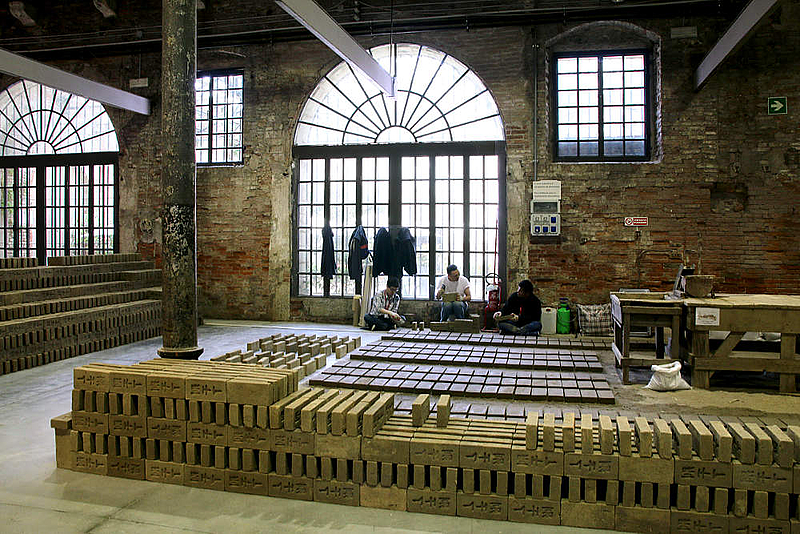
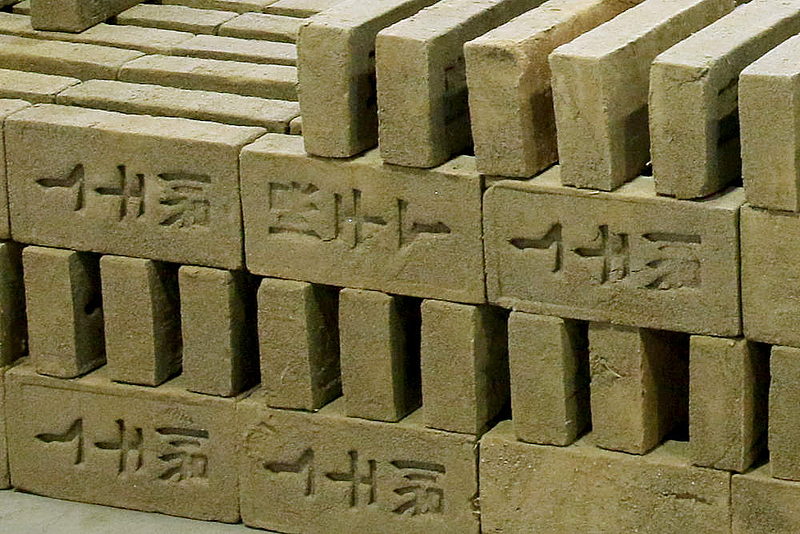
Installation views of RIRKRIT TIRAVANIJA’s Untitled 2015 (14,086), 2010–15, raw bricks, wooden stamps, tools, dimensions variable, at the 56th Venice Biennale, 2015. Copyright and photo by Haupt & Binder, Universes in Universe.
Untitled 2015 (14,086) (2010–15)
First presented at Beijing’s Tang Contemporary Art in 2010, this installation was reactivated for the 56th Venice Biennale in 2015, where visitors were encouraged to purchase raw construction bricks through a donation of EUR 10 (USD 12) or more. The slabs had been stamped with the serial numbers one through 14,086—referencing the amount of blocks required for the construction of an average-sized family house in China—and the characters “别干了,” the Mandarin translation of Guy Debord’s revolutionary protest slogan “Ne travaillez jamais” (never work). For the project, Tiravanija created a “little factory” in China where workers engraved the bricks using the artist’s own typeface “Tiravanija 1.” The interactive work rendered this drudgery visible and tangible, allowing audiences to contemplate consumer behavior and their detachment from human labor. The proceeds went toward ISCOS, a nonprofit foundation in Italy that protects trade union freedoms and supports international workers’ rights.
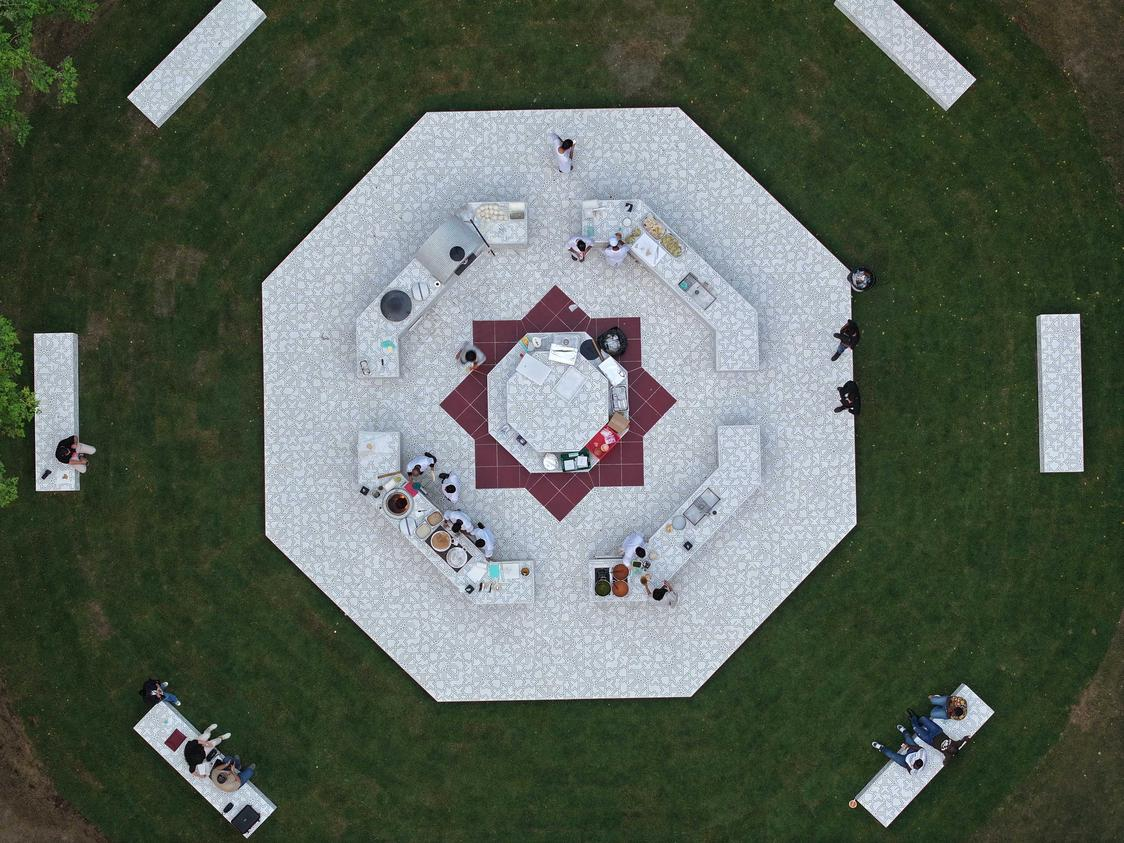
untitled 2025 (no bread no ashes) (2025)
At the Museum of Islamic Art in Doha, Tiravanija staged a public pavilion that acted simultaneously as a picnic spot and an art installation, providing a space to gather, rest, and reflect. Honoring Qatar’s Islamic heritage with its symmetrical, octagonal design and utilization of geometric white-and-maroon tiles, this work marked the artist’s first presentation in the country, commissioned for Rubaiya Qatar’s inaugural edition. Inspired by Victor Grippo’s 1972 anti-establishment street performance where he baked and shared bread in downtown Buenos Aires, Tiravanija set up traditional ovens and crockery stemming from the Middle East at his pavilion, organizing weekly baking classes, in which professionals could share their culinary expertise with the public to facilitate both literal and cultural nourishment.
Aisha Traub Chan is an editorial intern at ArtAsiaPacific.