People
Staying Curious: Isabelle de Caters on 20 Years of Gallery Isabelle
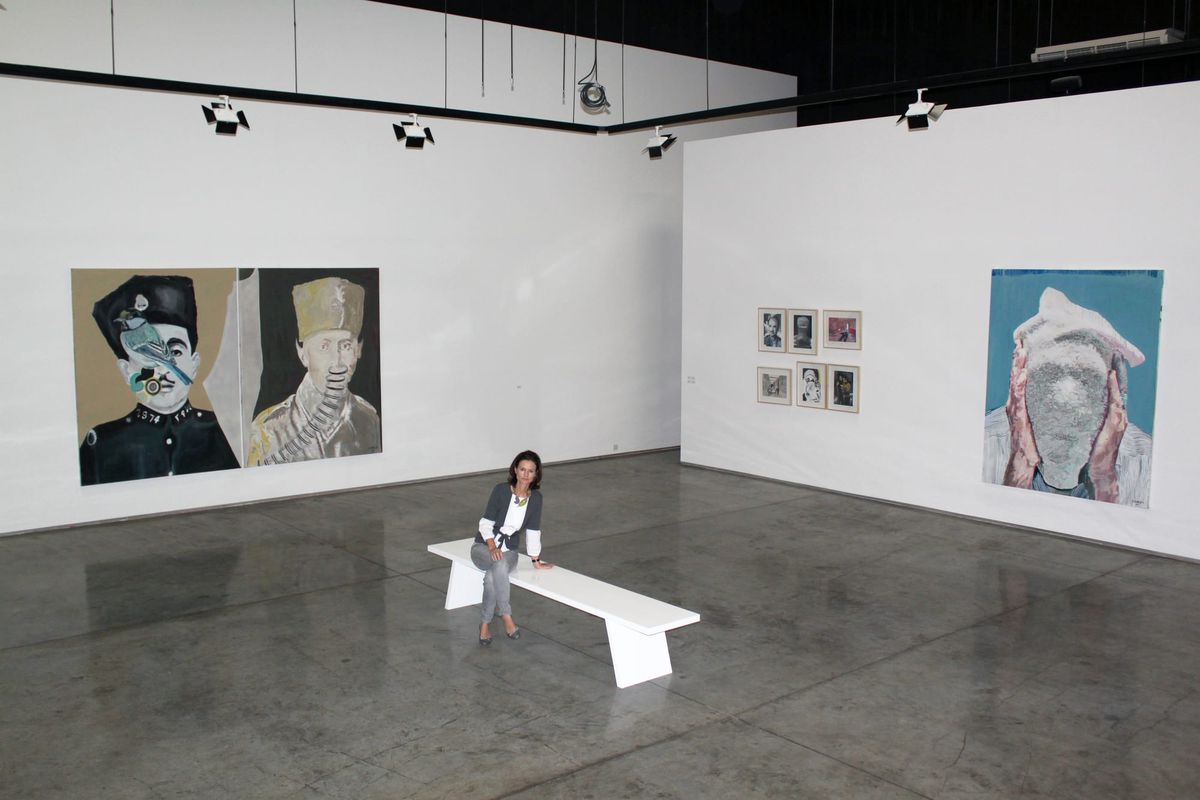
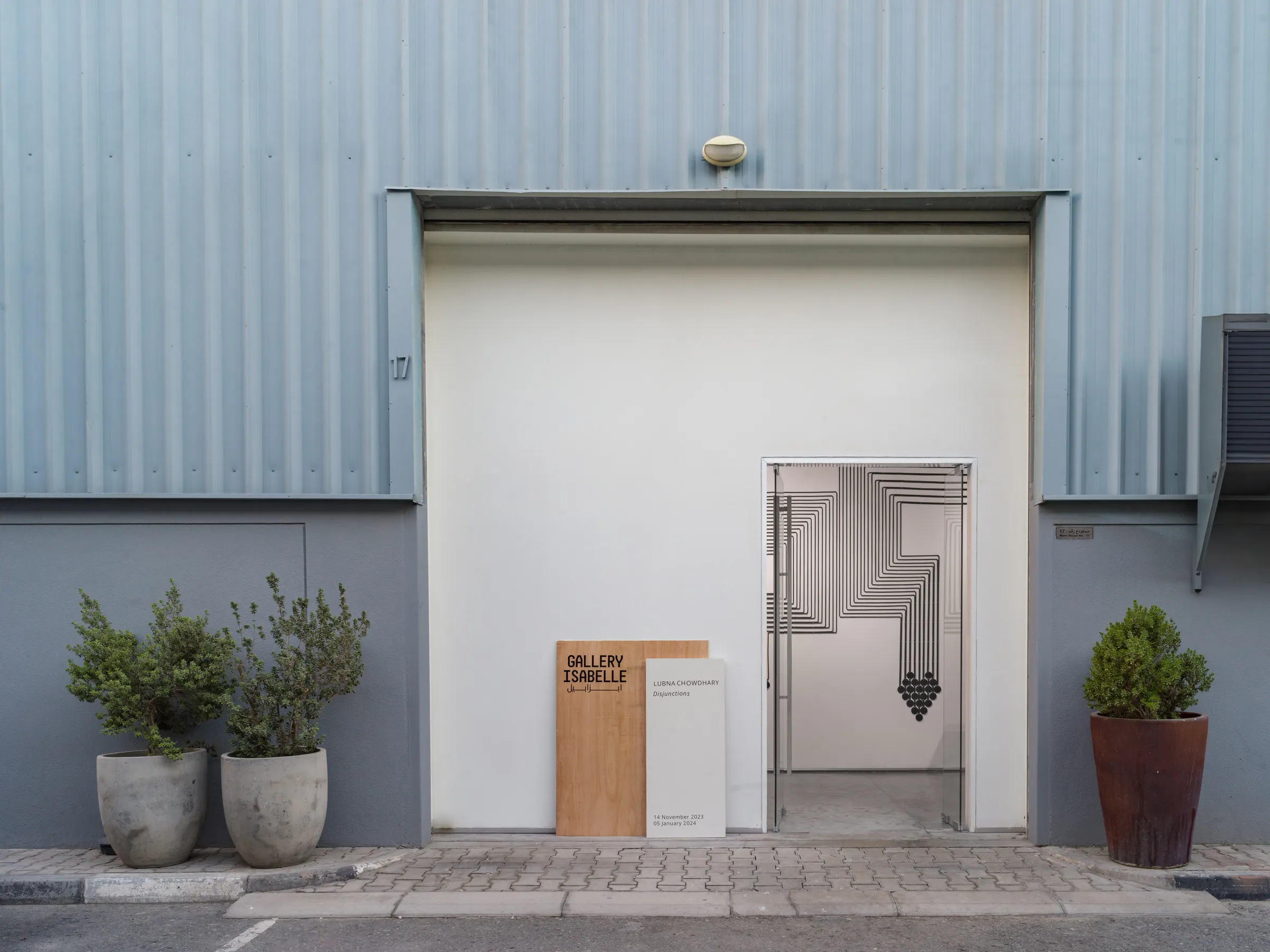
This April, Gallery Isabelle marked its 20th anniversary with “Move, Pause, Return,” a 20-day exhibition in Dubai that rolled out one work a day before bringing all 20 artists together in a final gathering. For founder Isabelle de Caters—who opened her first space in Al Quoz when contemporary art in the Gulf was still widely viewed as a short-lived experiment—the project became an occasion to reconsider what it means to sustain a gallery over time, not only through sales and visibility, but through long-term relationships with artists, writers, and audiences across the region.
20 years ago, when you opened B21 Gallery in a dusty industrial corner of Al Quoz, the prevailing thought was that contemporary art in the Gulf was a passing fad. Looking back, what conviction did you hold—in yourself and in the artists—that others lacked at the time?
I’m not sure it was conviction in the traditional sense. I had neither a long-term plan nor the idea that I would still be here two decades later. That lack of projection gave me a form of freedom—I was simply driven to explore and experiment with artists I believed in.
Very quickly, I realized that the most exciting part of this whole adventure was to listen to the artists. Everything came from there. I wanted to create a kind of foyer, a space of encounter, and to build each exhibition as an event in service of the artists, putting all my means behind their work.
In the early days, much of it was based on instinct. Looking back, what is interesting is that many of those intuitions resonated quickly with the artists, the formats, and the kind of engagement I was seeking. There was a strong response not only from the local and regional audiences, but also, very early on, from international collectors and journalists.
So if there was any kind of conviction, it came from that: trusting the artists, and trusting that something meaningful would emerge from that dialogue.
Galleries are often described as temples of taste, but they’re also businesses that need to cover rent, ship work, and keep the lights on. In your 20 years here, how has the interplay between commerce and conviction evolved in Dubai’s art scene, and where have you felt the most need to compromise?
In a context that was still developing, what mattered to us wasn’t scale, but meaning. We grew gradually and organically, always based on our sales. In fact, much of the early support came from outside the region—there was strong curiosity from Western collectors and institutions about what was then regarded as an “emerging” scene. With time, that support expanded within the UAE and across the region as well.
As the gallery developed, fixed costs increased, but it went hand in hand with the strengthening of the commercial aspect. Growth was always a response to what was already happening—commerce never dictated the program; it followed it. This allowed us to explore larger possibilities without losing our direction.
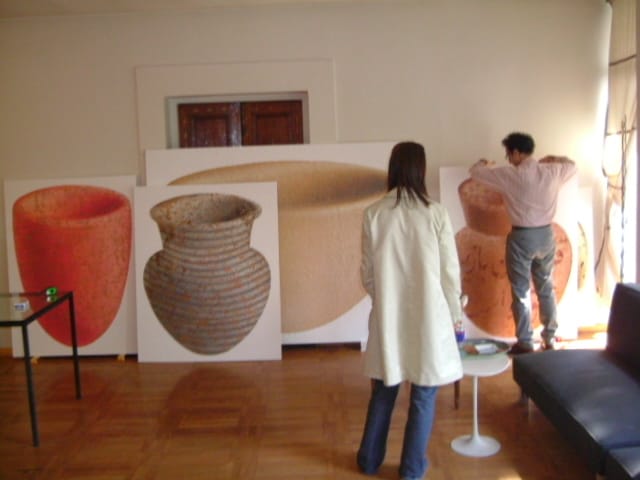
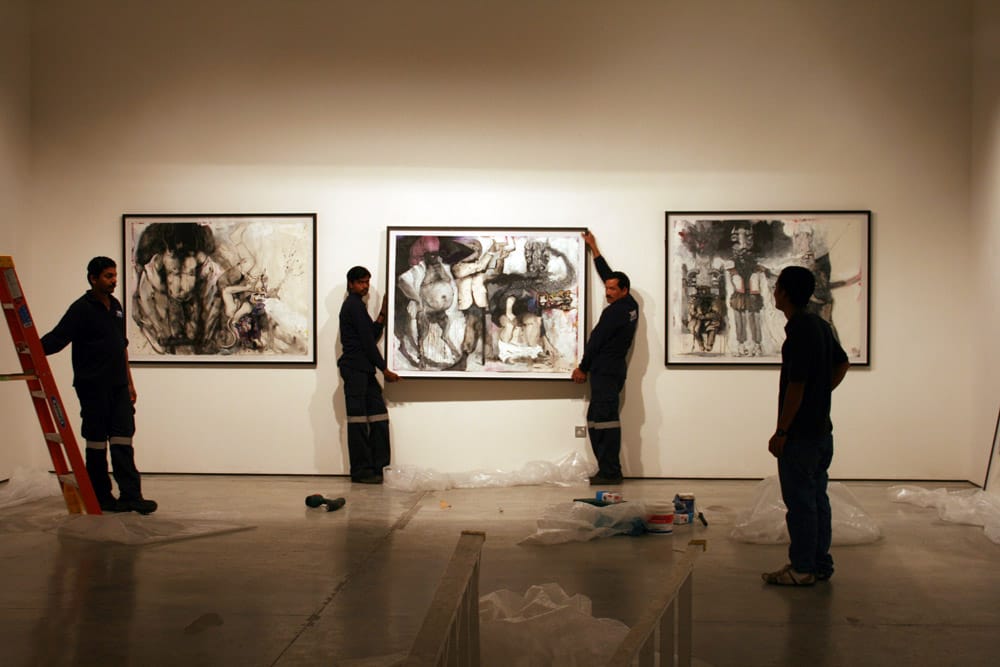
ISABELLE DE CATERS in the studio of the late FARHAD MOSHIRI, 2005 (left); and installation progress for AHMAD AMIN NAZAR’s “The Centre Cannot Hold” at B21 Gallery, Dubai, 2010 (right). Courtesy Gallery Isabelle.
You have built the gallery around a core group of regional artists, many of whom you’ve championed since their early careers. In an art world that is often captivated by the “new,” do you see loyalty as a romantic myth, or has it genuinely been your sharpest competitive edge?
I don’t see loyalty as a strategy—it’s simply a relationship that you live through. Over time, the collaboration deepens, and so does the understanding between both the artist and the gallery.
It’s not always linear. Separating from an artist you have supported and worked with closely can be one of the most difficult things. In a way, it’s like a couple—you grow together, but sometimes you also grow in different directions, and no longer meet each other’s needs.
Alongside these long-standing relationships, bringing in new voices is also a very important and exciting part of the process. It allows you to enter a different kind of risk zone, to test your intuition again, and to keep a sense of movement. This year, we are presenting three new artists, starting with Tirdad Hashemi, followed by Alia Zaal and Tatiana Chalhoub.
So if there is a strength, it comes from holding both—depth over time, and the openness to begin new relationships.
Dubai often promotes itself as a frictionless global hub, yet you’ve navigated economic downturns, shifting regional politics, and a gradual institutionalization of the art scene. What’s one “local” reality of running a gallery here that outsiders consistently fail to understand?
Nothing was given—we had to build both the context and the audience at the same time. In the early days we also didn’t have the infrastructure; I remember teaching myself how to stretch canvases and showing the framers new methods. That’s something that is often overlooked by those looking in from the outside.
At the same time, the sector here has been incredibly dynamic. What started as a relatively nascent landscape has become a very active and layered scene, with a constant flow of new initiatives, institutions, and opportunities.
Today, the challenge is no longer to pave the way, but to keep up—to navigate this density, to remain attentive, and to stay relevant within a context that is evolving very quickly.
Your 20th anniversary exhibition, “Move, Pause, Return,” unfolds one work per day over 20 days—a pacing that feels unusually slow, almost monastic, within the contemporary art calendar. Is this a deliberate counterpoint to the speed of art fairs and social media, or does it simply reflect your longstanding working method?
Two decades is really an accumulation of time rather than a date, and I didn’t want to draw a line and look back in a retrospective way.
On the contrary, I wanted to reflect on what I have learned from the artists, and on the many gifts they have offered me over the years—gifts in the sense of opening wider horizons, and deepening my understanding of the world we live in.
The idea of unfolding the exhibition—one work per day—finds its core in how it allowed each piece to be received fully, on its own terms. It also emerged quite casually through a conversation with Alexie Glass-Kantor. From there, she wrote a beautiful text in which she reflects on how artworks are not fixed, but continue to unfurl through time, gathering meaning through encounters, contexts, and returns.
In a way, this format allowed us to experience that directly. Each work appeared, stayed, and was then followed by another—like opening one gift at a time, almost like 20 birthday presents. It created a rhythm, a sense of attention, and a way to truly appreciate each work, rather than absorbing everything at once.
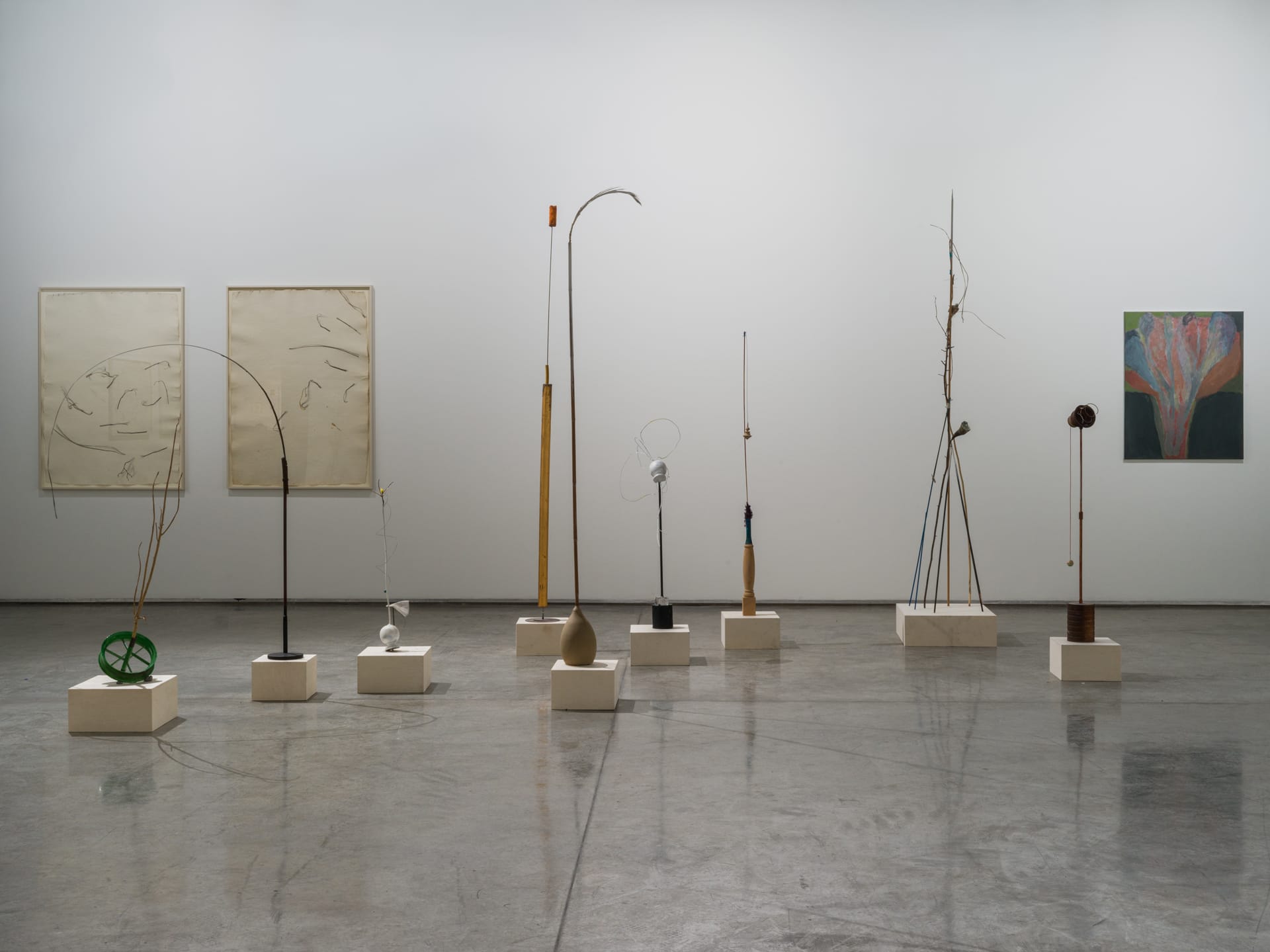
In an art world that often prioritizes constant visibility and rapid turnover, how have artists, collectors, and your own team responded to the deliberate daily pace of one artwork? Has this approach revealed anything unexpected about attention, memory, or the value of accumulation over time?
As I mentioned earlier, we witnessed something similar with our audience. People returned to see how the program was unraveling, and to discover a new work each day. The rhythm created a different kind of memory, where each piece had time to settle before the next one appeared.
We also have to remember the context in which this program started. It began at a moment of real tension in the region, with Iranian drones and missiles crossing the skies above us. Everything was, in a way, telling us to postpone. But we decided to continue.
On the second day, we presented a work the by late Iranian photographer Bahman Jalali, who had documented the Iran-Iraq war (1980–88) before deliberately moving away from direct images of conflict toward a more reflective engagement with memory and the archive. He passed away in 2010. In hindsight, that felt very symbolic—at a moment marked by violence, to show an artist who had chosen to step back from witnessing atrocity and instead question how history is seen and remembered.
In those instances, the program made us realize the full power of art—its ability to elevate us. It became a space for us—the artists, the writers, the contributors, and the audience—to connect, pause, and breathe.
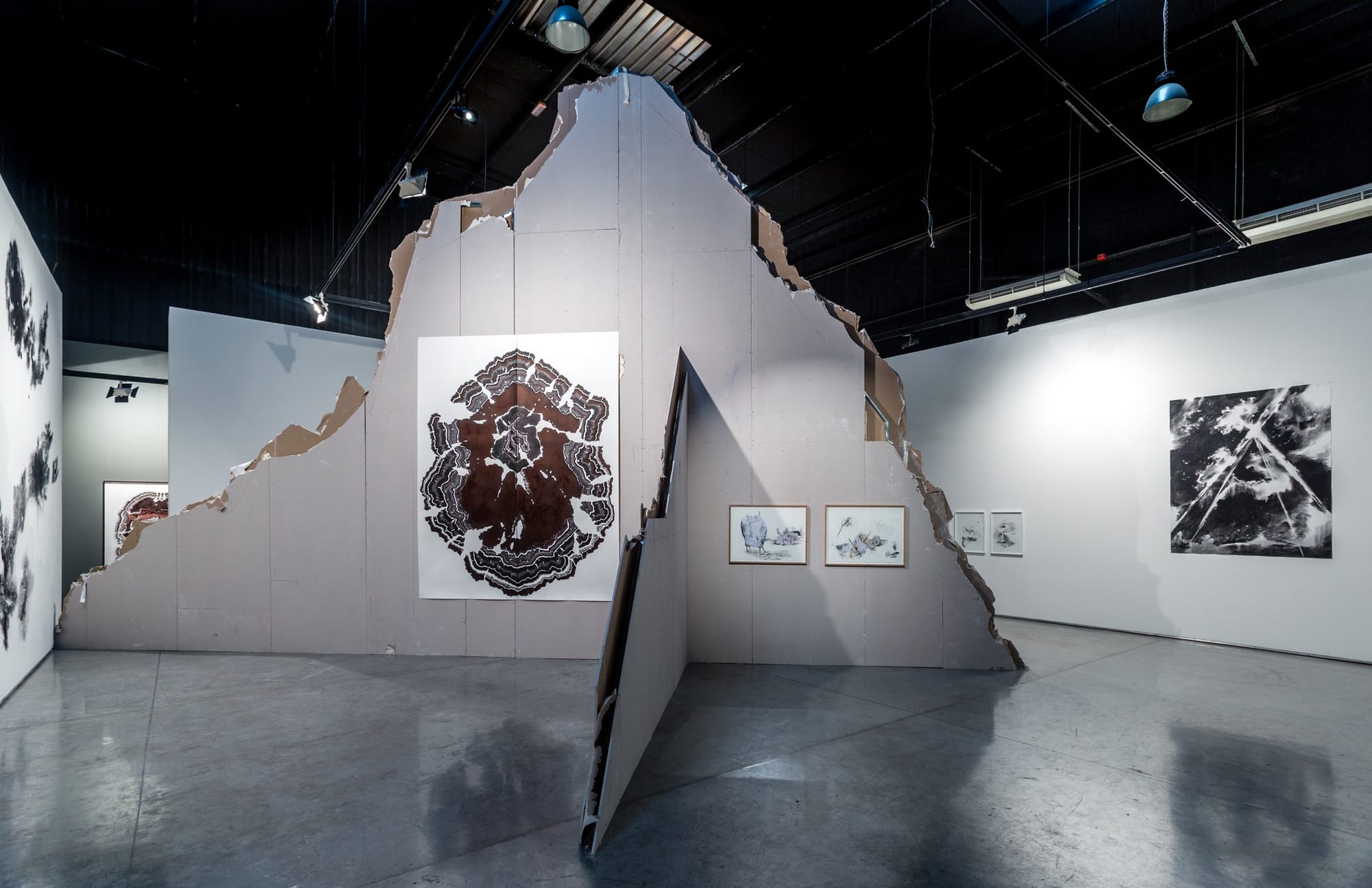
20 artists are featured in your anniversary show, each paired with a short reflection by an emerging regional writer or curator. In these pairings, do you see the gallery’s role shifting from presenting work to actively shaping a wider ecology of discourse and support in the region? Where do the most significant gaps still remain?
It was important for the gallery to not only present the works, but also to celebrate and support critical voices and practitioners. Jad Karam, the gallery director, initiated the process of engaging with emerging curators and writers from the region, pairing them with artists. Their contributions added a new layer of reflection for the audience—because a work, without its audience, is somehow not fully realized.
What has been very rewarding is the dynamic that arose from these exchanges. For example, curator Hafsa Alkhudairi, who is based in Saudi Arabia, entered into dialogue with Boston-based Egyptian Lebanese artist Lara Baladi and wrote a poem in response to her work Diary of the Future (2008–10). These kinds of encounters created something very alive and unexpected.
In that sense, the gallery became a kind of incubator for 20 “call and response” moments—each one opening a new layer of meaning.
Somehow, this 20-day program has become a reflection on the role of the gallery and the role of art itself—how it circulates, how it is received, and how meaning is built collectively over time.
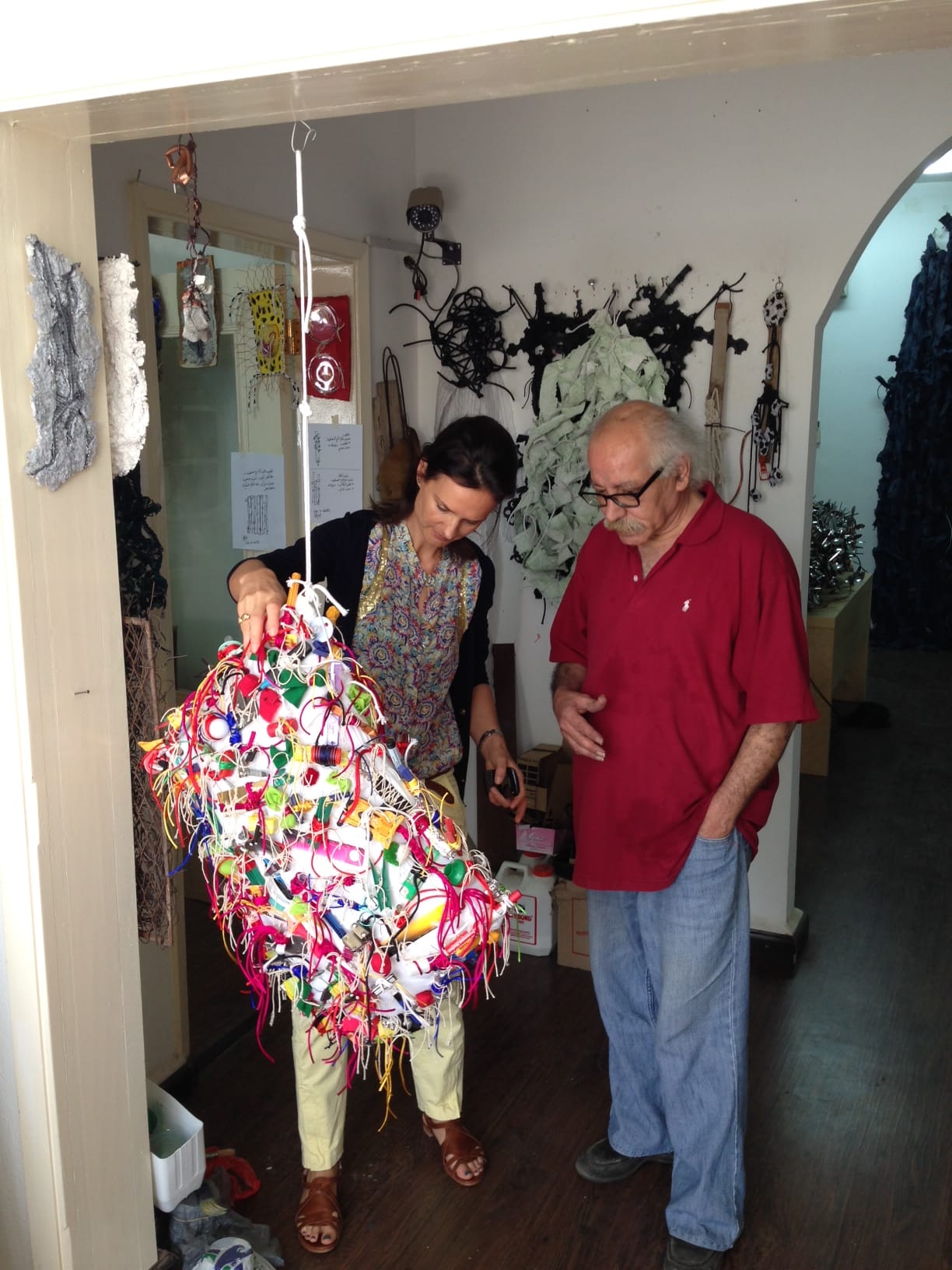
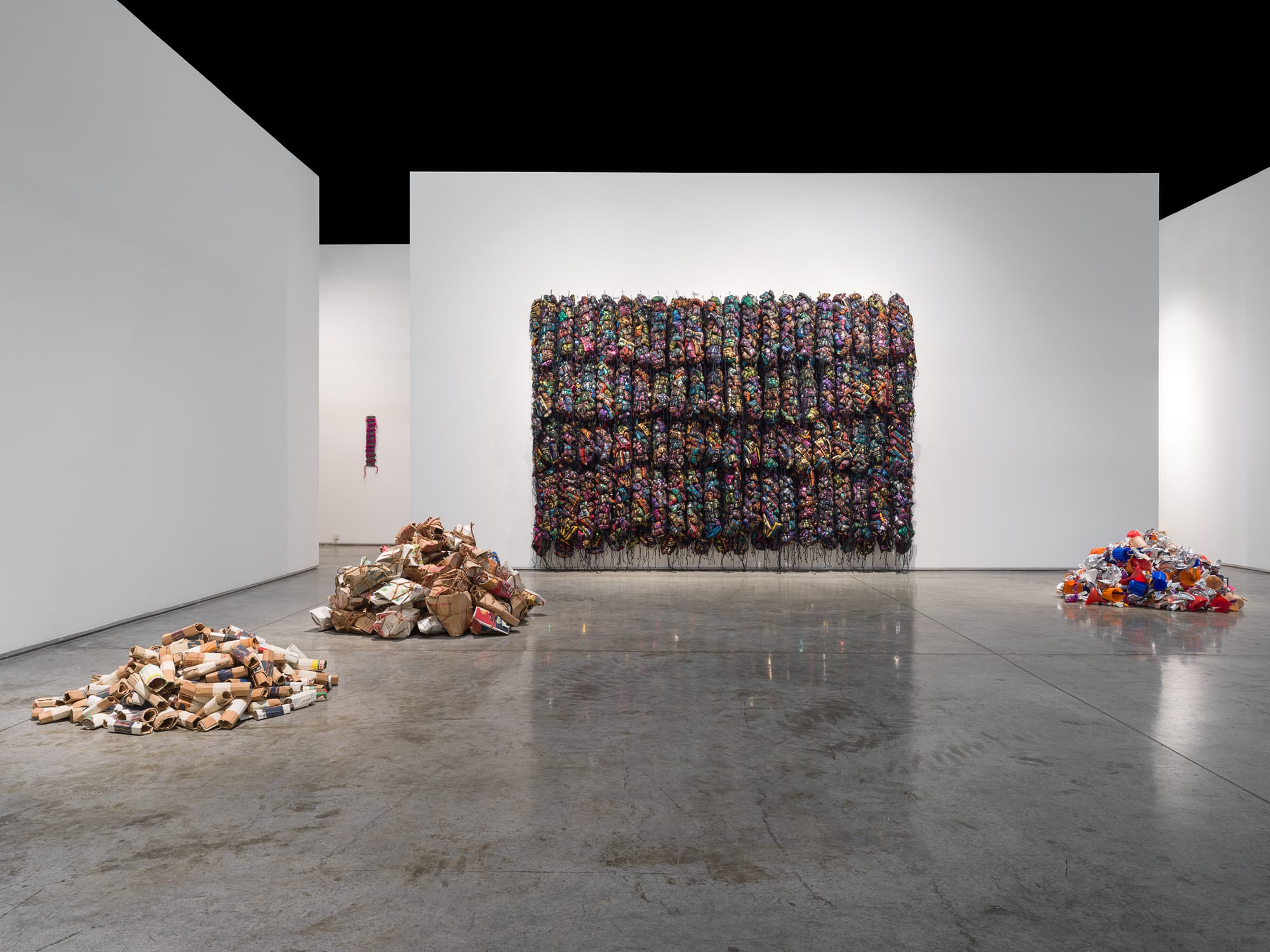
ISABELLE DE CATERS with HASSAN SHARIF (left); and installation view of HASSAN SHARIF’s “The Storyteller” at Gallery Isabelle, Dubai, 2025 (right). Courtesy Gallery Isabelle.
After two decades, what’s the most surprising marker of status or success you’ve observed in the Gulf art world? How has it shifted—from the early days of warehouse openings to today’s expanding museum landscape and growing regional and international collector base?
What has become clear over time is that our scene and our artists are fully relevant from a global point of view. In the early days, there was often a perception that this was temporary, or that it needed validation from elsewhere. That is no longer the case.
We’ve moved from informal warehouse openings to a much more structured and layered ecosystem, with institutions, collections, and a growing base of engaged audiences and collectors—locally, from the region, and internationally.
And yet, it still feels like a moment of becoming. The most exciting part is that the best is still to come, with so many developments unfolding across the region.
If you could revisit your first space in 2006, what’s the one piece of advice you would give to your younger self about what it truly takes to sustain a gallery for 20 years?
I come back to what Hassan Sharif taught me—that art should not try to be incredible, but remain ambiguous. He also taught me that when you encounter obstacles, they often reveal new paths and possibilities. Stay curious.
Elaine W. Ng is editor and publisher of ArtAsiaPacific.