People
Minor Keys and Major Silences: Yoshiko Shimada and the Art of Outrage
For decades, Yoshiko Shimada—Japan’s unflinching feminist and antiwar artist—has refused the anesthetic of national forgetting. Working across photography, installation, performance, and rigorous collaborative practice, she excavates the gendered scars of Japanese imperialism, from the comfort women system to the bureaucratic structures of erasure that follow.
On the eve of Shimada’s inclusion in the 2026 Venice Biennale “In Minor Keys,” she spoke with ArtAsiaPacific about the stakes of representing historical transgressions, her collaborative practice with BuBu de la Madeleine, and what it means to work against the official score.
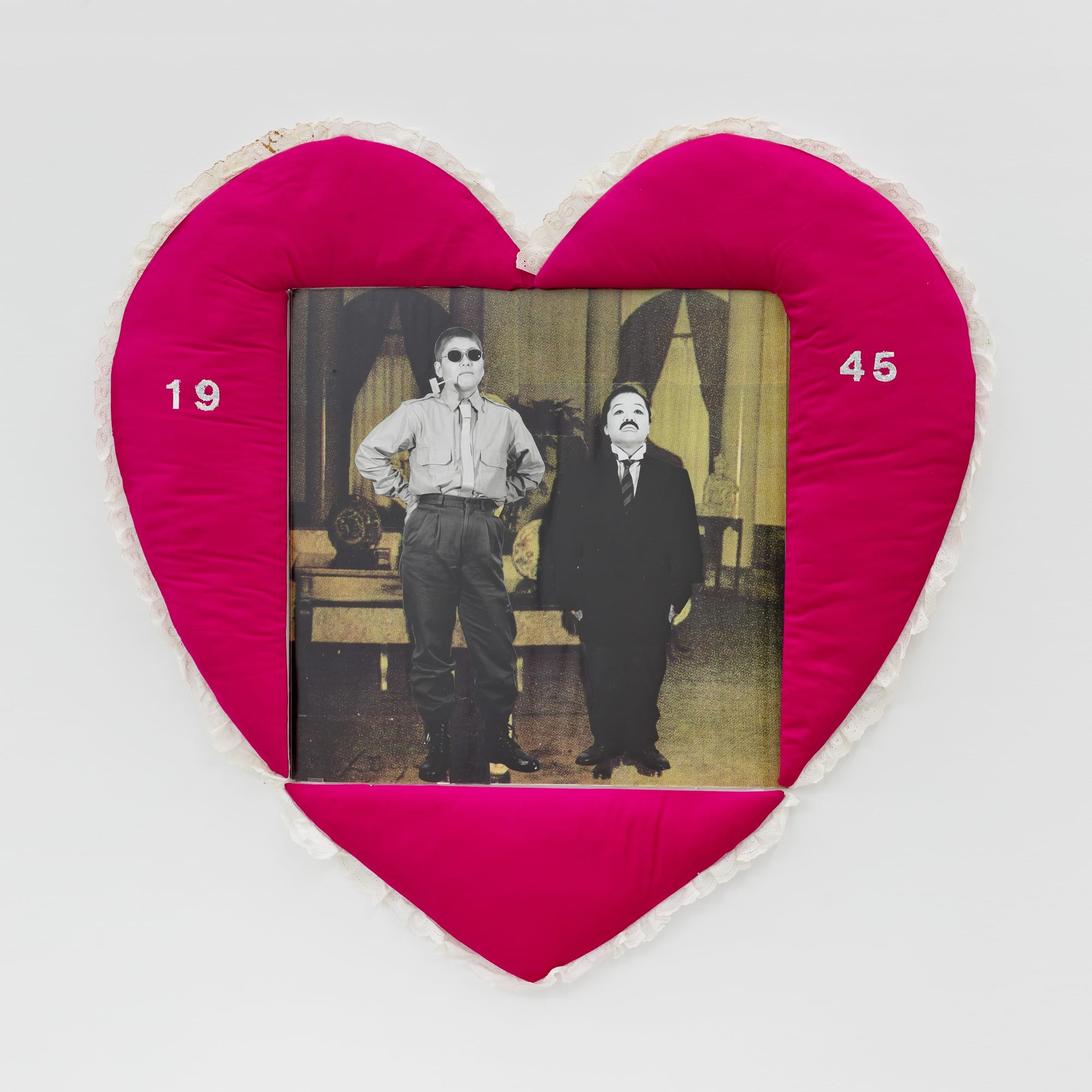
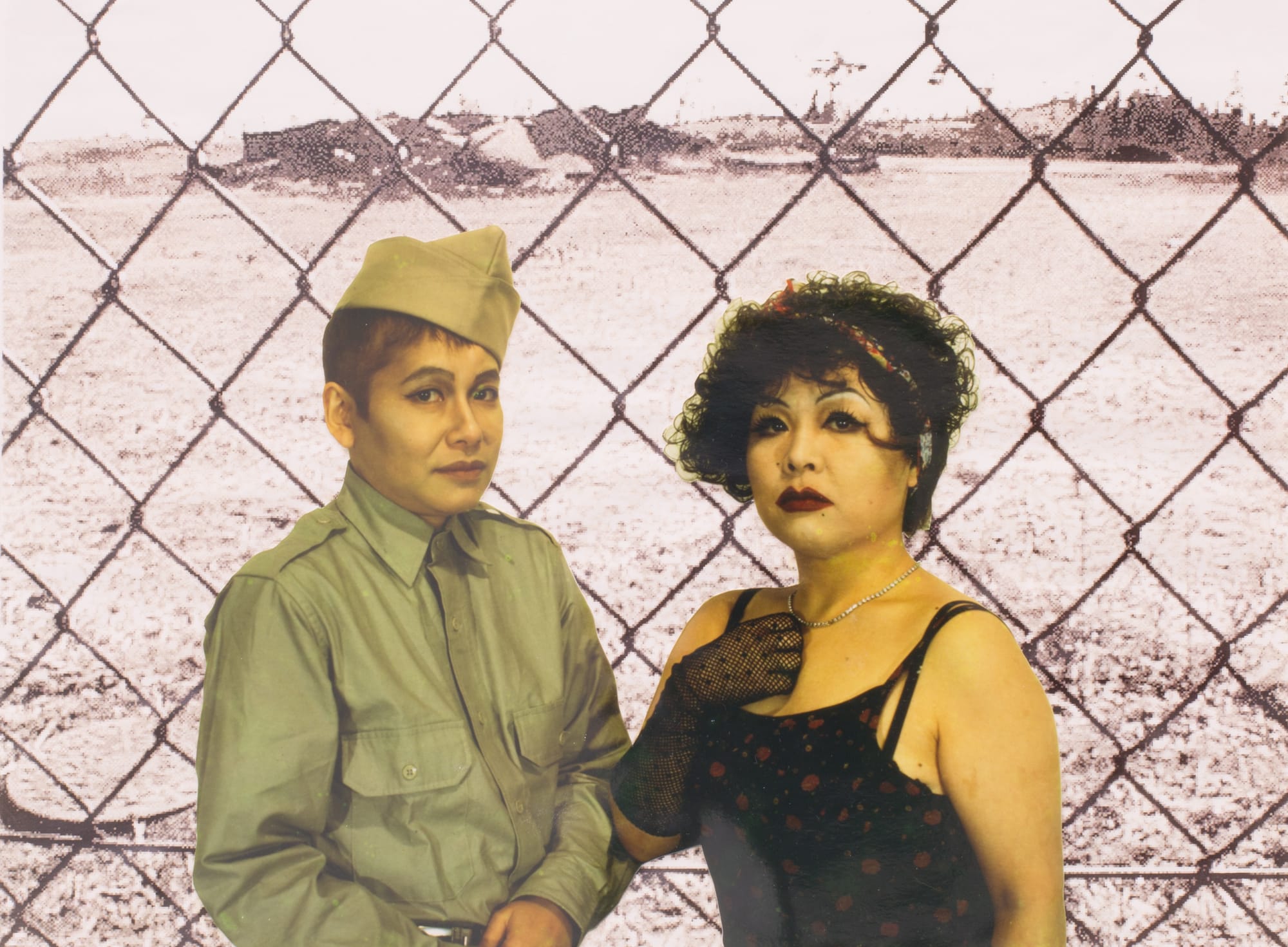
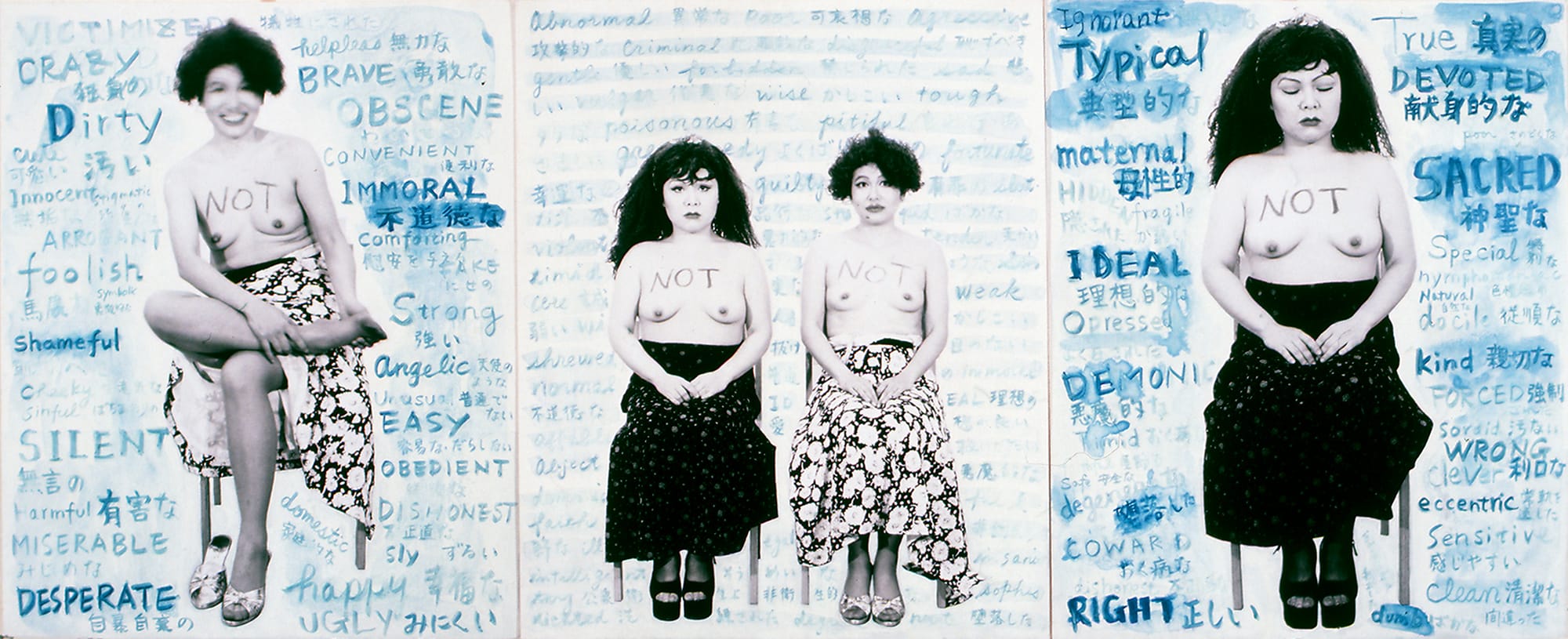
YOSHIKO SHIMADA and BUBU DE LA MADELEINE’s 1945, 1998, black-and-white photograph on colored copy, handmade cushion with lace trim, 91 x 91 x 3.5 cm (left); and Portrait, 1998, collage, 24.8 x 32.9 cm (right). Copyright the artists. Courtesy Ota Fine Arts, Tokyo.
Your collaboration with BuBu de la Madeleine spans from “Made in Occupied Japan” in the 1990s to new works in 2026 that you describe as “queering imperialism” through irony and humor. Koyo Kouoh conceived this Biennale in “minor keys”—low tones of emotion, relation, and subversion. Within that register, how does this strategy move beyond aesthetic wit to genuinely unsettle the imperial frameworks that continue to shape Japan’s memory of its wartime brutalities toward Asian women?
The atrocities of the Imperial Japanese army are deeply rooted in the imperialism that began with the Meiji restoration (1868). However, in Japanese history textbooks, Meiji and the “modernization” of Japan are depicted as wholly positive—a great achievement.
Yet Japanese people donning Western attire, wearing high heels, and dancing under the banner of “Leave Asia, Join the West” is nothing but a farce—a true travesty. By reenacting it in drag (double drag!), we wanted to emphasize the sheer absurdity of it all.
As for women in the Meiji era, some from the upper class aspired to be “modernized,” but only within an imperial framework. Some founded women’s schools, yet these trained students to become “good wives, wise mothers” for the modern Japanese family system. Meanwhile, lower-class women were sent across Asia and beyond as karayuki (overseas prostitutes). The Japanese empire divided women into “mothers” and “whores,” forcing both into commodified roles that served imperial expansion.
We use drag—especially male drag (women in male disguise)—to highlight the farcical nature of this charade and the violence lurking beneath it. I’m actually not sure if this aligns well with the concept of “minor keys,” but I think minor keys don’t always have to be quiet. They can be loud and subversive.
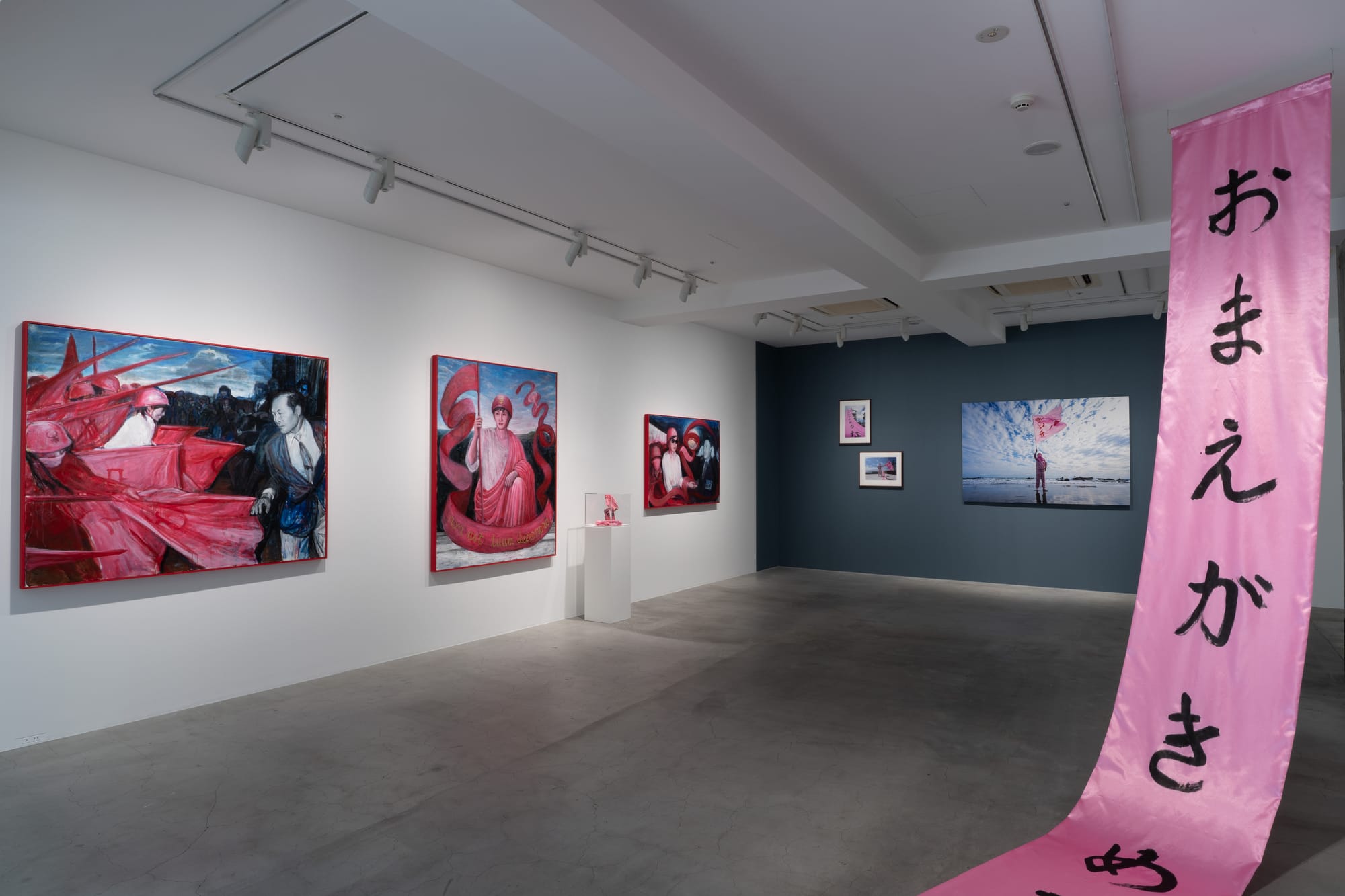
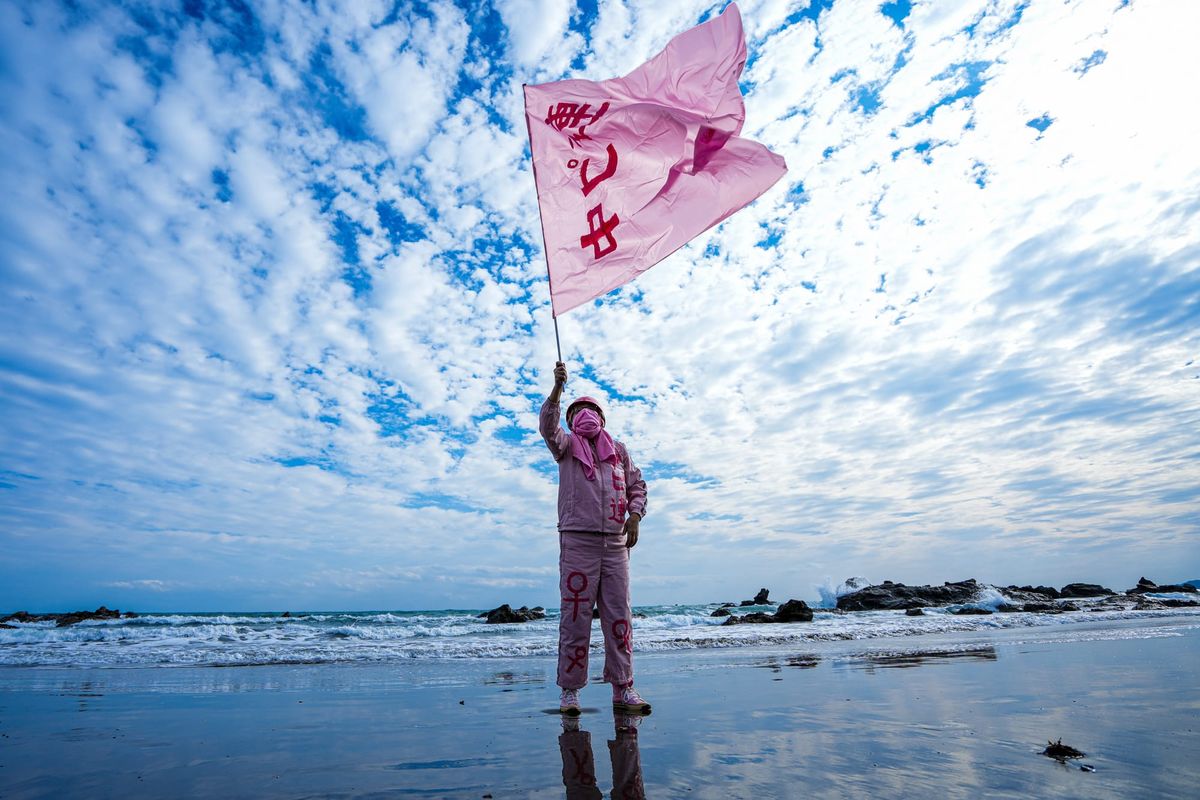
In “It’s Not Yours to Decide!,” you revive the Chū-pi-ren movement (Women’s Union for Liberalization of Abortion and Legalization of the Pill)—the pink-helmeted radicals of the 1970s who fought for abortion rights and access to oral contraception—whose legacy has been reduced to a punchline, even within Japanese feminism. Why, in 2026, is it urgent to reclaim these so-called “outrageous” women? And what does their unapologetic assertion of bodily autonomy expose about how little Japan has progressed on women’s self-determination since the anti-abortion laws they challenged?
It took over 30 years for birth control pills to be legalized in Japan. Authorities—mostly male doctors—insisted that women must patiently explain themselves and be “understood” in order to achieve anything. They argued that Chū-pi-ren’s direct approach “alienated” them and delayed legalization. Well, I disagree. Emergency contraception was only legalized last year, after years of campaigning and “patient explanation” by young female activists. This patriarchal decision-making system must change. We should not have to be “understood” to make decisions about our own bodies. We need more “outrageous” women and more direct action to secure our right to self-determination.
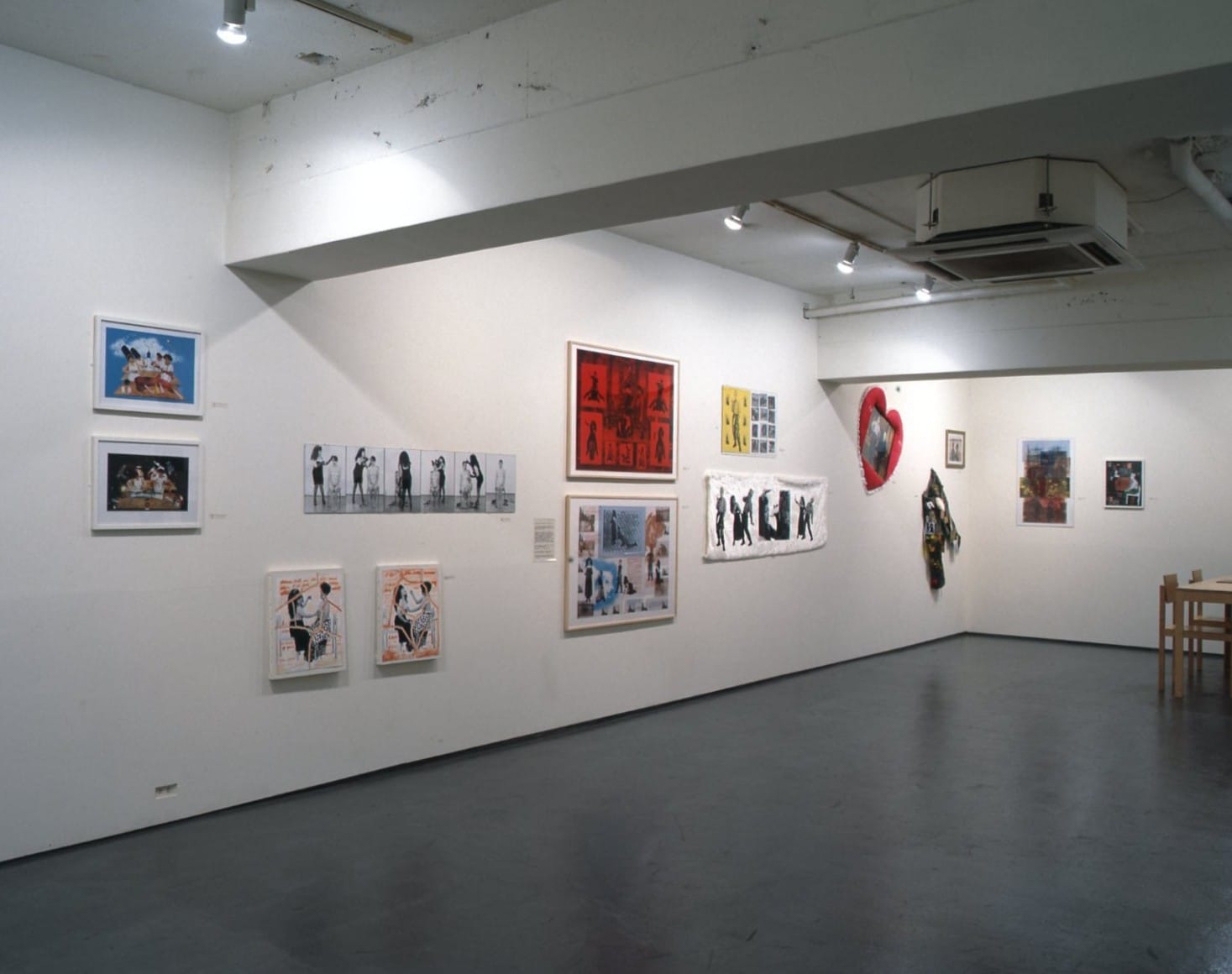
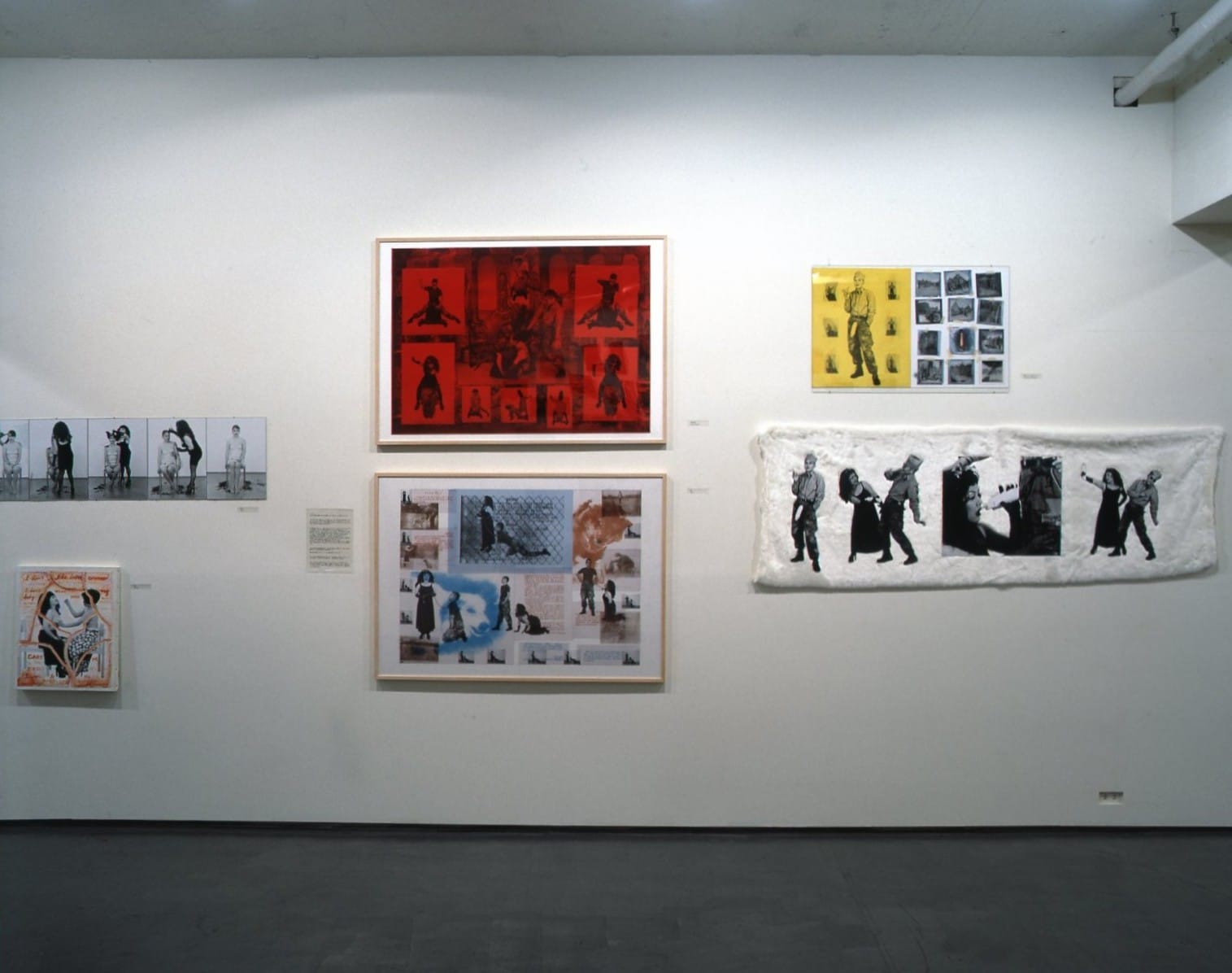
Installation views of YOSHIKO SHIMADA and BUBU DE LA MADELEINE’s “Made in Occupied Japan” at Ota Fine Arts, Tokyo, 1998. Copyright YOSHIKO SHIMADA. Courtesy Ota Fine Arts.
You have spent decades confronting Japan’s wartime sexual violence and the comfort women system. For Venice, how does your turn to Chū-pi-ren connect the imperial militarization of women’s bodies in the 1930s to ’40s with control over reproduction and sexuality in postwar Japan? Is this a deliberate bridge between state violence abroad and at home?
As I mentioned earlier, the empire exploited its subjects ruthlessly. While there was, of course, a stark class divide between Japanese citizens and colonial subjects, lower-class Japanese women were literally treated as sexual commodities.
Fujime Yuki, a Japanese feminist historian, defines the modern licensed prostitution system not simply as regulation of the sex industry, but as “a state-controlled system of prostitution centered on military comfort and the control of sexually transmitted diseases.” It was a system through which the state managed and utilized women’s bodies.
Although this system formally ended after the war, the legal and social frameworks governing women’s bodies remain deeply entrenched. The “comfort women” system is not confined to the 1930s and ’40s, nor did it exist only abroad—there were comfort stations in Japan, and many Japanese comfort women. It must be understood as part of a broader structure of dehumanization and exploitation embedded in modernization, imperialism, and colonialism.
Kouoh’s vision for “In Minor Keys” invokes affective, sensory worlds that gather and transcend through relation rather than confrontation. Given your history of confronting Japan’s refusal to apologize fully for its wartime crimes, do you see this emphasis on “minor” tones as a necessary strategy of quiet persistence, or does it risk absolving the powerful by turning political rage into poetic hums?
Quiet persistence is sometimes necessary, but those in power often exploit patience to prolong suffering and deny rights.
While I do not condone unilateral condemnation or the oversimplification of complex issues, not everything can be relativized under the appealing banner of “relational dialogue.” I interpret “minor” not only as quiet or conciliatory, but as minoritarian and subversive. Minor tones and poems can be outrageous, dramatic, and forceful.
Faced with unthinkable horrors and naked hatred—whether in Japan’s wartime atrocities or ongoing crises such as in Gaza and Iran—I don’t think we can remain quiet for long. We cannot silently yield to overwhelming evil.
As you frame it, self-determination is not something granted but something seized: “It’s not yours to decide!” In a country where abortion remains technically criminalized under the penal code and requires spousal consent, how does this exhibition function as both historical recovery and urgent intervention against ongoing reproductive coercion?
I believe that human rights, including the right to self-determination, are inherent. In Japan, however, “rights” are generally regarded as something bestowed by those in power and tied to obligations.
As you point out, although conditions are gradually improving, abortion remains criminalized. Future changes still depend on those in power who do not currently recognize women’s reproductive autonomy. I hope this work can serve as a reminder of the current state of women’s self-determination—perhaps not only in Japan, but globally.
Your collaborations with BuBu have long centered on women and socially marginalized communities. In a Biennale gathering artists from across the Global South and its diasporas, how do you prevent this project from becoming a Japanese feminist footnote, and make it speak instead to the shared histories of imperial sexual violence that link Korean, Chinese, Southeast Asian, and Indigenous women across empires?
The history of Japanese Imperialism is also a history of colonialism—Korea, Taiwan, Manchuria, Okinawa, Hokkaido—in which Japanese women occupied positions as both aggressors and victims. After the Pacific War, Japan has remained under American control and influence, including the persistence of military-related sexual violence, especially in Okinawa.
BuBu has also been active in advocating for sex workers’ rights not only in Japan but across Asia. I do not believe solidarity can be forged solely on shared gender or victimhood. It requires engaging with one another while fully acknowledging our complex and differing positionalities.
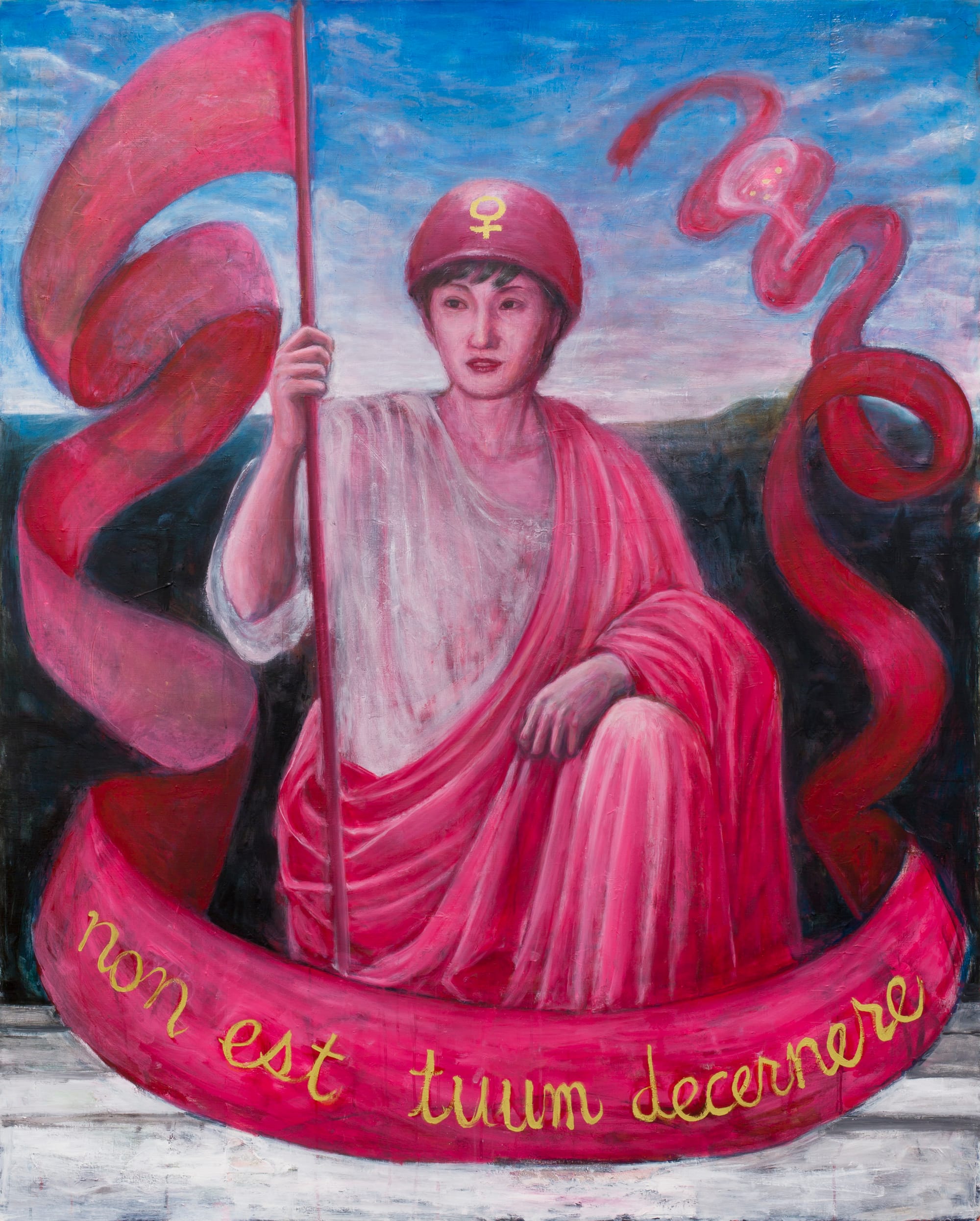
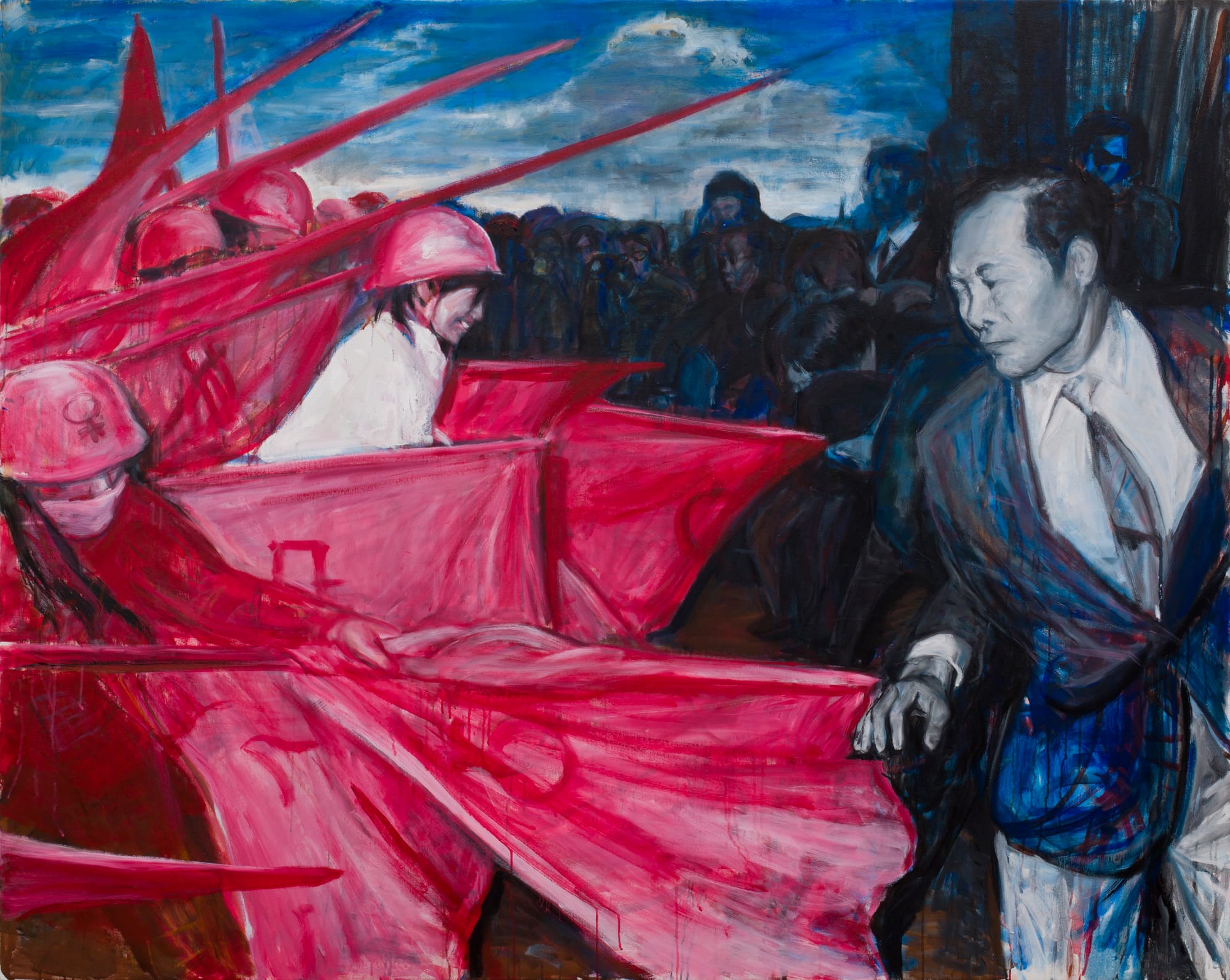
YOSHIKO SHIMADA, Resurrection, 2023, oil on canvas, 162 x 130.3 cm (left); and Battle against J.A.M.S., 2023, oil on canvas, 130.3 x 162 cm (right). Copyright the artist. Courtesy Ota Fine Arts, Tokyo.
Looking at the pink helmets, the embroidered declarations, and the resurrected images of Chū-pi-ren, what might those 1970s activists say if they saw their struggle reframed at the 2026 Venice Biennale? Would they see it as continuation of their fight, or ask why, 50 years on, Japanese women still need an artist to declare “It’s not yours to decide!” because the structures that silenced them remain largely intact?
Unfortunately, I think they would feel it is still necessary.
In fact, no former members of Chū-pi-ren have appeared at exhibitions or talks in Japan; they may still feel too “ashamed” to come forward. At the same time, I have received many positive responses from younger women who were previously unaware of Chū-pi-ren but are now deeply interested in its history.
The whereabouts of Chū-pi-ren’s leader, Enoki Misako, have been unknown since 1979—she disappeared entirely. In 2023, the novelist Kirino Natsuo published a work inspired by Enoki’s life. We were working on Chū-pi-ren independently, at the same time, without knowing of each other’s projects! We later spoke together for Mainichi News and at Kyoto University, where more than 500 people attended. There is now strong interest in Chū-pi-ren in Japan, and hopefully beyond.
Elaine W. Ng is editor and publisher of ArtAsiaPacific.