People
Shi Guowei’s Authentic Illusions
For Shi Guowei, color is an act of displacement. Working from black-and-white prints of his own making, the Beijing-based artist applies layers of pigment by hand, tracing the emotional residue of an encounter over its recorded fact. His images hum with a strange, charged luminosity—at once serene and assertive, they carry the indexical weight of photography while radiating the tremulous subjectivity of painting. The works enact a quiet violence of color: what the camera fixed, the hand reopens.
Shi calls this condition “authentic illusion”—a configuration that interrupts the logic of reality from within. Born in Luoyang in 1977, the artist studied photography at Tsinghua University’s Academy of Arts & Design and completed a master’s degree at the Fachhochschule Dortmund.
On the occasion of Art Basel 2026, where Magician Space is presenting new works by the artist, ArtAsiaPacific spoke with Shi about color, subjectivity, and the felt truth of reality.
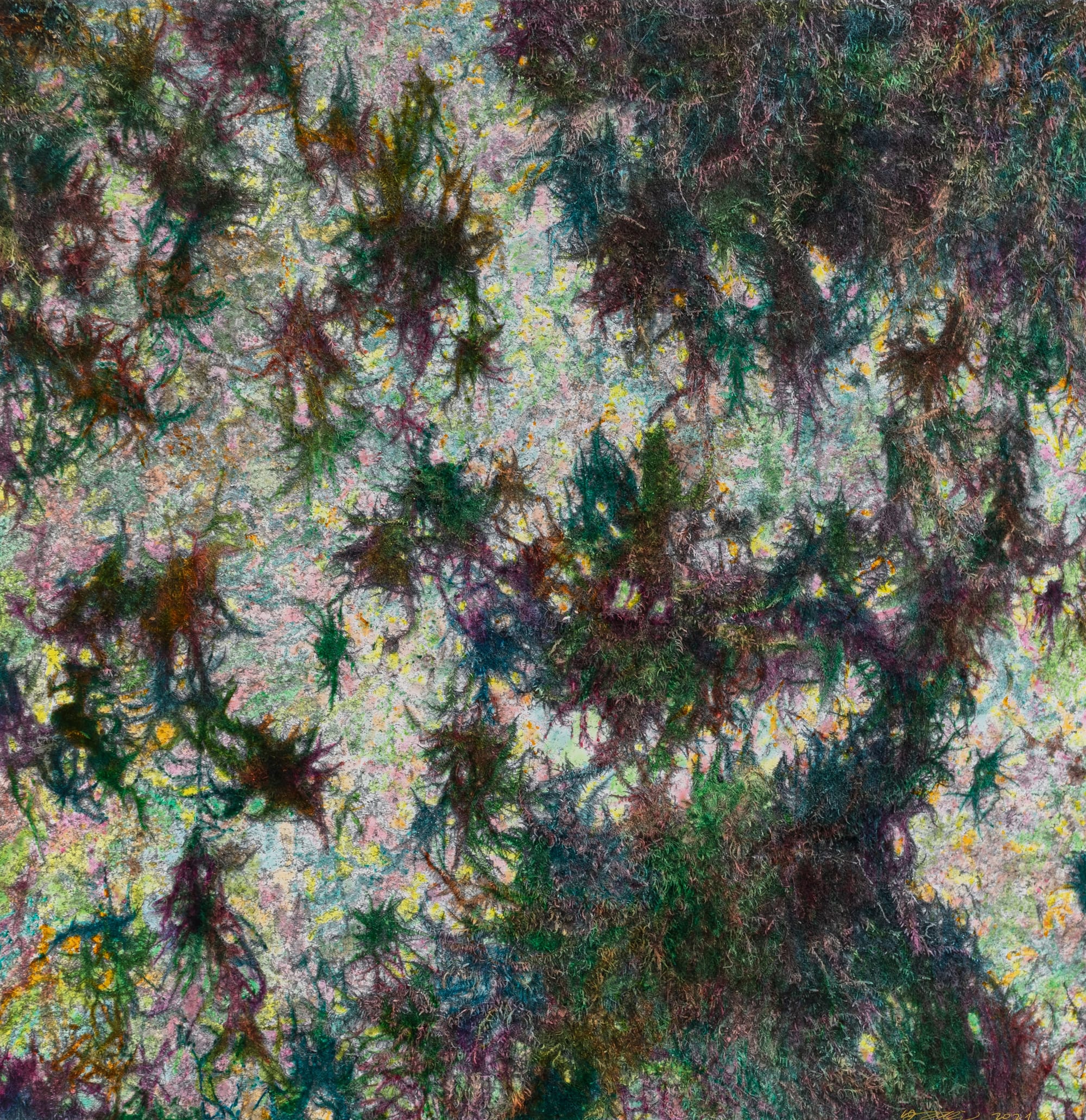
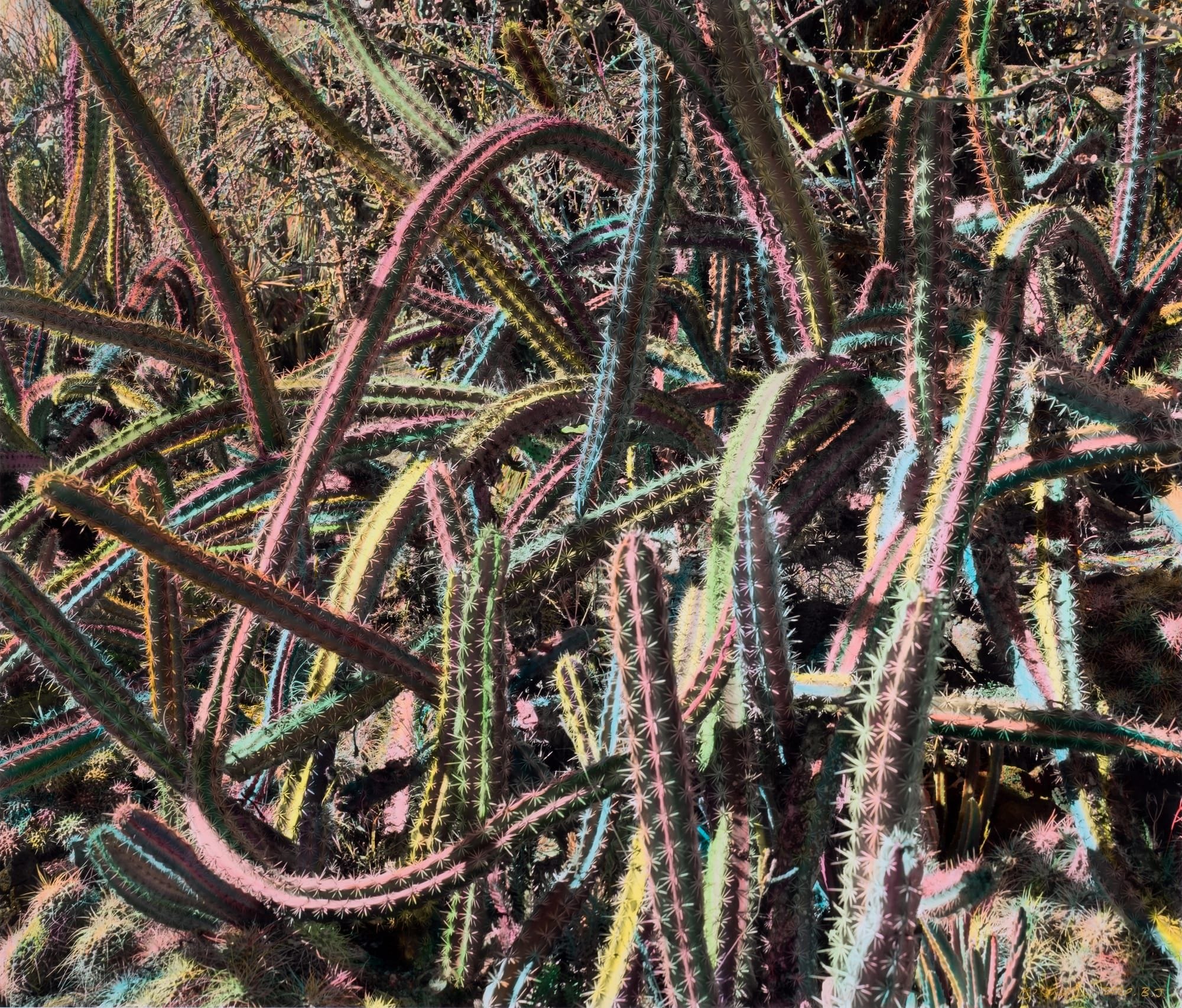
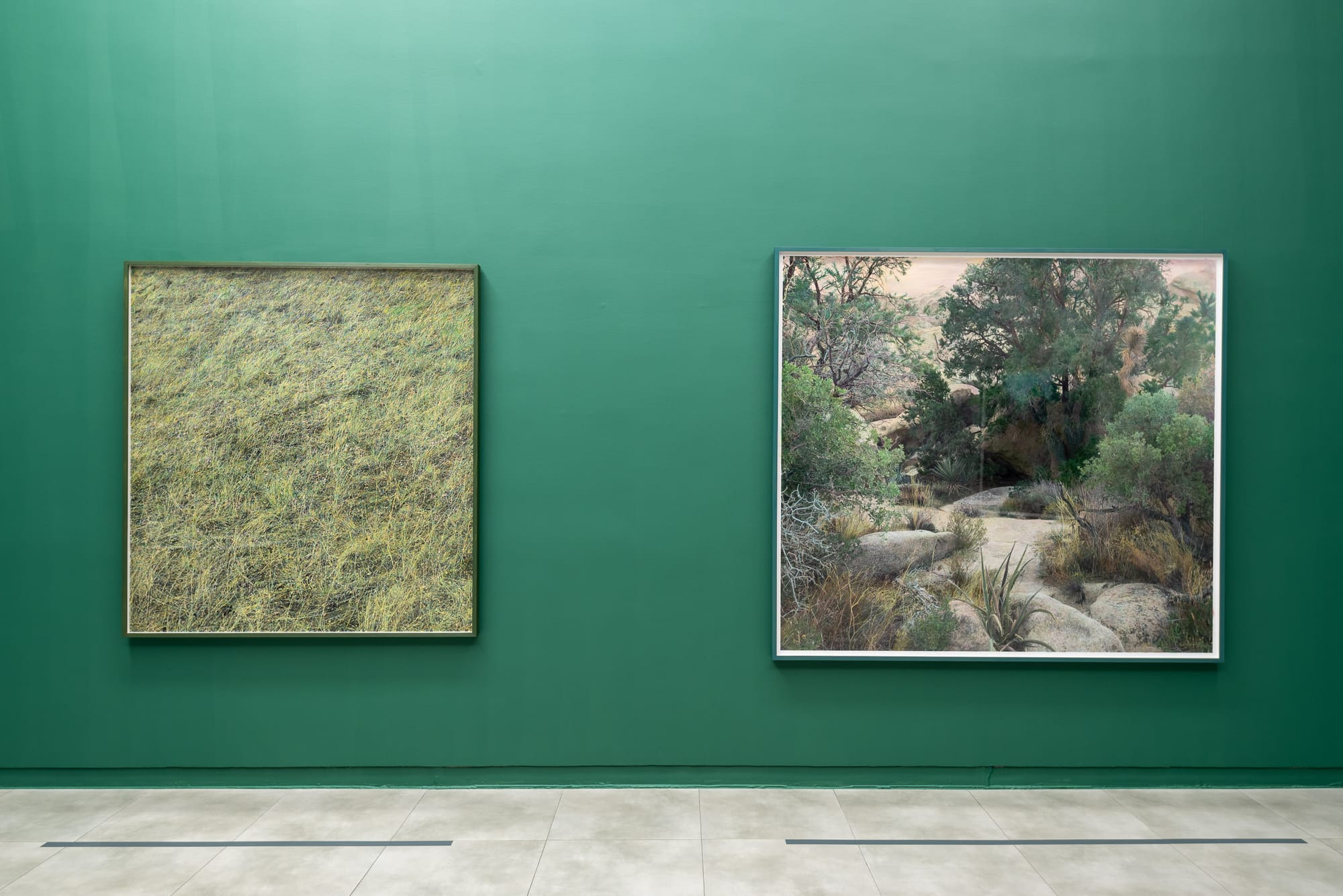
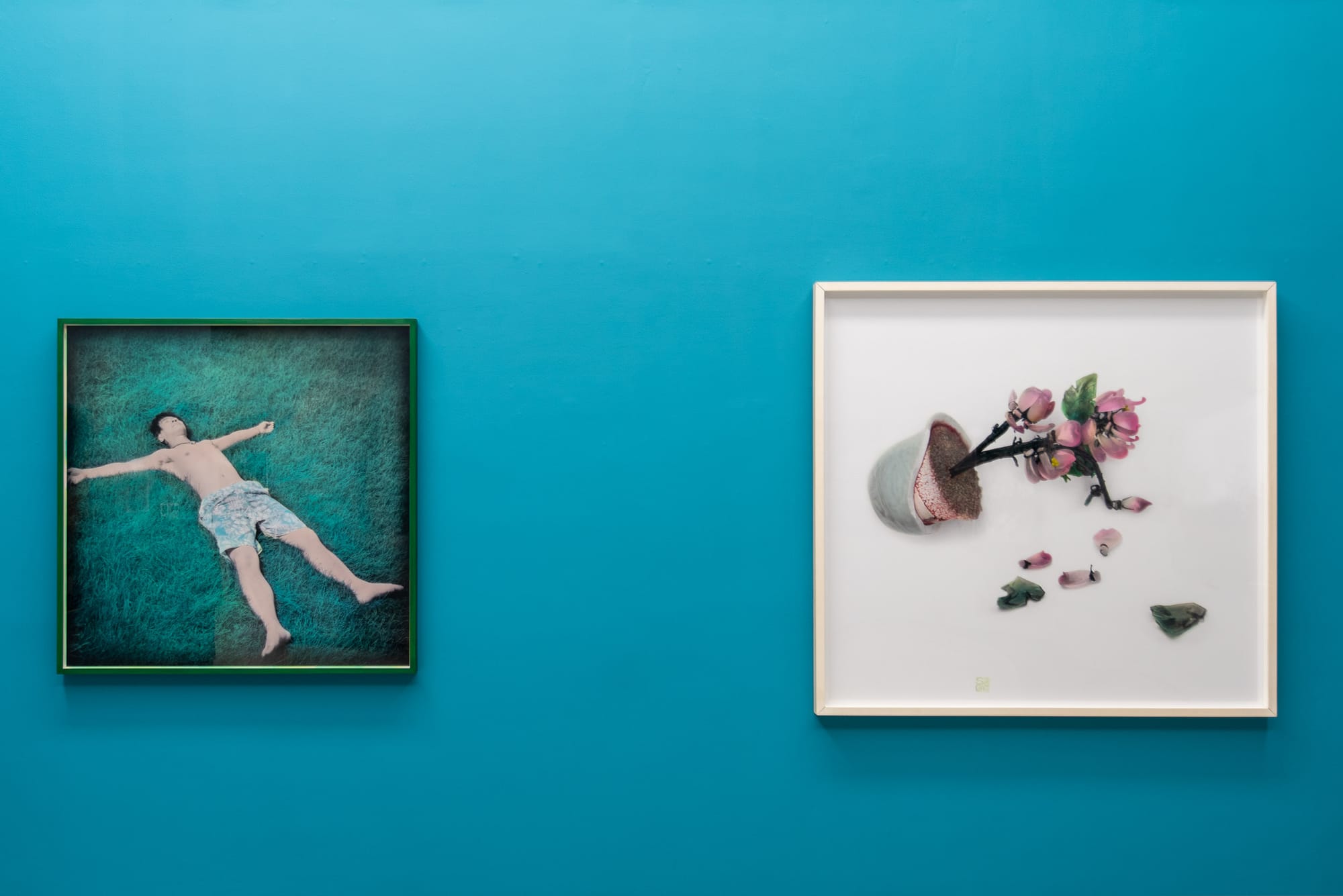
SHI GUOWEI, Continuous Colored Shape, 2021, C-print, color ink, 79.5 x 77.5 cm (left); and Spinose Plant, 2020, C-print, color ink, 150 x 175 cm (right). Courtesy the artist and Magician Space, Beijing.
You have written about color as deeply subjective and emotional, even suggesting that “emotional color” is “the most real.” How would you elaborate on your relationship with color?
From a scientific standpoint, color is merely light at different wavelengths; it carries no inherent emotion. Yet the same color can elicit markedly different responses in different viewers. In this sense, “objective color” does not exist; nor is there such a thing as an “absolutely accurate” color.
Consider the purplish-red of a sunset: for some, it is uplifting; for others, melancholic. We cannot say they are seeing different sunsets, nor that either response is incorrect. Color is always entangled with personal experience—background, memory, belief—so there is no universal standard. Yet these emotional responses are undeniably real, and this is what matters to me.
In the studio, I do not aim to restore a scene’s original colors; rather, I apply color in accordance with my inner state. That said, the source image contains its own chromatic cues—often what initially moved me—which I may choose to intensify rather than render neutrally.
When you are in nature—walking, waiting, deciding when to shoot—do ideas about later color interventions already begin to form?
Sometimes the decision about color arises the moment I press the shutter; occasionally, it is already clear during framing. At other times, I record a scene but cannot begin working on it for a long period—not because it is unsuitable, but because I cannot find a point of entry. Ultimately, it depends on the image. Some things require time.
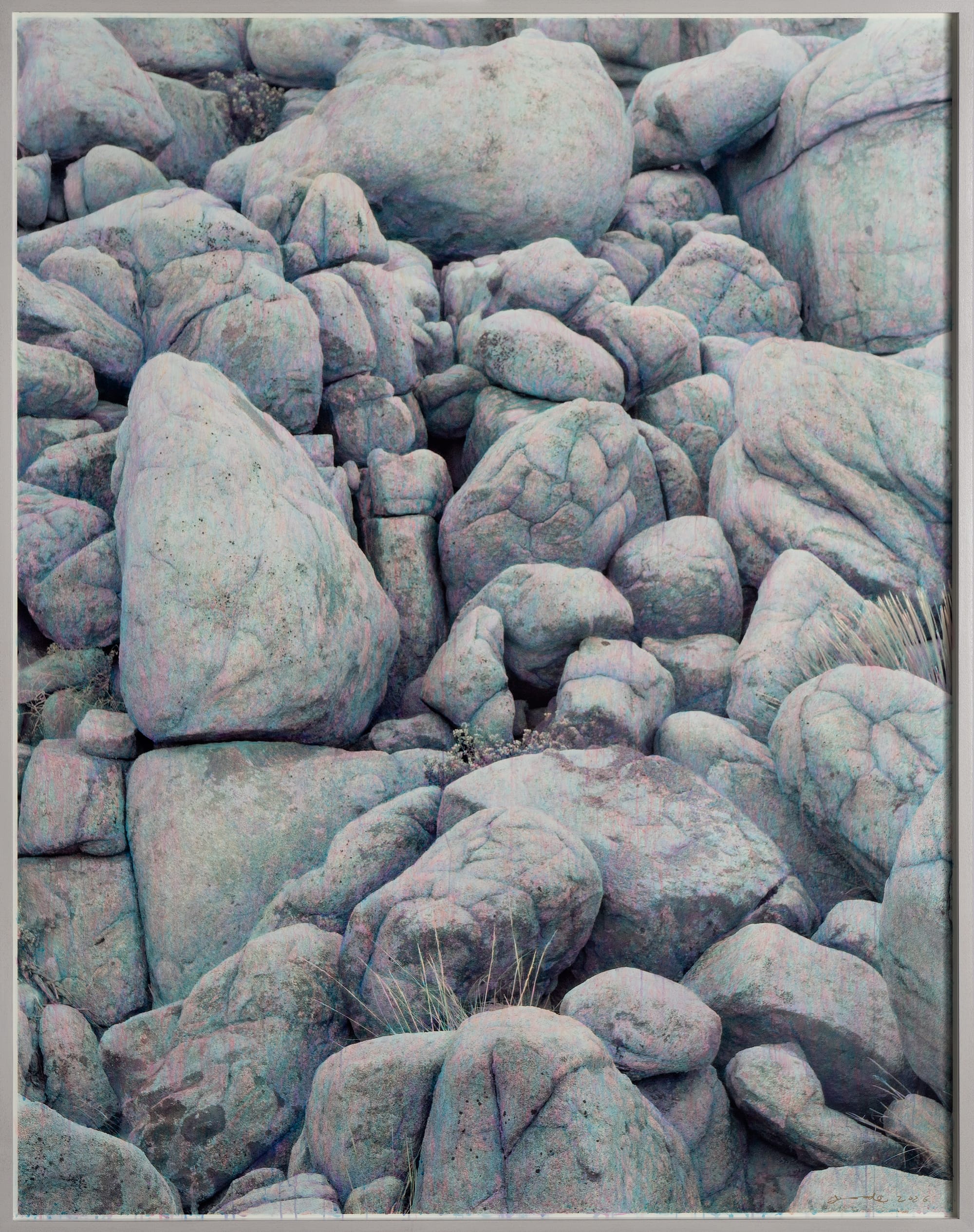
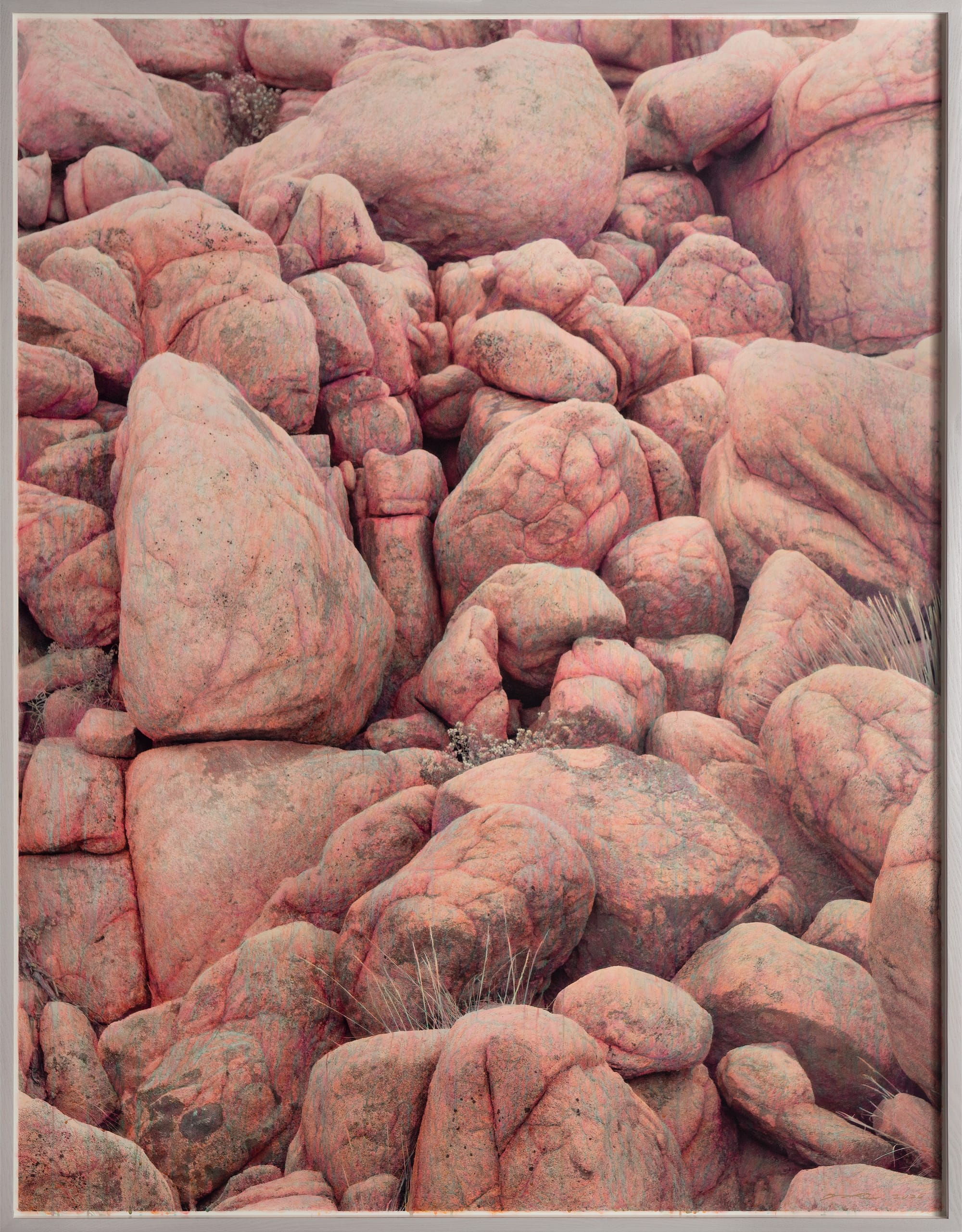
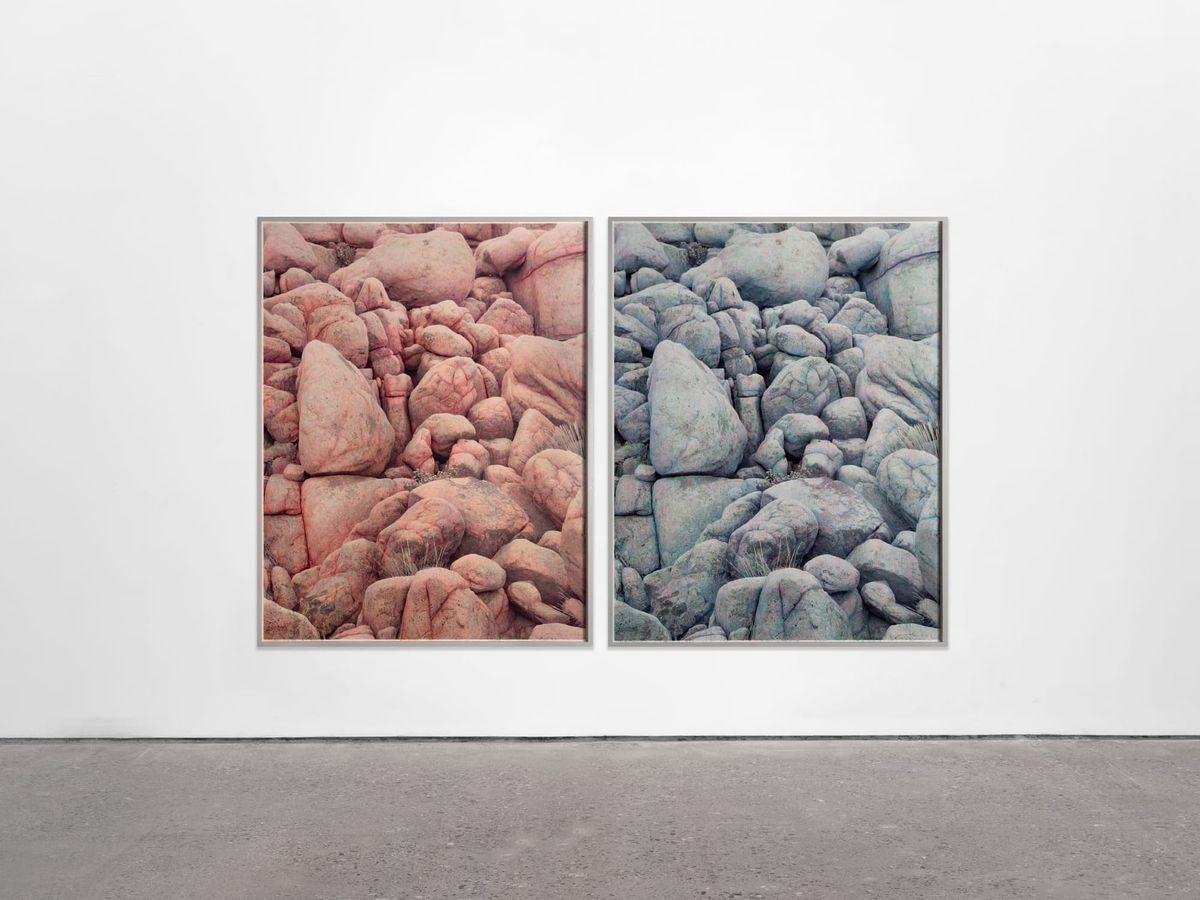
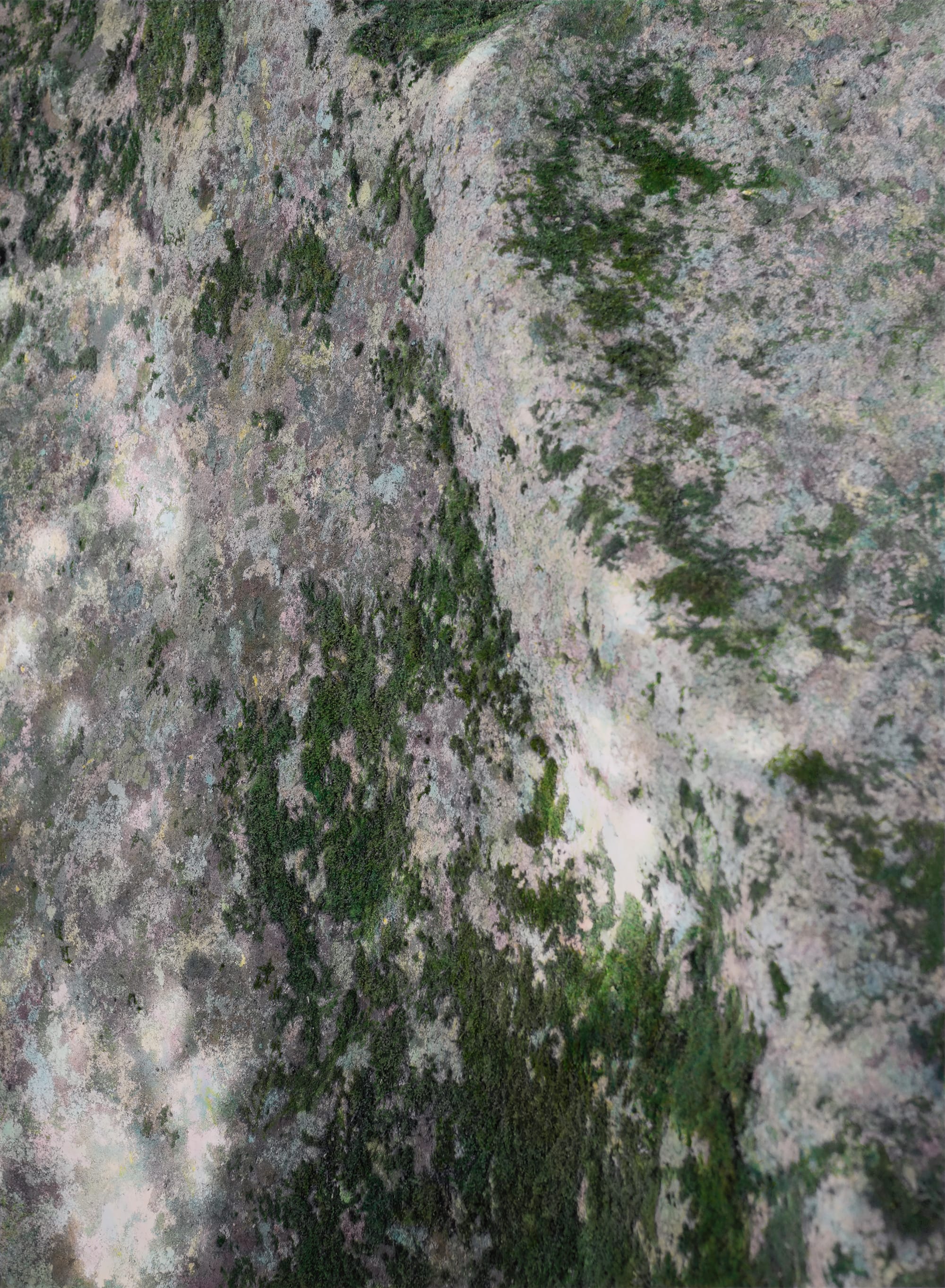
SHI GUOWEI, Amrta (Deathless) / Anutpada (Unborn), 2026, C-print, color ink, in two parts, 162 x 126 cm each. Courtesy the artist and Magician Space, Beijing.
Could you take a recent work and walk us through the process—from your first encounter on site, to photographing, to constructing the final image from multiple frames?
Take Amrta / Anutpada (2026), photographed in a wilderness in California. I came upon a mound of scattered rocks by chance and initially paid little attention. But as I sat opposite, pausing for a drink, details emerged: the peculiar beauty in their smooth surfaces, the milky tones tinged with pale yellow, and the subtle creases—almost like human skin.
I felt as if the stones were inviting me to record them. I began photographing, making multiple compositions, and later selected a slightly blurred image. Compared to sharp clarity, softness can sometimes be more compelling.
When I enlarged the black-and-white print, I realized that a single image could not fully convey the vitality of these ostensibly lifeless forms. If there is life, there must also be death—yet these are merely stones. The work became a reflection on life.
I ultimately produced two versions from the same negative: one in warm tones, where the stones resemble flesh suffused with dark red blood, suggesting vitality; the other in cool tones, austere and distant, yet hinting at regeneration. When the photographs are shown together, the combined Sanskrit titles refer to a state beyond birth and death.
To what extent you consciously pursue “alternative realities” in a work, and how much emerges unpredictably through the layering and reworking?
What I pursue is not a predefined alternative reality but a felt truth—what I think of as an “authentic illusion.” The image may begin in observation but does not end there; the work in the studio is a process of displacing the given reality so that another, more emotionally coherent one can emerge.
Some works come together quickly; others require prolonged, repeated reworking. It is through this iterative process that something elusive and unpredictable begins to surface—not a reality I set out to build, but one that takes shape through time and chance.
This constructed illusion, paradoxically, yields a stronger sense of truth. What I seek is not factual accuracy of what once was, but the intensity of what is felt—what remains most vivid in memory and that we find ourselves returning to, again and again.
Walk us through the process of hand-coloring in the studio.
Hand-coloring is one of photography’s oldest techniques, and I first developed my own approach during my graduate studies at the Fachhochschule Dortmund. I worked through and eventually beyond that tradition.
If the goal is simply to return color to a monochrome image, the process is merely a technique. But once it becomes a subjective, painterly intervention, it is more complex. Brushwork, materials, and skill come into play—and above all intention, which is not always stable.
At times the process becomes tense: the hand strays from the will, image and color come into conflict, and the composition loses equilibrium. There is no correcting, only continuing or starting over. Sometimes you succeed; sometimes you fail entirely. There are moments of carelessness, and moments of overworking—where you pass the stopping point without realizing it. Knowing when to stop can be harder than knowing how to begin.
Some recent landscapes read as thresholds we can enter; others remain sealed or faintly hostile, despite their beauty. When you build an image, do you think of it as an invitation into another world, or as a surface that holds the viewer at a distance?
My recent work circles around certain thematic prompts—scenes of festivity, moments glimpsed at the edges of daily life. Within these fleeting frames, simple human emotions are held in suspension: the kinds that resurface unexpectedly, triggered by a fragment of collective memory.
I am interested in how such subtle emotions arise, and I try to trace that through the image. But I do not begin with a fixed premise. What I do, as faithfully as I can, is to render the impressions the world leaves on me.
The works may appear beautiful yet inaccessible or harsh, or unexpectedly warm and tender, and sometimes all of these at once. Each feeling is genuine, arising from the viewer’s encounter with the work on their own terms.
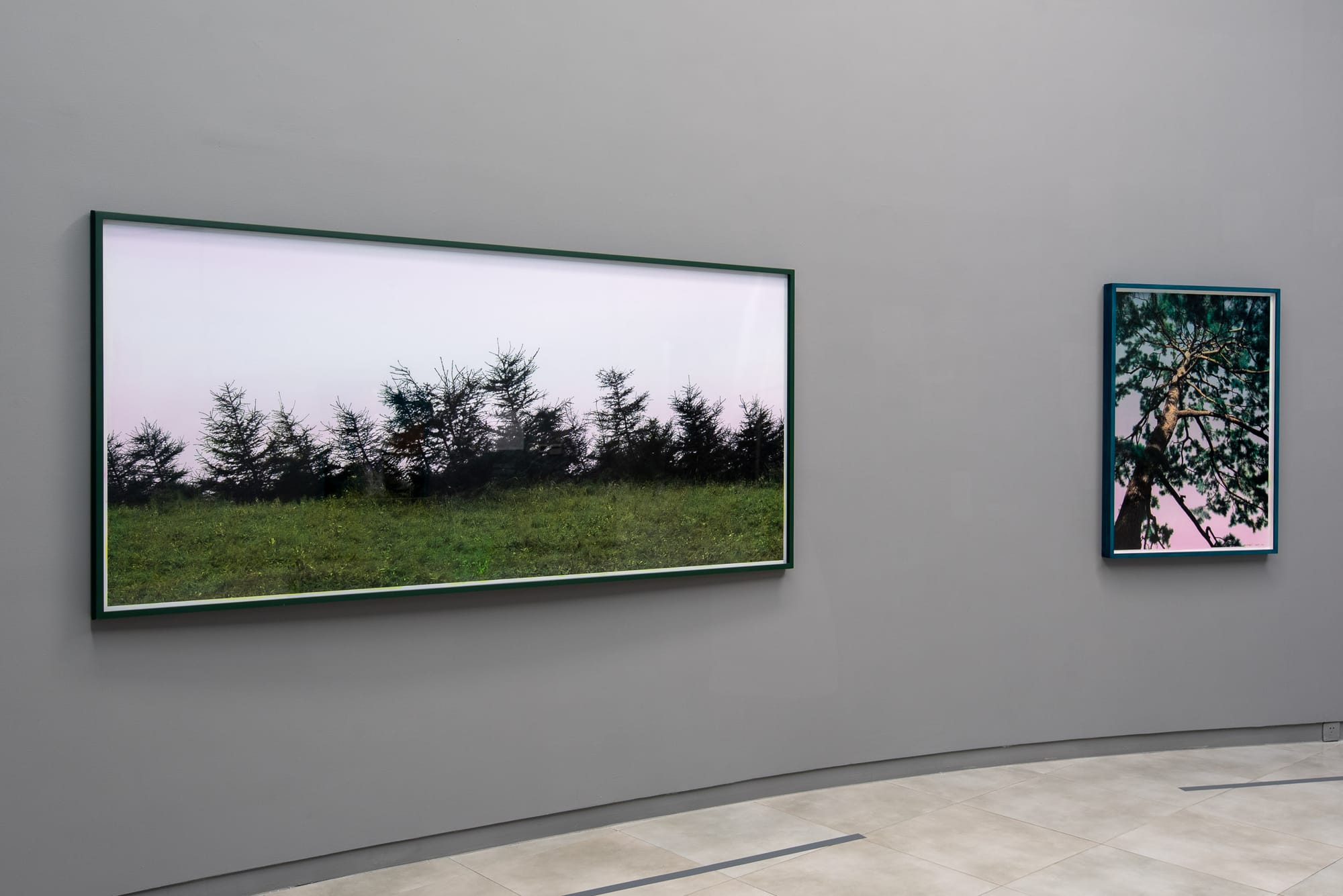
Trees recur throughout your work. What do trees allow you to think through that other motifs cannot, and do you regard them primarily as images of nature, of social order, or of interior psychological states?
Trees are what I encounter most while walking in the mountains, which partly accounts for their frequency. But familiarity alone does not explain their hold on me.
What I keep returning to is their silence, and their inequity. Trees cannot negotiate their fate: those rooted near water will always outgrow those wedged in rock crevices. Some begin with every advantage; others spend their entire existence in a slow, unwitnessed struggle. Yet they do not rail against this—they endure and persist, quietly and tenaciously.
This silent resilience moves me deeply. In many ways, they mirror the human condition: distributed unequally across an indifferent landscape, each finding its way to continue—like different trees of the same forest, each shaped by what it is given.
You wrote in 2018 that your work has become increasingly “themeless,” and that strong thematic intention can seem “unilateral, flat, even silly” when confronted with reality. What brought you to that position?
Around 2018, I was undergoing a transition. My earlier work was organized around clear themes; I believed a work succeeded only when its intention was precisely encoded and accurately received. The viewer was meant to arrive at a specific reading. That felt, at the time, like rigor.
Extended time in the mountains gradually eroded that certainty. I turned inward and began attending more carefully to what I was actually seeing, rather than what I had already decided to say. It became harder to maintain the conviction that reality could be addressed through strongly directed, declarative arguments—the world is too layered, too ambiguous, and too resistant to that kind of resolution.
Gradually, I found myself drawn to more subtle, indeterminate emotional states: the gray areas that thematic clarity tends to flatten or foreclose. Explicitly directed works were replaced by something harder to make, attempts that became increasingly harder to name. Each step since has asked more of me.
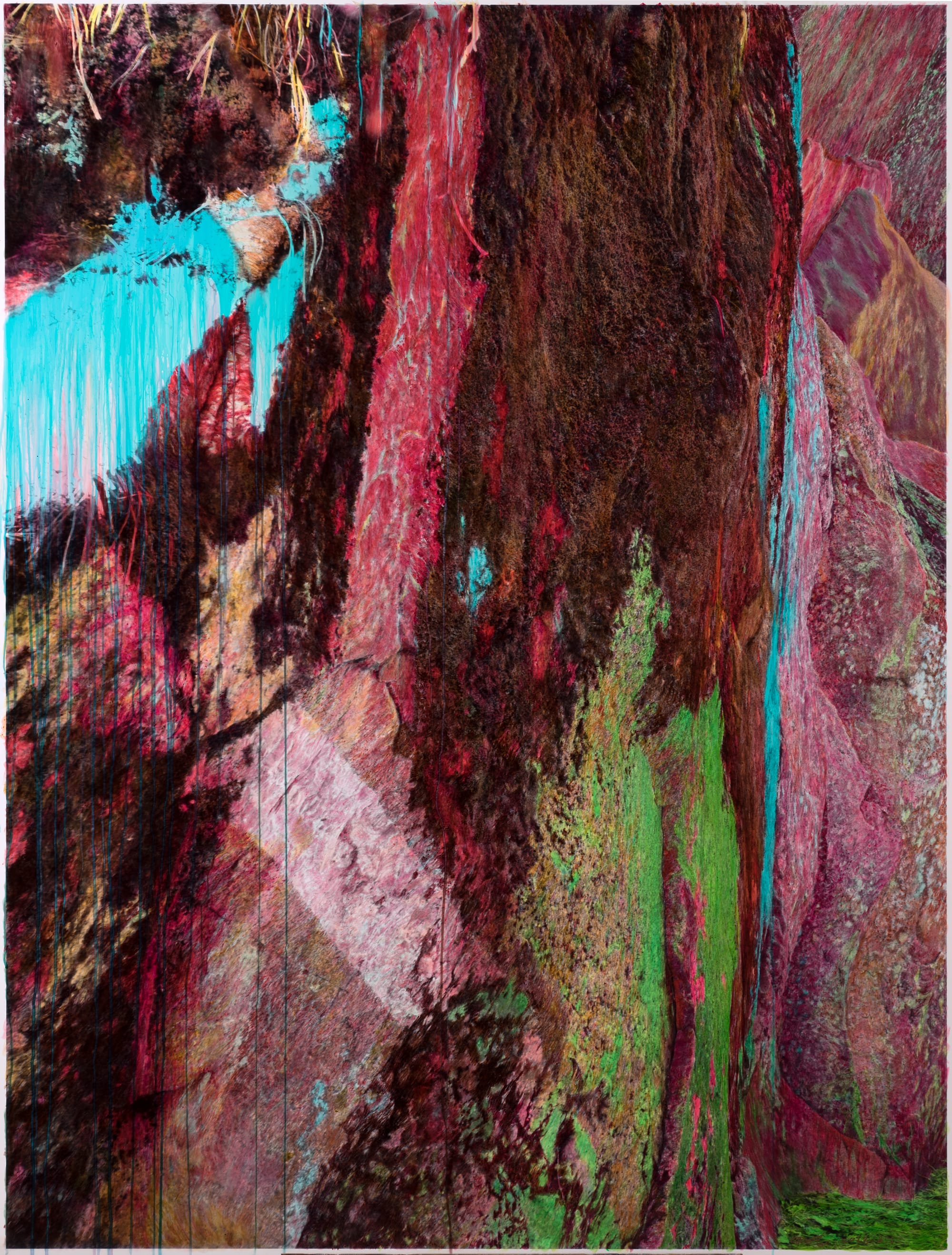
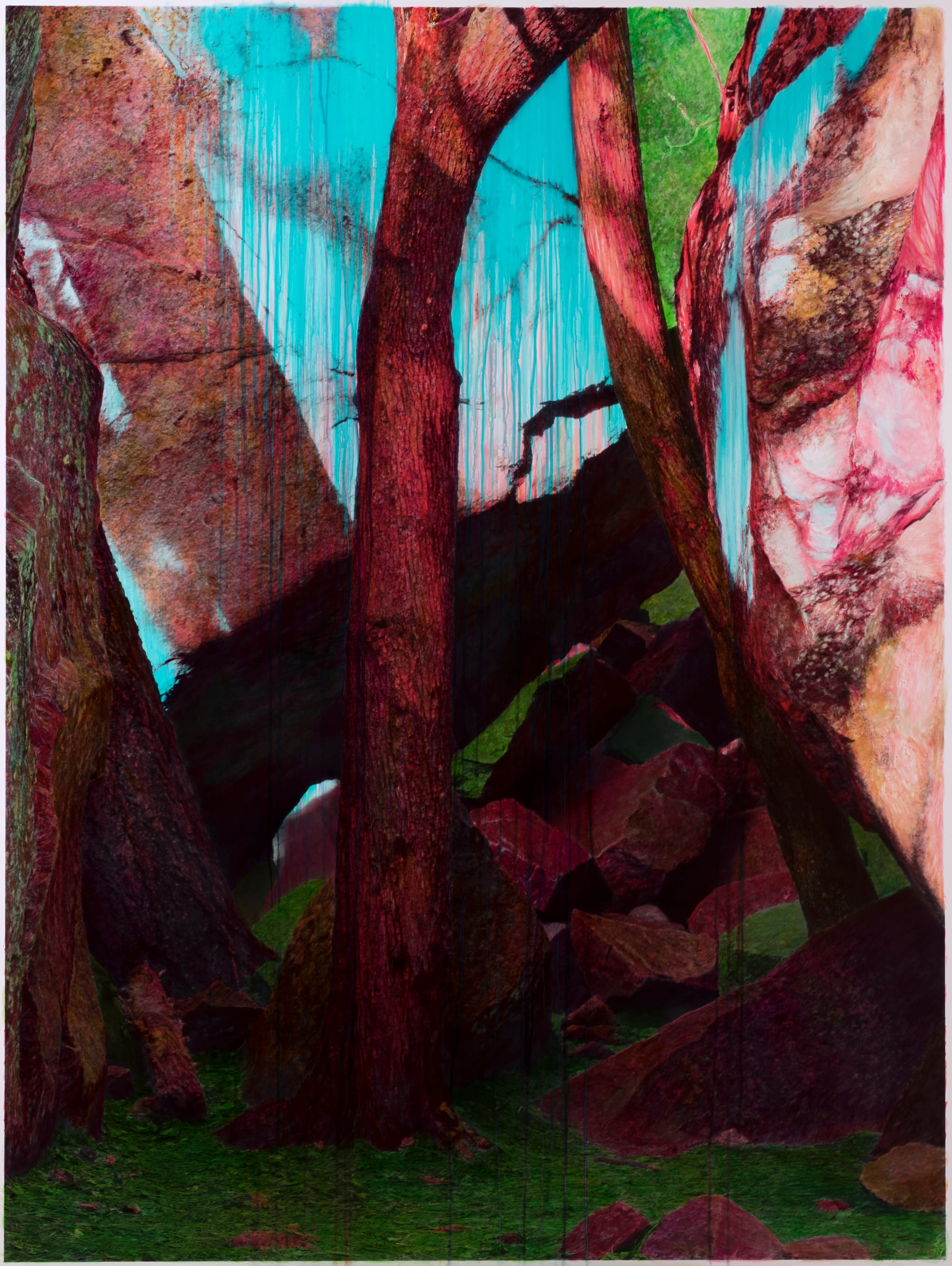
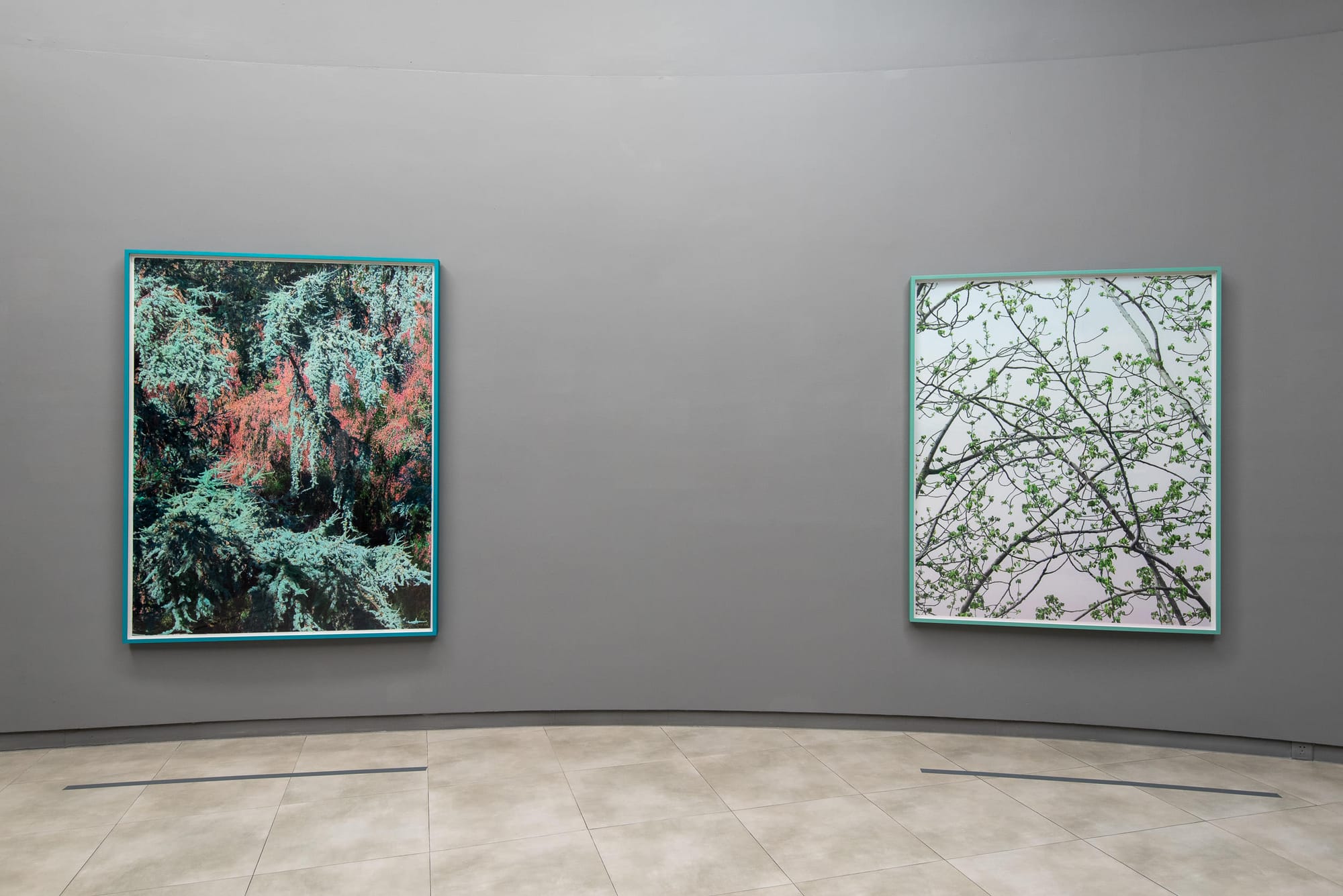
SHI GUOWEI, Scene A, 2023, C-print, color ink, 130 x 171 cm (left); and Scene B, 2023, C-print, color ink, 130 x 171 cm (right). Courtesy the artist and Magician Space, Beijing.
The photographs for Scene A and B (both 2023) were taken in California, yet the impulse to work on them only arrived after you returned from time spent in the Greater Khingan Mountains with the Ewenki people. Wool (2021), similarly, grew out of an encounter with shepherds in Altay. Some of your most emotionally direct works seem to emerge from contact with communities living at the edges of modernity. Is that a conscious choice, or is it something more accidental?
Much of what I make is genuinely contingent. These works would not exist had I not gone to those places or met those people—yet I never arrange my travels with specific ends in mind.
Going to the Greater Khingan Mountains was as unplanned as my time in California. It is simply that these experiences converged across different times and places, finding some point of contact within me and producing an unexpected resonance.
At times I feel like a leaf drifting across water—moved by circumstance, uncertain of what lies ahead. Yet perhaps there is something beneath that journey. Artists occupy their own kind of marginal position, and I suspect that shared ground is what pulls me, without my fully knowing it, toward those who live at the edges.
Some critics situate your work within the broader arc of Chinese contemporary art—the ‘85 New Wave, the post-1989 moment, Cynical Realism—while Karen Smith places you in the literati tradition, among artists who turned away from “muddy daily affairs” toward self-cultivation and a practice that “demanded little from the external world.” Do you feel any affiliation with these lineages?
I have never given much thought to where I might sit within the genealogy of Chinese contemporary art, and it is not a question that particularly concerns me. The methods I work with are, at their root, quite ancient. What I seek is simply to engage with the world on my own terms, and to render, as faithfully as I can, its reflections within the contours of a single individual life. It need not be earth-shattering. It only has to be alive, and true.
Shi Guowei’s new works are on view at Magician Space’s booth at Art Basel 2026.