People
New Currents: Melody Qingmei Li’s Porous Selves
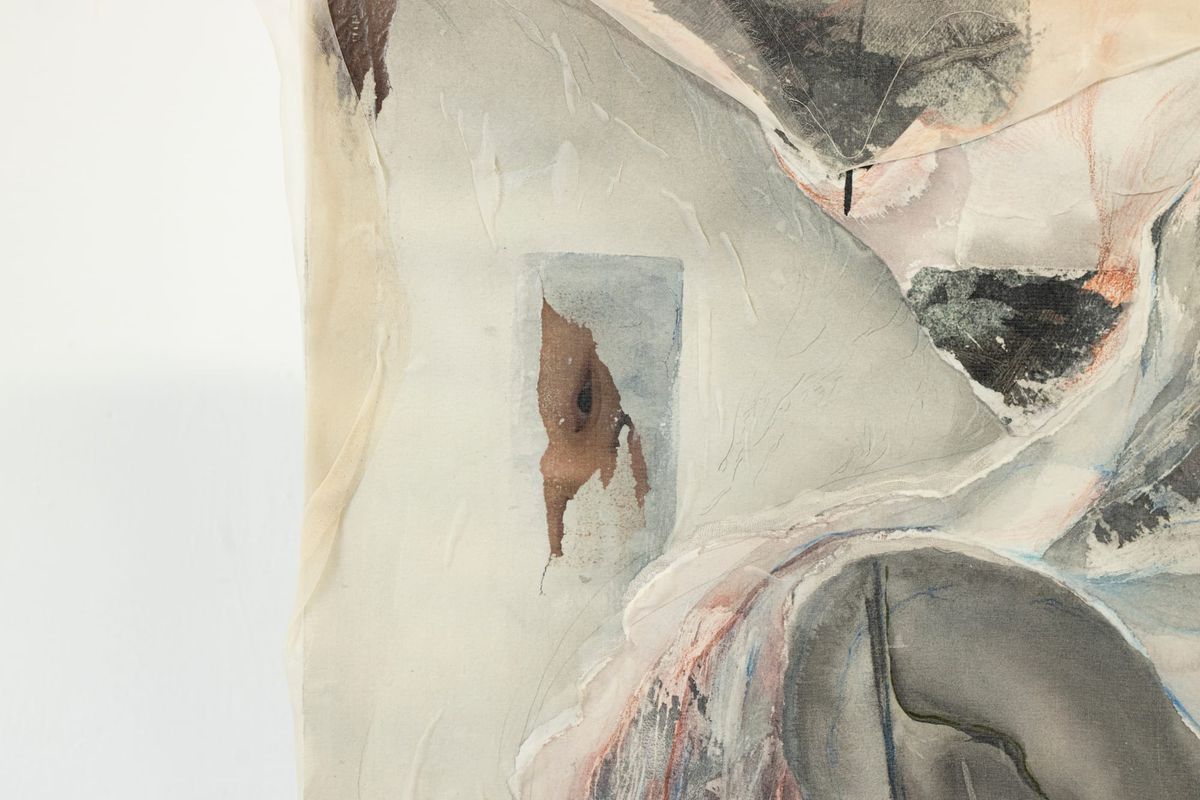
Hong Kong-based artist Melody Qingmei Li treats skin as subject, method, and medium—a means of navigating the body’s mutable relationship to the world. Through sculpted tendrils, silken sheets, and ethereal washes of paint, her multimedia practice defamiliarizes the self, dissolving its boundaries to transform it into something fluid, fleeting, yet expansive.
Li began producing sketches and drawings of human skin during the Covid-19 pandemic as a meditative exercise, tracing the body’s outermost barrier at a moment when touch itself felt newly fraught. This impulse unfurled into her painting-sculptures Baby Where Are You Going I, II, and III (all 2023), inspired by the leathery aerial roots of banyan trees—a species native to Hong Kong’s subtropical landscape. Mutated branches, mottled and cracked, protrude from the canvas like ancient tentacles in shades of dusky pink, mauve, and ocher. Their patterns evoking membrane, carapace, and bone, the works gesture toward confinement, probing the tension between constraint and protection, defense and invasion.
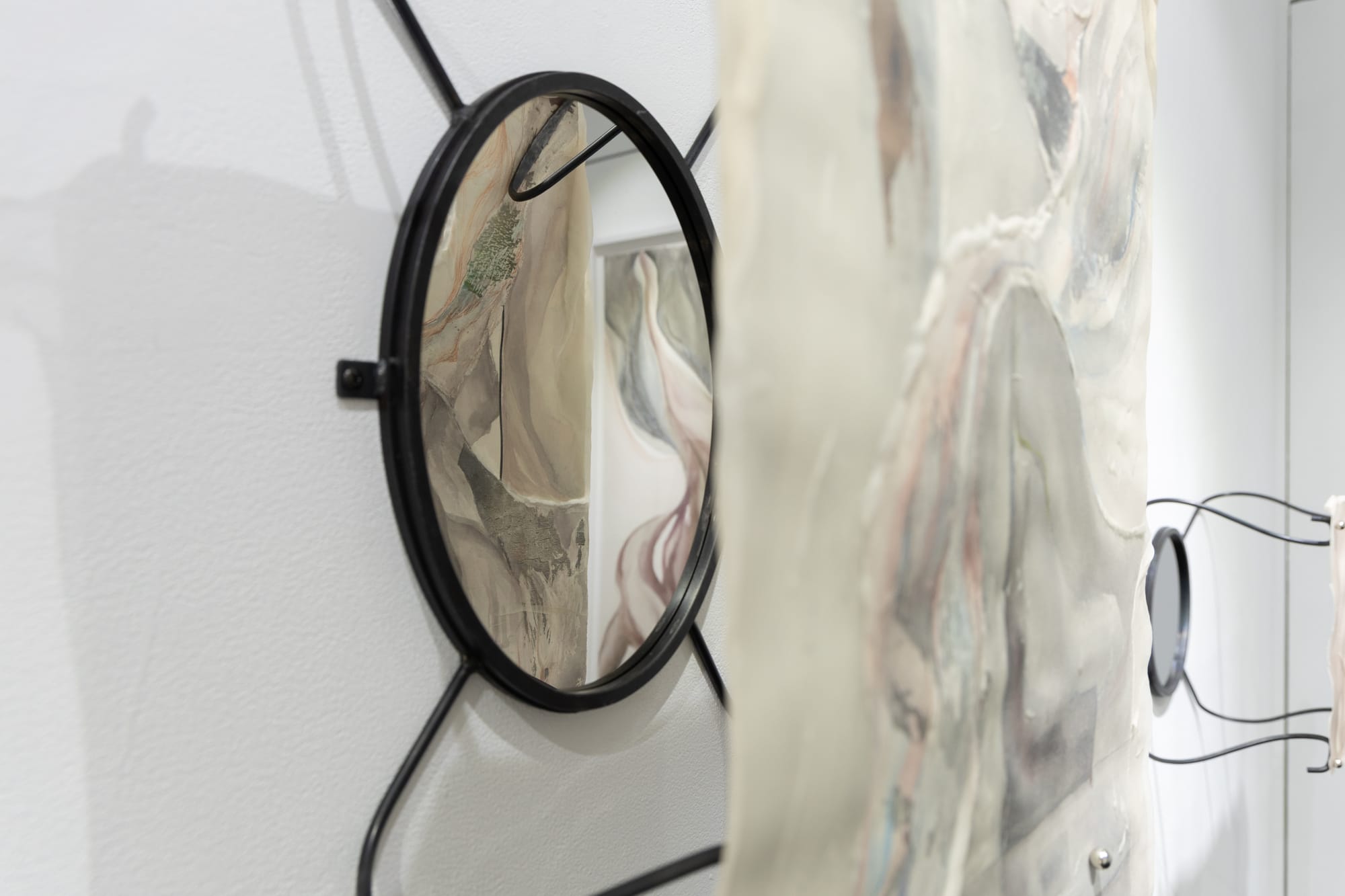
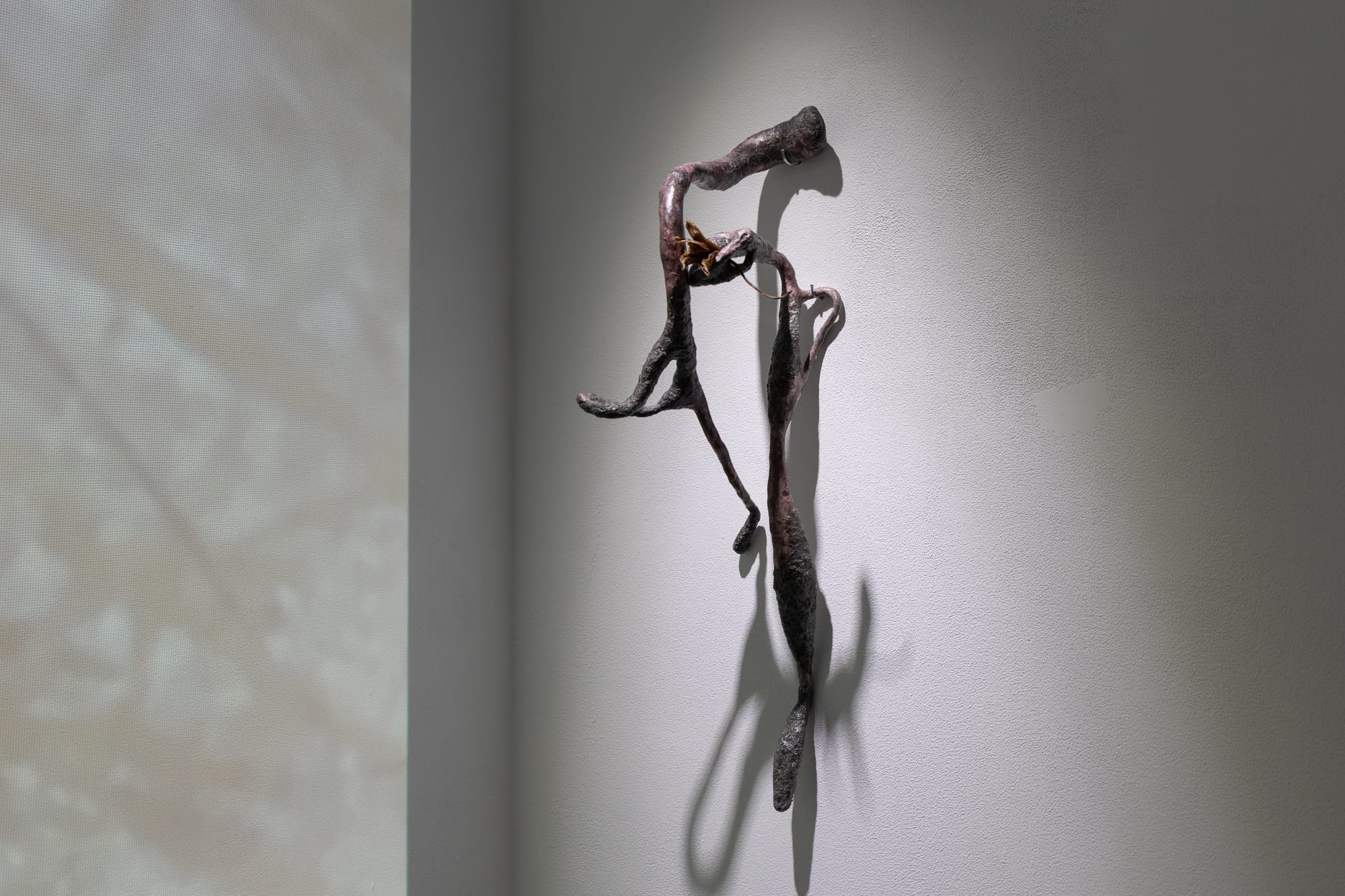
These concerns were distilled in her solo exhibition “my gaze is as clear as your breath” at Hong Kong’s Square Street Gallery last year, where Li dissected and remounted her drawings of skin. Crafted from folds of silk and pastel-toned mineral pigments on paper, these delicate collages hovered at a distance from the wall, suspended on metal wires. Works such as in fragments, seeking flickers and touching you in hollow cracks (both 2025) are punctured with nails and installed on custom-made iron-framed mirrors, which reflect the reverse side of the “skin” back at itself, producing an endless act of self-examination. Yet the mirrors never reveal the whole—offering only partial views, frustrating any attempt at totalization or taxonomy. Elsewhere, the biomorphic sculpture making sense, making kin (2025) stretches its branchlike legs—or perhaps leglike branches—down the wall, refusing the confines of the canvas. Combining organic and artificial materials—incense ash with stainless steel, dried flowers with magnets—the constructions soften the frontier between the human and nonhuman, creating a space for a more hybrid mode of existence.
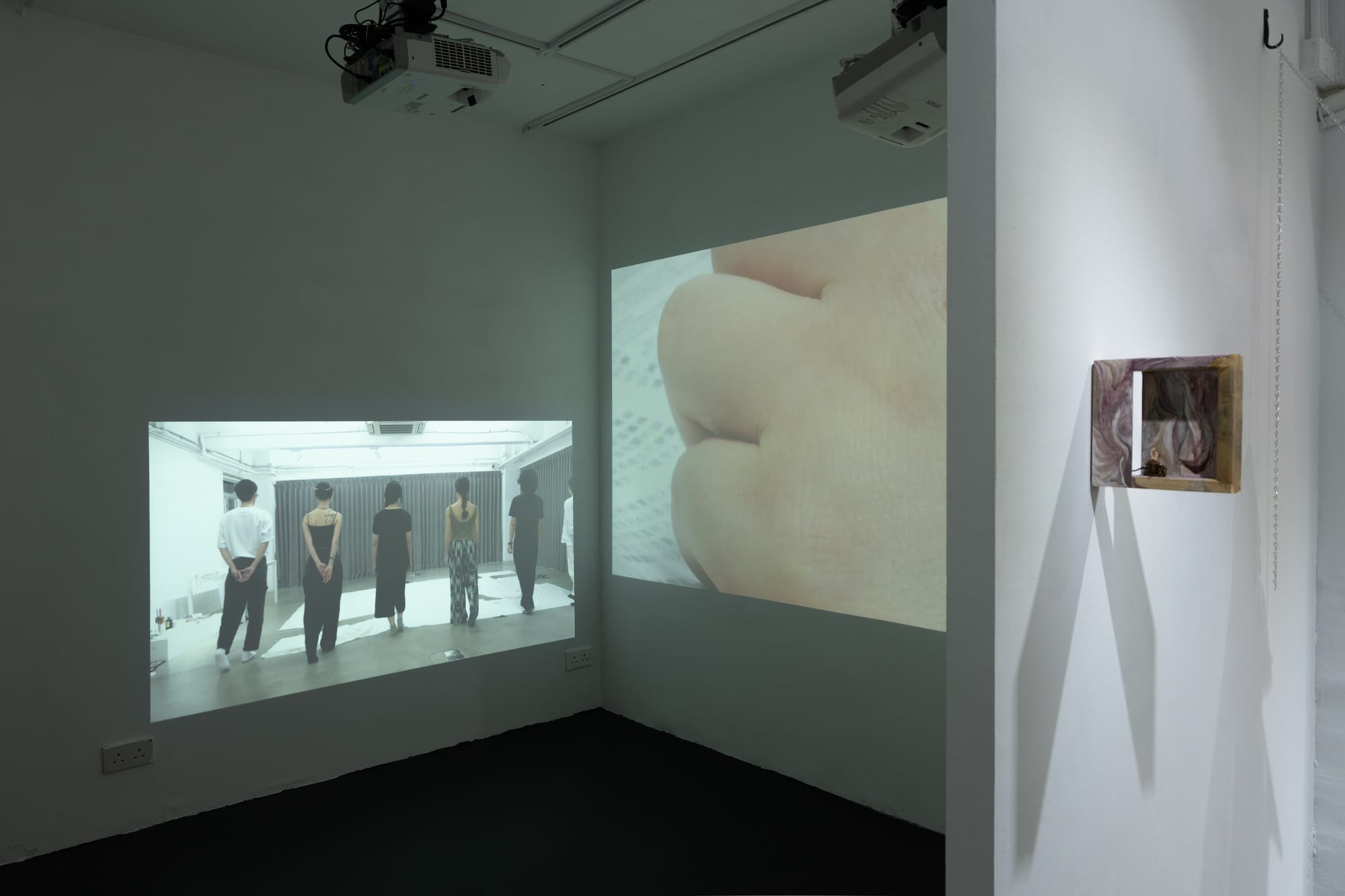
Centering the logic of care and close attention, Li led a series of workshops titled “The Body Map Experience” at HART Haus, inviting participants to slow down, observe, and render their own skin in drawing. The sessions are documented in the two-channel video to see is to touch to care is to mutate is to be (2025): one screen shows clips from the workshop, the other displays macroscopic footage of organic forms—fungus, tree bark, human skin, moss, and mold—alongside AI-generated dreamscapes. Corporeal and vegetative textures, paired with a fractured, ASMR-like soundscape, elicit a visceral effect that is unsettling yet familiar. Beside the projections, a pair of headphones invites viewers into a more intimate encounter. Those who choose to put them on hear workshop participants reflect on their relationships with their skin and bodies, revealing stories that are deeply personal and quietly shared.
“Integrating fragments of images is similar to sewing pieces of flesh. . . . It is an act of violence, with tenderness scattered around,” said Li. “My images always sit in between, searching for a crack in the constructed theater of power in daily life.” This in-betweenness bleeds through her work, seeping through silk, spilling from fissures, reassembling itself along the seams.
Aisha Traub Chan is a writer based in London.