People
New Currents: Jeanne F. Jalandoni’s Imagined Memories
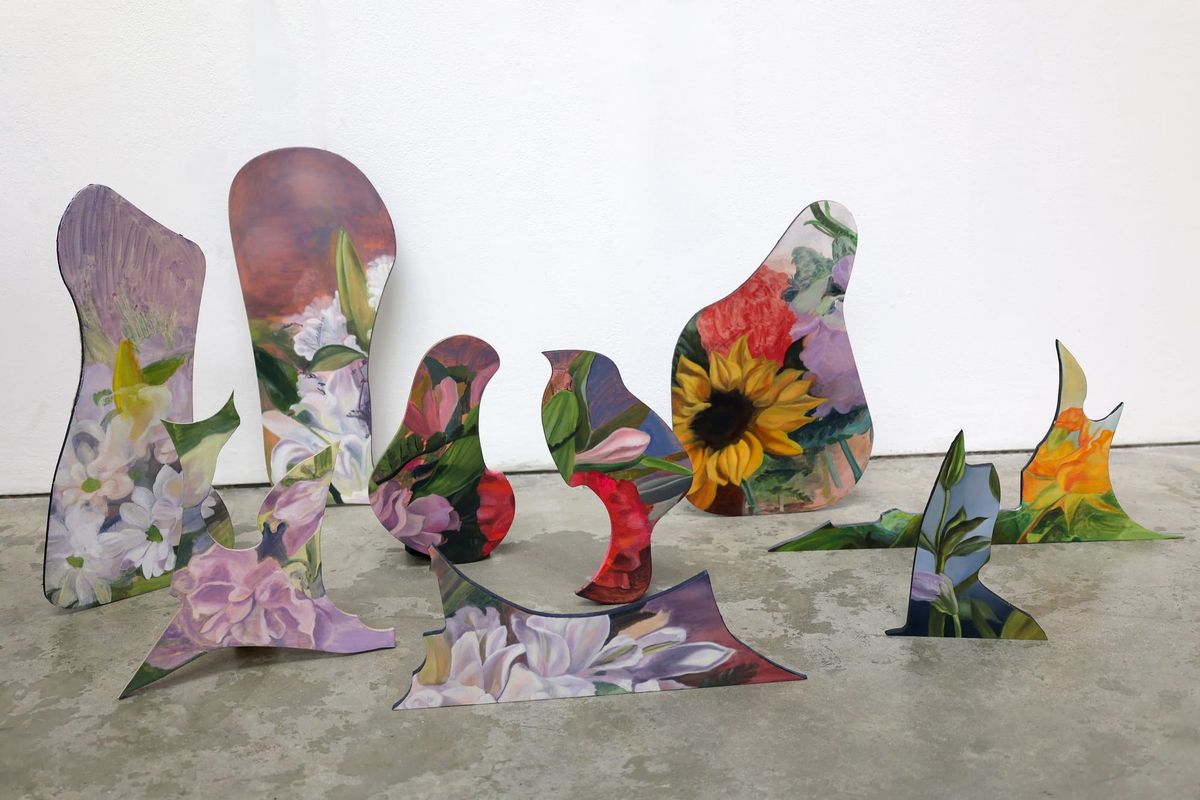
Jeanne F. Jalandoni’s artworks begin from a place she knew only in disjointed segments: anecdotes, folklore, and stories passed down by her Filipina mother. Presented at the Royal College of Art (RCA) degree show in London, her series Life for a Life (2026) gives physical form to this condition through sculptural installations of irregularly shaped wood cutouts—like puzzle pieces of the mind—depicting brightly rendered flora on one side and faded family photographs on the other. These works speak to the core of Jalandoni’s practice: an embodiment of familial memory and imagined history through traditional Philippine textiles and cultural symbols.
Born and raised in New York and now based in London, Jalandoni is a 2026 RCA candidate completing her MA in painting. Through weaving, machine knitting, and vivid pigment, her multimedia practice speaks figuratively and materially to the complexities navigated by second-generation Filipino Americans—inheriting two cultures at once, with knowledge that is partial, mediated through diaspora.
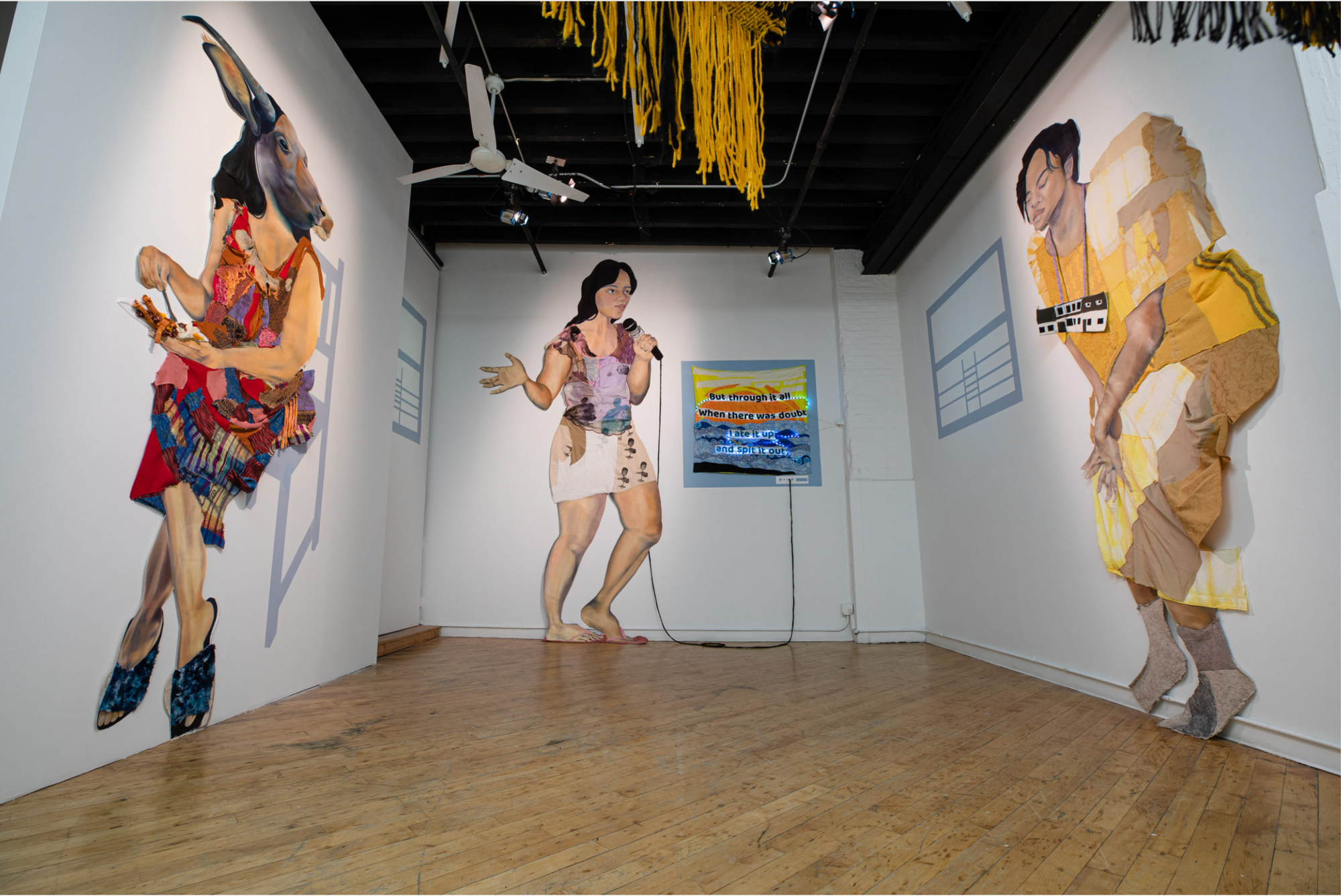
Among her earlier work, Filipino Party (2021), featured in New York’s Textile Arts Center group exhibition “Considering Mass and Density,” comprises three floor-to-ceiling oil-on-canvas cutouts of female figures, one singing karaoke, another eating, her head replaced by that of a carabao, the Philippines’ national animal. Through these women, Jalandoni places the rituals of everyday life in the archipelagic country alongside the weight of national symbolism, illuminating the layered, constantly evolving nature of Filipino American identity.
“In the Belly” (2023), her first international solo exhibition with Taymour Grahne Projects in London, expanded on this symbolic language. Through oil paintings and handmade textiles, Jalandoni traced an origin story for the carabao, a personification of Filipino American culture shaped by childhood memories of her mother’s oral recollections.
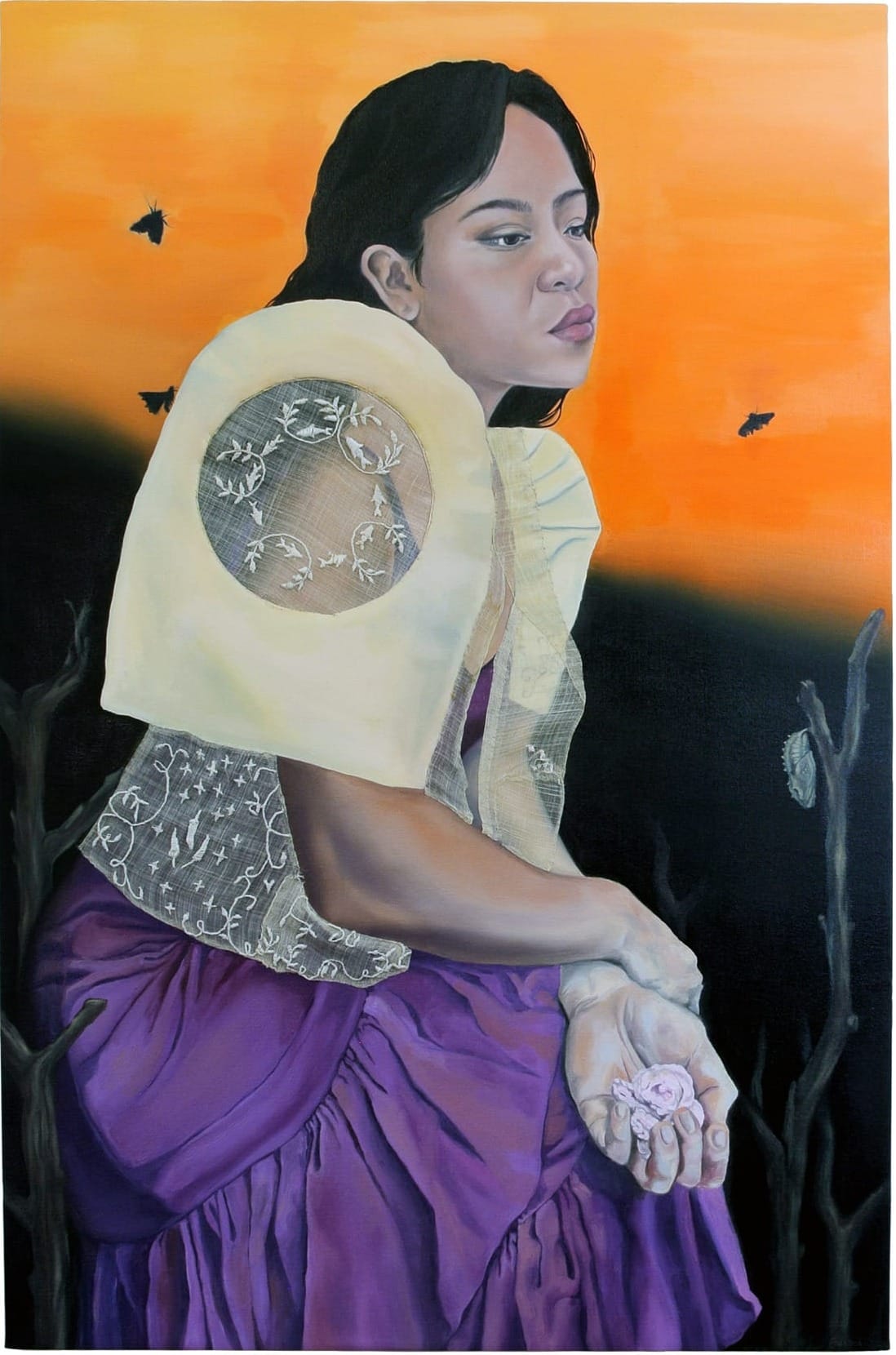
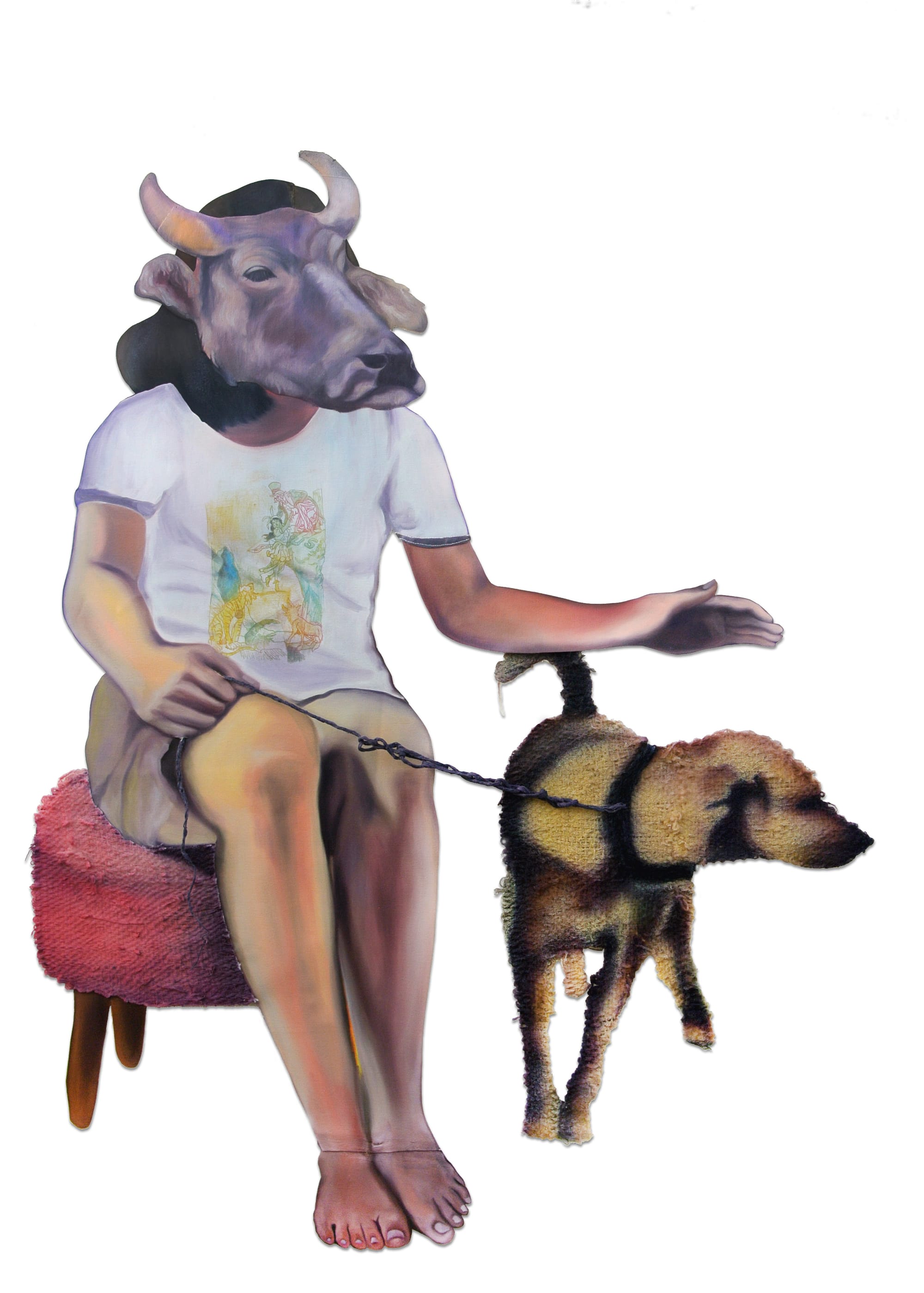
JEANNE F. JALANDONI, Moth Whispers, 2025, oil on canvas, hand-embroidered piña fabric, 101.6 x 91.44 cm (left); and He Can’t Let Her Go, 2025, oil on canvas, acrylic, cotton, pastel, 142.2 × 101.6 cm (right). Courtesy the artist.
The hybrid protagonist reappears in The Call (2025), this time holding a rooster, seated on the ground surrounded by bamboo. The regal figure pays homage to the fortitude of the animal, which carries deep significance within the country’s agricultural and colonial histories. In He Can’t Let Her Go (2025), featured in “Crosscurrents” at LATITUDE Gallery, New York in 2025, Jalandoni reworks a photograph of her mother, again replacing her head with that of a carabao to channel its resilience toward her mother’s survival of breast cancer.
In Moth Whispers (2025), hand-embroidered piña fabric—woven from pineapple leaf fibers and rooted in Spanish colonial history—adorns the sleeves and bodice of a pensive self-portrait, the artist rendered in traditional Filipiniana dress. Childhood memories are often distant and hazy, much like the soft contours of her painted subjects. Jalandoni funnels the meandering, nostalgic cadence of her mother’s bedtime stories into images that seem to echo with the fading refrain: “Once upon a time in the Philippines…”
Emmanuelle Richter is an editorial intern at ArtAsiaPacific.