Shows
Operation Minor Keys: West Asian Artists and Pavilions at the 2026 Venice Biennale
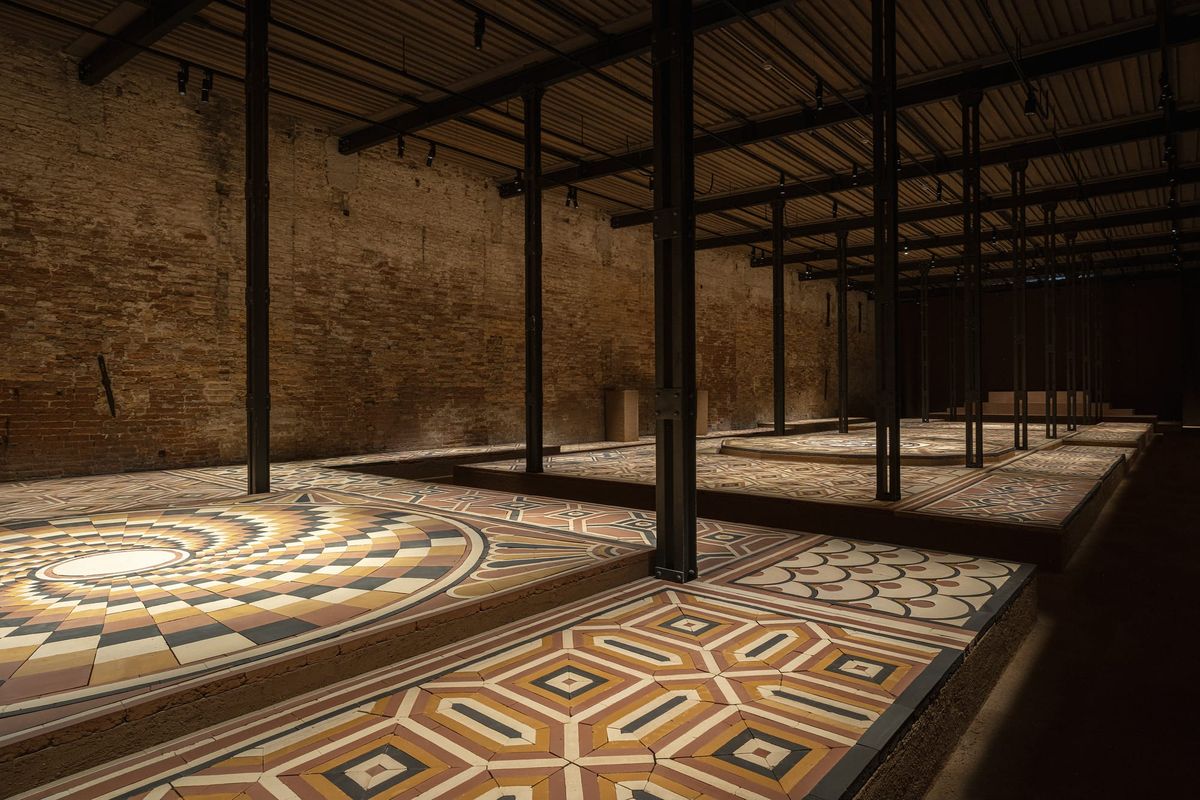
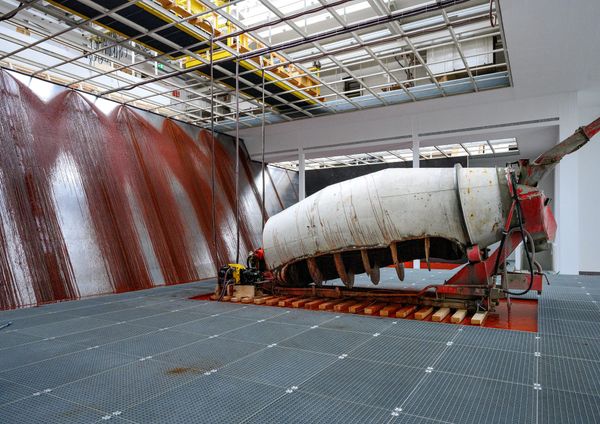
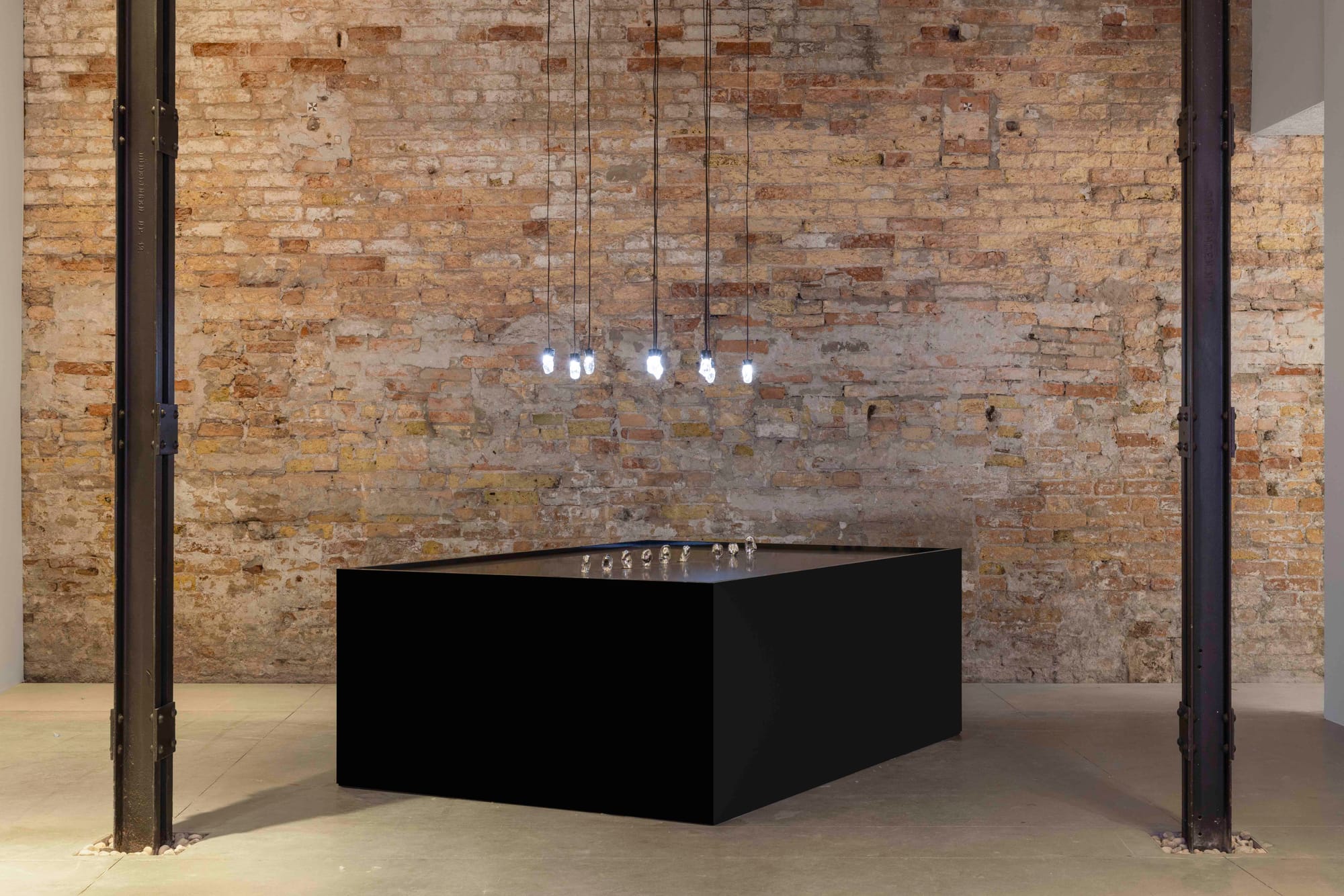
“If I Must Die,” the prophetic and now-viral poem by the slain Palestinian poet Refaat Alareer, boldly set the Arsenale’s tone at its front door. Alareer’s words were not abstractions for many West Asian artists, curators, and art workers, several of whom created work for this Biennale while navigating political strife, chronic trauma, and even active bombardment. At the Saudi Arabia pavilion, Dana Awartani’s tour-de-force was the largest iteration to date of her mosaic interpretations of destroyed heritage sites. Comprising 29,000 clay bricks, her installation evoked 23 such sites including Gaza’s Bureij mosaic and Syria’s Raqqa Museum. Majestic and melancholic, the exquisitely rendered flora and fauna compelled visitors to bear witness to the wanton destruction of biological life as well as cultural heritage. Next door at the UAE pavilion, curator Bana Kattan assembled six artists in an elegant sonic-based exhibition titled “Washwasha” (“whispers”) featuring works by Mays Albaik, Alaa Edris, Lamya Gargash, Taus Makhacheva, Jawad Al Malhi, and Farah Al Qasimi. A captivating piece was Albaik’s glass sculpture, capturing the interior cast of her mouth as she attempted to articulate phrases on language and being, including a line from Mahmoud Darwish’s A Rhyme for the Odes. The Lebanese pavilion featured veteran artist Nabil Nahas’s 45-meter wraparound frieze of 26 acrylic-on-canvas panels based on geometric motifs drawn from nature, space, and the country’s national cedar. Ironically, it was impossible to view Nahas’ elevated artwork without also seeing a significant slice of the neighboring Slovenian pavilion’s concrete debris floor installation, a poignant and unwitting metaphor of Lebanon’s embattled reality.
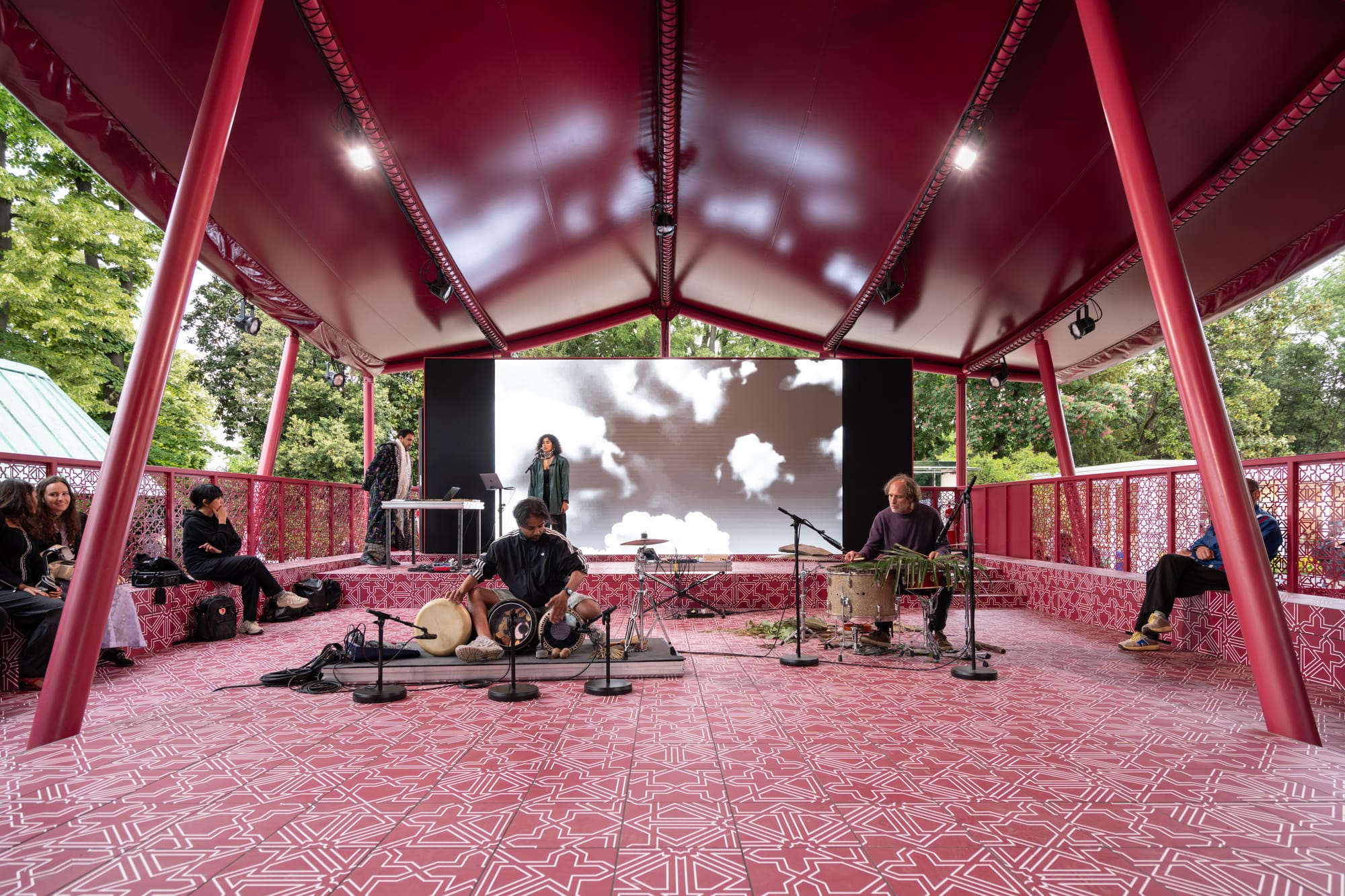
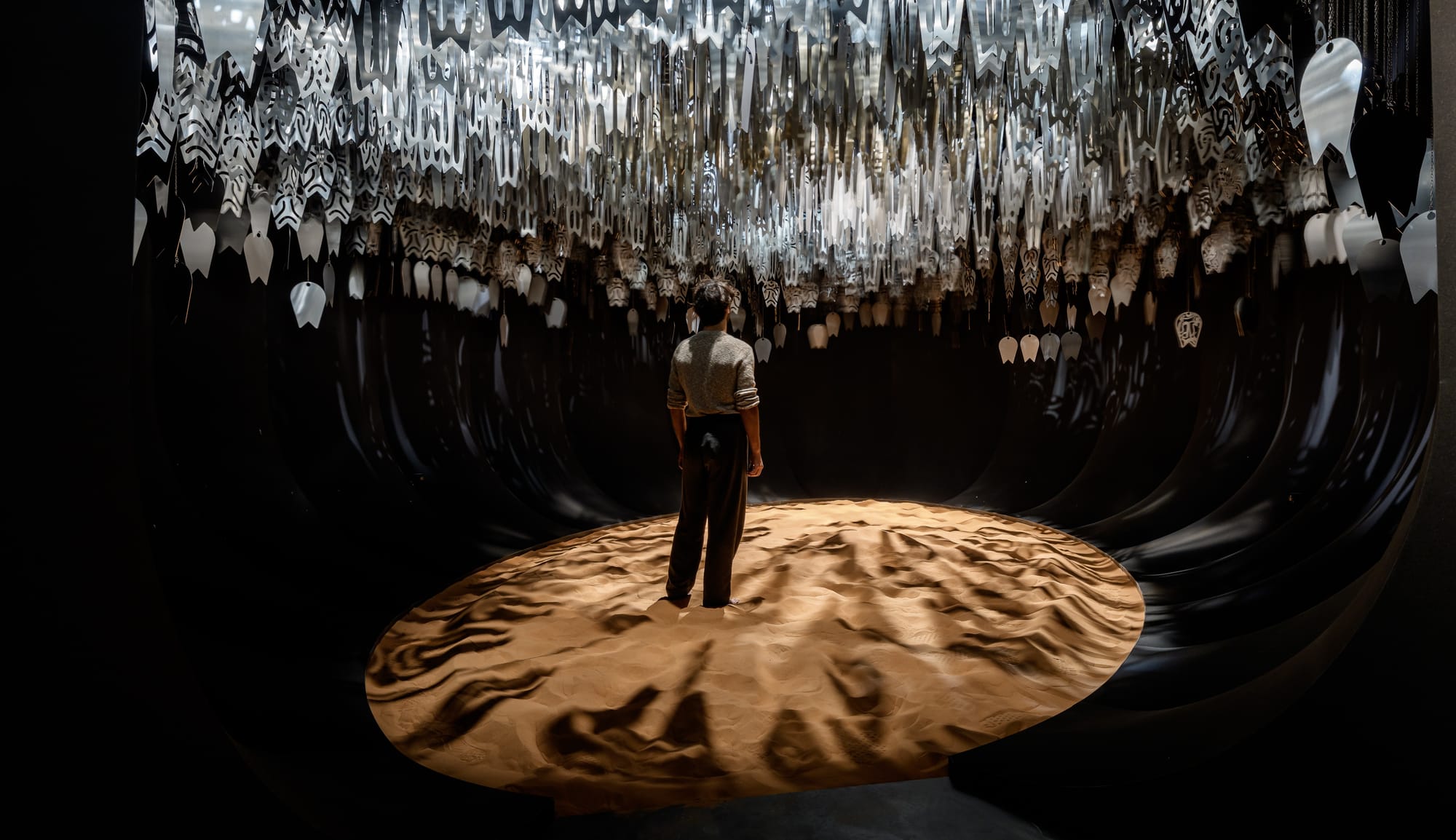
Debut pavilions by Morocco, Oman, and Qatar embraced the trends in artisanal collaboration and “activations” with mixed results. Qatar’s temporary pavilion in the Giardini, curated by Tom Eccles and Ruba Katrib on the site of the state’s future permanent pavilion, hit all the right notes with its culturally savvy, multisensory elements. The only fixed components were Rirkrit Tiravanija’s wine-colored canopy sporting a mashrabiya-inspired pattern and Alia Farid’s oversized fiberglass jerrican sculpture. Within the open-air structure, Sophia Al-Maria’s continuing filmic exploration of “Gulf Futurism” provided the techno-apocalyptic backdrop to Tarek Atoui’s performances incorporating sounds recorded along the Qatari coastlines. The misk al-khitam—literally “a seal of fragrance,” or a perfect ending—was Fadi Kattan’s culinary program spotlighting regional chefs. Morocco’s enormous, sunlit pavilion was filled with Amina Agueznay’s 150-odd sumptuous cascading panels of wool, raffia, and fabric, produced in collaboration with 160 Moroccan artisans. It hewed toward the vibe of a luxury interior design showroom-cum-workshop, but on the plus side there was a giant bed where visitors could lounge and watch workers at the weaving looms. For Oman’s inaugural pavilion, Haitham Al Busafi designed a dim, immersive portal where visitors trod on Omani desert sand; their movements triggered chimes from the overhead thicket of intricate silver elements referencing traditional horse ornamentation. Like Armen Agop’s installation at the Egyptian pavilion which combined abstract granite sculpture with sound and scent, it felt too decorative and emotionally dissociated from this year’s Biennale. Of greater gravitas was Turkey’s Nilbar Güreş’s multi-media installation playing with motion, balance, and space, where colorful threads invited viewers to conjure philosophical and ethical connections between eclectic sculptural elements.
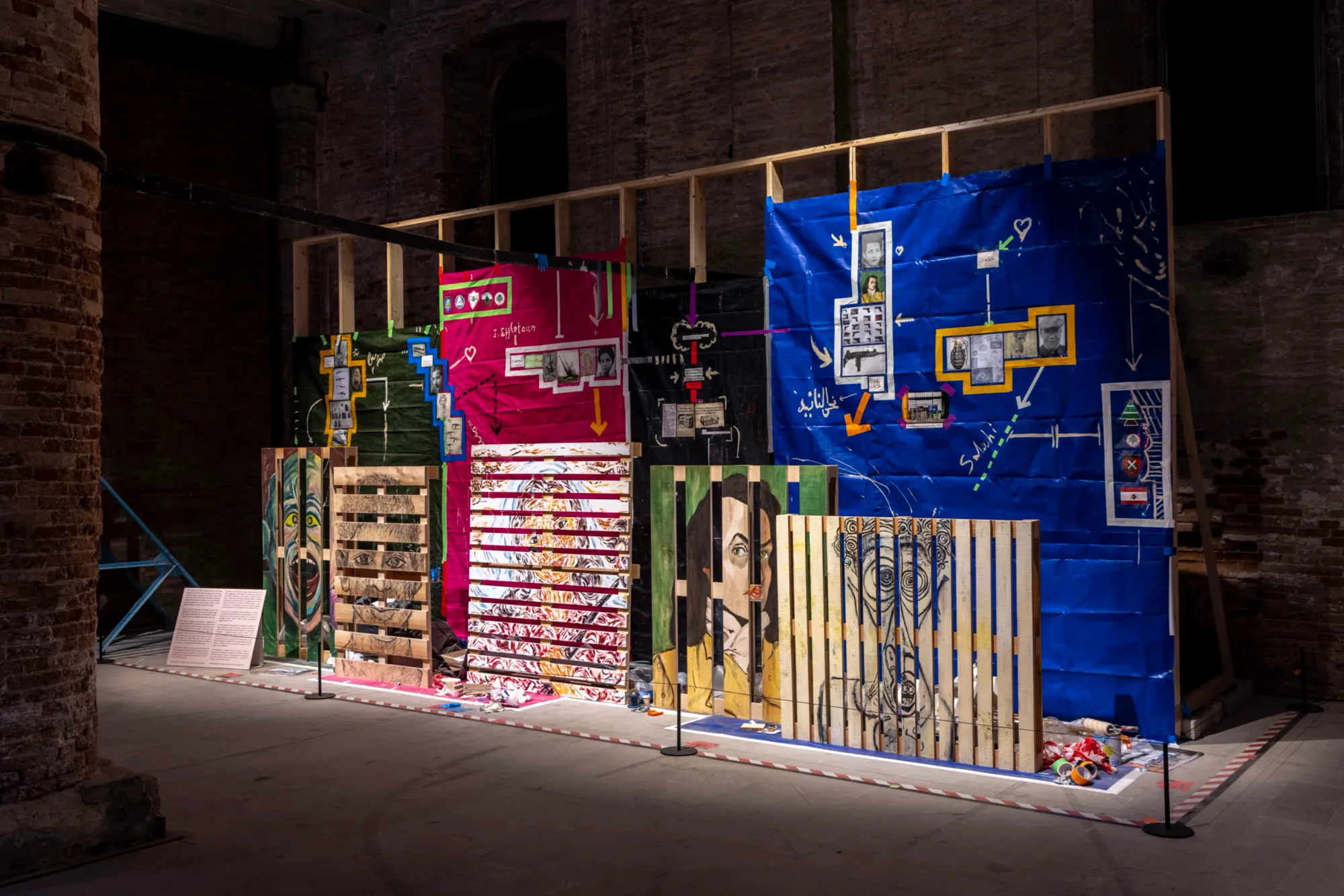
Despite the main exhibition’s uneven curatorial execution, many standout works by West Asian artists referenced regional politics and history with inventive irony, imagination, and humor. Speculative history was the subject of Walid Raad’s painted shipping pallets, elements of his fictional universe in which Balkan militias purchased Lebanese arms after the end of Lebanon’s civil war in 1990. When they uncrated their weapons, they were surprised by interior pallets richly adorned with replicas of lost Arabic and Ottoman paintings. Raad also showed 11 paintings imagining bedrooms, both palatial and makeshift, in which Yasser Arafat, chairman of the Palestine Liberation Organization, may have slept. Fearing assassination, the famously peripatetic leader seldom stayed in the same room for more than a few nights. Another tongue-in-cheek riff on celebrity was Raed Yassin’s Warhol of Arabia series (2016–18). Taking Warhol’s 1977 visit to Kuwait as his point of departure, the artist constructed imaginary portraits interposing the pop icon within gatherings of local luminaries. Using earth core samples excavated in the process of “rescue archaeology,” which is part of the land development process, Joana Hadjithomas and Khalil Joreige presented tall, visually arresting Time Capsules (2017) from Beirut, Paris, and Athens in suspended cylinders. They were captivating geological documents, compelling visitors to consider history as literally told from the ground.
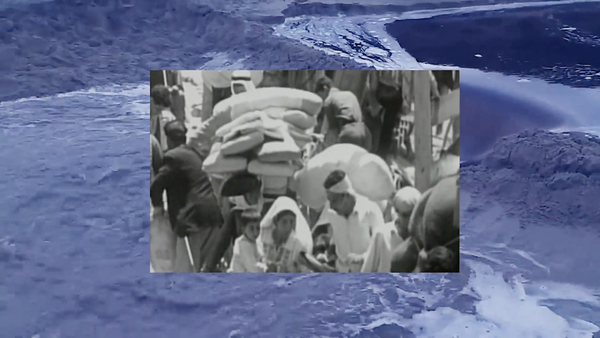
As pro-Palestinian protests and an artist strike shuttered parts of the Biennale during preview days, several artworks reminded us of Israel’s totalizing devastation of Palestinian psychic, biological, and economic vitality over 78 years of occupation. Vera Tamari’s deceptively cheerful installation of 660 miniature, brightly hued terracotta clay trees, sprouting from the ground under a black-and-white photograph of a lone olive tree, was an homage to the estimated one million olive trees uprooted by Israel since 1967. Mohammed Joha’s understated and tender No Shelter series (2025– ), watercolor and collage evocations of Gaza’s landscape, paid tribute to Gazans’ innovative repurposing of waste materials for everyday survival with his use of scrap paper, fabric, and cardboard. Most poignantly, his abstraction gestured to Gaza’s obliterated terrain as well as the natural decay of memory. Avi Mograbi juxtaposed videos documenting two business directories from Palestine: the Dalil Gédéon from 1938, showing enterprises such as the Arab Motor Company operating throughout Greater Syria, Transjordan, and Palestine; and Gaza’s online business directory from 2023, reflecting an economic landscape distorted by decades of blockade and occupation and now almost entirely decimated. As Mograbi’s artistic collaborator Avital Barak wrote, “both directories serve as evidence of the ongoing Nakba that began in 1948.”
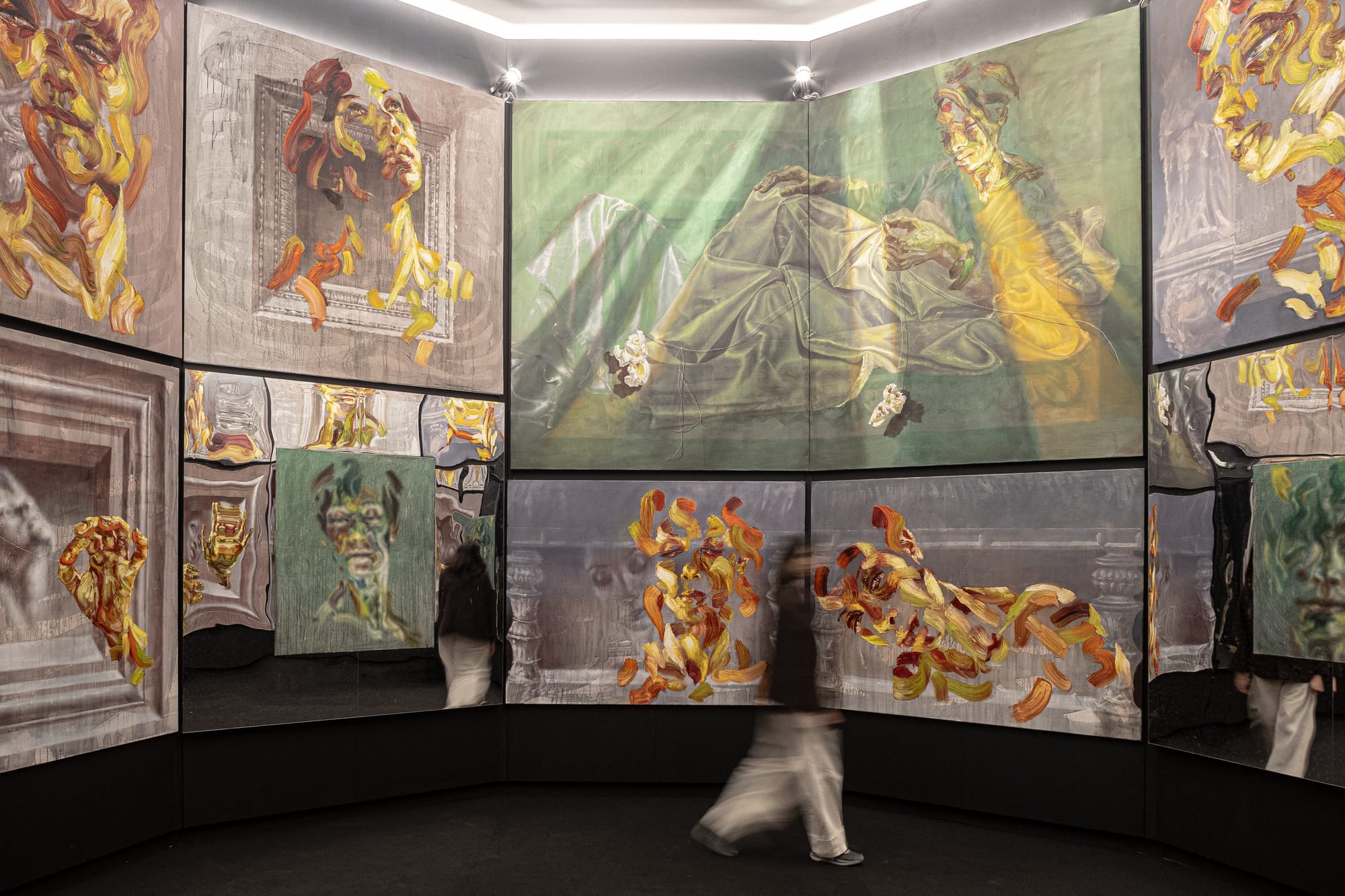
Syria and Palestine were the subjects of two remarkable exhibitions. At the Università Iuav di Venezia in Dorsoduro, Sara Shamma’s Tower Tomb of Palmyra at the Syrian pavilion marked the country’s return to the Biennale after the fall of Basher al Assad’s government in 2024. Shamma’s monumental 15-meter-tall structure references Palmyra’s 150 distinctive tower tombs, built during the first to third centuries, that ISIS plundered and destroyed during the Syrian civil war (2011–24). The loot was mainly sold to European buyers, some of whom were certainly circulating, predator-like, in Venice’s parties and pavilions. The structure’s interior was lined with Shamma’s haunting expressionist paintings in place of traditional funerary portraits and sculptures. At Palazzo Mora, Faisal Saleh’s Palestine Museum exhibited the extraordinary Gaza Genocide Tapestry featuring 100 widely circulated media images of Israel’s genocide in Gaza rendered in tatreez (embroidery) by artisans from refugee camps in occupied Palestine, Lebanon, and Jordan. When these images first emerged, mainstream Western media often downplayed and cast doubt upon their legitimacy until tens, likely hundreds of thousands had been annihilated. It is a perverse and irreparable stain on humanity that artists have embroidered likenesses of their freshly killed countrymen for the “Olympics of the art world.”
Chin-chin Yap is a Singaporean writer and filmmaker based in Lisbon and contributing editor for ArtAsiaPacific.