Shows
Roksana Pirouzmand’s Dual‑Site Meditation on Loss
Roksana Pirouzmand
everything was once something else
OXY ARTS
Los Angeles
Feb 21–Apr 11, 2026
everything was once something else (the land was the sea, the sea was the land)
JOAN
Los Angeles
Feb 21–May 2, 2026
Roksana Pirouzmand is known for powerful installations and performance-based sculptures whose figurative meaning is often created through literal deterioration and erosion. The Iranian-born, Los Angeles-based artist’s latest exhibition unfurled across two separate venues like echoes or reverberations of each other, exploring the causes and effects that shape our individual lives and chart the course of history.
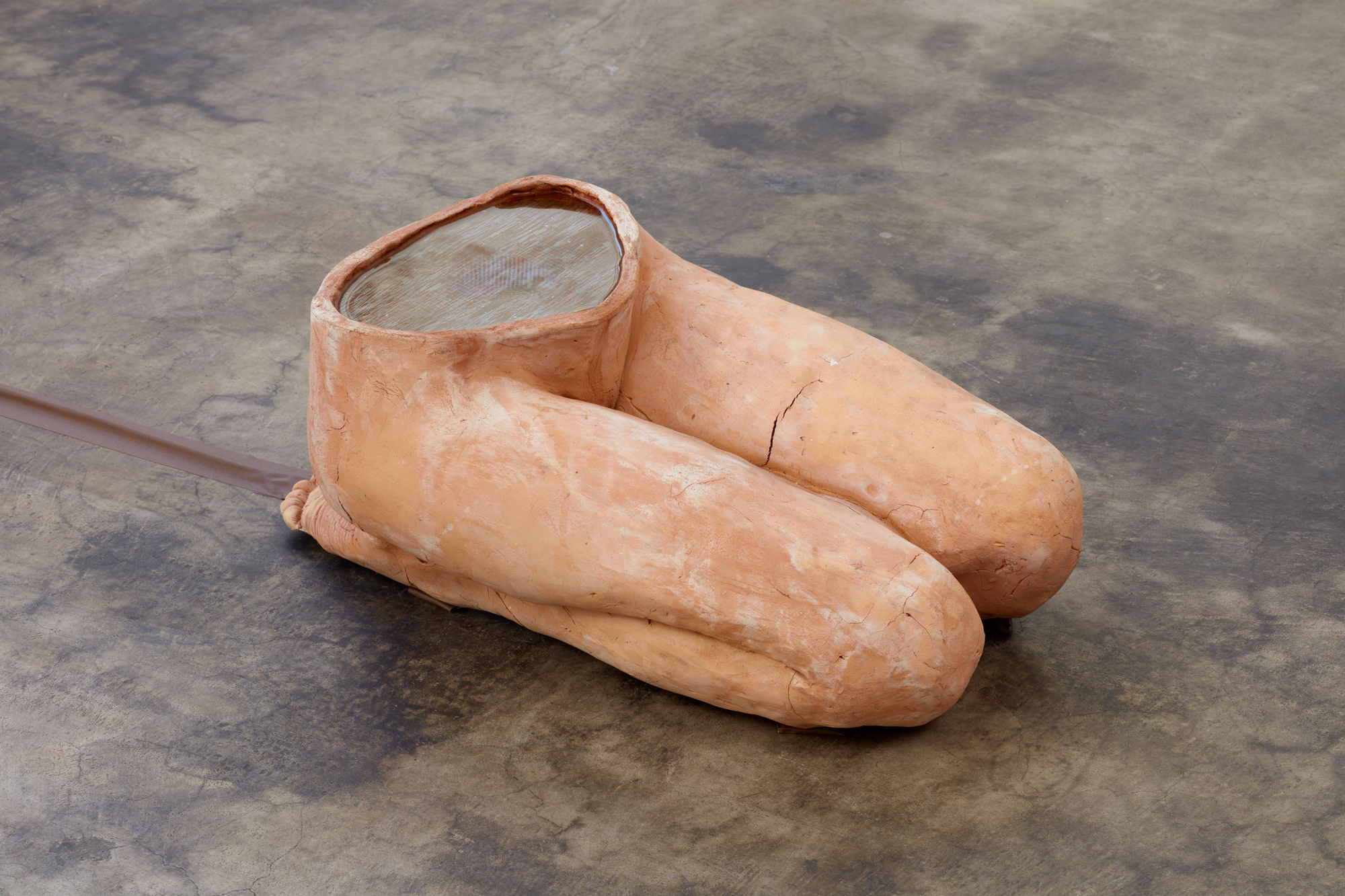
There are the cascading reactions within family and generational bonds. Anatomical clay casts based on Pirouzmand’s own body as well as that of her mother (the artist has also frequently cast portions of her grandmother’s form in the past) populated the sunny, seventh-floor industrial space of JOAN in downtown Los Angeles. The floor sculpture, kneeling, sinking (2025) is modeled after Pirouzmand’s lower body in a kneeling position, cut through the hip, connoting prayerful deference and vulnerability. At the center of this presentation was spring (2025–26), a full body cast reclining on a slab of steel, entrenched in a shallow pool of water that slowly eroded the clay corpus and rusted the steel.
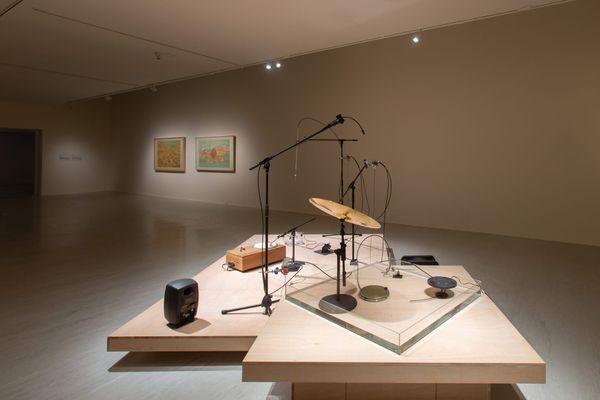
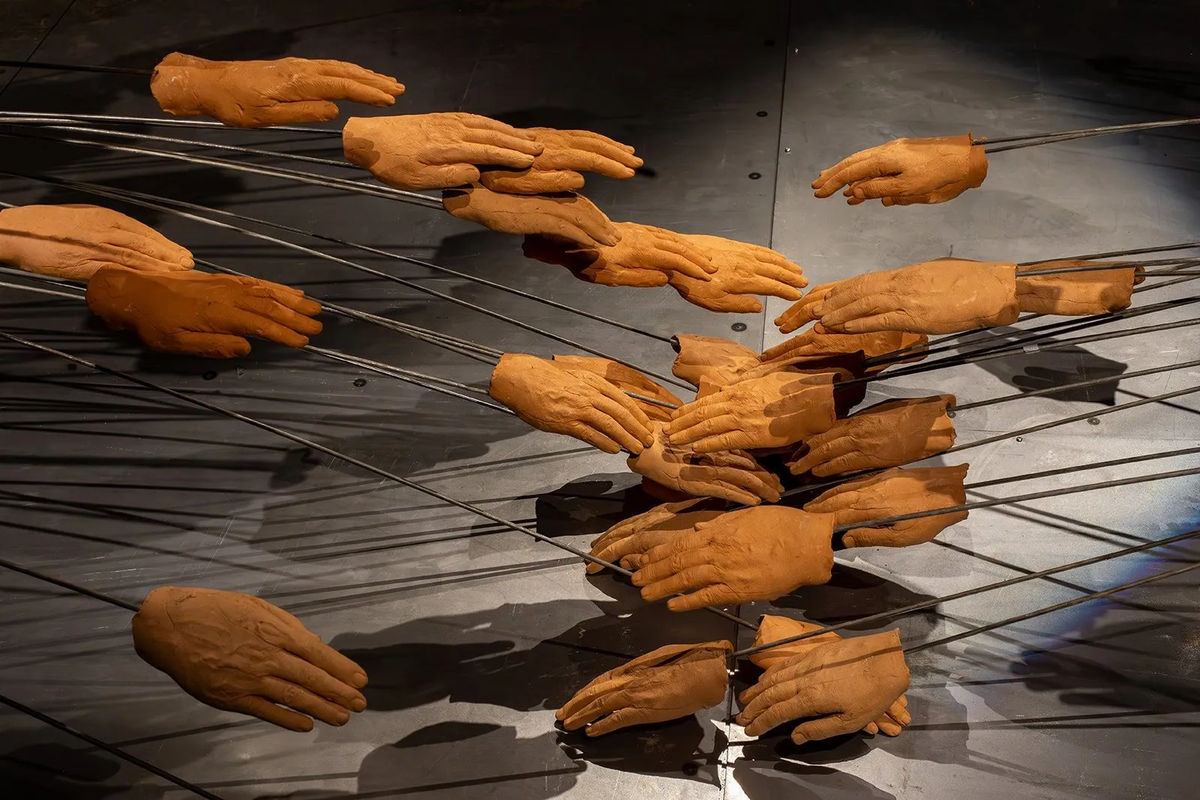
Subtler, long-range influences that might ripple across eras are felt in land was the sea the sea was the land 1 and 2 (2026). The sculptural installation comprises a steel shelf piled high with casts of hands facing another steel shelf with a panel of clay. A mysterious hum pervaded the gallery, generated by sound exciters that imparted a quiet but steady vibration throughout the works, gradually abrading the clay pieces. Fingers cracked off from the cast hands, littering the floor of the gallery. The sheet of clay, once whole, splintered into several parts, with large chunks tumbling onto the ground, reflecting the often fractured identities of diasporic communities, including Pirouzmand’s own experiences with displacement. Born in 1990 in Yazd, Iran, and raised by a family that practiced Zoroastrianism—one of the world’s oldest faiths originating in ancient Persia—the artist relocated to the US at the age of 21 through a religious refugee program.
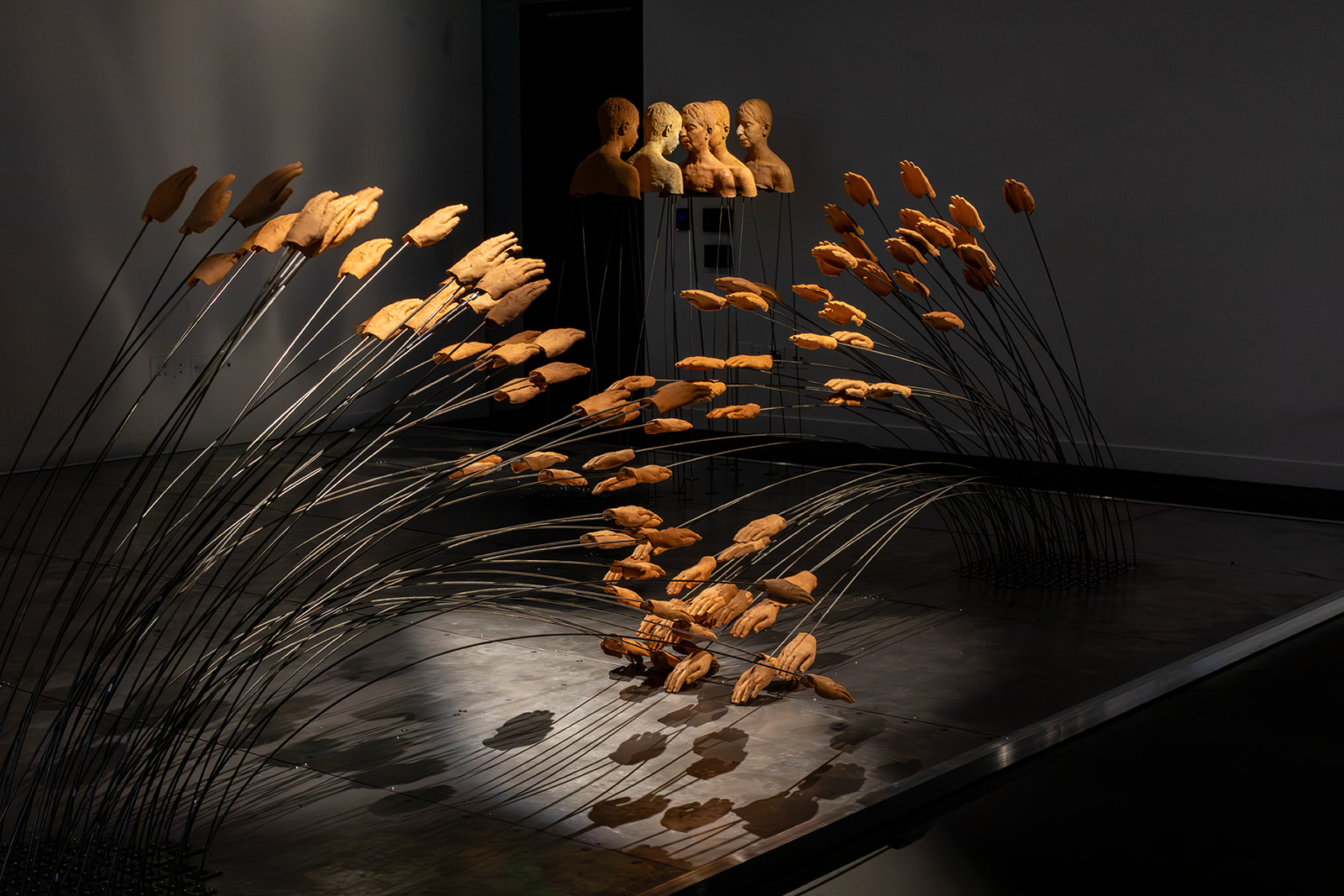
Pirouzmand also implicates and involves the spectator to highlight the direct impact of their own beliefs, actions, and movements. At OXY ARTS, she welded her sculptures onto a metal floor taking up almost the entire space. Visitors were invited to walk onto the specially devised platform, whose metal plates buckled and bowed with each step. Here, viewers encountered Wave (2026), a kinetic installation which consists of dozens of clay casts of hands, each affixed to the tip of a thin metal rod that bends and sways, recalling how cattails flutter from the weight of their flower heads or a gentle breeze. The many clay hands colliding with one another was cacophonous—at one point, a finger snapped off and fell to the ground, a small drama recalling Newton’s third law of motion which posits that for every action, there is an equal and opposite reaction.
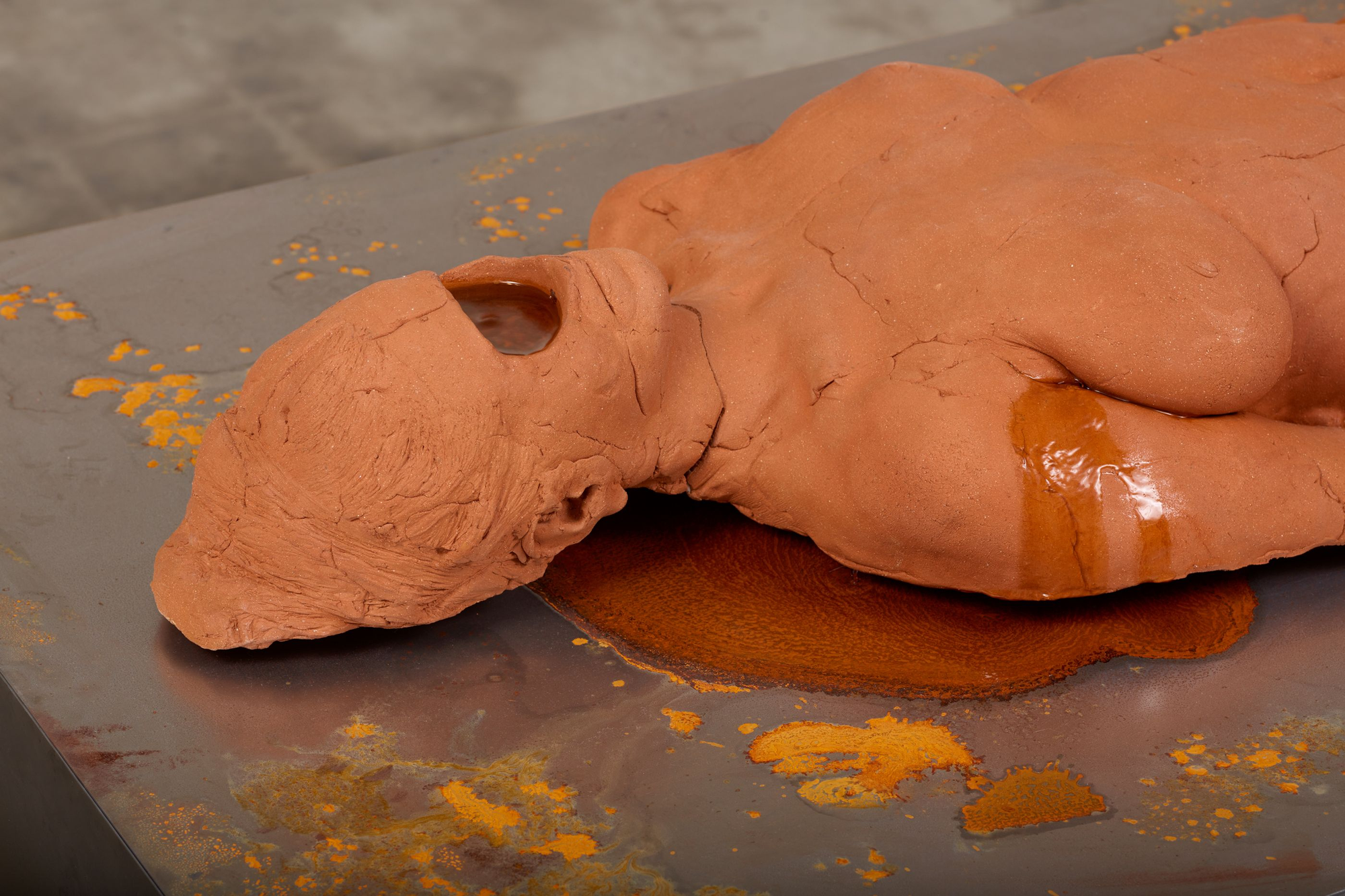
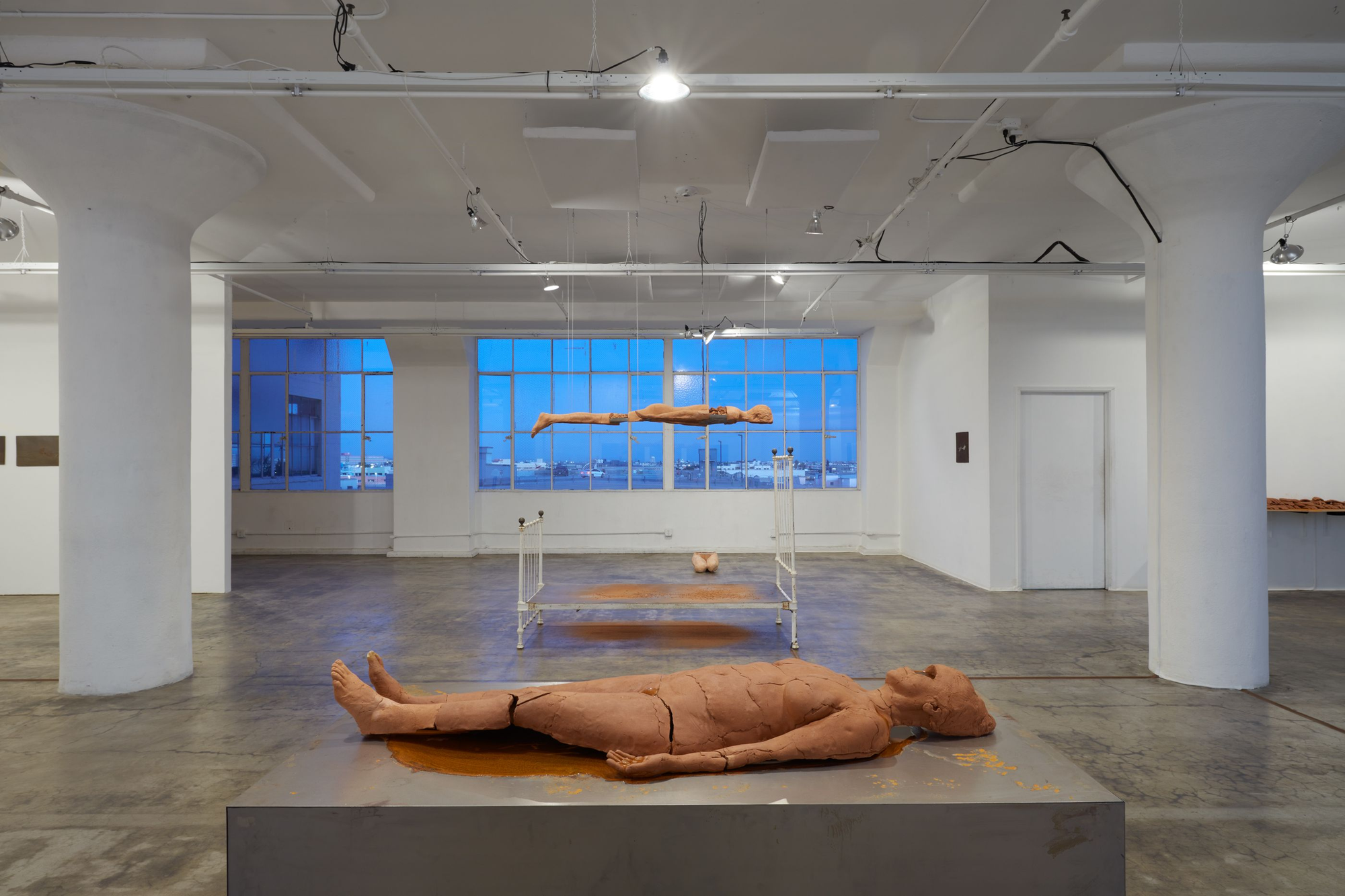
Also displayed at OXY ARTS, Horizon (2026) is composed of two casts of faceless adult bodies, vertically cleaved in half and horizontally laid out—with one seemingly merging with a crib—referencing infancy, rebirth, and regression, as well as the psychosomatic imprints of our childhood on our adulthood. At JOAN, a clay body is suspended in a similar position above a full-sized bedframe in dreaming, swifting, settling (2025–26), looming overhead and, little by little, depositing dust onto the fixture and floor below. Do the hopes and dreams of previous generations cast too long a shadow, or impose too heavy a trace?
In Land (2026), clay casts of the artist’s bust jostle against each other upon long metal rods, their eyes closed. While the damage at first glance appeared minimal, closer inspection revealed that each bust had sustained a fine but distinct layer of wear upon almost every surface. No person is an island; not a single soul remains unscathed in the unfolding of the human trajectory.
At the time of writing, US-Israeli airstrikes continue to rain down on Iran. The conflict began on February 28, although one could arguably link the true beginning of this war to the 1953 coup or the 1978–79 Iranian Revolution. Iran retaliated with bombings of American embassies in neighboring countries, resulting in direct deaths as well as indirect aftereffects: renewed animosities, discrimination against both Middle Eastern and Jewish communities, soaring oil prices affecting the global citizenry’s daily lives. Across the two venues, arguably the most important medium to Pirouzmand’s works went unlisted on the checklists—that of time, and its ability to both destroy and heal.
Jennifer S. Li is a writer, art advisor, and educator based in Los Angeles. She is also ArtAsiaPacific’s Los Angeles desk editor.