Shows
The 25th Biennale of Sydney: “Rememory”
25th Biennale of Sydney
Rememory
Multiple locations
Sydney
Mar 14–Jun 14, 2026
If audiences come seeking spectacle, this is not it. The 25th Biennale of Sydney, “Rememory,” rewards endurance. It unfolds in an arc that traces the edges of the city, moving through galleries across its western fringes before returning to harborside venues, and brings together works that ask the viewer to slow down and submit to each artist’s constructed world.
“Rememory” opened in March as curator Hoor Al-Qasimi’s home city of Sharjah found itself overshadowed by the escalating war between Iran and the coalition of Israel and the US. With her home region vulnerable to intensifying hostilities, her curatorial effort to examine the past in order to make sense of an unstable present felt all the more acute. Bringing together 83 artists, collaborators, and collectives from Guatemala to Taiwan, the exhibition positions shared histories as precursors to the future.
For the second time, the biennale occupies White Bay Power Station, a looming structure marked by the remnants of control rooms, cavernous halls, and machinery of a bygone industrial era. The rawness of these spaces is inescapable; unlike the Tate Modern’s sanitized Turbine hall, these interiors are heavy, dusty, and suspended in time. With such dominant architecture, ensuring works are neither overpowered by their surroundings nor diminished by the sheer scale of the site is no small feat. Yet Al-Qasimi succeeds in cultivating a sense of intimacy across the venue.
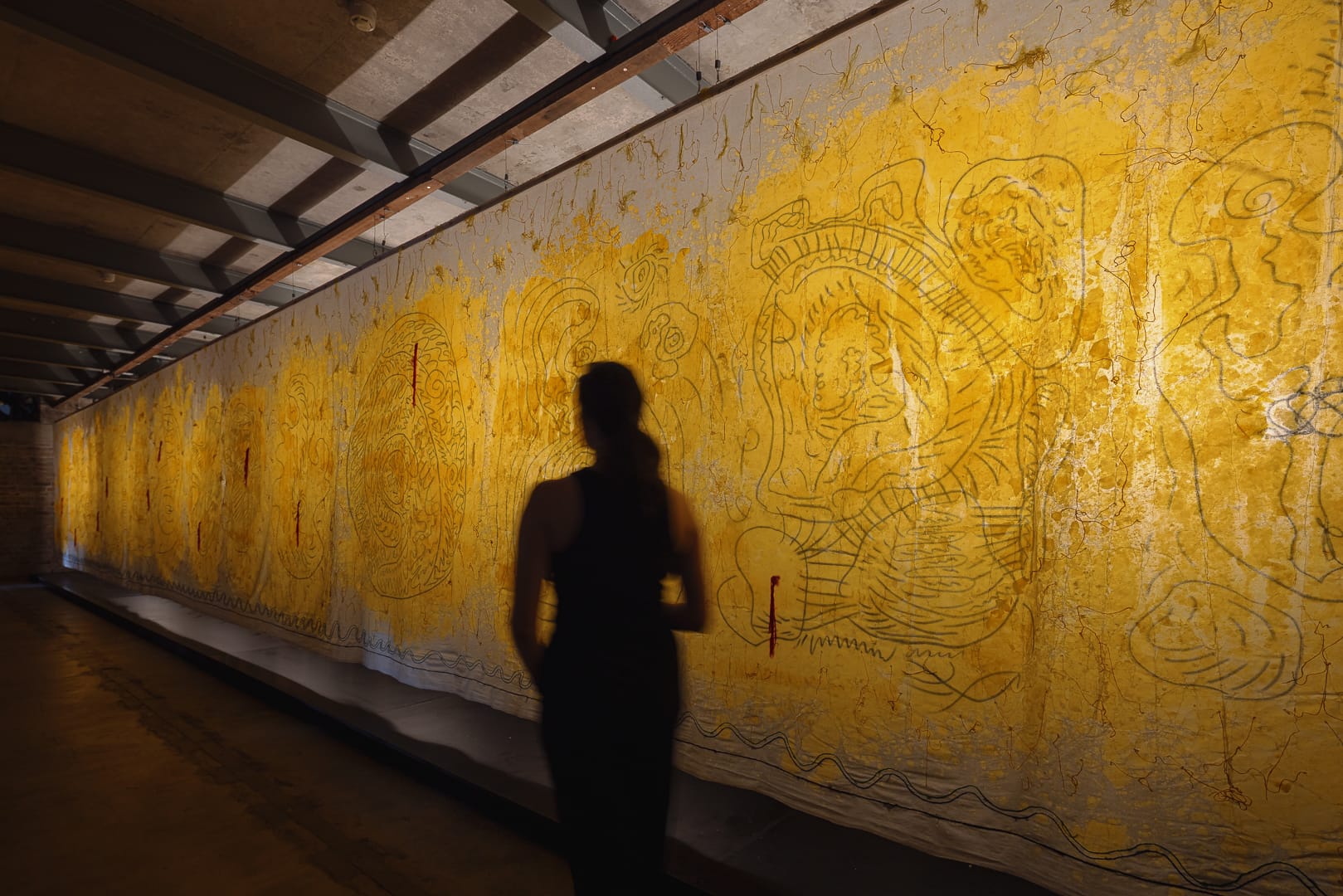
In an elongated, dimly lit pump house, a 17-meter-long blanket glows in luminous yellow, beckoning the viewer to come closer. Guatemalan artist Edgar Calel’s Pa sutz’ xkix tzolojpe (from the fog they will return) (2025) is an invitation to consider the scars of the past within the realities of today. Anchored in the Mayan belief that the residue of fire connects the sacred and the ancestral, his monumental work is stitched, marked, and folded, then doused in beeswax and paraffin. The resulting piece, as the title suggests, is built through layers of artistic intervention into an otherwise imperceptible form. The marks drawn across its surface appear figurative before dissolving into abstraction. The work encapsulates the concept of “Rememory,” derived from Toni Morrison’s neologism, where layers of intergenerational experience and spirituality hover intangibly close, suffusing the present.
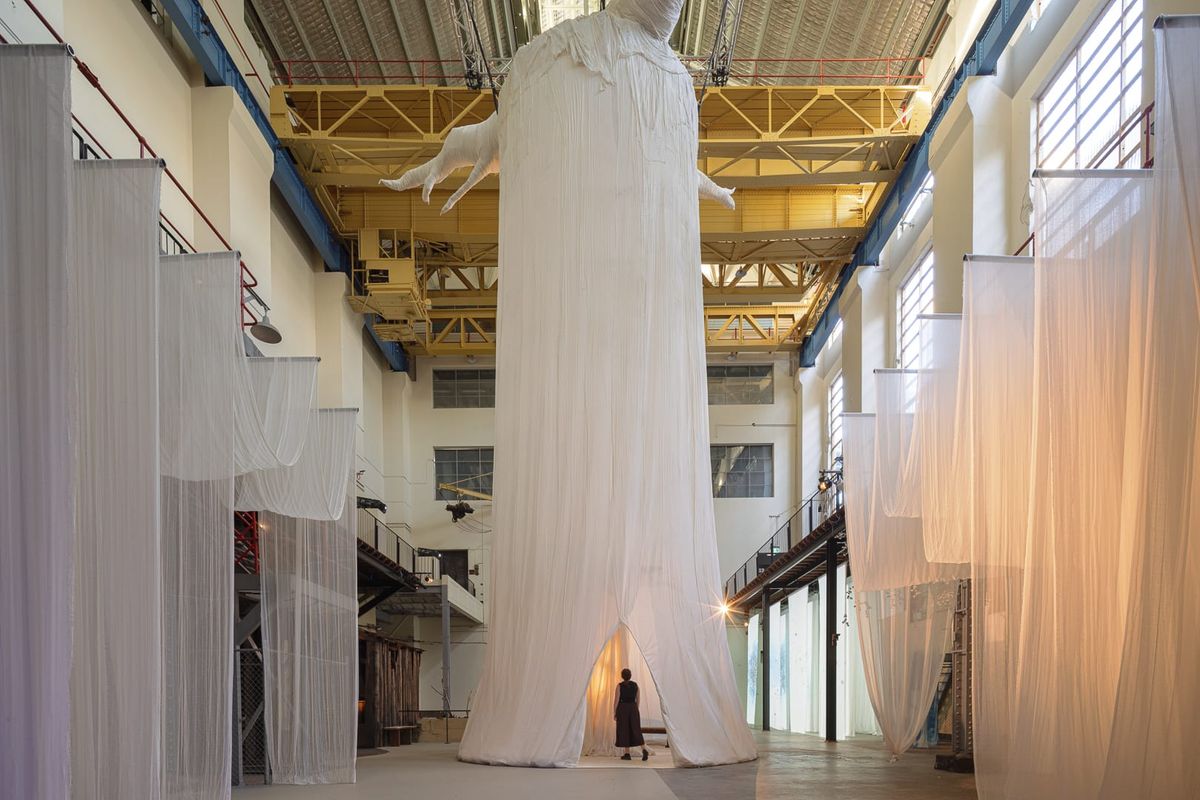
Emerging from the dark service rooms into the vast main halls, viewers encounter another textile presence. Nikesha Breeze’s Living Histories (2026) is perhaps the closest the biennale comes to the spectacular, measuring more than two stories, yet it remains deeply intimate in nature. A soaring African baobab tree stretches upward, swathed in white cotton gauze and shrouded behind a circular curtain. The viewer cannot help but be lured in, to be enveloped within the structure.
While being ensconced in its billowing folds is a calm, almost dreamlike experience, the viewer comes across the remnants of a wooden cabin. The space is lined with framed photographs, with handwritten notes scattered across tables for viewers to sift through as spoken-word recordings fill the room. In this mise en scène, Breeze recasts the viewer as researcher, inviting them, as she has, to interrogate Born in Slavery, a Library of Congress archive of more than 2,300 first-person accounts. Collected and transcribed by Federal Writers’ Project, an initiative of US president Franklin D. Roosevelt’s New Deal program in the 1930s, these interviews remain among the only firsthand testimonies of enslavement, many drawn from life on cotton plantations.
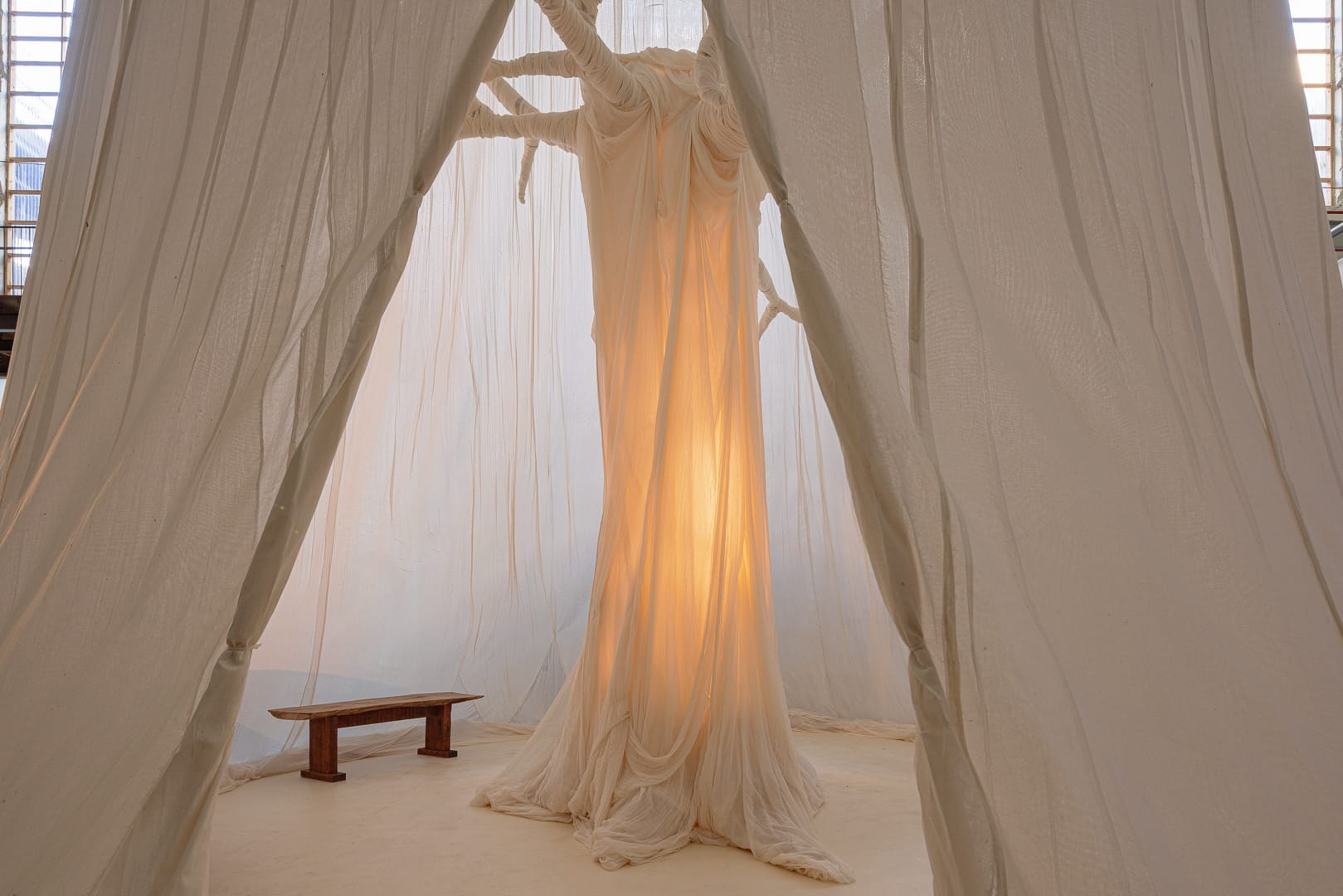
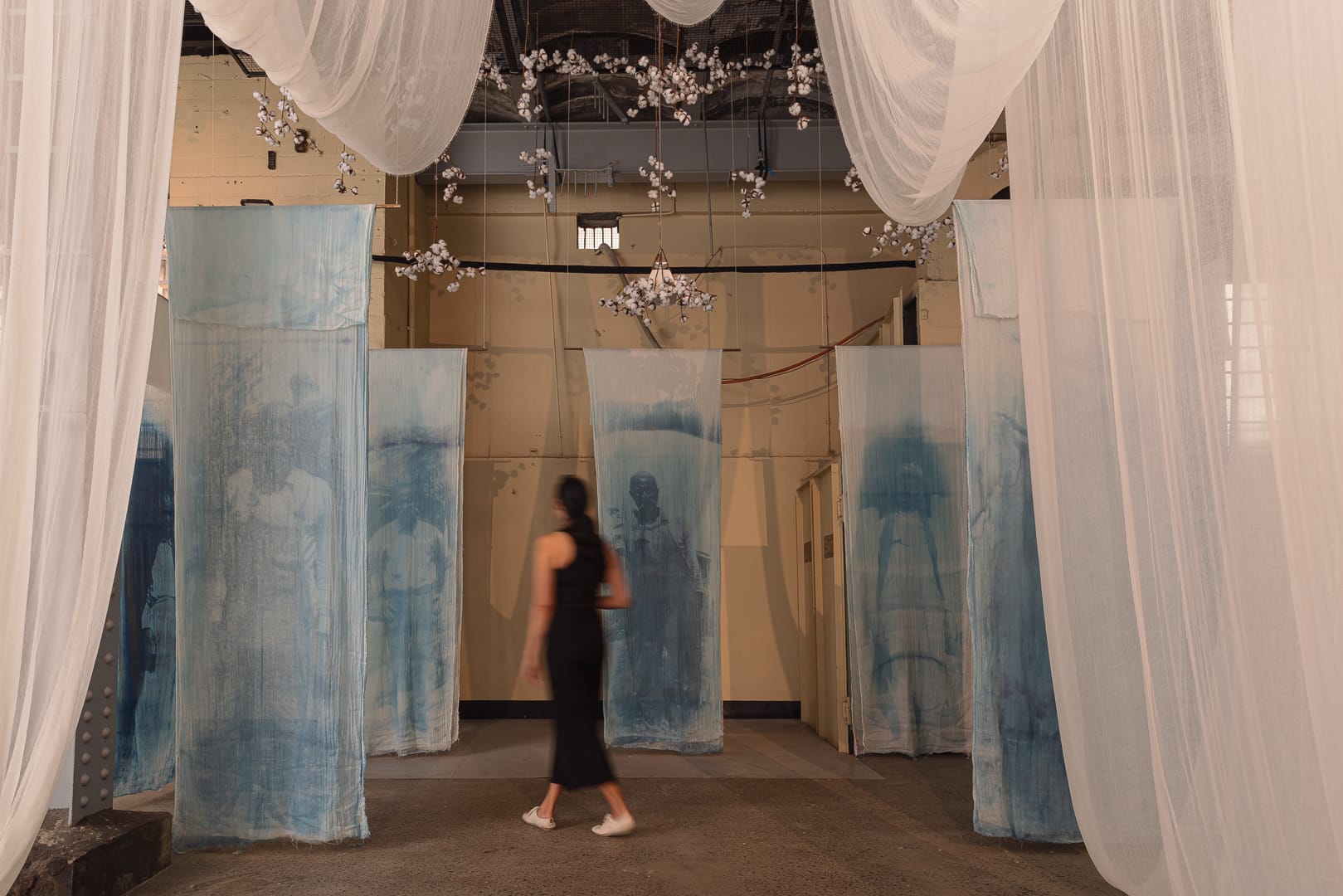
Breeze deftly constructs a sequence of spaces that compels the viewer to confront somber histories, urging them to read more closely and listen more intently, before returning to the cotton-swathed baobab, now charged with the weight of those testimonies yet held as a sanctuary in the present—a place where reflection, mourning, and quiet reckoning can unravel.
Al Qasimi’s biennale is a series of hushed confrontations with the past. She is known for her sustained curatorial engagement with overlooked histories, and her exhibitions complicate dominant historical narratives by approaching the archive site of intervention. In Sydney, her selection of artists and artworks turn toward the voices of those at the center of the stories being told.
Across all venues, videos unfold that are at once demanding and tender. This is not a biennale to rush through; each space asks for time and, at times, emotional stamina. These are difficult histories, and if the viewer resists the urge to turn away, they are met with a generosity of spirit from those who have endured some of the harshest realities of contemporary life—an openness that does not simply invite witness but insists upon it.
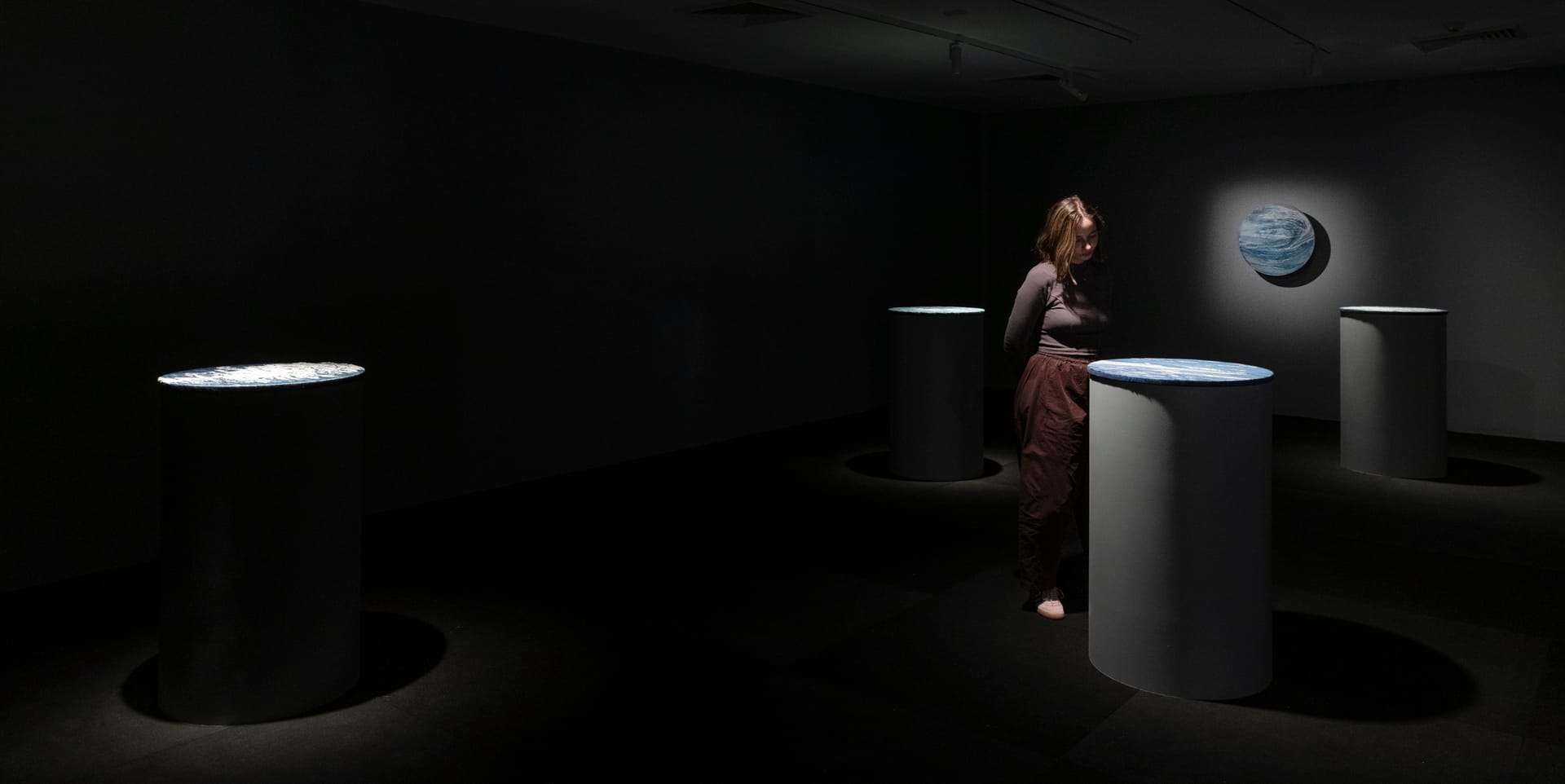
Displayed at Campbelltown Arts Centre, Lebanese duo Joana Hadjithomas and Khalil Joreige’s Asylum of our Dreams (2026) spans two adjacent galleries. A series of embroidered disks inspired by the ocean hover like planets within a darkened room; in the other, a long screen slices through the space. In dialogue with the embroideries, the video explores the projected dream of elsewhere, the unremitting belief that one might escape an inherited life and reimagine the future.
The drive to forge a new, prosperous life is traced through four men from the northern Lebanese town of Bab al-Tabbaneh, who recount their perilous journey: smuggled to Australia via Indonesia, surviving at sea, imprisoned on Christmas Island for five years, and ultimately deported home. Each man appears in documentary style interviews, shown in small, square television-sized projections set against a pulsating, ever-shifting seascape. Their stories are harrowing, shaped by near-death and relentless perseverance.
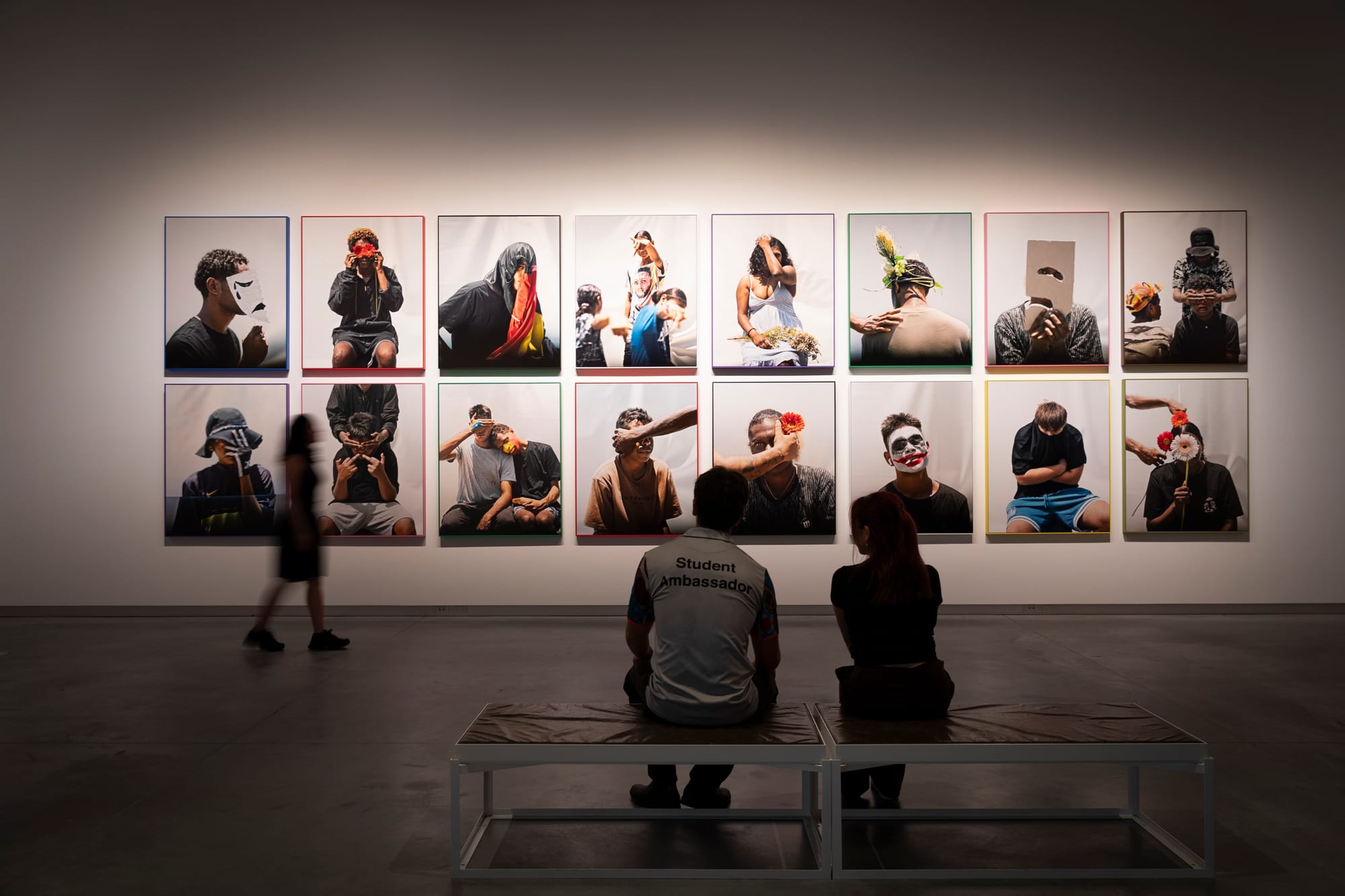
Code Black/Riot (2025), a collaborative series of works by Hoda Afshar, Vernon Ah Kee, and Behrouz Boochani, is exhibited across both Campbelltown Arts Centre and Chau Chak Wing Museum. Comprising a four-channel video, portrait photographs, color field paintings, and an original text, the work is an investigative call to action. The video, filmed in Australia’s North Queensland, captures the voices of First Nations children who have been part of the youth detention system, as well as its staff. Made in collaboration with First Nations advocacy group Change the Record, the video obscures the identity of its subjects—they appear in shadow, in outline, or in close-up from the nose down—yet their words are confronting in their clarity. They speak of violence built into the system, of a “night mode” that plunges the children for days at a time into darkness, and of the fear and anger of an institution that has betrayed them. In the tenebrous of the gallery, the sense of complicity is inescapable: Australia, as a nation, has failed these young people.
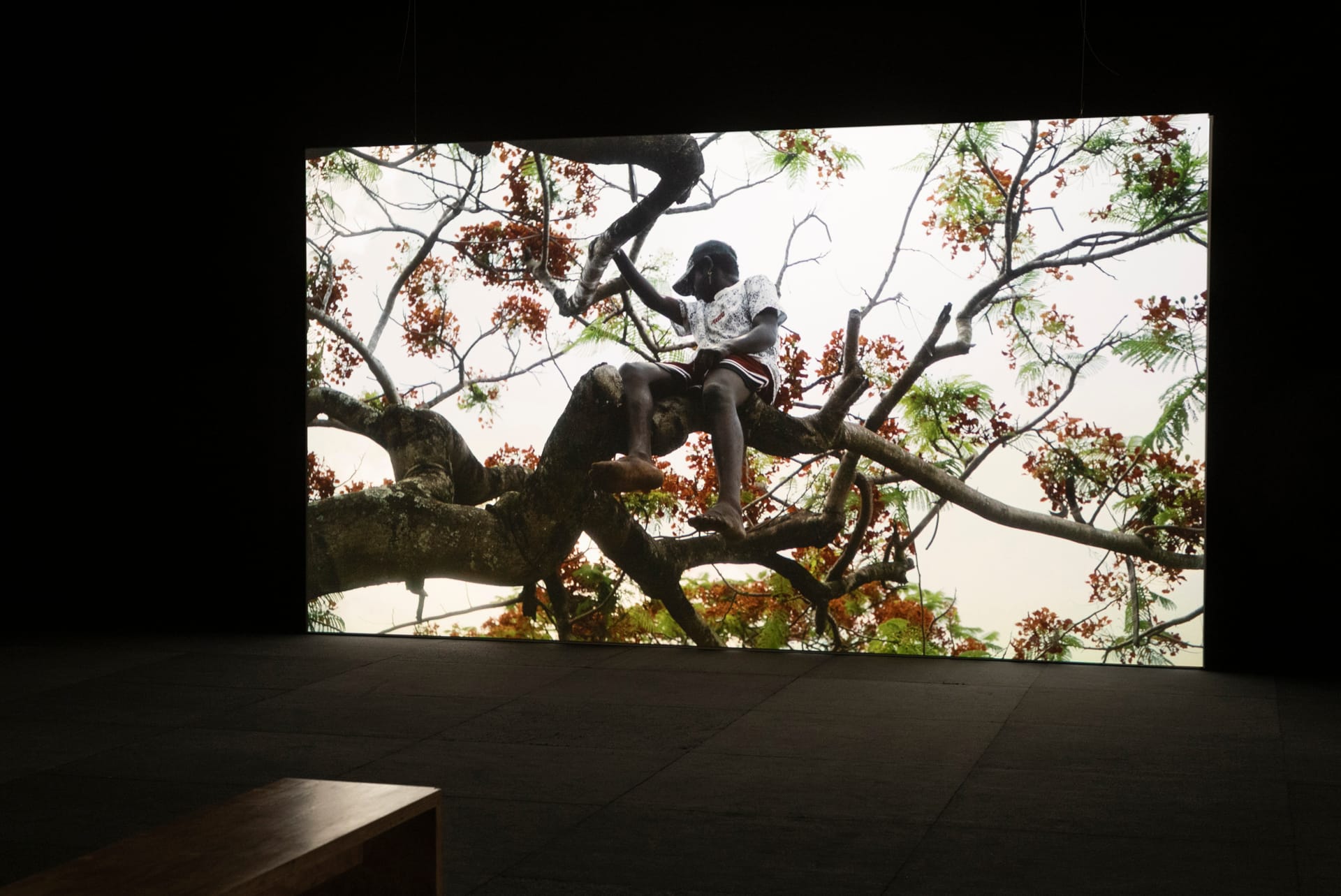
Back in the city, in a small nook of the Art Gallery of New South Wales, a video work by Sydney-based artist Kuba Dorabialski delivers perhaps the most pertinent message of Al-Qasimi’s biennale. Field Report (2026) is a cinematic narrative that follows a young female Polish writer arriving in Sarajevo to research a novel set during the Bosnian War of the 1990s. As she meets and interviews those who lived through the conflict, she faces objections to her creative impulse and its impact. For the survivors, their trauma is not artistic fodder and, as one interviewee notes, “Your story can’t help anyone. And it will not stop other crimes.” The work crystallizes a central question around the consent of memory, asking at what point storytelling becomes an extractive, and perhaps impotent, act.
In the weeks leading up to the biennale’s vernissage, the organization, Al-Qasimi, and several artists were besieged by sections of the Australian press over assumptions of the curatorial framework and the personal positions of participating artists. The exhibition opened amid a climate of fractious expectation. By the final evening of the vernissage, an American DJ—neither an exhibiting artist nor a member of the curatorial team—made a series of unexpected and discriminatory political remarks that have since tornadoed across national media landscape, an isolated storm eclipsing Al-Qasimi’s carefully curated exploration of memory as both resistance and release.
Returning to Dorabialski’s video, a hardened Bosnian woman, measured in the sharing of her experience, reflects, “It only takes one character to represent everybody.” The line reverberates beyond the frame, pointing to a persistent tension in contemporary society where plural voices are so often compressed into that of a single agitator. It is an act that thins nuance, erases complexity, and produces a flattening that speaks loudly, but never truthfully.
Mikala Tai is an independent writer, curator, and cultural strategist based in Sydney. A specialist in contemporary Australian and Asian art, she has collaborated with local, national, and international organizations to strengthen cultural connections between Australia and Asia.