Shows
Kanitha Tith’s “Cycle of Life” at SNA Arts Management
Kanitha Tith
Cycle of Life
SNA Arts Management, Phnom Penh
Jan 16–Mar 14, 2026
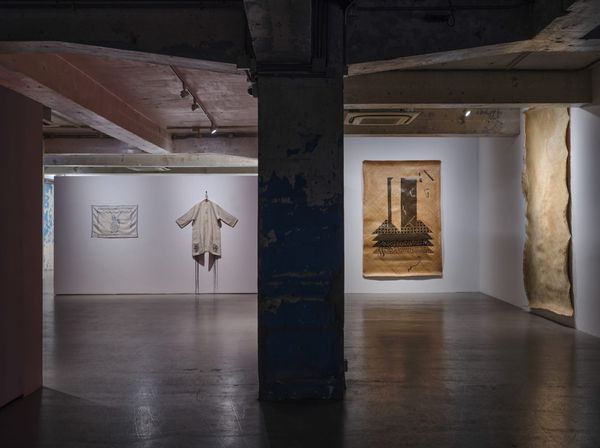
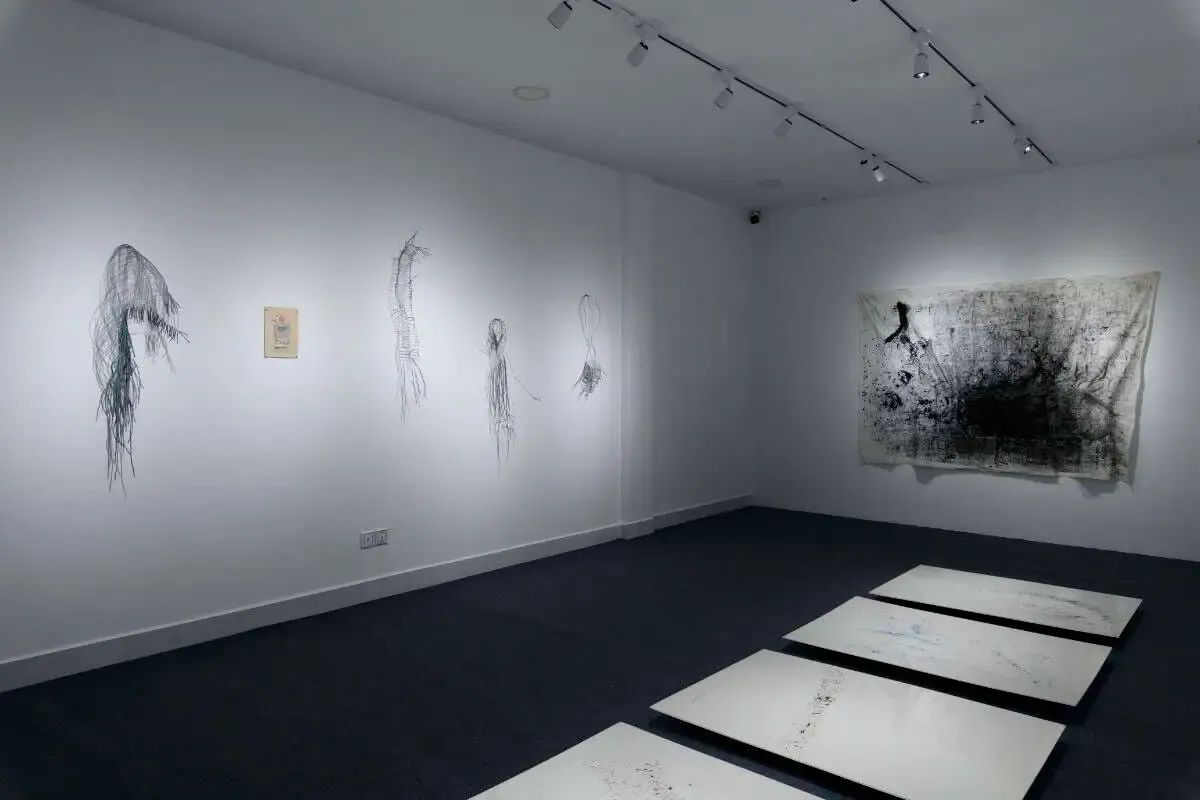
Kanitha Tith’s practice is one continuously alluviated and eroded by abstraction. “Cycle of Life,” her most recent solo exhibition in Cambodia, is a gentle reflection on her almost two-decade long exploration of abstraction and the freedom that it provides. From metal-wire sculptures woven from repetitive hand gestures to aquarelle drawings that capture vague figures emerging from distant past, from a canvas veined with ink marks of said metal materials to an oneiric video work that guides viewers through a now-demolished heritage building in Phnom Penh, Kanitha’s works resist direction. They trace the contours of her memories and dreams, her childhood and adult life, of Phnom Penh through its quotidian materials and fragmented development, of Cambodia and her people’s continued existence in the Khmer Rouge’s aftermath. Anchored in the Buddhist concept of “vat sangsa,” a perspective on life as a long, yet onward, migration, the exhibition delves into the possibilities of speaking indirectly about the layered textures of a cyclical life, where materials, memories, and shadows converge and circulate with undulating rhythms.
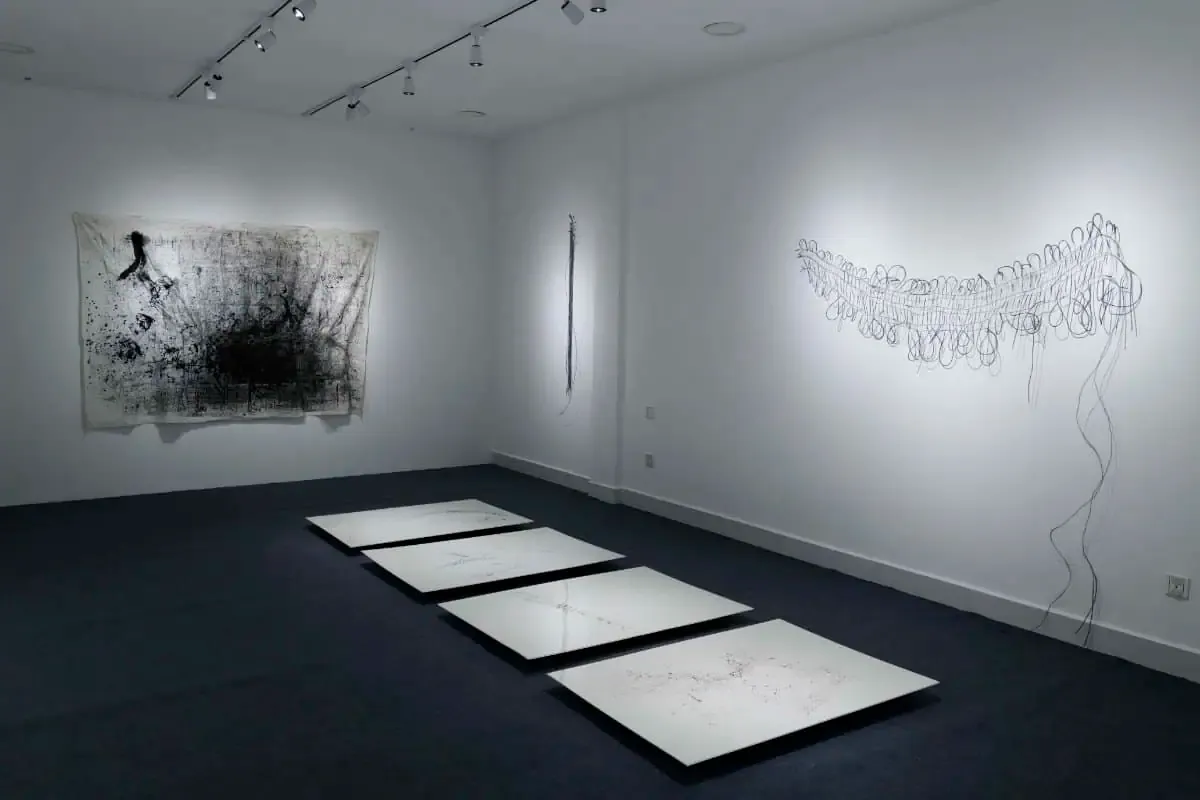
Abstraction for Kanitha is not a cerebral matter. She molds it with finger movements—a cumulative gesture, honed through years of engaging with tangible materials. An artist with a keen eye for things easily overlooked, Kanitha has made steel wire her sculptural material of choice, coiled into strings and a dime a dozen. Alternating between stretching and weaving, her hands spin out a plethora of abstract, silhouetted sculptures that conjure a wide array of associations from marine invertebrates (Untitled (02 - 03), (2025)) to everyday objects such as the ក្រមា (krama) scarf (Untitled (05) (2025)). This act of material reclamation allows Kanitha to pursue formal freedom by following her intuitive fingers as they sculpt with lines and negative space. These same metal strings become her painting tools as Kanitha turns to canvas. Over the stretched surface of Black ink (TK26J-049)(2012), she rolled and rubbed ink-coated strings, creating a sinister orb that appears ready to combust. 2012 was a restless year in Cambodia, marked by the death of King Norodom Sihanouk, escalating land rights conflict, and the fraught proceedings of the Khmer Rouge tribunal. The painting encapsulates and distills those frightful memories, translating them onto canvas through the seemingly nugatory steel wires.
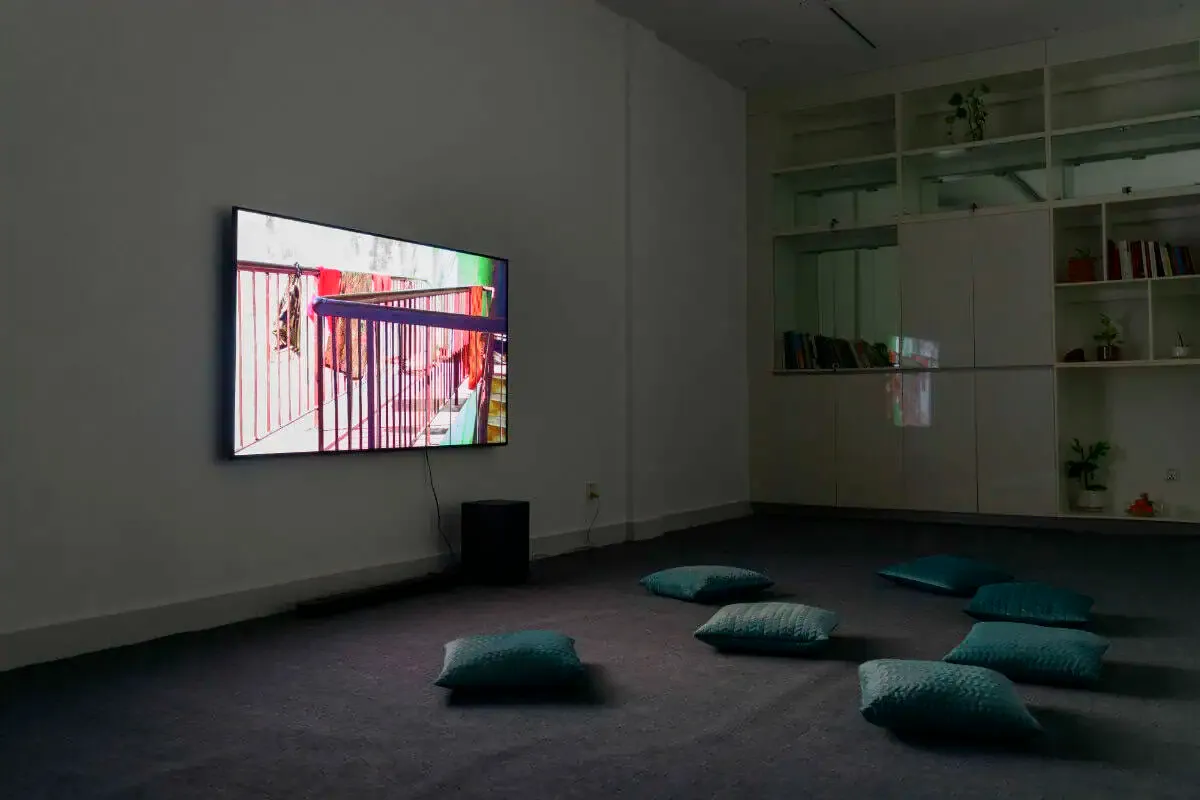
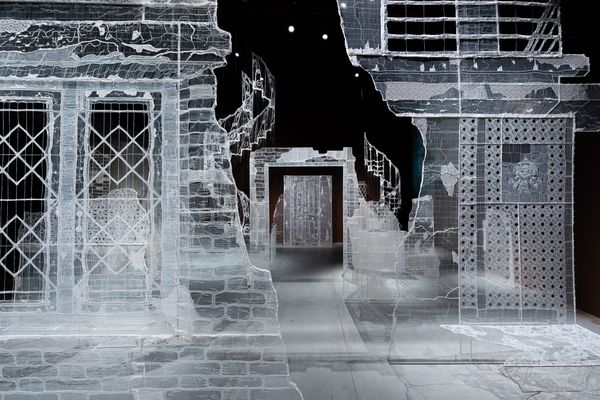
Memory and its abstract manifestations haunt the labyrinth of Kanitha’s inner world. In Phnom Penh, a city where streets are teeming with motion, sites of memories are vanishing at a dizzying rate. The video work Boding (2025) foregrounds Kanitha’s memories of moving through one such place. Known among locals as the White Building, it was a 1963 apartment complex that, following the fall of Khmer Rouge, was allocated to house artists who survived the genocide; it later became a gathering site for generations of Cambodian artists before its ultimate demolition in 2017. Kanitha has spent her formative years there, staging exhibitions and organizing events with fellow artists. In Boding, her camera strays from linear narrative. Instead, it contemplates the flickering lightbulbs in tenebrous corridors, follows a stray dog up concrete stairs, and brushes against sounds of old Khmer songs. Classical ballads such as Sin Sisamouth’s ព្យុះជីវិត (Pyous Chivet, or Storm of Life) float in the air, lulling viewers into a mnemonic realm that has since turned mute. In what was once the dark heart of a bygone building, Kanitha excavates and gathers as many images and sounds as she can, keeping its memories alive in abstract montage.
Yet, memories fade. Like waves, they crash and recede, leaving behind faint residues of time. Scattered between Kanitha’s sculptures and large-scale paintings are her watercolor drawings, more intimate, nonetheless provocative. Her subjects remain illegible, whether faceless figures conjured from Kanitha’s family photographs (Untitled (TK 26J-O15) (2023)), or purely abstract swaths merging into iridescent blooms (Untitled (TK 26J-O10) (2022)). Whether the drawings mirror real people and landscapes from her own experience, we might never know. With their physical referents sieved out, and the titles belie no clue about their origin, we are forced to construct our own narratives for these open reservoirs, thus lending them a more collective quality. Abstraction has always been Kanitha’s lens through which she processes emotions, recollections, and encounters, so as to craft a world abundant with novel interpretations and enigmatic anecdotes. In the end, when our bodies return to dust, we too will exist only in the abstract.
Hung Duong is an independent art critic based in Ho Chi Minh City.