Shows
“Human Being Human” at The Private Museum
Human Being Human: Selections from the Collection of John and Cheryl Chia
The Private Museum
Singapore
Jan 19–Apr 26, 2026
Revolution greets you at the door of The Private Museum: in La Rivoluzione Siamo Noi (1972), Joseph Beuys strides forward, man as agent of history and progress—purposeful, assured, advancing. Nearby, Lee Wen’s Anthropometry Revision-INK Series No.06 (2008) halts that momentum: inked flesh is pressed on paper, leaving a life-sized trace—figure as evidence, measurement turned critique. Where Beuys projects forward thrust, Lee insists on gravity, tethering agency to corpus.
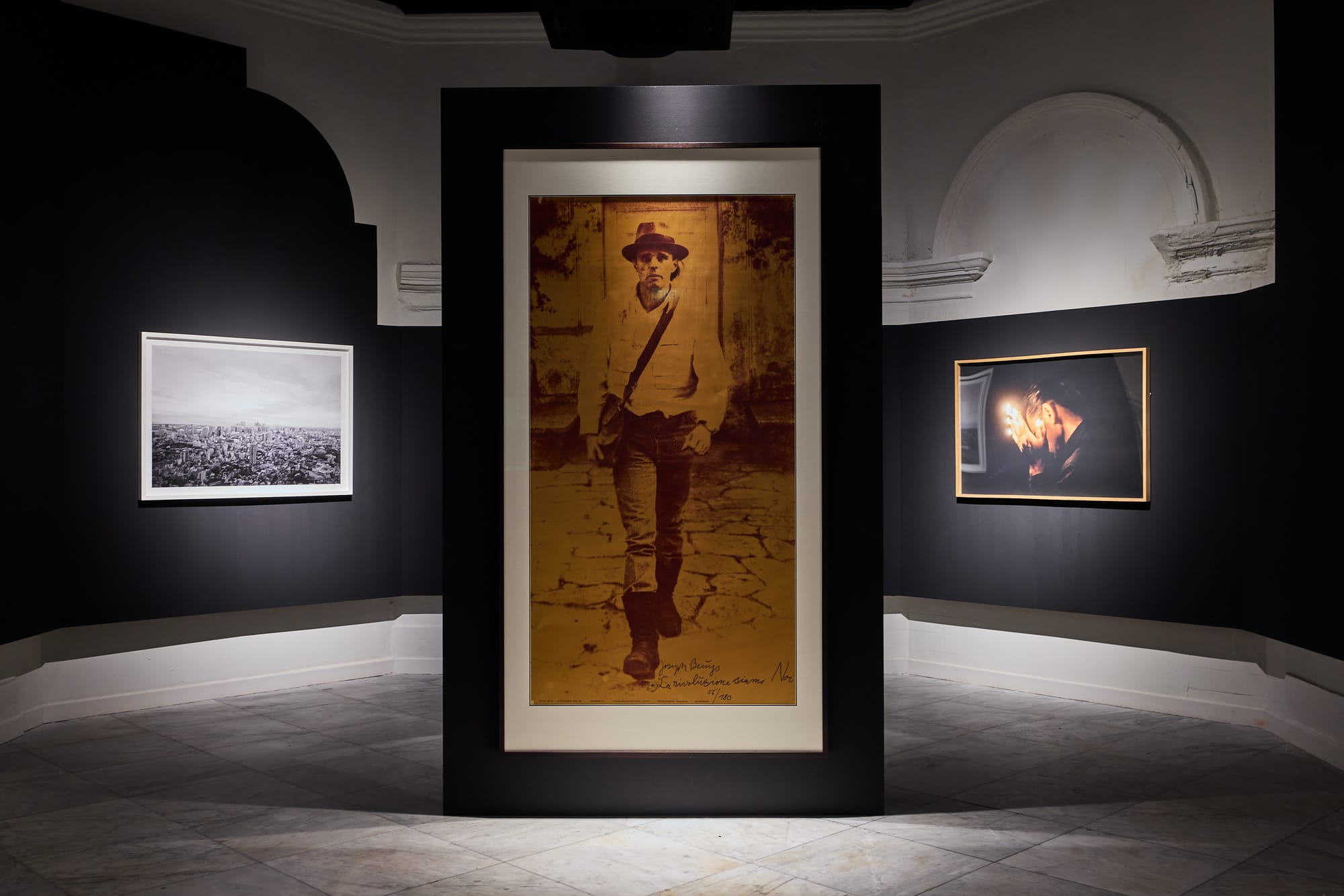
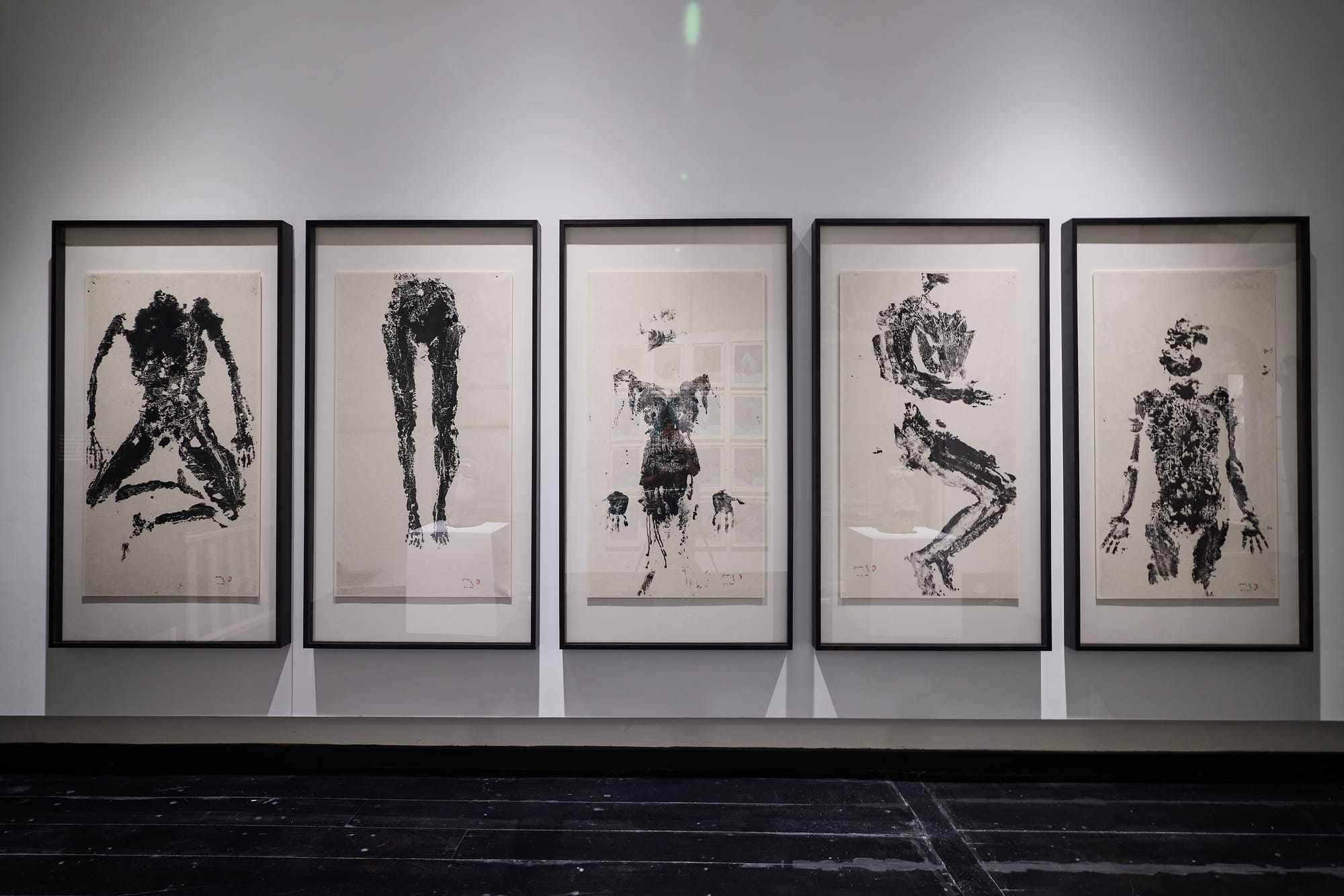
Installation views of JOSEPH BEUY’s La Rivoluzione Siamo Noi, 1972 (left); and LEE WEN’s Anthropometry Revision-INK Series, 2008 (right), at “Human Being Human: Selections from the Collection of John and Cheryl Chia,” The Private Museum, Singapore, 2026. Courtesy The Private Museum.
In “Human Being Human,” the body emerges as the exhibition’s central ground of inquiry. As Maurice Merleau-Ponty writes in Phenomenology of Perception (1945), “the body is our general medium for having a world.” Experience is forged in strain and contact, the self an ongoing process of becoming. Shaped over 25 years by doctors John and Cheryl Chia, the collection returns repeatedly to this premise. As John Chia notes in the catalog, life is “a school of suffering.” Vulnerability here is structural rather than contingent—inscribed into the flesh’s ongoing negotiation with the world.
Organized into four chapters—“Stateless,” “State,” “Statehood,” and “Rebirth”—the exhibition implies evolution only to undercut it. Room subtitles introduce further inflections as works slip across conceptual borders. Themes loop rather than build, the exhibition moving by return rather than linear development. While intellectually ambitious, this nesting of frames within frames risks diffusing the argument, leaving viewers to piece together a throughline that intermittently slips out of view.
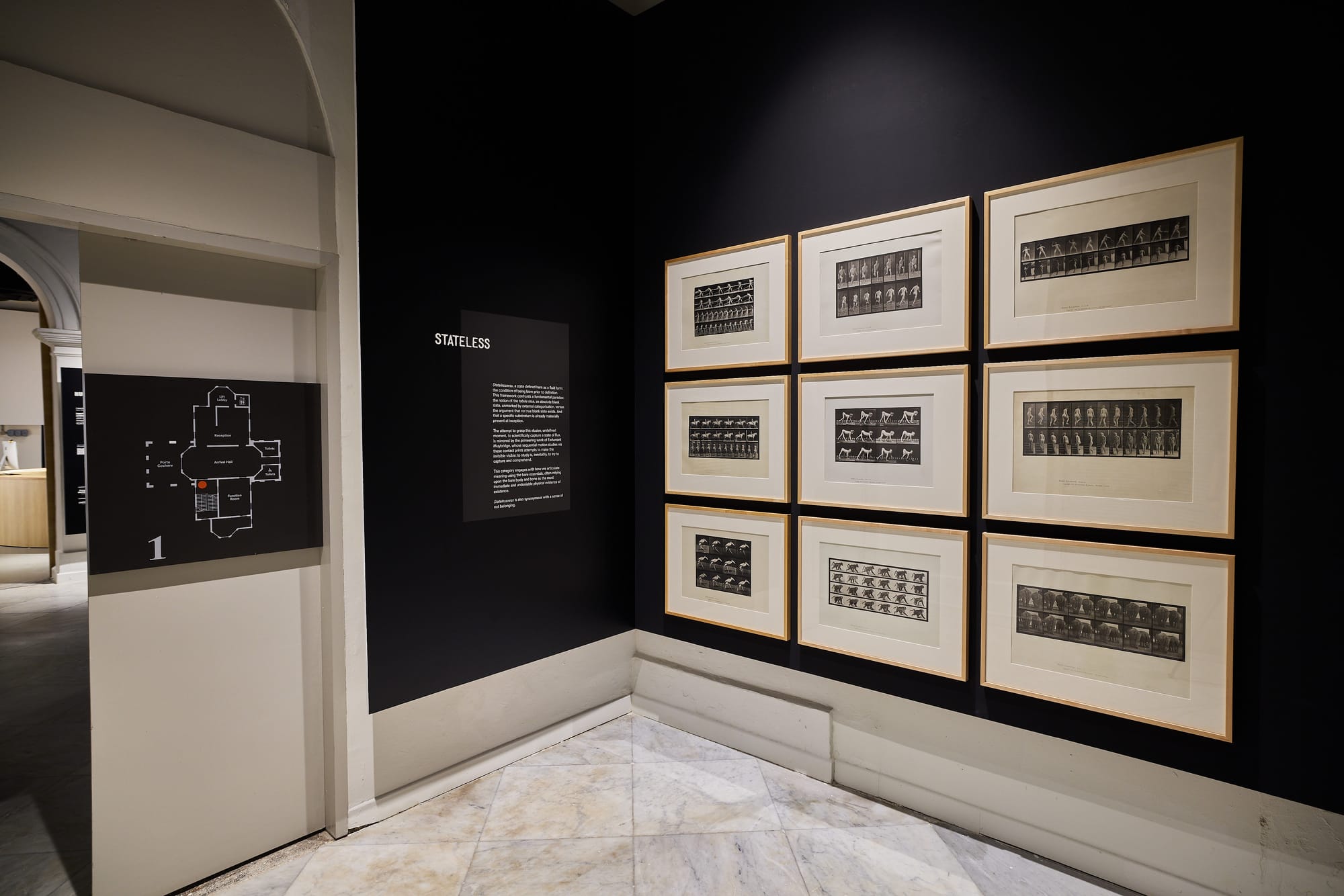
“Stateless” confronts the fantasy of the blank slate, insisting that the figure always arrives marked and resistant to neat classification. Eadweard Muybridge’s motion studies line the wall in disciplined grids of humans and animals, staging a system of scientific capture that promises clarity. Yet a sequence of a child with polio unsettles this taxonomy: crawling on hands and feet, the figure’s postures echo the quadrupeds nearby, collapsing the grid’s categories and exposing their limits.
If “Stateless” hovers in indeterminacy, “State” marks the onset of conditioning—when the self comes to be defined. Sherman Ong’s Hanoi Haiku (2005) stages this shift as the camera lingers in private interiors, making everyday gestures newly visible; to be seen is already to enter structure. Next door, in Sophia Gallery, John Clang’s Sans the Face (2019–2023) extends this dynamic into the social sphere: urban strangers cover their faces with oversized Post-it notes, a playful typology of anonymity in which hiding becomes another form of legibility.
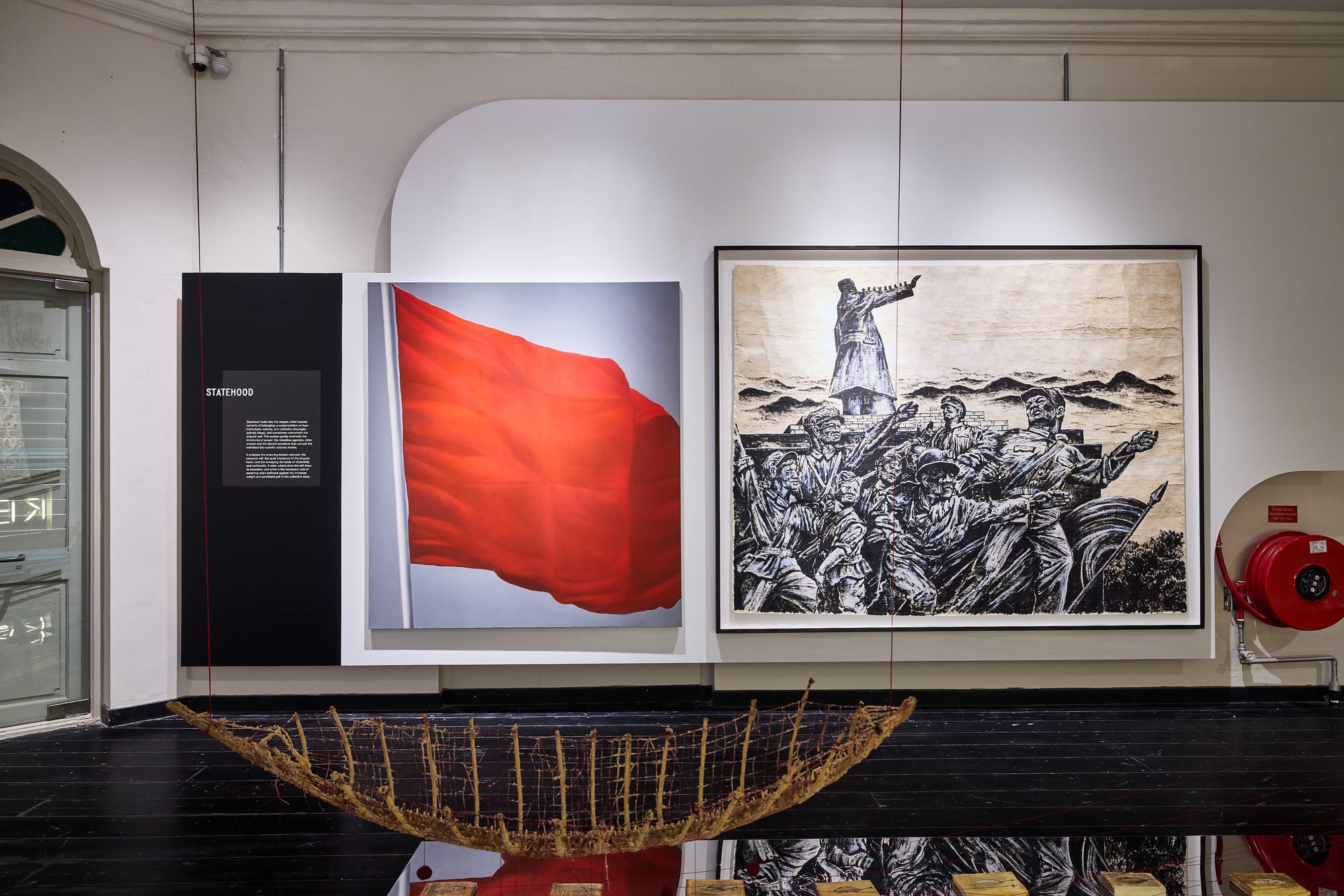
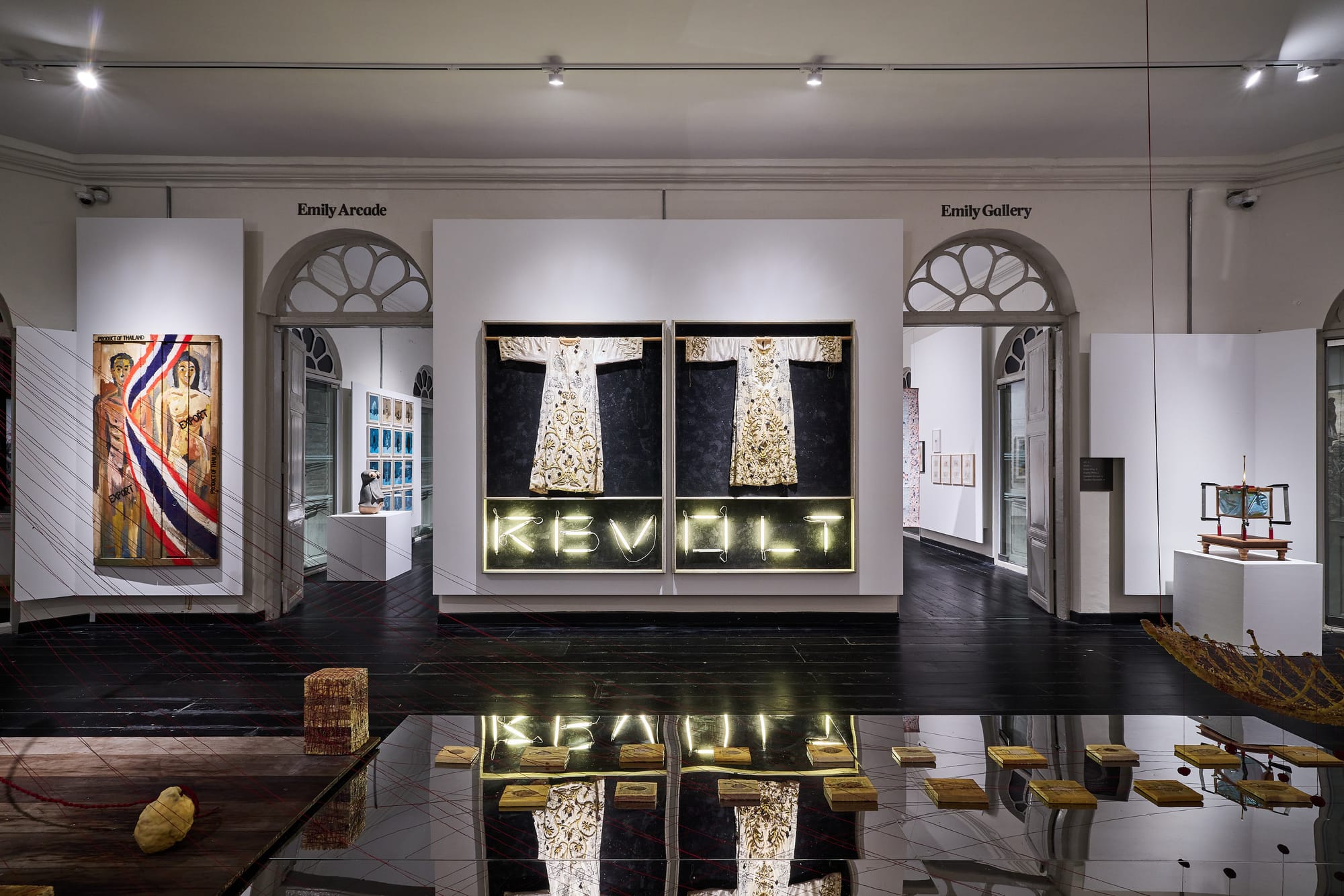
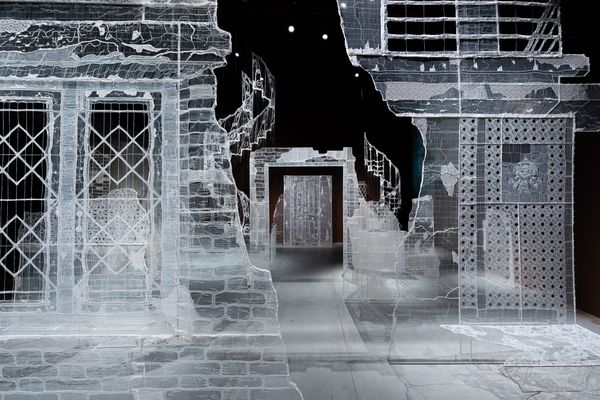
Installation views of “Statehood,” chapter three of “Human Being Human: Selections from the Collection of John and Cheryl Chia” at The Private Museum, Singapore, 2026. Courtesy The Private Museum.
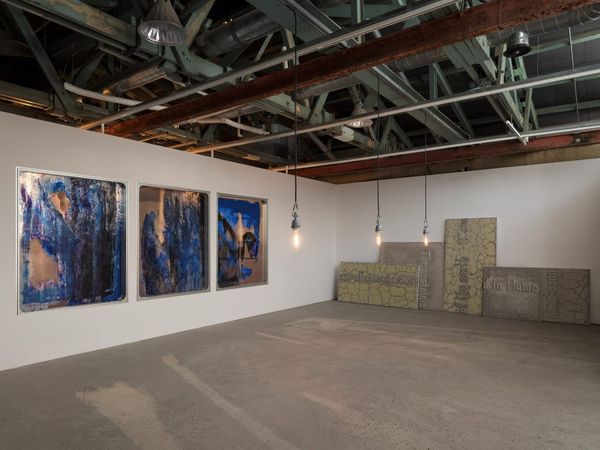
In the Osborne House, the exhibition turns to “Statehood,” where institutions and collective ideologies bear down upon the individual. Sun Xun’s Mythological Time (2016) gathers crowds beneath a towering Mao statue, restaging Cultural Revolution iconography—the heroic worker, the forward-pointing arm, the exalted leader—into a monumental tableau. Green Zeng’s 1954 and Left Right (both 2011) relocate ideology to the classroom, where national identity is rehearsed through discipline. Headless school uniforms, marked by names, dates, and commands, stage the body as both absent and inscribed within a collective order. Across the section, flags, books, and uniforms render the subject legible within a shared code—ideology is not simply represented, but enacted through repetition and gesture.
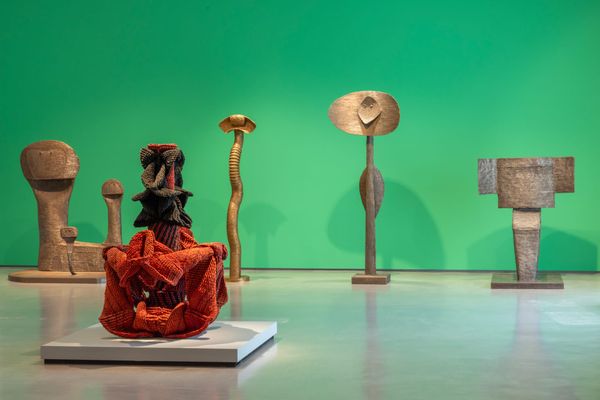
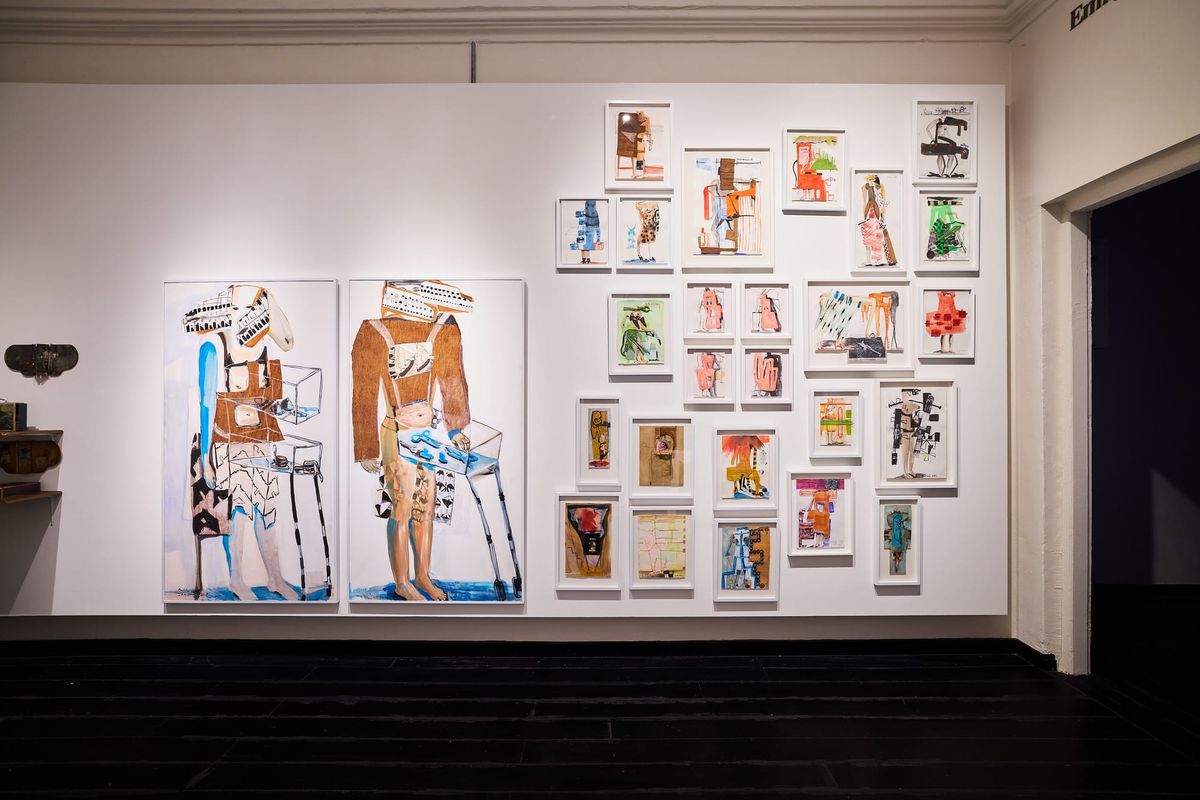
The Emily Gallery shifts the exhibition into a more intimate register, where conditioning is internalized and lived. Mella Jaarsma’s painted figures inhabit hybrid barkcloth garments and prosthetic supports, poised between care and confinement, rendering conditioning as something worn and worked through the body. Among the quietest and most affecting works on view are Lai Yu Tong’s Left Hand Drawings (2021)—small, spare studies made after he lost dexterity in his dominant hand, where the body is seen relearning its own gestures. Rina Banerjee’s drawings depict hybrid human forms alongside long, incantatory titles, where identity and migration emerge less as fixed categories than as ongoing processes of negotiation.
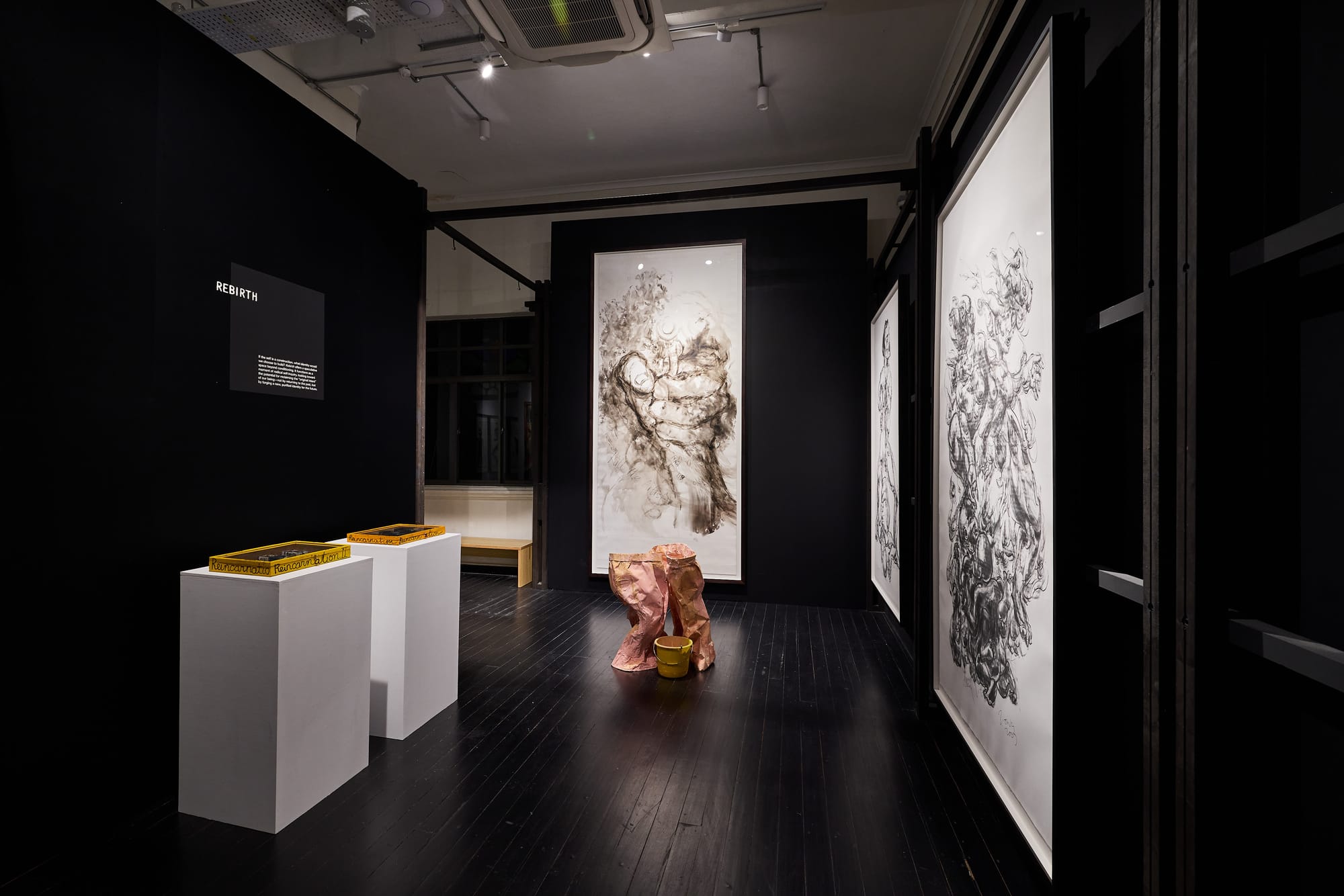
The show ends with “Rebirth,” tucked within the Caroline Verandah. Rather than closure, the section proposes rupture without resolution, its logic resembling samsara—cycle rather than release. Tang Da Wu’s ink drawing Kill All Artists (n.d.), showing a hand gripping a gun, imagines the destruction of the self as a condition for renewal. As co-curator Aaron Teo notes, citing Tang, artistic creation begins with the artist arriving with an “empty glass”— setting aside ego and accumulated scripts so that something new can emerge. Installed beside it, In Broad Daylight, I Do (2024), with trousers formed from local soil, returns the gesture to the ground. Made through a performance in which Tang repeatedly tried to fit himself into oversized paper clothing—tearing them, fumbling, trying again—the work renders renewal as process: awkward, iterative, and materially bound to the earth.
Tang’s “empty glass” proposes a necessary clearing, but as the exhibition contends, nothing ever starts from zero. Muybridge’s photographs return as a reminder that every movement carries traces of habit, strain, and adaptation. If, as Merleau-Ponty suggests, we meet the world through our bodies, then this clearing is less erasure or reset than a way of working with what is already there. Across these works, “rebirth” reads not as a clean break but as continuity: a slow, ongoing negotiation with what persists. To be human here is not to begin again, but to keep going from what has already been lived.
Yvonne Wang is an art writer and the Singapore desk editor for ArtAsiaPacific.