Shows
To Fall, and to Mourn: Isaac Chong Wai’s “An Intimate Surrender” at Tai Kwun
Isaac Chong Wai
An Intimate Surrender
Tai Kwun JC Contemporary, Hong Kong
Jul 10–Aug 9, 2026
On the third floor of Tai Kwun, a light fixture awaits at the top of the stairway, its harsh beam briefly dazing visitors and disengaging them from their duty of observing, until a man enters the scene and begins to dance. His movements are graceful yet vigorous as he spins, falls, and rises again and again, a ritualistic continuity that sets the tone for Isaac Chong Wai’s “An Intimate Surrender.”
Commissioned by Tai Kwun and marking his solo live art debut, the exhibition constitutes a homecoming for the Hong Kong artist who has lived in Germany since 2013. It draws extensively on Lilian Lee’s classic novel Farewell My Concubine (1985), which traces the complicated relationship between two Peking opera actors, Cheng Dieyi and Duan Xiaolou, exploring homoeroticism and gender fluidity against the epoch-spanning backdrop of political turmoil in 20th-century China. Dieyi and Xiaolou achieve stardom through their signature performance of the ill-fated romance between Xiang Yu, a Chinese warlord, and his consort Yu. The story was later adapted into Chen Kaige’s award-winning film starring LGBTQ+ icon Leslie Cheung as Dieyi, whose obsessive attachment to the female Consort Yu, along with his unrequited devotion to his stage partner, ends with him taking his life—echoing Consort Yu’s suicide and, in retrospect, anticipating Cheung’s own tragic death offscreen.
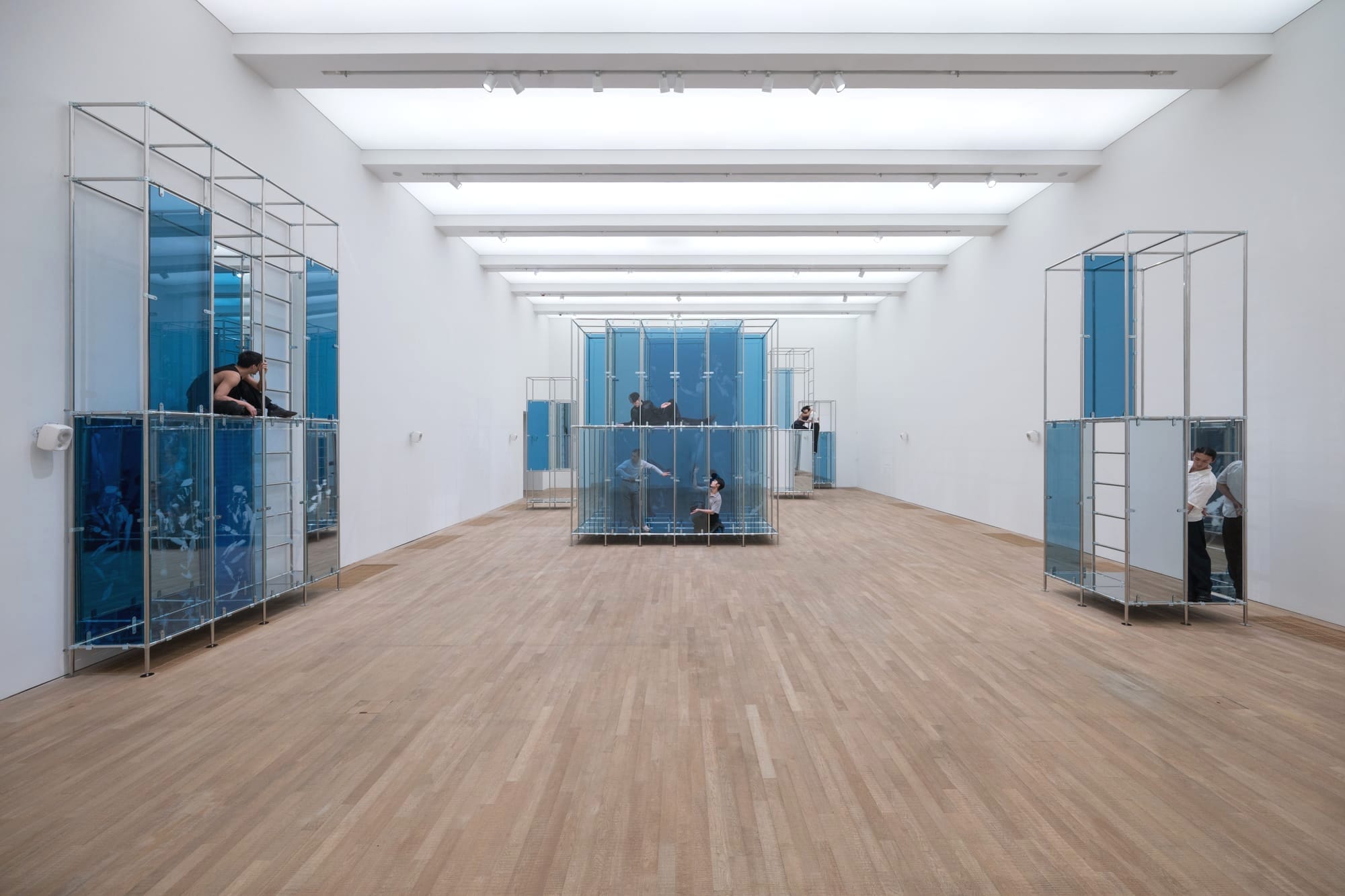
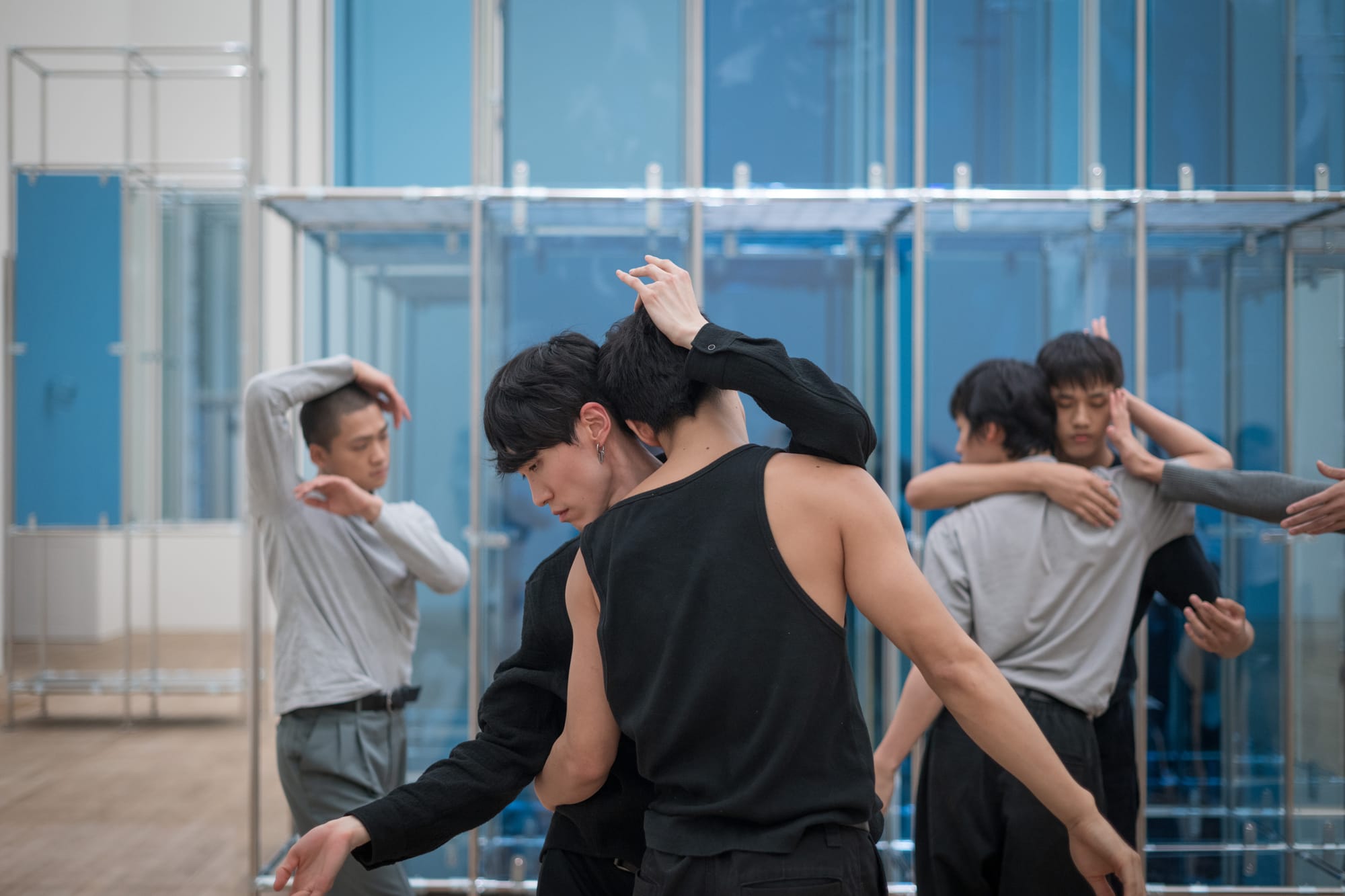
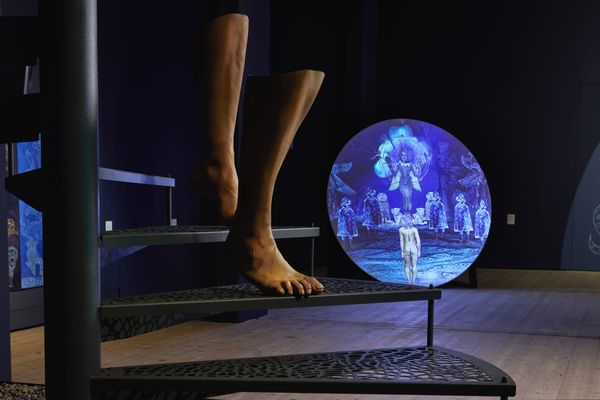
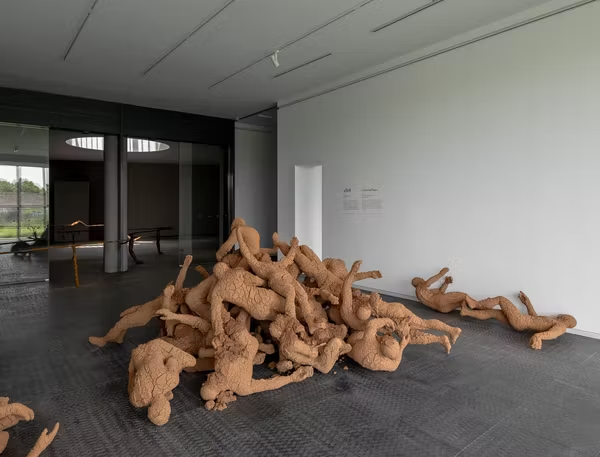
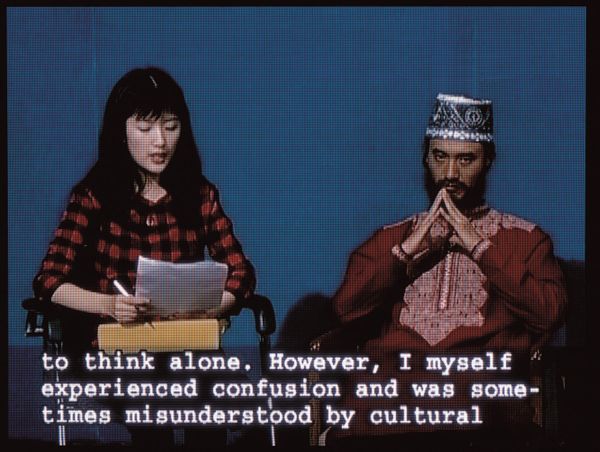
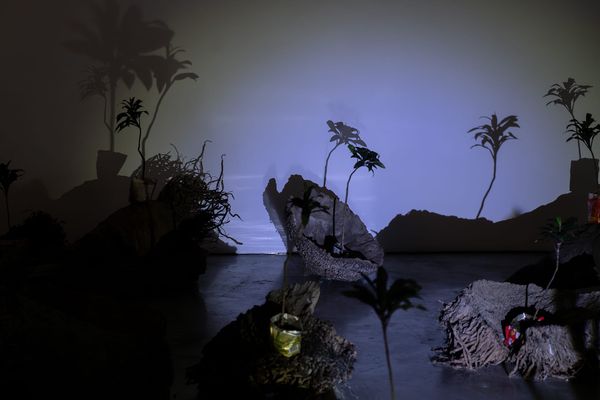
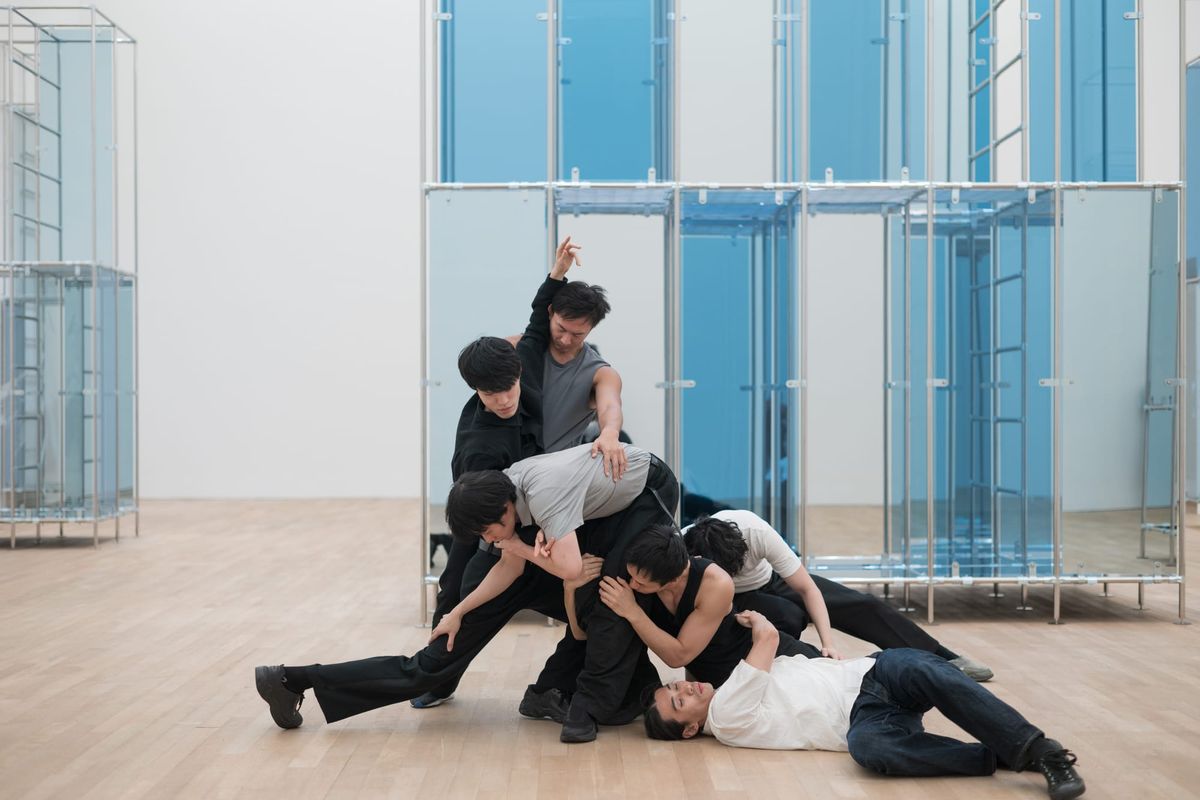
Installation views of ISAAC CHONG WAI’s “An Intimate Surrender,” live performance at Tai Kwun JC Contemporary, Hong Kong, 2026. Photo by Tai Ngai Lung. Courtesy Tai Kwun.
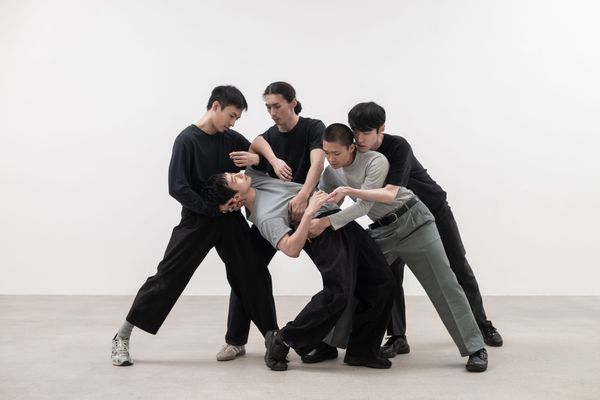
In “An Intimate Surrender,” Chong extends this troubled narrative into a choreographic intervention in the main gallery, where towering steel scaffolding from his Touched series (2026), featuring mirrors and blue-tinted glass, evokes the skeletal architectonics of a theater or film set. An all-male troupe, occasionally joined by the artist himself, moves to Japanese musician Nobutaka Shomura’s percussive, mechanical score. Clad in grayscale attire, the performers forgo the opulence of Peking opera costume in favor of understated theatricality. With balletic precision, each dancer twists, pivots, and sinks to the ground at varying intervals, only to reverse and rewind the sequence in a continuous loop. These recurring gestures of descent and recovery emulate Dieyi’s perpetual renditions of Consort Yu’s self-destruction and, ultimately, the protagonist’s own demise, presenting a kinetic composition of masculine sexuality, vulnerability, and grief.
Chong’s oeuvre has long interrogated what it means to fall, transmuting the jarring corporeal sensation into a communal practice of care, as demonstrated in Falling Reversely (2021/24). At Tai Kwun, this inquiry is sharpened through the conflation of involuntary collapse and conscious surrender. In Chinese, the term for “surrender” combines 投 (tóu, “to cast oneself in”) and 降, a character read both as jiàng (“to descend”) and xiáng (“to submit”). By foregrounding this duality, in which physical descent and capitulation converge in one sign, Chong emphasizes the liberating potential of submission: when the body is bound by social constructs that disavow innate subjectivity, resistance comes not through abiding, but through yielding to the gravitational pull of transgression.
As the performance unfolds, the dancers disperse across the metal frameworks. Some press themselves against ghostly human contours etched into the glass; others drift through the open platforms, fingers poised in the stylized “orchid hand.” They eventually reconvene in small groups in which one body is constantly on the verge of tumbling, only to be caught, propped up, or gently lowered by others. It is an achingly tender sight: historically, even the subtlest expressions of queer affection have met disciplinary violence. Here, they surface through the stilted yet strangely flexible logic of dramaturgy, where cross-gendered personas are allowed to emerge beyond societal disapproval.
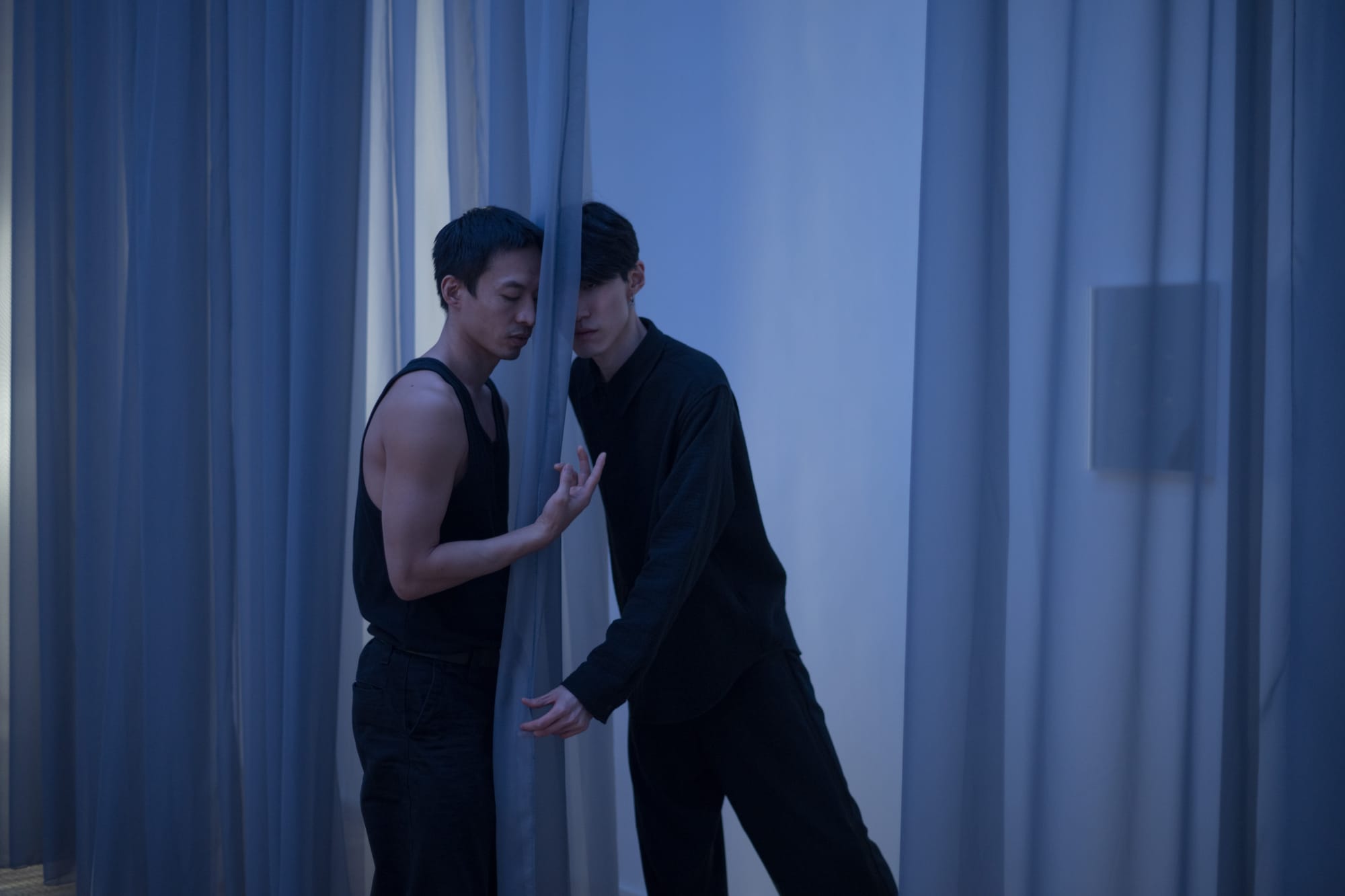
If non-normative identities can inhabit such artificial structures, what lies beneath the façade of performance? In the adjacent gallery, Chong turns to a space of rehearsal, where sheer silk curtains and dusky blue lighting conjure the hush of a dressing room. A pair of dancers roams through a melancholic pas de deux as deconstructed hairpins, phoenix coronets, and pearls gleam in mirrors and vitrines, casting selfhood as a veneer that is endlessly made and unmade, further exposing an inventory of unresolved fantasies and longings. Chong does not reckon with performativity so much as succumb to it, reconciling our inner and outer worlds within a liminal threshold where marginalized desires are affectively realized.
Annette Meier is an assistant editor at ArtAsiaPacific.