Shows
The Power of 70 Decibels: Lawrence Abu Hamdan’s “Repercussions”
Lawrence Abu Hamdan: Repercussions
The Barbican
London
Sep 23–26, 2026
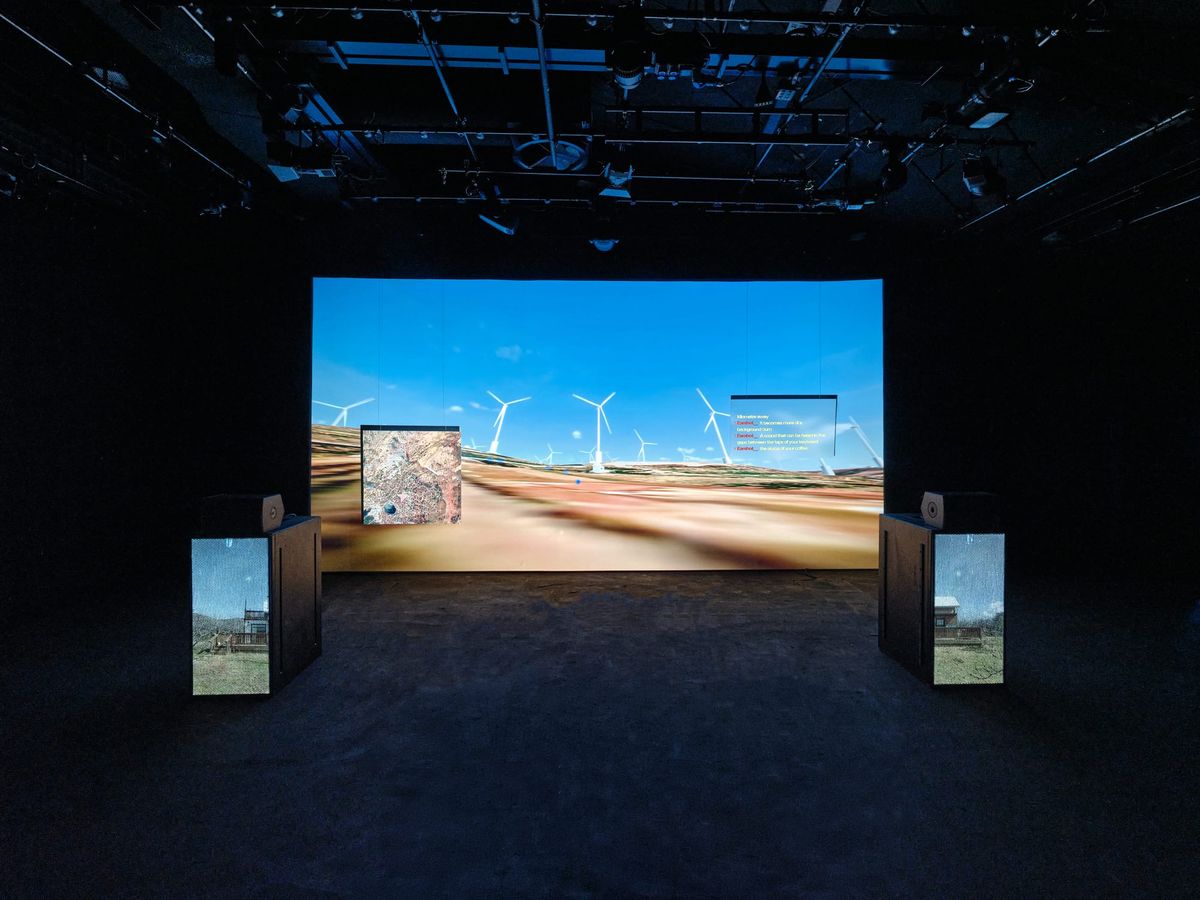
What makes a good listener when tuning into evanescent events unfolding thousands of miles away? And what is at stake? These were the questions I found myself returning to throughout Lawrence Abu Hamdan’s video installation Zifzafa: Livestream Audio Essay (2025) and live performance-lecture Air Pressure (2022), both part of an event series the artist produced at the Barbican exploring aural injustices. A simulation of the Israeli-occupied Syrian Golan Heights with narration unfolding in a chat box, Zifzafa investigates the potentially near-deafening fallout surrounding the construction of a wind farm on the Golan by Israeli company Energix. As the virtual flyby takes viewers across the plateau, audio clips of Jawlani village life and animal activity double as an archive of the endangered soundscape. Air Pressure shifted the focus to Lebanon. Backed by social media footage, Abu Hamdan details residents’ experiences of emblematic incidents during the country’s rapid unraveling in 2020–21, and how the din of Israeli Defense Forces (IDF) aircraft trespassing Lebanese airspace became the score that structured daily life. Serving up earfuls of careful research and trenchant reflections, the works are demanding on several fronts.
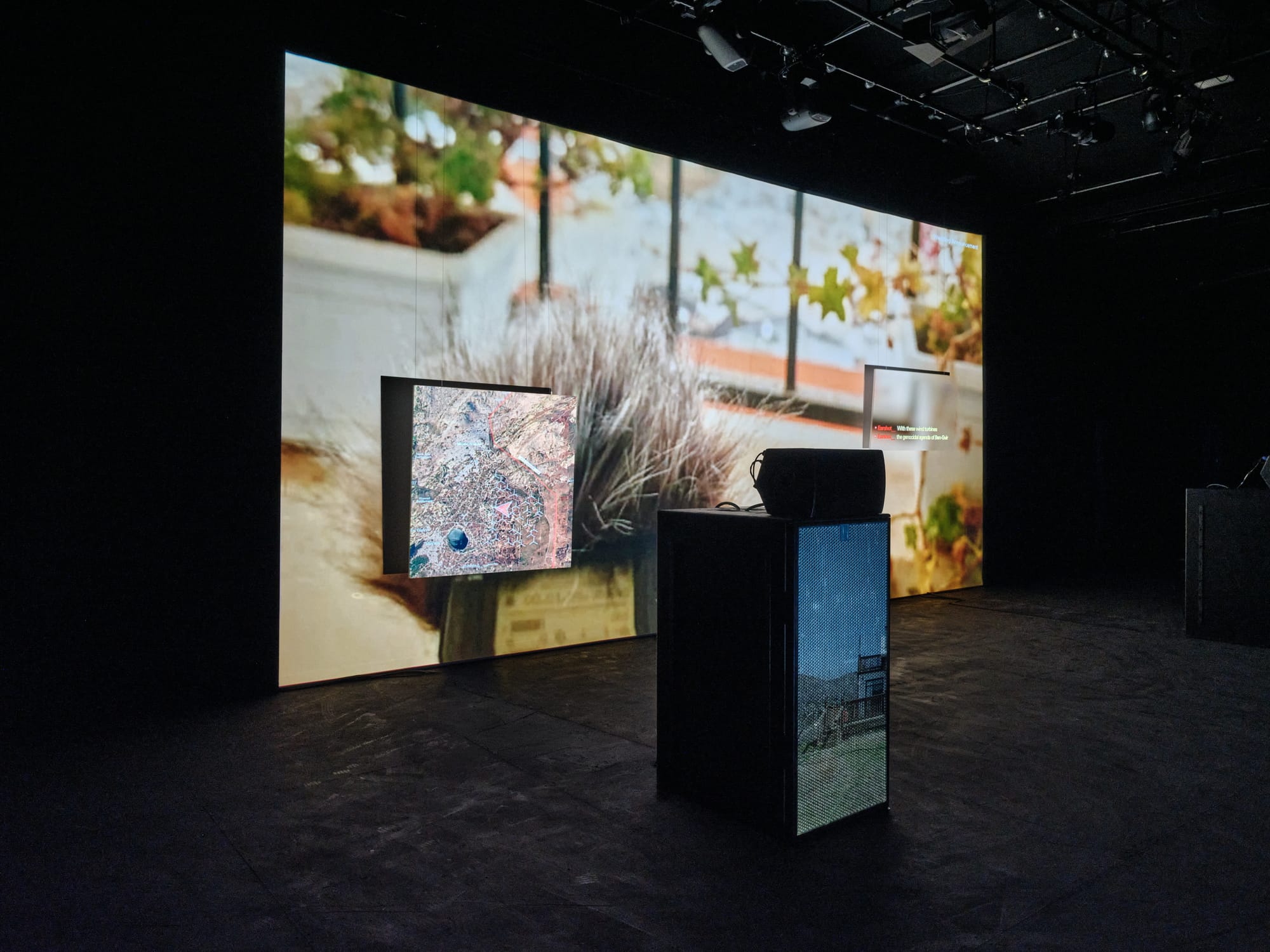
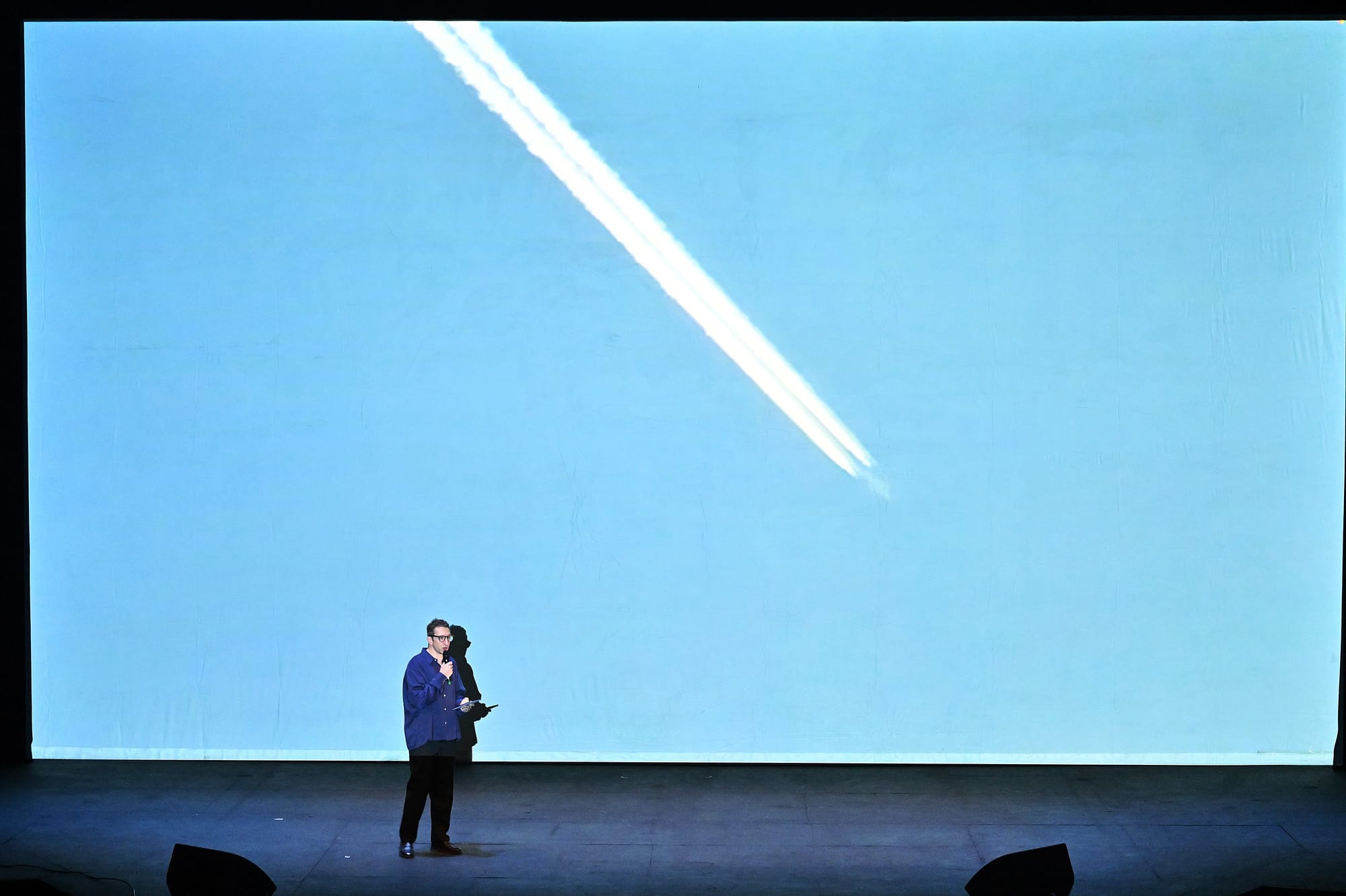
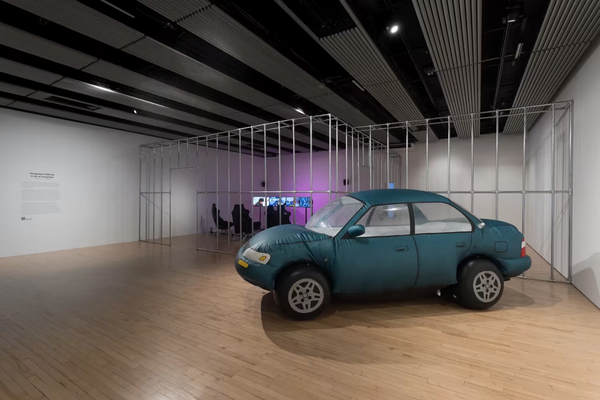
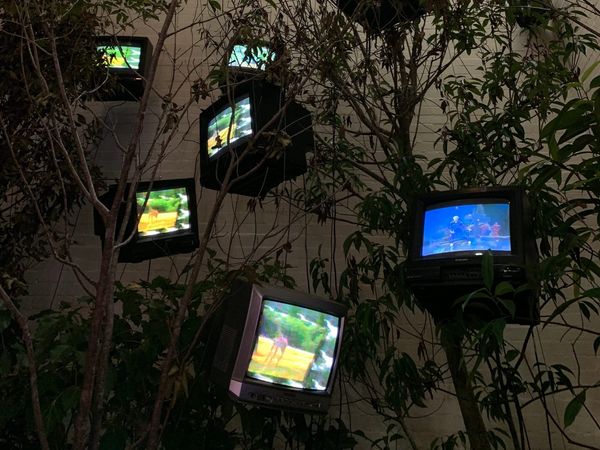
Installation view of LAWRENCE ABU HAMDAN’s Zifzafa: A Livestream Audio Essay, 2025, live performance and video installation with surround sound and color. Photo by Thomas Adank. Courtesy and copyright the artist and the Barbican (left); and performance still of LAWRENCE ABU HAMDAN’s Air Pressure, 2022, live performance and video installation with surround sound and color. Photo by Mark Allan. Courtesy and copyright the artist and the Barbican (right).
Among the most transformative realizations that could have wormed into listeners’ ears is that silence is never neutral. For most, the firmament is quiet because the price for that peace is being borne elsewhere. In Air Pressure, the artist outlines how 20 countries have purchased and helped fund arms manufacturer Lockheed Martin’s F-35 fighter jets, with all parties bound to the American company for software updates and maintenance. The exception is Israel, which operates its own software, because it has the most real-world experience deploying the jets and can thus provide valuable feedback. Without making a noise, the 19 other countries benefit. Toward the end of his monologue, Abu Hamdan reflects on how the Lebanese skies fell quiet in May 2021 as the IDF began airstrikes on the Gaza Strip during an 11-day offensive. “In silence, we hear what they are most capable of,” he says. Similarly revealing how the absence of sound is charged, the narrator in Zifzafa recounts how Jawlani activists were unexpectedly joined by the Israeli environmentalist group Keepers of the Golan in their protest against the wind farm. For the Keepers, the goal was to preserve the tranquility of the pristine land. For the Jawlani, it was to protect their community’s ties to their home and to restore the lively raucousness that was forcibly muted when an estimated 140,000 residents were displaced following the start of Israeli occupation in 1967.
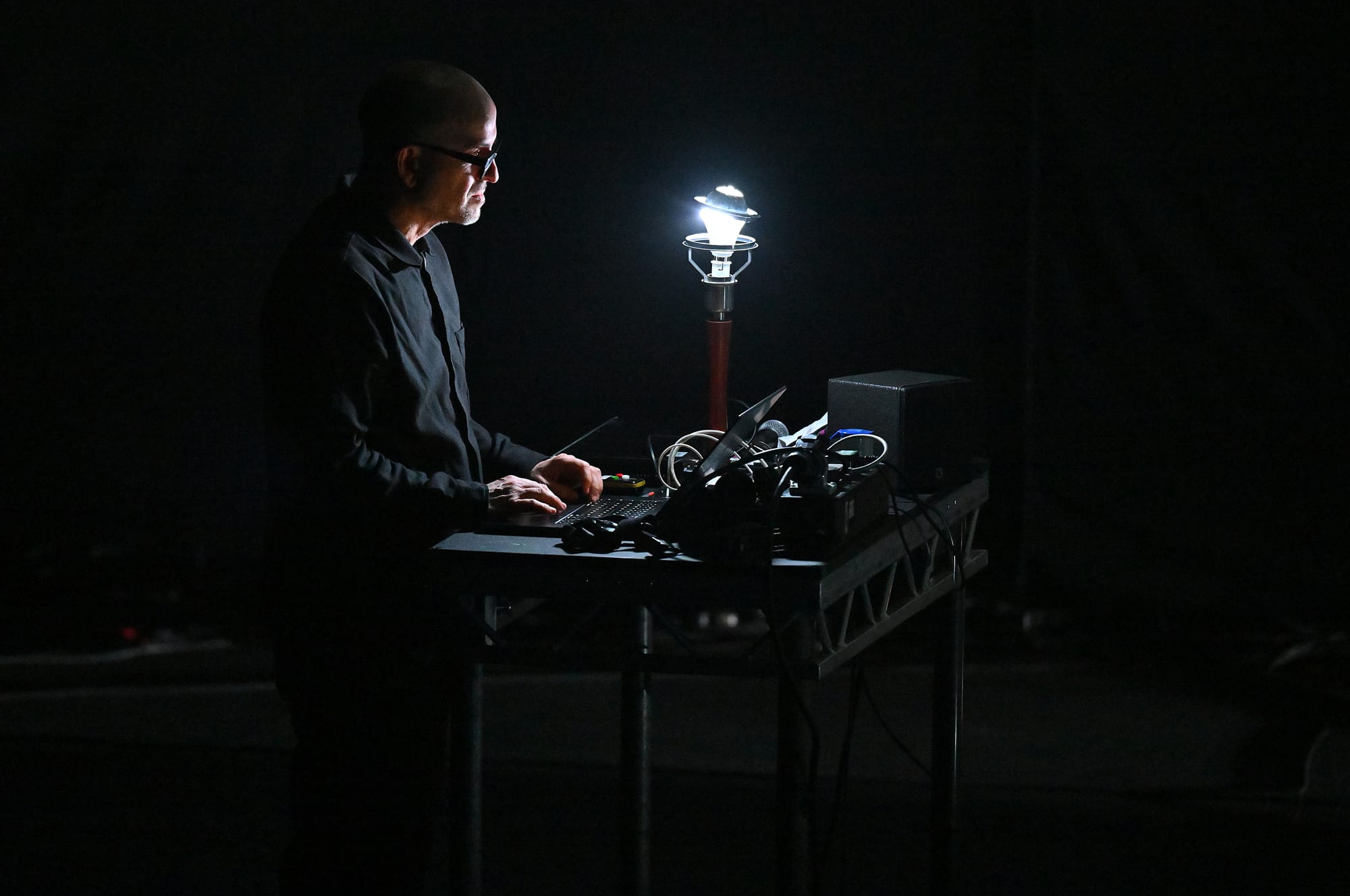
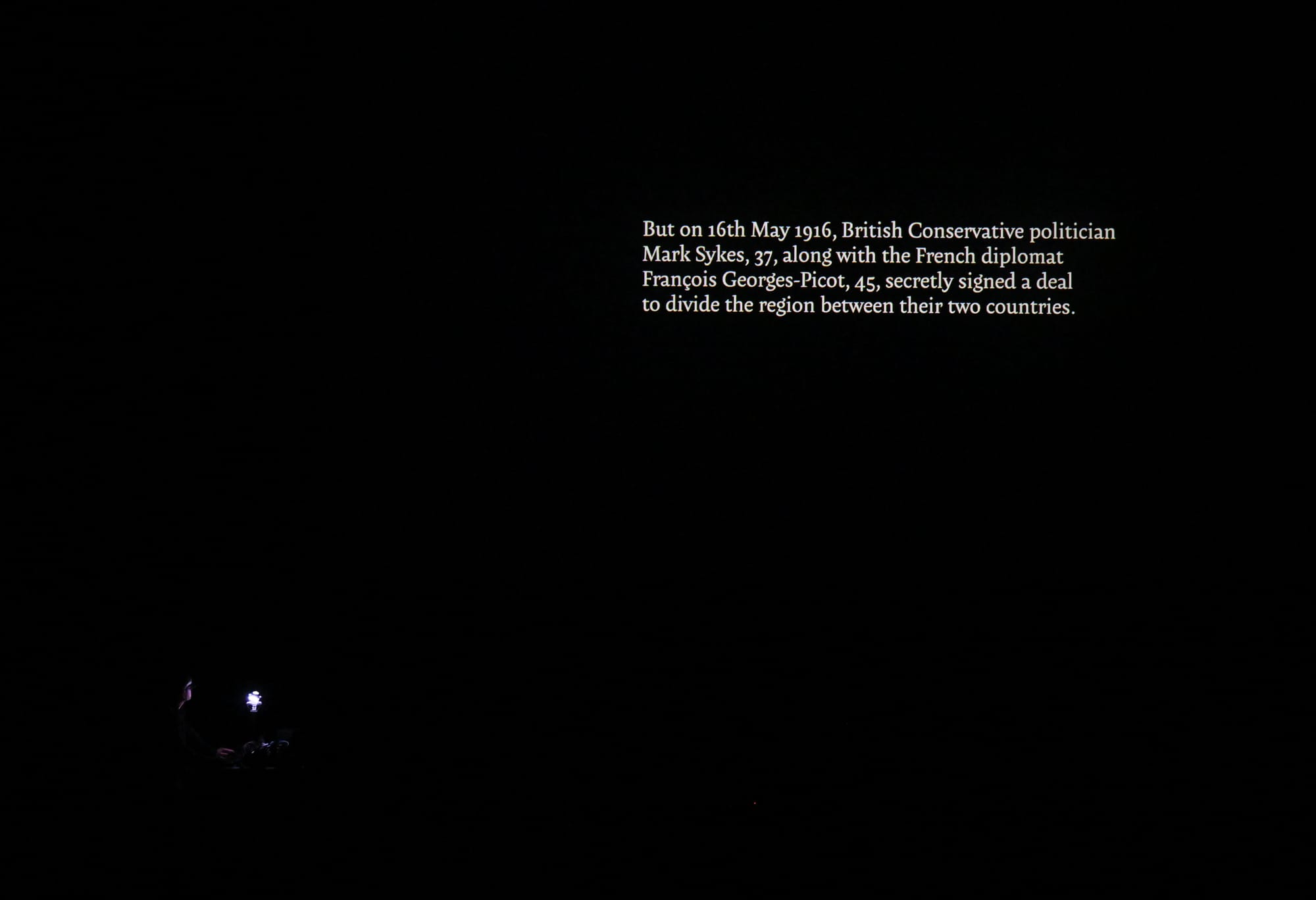
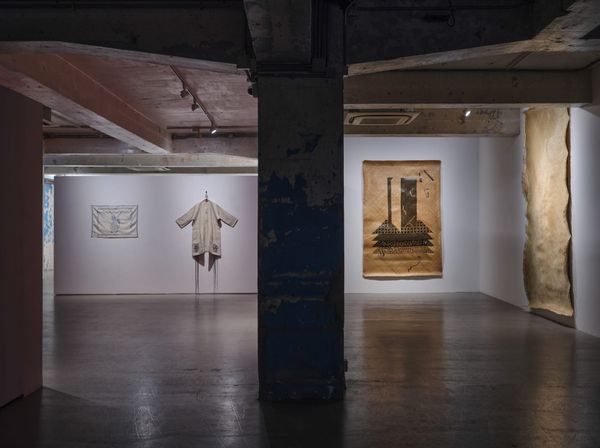
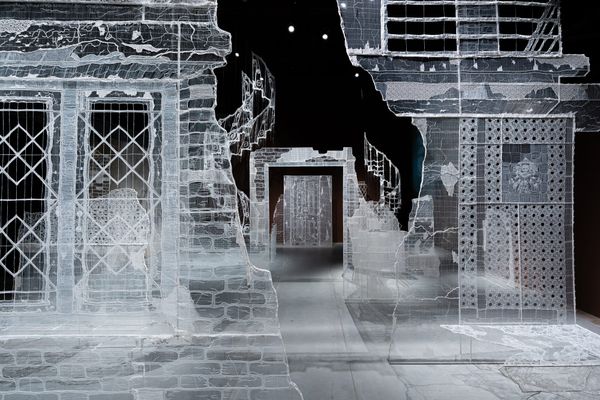
Performance stills of RANA EID and MATTHEW HERBERT’s Sykes-Picot, 2026, live performance and video installation with surround sound. Photo by Mark Allan. Courtesy and copyright the artist and the Barbican.
Directly questioning who underwrites the relative serenity of British life, Rana Eid and Matthew Herbert followed Abu Hamdan’s Air Pressure with their commissioned performance Sykes-Picot (2026). The piece traces the specters of Mark Sykes and François Georges-Picot—former diplomats of Great Britain and France, respectively—whose 1916 agreement carved up the Ottoman Empire between their two countries and Russia, guaranteeing control over oil extraction and exports while seeding conflicts that endure in West Asia today. Eid and Herbert had initially intended to use audio clips from Sykes and Georges-Picot’s lifetimes, but the archivist whom they were working with was killed by the IDF in Lebanon this April. The archive was also destroyed. Pivoting, they recorded the places where Sykes and Georges-Picot lived and worked. Recalling a “peaceful nature sounds” playlist, the trickling of raindrops through a Lebanese cedar on the vast Sledmere Estate—the Sykes family seat in Yorkshire—brings the family’s affluence into sharp contrast with the archivist’s cruel fate: a sickening filler for the lacuna.
As the performances and videos progressed, it became clear that the audience’s pleasure is less of a priority than their discomfort. Air Pressure includes a strategically extended pause that forces listeners to halt their breath. Is it over? Do we applaud? Meanwhile, the backing videos are too shaky and repetitive, the sound at times too loud, Abu Hamdan’s voice too muffled. In Zifzafa, the virtual spin across the Golan is too disorienting, the drone of the wind turbines too grating. It is tempting to take what Abu Hamdan’s practice imparts about the aural mechanisms of warfare and walk away with an affirmed sense of one’s moral position. And yet the work seems to invite audiences to sit with unease instead. What channels have been dialed up or down? What might be just out of earshot?
Chloe Chu is an art writer and editor based in London.