Shows
A Low Hum: The 16th Gwangju Biennale
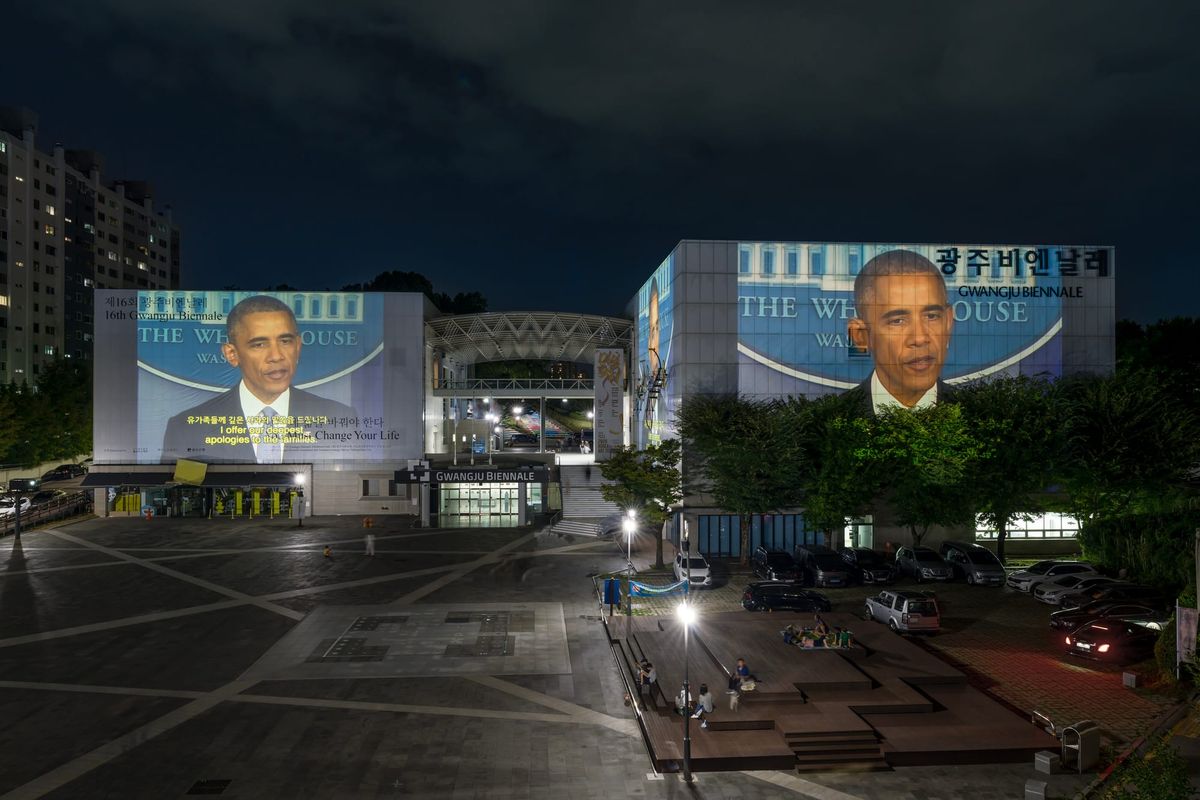
Each evening, the façade of the Gwangju Biennale Exhibition Hall lights up with James T. Hong’s Apologies (2012– ), an ever-expanding anthology of government officials and heads of state offering contrition. It is, in Hong’s words, “a timeline of political progress as unrepentant recidivism and contrite repetition.” The reel begins in 1937 with Japanese ambassador Hiroshi Saito regretting the sinking of the USS Panay, followed by German chancellor Willy Brandt falling to his knees before the Warsaw Ghetto Uprising monument, and closes in 2023 with the Dutch king apologizing for his nation’s role in slavery. In between, we see a procession of presidents, prime ministers, and a pope begging for pardon inherited legacies of discrimination, dispossession, and crimes. Delivered years, decades, sometimes centuries after the fact, these gestures accumulate into a tedious spectacle. What Hong’s work exposes, ultimately, is a paradox at the heart of any political change: the token of penitence stages transformation precisely in order to defer it. This monumental record of inertia is one of the few works in this year’s Gwangju Biennale that interrogates its title directive, “You Must Change Your Life,” showing how fast the imperative to transform can settle into ritual.
The directive itself is lifted from the closing line in Rainer Maria Rilke’s 1908 sonnet “Archaic Torso of Apollo.” Artistic director Ho Tzu Nyen has spoken of encountering the poem on an exhausted day and feeling an “expanded capacity.” The line carries urgency: it insists you change without explaining how or toward what. That openness allows Ho and his co-curators (Gahee Park, Brian Kuan Wood, and Che Kyongfa) to treat transformation as something layered across scales and rhythms, at times seismic, at times imperceptibly slow.
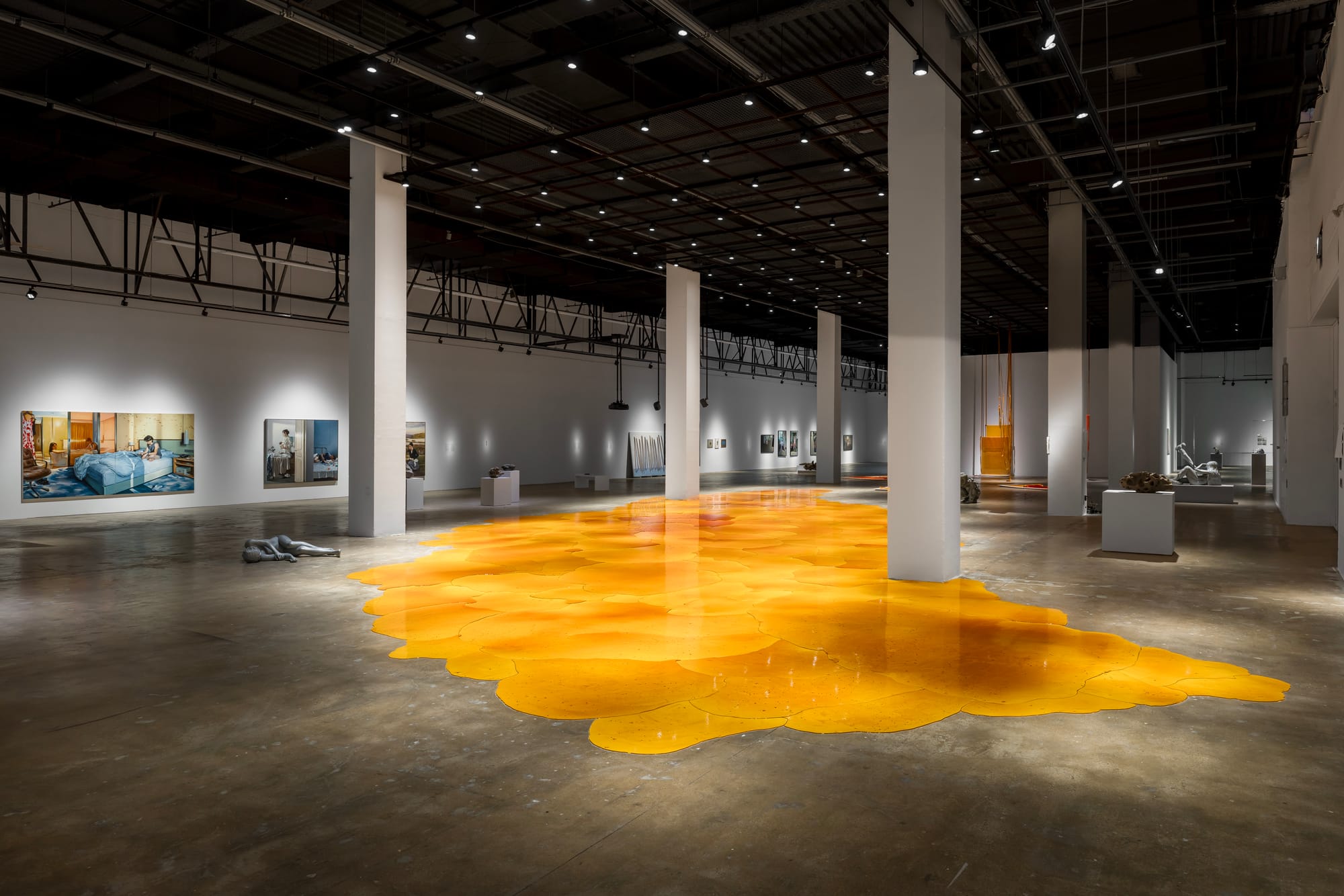
That split tempo is made tangible in the opening section, “Molecules and Me,” where Goldin+Senneby’s Resin Pond (2026) pools nearly two tons of pine resin across the floor into a luminous amber slick. Within the living tree, resin is at once a toxin that repels pests and fungi, and a sealant that closes wounds. It is also energy-dense, terpene-rich, harvestable for refinement into biodiesel and aviation fuel. Jakob Senneby, one half of the duo, lives with multiple sclerosis, a condition in which the body’s defenses chronically turn against its own nervous system. This experience with autoimmunity has reoriented the duo’s longstanding scrutiny of capital’s absurdities. Resin Pond proposes that the generative and the destructive are no longer separable—not in climate crisis, not in geopolitics, not in technology, and certainly not in the poison-cure logic of a market that carries within it both its own overcoming and its catastrophe: a perspective that regards change less as directional than conditional.
In the curatorial statement, Ho frames practices as techniques “repeated at regular intervals either to control or to conduct change,” and the tension between repetition and rupture runs through the exhibition. Scattered across the floors are clusters of volcanic rocks from Jeju, their contorted forms holding, within a single mass, radically unequal durations: the slow accrual of sediment, the violence of eruption, the long aftermath of cooling and weathering. Equally threaded through the space, and functioning as the exhibition’s connective tissue, are Sasaki Ken’s more than 60 small paintings of unremarkable things—a pair of Converse sneakers, workers’ boots, a light switch, a tennis ball. One of the canvases depicts an ominously overcast sky: Sasaki’s record of the Tokyo sky in the days after the 2011 Tōhoku earthquake, when fears of radioactive drift from Fukushima hung in the air. Dispersed as they are, the rocks and the mundane paintings can feel opaque, even excessive. Yet their sheer persistence makes the argument that change moves at no single speed and takes no single form, and that it is often already underway, lodged in the textures of the everyday. Whether this constitutes a veiled hope for transformative force, or an oblique salute to Gwangju’s own insurgent heritage, the exhibition leaves deliberately open.
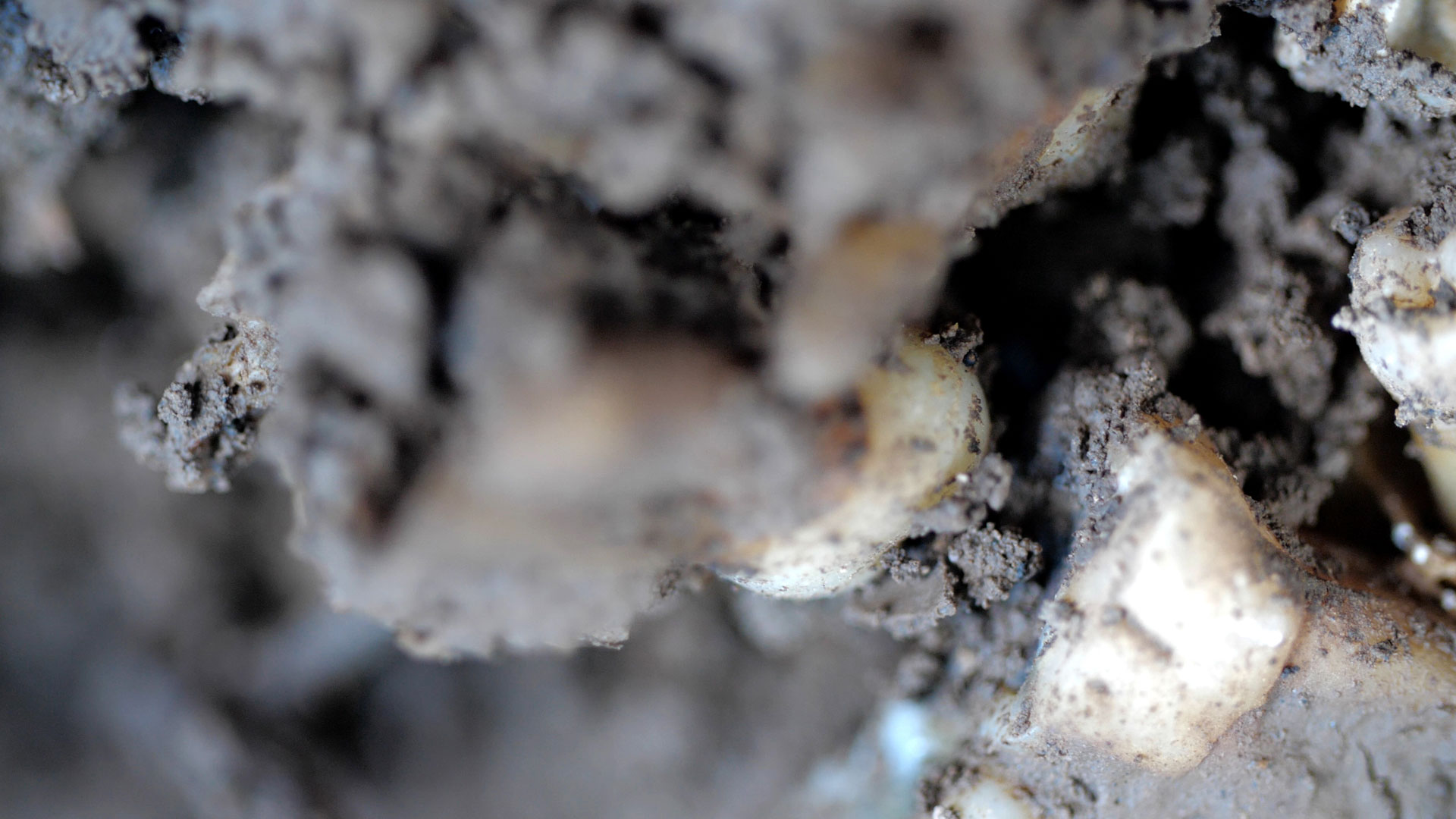
“Molecules and Me” rewards sustained looking, and it repeatedly nudges the viewer toward the unfinished. Maya Watanabe’s Liminal (2019), a single-channel projection on a tilted, engulfing screen, offers extreme close-ups of human remains exhumed from mass graves of Peru’s internal armed conflict, which took place between 1980 and 2000. Decades later, roughly tens of thousands of the victims are still missing or nameless, and many crimes remain unacknowledged. Watanabe’s camera shifts constantly between focus and blur, refusing to let atrocity resolve into a fixed historical image. Even death, the work implies, withholds closure: mourning persists, identity stays suspended, and the past exerts its pressure from within a near-molecular anonymity.
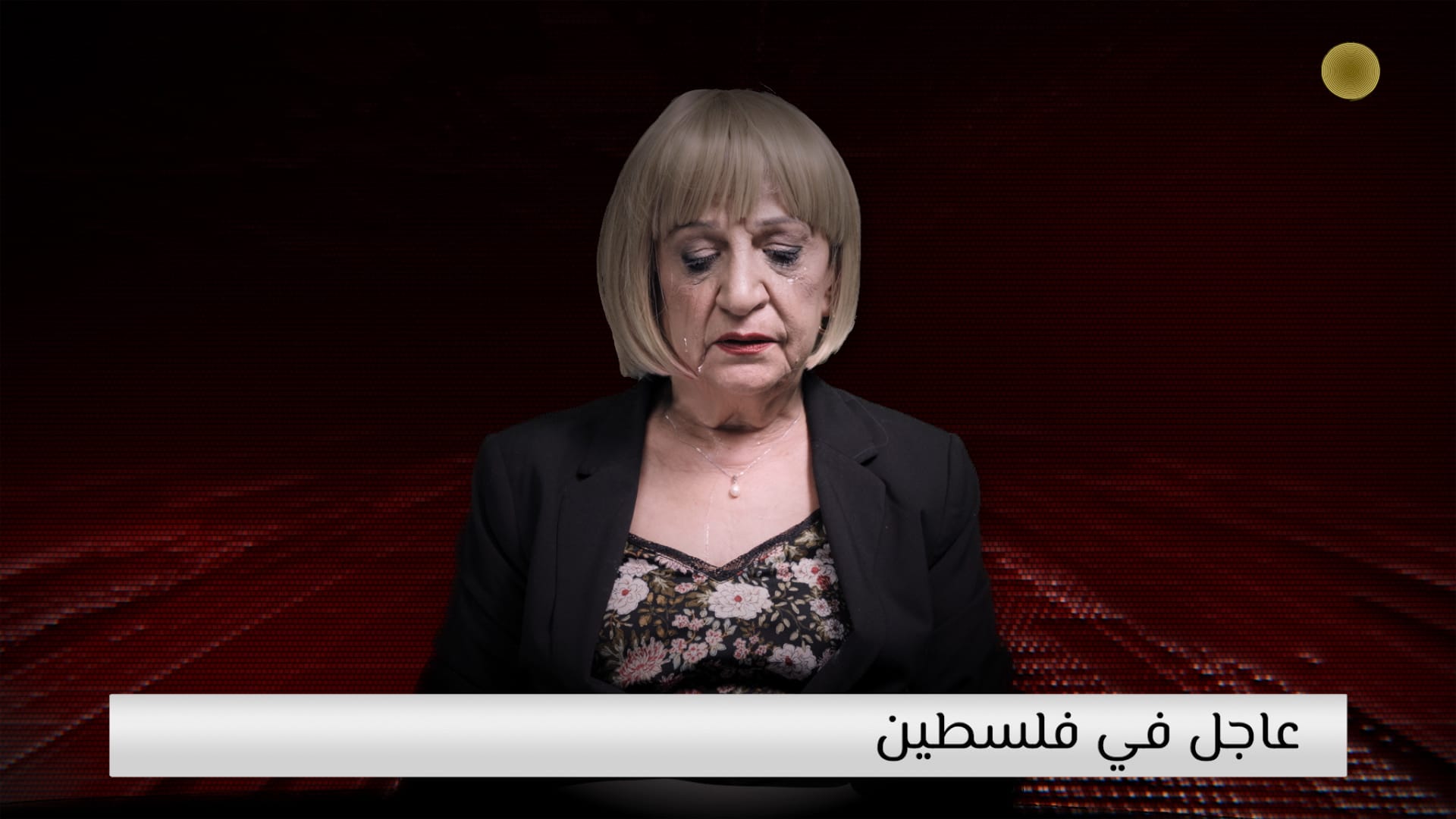
Historical wounds and their seepage into daily life come to a point in the second section, “Bodies and Bonds,” where Mona Benyamin’s two videos furnish the exhibition’s most bracing case for art as a means of processing trauma. Her parents, who lived through the mass displacements of Palestinians during the Arab-Israeli conflicts, the Nakba (1948) and the Naksa (1967), are featured as performers cast into the formats of a sitcom and a newscast. In Trouble in Paradise (2018), they run through comic bits about the eradication of Palestinians, broaching the subject through gallows humor delivered with a Brechtian affect over a canned laugh track (“How do you make a Palestinian cry? You kill his family”). In Tomorrow, Again (2023), they reappear as anchors and bystanders: a newsreader who cannot stop weeping, an eyewitness to one disaster after another. Benyamin creates a condition of perpetual emergency and then asks, with a sardonic edge, how one is meant to change a life whose ground state is recurring ruin.
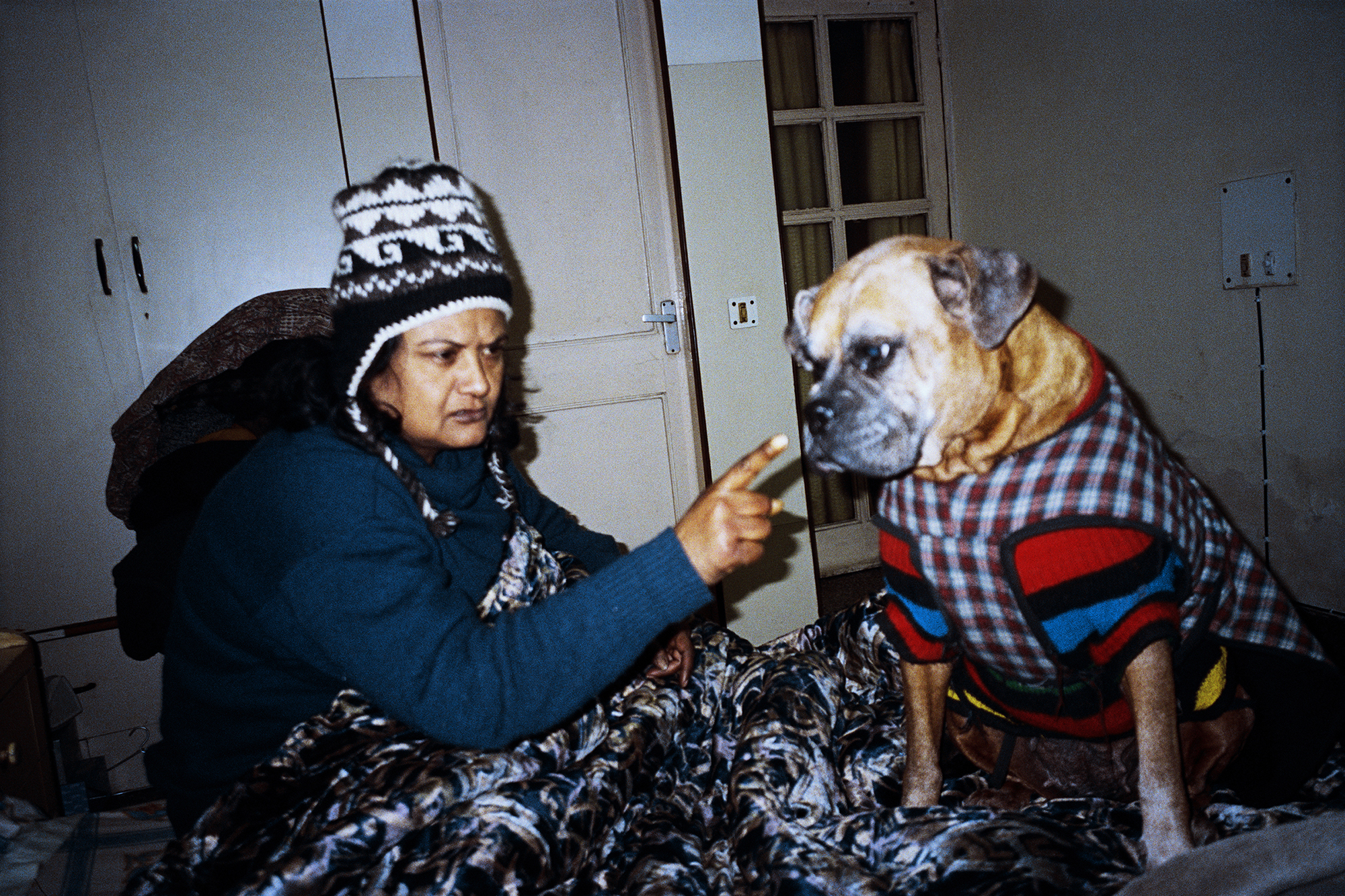
Time, kinship, and the slow labor of change take a more sensorial, elegiac turn in the pairing of Amanda Heng and Sohrab Hura. Heng’s Another Woman in Gwangju 1996, 2014, 2023 (2026) follows photographs of the artist and her mother across three decades, beginning with the mother’s request for a portrait and returning, in 2014 and again in 2023, to restage the original poses. As the two women age together, the roles of care and dependence visibly reverse, and the duration itself becomes legible. Nearby, Hura’s slideshow video Bittersweet (2019) and the black-and-white photographs, handwritten notes, and sketches of Life Is Elsewhere (2005–11) chronicle his life alongside a mother diagnosed with schizophrenia and her dog, Elsa. A letter penned by his mother details how the dog’s arrival remade her days: “As the years passed, I forgot all the reasons for not wanting her. She had become my dog and my friend a long time ago.” Change seldom arrives as a singular event, and neither do joy, grief, or hardship. It takes shape instead through fragments, the pieces by which a life is assembled.
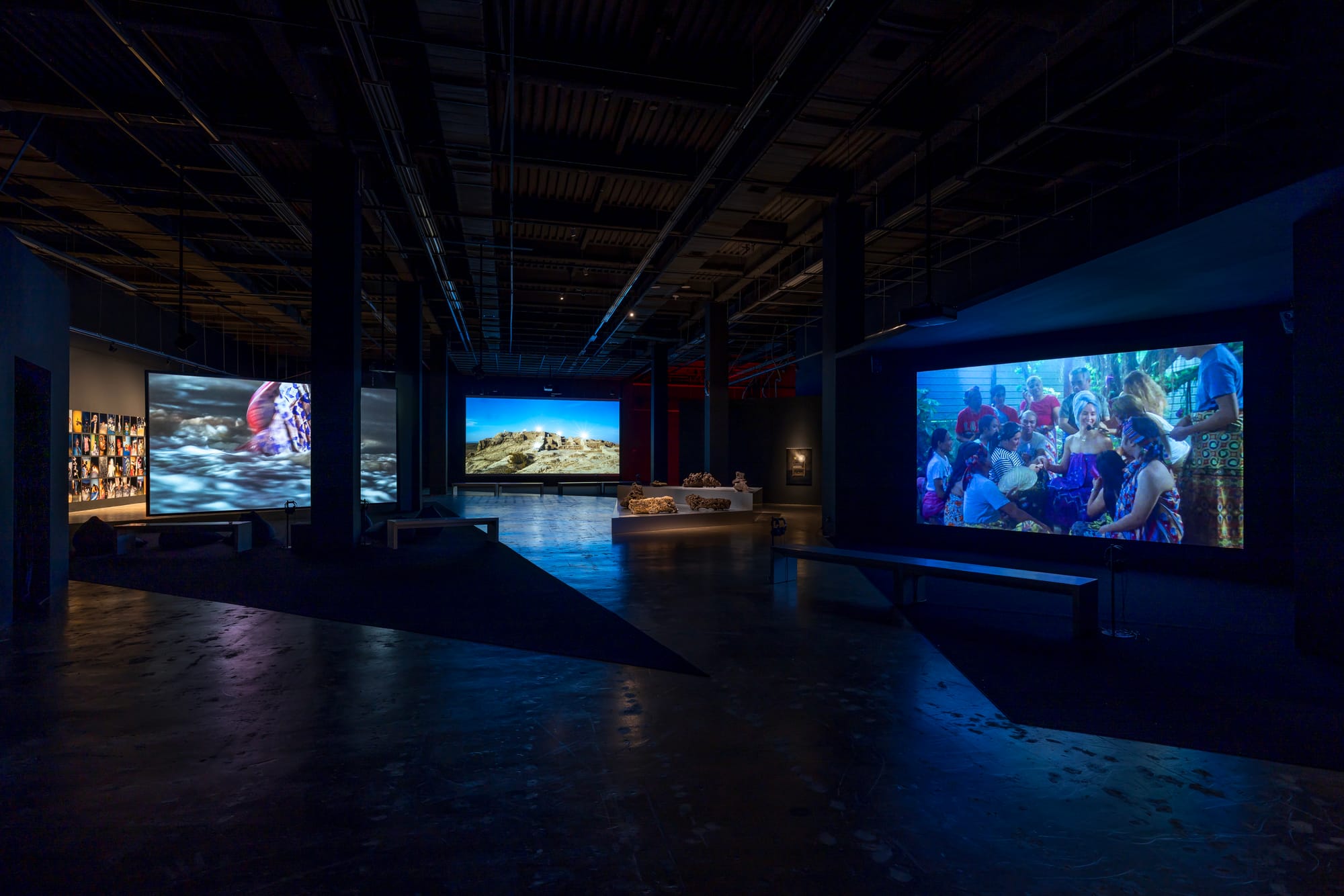
From bodies and their bonds the exhibition widens to terrain and cosmos. Three works anchor “Cosmos and Change,” a darkened room of incantation and other-than-human vision: Bhenji Ra’s Biraddali Dancing on the Horizon (2024), drawn from the artist’s encounter with pangalay, a dance practiced by the Tausug of the Sulu Archipelago; Hura’s The Coast (2019), following devotees of the goddess Kali reveling in the roar of the surf on Tamil Nadu’s shores; and Saodat Ismailova’s enigmatic Melted into the Sun (2024), which trails an eighth-century mystic figure known as “The Veiled One” across the Amu Darya, the Chillpiq burial ground, and a Soviet-era solar furnace. The three soundtracks bleed into one another, wrapping the viewer in a field of moving images that is by turns harmonic and dissonant, and within which personal, familial, devotional, and national histories reveal themselves as continually rewritten by myth, ideology, and science.
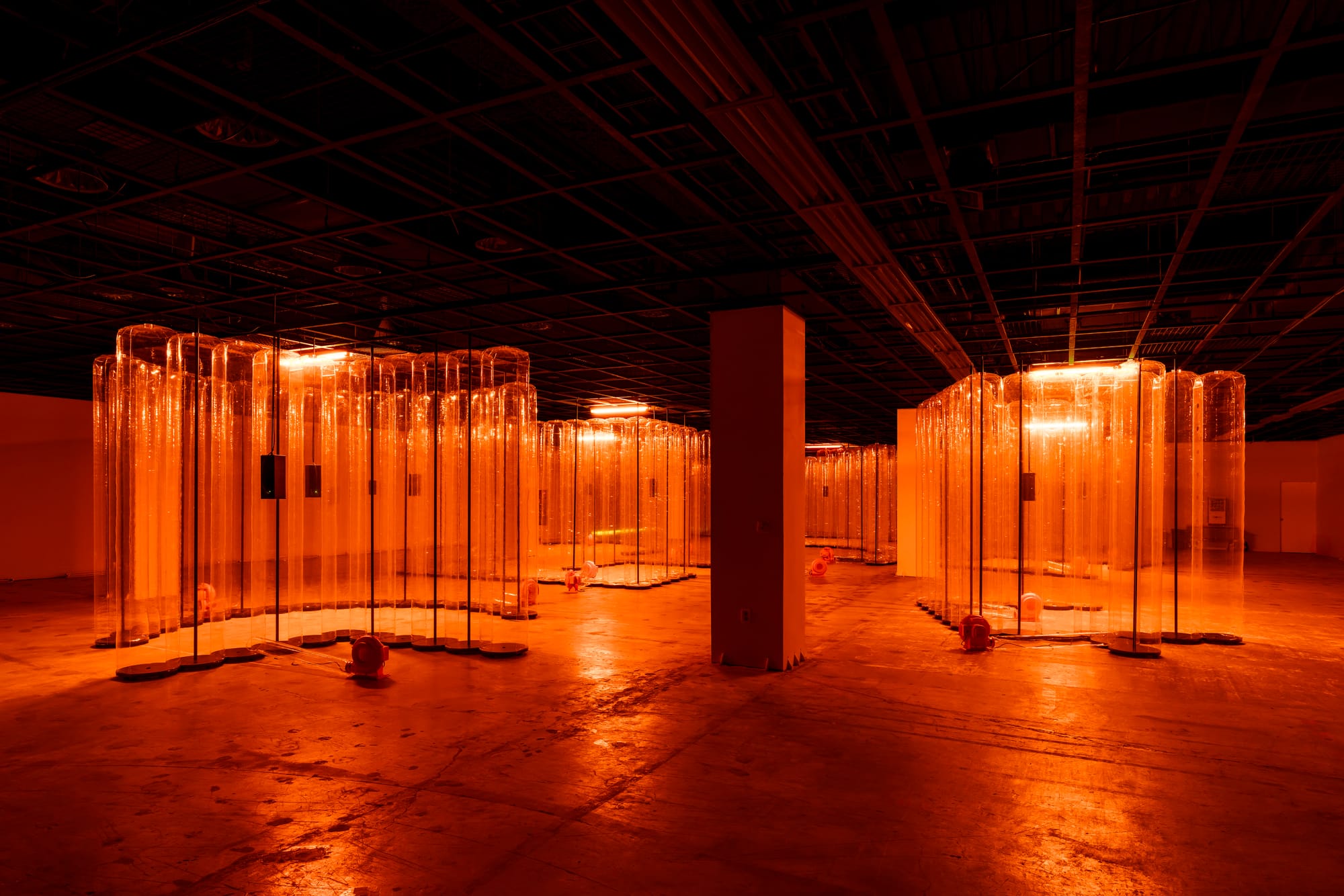
Jacqueline Kiyomi Gork’s Not Exactly BPM (Variation Rrose) (2026), presented in the final section, returns the focus to the body. It is a deconstructed nightclub built from centrifugal blowers, feedback, and transparent, sound-absorbing inflatables that swell into a sensory enclosure and then slowly exhale. A hypnotic score of kick drums and phase-shifting loops, built with the psychoacoustic artist Rrose, moves the room and its occupants alike. But instead of the euphoria of the dancefloor, the installation’s eerie self-awareness yields a low hum of anxiety and suspended anticipation, an artificial burnt-orange light filtering through vinyl walls.
Gork confronts the conceptually dense, politically freighted, and emotionally taxing works in the exhibition with a visceral reset, displacing intellectual reflection into corporeal attention: breath, pulse, the instability and the pleasure of an enclosed and rhythmic collective. If the biennale has spent its length imagining a “life elsewhere,” this last environment stages the pause before departure. It leaves the beholder with the question—how, having seen and felt all this, does one return to the world changed?
Louis Lu is an associate editor at ArtAsiaPacific.