Shows
Art Spectrum 2026: Tuned, Untuned
Art Spectrum 2026
ARoomWhereEveryRadioIsTunedToDifferentStations
The Hoam Museum of Art
Sep 1–Dec 27, 2026
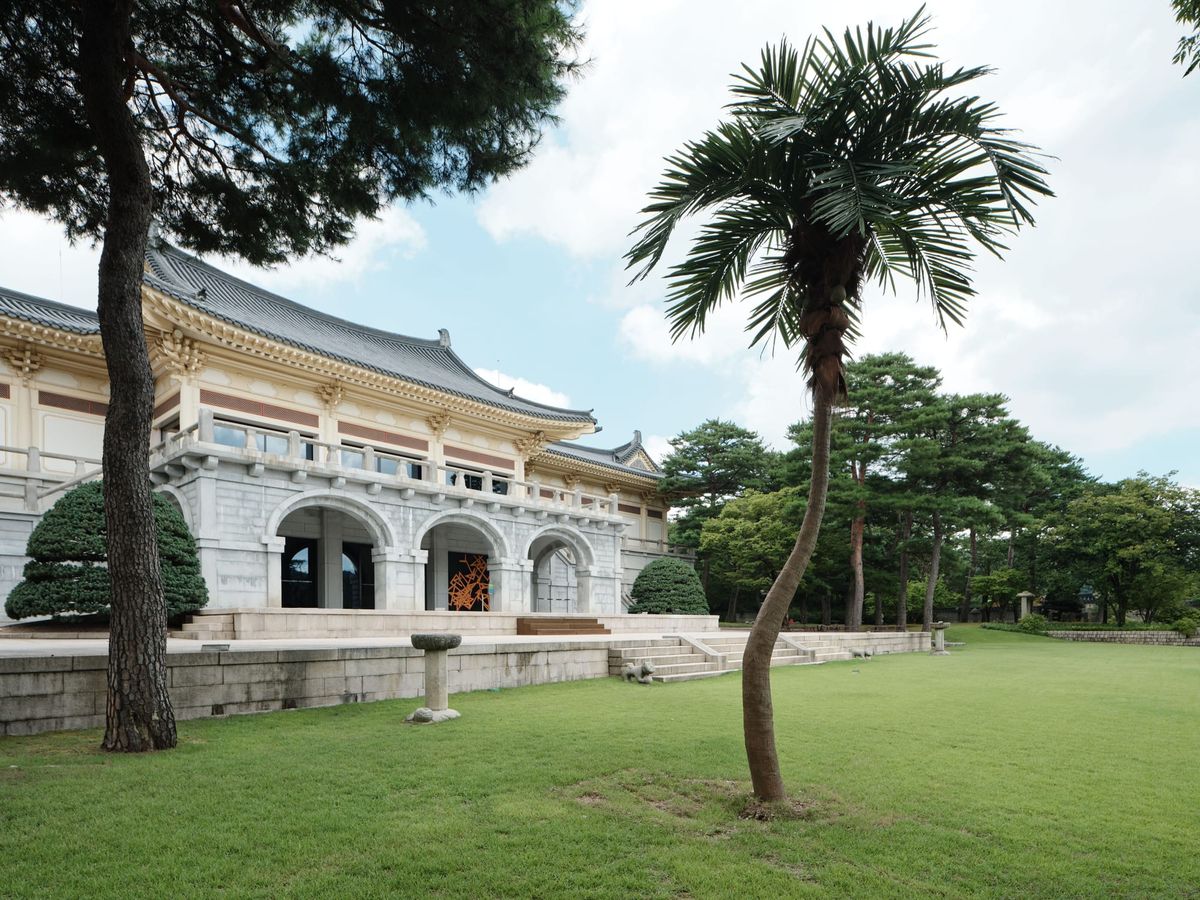
In Rachel Youn’s Parade Paradis II (2026), botanical life and manufactured spectacle are set against each other with a light comic touch. The work is an artificial palm tree whose crown rotates continuously, recalling at once the showy foliage at theme parks and the threadbare lexicon of “the tropical,” “the exotic.” Installed in the broad, hushed garden of the Hoam Museum of Art, Youn’s palm blends into the greenery rather easily. It is legibly about cliché, tourist fantasy, extractive capital, and diasporic belonging, and yet, equally a spot for the selfie—the sort that might attract couples and families who drive out past Seoul’s outskirts on a weekend. The catalog describes the piece as “an antenna receiving signals of exoticism.”
The work is a useful entry into this year’s edition of Art Spectrum, which is titled, in a single compacted string, “ARoomWhereEveryRadioIsTunedToDifferentStations.” The biennial exhibition moves away from its previous iteration, which took as its subject the holistic idea of the “screen,” instead adopting a polyphonic approach to position itself as “an undivided space filled with many different sounds and frequencies,” if we agree to take the works of each of the 23 participating artists and collectives—most housed within the museum, several dispersed across its grounds—as antennas of sorts. This feeling of undividedness, at least for me, is heightened by the elision of gaps in the title, which withholds a declarative cadence and nudges the phrase toward estrangement.
These days, most large-scale surveys or biennales feel obliged to generate an ambitious intellectual output, whether to decenter Western, human-centric, extractivist paradigms, or to usher forward alternative epistemologies, cosmologies, Indigenous knowledge, and spirituality. One of Art Spectrum 2026’s stated inquiries, on the other hand, is simply how practices formed in divergent cultural and social conditions might be brought into conversation under the geographic category of “Asia.” Yet the show is conscious that “Asia” or “contemporary art in Asia” is not a stable or rigid category; that’s why it defines the region as a frequency spectrum, and conceives the exhibition as a receptive space.
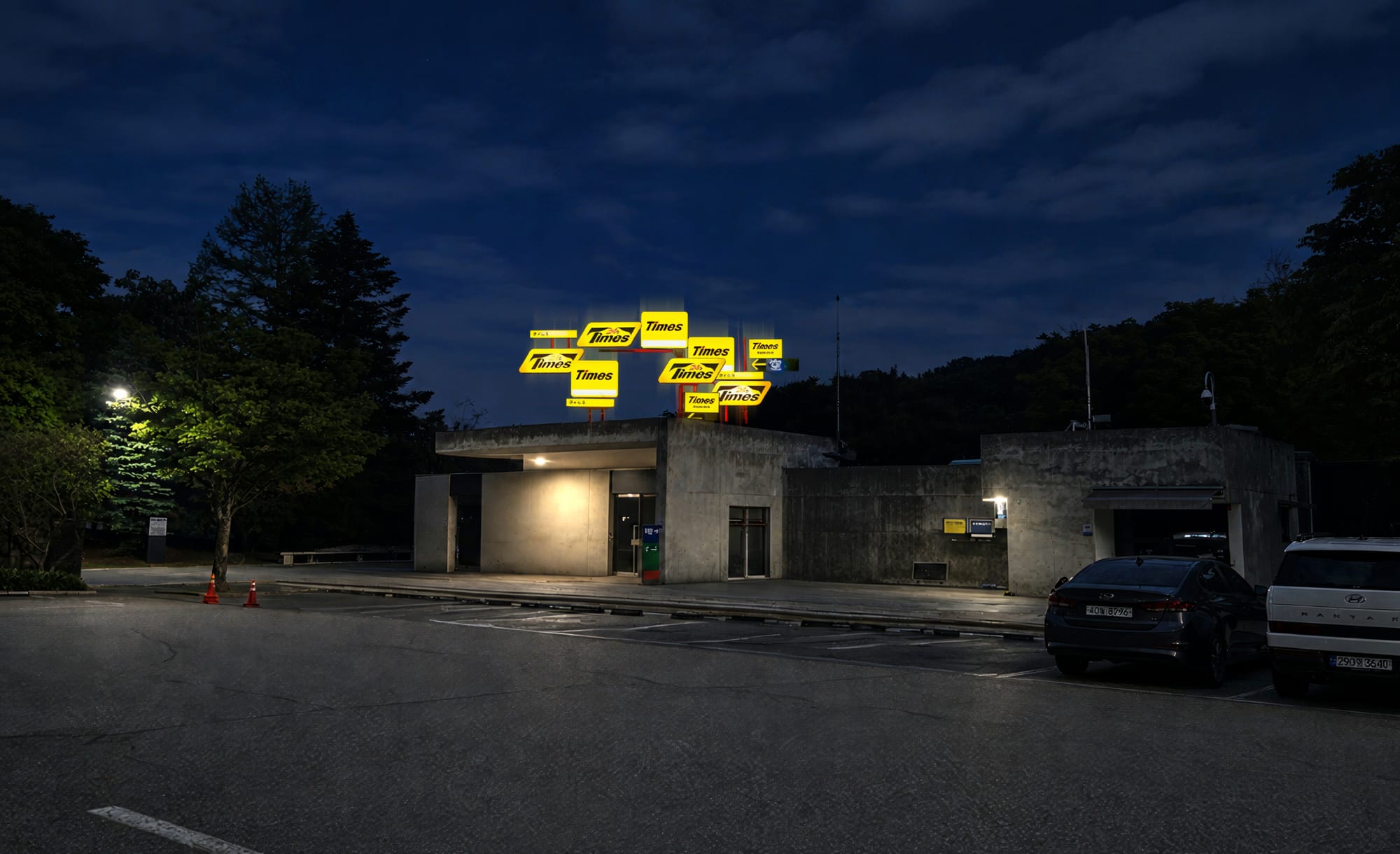
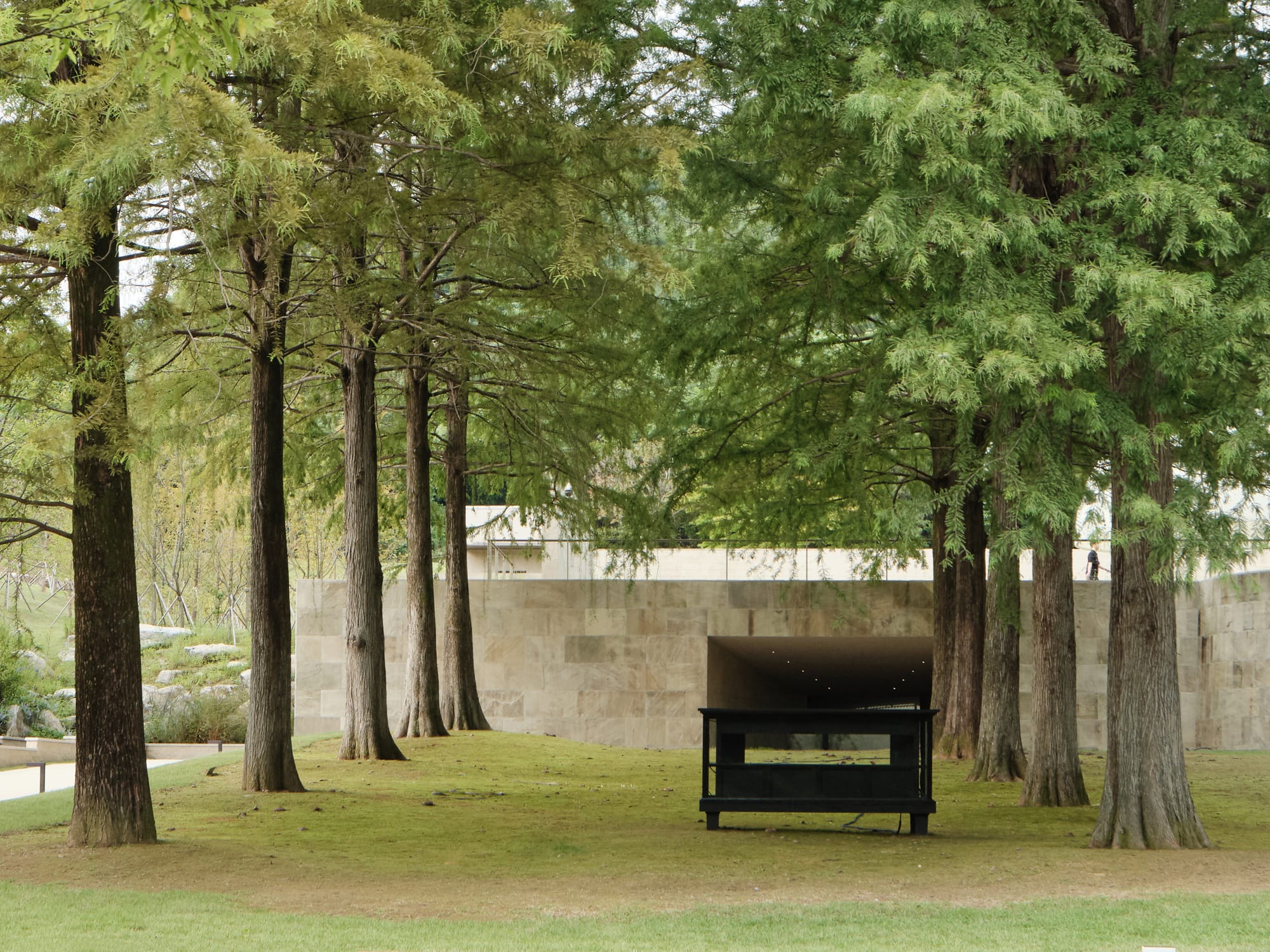
The exhibition begins in the parking lot. Arriving visitors are met first by SIDE CORE’s time gate (2021), an assembly of the branded “Times” parking signs common on Japanese streets. It grew out of the collective’s attention to Tokyo’s transient urban fabric and the disruptions and delays around the 2020 Olympics. The work was first staged on a vacant lot near the Olympic stadium. A short walk away, on a stretch of lawn, is Aerin Hong’s commission Music Siren (duet) (2026). Like Youn, Hong is drawn to how nonhuman life can be translated into unfamiliar artistic form. Two life-like toy butterflies beat their wings inside a vitrine, driven by a pair of motors; infrared sensors track the motion, the reflected light registers as vibration, and a sequence of devices converts it, eventually, into piano tone. Through this sleight of hand, the source of movement is prised apart from the source of sound, so that what we see and what we hear never quite align.
Once inside the exhibition space, we encounter SIDE CORE again, in rode work ver. under city (2023), a multichannel video that follows a group of skaters through Tokyo’s subterranean infrastructure, from stormwater reservoirs and decommissioned tunnels to maintenance corridors. Much of the city sits on reclaimed land and lives under constant threat of disaster, and these channels form part of its flood defense. Stitching the footage together with 3D data, the work links these isolated facilities into a single, virtual underground, like a buried metropolis beneath the visible one. “Emerging from distinct linguistic, historical, technological, sensory, political, and social positions,” the curatorial statement claims, “the participating artists maintain their singularity while remaining open to hearing one another.” SIDE CORE’s alertness to the appropriation of resources, to ambient risk, and to the artifice threaded through daily life echoes—retroactively and without emphasis—Youn’s and Hong’s probing of the natural and the fabricated. From the outset, the exhibition establishes a feeling of depth and sophistication.
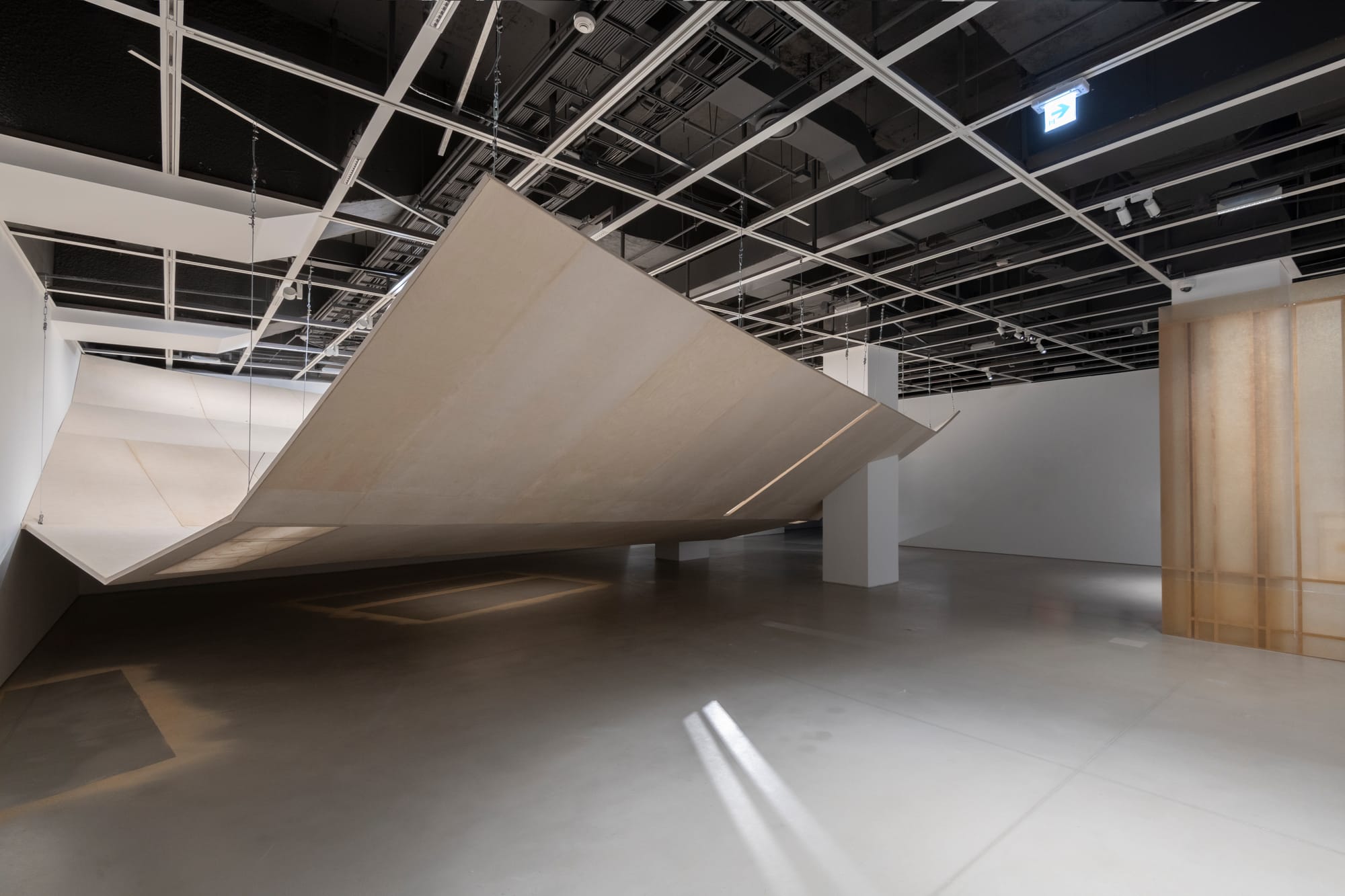
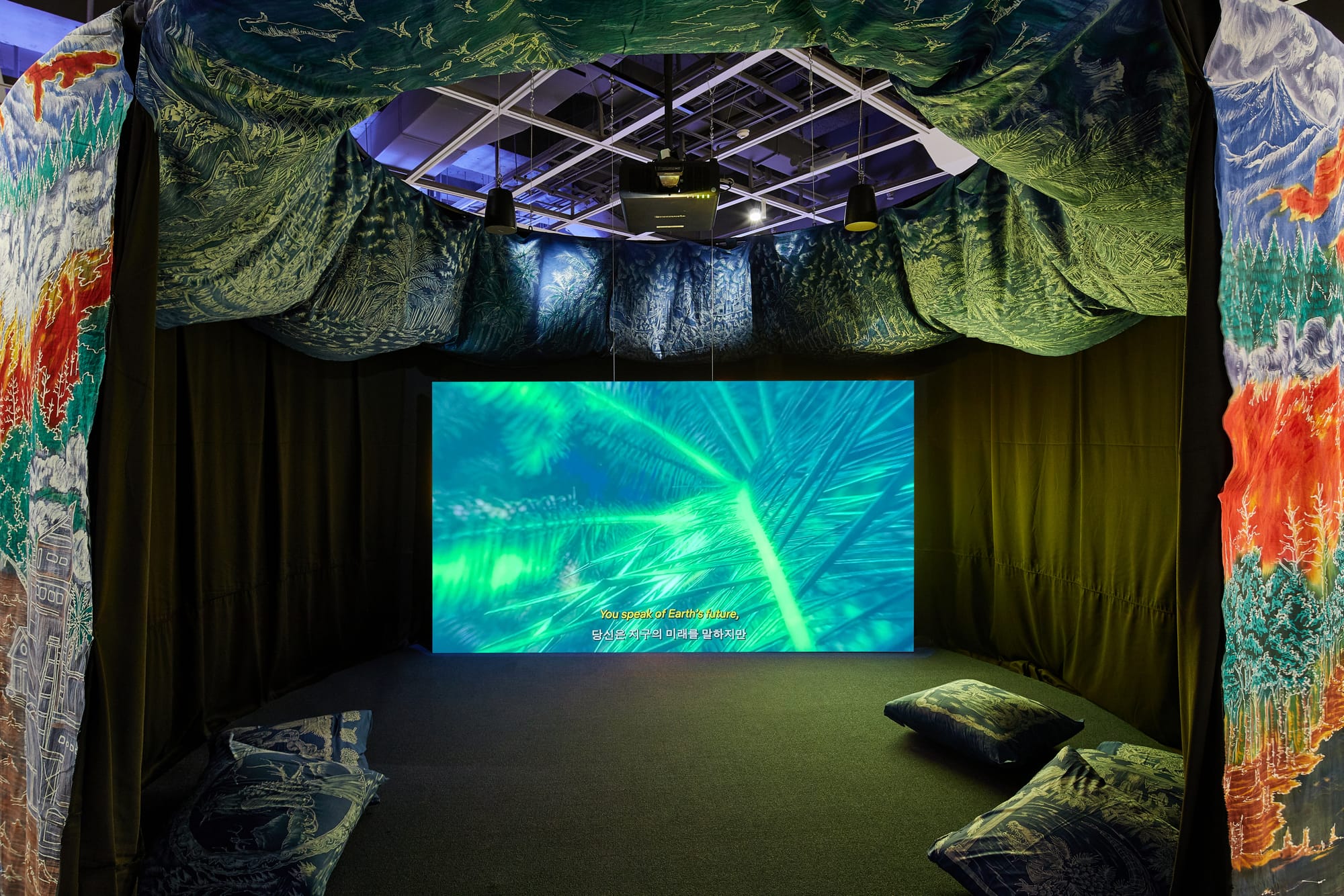
Hidden violence, on both a personal and planetary scale, is among the frequencies multiple artists tune into. For Suffocating (2026), Ruofan Chen used wood, aluminum, sawdust, organza, polyester, and threads of cotton, linen, and silk to form a collapsed timber structure. Beneath the wreckage, sawdust is laid into two tidy rectangles. Prompted by the dust filling a woodshop she visited, and by the slow damage caused by glass fiber, resin, and other fine particulates, Chen renders the chronic harm of the labor site perceptible through sheer volume and weight, as well as the brute fact of accumulation. Meanwhile, Elia Nurvista’s immersive structure brings two works into relation: Plantation Cosmology, a tent of traditional batik lavishly hand-drawn with scenes combining global trade, labor, ecology, and mythic creatures, shelters within it the video Plantation Tragedy (both 2026), a surreal standoff among palm trees, plantation workers, a scientist, and a robot. In the latter, each figure voices its own claim about progress, environmental justice, and workers’ rights, until the plants revolt, the strike erupts, and the robot threatens to detonate the estate. Different in medium and sensibility as they are, the two artists’ work converge on the exploitation embedded in the workplace and on the comorbidity binding bodily and planetary health. It is one of many moments throughout the exhibition where practices, despite their apparent dissonance, keep reverberating with one another, whether or not the curators intended them to.
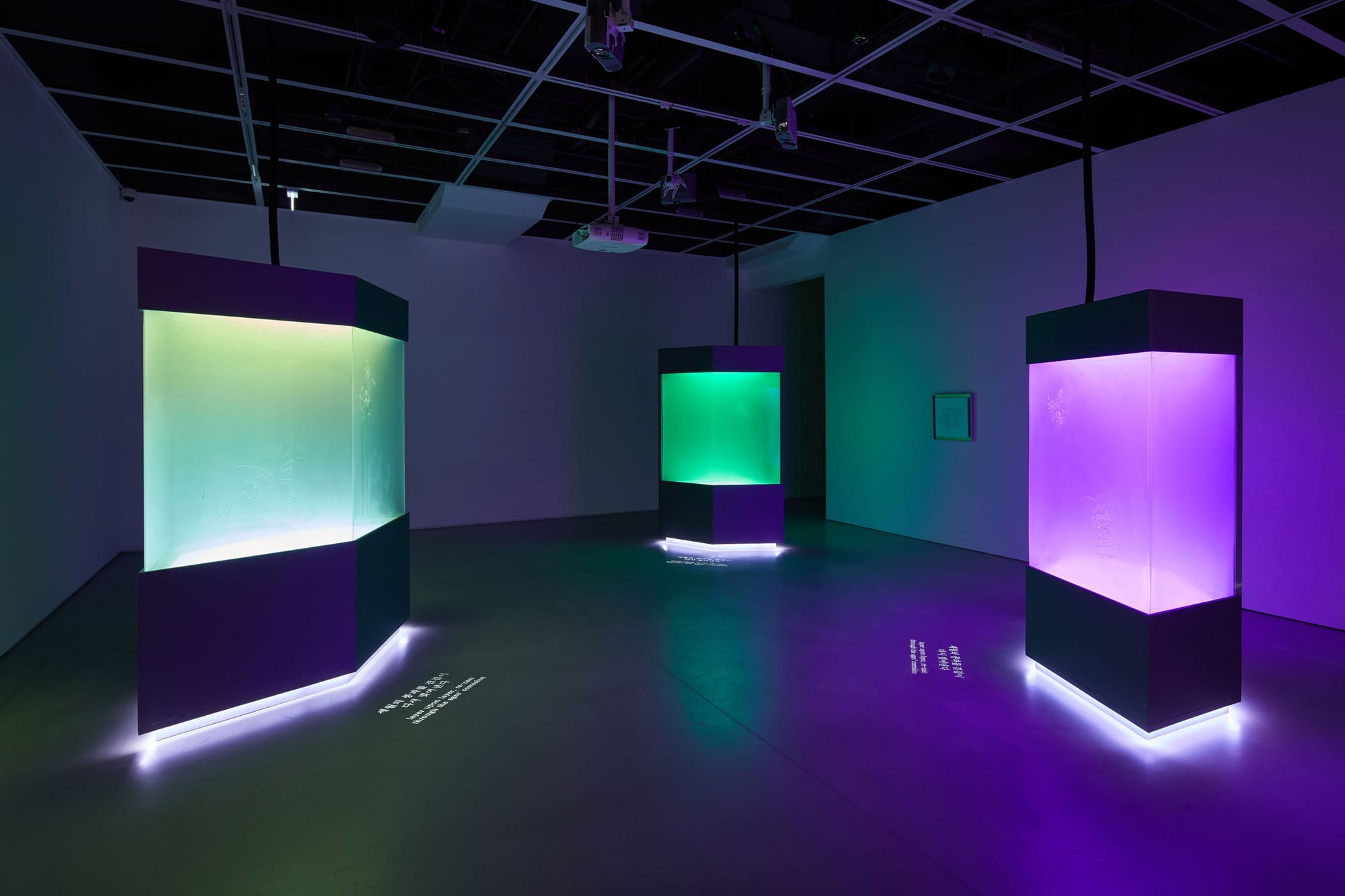
Perhaps expectedly, the exhibition does not try to assert a historical or political stance. It is more concerned with how the contemporary practices of a generation of Asian artists, and of international artists whose work touches upon Asian contexts, absorb larger epistemic shifts. Even so, several works directly tap into specific histories. Musquiqui Chihying’s The Recasting (2025) comprises three glass cases that emit light and sound, drawing on a bronze ding (an ancient Chinese cauldron) cast by the Japanese army in 1937 from weapons seized in occupied Nanjing and engraved with cherry blossoms as a monument to victory. It was shipped to Taiwan in 1951 and re-inscribed with the characters for Bo’ai (“universal love”). The tripedal cauldron is represented here as three empty, shattered vitrines, in which the spirits of the object, each holding the memory of a different nation and its past, engage in conversation. In the dark adjacent room, Chulayarnnon Siriphol’s Red Eagle Sangmorakot: No More Hero In His Story (2024) uses a documentary form to trace how Muay Thai, as a national sport, carries Thailand’s Cold War anxieties, class struggle, and state-sanctioned masculinity, and continues to animate the systems (monarchy, Buddhism, military, virility) that govern the country’s present. In both works, human bodies and nonhuman objects are equally raw material, vessels for state mythology. At the end of the exhibition, I walk away with an idea—one that I probably already half-knew—about how the world is always composed of competing histories and narratives. The show never attempts to resolve them, and yet it makes its case all the same: that art is the antenna by which we scramble for signal, and for pattern, in a world otherwise filled with noise.
Louis Lu is an associate editor at ArtAsiaPacific.