Shows
“Entangled and Woven” at the Whitworth
Hyundai Translocal Series: Entangled and Woven
The Whitworth
Manchester
Jul 10, 2026–Jan 3, 2027
The warrior Arjuna had just settled into prayer when he was confronted by a sight so shocking it sent him scrambling for his bow and arrow. Before him stood a chimera composed of nine animal parts. Arjuna took aim but stopped when he noticed a lotus flower—Lord Krishna’s emblem—in the beast’s human hand. The divine creature symbolizes how truth is multifaceted, at times challenging to wholly behold, but inflected in everything and everyone. The parable reflects the values behind “Hyundai Translocal Series: Entangled and Woven,” which comprised textile-based commissions developed by four South Korean artists and four Indian artists following research exchanges in one another’s countries. Challenging rising xenophobic tides, their attentiveness to the craft traditions they encountered resulted in a presentation as dazzling in its technical prowess as it was compelling in its stories of past and present cultural connections.
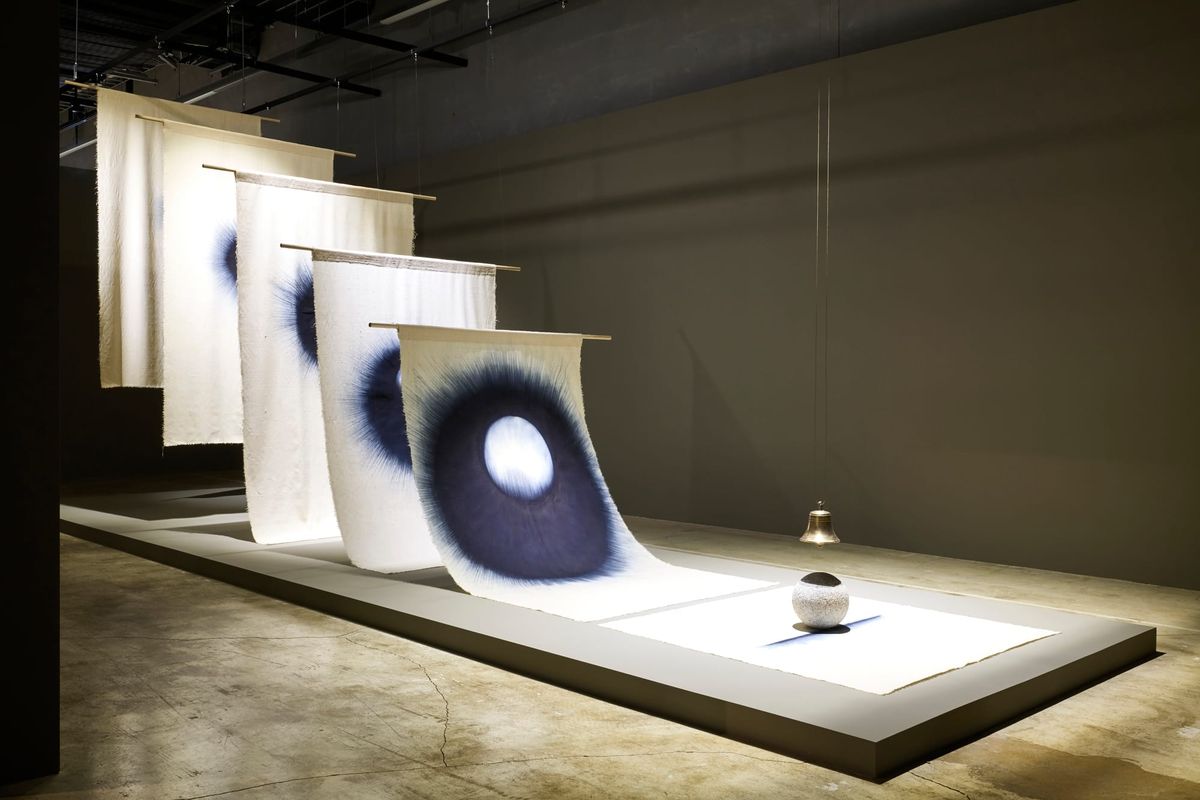
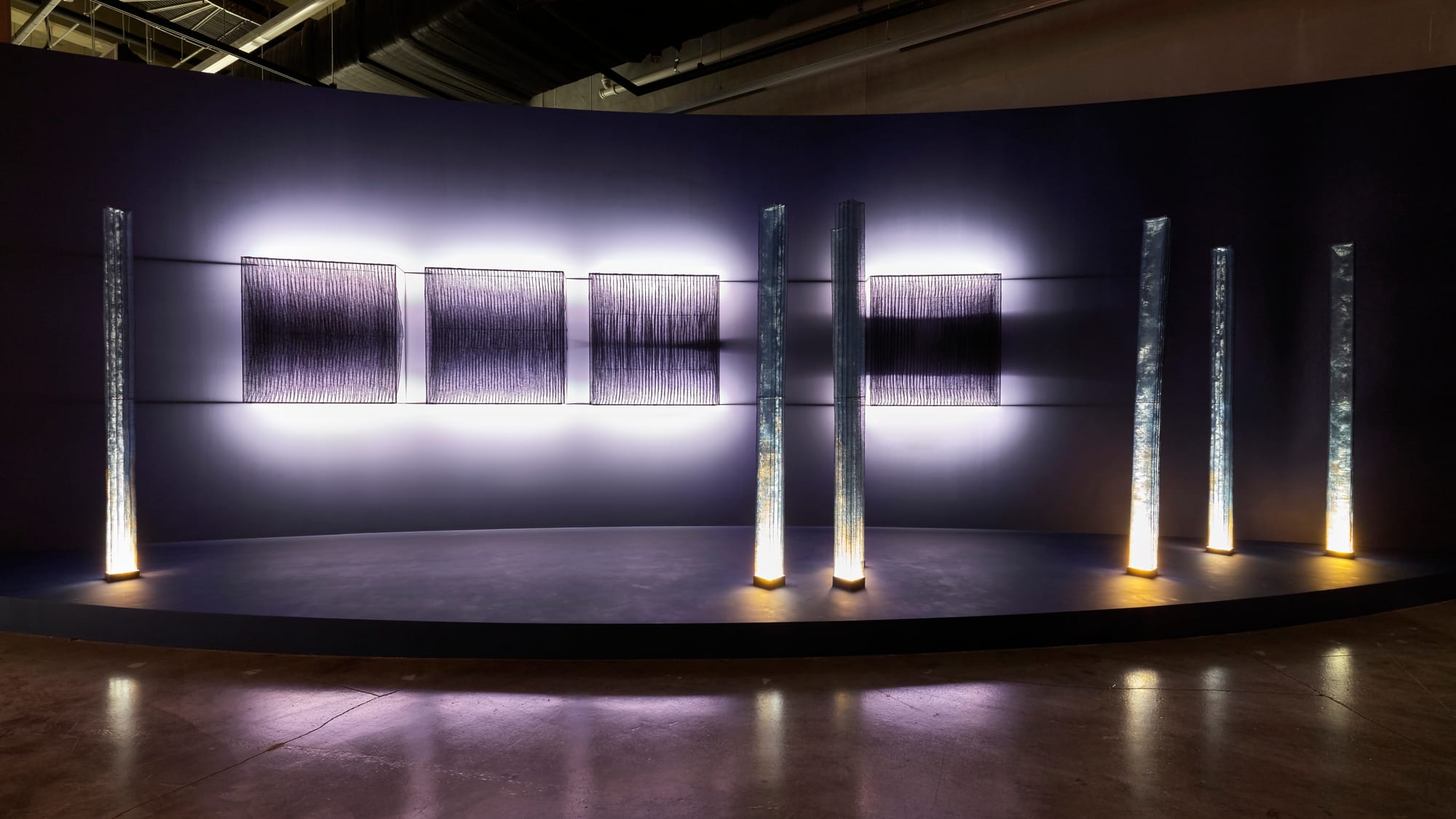
The Navangunjara—the being that appeared to Arjuna—is unique to poet Sarala Dasa’s 15th-century retelling of the Mahabharata in the Odia language. Hailing from Odisha state, the art-and-fashion collective Boito created a sculpture of the Navangunjara, with each part representing a local craft: its peacock neck, for example, is covered in cloth-based pattachitra paintings, while plaited sabai grass forms its serpent tail. Similarly referencing a 15th-century epic poem, the title of Yeonsoon Chang’s Worincheongang series (2025) translates as “the moon reflected on a thousand rivers.” The Buddhist teaching echoes the notion that truth is not singular but takes diverse forms. For the installation, Chang sewed and ironed indigo-dyed abacá fabric into almost prismatic structures that create gradients of light, evoking moonlight cast on water. Indigo likewise colors the work of Kaimurai, who considers the pigment sacred and paints dense, radial lines in a meditative process. Placed nearby was a piece of 19th-century indigo resist-dyed cotton from the Whitworth’s collection in Manchester, nodding to the historical demand for “blue gold” in Europe. Because of its popularity, indigo was widely cultivated in India, often in place of food crops. Farmers eventually rose against colonial planters in the Indigo Revolt of 1859. The fragment exemplified how thoughtful inclusions from the museum’s holdings complicated the exhibition’s material histories.
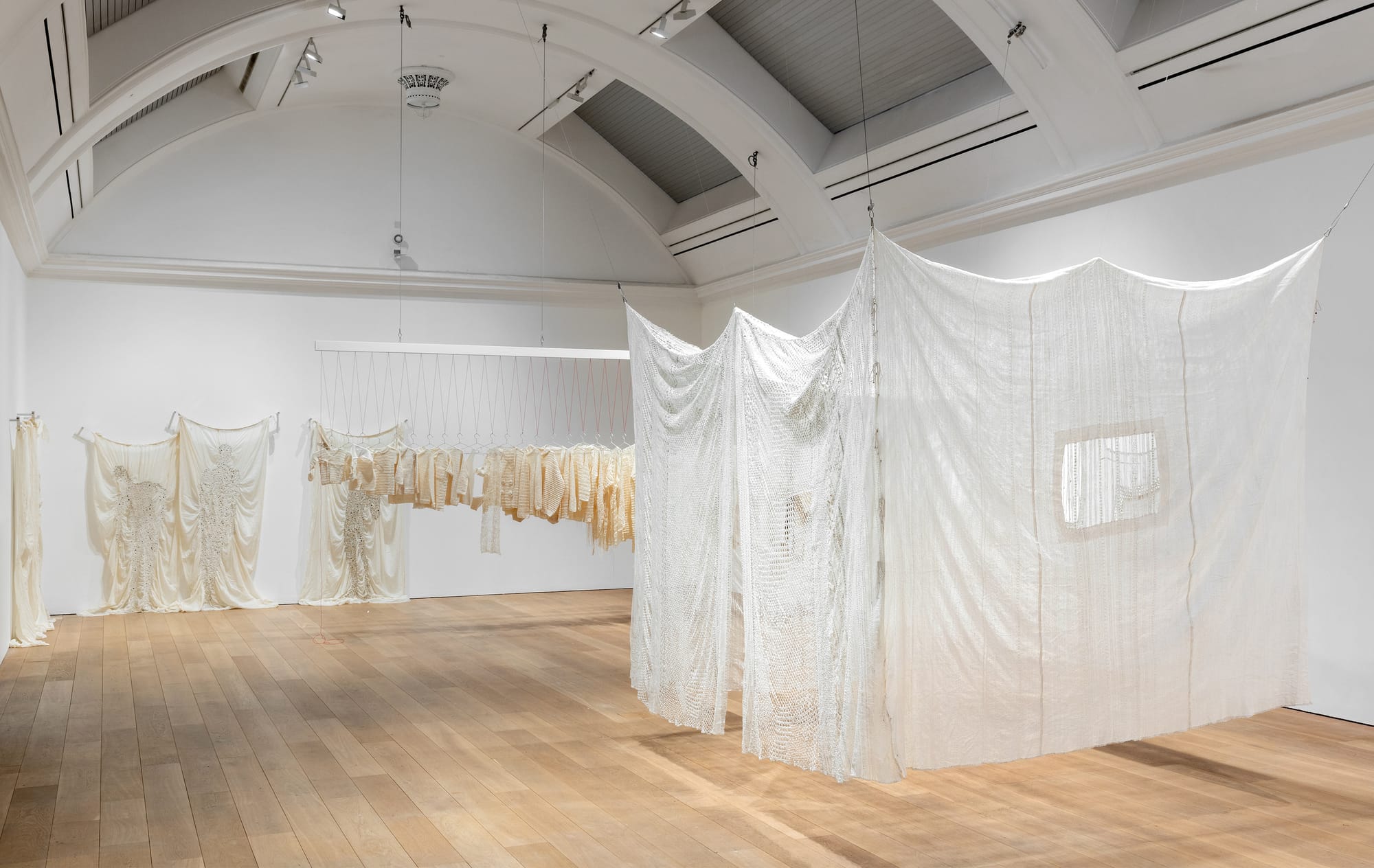
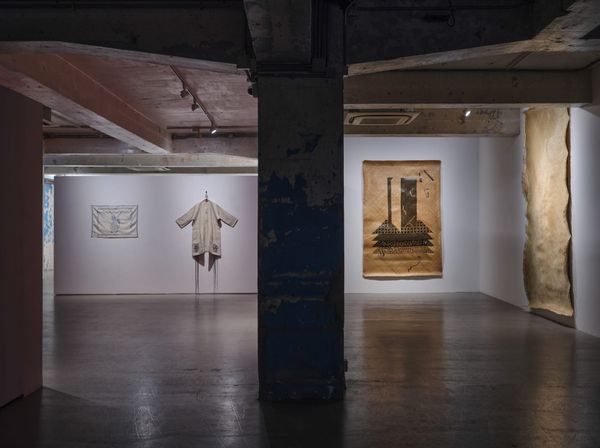
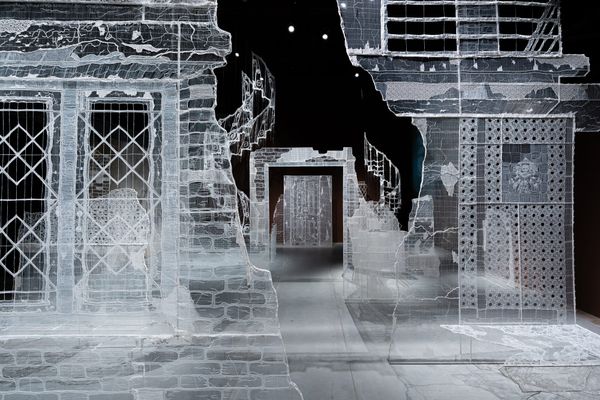
Extending the theme of spiritual symmetries, Sumakshi Singh’s Spanning the Void (2025) recreates a bridge in Cheongju with delicate lace. The intricately worked gossamer threads replicate the bridge’s wooden texture and the swastika embedded in its fencing, the latter speaking to the spread of Buddhism from India to East Asia along the Silk Road. Another piece of religious architecture could be found in Jounghye Yoo’s installation. The diaphanous layers of fabric—bearing gold embroidered patterns and Ajrakh hand-block printed and resistance-dyed motifs—are cut to resemble the gate of Vishwanath Temple in Varanasi. Like Singh and Yoo, the fashion label Péro uses the language of textiles to reinterpret architectural forms around the human body. Entangled Memories, Interwoven Stories (2015–25) consists entirely of stitching normally used to close seams and raw edges in clothing, and recalls the lattice screens of Mughal palaces. Its elaborate threadwork resembles that of an ornately patterned Chikankari mat from the Whitworth’s collection. Again, the artifact sheds light on colonial histories. Developed during the Mughal era, white-on-white Chikankari embroidery declined under British rule as it was outcompeted by industrially manufactured textiles. It survived as a domestic art, passed between women who used it to make a meager living.
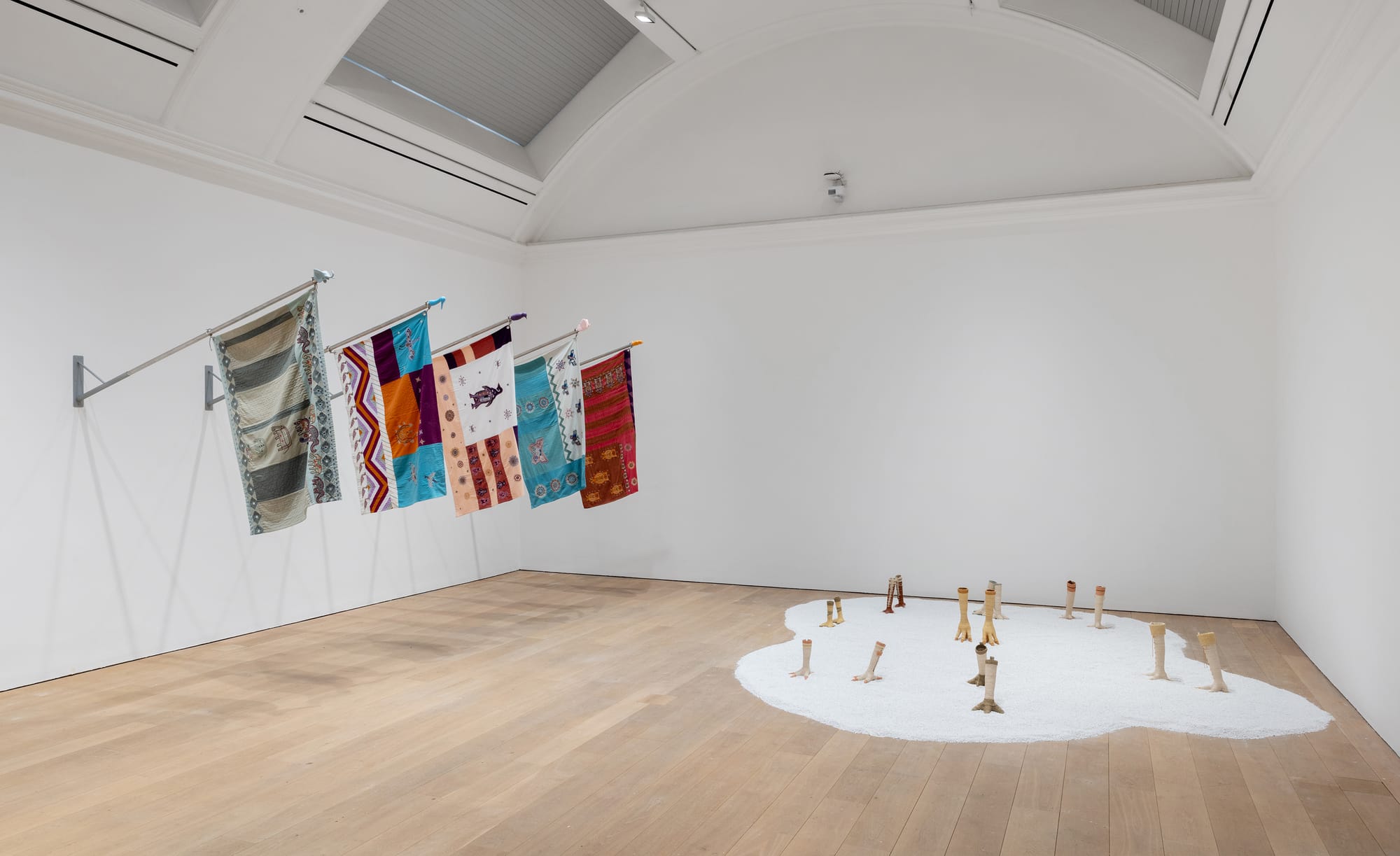
Installation view of YOUNG IN HONG’s Sacred Empires, 2025 (left), and White Cranes in Snowfall, 2024 (right), at “Hyundai Translocal Series: Entangled and Woven,” the Whitworth, Manchester, 2026. Photo by Michael Pollard. Courtesy the Whitworth.
The crafts of working-class women came into focus in Young In Hong’s Sacred Empires (2025). The series of flags was made with the Kala Raksha collective in Kutch, where different styles of embroidery and mirrorwork are celebrated as distinctive markers of communities. Adorned with dainty circular mirrors and vibrant stitching, the patchwork banners represent animal colonies and their fluid territories, positing identity as both intrinsic and responsive.
Mirrorwork embroidery was seen in Somi Ko’s People of One, Moment (2025), too. Here the glimmering circles are arranged on five panels of cotton in the shapes of dancing figures. These moments of ecstasy reveal a truth: we contain reflections of one another and, as such, are each other’s greatest teachers.
Chloe Chu is an art writer and editor based in London.