Shows
Home Is a Fleeting Embrace: India at the 61st Venice Biennale
Geographies of Distance: remembering home
India Pavilion at the 61st Venice Biennale
Arsenale di Venezia
May 9–Nov 22, 2026
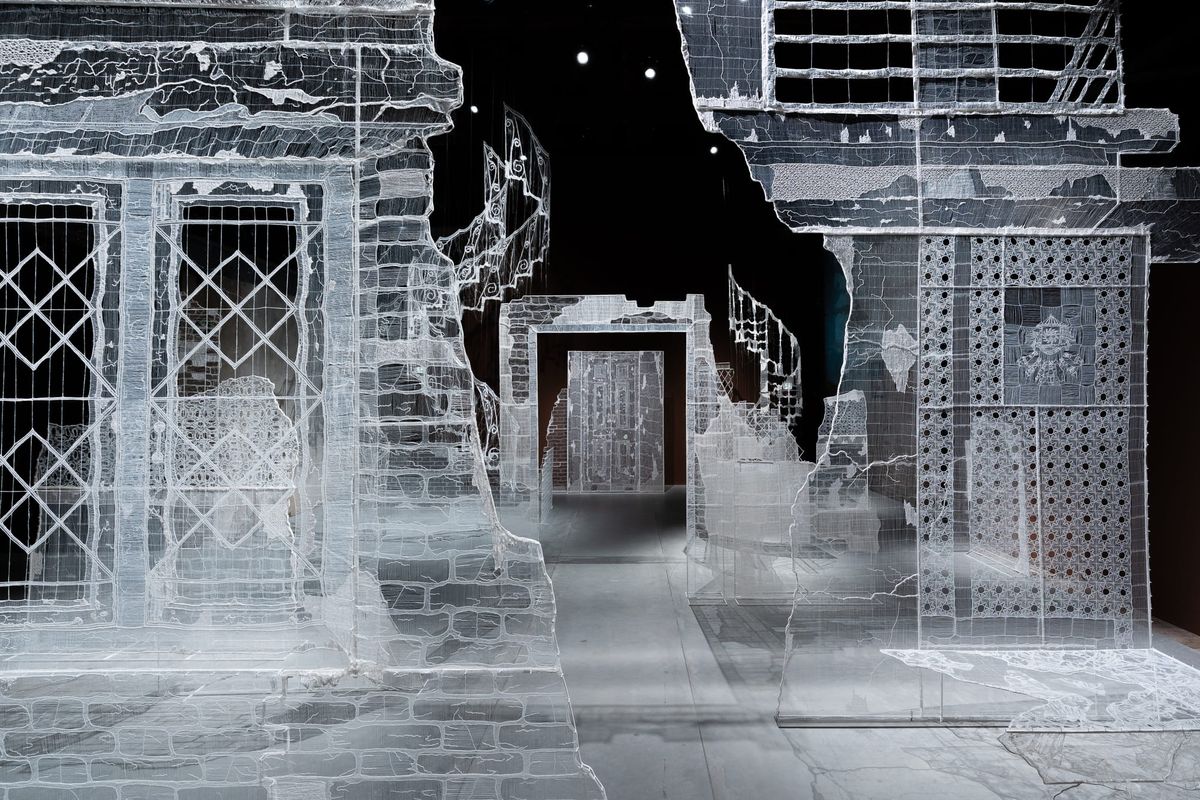
Light enters the vast Isolotto warehouse, filtered and curious. Wispy white, lace-like forms catch my eye first; I move toward them before I even mean to. Sumakshi Singh’s Permanent Address (2026) gradually comes into focus. The installation is a monumental, ghostly recreation of the home her grandparents moved into as refugees in New Delhi after the 1947 partition of India. “33 Link Road,” as the artist remembers, is where members of the family were birthed and married. Afternoons spent knitting and embroidering with her grandmother led to this threaded homage, where memory takes on its own afterlife.
The set-up of the India Pavilion recalls an abandoned plot with the kind of postcolonial-era bungalows I used to walk past as a child—houses still standing, but empty, with no heirs to return to them. The exhibition, titled “Geographies of Distance: remembering home” and curated by Amin Jaffer, imagines home as something assembled—pieced together from textures and rituals we repeat without quite noticing. Conceived as a surreal private dwelling, the room holds a faint layout of a house, a panorama of a town nearby, towering bamboo, dry soil, and bulbous flowering forms. To move through it is to walk through a memory forming before you.
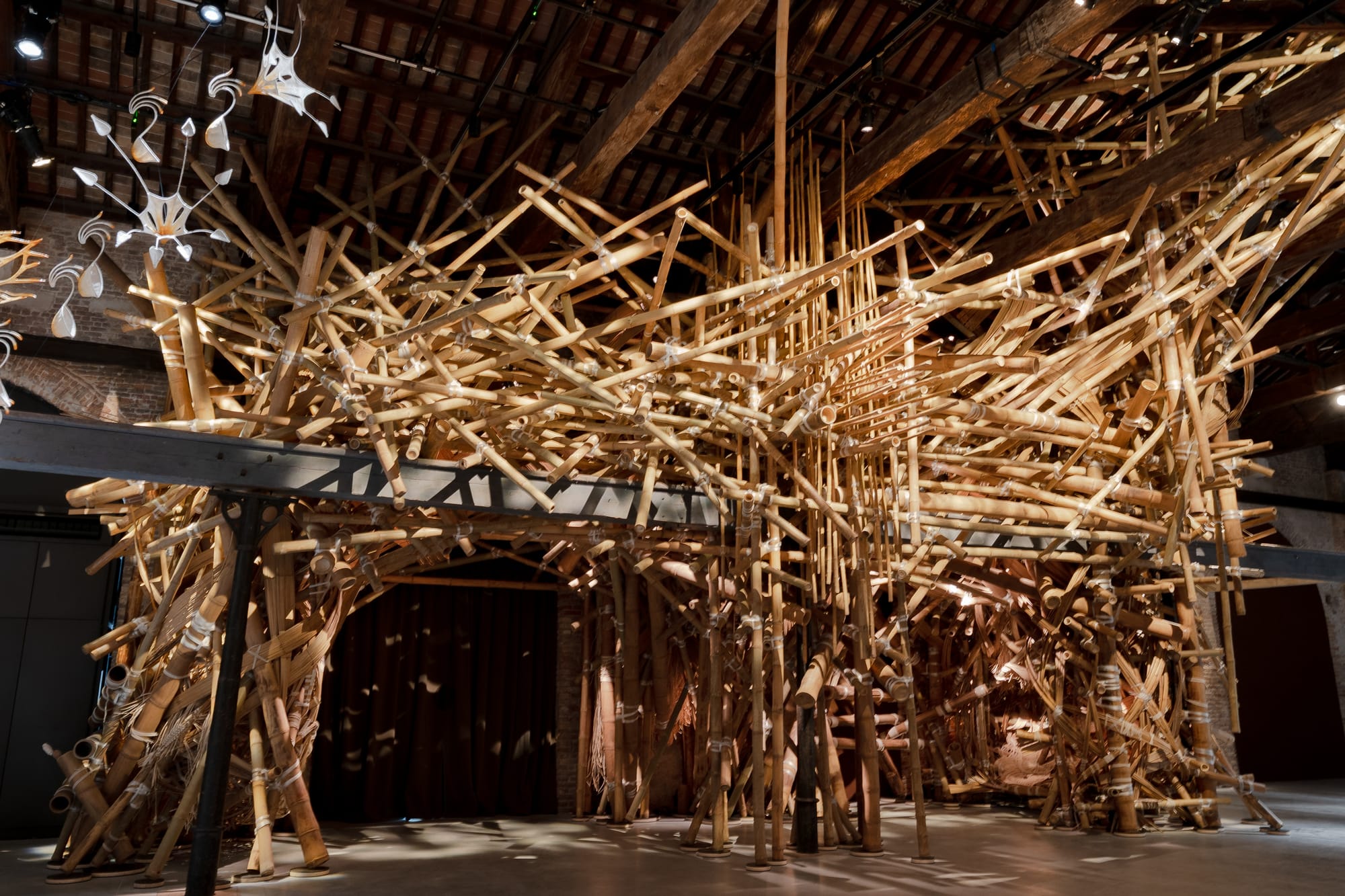
Installation view of ASIM WAQIF’s Chaal, 2026, at the India Pavilion, 61st Venice Biennale, 2026. Photo by and copyright Joe Habben. Courtesy the India Pavilion.
Near Singh’s ethereal structure, the bamboos in Asim Waqif’s Chaal (2026) shoot upward and sideways—dense and unapologetically expansive. Where Singh’s home dissolves into thread, Waqif remains steadfast. It draws on the visual grammar of scaffolding that perpetually blankets cities across India: construction in permanent mid-sentence, always in a state of becoming. There is a rugged quality to Waqif’s edifice, as if it might outlast both the hands that built it.
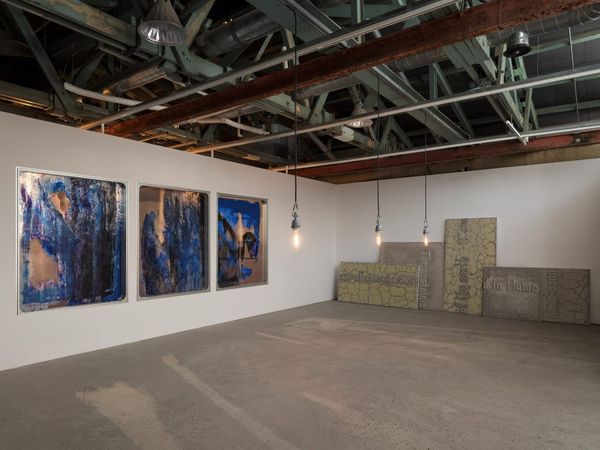
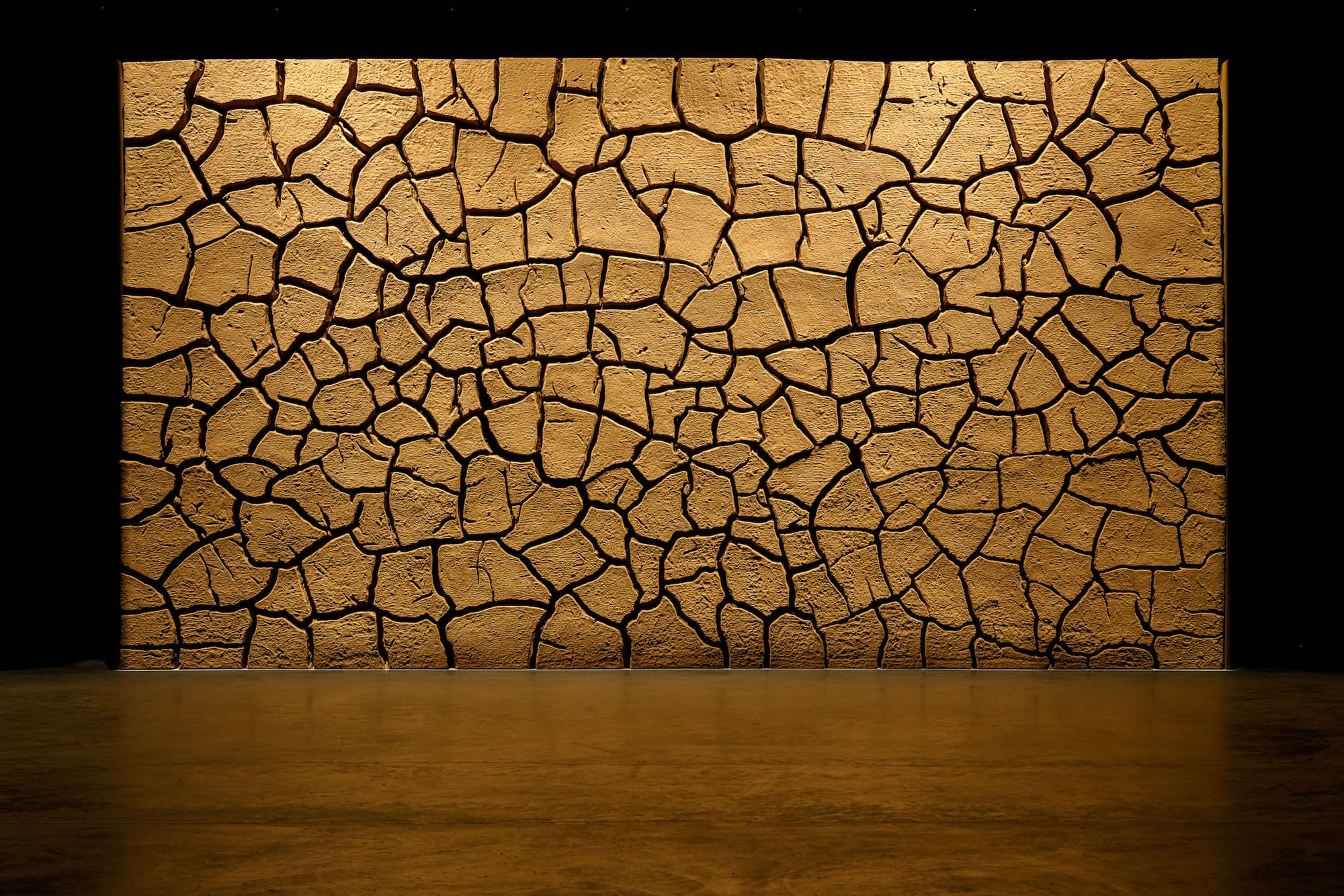
Elsewhere, Alwar Balasubramaniam’s installation, Not Just for Us (2026), embodies an entirely different register. The sculptural panels are made of clay and soil sourced from rural Tamil Nadu, where he works, bearing cracks caused by the natural process of evaporation, which reify the passage of time and ecological fragility. Rather than metaphorizing home through mournful nostalgia, it presents the water cycle as a repetitive ritual of belonging and renewal. Yet the piece also captures the resilience of the land, and how it endures despite seasonal fluctuations.
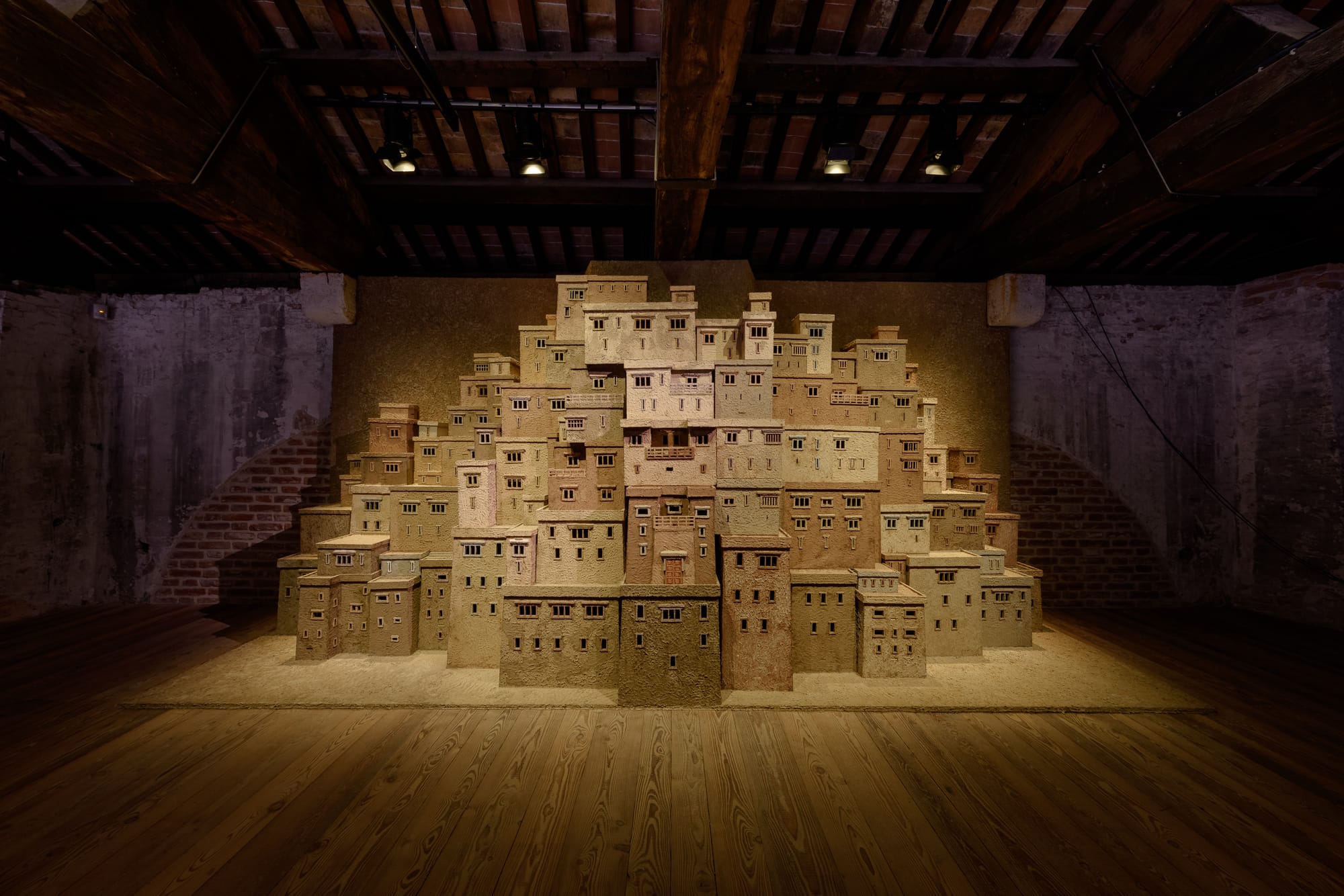
Positioned against one wall, Skarma Sonam Tashi’s Echoes of Home (2026) resembles a mountain settlement. The structure comprises clusters of earth-colored blocks made from papier-mâché of cardboard and discarded books, which the artist soaked and bound with tamarind seed glue and clay from Leh, suggesting Ladakhi dwellings through outline and residue. Despite its seemingly compact architecture, the work feels deliberately fragile with its flimsy, impermanent materiality, standing in for a landscape, and way of life, that is itself in constant flux.
Meanwhile, Ranjani Shettar’s Under the same sky (2026) unfurls overhead like a vegetal awning. The large, pale botanical forms, tinged with deep yellow, sprout and blossom—entirely handwoven from cotton and steel, then lacquered, each petal and tendril is the result of patient, unhurried labor. Their shadows stretch across the floor in quiet abundance, at once intricate and indistinct. Standing beneath the installation, one does not feel grief, but something softer: that part of a bittersweet memory that does not ache—the quiet knowledge that, sometimes, home is a beautiful, fleeting embrace.
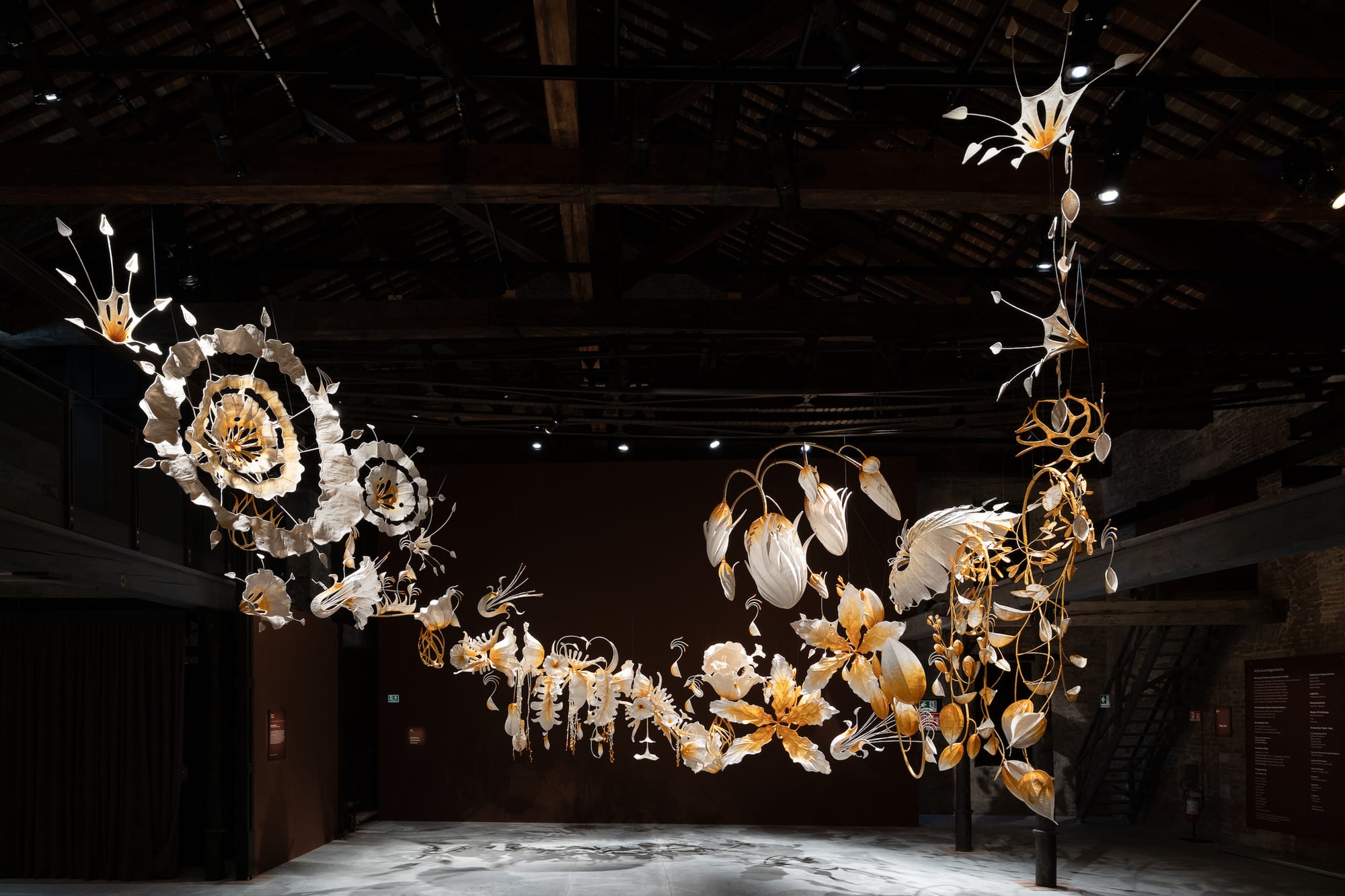
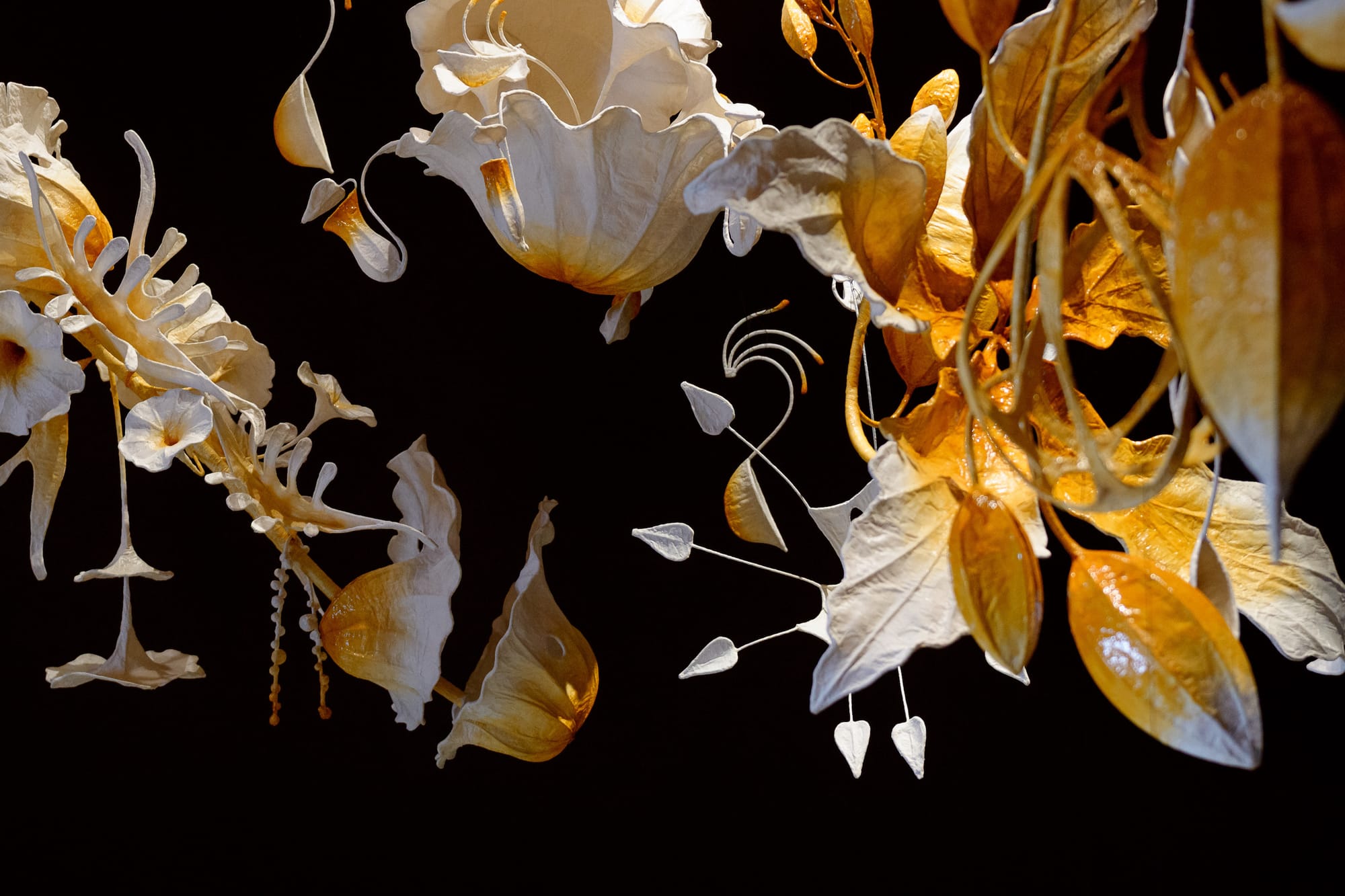
Installation views of RANJANI SHETTAR’s Under the same sky, 2026, at the India Pavilion, 61st Venice Biennale, 2026. Photo by and copyright Andrea Avezzù. Courtesy the India Pavilion.
Taken together, “Geographies of Distance: remembering home” does what only the most careful acts of remembrance can: it holds the ungraspable without fully clutching it. The presentation does not elegize what was once home so much as locate its remnants in unlikely, often overlooked places. Memories of the past are attached not only to physical addresses, but to the smaller, more ordinary textures: hallways that now only exist as delicate maps in your mind; the particular feeling of a space that you once lived in and tended to.
Eventually, it dawns on you that care and loss are the same thing—tied to the same place, but experienced at different moments in time. Somewhere within you, a light still flickers in a room you have not entered in years. The walls may be gone. The address may no longer belong to you. But the memory of standing in that doorway, basking in the glow of that golden afternoon, is always yours to keep.
Shreya Ajmani is a writer and art professional focusing on art from Asia and its diasporas.