Shows
Muralnomad: Batima Zaurbekova’s “Threads of Heritage”
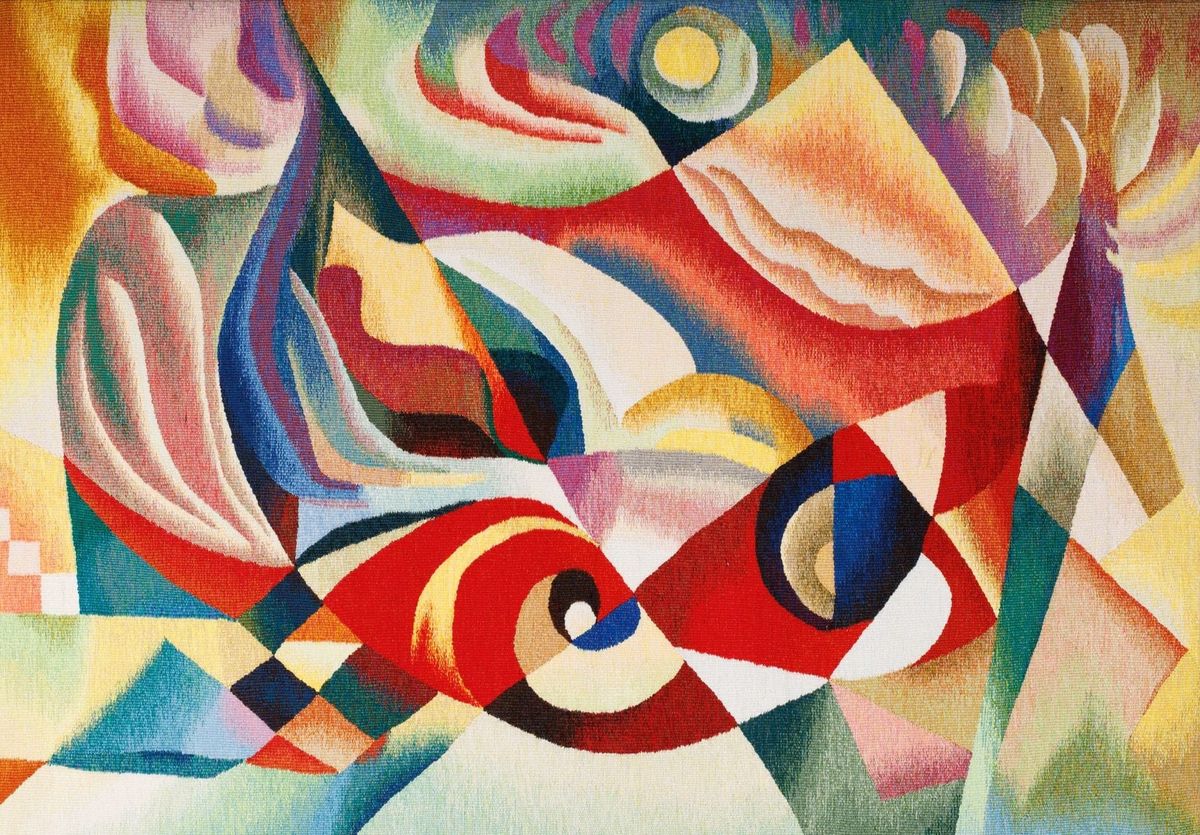
Batima Zaurbekova
Threads of Heritage
Abylkhan Kasteyev National Museum of Arts
Almaty
Sep 25–Nov 8, 2026
In 1952, Le Corbusier declared tapestry “the ‘mural’ of modern times,” the perfect complement for the internationally mobile nomad in an era of revolutionary speed, time, and motion. His term “muralnomads” not only refers to the textiles’ portable nature but also serves as, in scholar Daisy King’s words, “a metaphor for the nomadic inheritance of their making, that in turn mirrors the migration, displacement, and complexity of modernism itself.” “Threads of Heritage,” the solo exhibition by the octogenarian Kazakhstani artist Batima Zaurbekova featuring over 80 tapestries, paintings, and sketches, offers a unique opportunity to consider her works not only within historical lineages but also as personal expressions of postcolonial utopianism, mobility, and progressiveness.
Kazakhstan’s celebrated textile heritage has long mirrored the Central Asian steppe nation’s historic identity as a locus of trading empires, migratory routes, and cultural transmission. The world’s oldest known hand-knotted pile carpet is the Pazyryk rug dating to the fifth century B.C.; it was discovered in a royal tomb of the Pazyryks, a nomadic Iron Age culture that flourished in the Altai Mountain region within present-day Siberia, Kazakhstan, Mongolia, and China. Tapestries and wall hangings are traditional fixtures in Central Asian nomadic architecture where the “woolen walls,” to use Le Corbusier’s term, transformed yurts into homes. Imperial Russian and Soviet developments gave rise to Almaty’s first tapestry school, the Kovroschitsa Artel, which was founded by the artist Nikolai Tsivchinskiy. Tsivchinskiy was born in Saint Petersburg in 1905, studied and worked in Ukraine producing tapestries at the Kyiv Experimental School, and moved to Almaty in 1937 to escape Stalin’s repression. Another important founder of Kazakh tapestries is Kurasbek Tynybekov, who was born in 1947 and studied in Ukraine; he taught at the Almaty Art College in the early 1970s, where he mentored the young Zaurbekova.
As the first female artist in Kazakhstan’s burgeoning school of tapestry art in the 1960s and ’70s, Zaurbekova is all the more estimable for her achievement considering the patriarchal norms that persisted despite women’s equality under the Soviet constitution. She was born in 1946 in the village of Furmanovka in the Zhambul region of the Kazakh Soviet Socialist Republic to an artisanal family; her mother was a carpet artisan and her uncle a jeweler. As a child, Zaurbekova loved music but chose to study painting, which her mother considered a more reputable profession. She graduated from the Alma-Ata Art School in 1969 and later obtained a specialization in applied arts from the Abai Kazakh National Pedagogical University.
In person, Zaurbekova is vivacious and outspoken. She confesses that France had the greatest influence on her as an artist. “In 1982 I had a tour of Rome, Florence, Venice… Everywhere it was an open-air museum. I went to France for an exhibition, and I must admit I was very successful; they even asked me to stay. But those were Soviet times and I had to return to my country… I found inspiration everywhere. The more you see, the more sophisticated your work becomes.” She recalls participating in every exhibition she was invited to, working 16 to 18 hours a day to meet deadlines. She held her first exhibitions in Paris in 1989 and 1991, in Almaty in 1995, Milan in 1998 and Lugano in 1999. From 1997 to 2000 she lived in Turkey, a country for which she felt a great affinity, and held nine exhibitions in Ankara, Istanbul, and other Turkish cities during this period.
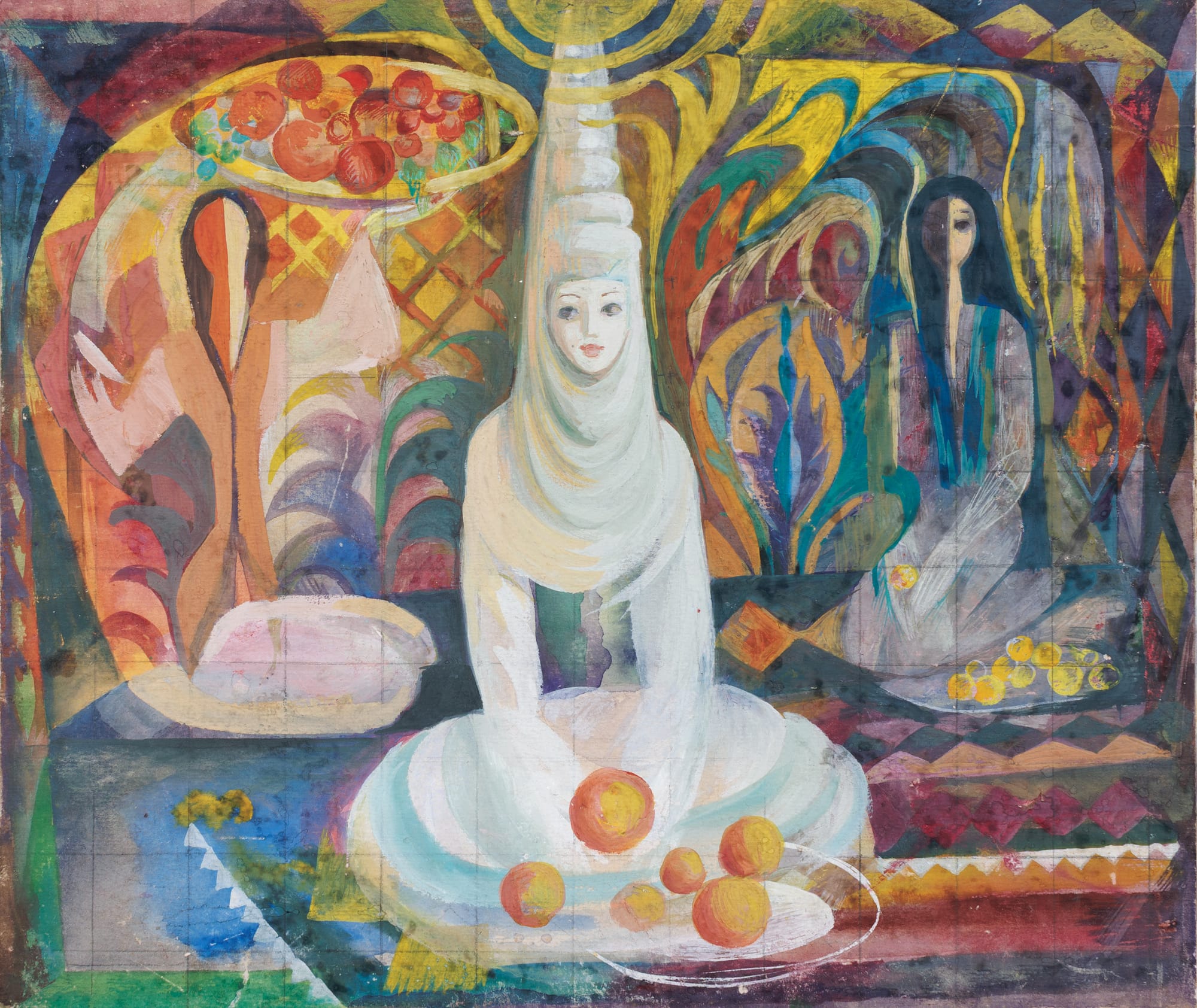
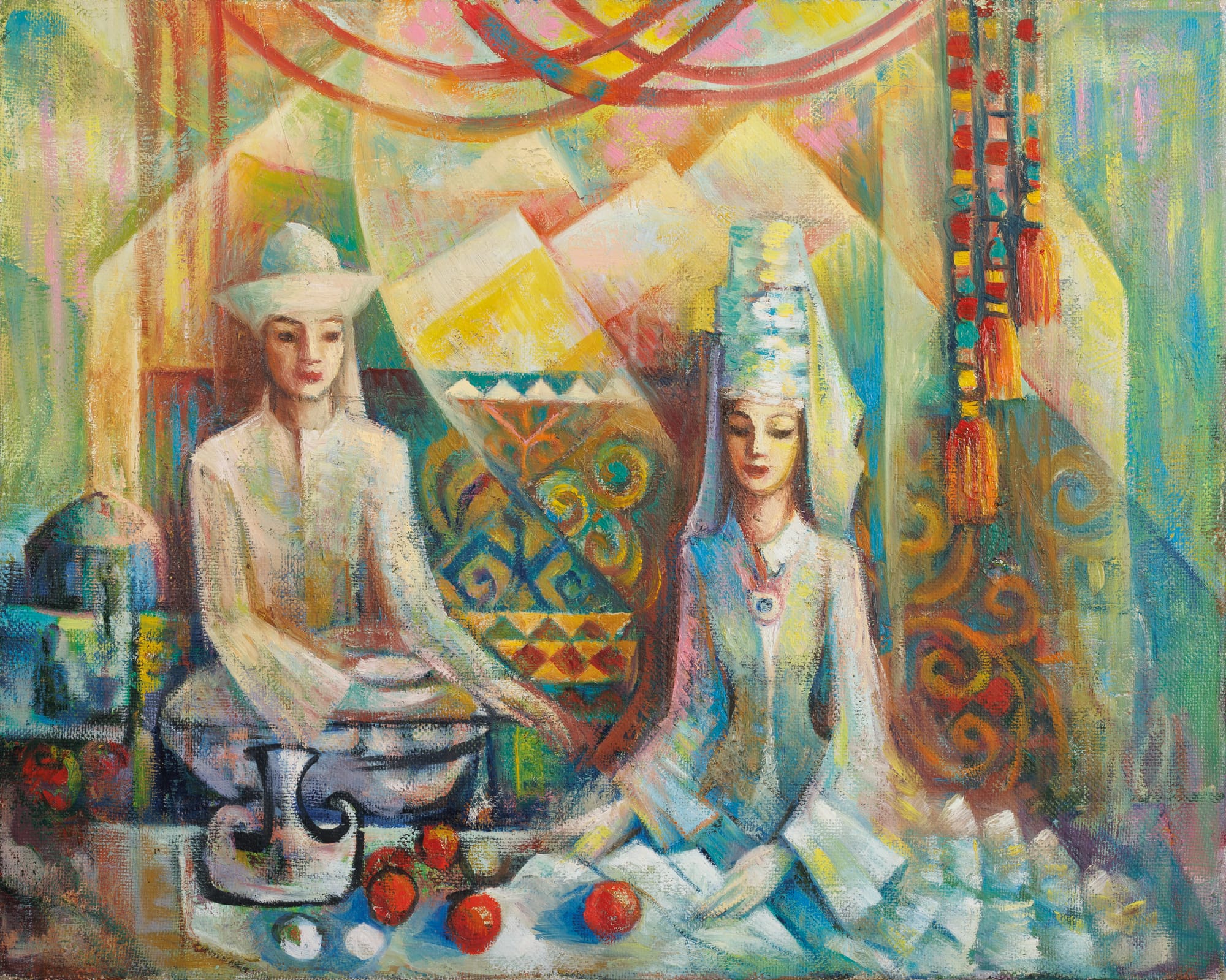
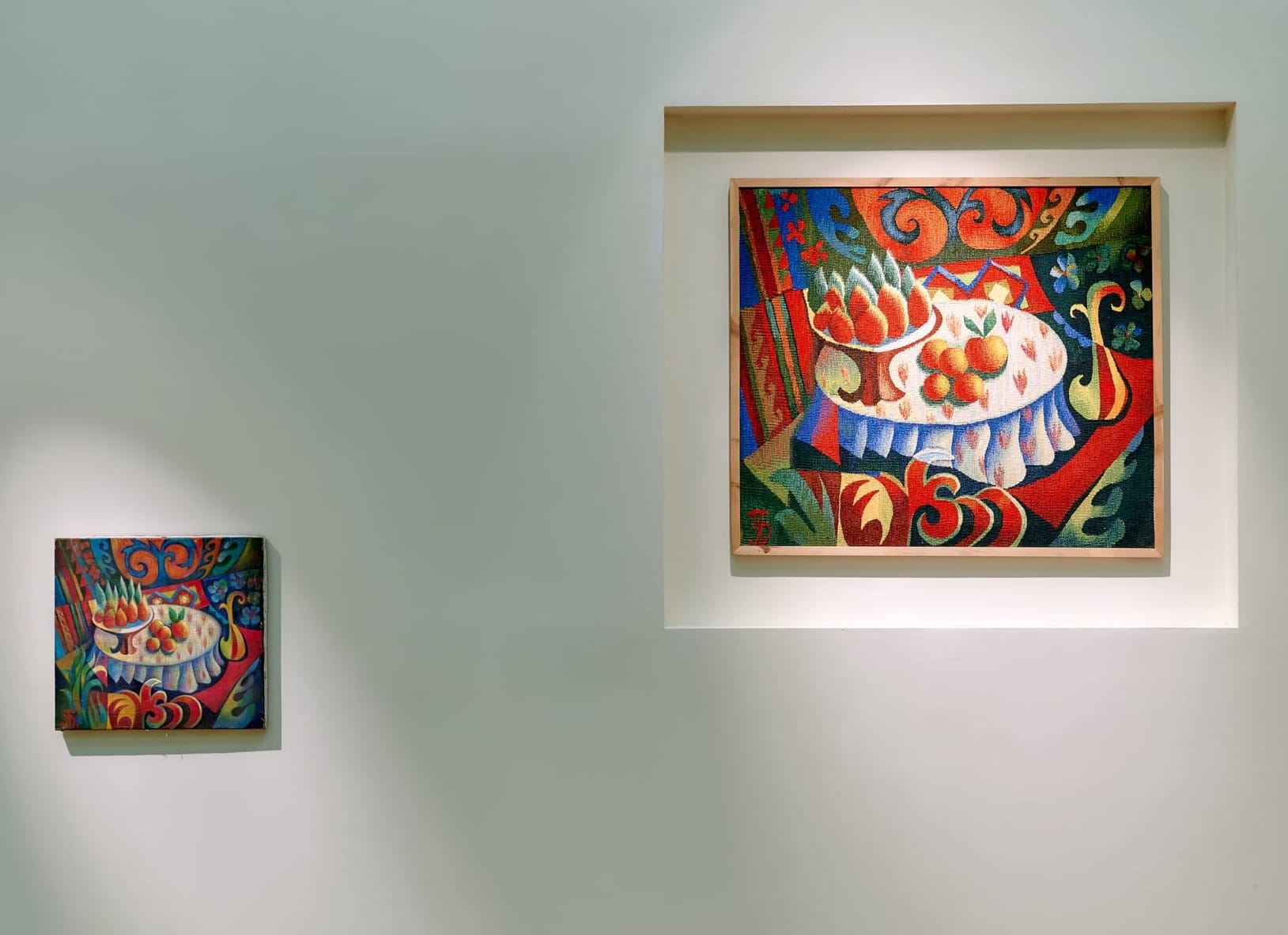
BATIMA ZAURBEKOVA, Waiting, 1980, gouache on paper, 35 x 41 cm (left); and Sketch for the Family tapestry, 2017, oil on canvas (right). Copyright and courtesy the artist.
The exhibition’s Russian curator Alina Fedorovich has made a remarkable effort to position Zaurbekova’s work within the pantheon of Western modernist artists and thinkers, including Claude Lévi-Strauss’s logic of mythological art and Sonia Delaunay’s geometric abstractions. A missed opportunity is the relative lack of explication of Kazakh cultural motifs, as well as the cultural milieu of Zaurbekova’s contemporaries. For example, the first section shows a selection of Zaurbekova’s early works, installed on freestanding temporary walls surrounded by the museum’s permanent displays of ornamental furniture, tapestries, musical instruments, and hunting paraphernalia. The juxtaposition between these ethnographic objects and Zaurbekova’s pieces is striking, but barely addressed by a wall text relating Zaurbekova’s philosophy to that of the Swiss constructivist Sophie Taeuber-Arp. Against the classical tapestries’ palettes and designs, Zaurbekova’s experimentation with figuration and abstraction in works such as In the Yurt (1985) is perceptibly expressive and bold. Even in these early examples, her deceptively unfettered designs resemble freehand painting, and her bright, complex color combinations and transitions are underpinned by technical finesse and confidence.
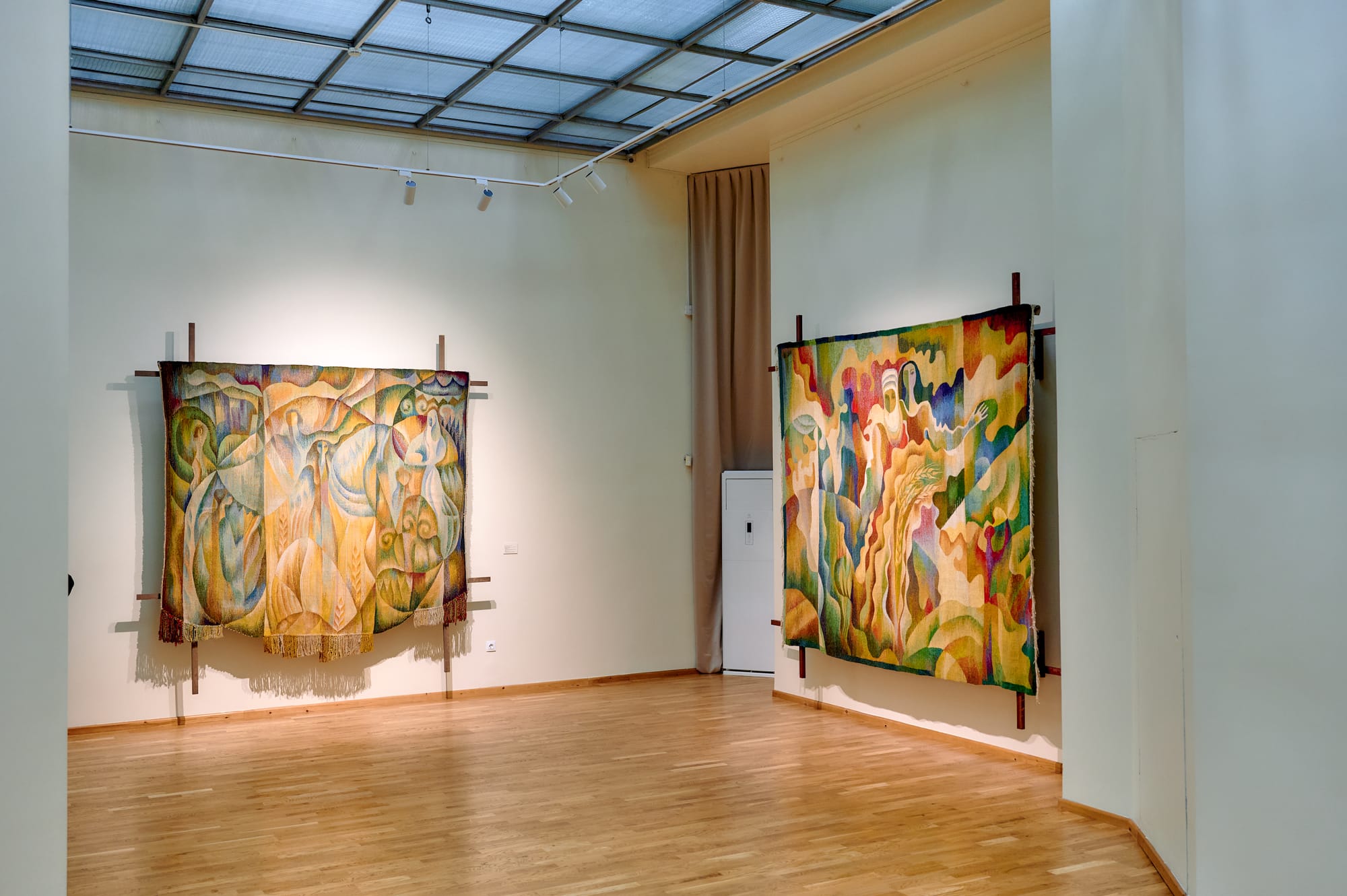
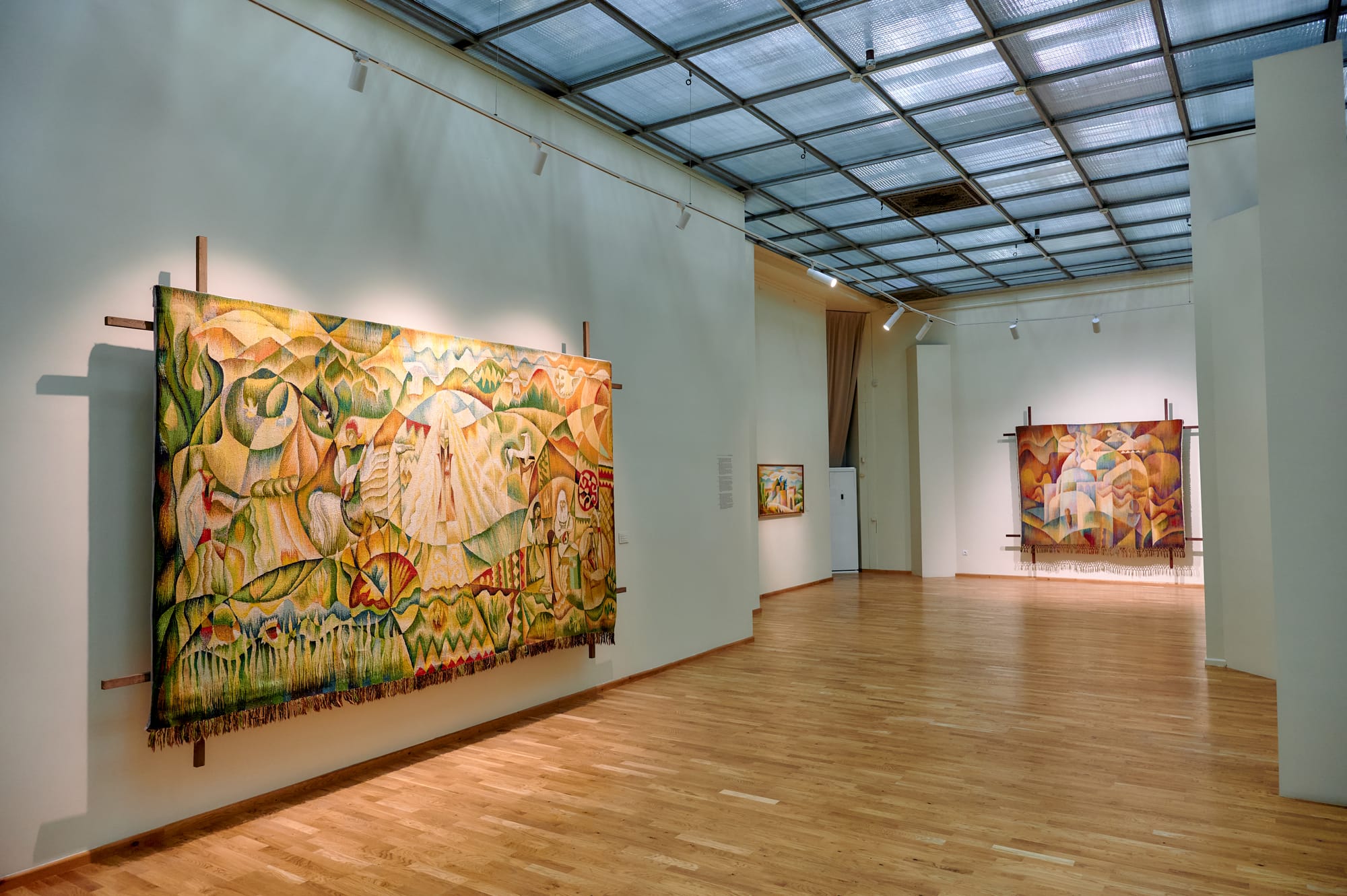
During the 1970s, Kazakhstan experienced rapid industrialization and urbanization alongside the coterminous crises of the Aral Sea’s collapse, continued Soviet nuclear testing at Semipalatinsk in the northeast, and severe environmental degradation from Khrushchev’s disastrous Virgin Lands campaign. Against such irreversible and even existential transformation, the quixotic quest for ecological, social, and cultural harmony underpins Zaurbekova’s monumental tapestries in the exhibition’s second section. Large-scale works such as Vastness (1975), Kazakhstan (1977), and Mother Earth (1984) are most remarkable for their semi-abstract compositions integrating human figures, mountains, trees, and water; wind, air, and light are invested with color, shape, and solidity. Mother Earth, which Zaurbekova highlights as perhaps her most technically demanding project, showcases the artist’s virtuoso dexterity in wave-shaped flourishes merging motifs of land, agriculture, and women. The exhibition’s centerpiece, Vastness, presents a majestic prelapsarian vision of the world, coalescing around a stylized yurt and female figure surrounded by radiant waves of musicians, flora, and fauna. Its kaleidoscopic color gradation is highly intricate and precise, depicting even tiny figures’ cheekbones with intimacy, while unifying diverse landscape elements in an overarching symphony of color. Zaurbekova estimates that this tapestry, measuring 207 by 361 centimeters, took around six months to make; she notes that the selection of thread colors was often the most demanding part of the process, particularly when depicting highly gradated planes of color.
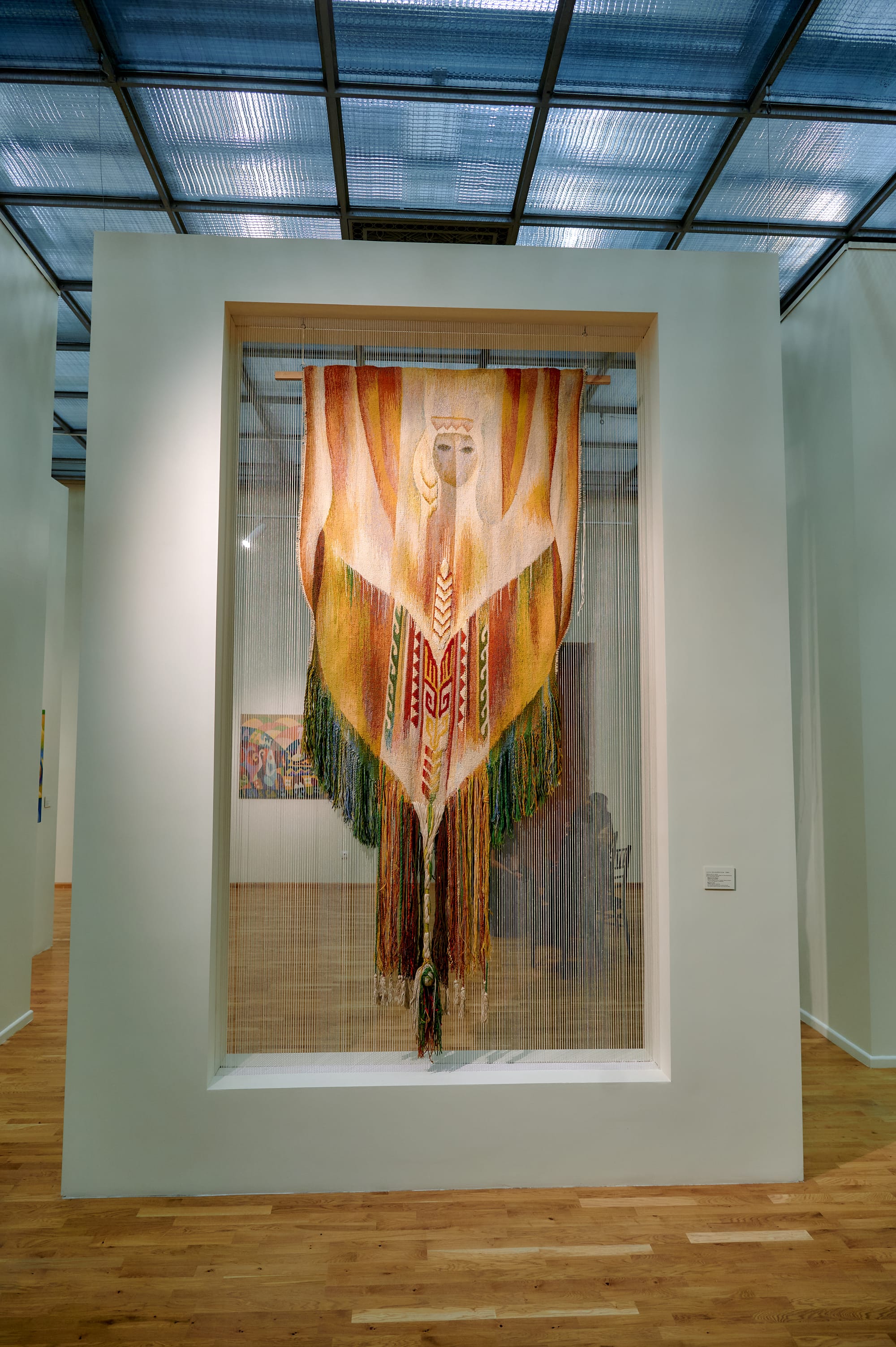
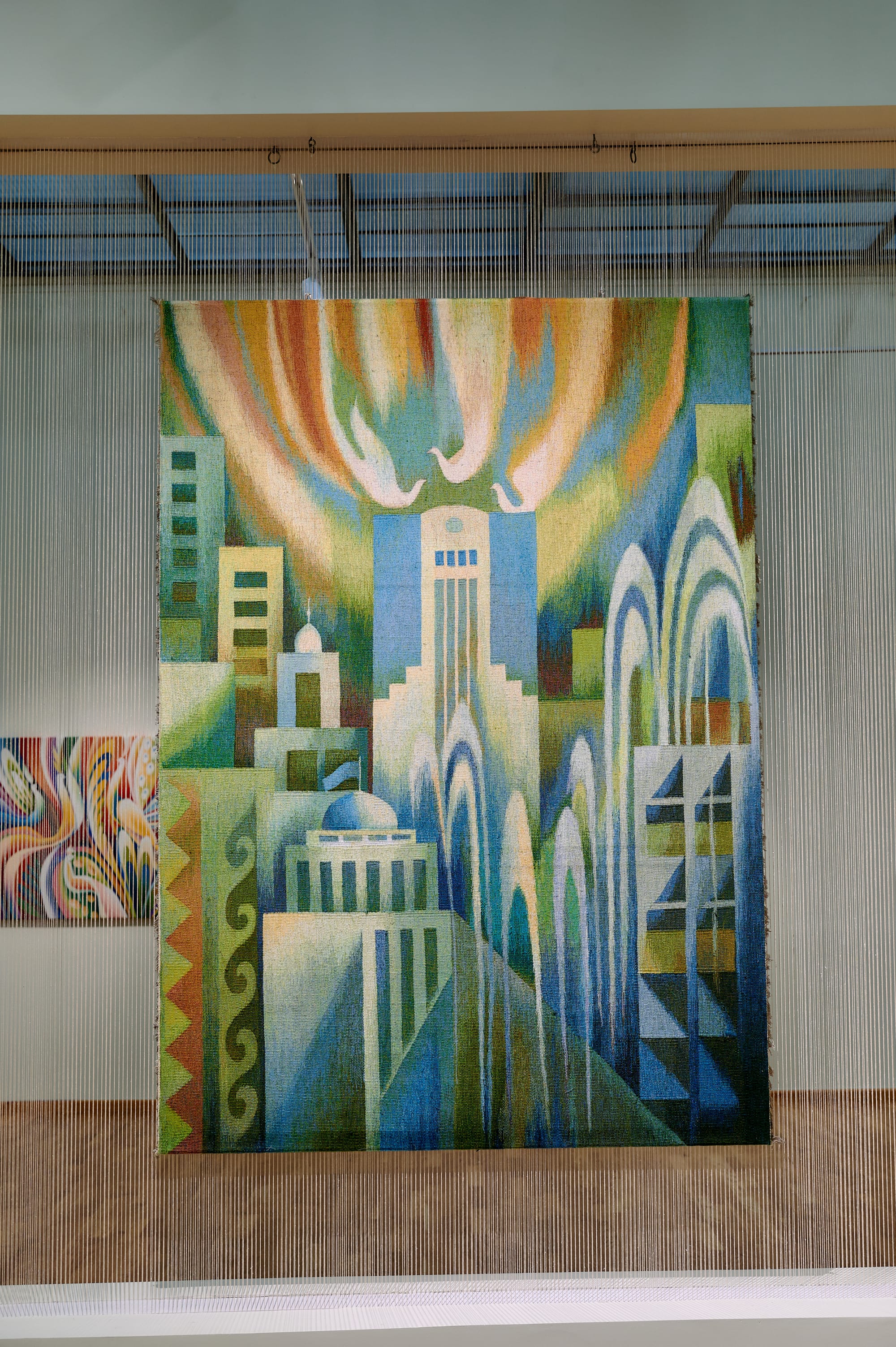
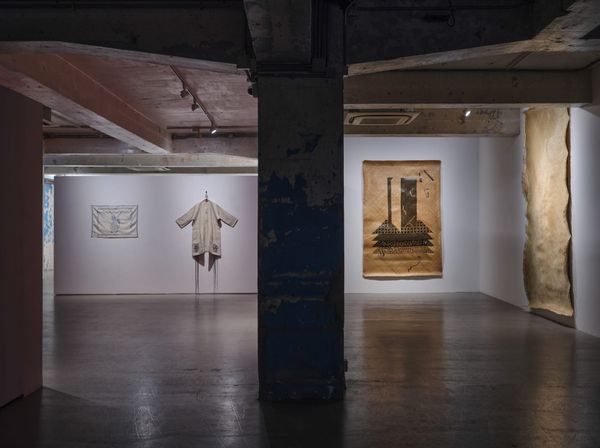
Installation views of BATIMA ZAURBEKOVA’s “Threads of Heritage” at the Abylkhan Kasteyev National Museum of Arts, Almaty, 2026. Photos by Kirill Fedorov. Courtesy the Abylkhan Kasteyev National Museum of Arts.
Zaurbekova’s intensive period of creativity in the late 1970s and ’80s was matched by increasing professional recognition. In 1977, the state commissioned her and three fellow artists to produce a 100-square-meter tapestry for the Kazakhstan Hotel. The landmark work, Rainbow, took two years to produce and is featured in Melody, a documentary about Zaurbekova produced by Kazakhfilm in 1977. After the Soviet Union’s collapse and Kazakhstan’s independence in 1991, Zaurbekova decamped to Turkey, seeking respite from the exhaustion of these transitional years. The immediate post-Soviet period presented difficult times for Kazakhstani artists as the Ministry of Culture stopped commissioning artworks. However, expanding opportunities for interaction with other countries fostered greater cultural exchange and growing public interest in the arts. In 1997, the Soros Foundation opened the Soros Center for Contemporary Art in Almaty; despite criticisms of its harboring a neoliberal agenda, it functioned as an important platform for independent artists before closing 10 years later.
Kazakhstan’s early years of independence find material expression in Zaurbekova’s experimentation with space, time, and motion. She created multiple oil paintings and tapestries of Almaty and Astana in the 2000s, capturing the metropolises in their most dynamic period of post-Soviet economic boom. Here, her skyscrapers pulse with muscular, radiant prisms of color, as if the buildings were literally arching sunward like blooming shoots. It is also delightful to see Zaurbekova’s reworking of certain motifs across decades; in the exhibition catalog, the curators have helpfully juxtaposed several such pairs. The progression of her Still Life canvases from 1978, 1989, 2004, and 2006 is reminiscent of visits to an old friend over many years, marked by new adventures and accumulating wrinkles, where you are always received with joie de vivre and a platter of fresh oranges. Today, Zaurbekova is one of the state’s most illustrious artists: she is an Honored Worker of Culture of the Republic of Kazakhstan and a recipient of the Order of Otan, one of Kazakhstan’s most prestigious civilian awards. Days after her 80th birthday, her exhibition opens on the cusp of a new era of Kazakhstani contemporary art, most prominently heralded by the 2025 inaugurations of the Almaty Museum of Art and the Tselinny Center of Contemporary Culture. Both projects, underwritten by Kazakhstani entrepreneurs, are part of bold visions inscribing Almaty’s star within the global circuits of contemporary art and creative capital. The muralnomads are embarking upon another brave new world.
“Threads of Heritage” is on view at Almaty’s Abylkhan Kasteyev National Museum of Arts from September 25 to November 8, 2026.
Chin-chin Yap is a Singaporean writer and filmmaker based in Lisbon, and a contributing editor for ArtAsiaPacific.