Shows
Conditions for Resonance: “Attunement” at the Taipei Fine Arts Museum
Attunement: Contemporary Politics between Mindscape and Soundscape
Taipei Fine Arts Museum
Taipei
July 4–Sep 27, 2026
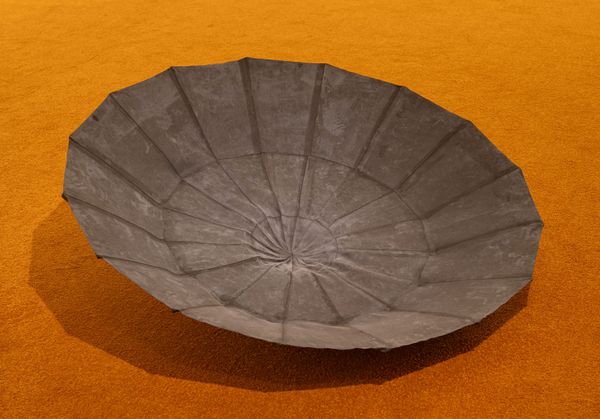
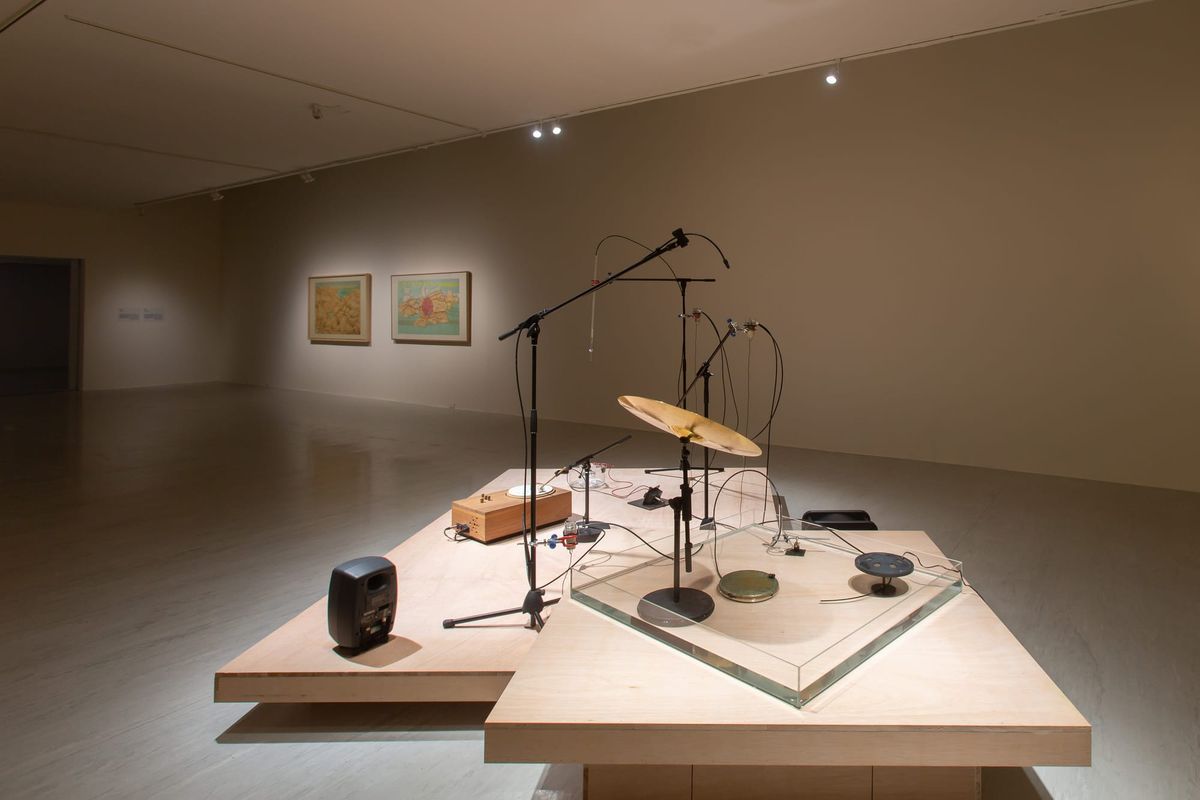
It is said that before an earthquake becomes visible, it is first registered through the body—as vibration, sound, and sensation. Standing before Yuan Jai’s ink painting Shifting Hills (2000), made a year after Taiwan’s devastating 921 earthquake, one senses a trembling in the overlapping lines that transform mountains into rolling waves and dislocations. This perceptual instability extends into the adjacent Long River (2002), where dots and lines of rain dissolve distinctions between mountain ranges and vast rivers. Nearby, Tarek Atoui’s sound installation Pulses in 11 (2020) translates another form of movement into sound: droplets fall into a basin connected to a speaker, producing resonant thuds in an 11-beat cycle with no discernible beginning or end. Drawing on an Arab musical tradition grounded in repetition and collective attentiveness, Atoui directs our perception toward pulse and embodiment. Though they emerge from distinct cultural and artistic contexts, Yuan and Atoui’s works nevertheless seem momentarily in tune.
This immersive adjacency establishes a tone that reverberates throughout “Attunement: Contemporary Politics between Mindscape and Soundscape,” guest-curated by Hsu Fang-Tze at Taipei Fine Arts Museum. At a time increasingly defined by accelerated production and the exhaustion of attention, Hsu proposes attunement not as another demand upon already depleted senses, but as a practice of redistributing sensorial awareness. Confronting consequential issues such as climate breakdown, colonial extraction, and genocidal violence, the exhibition frames attunement as an ethical and political practice—one that cultivates attentiveness while reorienting habitual modes of perception.
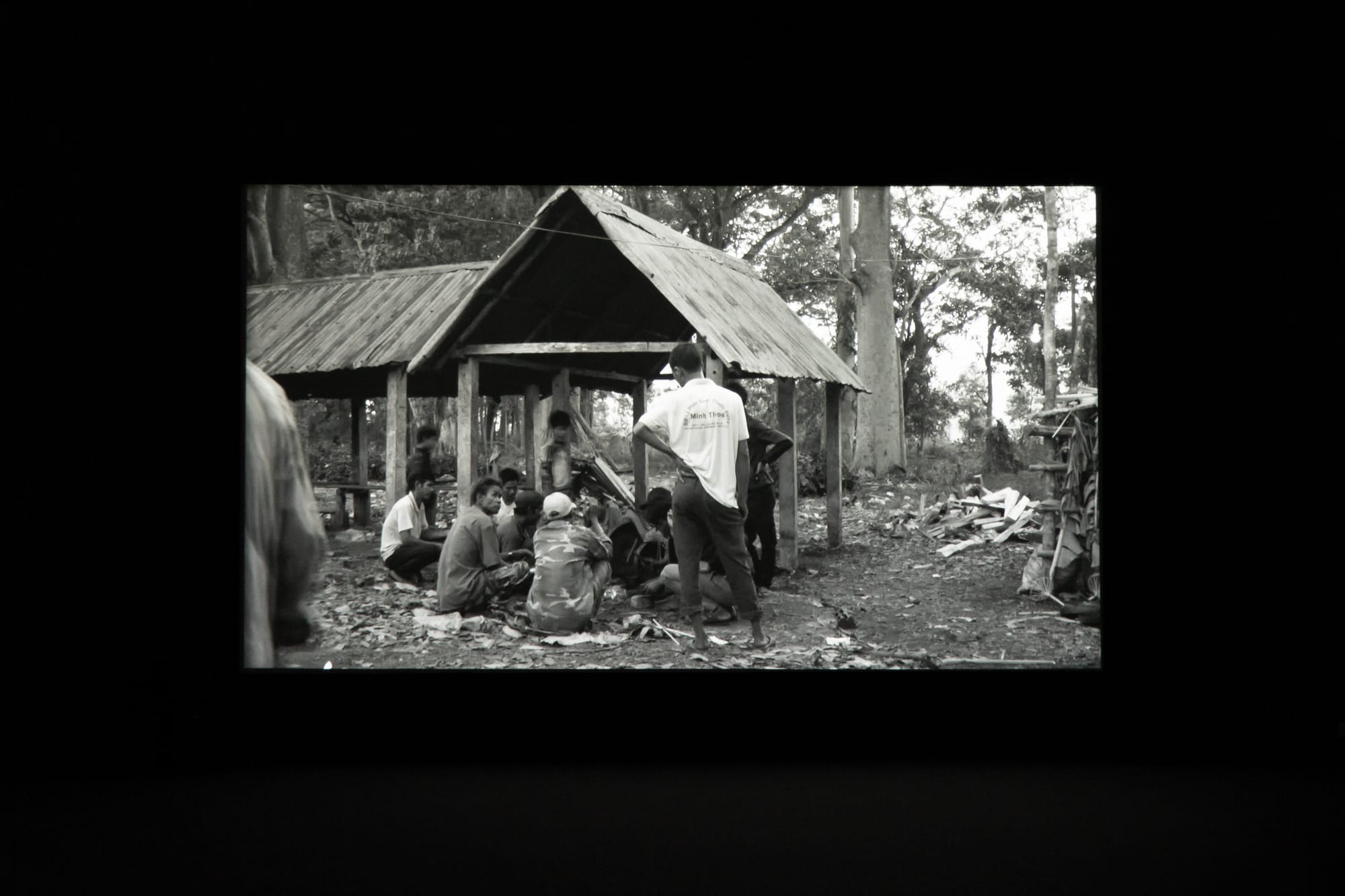
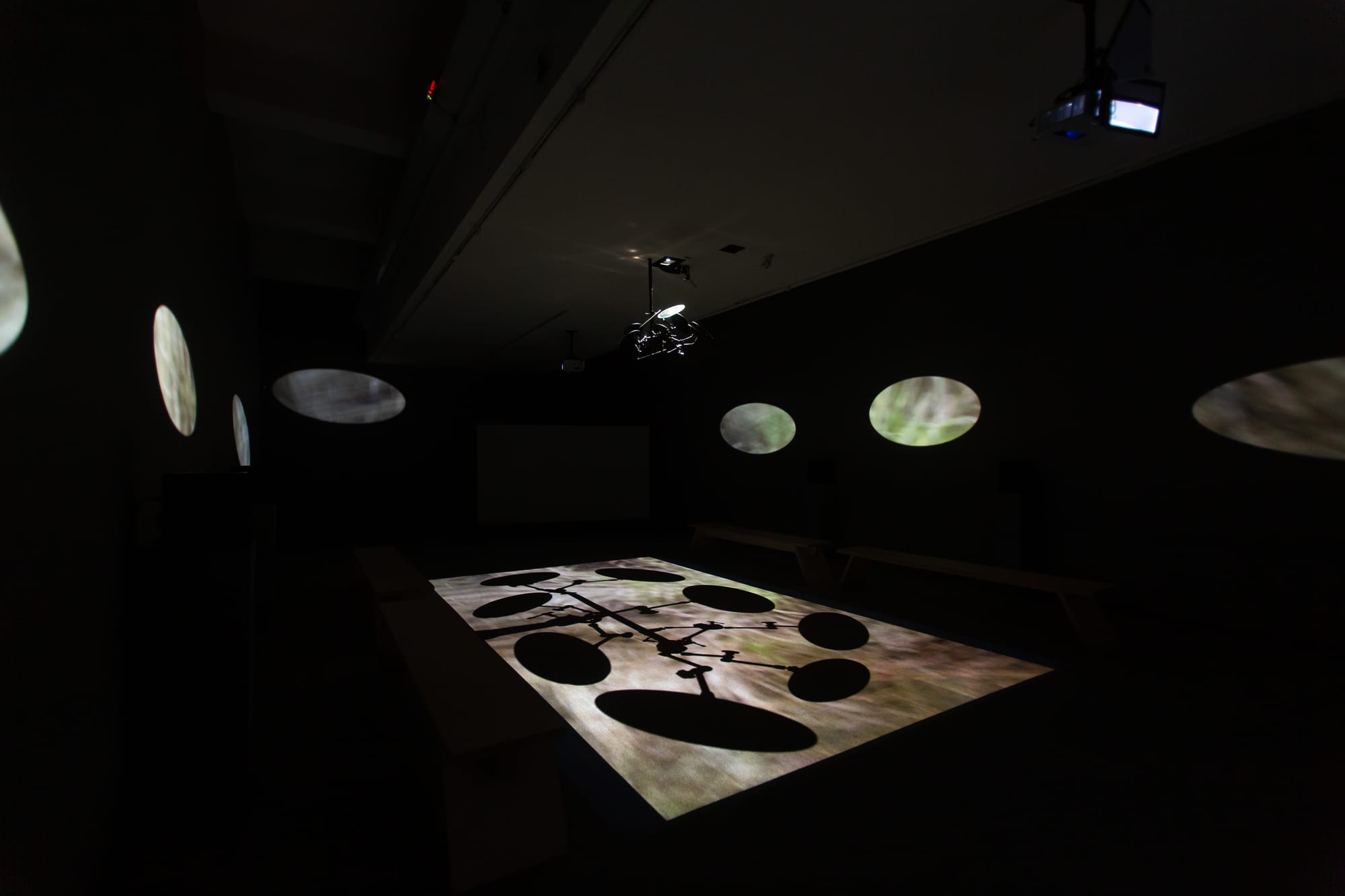
Installation views of NGUYEN TRINH THI’s 47 Days, Sound-less, 2024, at “Attunement: Contemporary Politics between Mindscape and Soundscape,” Taipei Fine Arts Museum (TFAM), 2026. Courtesy the artist and TFAM.
A compelling example is in Nguyen Trinh Thi’s video installation 47 Days, Sound-less (2024). Set within a darkened chamber, two diagonally positioned screens and suspended mirrors create an enveloping environment of shapeshifting images, light, and sound. Between the screens, viewers encounter a layered montage that combines Nguyen’s earlier footage of Jrai communities preparing rituals with natural landscapes and sounds drawn from American and Vietnamese films. Colonial cinema has long participated in determining what deserves narrative attention and what remains peripheral. Who or what is permitted to occupy the foreground, and which histories, bodies, and environments are reduced to noise? Rather than answering these questions through the production of new images, Nguyen challenges anthropocentric modes of perception and colonial extractivism through an embodied, nonlinear form of storytelling that reorients our senses toward what has always been present yet deemed insignificant.
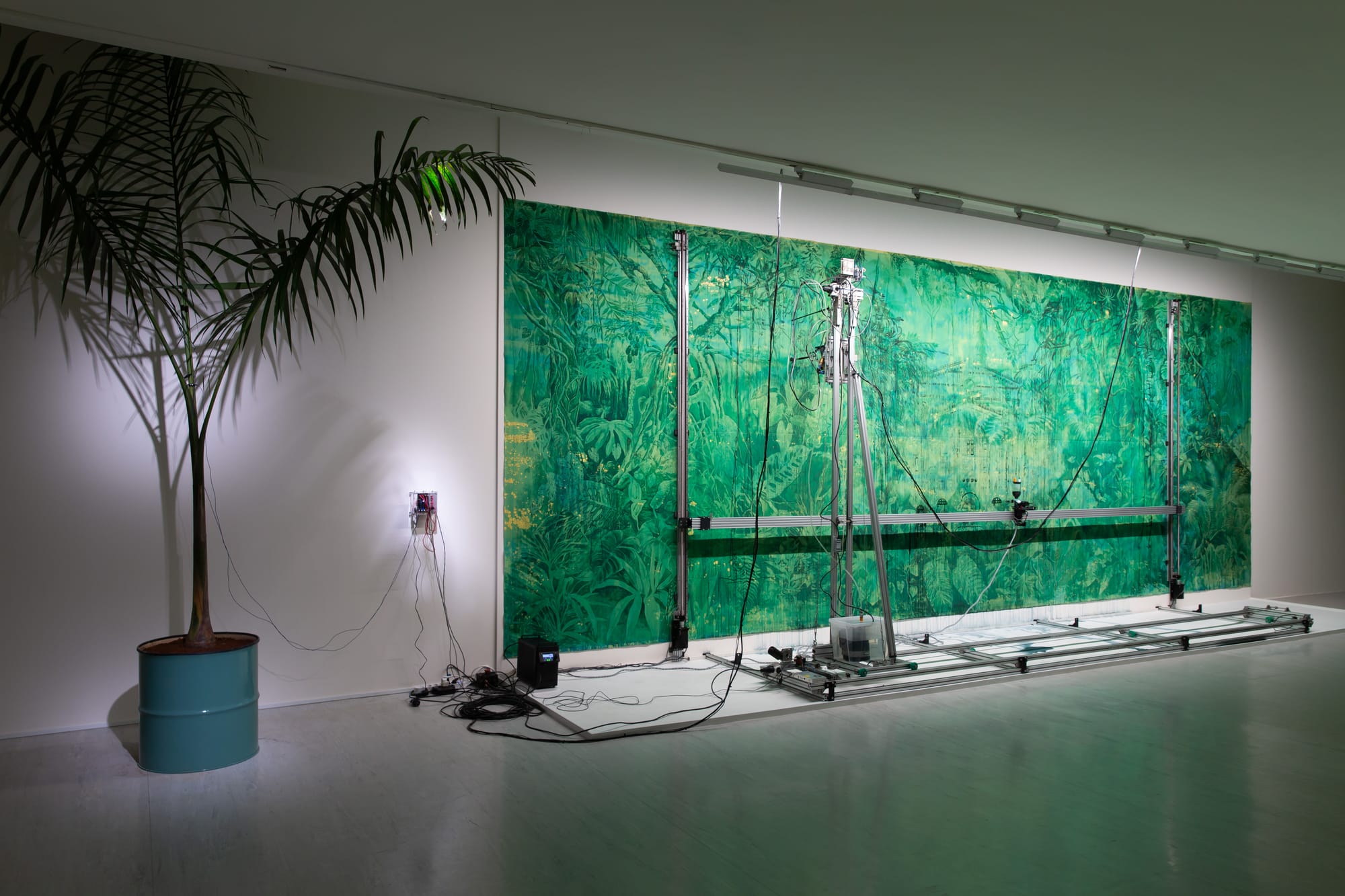
In the neighboring gallery, bright artificial light draws the attention to the expansive imagery of Kei Imazu and Bagus Pandega’s Artificial Green by Nature Green 4.3 (2025/26). The work connects a living royal palm to a mechanical drawing arm whose movements are guided by the tree’s electrical activity. Using water-soluble ink, the mechanism produces green images throughout the week, only for them to be erased over the weekend before the cycle begins again. A 1905 lithograph of an Indonesian rainforest is brought into relation with the Royal Palm Boulevard at National Taiwan University, which was founded in 1928 during the Japanese colonial era, connecting Indonesia and Taiwan through intersecting histories of colonial cultivation and extraction. Rather than producing a stable object, the work unfolds through cycles of inscription, erasure, and renewal. Yet this regenerative rhythm carries a darker implication: it sits uneasily alongside the disappearance of forests through palm-oil production, placing simulated ecological regeneration against an economic system propelled by relentless extraction and growth.
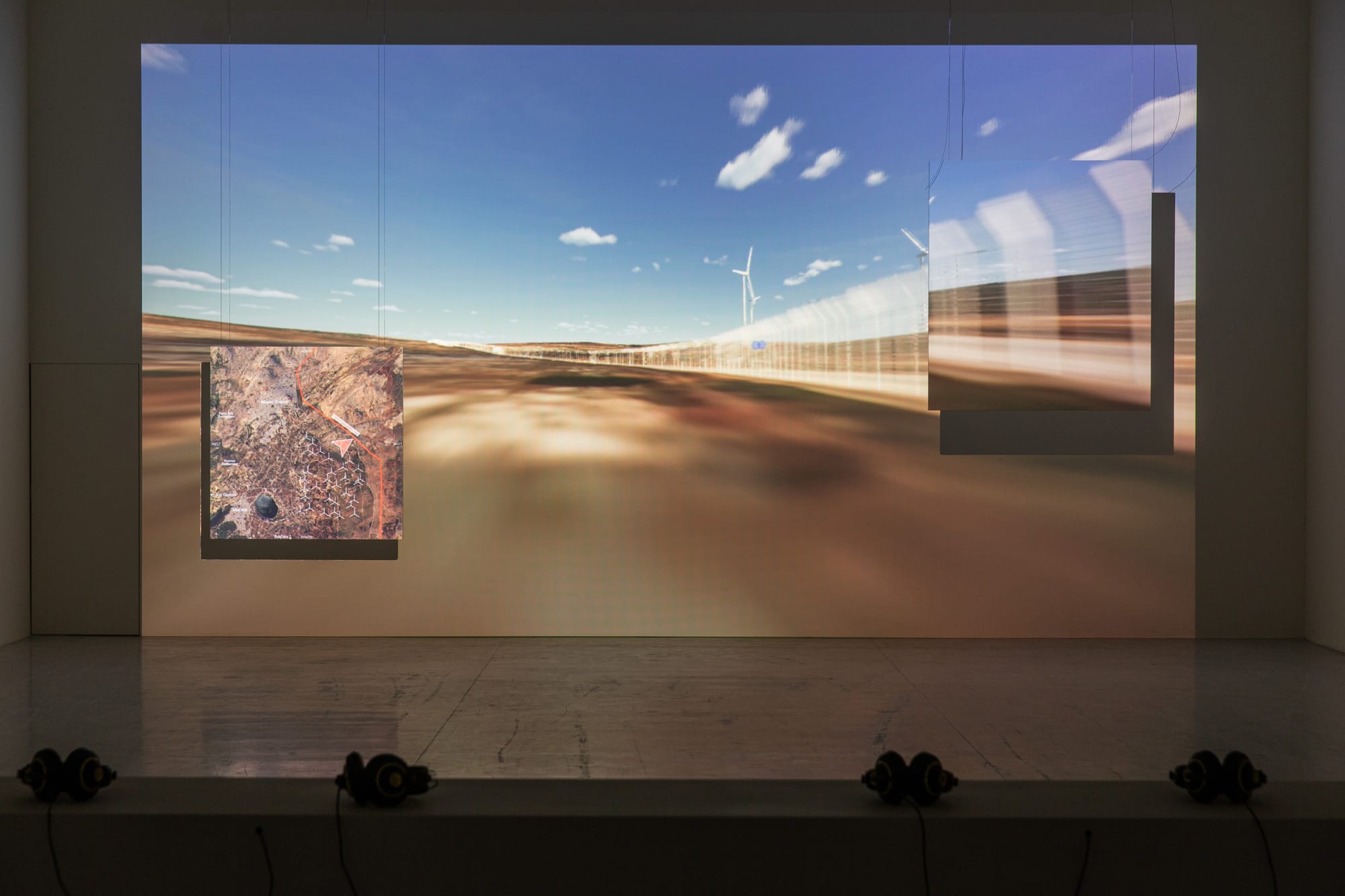
Throughout the exhibition, such moments of friction, instability, and transformation recur, both in the bodily experience of moving through the galleries and in the histories mobilized by the artists. Lawrence Abu Hamdan’s Zifzafa: A Livestream Audio Essay (2025) visualizes the invisible propagation of noise from planned wind turbines across the occupied Syrian Golan Heights, revealing how sound can become a means of occupying bodies and territories. In Chen Ting-Jung’s You Are the Only One I Care About (whisper) (2018), the affective familiarity of popular music becomes entangled with the ideological infrastructures of Cold War-era broadcasting. Just as sound is produced through oscillations traveling across air and matter until they reach our ears, attunement should not be mistaken for pure harmony. Drawing on Anna Tsing’s notion of “friction,” Hsu foregrounds how various sonic encounters generate conflict and inequality as well as unexpected collaborations, translations, and possibilities.
Susan Schuppli further challenges the limits of human perception in Listening to Ice (2021), turning to hydrophones capable of registering meltwater, cracking ice, and ancient air bubbles within the Drang Drung Glacier. Bringing scientific techniques into dialogue with the situated knowledge of Indigenous communities affected by climate change, Schuppli approaches the glacier not simply as an object of study but as a “material witness”—matter capable of registering and testifying to environmental transformation. Listening here becomes a means of recognizing forms of testimony that established regimes of evidence are unable, or unwilling, to register. ICE RECORDS (2022) extends this proposition by treating glaciers as archives whose histories disappear as they melt. Available for visitors to play in a dedicated listening room, the vinyl records gradually deteriorate with each use, their material decay echoing that of the environments they preserve.
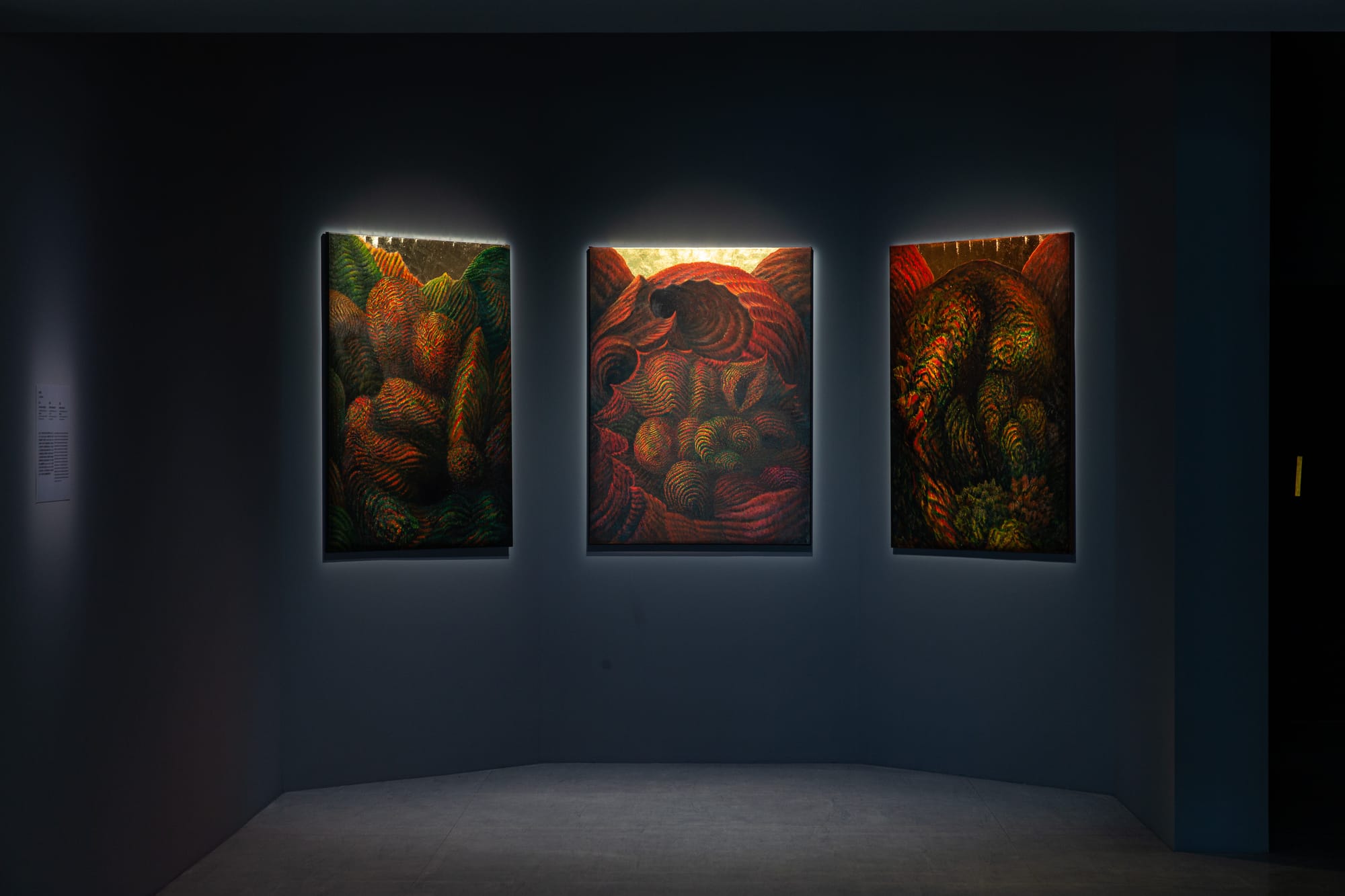
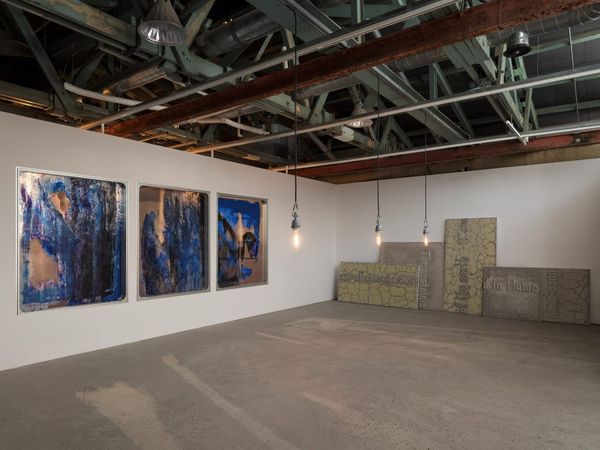
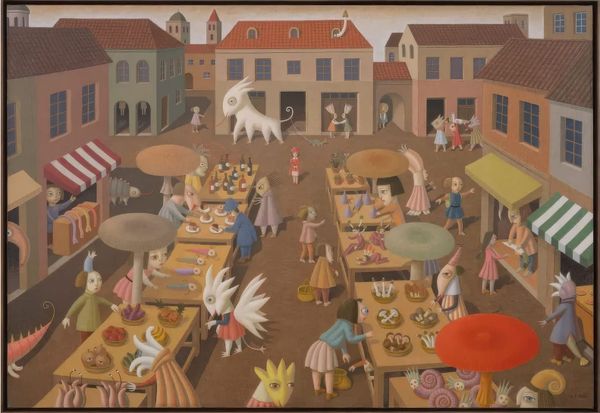
Attunement derives its force not only from individual artworks but from their careful choreography within the exhibition space. Together, they suggest curating itself as a practice of attunement: composing conditions in which different frequencies, temporalities, histories, and intensities meet—in resonance, but without resolution. This curatorial proposition is perhaps most palpable in Lin Chi-Wei’s presentation. Building upon his exploration of synesthesia and the rhythmic brushwork exemplified by Kazimir Malevich, Lin’s paintings Mountain of Nāgas, Mother Raw Earth, and Magic Mountain (2020–22) immerse viewers in a dynamic temporality through vivid red hues and textured surfaces set against midnight-blue walls. The repeated use of line and color produces a visual musicality that links Lin’s practice to that of the self-taught ink painter Yu Cheng-Yao (1898–1993), whose works from both museum and private collections are displayed in adjacent rooms.
Both artists engaged deeply with music. Lin has developed a philosophical history of sound independent of Western traditions, drawn to traditional Chinese music broadly; Yu, by contrast, devoted his life to reviving Nanguan, a tradition characterized by slow, restrained melodies and concentrated performance. What they share is a transgenerational inquiry into discipline and meditative practice, structured through sustained attention. Lin extends this sensibility through Chapelet (Chapelet Sonore) (2018), in which five strings of handmade beads, color scores, human voices, and bodies become an engine for synesthesia, allowing a performance to unfold without rehearsal or conductor. A minimal structure remains in the form of the beads, colors, and five evolving passages, while the resulting sonic community emerges contingently through listening bodies and live correspondence.
Lin’s work thus brings “Attunement” toward a fitting, if deliberately unresolved, conclusion. Rather than reconciling the exhibition’s tensions, it situates us within a larger resonant field in which energies circulate, collide, and continually shift. What holds this field together is neither harmony nor consensus, but a set of conditions spacious enough for difference to persist and structured enough for new relations to emerge. Attunement, in this sense, is less about achieving synchronization than about developing the capacity to remain receptive to what cannot be fully assimilated into one’s own frequency. Within this delicate balance—between structure and openness, listening and friction—something unforeseen, perhaps even revolutionary, might become possible, if we are willing to listen.
Emily Shin-Jie Lee is a Taiwanese researcher, writer, and curator based in Amsterdam. She is currently head of research at Framer Framed, a platform for contemporary art, visual culture, and critical theory and practice, and a PhD candidate at the Amsterdam School for Cultural Analysis, University of Amsterdam.