Shows
Wisdom Beneath Waves: Kim Duck-Yong at Soluna Fine Art
Kim Duck-Yong
Where Grain Becomes Light
Soluna Fine Art
Hong Kong
Oct 15–Nov 28, 2026
In the 16th-century esoteric text Gyeongmong yogyeol (“The Secret to Banishing Ignorance”), Korean scholar and philosopher Yi I wrote: “A learner must face toward the Way with sincere heart and not disturb his will with various worldly matters.” The aphorism, inspired by Confucianism, Daoism, and Zen Buddhism, highlights the intellectual discipline and inner cultivation that run through literati art. Kim Duck-Yong’s “Where Grain Becomes Light” at Soluna Fine Art in Hong Kong harnesses this literati spirit. Utilizing organic mixed media and traditional methods as a lens on nature and interiority, the South Korean artist renders the external world as a space for quiet self-examination.
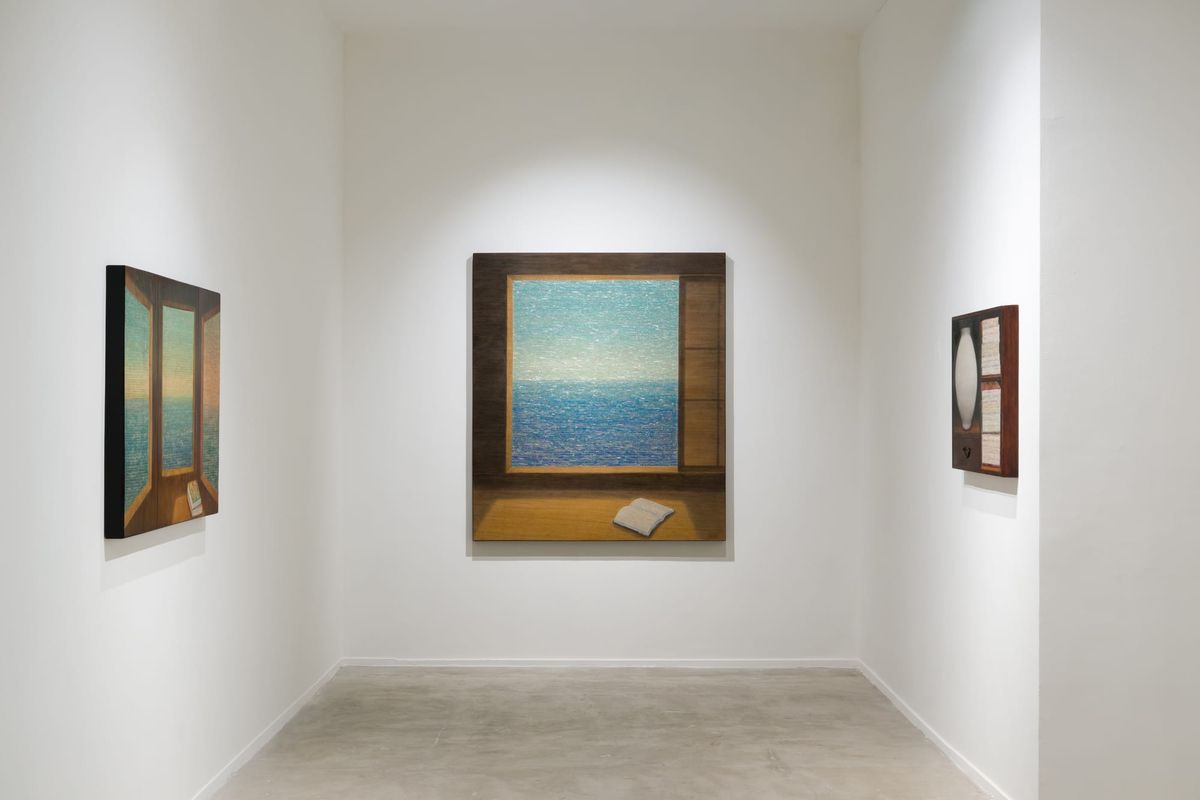
The ground floor of the gallery is transformed into a salon of seaside portals, chief among them Borrowed Scenery - Light and Grain (2026). Kim grew up with East Asian philosophies that emphasize ecological harmony, and here makes the connection between material and subject essential. A depicted window frame of a cabin is made of actual wood, while a coruscating ocean vista comprises mother-of-pearl, found exclusively inside the shells of ocean-dwelling mollusks. In the foreground, an open book rests in the sunlight, alluding to Confucian ideals of knowledge and erudition. Calm, focused, and restrained, the work is shaped by its simplicity, cultivating an image that is, as its title suggests, “borrowed”—from the environment, ideologies, and experience.
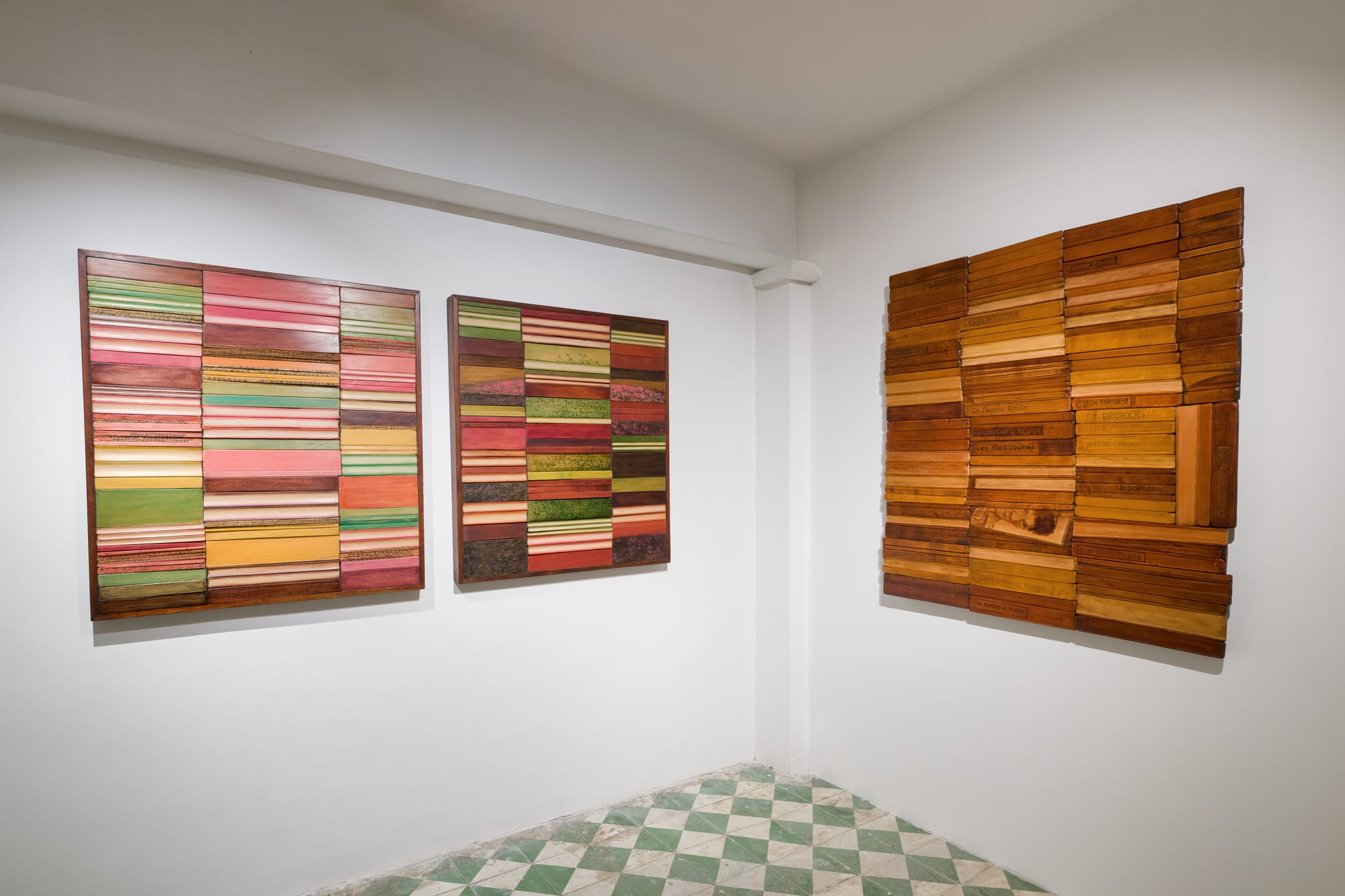
Installation view of KIM DUCK-YONG’s Chaekgeori - Jeokcheung Jimi (The Beauty of Accumulation) series, 2013– , dancheong and mixed media on wood, dimensions variable, at “Where Grain Becomes Light,” Soluna Fine Art, Hong Kong, 2026. Courtesy the artist and Soluna Fine Art, Hong Kong/Seoul.
Ascending to the next floor, these concepts manifest in a more understated manner. The Beauty of Accumulation series (2013– ) features wooden blocks decorated in the traditional Korean wood-dyeing method of dancheong to resemble vertical stacks of books. Autumnal colors form the covers and spines, while woodgrain stands in for pages. On some, Yi I’s pithy quotes urge aspiring sages-in-training to study diligently. In another panel, volumes bear titles from Vincent van Gogh’s oeuvre. These works tie Kim’s practice not only to the literati ideal of being well-read but also to a wider pictorial tradition of representing nature. The van Gogh homage directly evokes the Dutch painter’s close attention to color and light, a preoccupation that Kim pursues in the shimmering refractions across his striated seascapes.
Kim’s works exude a certain tranquil steadiness. Their materials engage the organic world, and their methods and influences are distilled from his life and worldview. Elegant as his ocean sunrises are, and contemplative as his pillars of novels may be, neither is ultimately the real subject. What is truly on display is Kim’s own inner cultivation, which recalls Yi I’s words: “Let this mind be like the bright sun in the blue sky, that people are able to see.”
Harison Butler is an editorial intern at ArtAsiaPacific.