Shows
Up Close: Firenze Lai Paints the Gravity of Hope
Firenze Lai
North and True North
White Cube Mason’s Yard
London
Oct 13–Nov 14, 2026
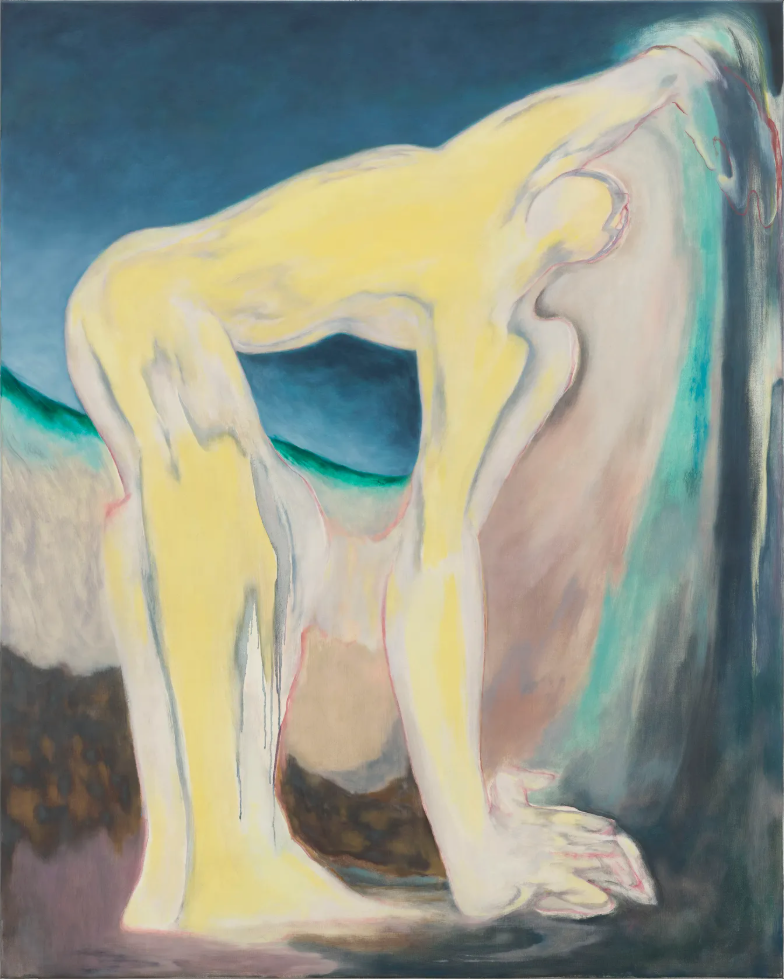
Some painters give pain a color; Firenze Lai draws out its pallor. In Moonbow (2024), the yellow figure glows softly, its depleted hue suggesting sickness as much as sanctity. It stoops, one arm braced against the ground, the other pawing at an indeterminate opening overhead. With the slightest stroke, Lai registers the head’s agonizing backward tilt: the effort of looking up while the body bears down. Below, a red vein runs through a finger of the distended supporting hand. Thinly brushed, the hues chafe against one another, violent in their quiet dissonance.
The painting belongs to “North and True North,” Lai’s solo exhibition at White Cube Mason’s Yard. Where the Hong Kong-born painter’s earlier protagonists already bend and buckle against the spaces they inhabit, here flesh takes on sculptural density, each contortion calcifying under the strain of sustaining it. Color offers moments of levity: lush in some passages, desultory in others. Alone or heaped together, the bodies teeter between ungainliness and grace, their heft and mass insisting that poise is but burden, carried well.
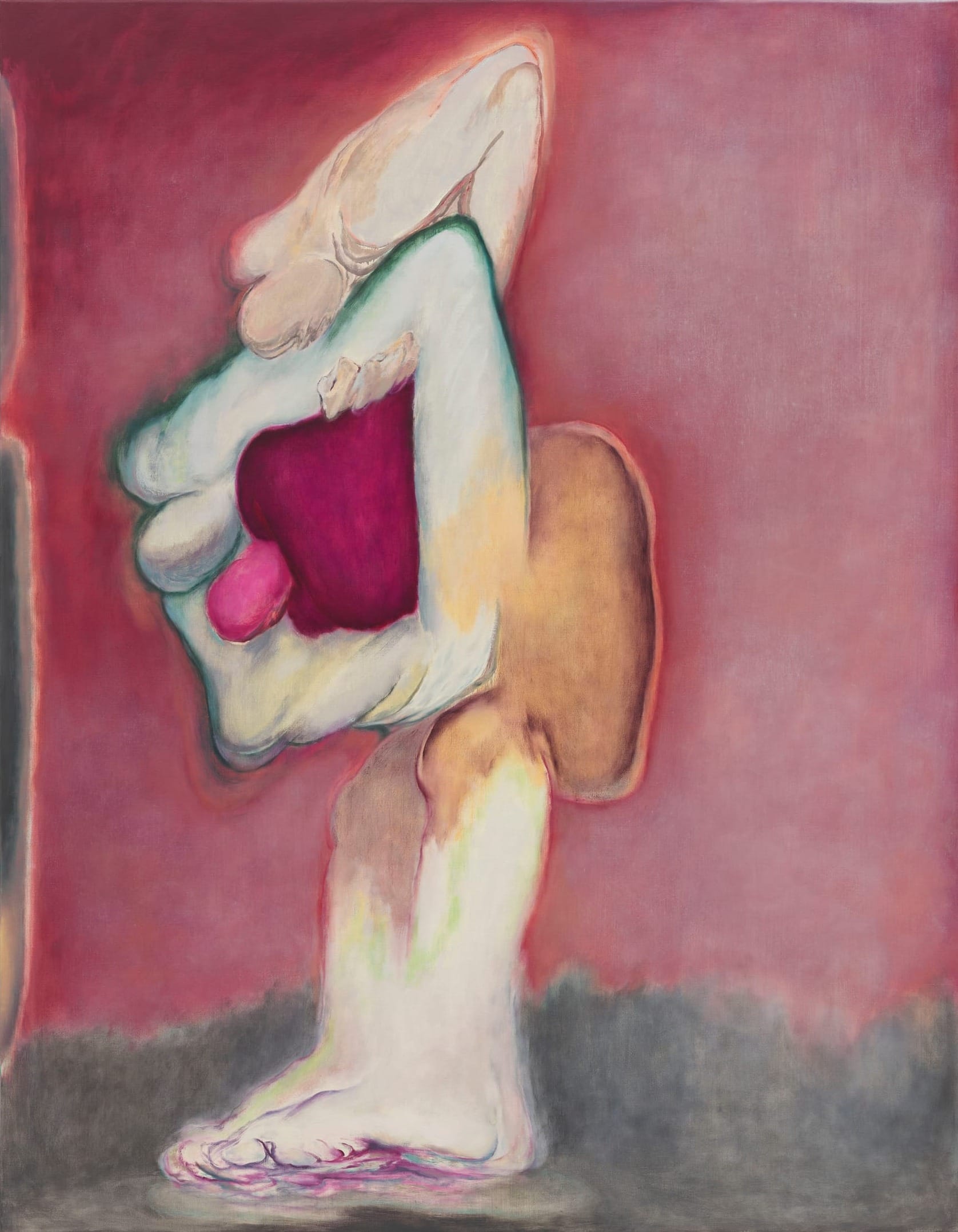
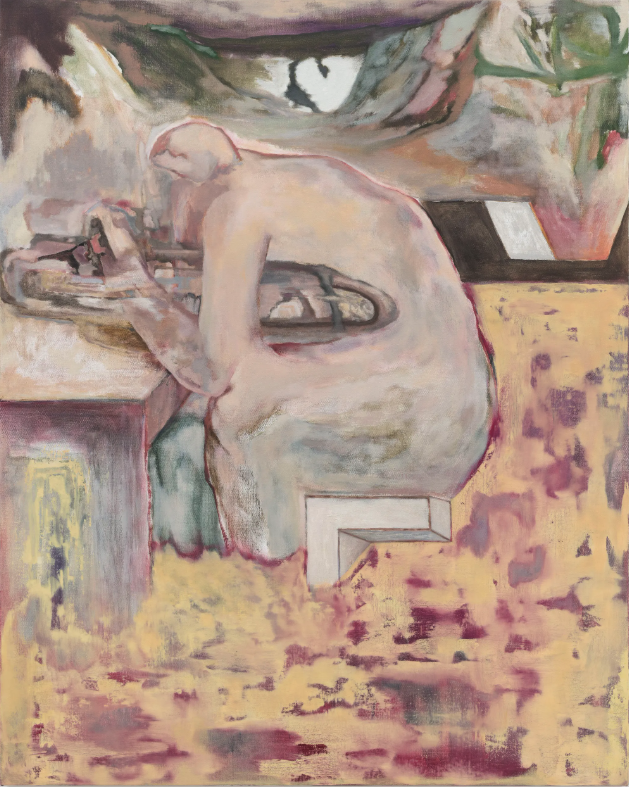
FIRENZE LAI, Trinity, 2025, oil on canvas, 160 x 125 cm (left) and Grey Matter, 2026, oil on canvas, 125 x 100 cm (right). Courtesy the artist and White Cube.
Increasingly, Lai’s subjects grow intimate with the thresholds that confine them. In Trinity (2025), three figures interlock in a vertical balancing act against a sumptuous magenta horizon. The top form’s arched buttocks graze the upper edge of the canvas; at the bottom, swollen feet sink into a murky pool of light. Three heads bow in the same direction, in deference, even reverence, to their predicament: between floor and ceiling, birth and death, they hold each other up and weigh one another down. In Grey Matter (2026), a solitary torso curls inward, its hunched back etching an exquisite curvature against the world beyond. That world, whether courtyard or interior, is less hostile than indifferent, yet against its pressures the individual draws in its borders, folding into itself.
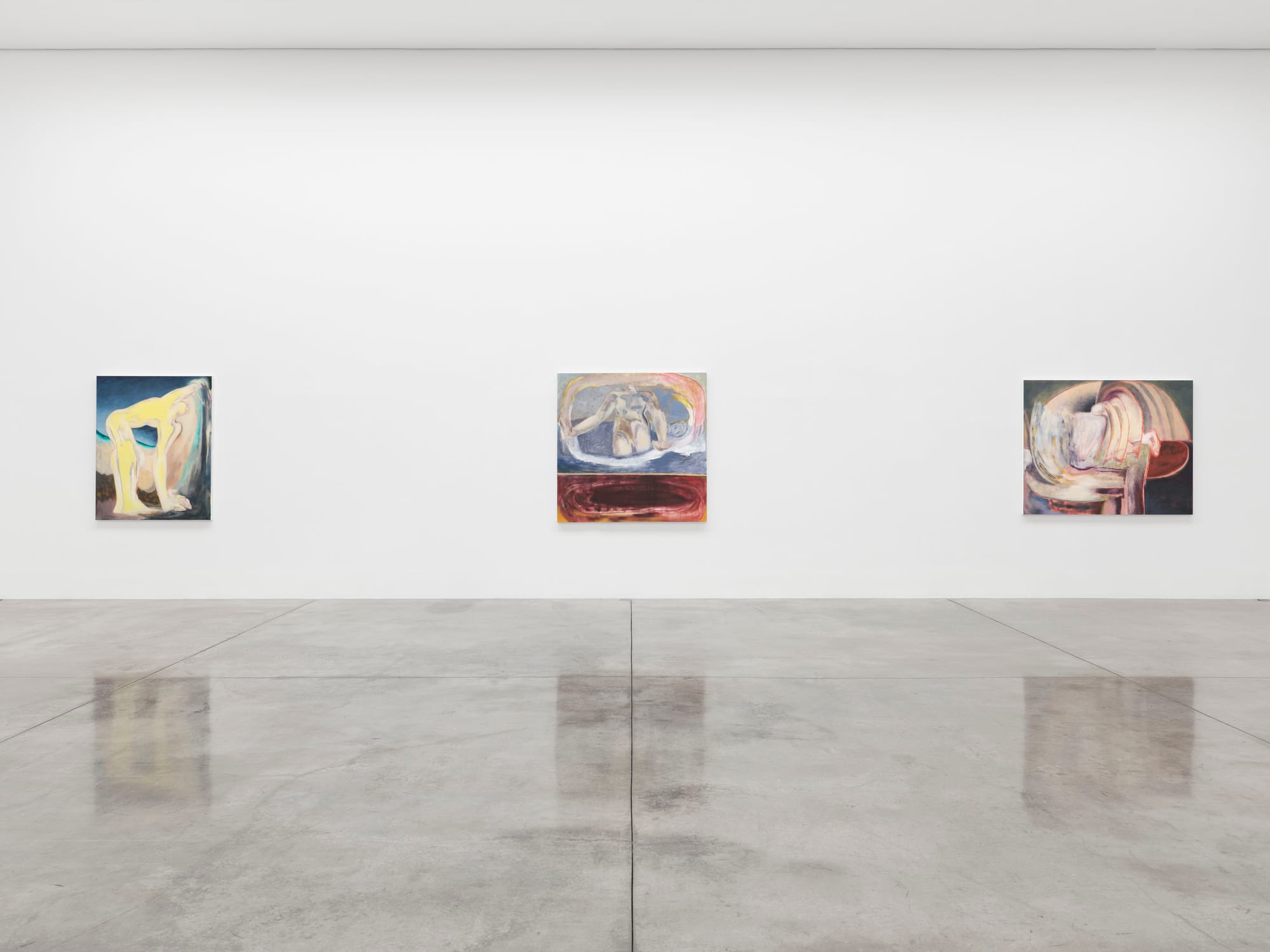
Moonbow traces an opposite arc. From the ground, the upper limb unfurls a tenuous curve skyward, then gropes outward, searching. The hand is perhaps stuck, but still it reaches. We follow the arm up, then return to the hand below; looking becomes a circuit between that which is sought and the cost of that seeking. A moonbow is a lunar rainbow, a ghostly spectrum cast by the moon, rather than the sun, through rain or mist. Its colors too faint to discern, it offers light without the coming of day, a dawn that never breaks. Lai’s figure stretches toward that withheld promise, feeling for a passage. When beauty shows us a direction but not the way through, hope becomes the heaviest load. What—and how—are we holding up?
Michele Chan is managing editor at ArtAsiaPacific.