Shows
The Spices and Textiles Behind Najat Makki’s Landscapes
Najat Makki
Whispering Definitions
Iyad Qanazea Gallery
Abu Dhabi
Sep 10–Dec 10, 2026
Consider Najat Makki’s Emirates of Love (2025) as a landscape. The roll of blazing reds at the center of the canvas can be regarded as a dramatization of the desert by day, and the yellow atop is the sun at full force and hue. Look further upward and things get celestially (and temporally) wonky. A storm encroaches—or perhaps it is simply the night arriving—and at the utmost top are winds, clouds, and stars, scrawled in silver against blues and greens, much like the body of water at the bottom. As above, so below.
The painting is the centerpiece of “Whispering Definitions,” Makki’s solo exhibition at Iyad Qanazea Gallery in Abu Dhabi, and the largest in the show. It is also a prime example of her deftness in layering.
Reading the more stratified canvases as landscapes offers the most accessible entry point, as it makes it easier to navigate the multitude of textures and colors. It is certainly not an erroneous interpretation: Makki has long based her compositions on the desert, seas, and urban skylines of the UAE. Her “landscapes” become more interesting, however, when one considers their inspiration: their primordial matter.
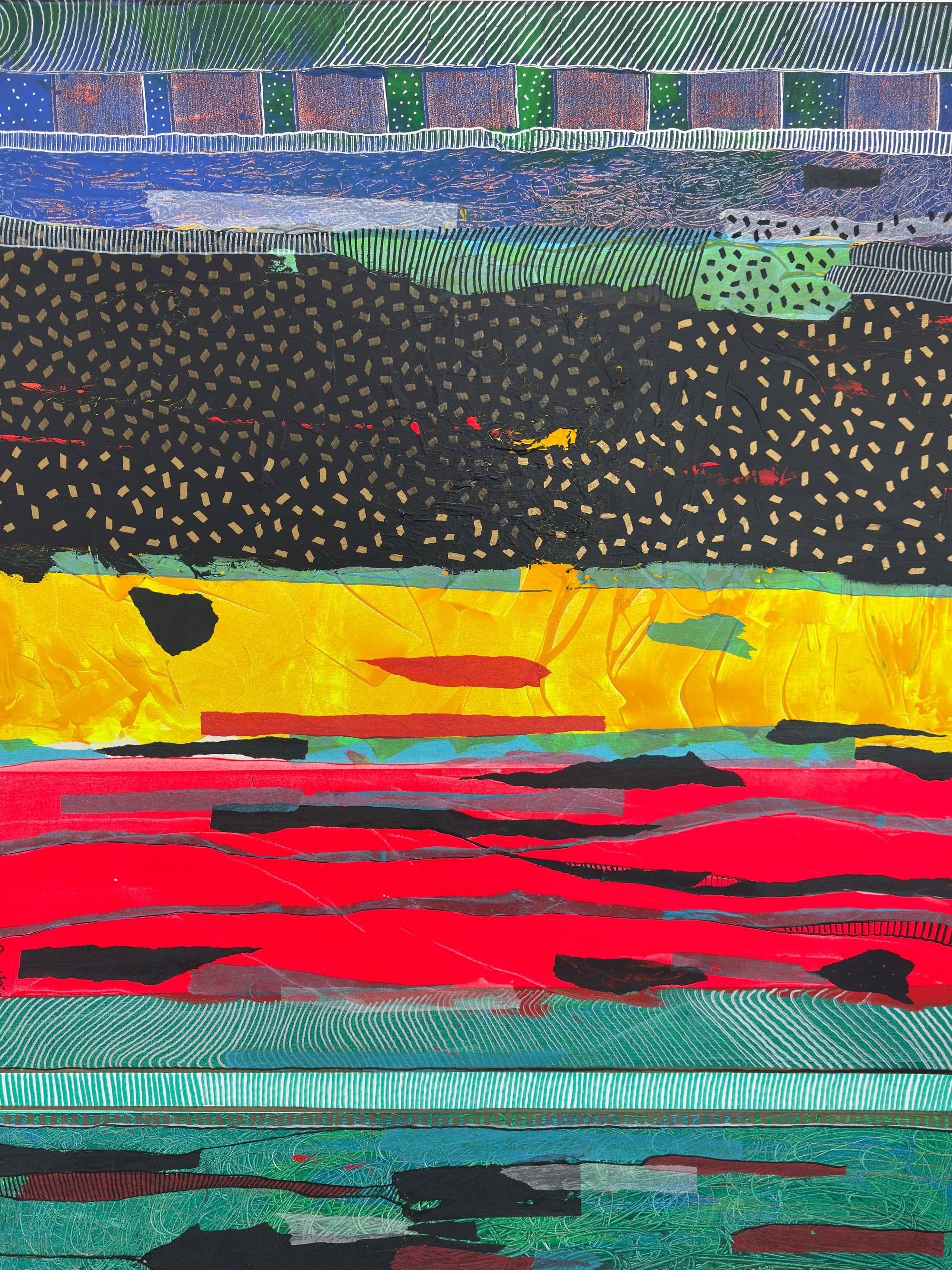
Born in 1956 in Bur Dubai, Makki grew up close to the sea and often spent time in her father’s herbal medicine shop at the souk. The baskets of herbs and spices left a lasting impact on her palette, as she has expressed in several interviews. The artist has also been known to incorporate natural materials such as henna and saffron into her works, deriving her colors directly from the powders she saw at her father’s store.
Returning to Emirates of Love with this in mind transforms viewing into an experience of synesthesia. The yellows evoke the taste of turmeric; the golds are granular like raw sugar. The creased, crumpled texture of the colors also has a sartorial quality, bringing to mind the textiles the young Makki must have seen growing up, which are still found in Dubai’s traditional markets. Fabric has been as much a source of inspiration as spice, and the artist has spoken of drawing from her sisters’ love of embroidery.
The painting Emirates of Love featured in Christie’s Mawasim auction at the end of October, which marked the 20th anniversary of the auction house’s debut in the UAE. At Iyad Qanazea Gallery, it has magnetic stopping force. The gray vinyl flooring, white walls, and tiled office ceiling let its vibrancy come through unimpeded. Hanging by the door to the gallery, it is among the first works visitors see upon entering, and the last upon leaving.
Emirates of Love is arguably the strongest work in the exhibition, though Nagham (2025) and Love Coast (2024) also stand out, the latter clearly showing how the artist draws from textile patterns.
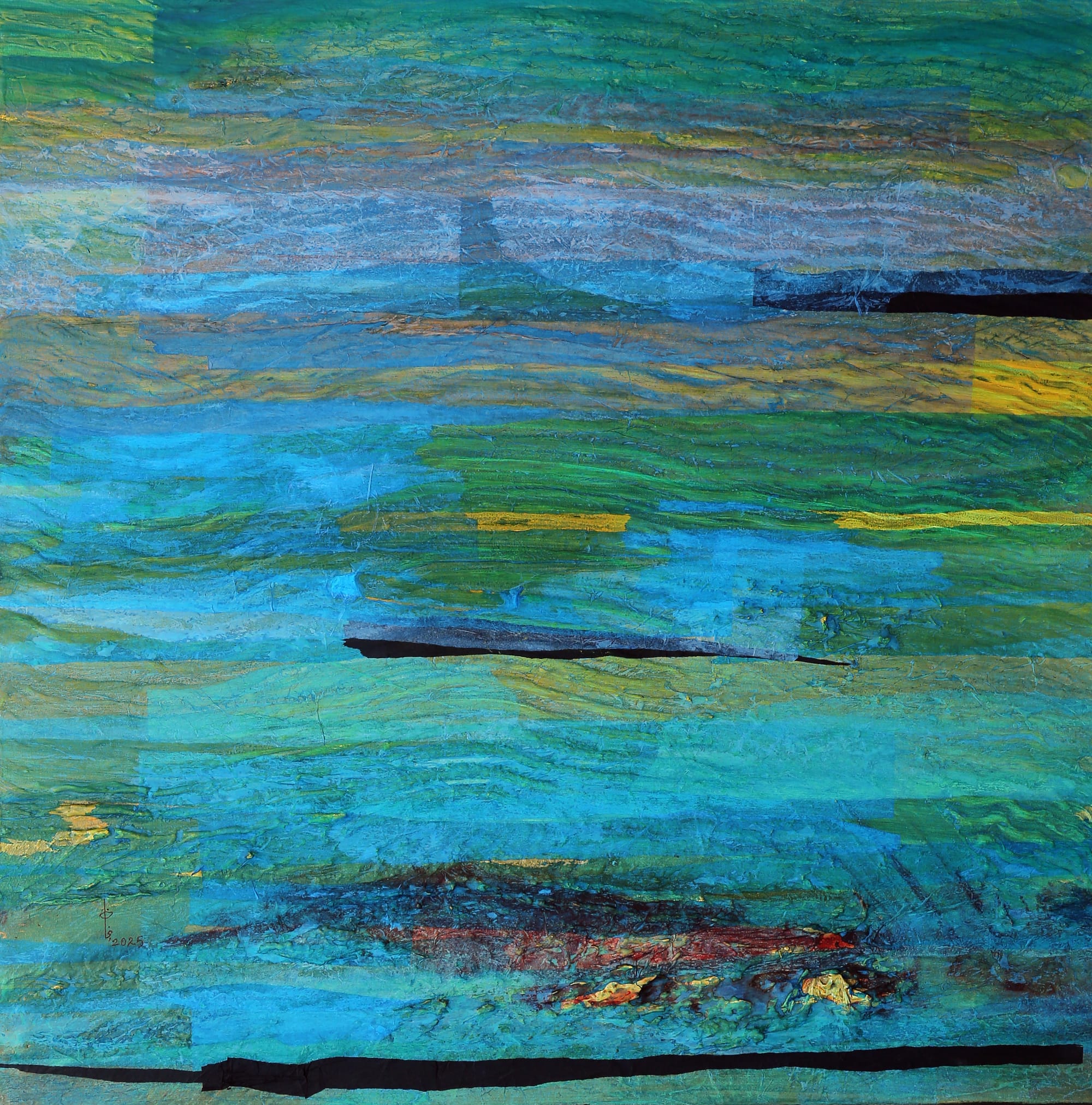
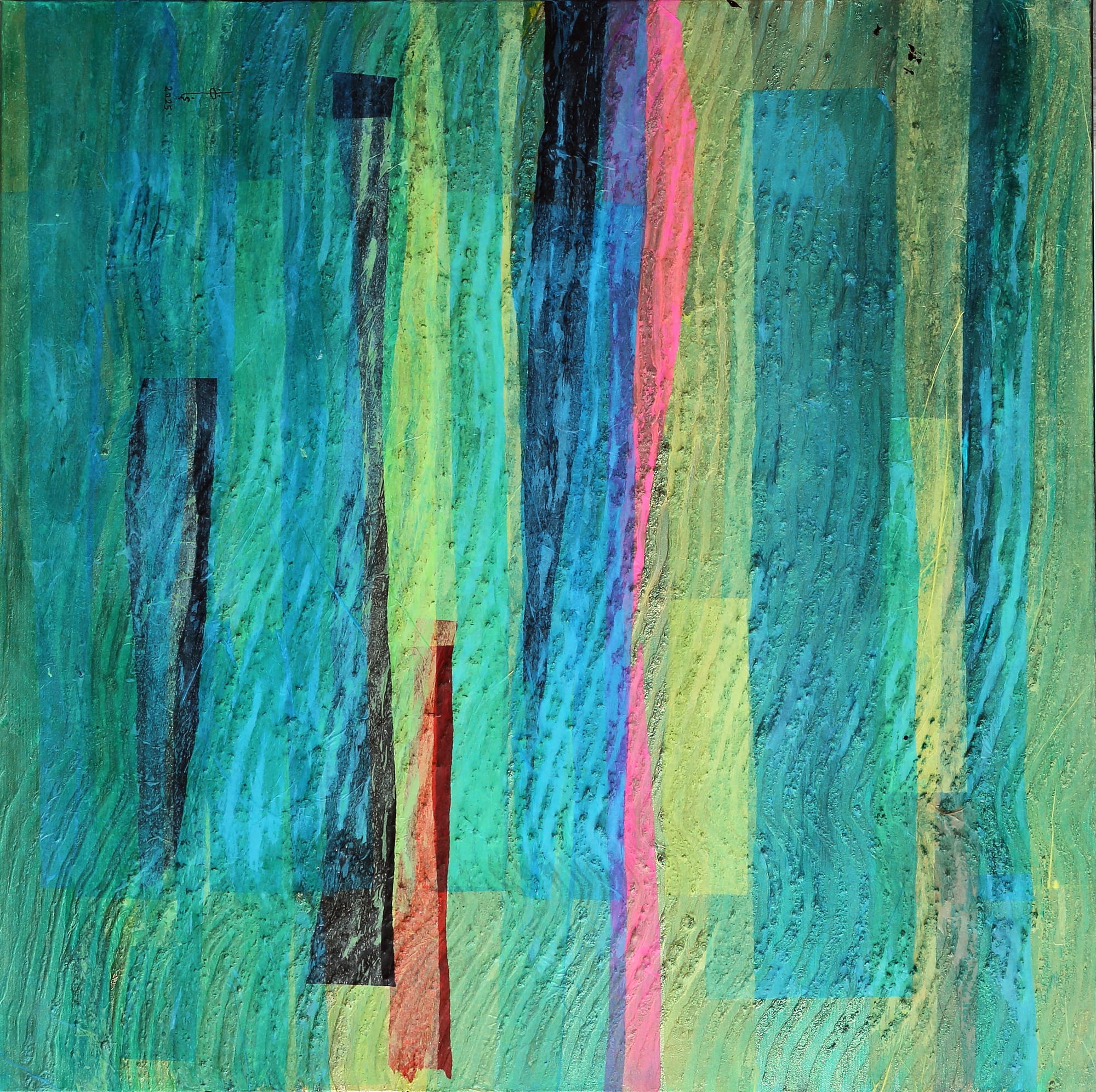
NAJAT MAKKI, Visual Dimensions, 2026, collage and acrylic on canvas, 80 x 80 cm (left); and Color Rhythm, 2026, collage on canvas, 80 x 80 cm (right). Courtesy the artist and Iyad Qanazea Gallery, Abu Dhabi.
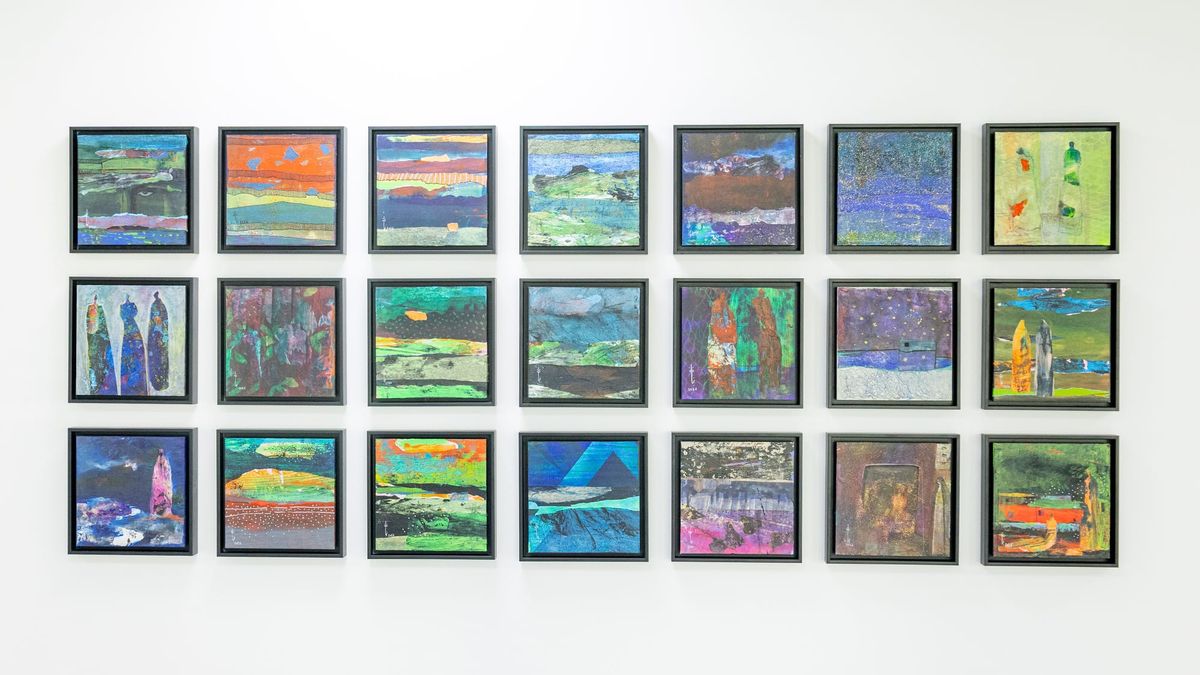
Most of the works on show were produced in the last year but rely on techniques and approaches the artist has spent decades developing. In Various Rhythms (2025), a series of small square paintings show variations on her silhouetted female figures, a signature motif that formed the basis of her large-scale light installation at Dhai Dubai 2024 at Expo City Dubai. At the far end of the exhibition hangs a series of works in neon colors, a medium Makki has explored since the late 1980s, after she returned to the UAE from studying at Cairo’s College of Fine Arts and became one of the first Emirati women to receive a formal education in art. These works, however, need a dark, UV-lit space to show their full depth and spectrum, and in the sunlit gallery they fall short of their intended effect. Elsewhere, Visual Dimensions and Color Rhythm (both 2026) blend collage with acrylic to fashion a terrain-like surface.
The breadth of Makki’s practice is well represented in “Whispering Definitions.” Some works may not be the boldest of her oeuvre, but even these show an artist in command of a palette entirely her own and who, even at 70, remains ceaseless in her experimentation.
Razmig Bedirian is an art writer based in Dubai. His articles have appeared in The National, The Art Newspaper, Canvas, and ArtAsiaPacific. He holds an MFA in creative writing from New York University, where he also worked as an adjunct instructor.