Shows
Shared Constellations: Rahaal Nomadic Museum
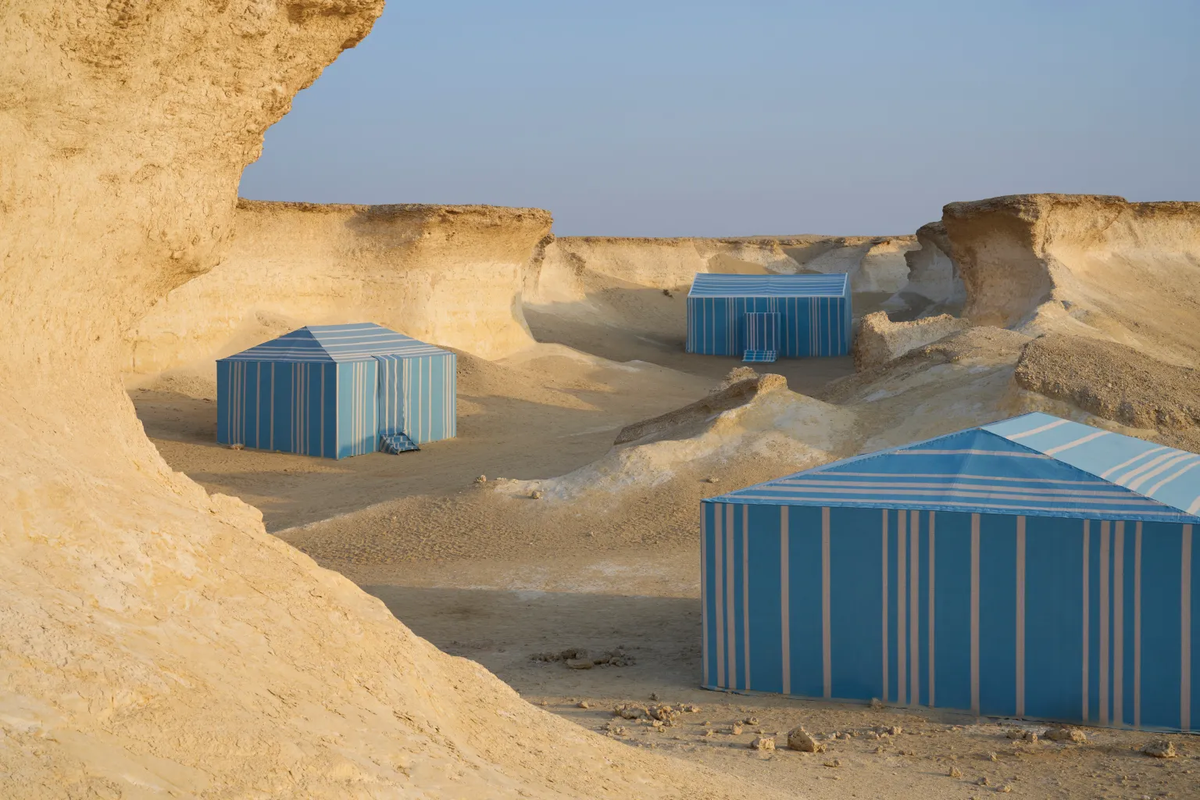
The road out to Doha thinned quickly. It was my fourth day in Qatar during the first edition of Art Basel; many art-world acquaintances, including a seasoned art advisor, told me that I absolutely had to go to Rahaal for “an art experience in the desert as you’ve never seen before.” The only way to get around in the historic nature reserve of Zekreet was to book a private car with a skilled driver. During our journey, the concrete road gradually led to more unstable sandways, and we became unsure of how we would reach our destination. Even someone who knew the desert well would be challenged by its beige, windy vastness. After several times of getting lost, three beautiful pale blue tents finally came into view, almost like a mirage.
Getting lost was undoubtedly part of the experience, as I would learn later on in conversation with Sheikh Mohammed Rashid Al-Thani, the mastermind behind Rahaal, a temporary nomadic museum co-founded and organized with New York-based designer Will Cooper. According to Al-Thani, who welcomed us in the Al Majlis pavilion, Rahaal began as an experiment, to allow guests coming from abroad to encounter the desert as both a cultural ground and a philosophical space for the Arab world. As founder and director of the Institute of Arab and Islamic Art in New York, Al-Thani has played a pivotal role in promoting Arab culture in the US, particularly at such a delicate time when political directions would rather go against that spirit.
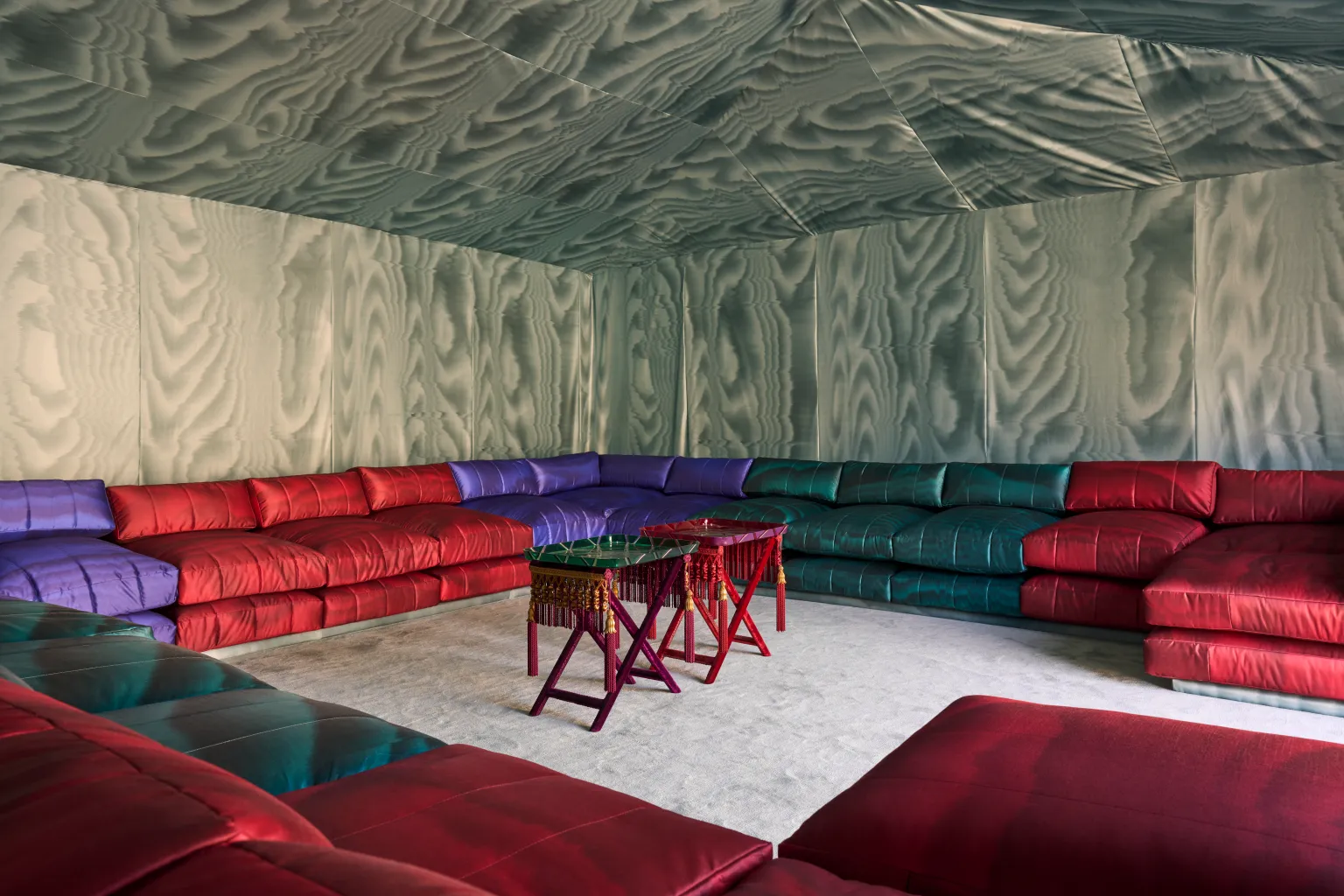
Al Majlis unveils itself as a beautiful textile pavilion with low seating and woven textures, where conversations among the guests are accompanied by the circulation of tea and coffee. Anyone is welcome, without hierarchies and without assumptions, honoring the original function of such a place within nomadic desert cultures. An incredible amount of research, conducted by Will Cooper, went into the materials and textiles engulfing us. We learn that, amid the program of Art Basel Qatar, Al-Thani wanted to offer something deeply rooted in Qatari culture and tradition, beyond the newly built, hypermodern Doha. At a moment when the Gulf is swiftly expanding its cultural infrastructure and global art events, Rahaal proposes a slower, more intimate encounter—the Arabic word rahaal itself evokes the idea of traveling, the unhurried movement of a nomad through open terrain. The museum itself is situated lightly within the landscape, comprising three pavilions that are protectively surrounded by sand dunes.
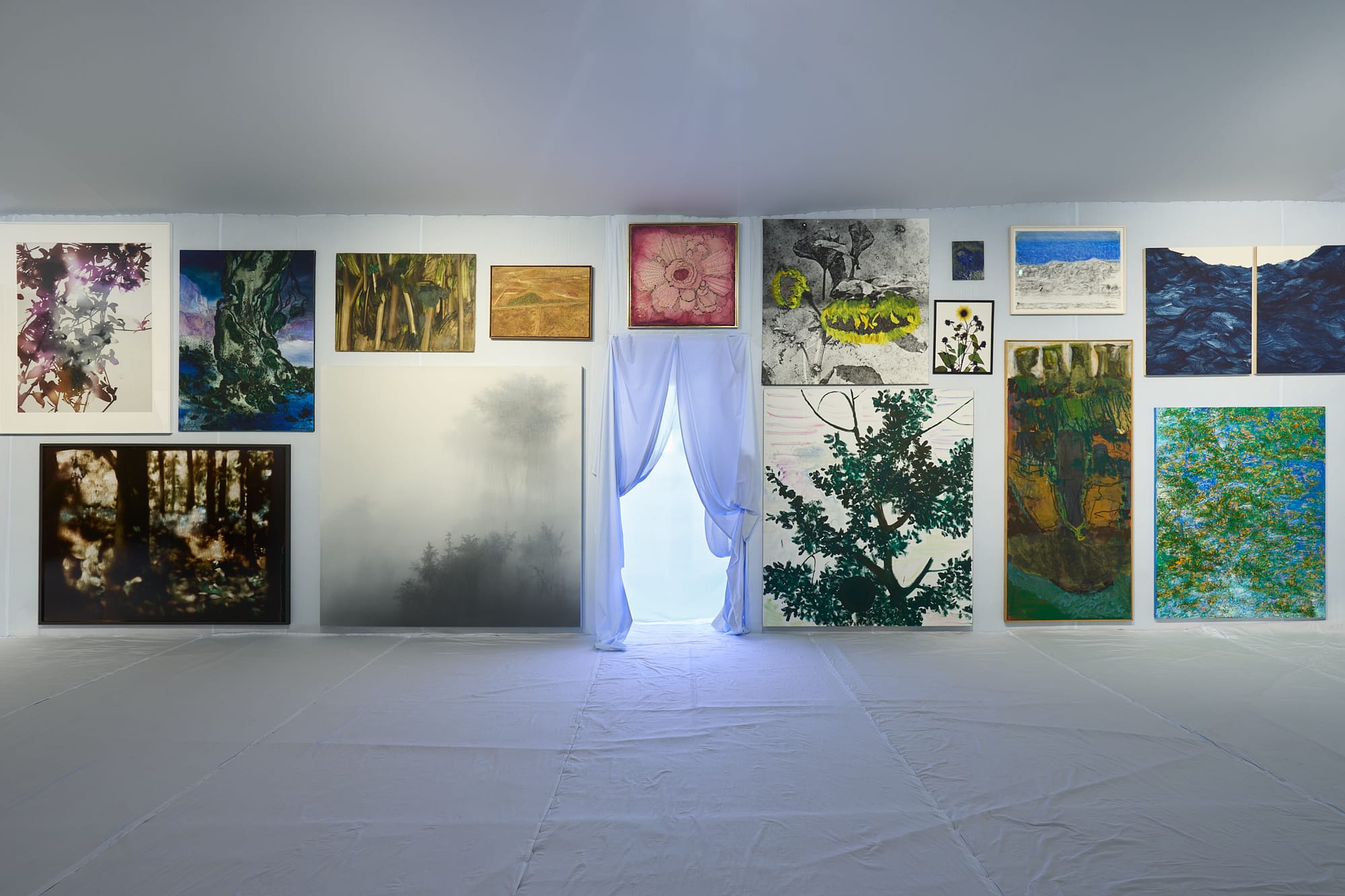
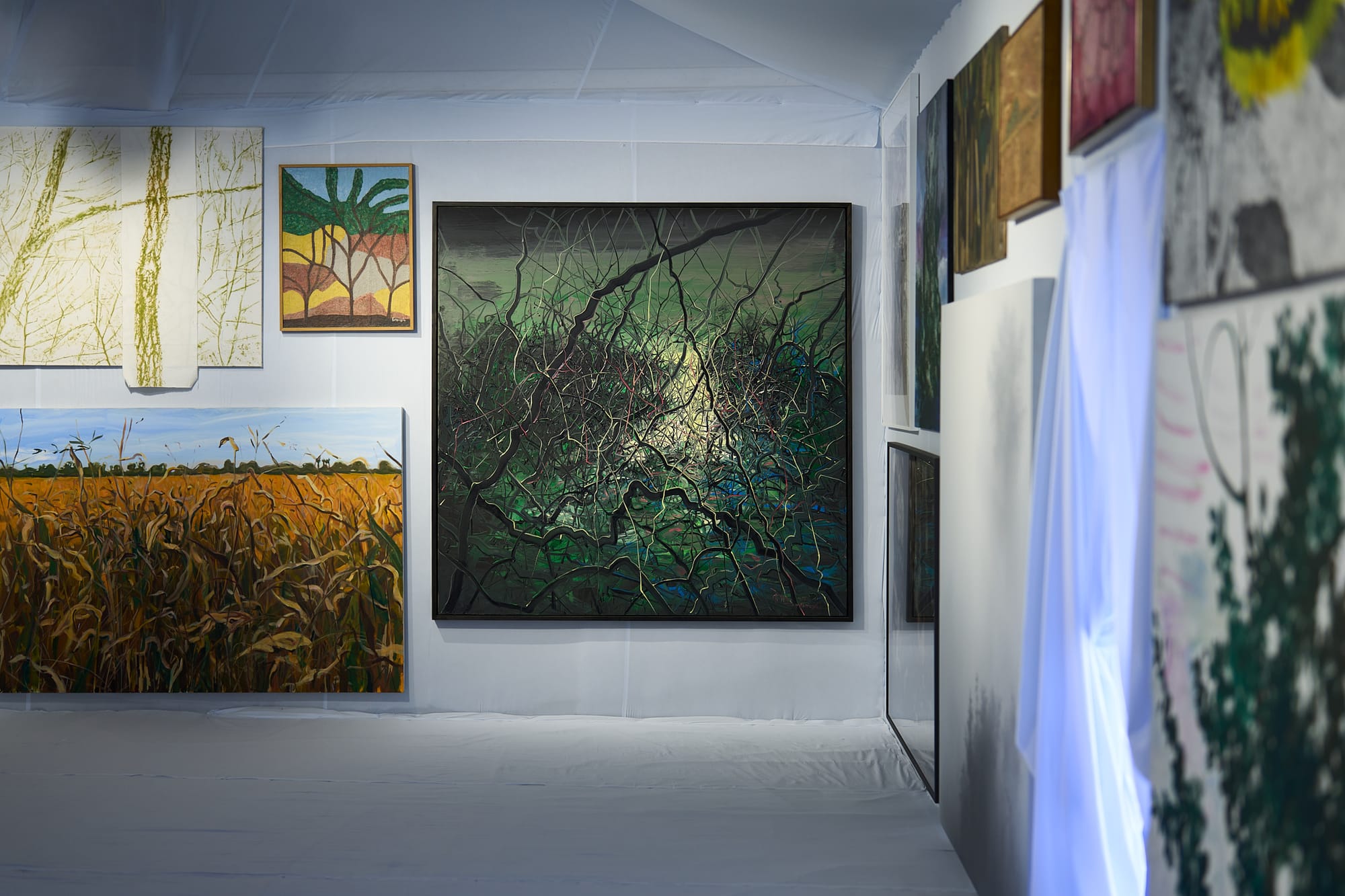
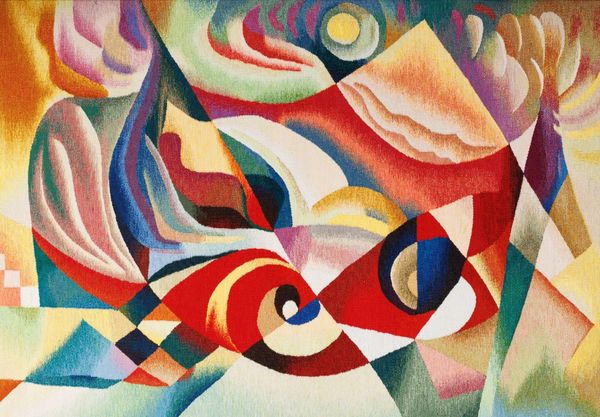
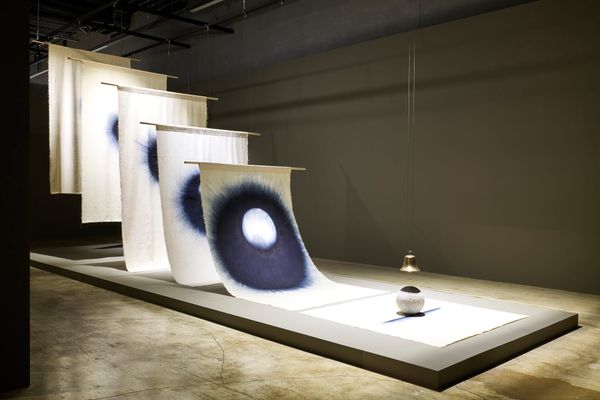
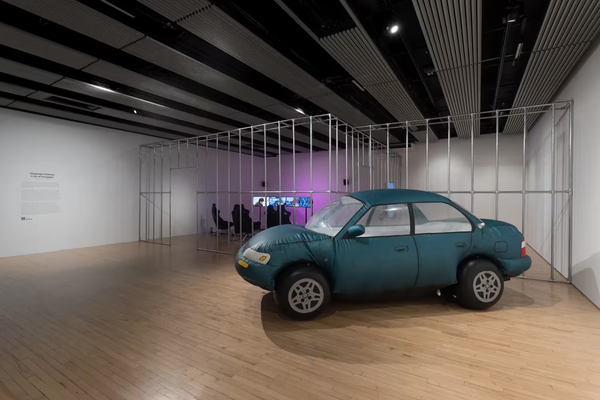
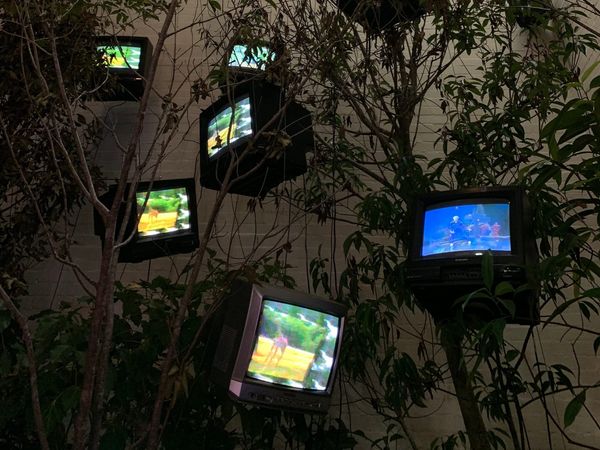
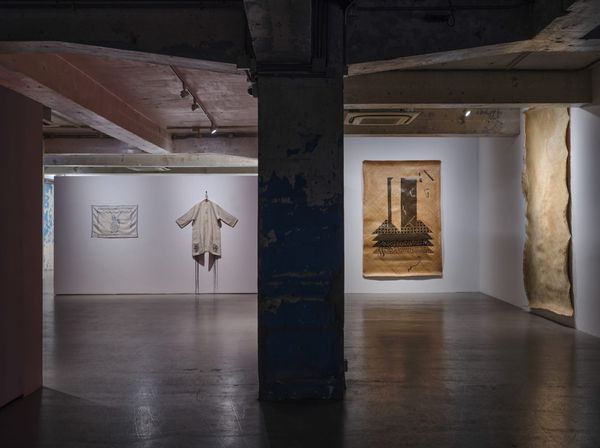
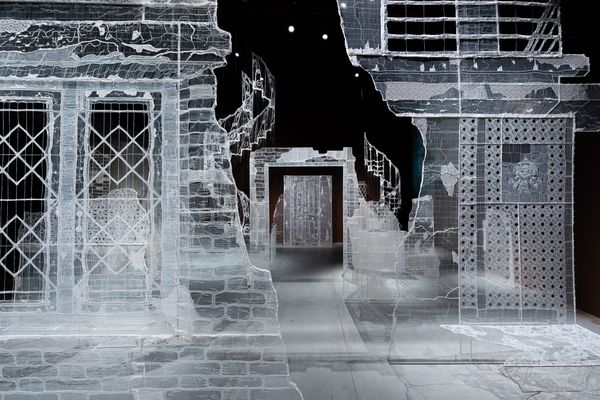
Installation views of “Anywhere is My Land,” in the Al Ma’rad pavilion at Rahaal, Qatar. Photo by Sebastian Boettcher. Courtesy Rahal.
The nearby pavilion Al Ma’rad hosts the exhibition “Anywhere is My Land,” curated by Al-Thani, which features a comprehensive selection of artworks on loan from various institutions, galleries, and private collections. Each piece engages with the complex relationship between art, humans, and nature. From local to international names, from more obscure to widely known artists, Al-Thani has curated a deeply universal and pure dialogue between generations, geographies, and structures. I recognized works by Etel Adnan, Kibong Rhee, Catherine Opie, Giuseppe Penone, and Zeng Fanzhi, together with artists grounded in the region such as Nasser Assar, Ziad Antar, Helen Khal, Samia Osseiran Junblat, and Khalid bin Hamed. The exhibition title is borrowed from the central piece by Brazilian artist Antonio Dias, Anywhere Is My Land (1968), in which a grid frames a field of stars, presenting an abstract map where borders dissolve into constellations. In the desert, this idea becomes literal. For centuries, stars have served as an orientation for travelers crossing immense landscapes, but they also carry a deeper implication: under the same sky, geography becomes shared. Anywhere, indeed, might be one’s land.
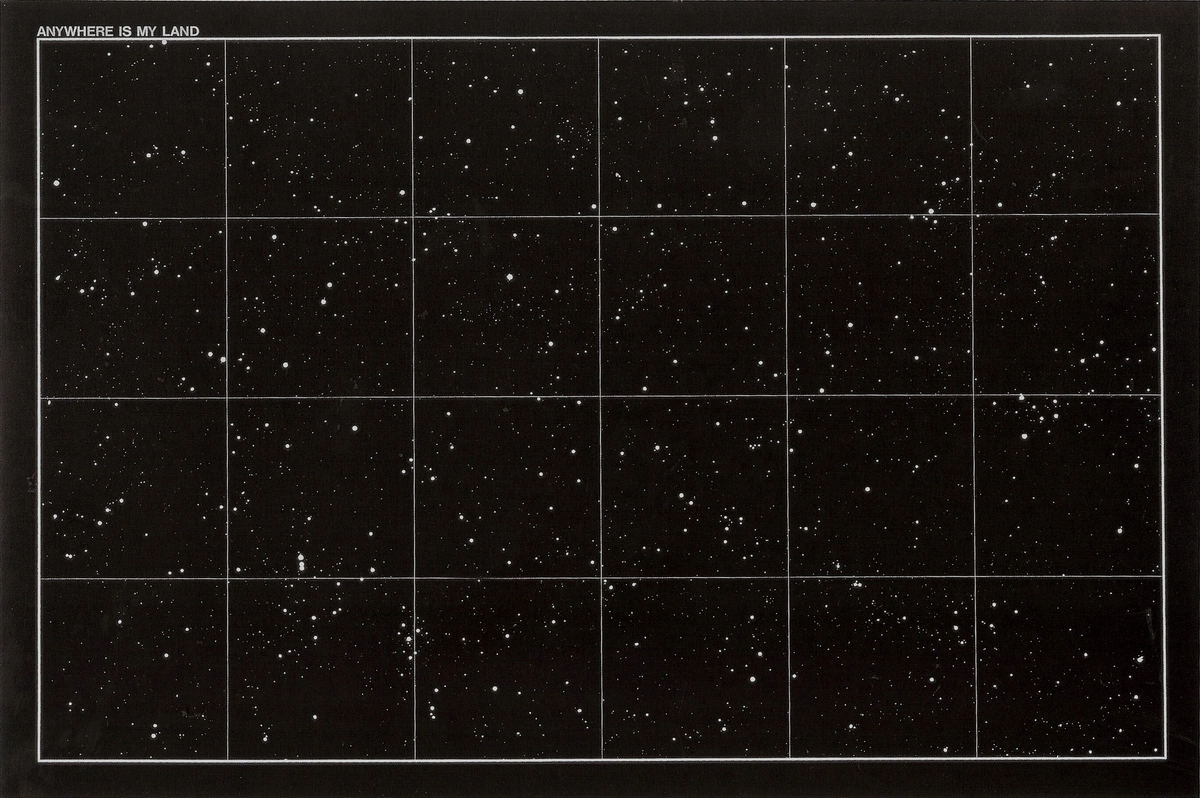
Around a month later, I am to think once again of this experience of connection, when the image of the Gulf has shifted from one of rapid cultural expansion to one marked by another sudden war. I reflect on Al-Thani’s concept of nurturing this project into something bigger, perhaps a biennial in the desert, where East and West, humans and nature might commingle through art, as every artwork conversed with one another in the Al Ma’rad. I think of my trip back, when the evening approached, and the desert transformed: the temperature dropped, and stars began to appear. The grid of Dias’s imagined cosmos suddenly felt less like an abstraction and more like a map that has always existed.
In the boundlessness of the desert, Rahaal offered us something quietly profound: the notion that culture, like the stars, is a shared constellation. Perhaps this idea can grow larger than the forces that suffocate us by placing one against the other.
Valentina Buzzi is a curator, writer, and PhD candidate based between Paris and Seoul. Her cross-cultural, interdisciplinary research focuses on modern and contemporary Korean art, particularly its local contexts and international circulation.