Shows
Laila Majid and Inaam Zafar’s “Body Quotidian” at the Sharjah Art Foundation
Laila Majid and Inaam Zafar
Body Quotidian
Sharjah Art Foundation
Sharjah
Jun 13–Sep 20, 2026
The lamp in Inaam Zafar’s painting Bent Moon (2025) does not illuminate anything—that is, it does not fulfil its function as a lamp. Even though its light radiates within the spherical bulb, splaying and bending against the glass in luminous purples and whites, it is strangely contained, surrounded by an impenetrable, unaffected darkness. The enclosed, lunar glow beckons us to peer at the light—Zafar’s brushstrokes—with moth-like focus.
Adjacent is Laila Majid’s Steam 07 (2026); when viewed from afar, it seems like a small, metallic panel, clouded yet softly gleaming. Stepping closer, one recognizes that the color is a reflection of the carpeting in the gallery; closer still, shadows emerge as our blurred image becomes trapped within the piece, making us cognizant of our presence in the space.
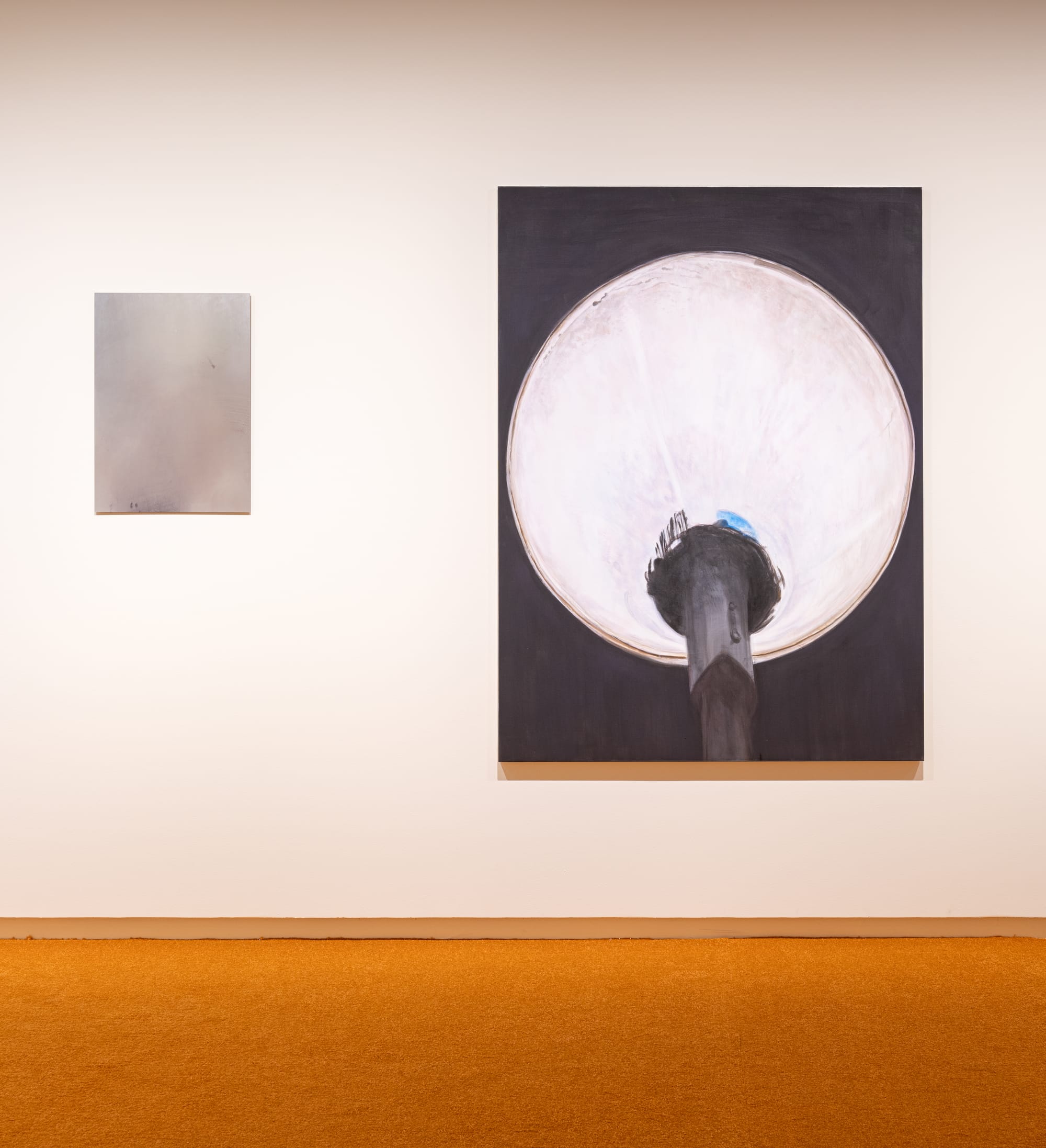
Installation view of LAILA MAJID’s Steam 07, 2026 (left), and INAAM ZAFAR’s Bent Moon, 2025 (right), at “Body Quotidian,” Sharjah Art Foundation, Al Mureijah Square, Sharjah, 2026. Commissioned by the Sharjah Art Foundation. Photo by Shavanas Jamaluddin. Courtesy the Sharjah Art Foundation.
A chiastic dialogue occurs between the two works, hung side by side in Majid and Zafar’s duo exhibition “Body Quotidian” at the Sharjah Art Foundation. In Bent Moon, the discernible streetlight verges on abstraction the longer you look at the incandescent bulb, while Steam 07 initially appears abstract before proving to be a photograph of a fogged-up mirror, printed on a Dibond panel. However, like Zafar’s lamp, it is a mirror that does not fully reveal.
“Body Quotidian” is rife with such harmonies. Each piece stands on its own, yet new meanings arise through thoughtful pairings. According to curator Raja’a Khalid, finding connections between Majid and Zafar’s works was an instinctive process, as both artists, in their own oblique way, examine how everyday objects and experiences evoke an unexpected physicality. In his paintings, Zafar often contemplates quotidian items as metaphors for death and decay. Meanwhile, Majid probes questions of desire and pleasure in her sculptural and photographic practice.
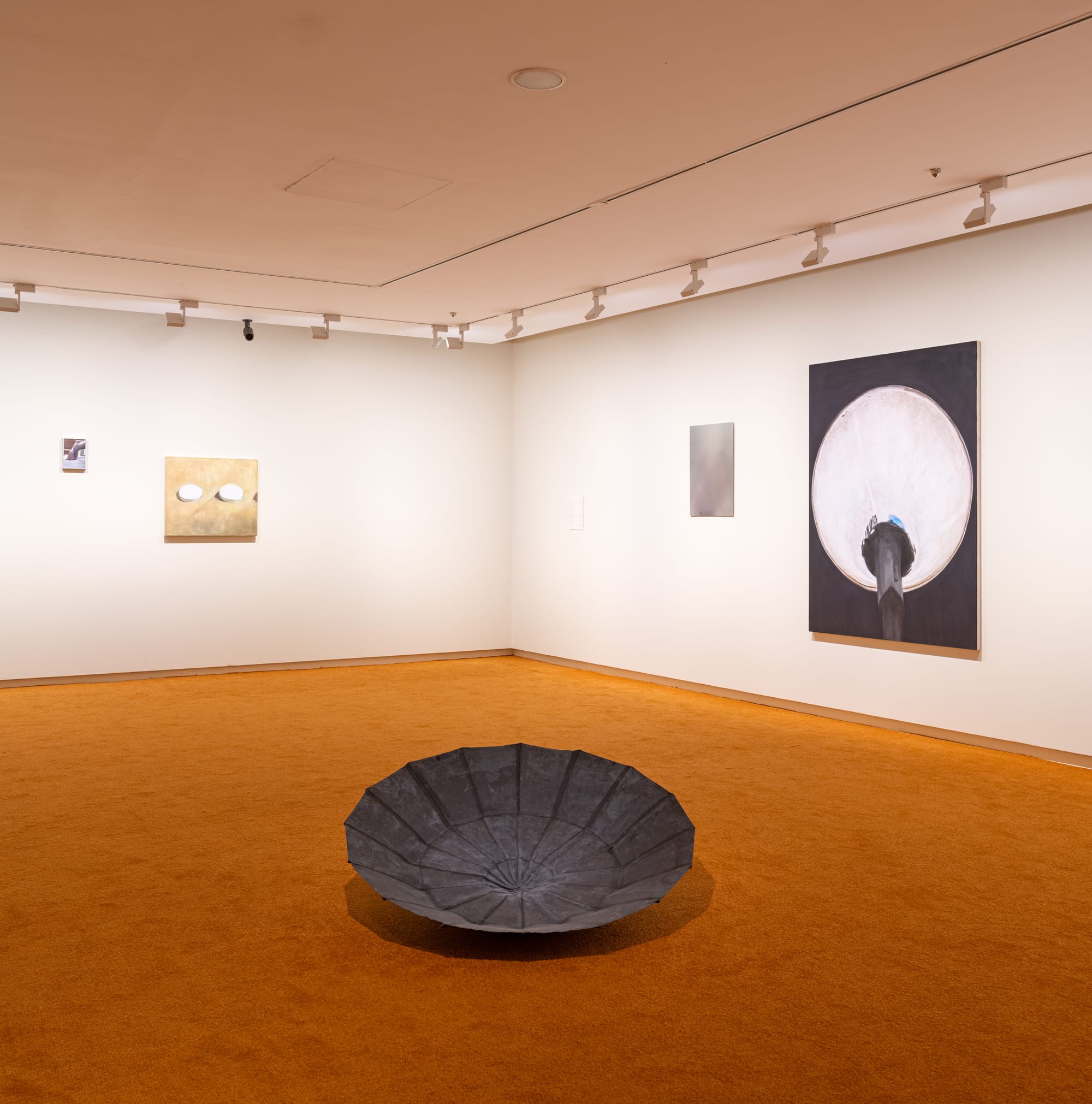
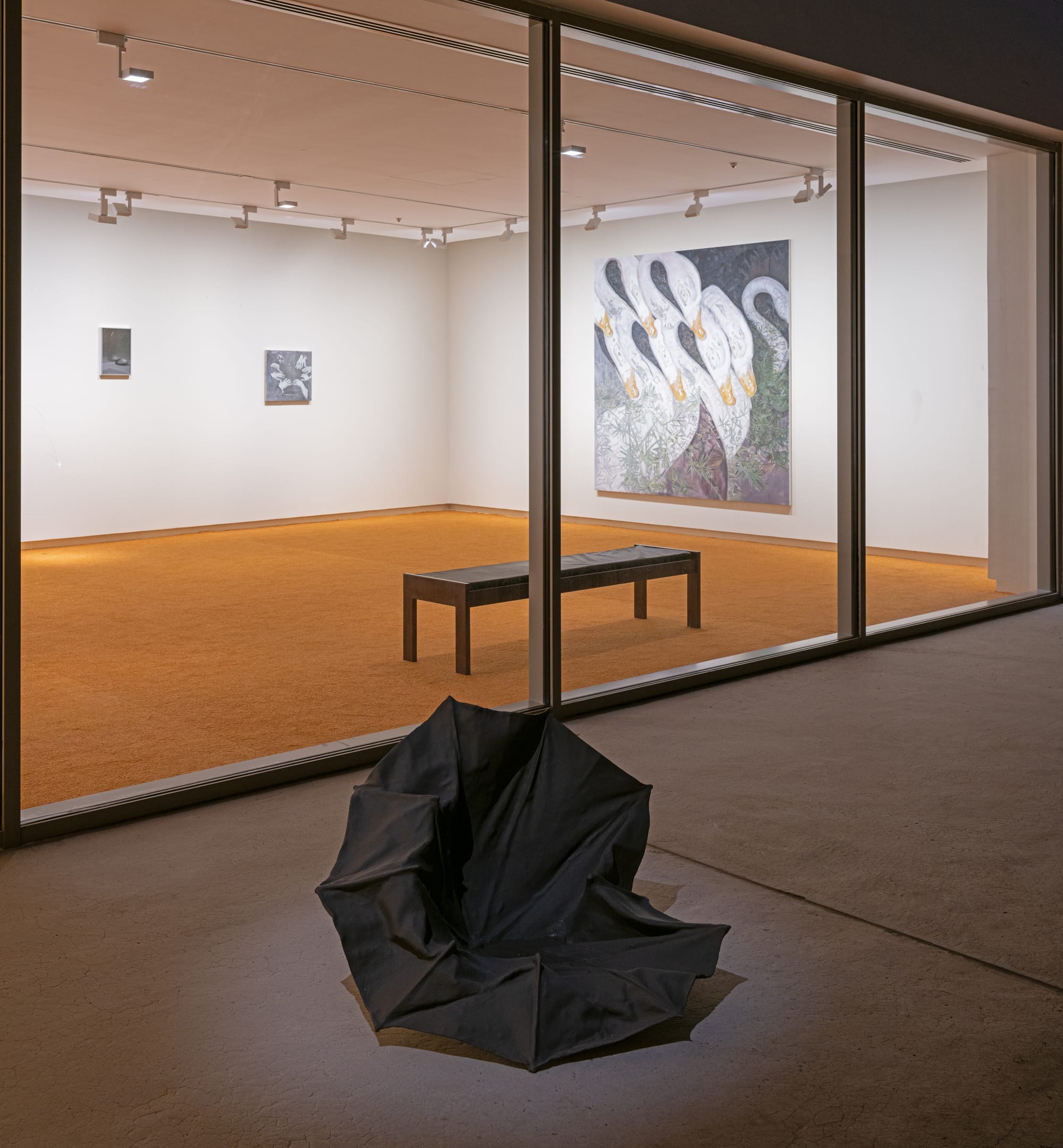
Installation views of LAILA MAJID and INAAM ZAFAR’s “Body Quotidian” at the Sharjah Art Foundation, Al Mureijah Square, Sharjah, 2026. Photos by Shavanas Jamaluddin. Courtesy the Sharjah Art Foundation.
Corporeal references are most evident in Majid’s Sunday (2026) and Zafar’s To see and not see (2025). Sunday is a close-up image of a foot, twisting from the ankle, manicured toes flexed against the soft, fabric surface of a couch or mattress. Next to it, To see and not see is an oil-on-canvas depicting two pills resting on the palm of someone’s hand. The tablets, placed horizontally, recall a pair of eyes staring back at the viewer, exploring notions of sickness and dependency.
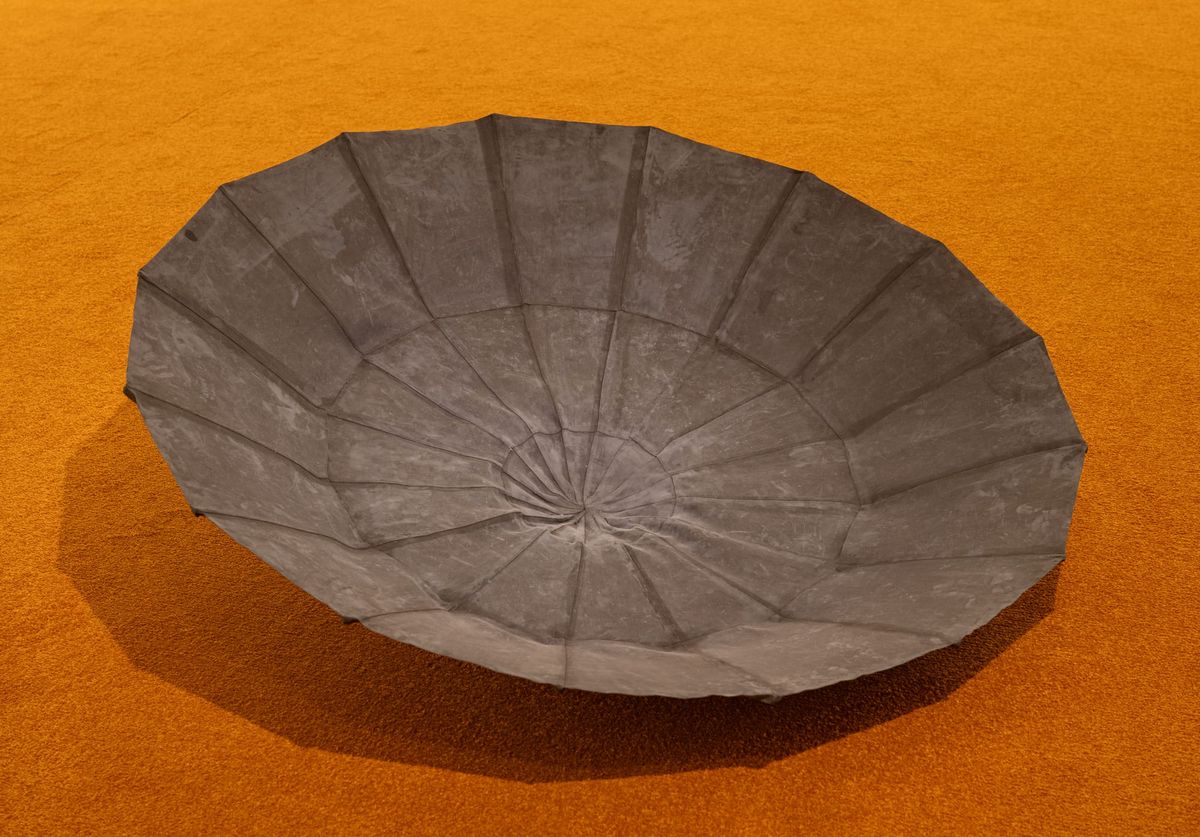
In the center of the space is Majid’s dressing for pleasure 01 (2024), an opened, upturned umbrella without a shaft. Echoing the round shape of the tablets in Zafar’s To see and not see, its form further resembles a satellite dish. The work is made of latex, a recurring substance in Majid’s oeuvre. In dressing for pleasure 01, there are fingerprints and smudges on the canopy, offering a visual record of human touch. A new iteration of the work, this time cast in resin and fiberglass, is installed in an outdoor area: also upturned but crumpled, dressing for pleasure 03 (2026) is filled with water, serving as a birdbath and subverting its original function as an umbrella.
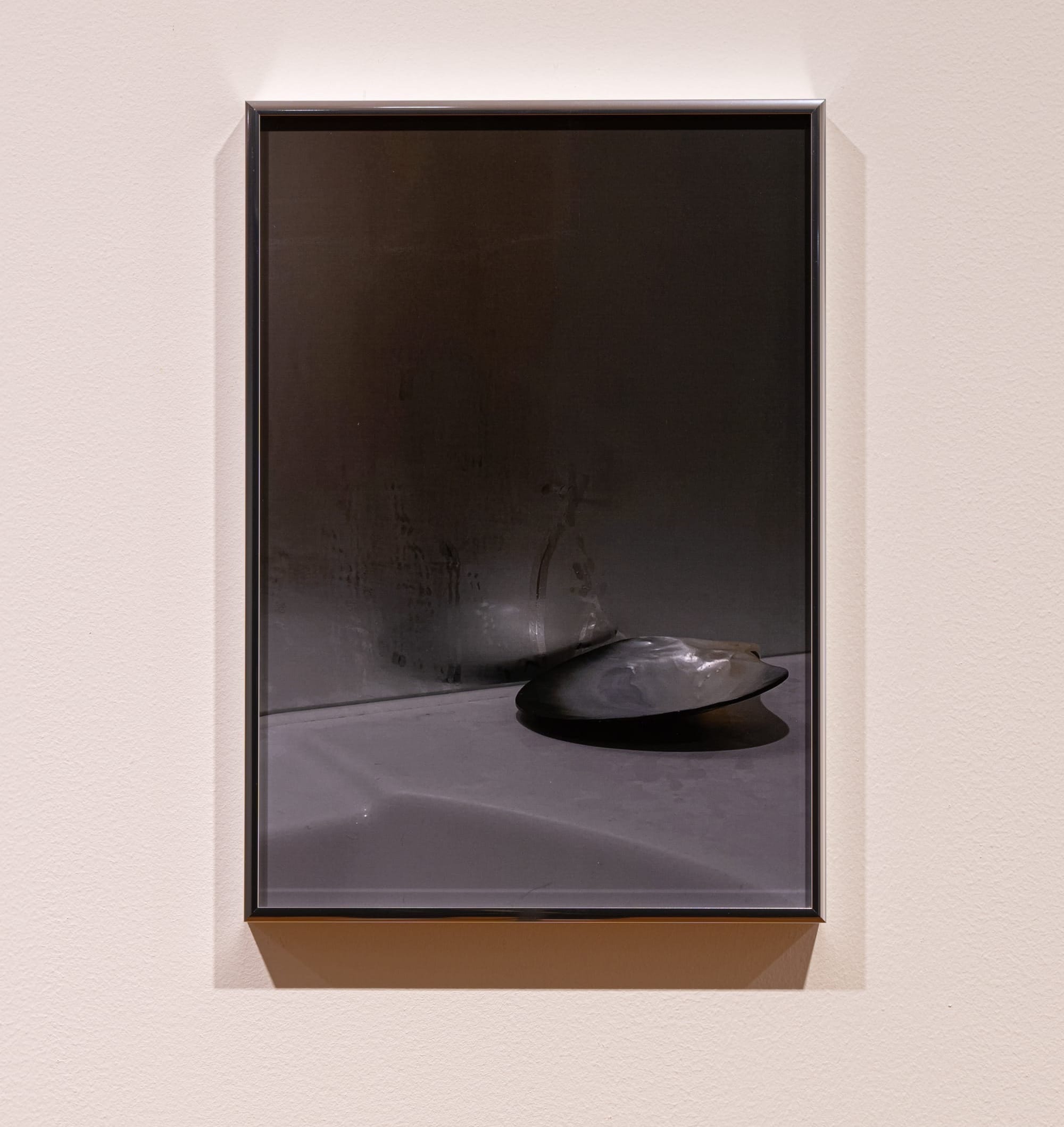
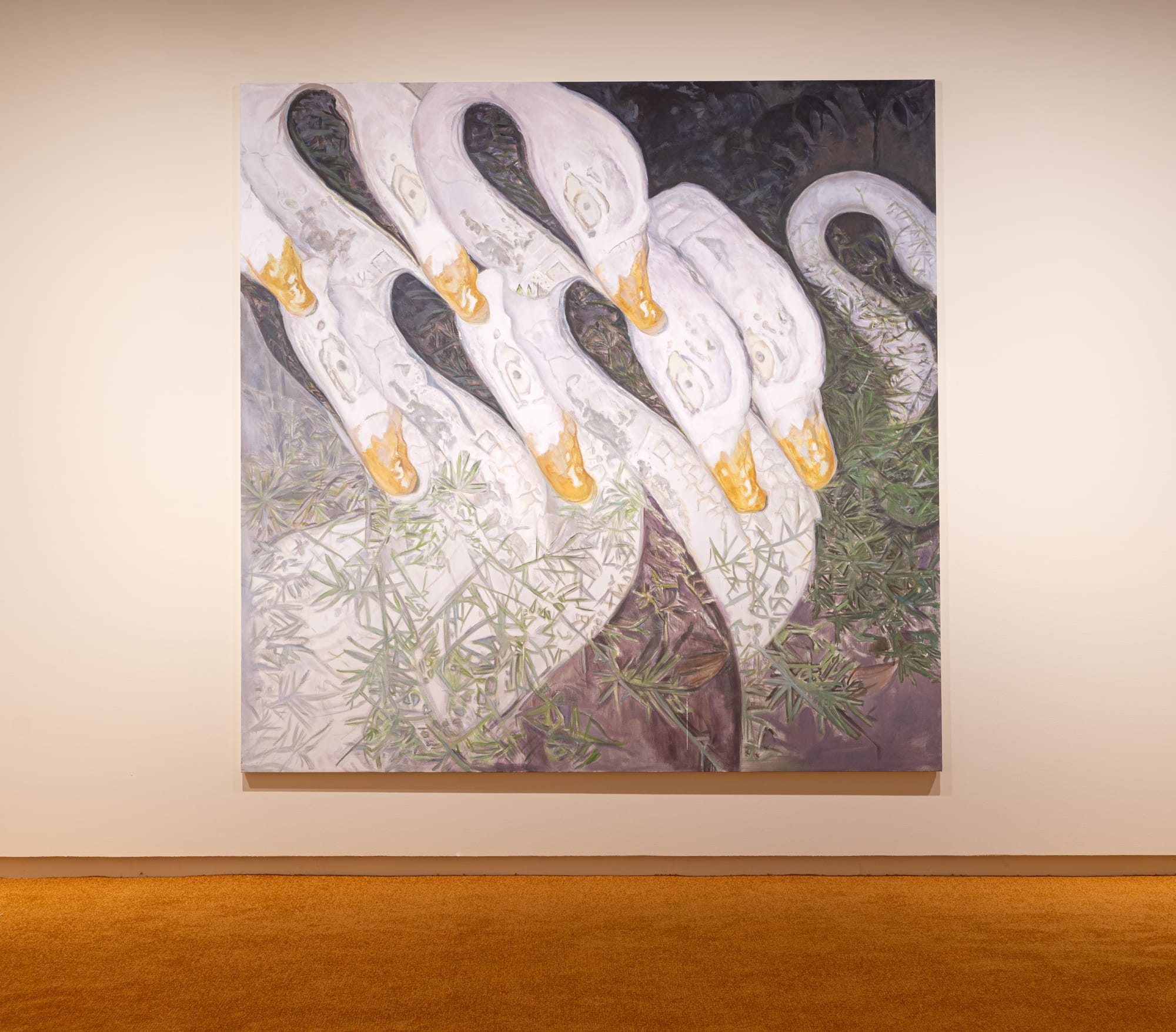
Installation views of LAILA MAJID’s Sink, 2024 (left), and INAAM ZAFAR’s Mourners, 2025 (right), at “Body Quotidian,” Sharjah Art Foundation, Al Mureijah Square, Sharjah, 2026. Commissioned by the Sharjah Art Foundation. Photos by Shavanas Jamaluddin. Courtesy the Sharjah Art Foundation.
Elsewhere, the exhibition highlights both artists’ propensity for carefully cropped compositions. Majid’s Sink (2024) is a detailed snapshot of a sink by a misty mirror; an abalone shell is perched atop the basin’s rear edge. The melancholic intimacy of Sink is enhanced by the mysterious communal energy in Zafar’s nearby painting Automatism of doubts (2026), which features several outstretched hands arranged in a circle.
The largest tableau on display has a somewhat fantastical flair. Spanning more than two meters in width, Zafar’s Mourners (2025) portrays a flock of swans nestled behind spindly leaves. Their necks are overly arched, their eyes unsettlingly human and piercing. Though the painting aesthetically and conceptually feels like an aside, it exemplifies Zafar’s technical prowess, demonstrating a visceral quality that lends itself to the context of the show: after several works kindling our own perceptual awareness, the swans’ wild eyes unflinchingly return our gaze—concluding the exhibition with an intersubjective, even confrontational exchange.
Razmig Bedirian is an art writer based in Dubai. His articles have appeared in The National, The Art Newspaper, Canvas, and ArtAsiaPacific. He holds an MFA in creative writing from New York University, where he also worked as an adjunct instructor.