People
Tender Keepsakes: Interview with Ocean Vuong
Over the past decade, Ocean Vuong has enshrined himself in the literary world with his visceral, unflinching prose. From his first poetry collection, titled Night Sky with Exit Wounds (2016), to his debut novel On Earth We’re Briefly Gorgeous (2019) and most recently The Emperor of Gladness (2025), his stories move through the working-class enclaves of Connecticut, often following troubled young protagonists as they grapple with their queer identities, generational trauma, and the lingering shadow of the American war in Vietnam.
For those who know his writing, then, the tender melancholy suffusing Vuong’s photographs might feel familiar, as if lifted from the pages of his books. Yet the images came before the words: he made his first foray into photography as a teenager, after a friend lent him a Nikon D80 to take flash pictures of skateboarders at the park, and punk bands performing in dive bars and basements. The casual pastime soon grew into a sustained and deeply personal endeavor as he began to document the textures of ordinary life in Hartford, where his immigrant family had settled in 1990. It became a means of assembling storyboards for his texts, and a way of showing his late mother, Lê Kim Hồng—for whom his written words were out of reach—how he saw the world.
This December, Vuong is taking part in the fourth edition of the NGV Triennial, which opens on December 13 at NGV International in Melbourne. The exhibition will present a selection of his photographs taken over the past 20 years, ranging from a 2009 series he shot at the pink-walled nail salon, where Hồng worked, to tender portraits of his younger half-brother Nicky, made in the wake of their mother’s passing. In the following conversation, Vuong discusses the impulses behind his image-making practice, a formative encounter with Nan Goldin, and the quietly devotional labor of dignifying the Asian American visual archive.
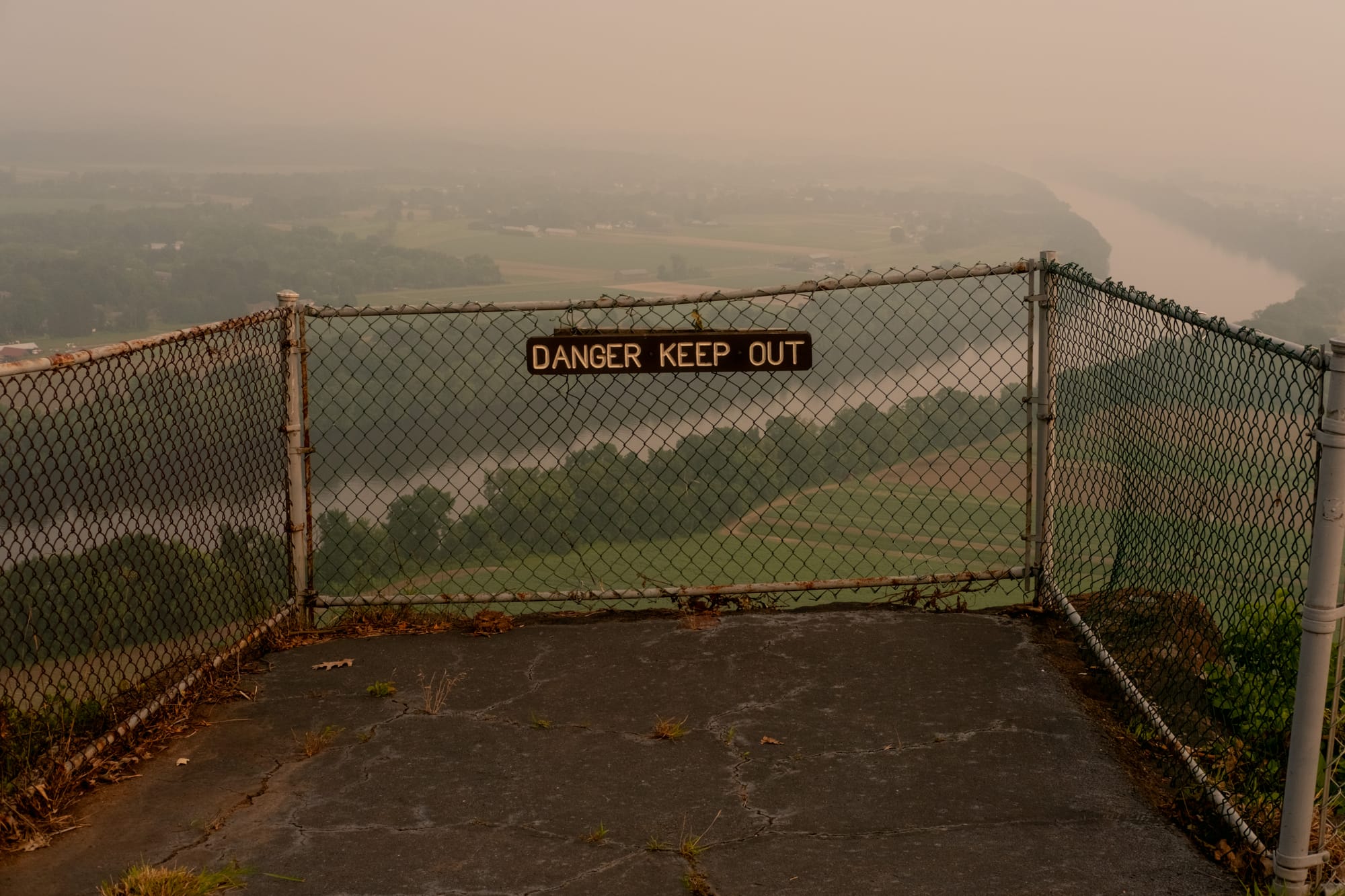
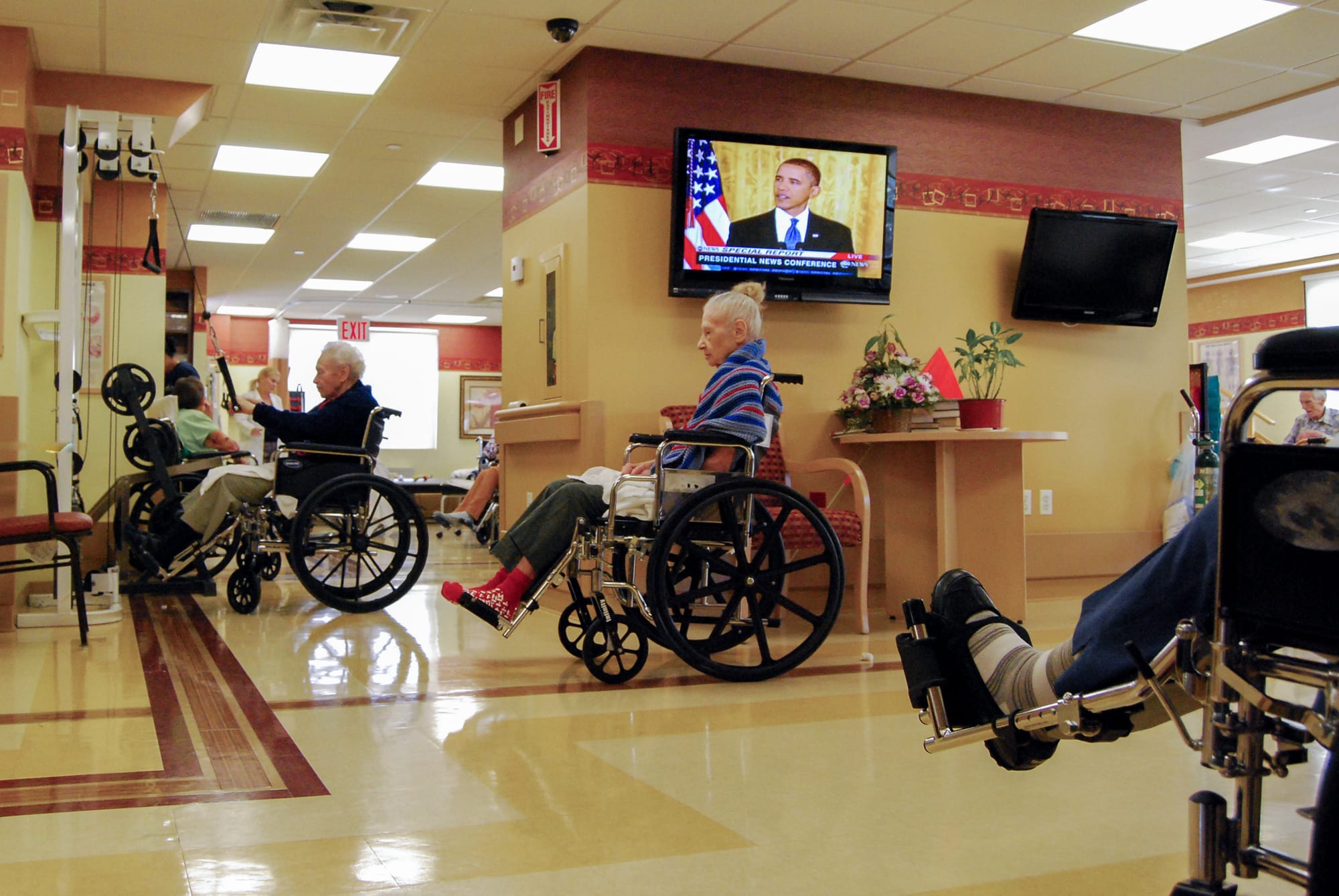
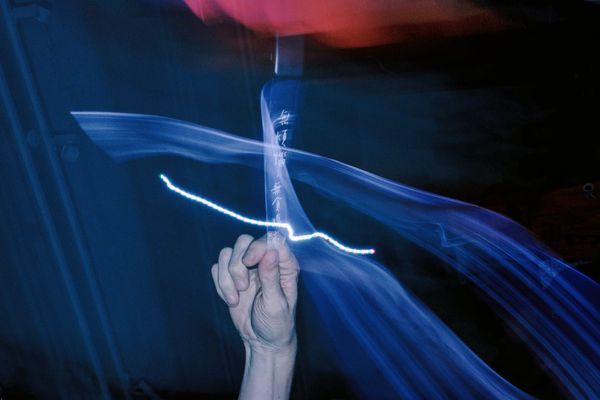
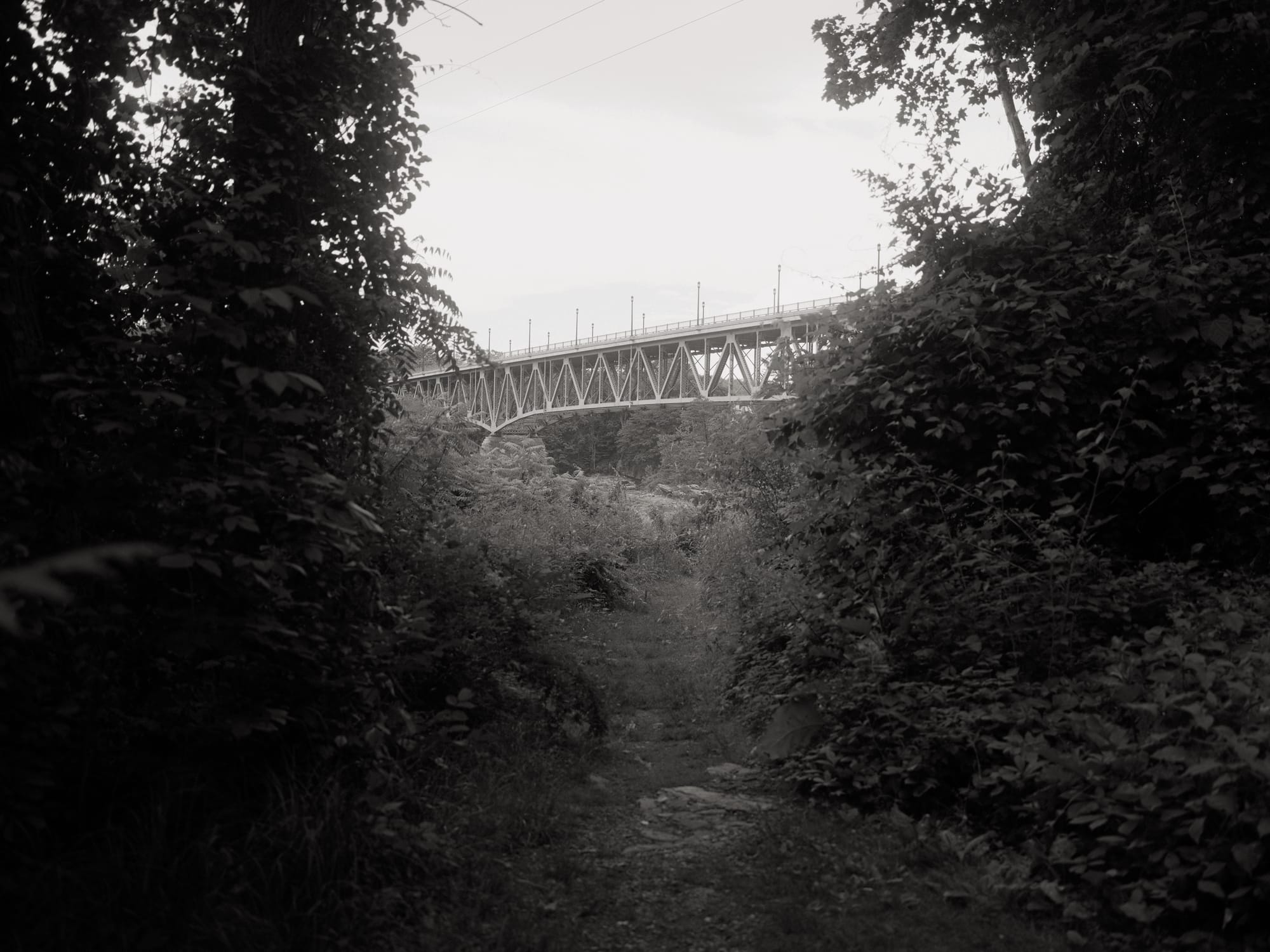
OCEAN VUONG, danger keep out, 2022 (left); and nursing home (i), 2009 (right), both inkjet prints. Courtesy the artist.
How do you divide your time between writing and photography? Do you follow a particular routine when it comes to your creative work?
They are very different art forms for me, almost like two different brains. The writing is much more nebulous. I’m not a disciplined writer at all, even though I want to be one. I have an image in my head of being like Toni Morrison, who wakes up at five in the morning and writes on a legal pad. I’ve never been able to do that. It’s much more chaotic for me, and much more about snagging inspiration from the world.
I’m more like someone with a net catching butterflies. It’s a lot of research, a lot of obsession, a lot of watching YouTube videos about history. When I start to write a novel, I write about three to four hundred words a day. But that takes a very long time to get to. The sponge stage is many years—maybe two years or so—before the novel composition starts. And once that starts, it’s pretty disciplined; every day is about three to four hundred words. But there’s no regimented time to that.
During the drafting, as I see and experience things, the ideas come in. For example, halfway through The Emperor of Gladness (2025), my friends took me to local wrestling shows. I never planned to have amateur wrestling in the story, but then I was so taken by the experience that it went into my novel.
Photography is much more somatic. The photographer really follows the world. The world has to be there first; the photographer follows. Whereas the writer goes first and can manifest the world from memory. I always say that if I was on Mars and the Earth blew up, I could still be a novelist of Earth from memory. I could still be a poet of Earth. But if the Earth blew up and I’m on Mars, I could never be a photographer of Earth. So photography is very dependent on a deep collaboration with the world. The world has to exist for photography to exist in the world. It’s a total inverse relationship between the two, but it feels very holistic to me.
Where would you say they intersect?
They’re both dependent on observation. Maybe a sculptor, painter, or dancer will say the same thing. Still, I think it’s really about looking. But with photography, there’s more gut reaction to it, because you can’t have the same time to process. In writing, it’s more like, oh, do I want to write about this scene? Well, let me think. Let me spend a week on it and see if it’s a worthy scene to describe or what have you. But for a photographer, if the scene is in front of you, you just snap it. You’ve got to just raise the camera and press the shutter and hope it makes sense. So it’s a lot more intuitive. My friend Cig Harvey, a great photographer, talked about how photography is like an art of love. Even in horrific scenes, there’s a kind of love for the image. There’s a love for the existence of it as a human reality of the world. And so you say, “I feel like I have to get this.” And you raise the camera.
It’s a very positivist idea and work, not in ethics or theme, but positive in the sense that it’s making—that you keep making the world as you try to capture it.
Do you recall the specific feeling or moment that drew you to the medium in the first place?
Well, photography was my first art. I didn’t know it was an art at the time; I was just taking photos of my friends’ bands. We came up on a DIY folk punk scene in New England. The politics were very radical. It was very anarchist-aligned, socialist. We were just teenagers. We didn’t really understand much of it other than that it felt urgent and necessary. We would play in these very DIY scenarios. I would just shoot flash photography in the shows.
When I looked at the images afterward, something like the poem started to come through in that, without plot or narration, there’s a dynamism in the image. I felt like I was using a hole puncher—I was punching holes out of time and the pieces that came out of it had their own mythology. That’s when I started to think, wait a minute, there’s something else happening here.
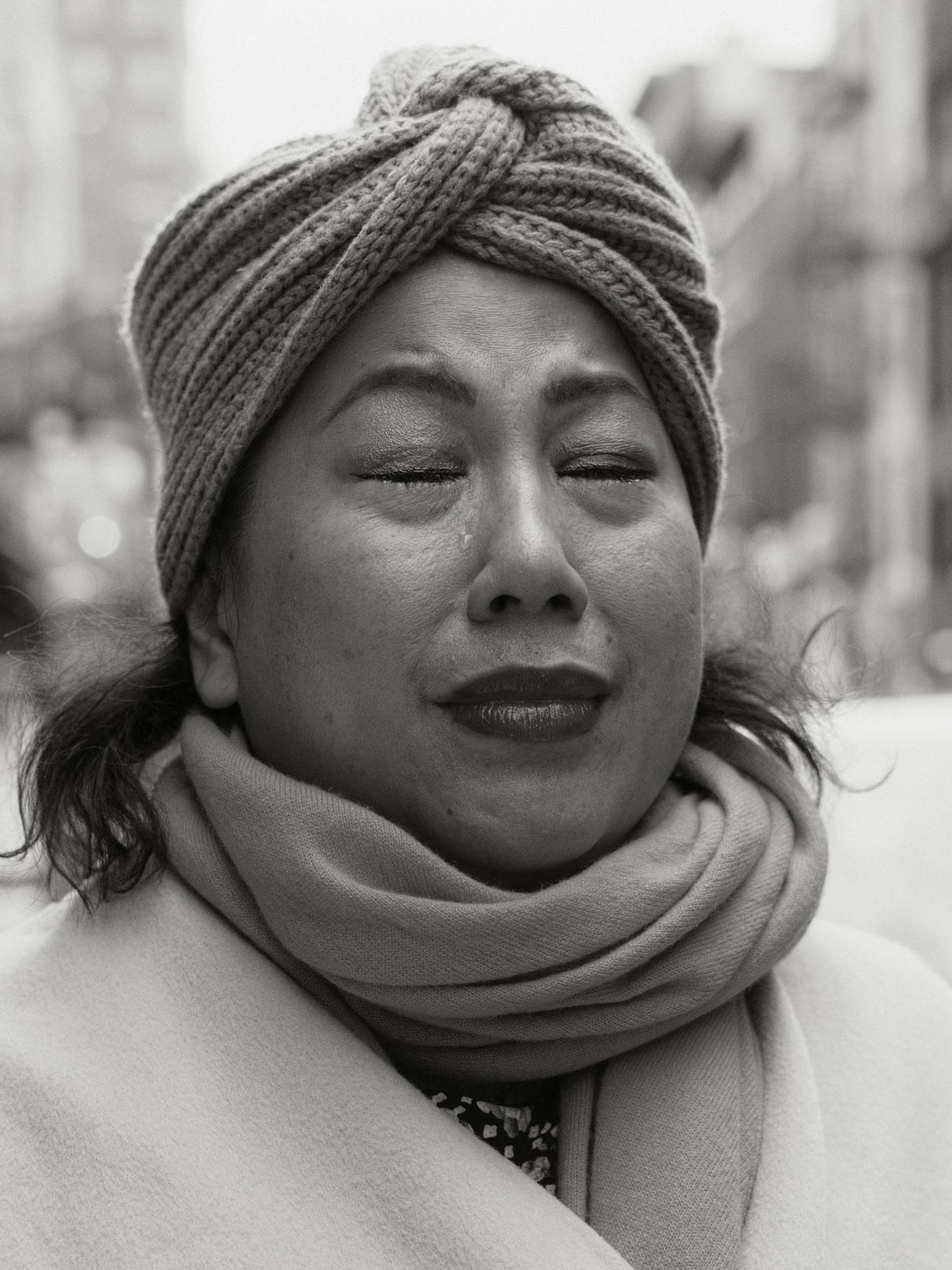
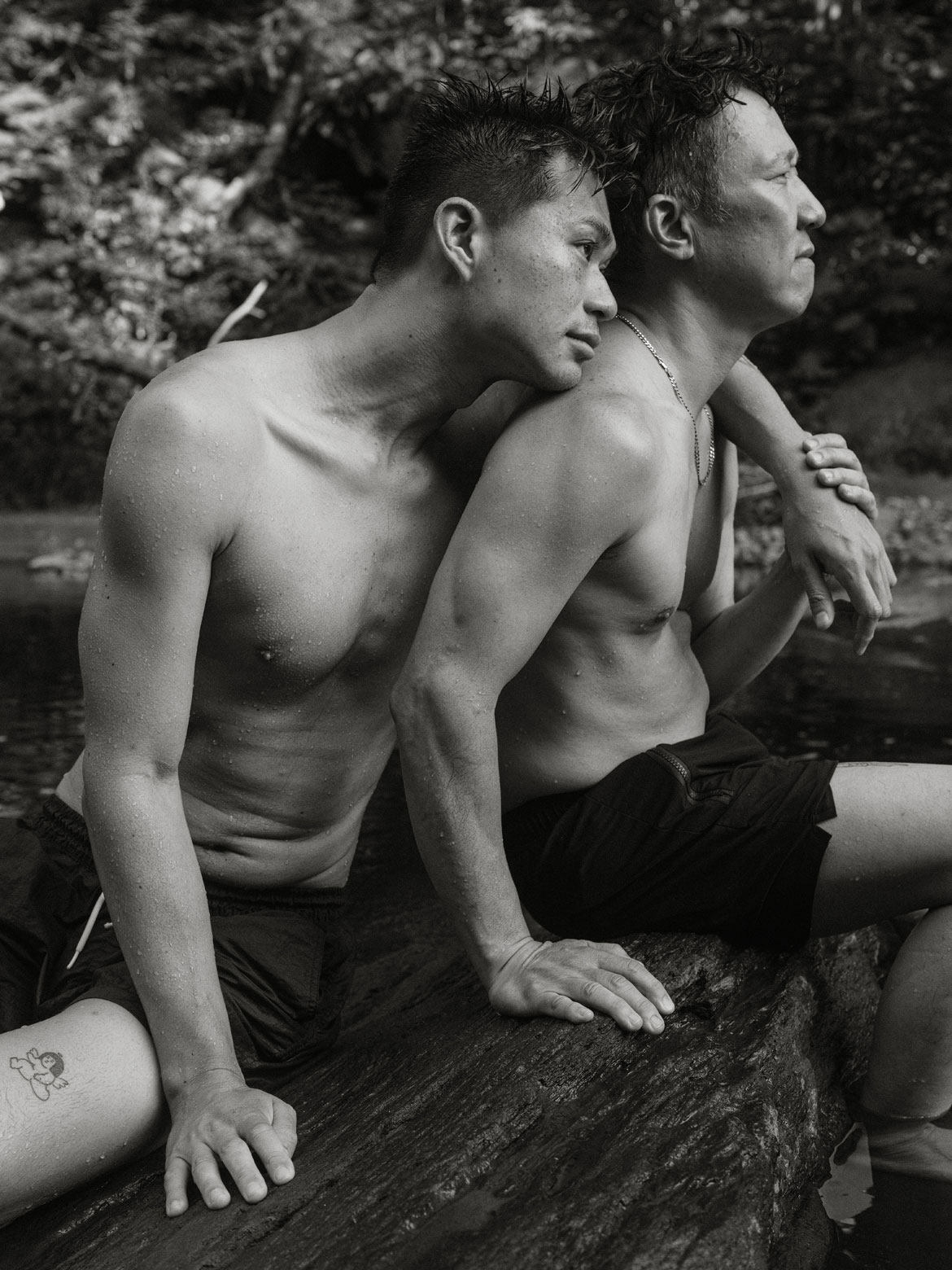
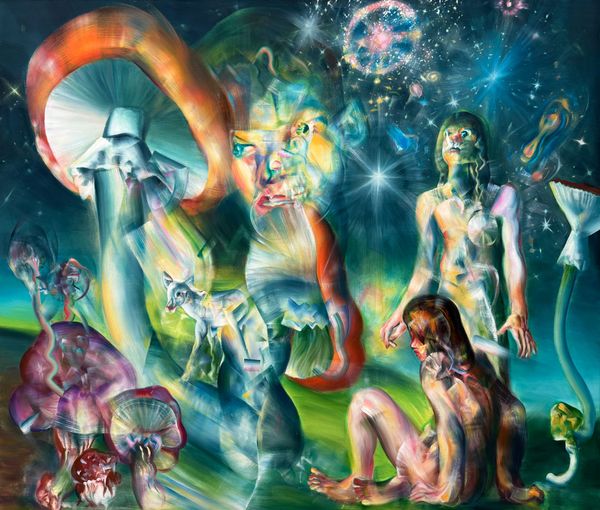
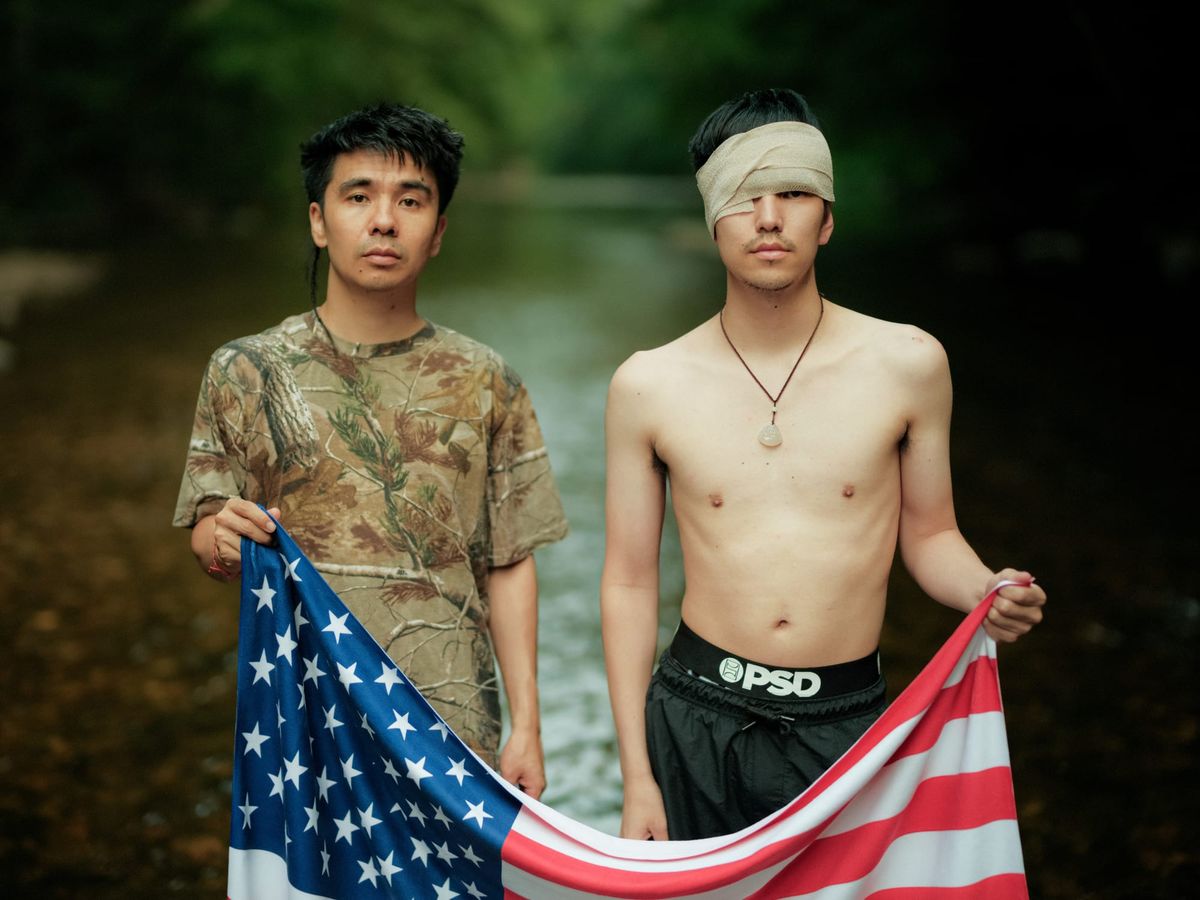
OCEAN VUONG, Mỹ Tâm crying, 2022, inkjet print (left); and Wilson and Fred at queer beach, 2024, inkjet print (right). Courtesy the artist.
You have since shifted away from capturing candid moments, such as at these live music events, to quieter, more staged compositions.
Yes; when I started to be a writer, I realized that I had this tool of documentation. At first, it wasn’t so much staged as direct. I would say, oh, let me just have my mother sit this way so I can capture her in a position I saw, say, in 19th-century portraiture in the books that I looked at as a kind of imaginative world-building for writing.
I never even understood that one could be a photographer. It was never in my head. I thought you needed permission or something. When I took these photographs, maybe I was inadvertently training as a photographer because I was studying the medium. I wanted to get a strong composition, so I spent more time taking photos of the streets, my family, my friends. It was all for writing. It was all to describe or even just pin it to my wall. I would pin those prints on my wall just to reaffirm my sense of my community and my world. That was all it was—it was like a procedural art, but it was more deliberate now.
It went from the shows to saying, let me stop and have my aunt stand here just so I can see the body of a Vietnamese woman in a post-industrial New England landscape. That was interesting to me, but it was a private endeavor. Then more recently, around 2022, when I was encouraged to really show this archive, which by then was almost 8,000 images, I started to think publicly.
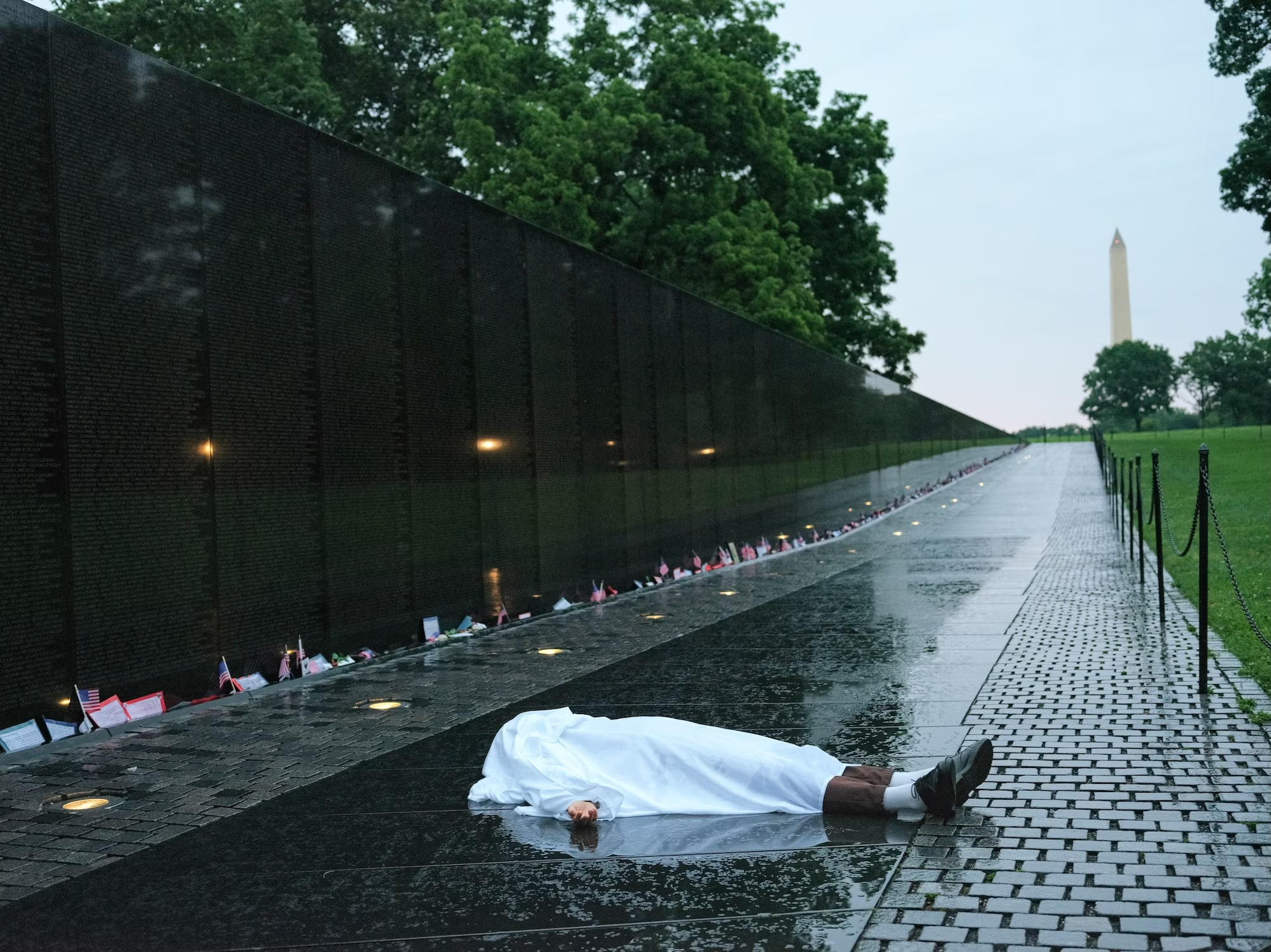
Maybe the first example of that would be the image of the Vietnam War Memorial where now I’m thinking in the typical Ocean Vuong way, which is all about layers, illusions, symbolism, but also this conversation between one Asian American artist and another—in this case, Maya Lin, who designed the wall. Now that photo might be the first one that starts to look like a lot of the illusions that I’m interested in in my literary work. By then, the staging became a very prominent part of creating mythologies deliberately as a way to tell the story in a public manner.
That’s still maybe 10% of the work right now. Eventually, maybe that will outnumber the more candid private archive, but for now it’s still pretty fresh.
A few years ago, you met Nan Goldin, who photographed you for Document Journal. How did that encounter shape your approach to photography?
Oh my gosh. It’s crazy to think about it. She doesn’t really do that kind of work and I was so touched that she said yes because she was reading my work. She’s a legend.
What was so beautiful is that we kind of forgot the assignment. There were long stretches where she stopped shooting and just sat on a bench talking. I told her I take photos too, but I’m just an amateur and whatever. She’s like, well, how long? I said, since I was 18. And she said, nobody’s a really good photographer; I’m not a good photographer. If you do it as long as I have, you’ll find the magic. Now, I don’t think that’s true—I think she’s a great photographer, and that she was being very humble. But what she said about photography reminded me of drafting. Nobody writes a good sentence on the first draft. If you’re very lucky, you get that. But usually you have to chisel away and find the magic as you work.
It just blew my mind how someone could be so generous and humble and yet accomplish so much. I still didn’t have a way back then. I didn’t know any gallerists or editors—I was not in that world. Nan said I should share the work, throw it on Instagram, so I did. Then all of a sudden these editors reached out and said, hey, is that yours or are you just collaging or what is this? Jackie Bates from The New York Times reached out, and that’s when things started rolling.
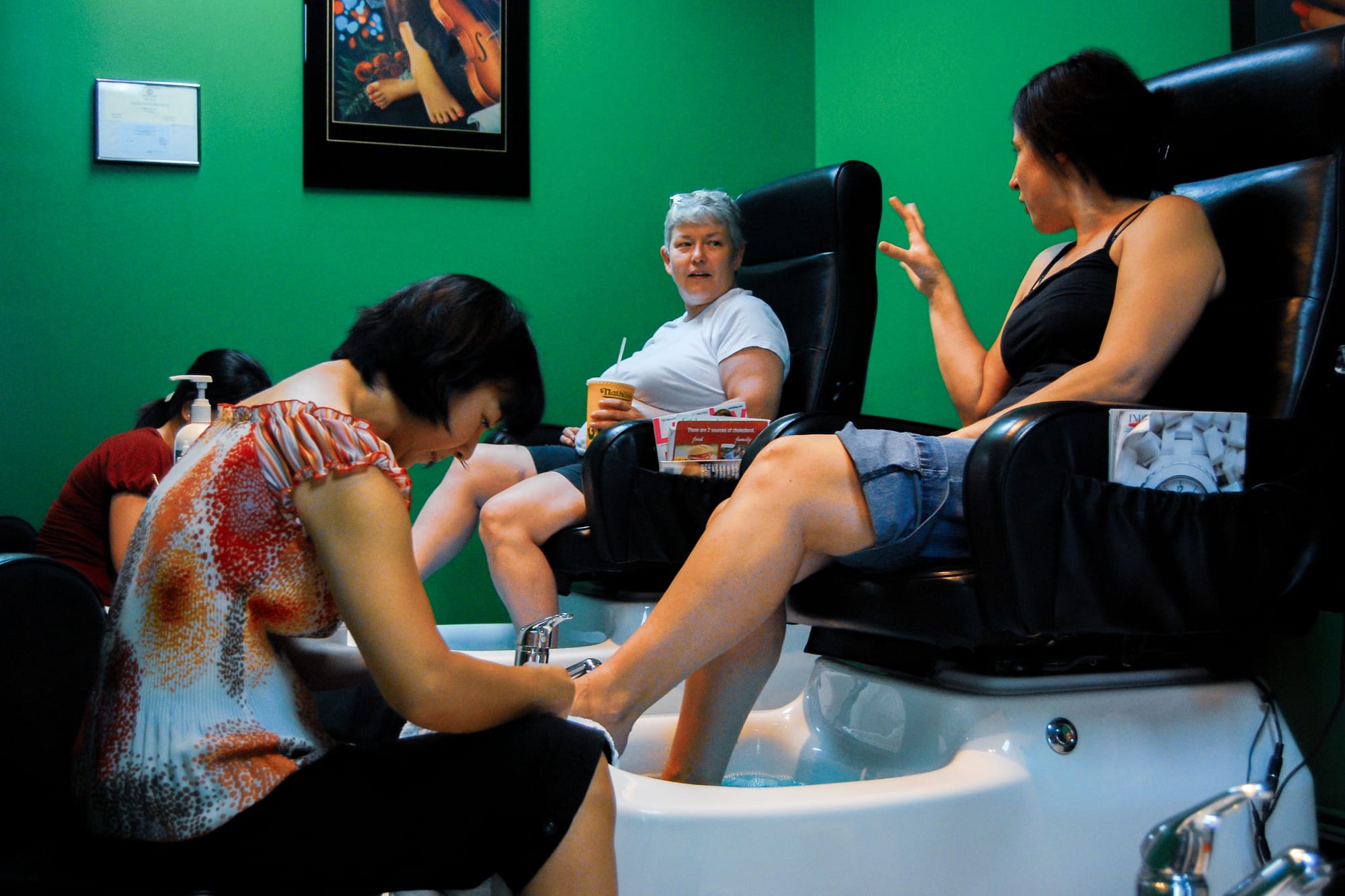
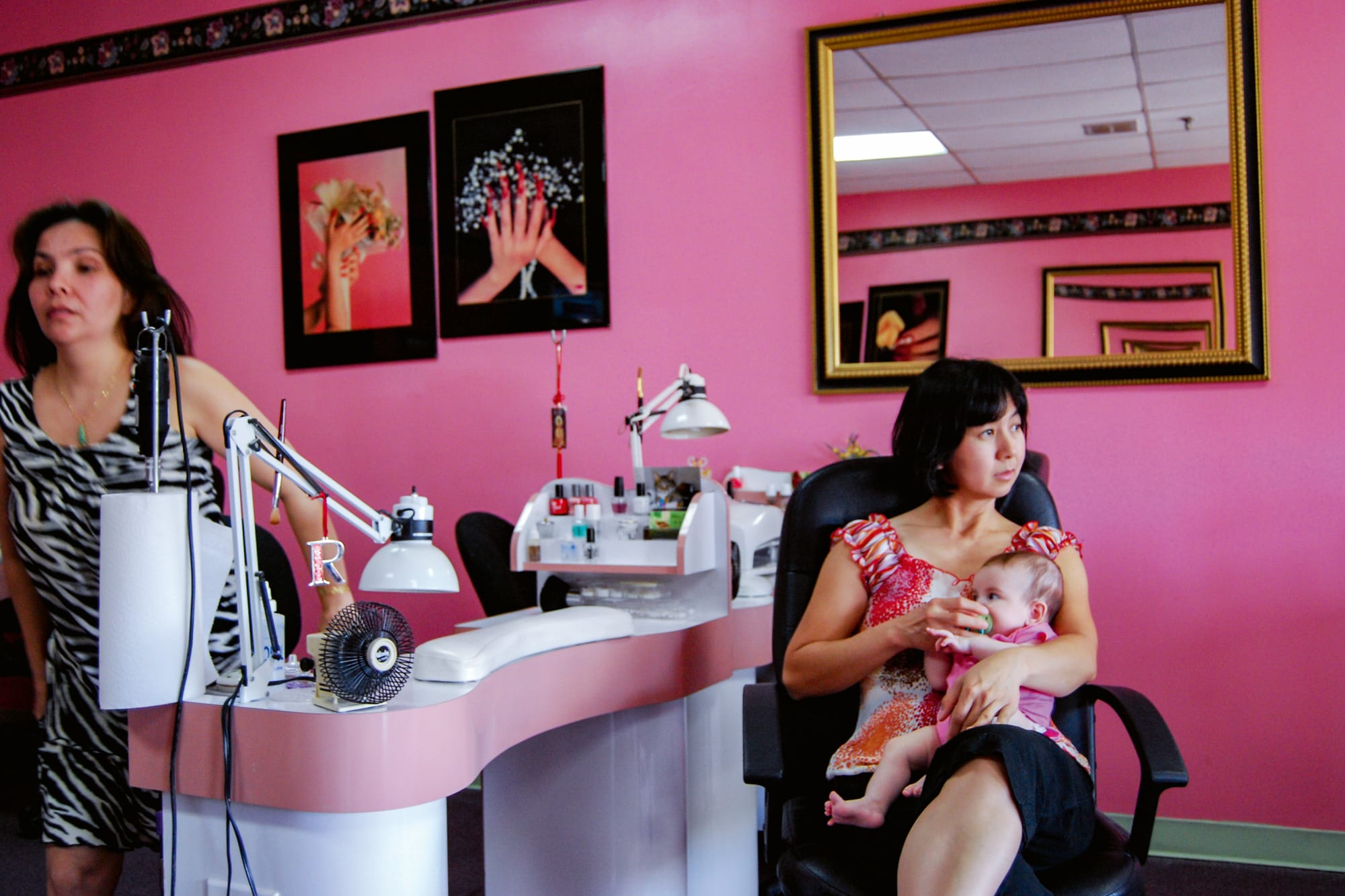
OCEAN VUONG, pedicures (left) and Phuong feeding Sara (right), both 2009, inkjet prints. Courtesy the artist.
How did you feel about that initial response to your photographs?
I’ll admit it was a little weird for me at the time. I’m still getting used to it because it’s a body of work that I never intended to show. It's a little different when you’re a writer because you’re always thinking, I’m going to publish this, hopefully. But here, there’s a sort of retroactive curation. I don’t know how to feel about it yet. I don’t have a firm feeling other than that it’s a little strange. It feels very vulnerable because these images were not supposed to be on a wall. Not that I have any feelings against that, but I originally felt they just weren’t intended to be there, whereas a lot of my photographer friends always hope to exhibit their work. So I’m acquiring that understanding quite late.
The photographs are very intimate, often unfiltered glimpses into your personal life. With your writing, even if it is in parts autobiographical, there is still the veil of fiction.
Yes, and writing is always cooked, because it’s memory. By the time you write a sentence with a subordinate independent clause, it’s cooked. You’ve already erased it a few times, or you’re thinking about the syntax in your head, whereas the photo is just all presence. And so when it’s cooked like that, even something autobiographical, it’s very embellished. You have reframed a lot of it, and that’s part of a lot of writing. Ironically, I think it’s more reframing than photography, although photography is not necessarily objective either. I suppose that’s where I find a lot of connection between the two arts, because they’re both mythologies.
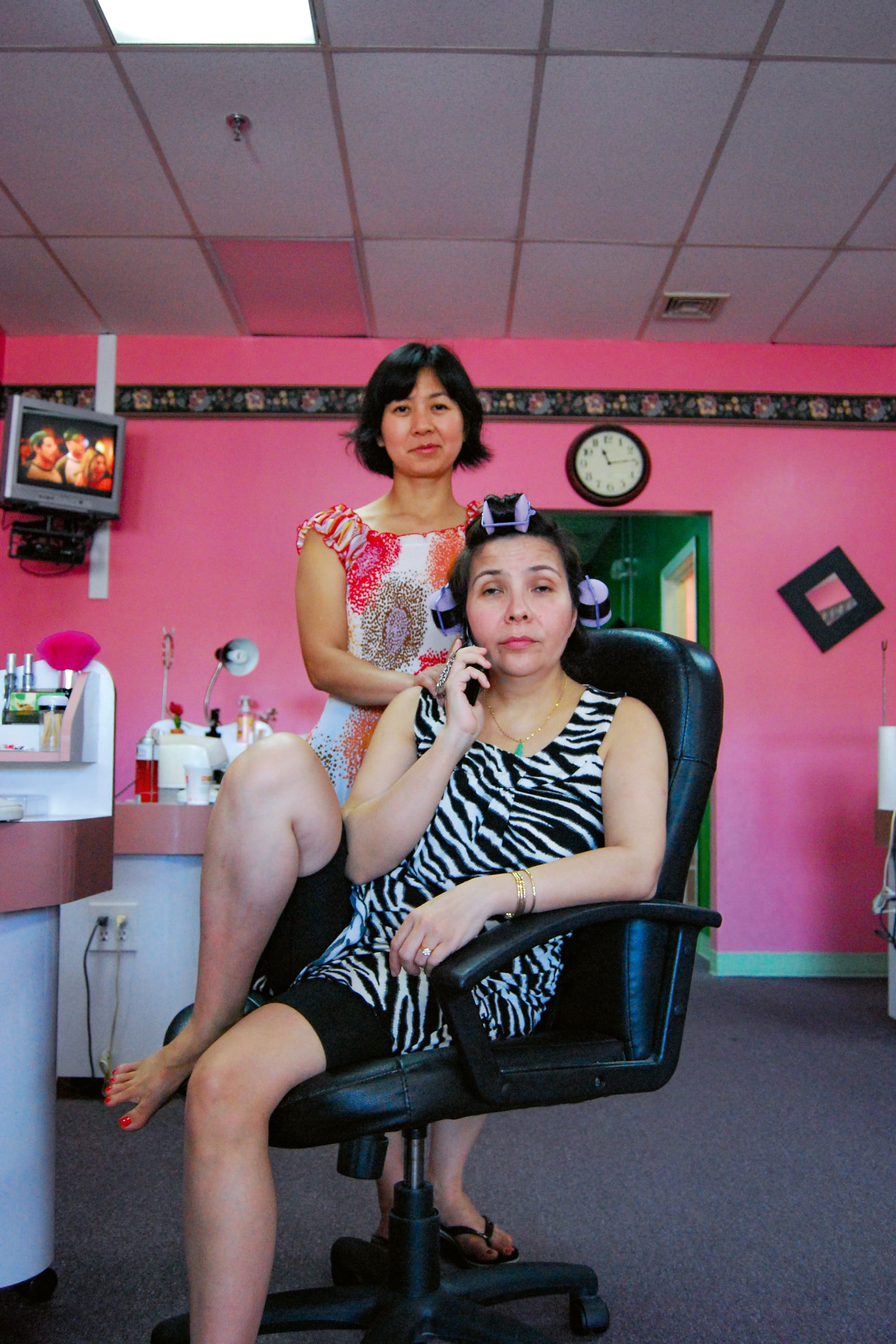
I’m really drawn to the photographs you took in the nail salon where your late mother worked, especially Rose and Phuong (i) (2009). It’s a very tender image, composed but casual, with both women dutifully looking at the camera. Could you tell me more about the moment in which you took this photo—how you set everything up, how your mother responded to the process?
I love that photo. I think you’ve really understood something within it that is very indicative of my work elsewhere in writing as well, in that it is composed.
The idea came when I saw how flushed the light was from the giant window, so everything was nice and equally lit, and no flash was necessary. And they were both just so balanced in the background. Even the TV and the mirror—everything was just so beautifully spaced out.
I wanted to make them feel powerful, as powerful as they feel to me in my life—both in their material bodily presence, but also in their spirit and what they mean to me. I knelt down, going lower shooting upward, so they could feel looming. But the moment itself was very short because my mom was on the phone with her sister in Vietnam, who was asking for money, which is why she has that tired look, like she has heard this story before. In Vietnamese, we call it than phiền. It’s this performative struggle in order to solicit money from the family overseas. That’s what was happening. She was hearing this monologue. She spun around, and her co-worker was there. I said, stand there and look at the camera. It was all just seven seconds, but I loved that.
You can see my mother is very relaxed in the photo, except for her toes. I feel like the anxiety of being asked for money you don’t have exists in your toes for some reason [laughs].
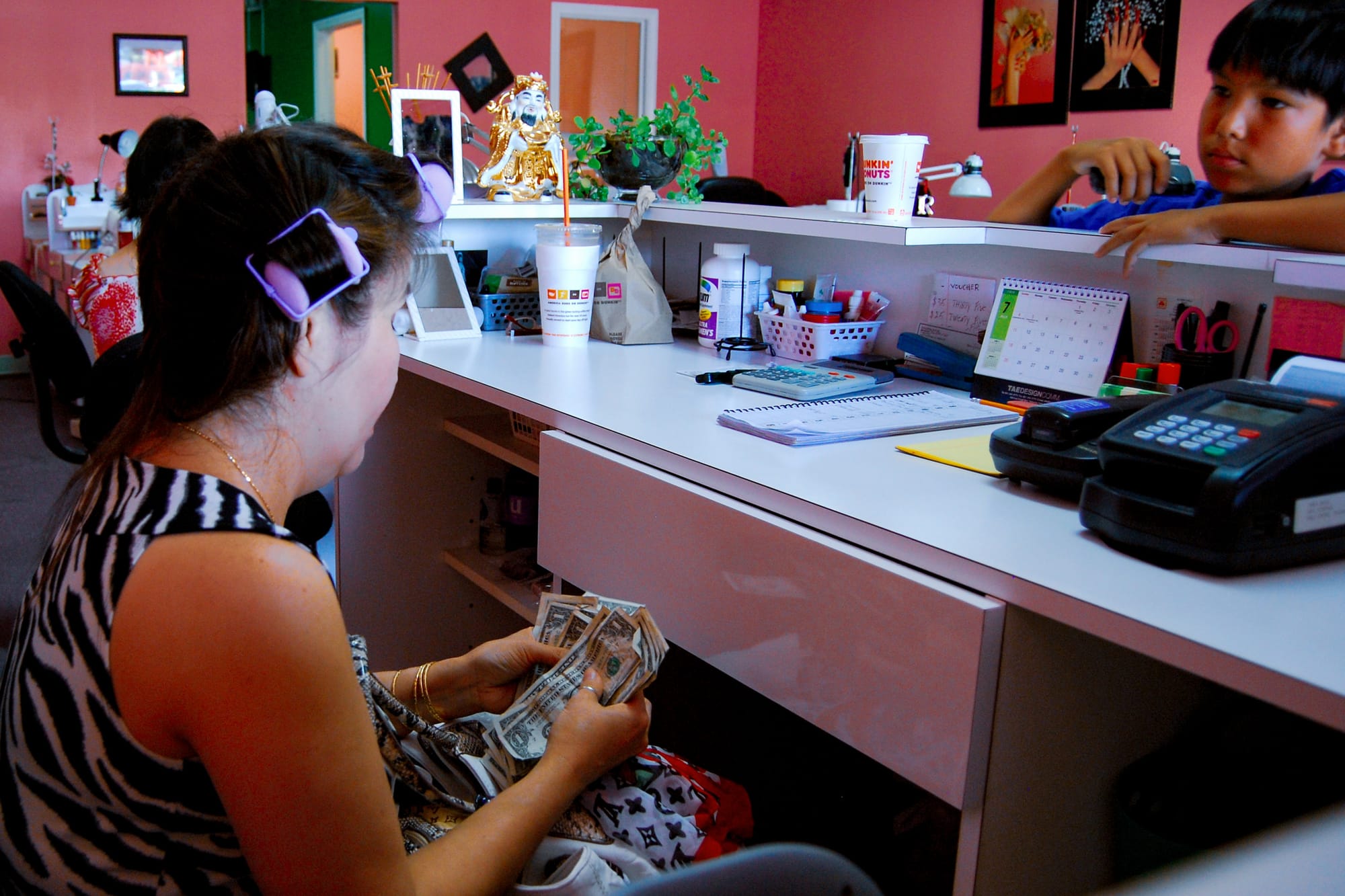
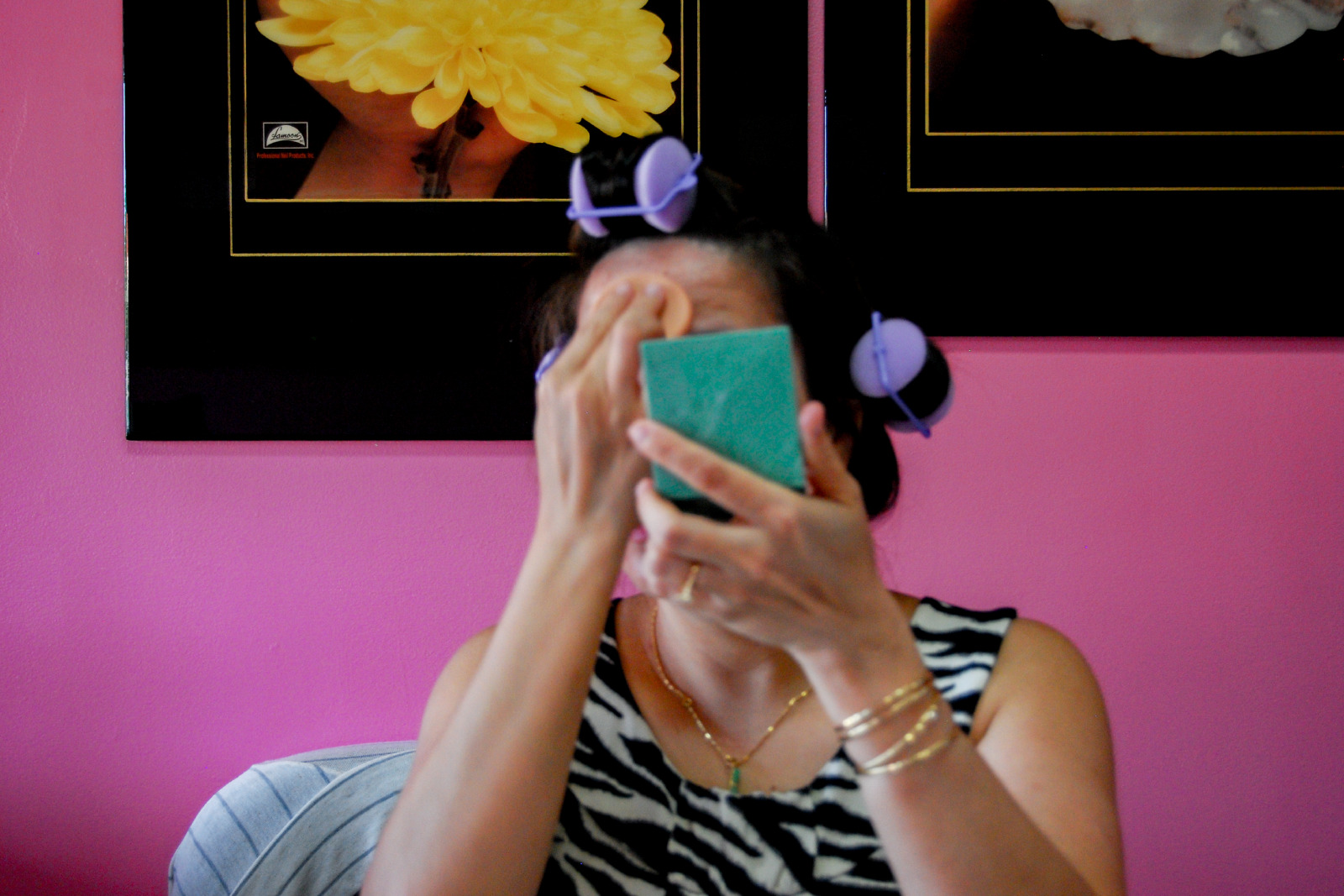
OCEAN VUONG, counting tips (left) and Rose putting on makeup (right), both 2009, inkjet prints. Courtesy the artist.
The nail salon is a bedrock of the Vietnamese diasporic community and, particularly in the American imagination, so prominently associated with Vietnamese women. What emotions and memories do you personally connect to this setting, and why was it important for you to photograph your mother there?
I was inspired by documentary photographers like Gordon Parks, William Gedney, and of course Walker Evans. All of them have photographed laborers, and I just thought the Vietnamese American nail salon is such a pervasive site of labor that very few people actually have seen, particularly the back rooms. It’s not just beauticians; it’s children being raised there, diapers changed, phở being cooked in the back for hours. It’s a place of joy and heartbreak, birthdays, grief and mourning. And it’s also like a controlled space of Vietnamese agency. None of that would have been possible if you worked in a factory—you can’t cook phở in a factory, or go into a corner and cry for hours if you have to, because somebody in the homeland has passed away. You’re not able to just bring your daughter to work and rock her in her crib, as my aunts often did while doing nails. So the nail salon was also a place of matriarchal caretaking, because we have determined it to be so, because there was no one else who could tell us we couldn’t do that.
At the same time, it’s a place of obsequious labor, because we always have customers to serve, but it’s also a place of supreme domestic agency in Vietnamese daily life. That friction is really fascinating to me, and I think it’s rare in the American workforce to have that, because every day was bring-your-family-to-work day.
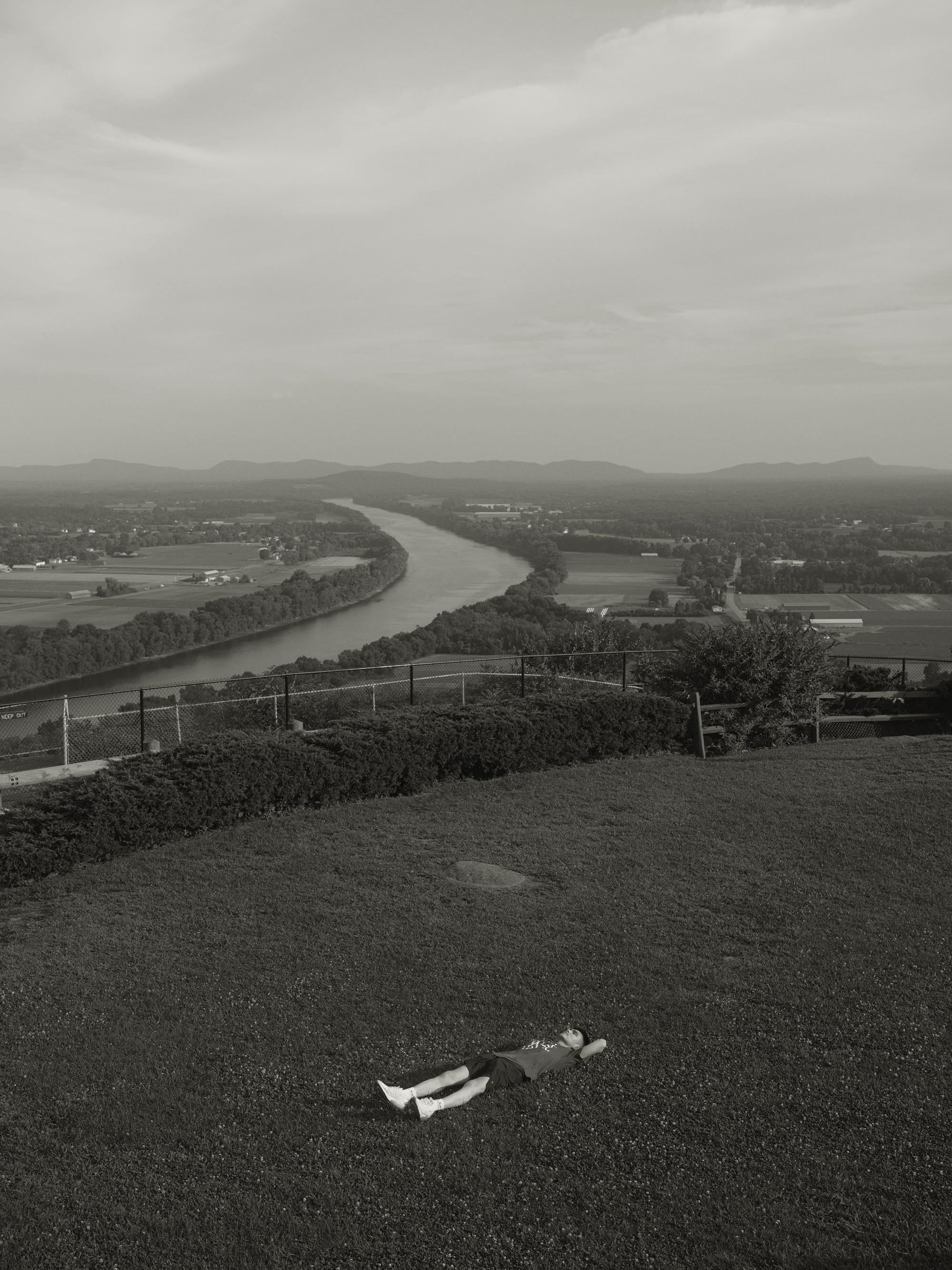
The working-class experience recurs throughout your work, though interestingly, your focus lies more on rest rather than labor— whether it’s your mother or your younger brother Nicky taking a break or coming home from long shifts at work. What compelled you to catch them in these moments of respite?
I think rest is a very powerful image for the Asian American visual tradition in the US, because Asian American life is often tied inextricably to labor. You know, you have the Chinese railroad workers, the laundry, the restaurants, the service work, Philippine nurses—they’re all tethered to labor. Whiteness is not tied so much to any one thing; it gets to be what it is. So for me, of course, it comes from a dialectic. It’s a reaction, but it’s a reaction that feels very refreshing to my eyes because I’m just taking photographs that I like to look at, and I like to look at Vietnamese people resting. This idea of the “unproductive” Asian also feels really powerful to me—there’s something very disobedient with an Asian body tending to itself in the American context, and not opening a door for somebody. There are pictures of my brother where it looks like he’s dreaming. What does it look like for an Asian body to dream and not tend to the country’s GDP? That’s how we have been legislated in and out of America, you know—let’s only let the good ones in, the productive ones, but not the bad and poor ones with nothing. This hierarchical elitist immigration policy shaped how we are seen and tolerated, how our entrance is tolerated. So when I think about labor, I also think about rest. Capturing the Vietnamese body at rest felt really healing to me.
You have spoken at length about needing to master even the most mundane details of the English language, whether to handle administrative matters for your family or communicate with others on behalf of your mother. Do you feel that the photographic medium, where the language is purely visual, unburdens you from that task of translation?
I’ll admit that’s one of the main impulses behind why I chose to go public with my image work. I recently had a show in Hartford, and my aunt and all of her nail salon co-workers came. None of them, including my aunt, can really read, or some are not illiterate but reading is not part of their daily life. So at the exhibition, they didn’t have to read; they could just see themselves. Watching them watch themselves and the nail salon, and see parts of it that they didn’t expect to see—the beauty in how it was presented—was really touching, and I think that making that world accessible to my community was really powerful.
Annette Meier is an assistant editor at ArtAsiaPacific.