People
Where I Work: The Unwritten Rules of Chan Wai Lap
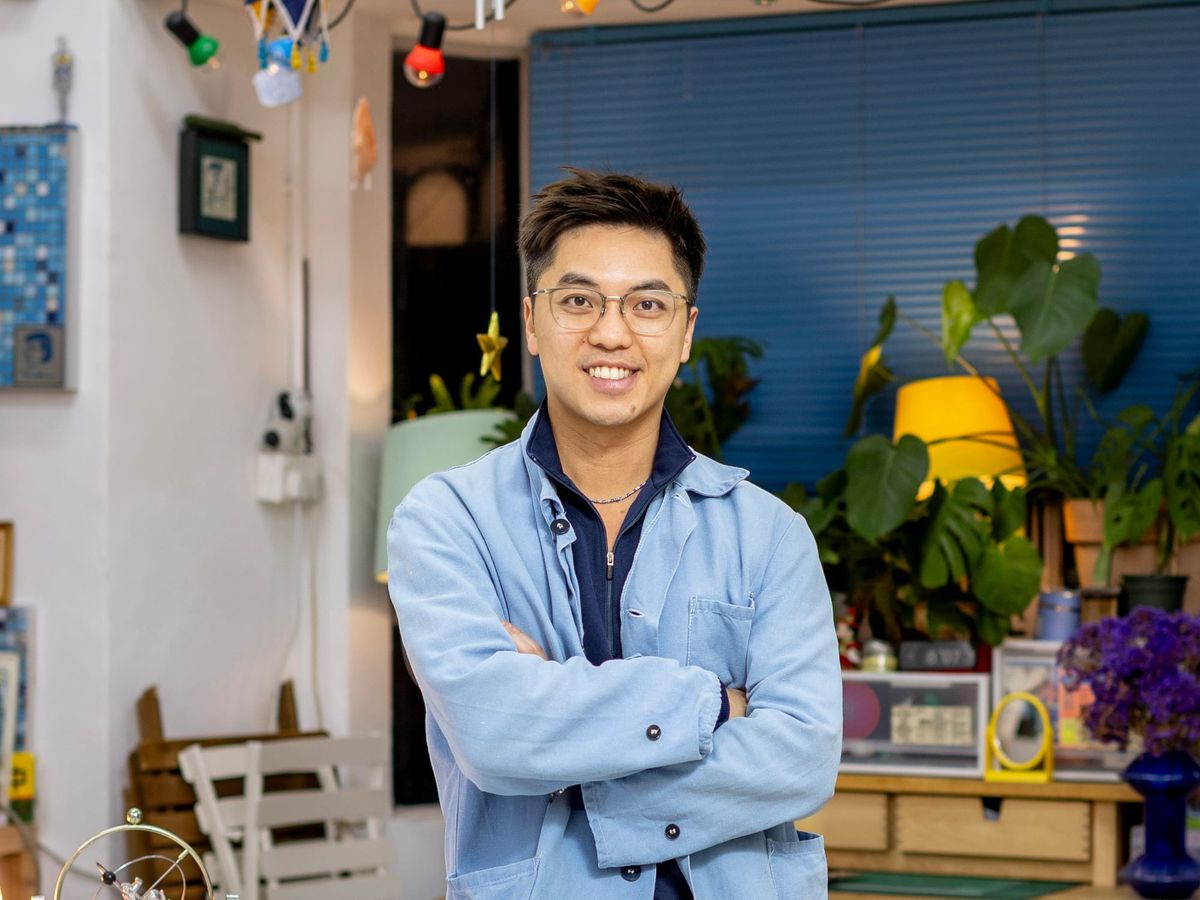
It seems fitting to me that Chan Wai Lap’s studio is in Fo Tan. The unassuming satellite town in Sha Tin District was developed in the 1960s and ’70s as a light manufacturing hub. Even its name, 火炭, literally “fire charcoal,” evokes the gritty furnaces of industry. As the majority of production relocated to the mainland from the late ’90s, Fo Tan became a place of two selves. From the outside, it still masquerades as a declining industrial center, with its aging factory buildings and warehouses. Inside those walls, though, a private haven of artists and creatives has blossomed, quietly rewriting the social code of Fo Tan into a vibrant mixed-use community.
The entrance to Chan’s studio exemplifies this. In an old corridor of peeling paint and cold linoleum, a heavy, prison-like door opens onto a space bursting with color. It’s small, but that hasn’t stopped Chan from filling every inch with art and life. Traces of his practice are everywhere. A scale model of Some of Us Are Looking at the Stars (2023), his interactive installation that graced the steps of the Hong Kong Museum of Art from March 2023 to April 2024, sits atop leftover tile work from his recent solo exhibition, “Jeremy’s Bathhouse” (2026), at Oi! Glassie. Glass and ceramic snails, each a stand-in for Jeremy, emerge from potted plants and crevices. Rainbow wind chimes hang from the ceiling, and cabinets and shelves overflow with kitsch trinkets collected from markets over the years. On a workspace lie mosaics of pool tile, bars of soap, and a lone school shoe, the model for his 2026 installation at the Centre for Heritage, Arts and Textile. An in-progress drawing of a pool hangs on a wall. Cheerful and effervescent, the space echoes the hyperactive personality of its owner.
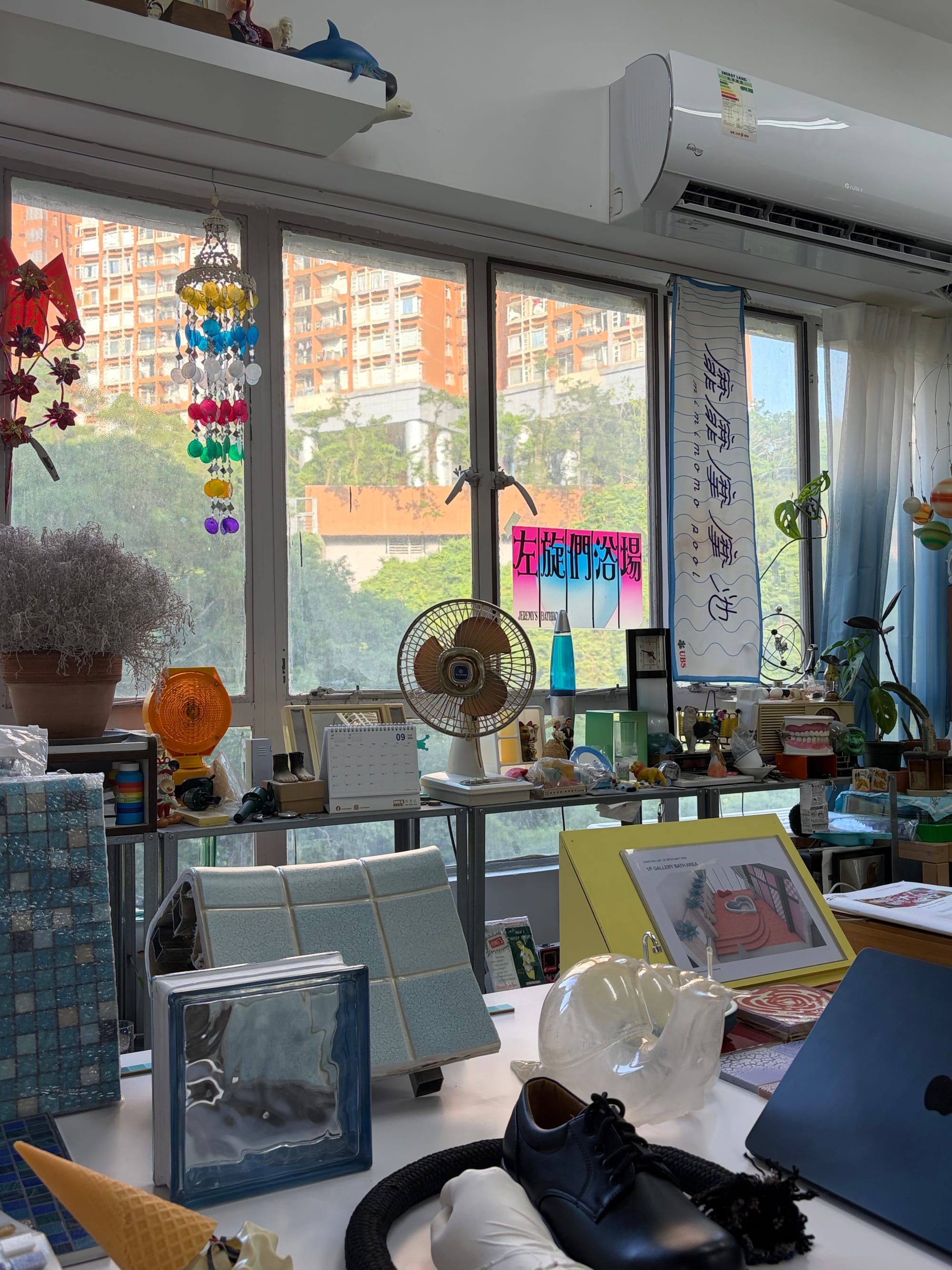
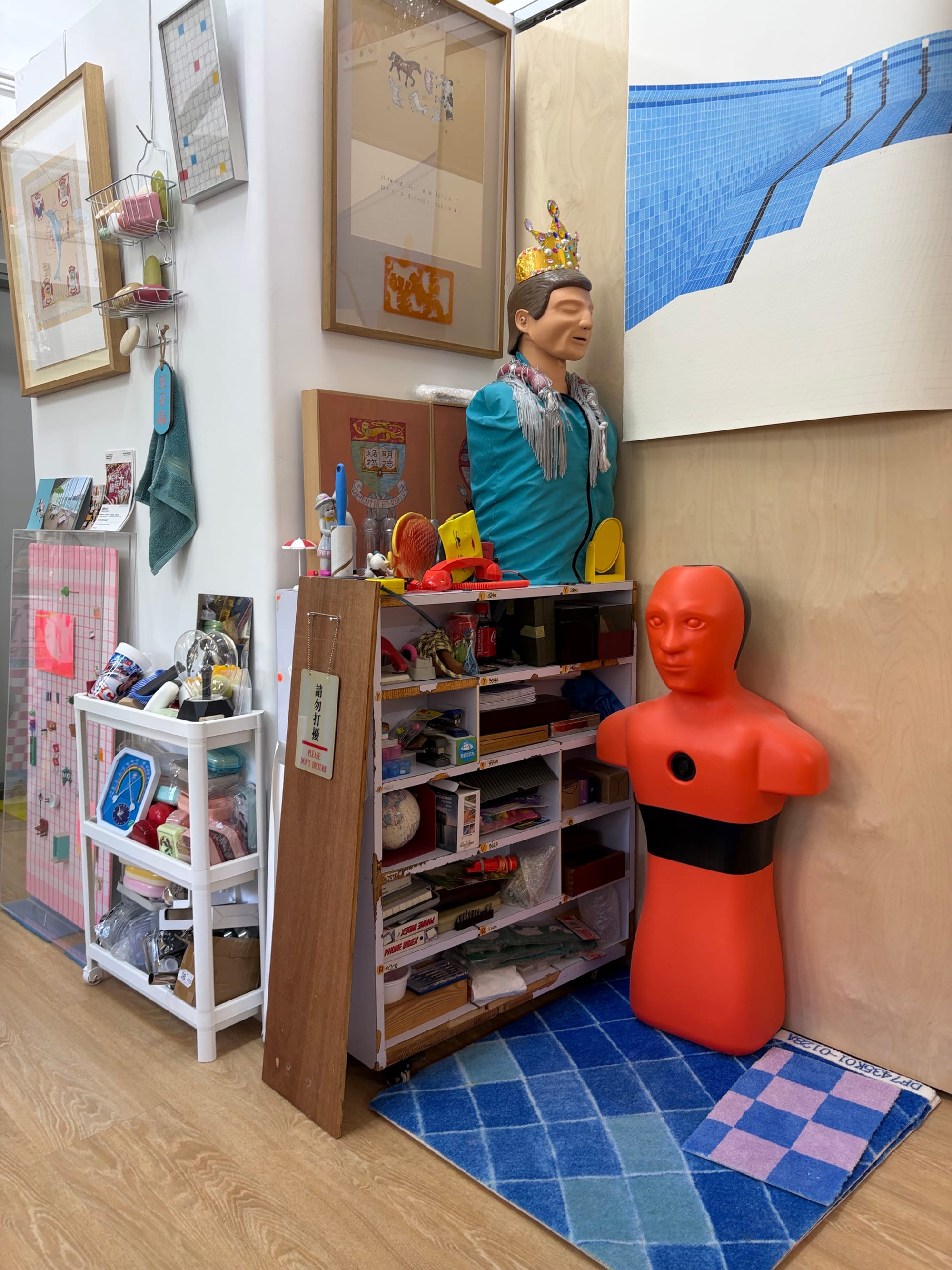
Views of CHAN WAI LAP’s studio in Fo Tan.
Born in 1988 in Hong Kong, Chan did not foresee the course his art career has taken. After earning a degree in graphic design in 2011, he drew his early works exclusively from memories of high school. Series like Today’s Lesson, The Rules, and Copies of Transcripts (all 2013) addressed the pressures of the Hong Kong education system, from authoritarian uniform policies to the fear of receiving less-than-stellar grades. Around 2019, feeling that he had exhausted this setting, he found himself directionless. It was then that he decided to teach himself to swim, visiting his local pool daily. “I would go there every day at 11 o’clock, and I’d see the same people. I would escape my problems in this public space, but what about them? Suddenly I had so many questions. It felt like a breakthrough. At that moment, I felt compelled to draw the swimming pool.”
That moment has defined Chan’s career since. He seeks to understand how community spaces are shaped as much by unwritten social codes as by formal rules, and the public swimming pool is the perfect vessel for these concepts. There are scheduled times, rules about running and diving, and conventions about how you behave or where to sit. Even the changing rooms, he notes, are a bizarre mix of intimacy and exposure. When visiting pools, Chan slowly drinks in the atmosphere, counting tiles, observing how people act, and learning how each community operates with its own idiosyncrasies. The discovery of what governs these spaces around the world is the core of his practice. Sometimes rules prevent the experience; he recalls turning up at a pool in Istanbul, eager to swim, unaware that registration was required, with a three-month waitlist. He did not end up swimming that day.
Gesturing to a half-finished sketch on the wall, he describes how he brings this fieldwork into the studio. He meticulously sketches a grid and consults a book of pool tile swatches, matching their colors as accurately as possible to his pencils. He then sets about coloring each square, one by one. I ask whether this process ever gets monotonous, or whether the repetition adds something to the wider context of his work. With a smile, he likens it to a kind of meditation: “When I’m back in the studio, drawing, repeating the tiles and the blue colors, I think it’s the same as when I’m swimming in the pool, repeating the same strokes, the same actions. The body is doing the same things all the time.”
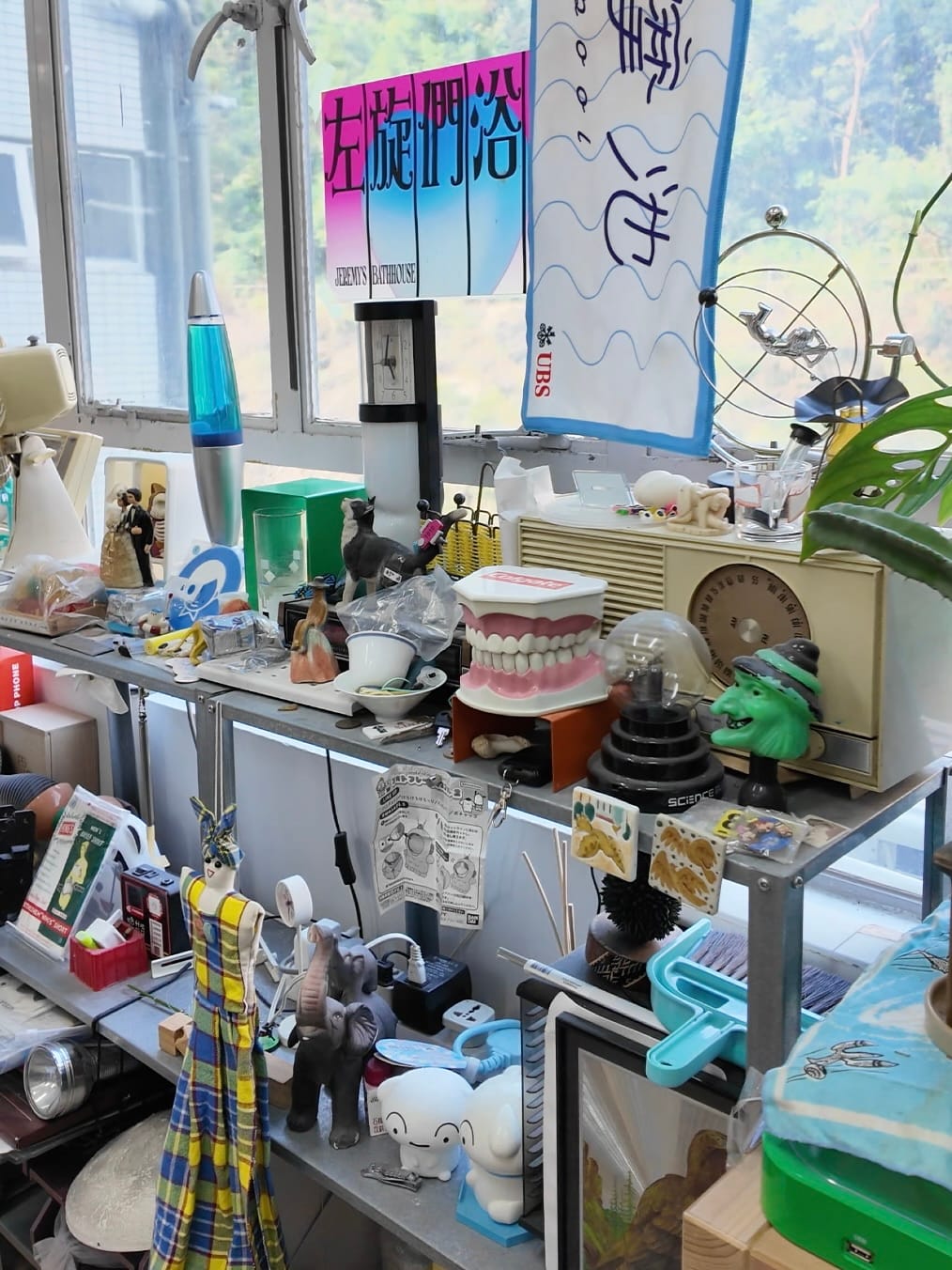
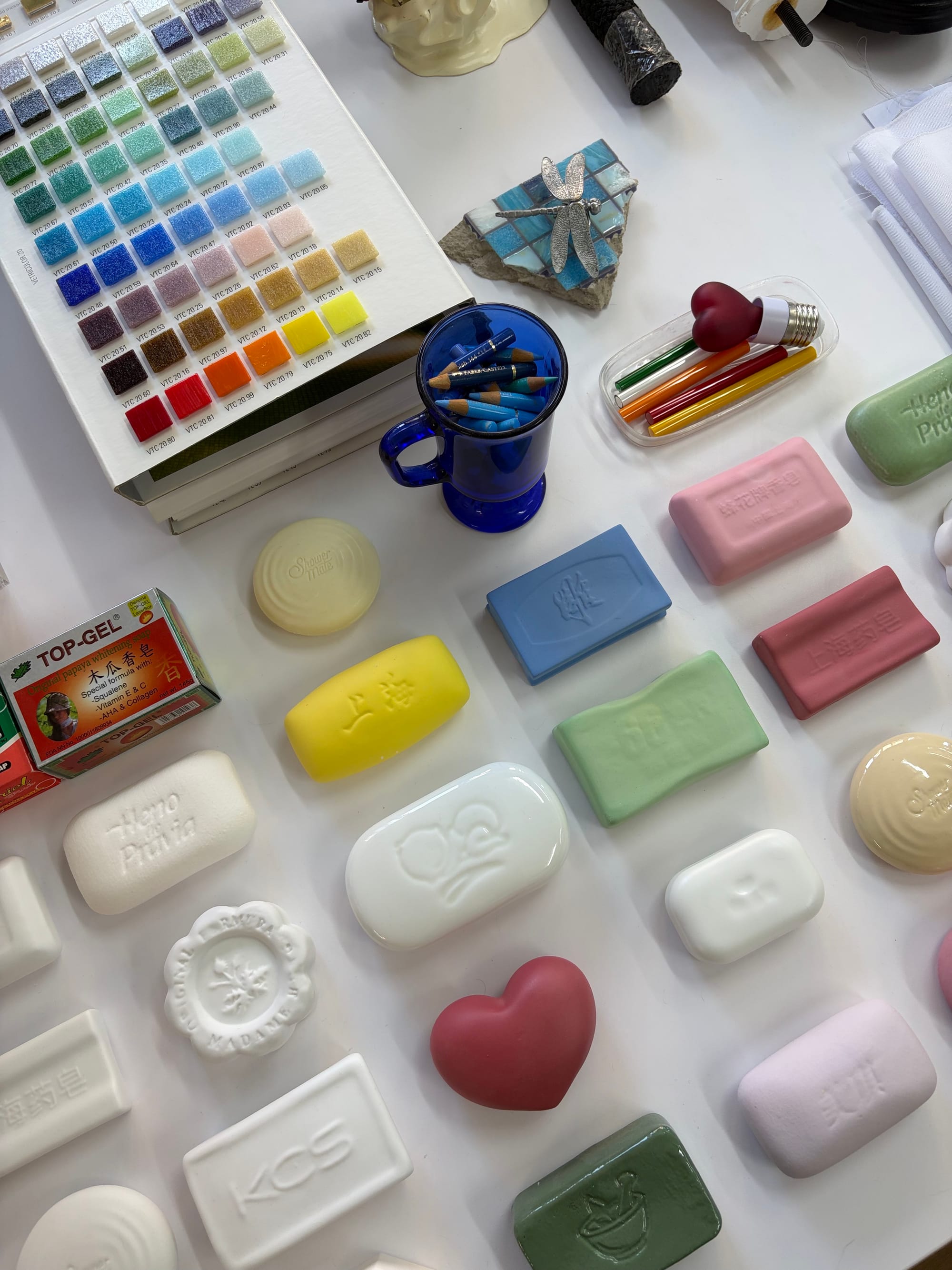
Views of CHAN WAI LAP’s “private museum” of objects (left) and his studio workbench (right) in Fo Tan.
He points fondly to a cup on his workbench, filled to the brim with well-used pencil stubs. “You can really see how I spend my time.” For Chan, this is art in and of itself. The pencils, shrinking as he works, tell their own story and testify to his practice. He reiterates his affinity for physical objects, for the stories they communicate and the connections people can form with them, by leading me to what he calls his own “private museum.” I eye novelty mugs, a lava lamp, and statues of dolphins and elephants huddled on top of vintage radios. Several black-and-white cats, chosen because they resemble his own, are dotted around. The secondhand menagerie is as bubbly and vibrant as Chan himself, each piece collected during his travels and residencies around the globe. He takes particular joy in an alarm clock shaped like a dancing apple and a rare Mickey Mouse collectible from Shanghai Disneyland. The area is a source of inspiration, he tells me, not only because of each item’s story and the questions they raise (where did they come from, who owned them before, what were they made for?), but their physicality—their realness—which instantly and tangibly forms a connection between person and thing.
This is why similar quotidian knickknacks so often appear in his works: the color-coded identity cards of Friends Accepted (2016), the magnets, receipts, and handwritten notes of See Words - Drink Soup (2021), and the figurines and fabrics of Sunshine Game (2022). It is also why Chan has also explored his swimming pools in physical, interactive installations that invite viewers to feel the space, such as “Jeremy’s Bathhouse” and “The Lonesome Changing Room” (2021). On the table in front of us sit test pieces from installations past: large mosaic sections shaped like the edge wall of a pool. Looking at them, I already feel a tangible connection, imagining the grit of the tile and the smell of chlorine. I ask Chan about the contrast between his installations and his paper works: one allows interactivity and engagement, while the other is minimal and more detached. The answer lies in the process, he says. “The drawings involve individual work that I must finish by myself. But in creating installation art, you need to engage so many people: architect, curator, engineer. It’s quite a different approach.” This spirit of isolation or collaboration infuses the works, whether he intends it or not. Chan’s creative practice, it seems, is itself shaped by a set of unspoken rules, which influence his execution and shape how we engage with the pieces, in ways both familiar and surprising.
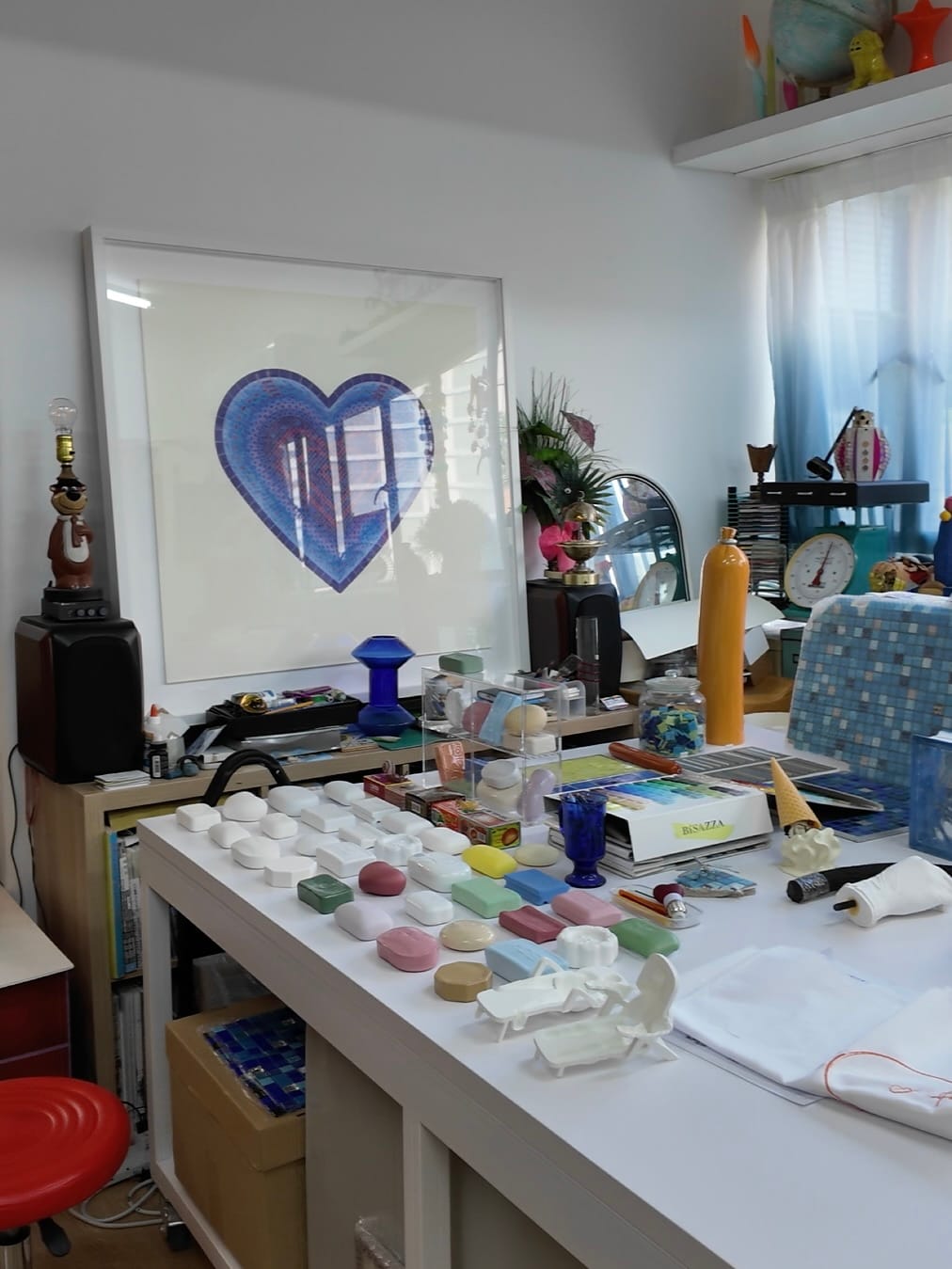
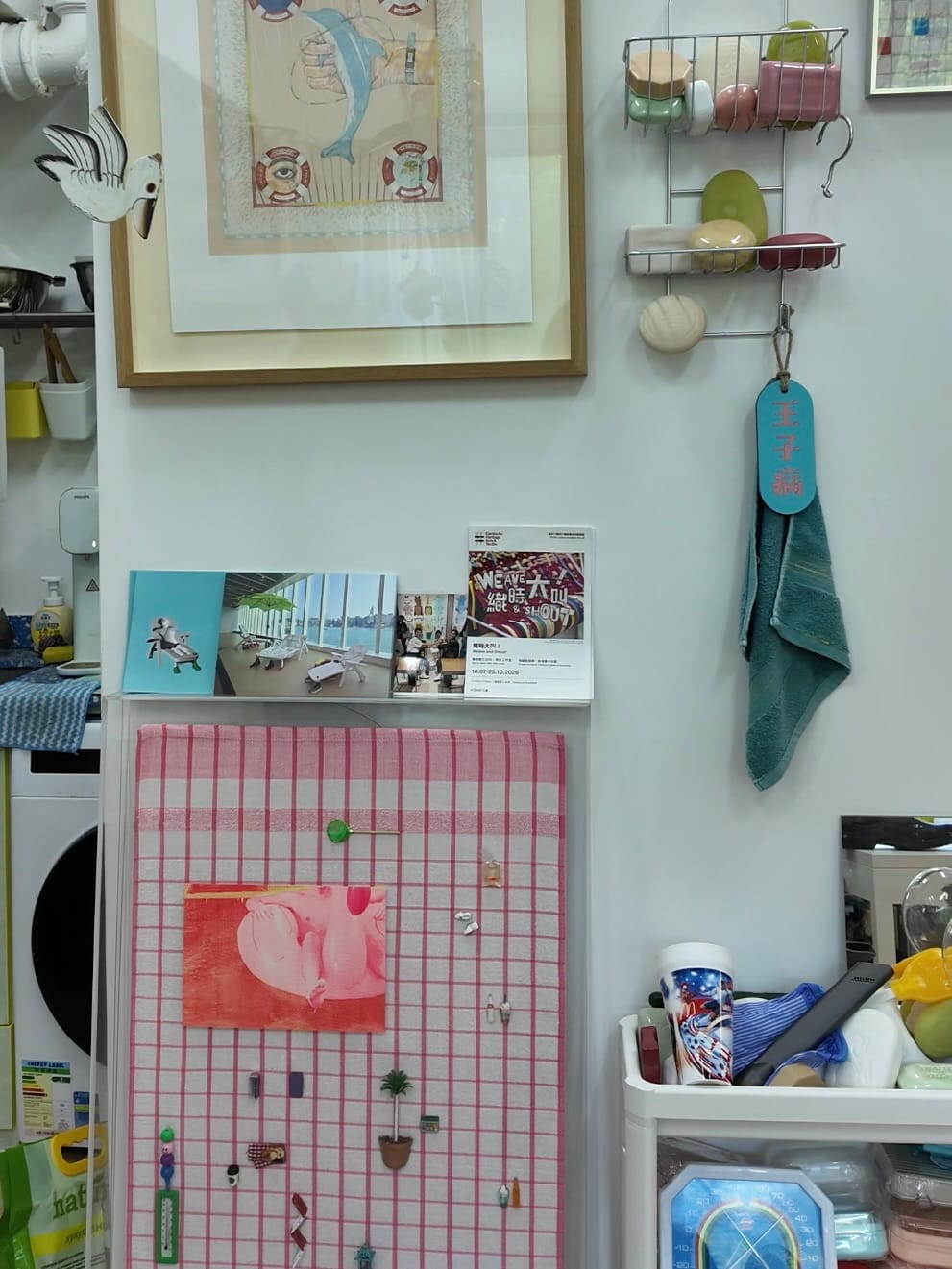
Views of CHAN WAI LAP’s studio in Fo Tan.
I ask, in the event the proverbial pool were to ever run dry, where he might set his sights next. “I have focused on the public space all these years. How about the private space? They might already be described as ‘private,’ but might have even more private rules, too.” He ends pensively, “I’ll keep exploring.”
Leaving Chan’s creative playground and stepping back into the drab industrial corridor feels a bit like crawling out of the wardrobe after a trip to Narnia. It also prompts me to reflect on the questions at the heart of his work: the dichotomy between public and private spaces, the unwritten rules we all follow, the façades we put up, and the interior stories that drive our everyday lives. As I step onto the street, I wonder whether Fo Tan has its own story to tell, its public-facing industrial towers at odds with its hidden creative culture. I was surprised to learn that the name was once quite different, altered over generations of shifting pronunciation. How fitting that the studio of Chan Wai Lap, an artist obsessed with social behavior around bodies of water, resides in a place once called 河灘 Ho Tan, or “river beach.” If only the name had once meant pool, too.
Harison Butler is an editorial intern at ArtAsiaPacific.