People
Community and Sustainability: Notes from Scotland
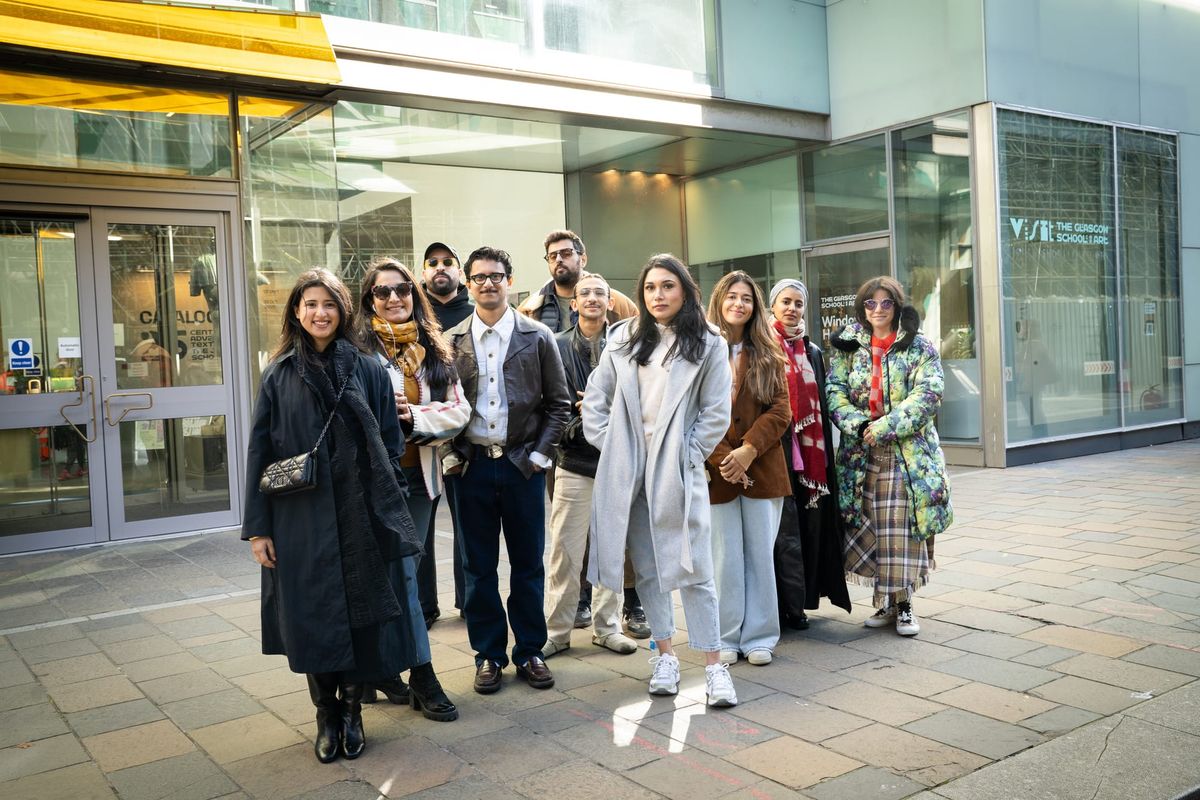
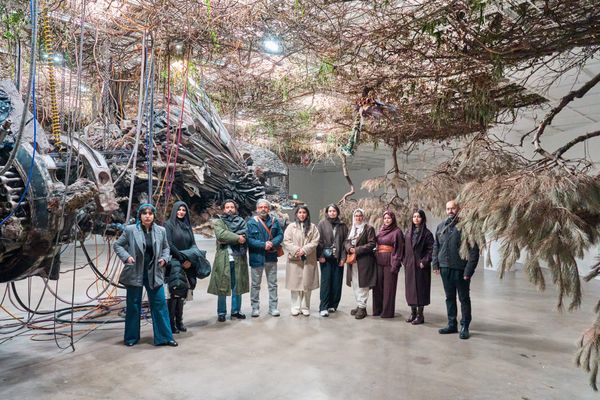
In September 2025, Saudi Arabia’s Visual Arts Commission sent a delegation of artists and cultural practitioners to Scotland through Art Bridges, a professional development program connecting participants with international peers. Visits to cultural institutions and conversations with Scottish practitioners led to in-depth reflections on approaches to community engagement, institutional collaboration, and sustainability in visual arts.
Below, Danya Faisal, Bayan Ashour, and Afia Bin Taleb reflect on the exchange and the possibilities it opened for Saudi Arabia’s growing visual arts sector.
DANYA FAISAL
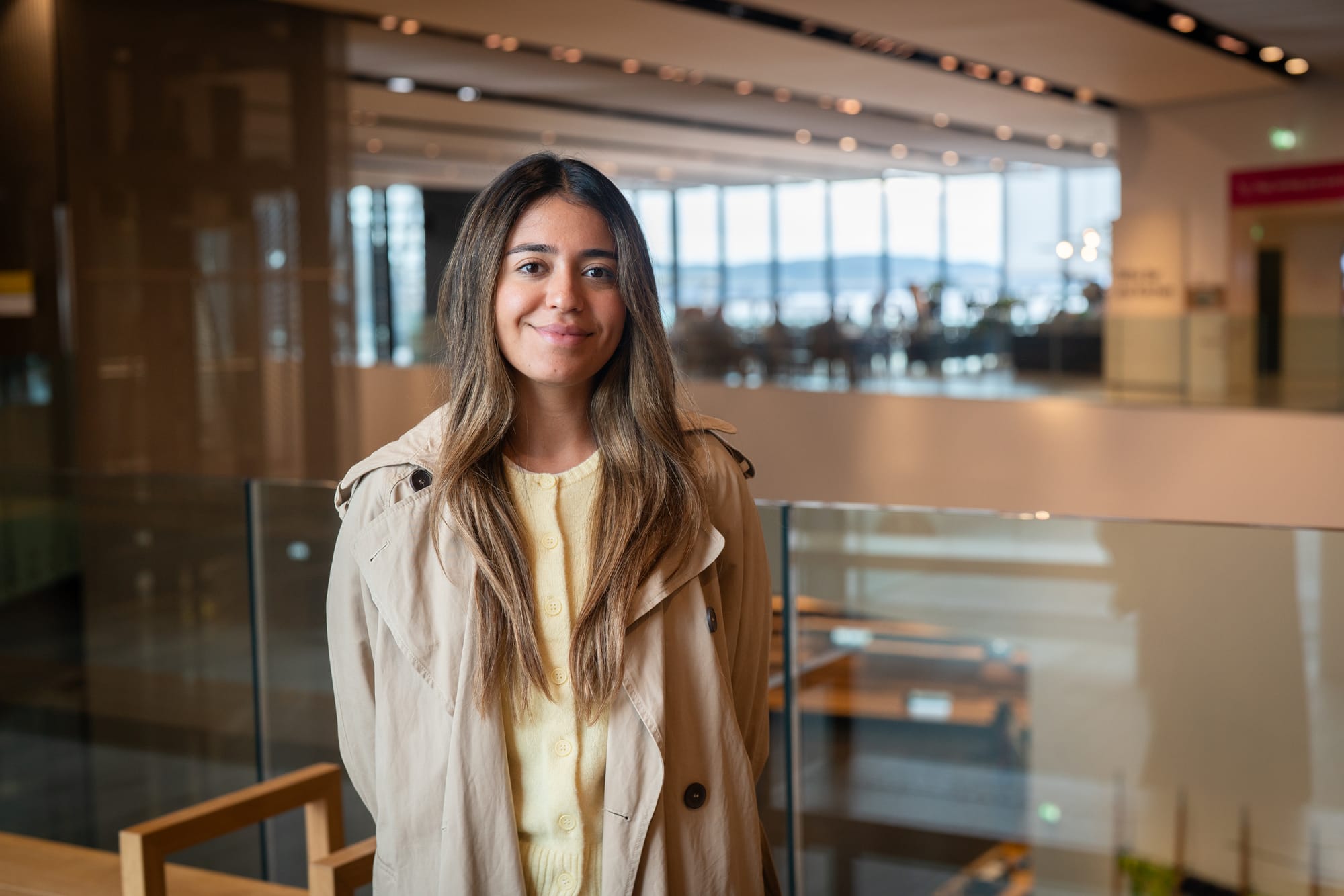
Danya Faisal is community relations coordinator at Hayy Jameel in Jeddah overseeing community outreach programs, managing communication platforms, and fostering collaborations.
Can you describe a specific moment during the program when a conversation or interaction changed the way you think about the role of visual arts in society?
A conversation with Leonie Bell, director of V&A Dundee, about museums as spaces for public dialogue rather than simply venues for exhibiting collections stands out for me. I was impressed by how deeply community engagement was embedded within the curatorial process, with exhibitions and public programs developed alongside communities. “Thread Memory: Embroidery from Palestine” was a powerful example, demonstrating how collaborative curation can center community voices, preserve cultural heritage, and create meaningful opportunities for dialogue and reflection. The conversation shifted my understanding of the social role of visual arts and reinforced the idea that cultural institutions can actively shape public memory and discourse.
How did the program’s structure foster genuine exchange or collaboration, rather than a one-way presentation of ideas?
The program encouraged dialogue, creating opportunities to exchange ideas with museums, galleries, universities, and artists across Scotland. Discussions centered on the evolving role of museums as spaces for public engagement, community-led curation, cultural representation, and preserving heritage. We explored how institutions address inclusivity, accessibility, and contemporary social issues through exhibitions and programming. Conversations also examined artistic research, interdisciplinary practice, and audience participation. A conversation I had with Tessa Giblin from the Talbot Rice Gallery proved that Scottish practitioners were equally interested in learning about Saudi Arabia’s rapidly developing cultural sector, making the exchange collaborative and reciprocal.
What most surprised you about the similarities or differences between the contemporary art ecosystems in Saudi Arabia and Scotland?
What surprised me most was how many similarities existed between the contemporary art communities despite differences in scale and institutional history. Artists in both Saudi Arabia and Scotland are engaging with themes of identity, heritage, and social change, but the methods and approaches being used differ. In Scotland, I found that arts institutions were closely integrated with their local communities through public programs and accessible engagement. Seeing this encouraged me to think about how Saudi cultural spaces might continue growing through more participatory and community-centered approaches.
Did any aspect of the Scottish art scene prompt you to reconsider how similar structures might evolve or be adapted within the growing Saudi visual arts context?
Yes, the Scottish art scene made me consider the role that museums and galleries in Saudi Arabia might play, especially when it comes to accessibility and public engagement. I was particularly interested in how institutions like the Dundee Contemporary Arts balanced academic rigor with experimentation and community interaction. The relationship between artists, curators, and audiences often felt open and conversational. It made me think about how Saudi institutions can continue growing while remaining responsive to local communities and cultural contexts. Rather than simply adopting external institutional models, I believe Saudi Arabia is actively working to develop its own approaches that combine local values with collaborative and experimental practices.
What do you see as the potential long-term impacts of the program?
The program created valuable opportunities for artists and cultural practitioners from different backgrounds to openly discuss their practices, challenges, and aspirations. One of the most insightful conversations was with the leadership team at Cove Park, where we explored the role and impact of artist residencies in supporting creative development, collaboration, and experimentation. As artist residency programs continue to grow within Saudi Arabia’s cultural sector, these discussions were particularly relevant to my role at Art Jameel and reinforced my interest in expanding residency opportunities within our own organization. While these conversations may lead to future collaborations, the program’s greatest impact was in reshaping my understanding of cultural exchange. Rather than focusing solely on institutional partnerships, it emphasized dialogue, mutual curiosity, and shared learning.
Reflecting on your experience, what is one question you wish to pose to the organizers, the hosts, or even to yourself about the future possibilities opened by programs like Art Bridges?
Reflecting on the experience, the main question I would ask is: how can programs like Art Bridges create longer-term collaborative ecosystems rather than short-term exchanges? The program demonstrated the value of dialogue and exposure to new cultural contexts, but it also highlighted the importance of continuity. I would be interested in exploring how relationships developed through programs like this could evolve into sustained partnerships, co-curated projects, or reciprocal residency opportunities.
BAYAN ASHOUR
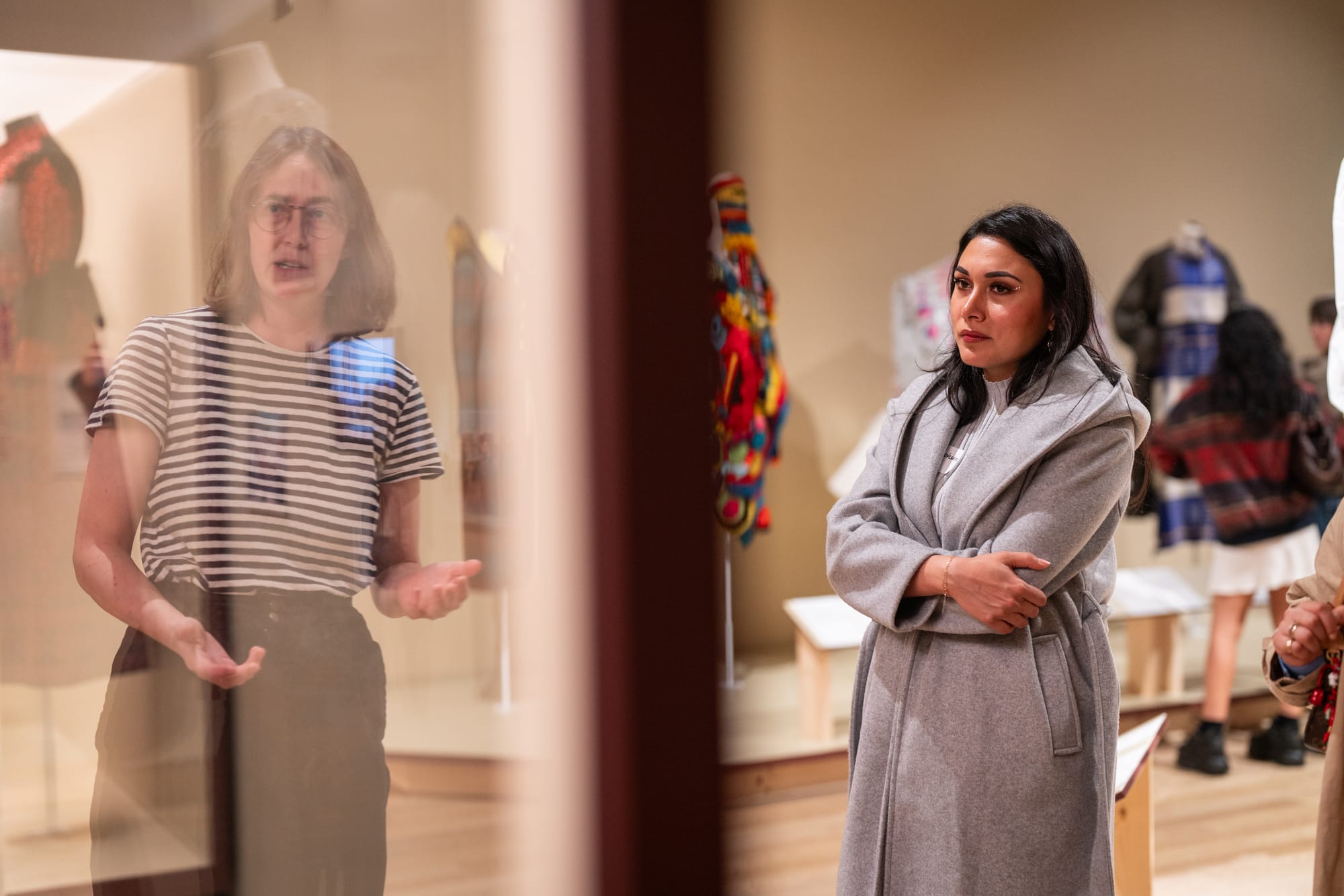
Bayan Ashour is visitor experience manager at Hayy Jameel in Jeddah. Her work focuses on audience engagement and making art accessible and welcoming to diverse communities.
Can you describe a specific moment during the program when a conversation or interaction changed the way you think about the role of visual arts in society?
Encounters at Tramway and Trongate 103 served as profound catalysts for rethinking the civic potential of creative institutions. Witnessing them operate, not merely as venues but as vital spaces, was a revelation. It mirrored our ambitions at Hayy Jameel, to cultivate a site that belongs, fundamentally, to its community. I realized that a visitor’s journey should transcend the formal, pristine gallery into an immersion within a vibrant creative ecosystem. This experience crystallized my objective: to move beyond the logistics of audience management toward the cultivation of a warm, inclusive environment where practitioners from all disciplines feel empowered to gather, discourse, and co-create.
How did the program’s structure foster genuine exchange or collaboration, rather than a one-way presentation of ideas?
During the program, moving from the storied halls of The Burrell Collection to the immersive landscape of Cove Park, and finally to V&A Dundee, facilitated an organic kinship rather than a traditional institutional exchange. We found ourselves in a sophisticated, two-way dialogue regarding the architecture of welcome, support, and empowerment. It was never a unidirectional lecture; our Scottish peers were equally intrigued by the energetic, community-led ethos defining Hayy Jameel. At Dundee Contemporary Arts, our discussions on public engagement became a rich tapestry of shared narratives, exploring how to invite families and independent thinkers into our spaces as partners in authorship, ensuring that contemporary art remains a radical, accessible commons for all.
What most surprised you about the similarities or differences between the contemporary art ecosystems in Saudi Arabia and Scotland?
I was struck by the realization that creative impulses remain universal, transcending geographic and cultural specificities. Whether at a grassroots incubator like the Edinburgh Sculpture Workshop or within a multidisciplinary framework like Hayy Jameel, there is a shared, restless curiosity to convene and create.
Did any aspect of the Scottish art scene prompt you to reconsider how similar structures might evolve or be adapted within the growing Saudi visual arts context?
In Scotland, museums often function as public squares where casual connection and quiet contemplation are valued as deeply as the art itself. This inclusive social architecture offers a compelling blueprint for our rapidly growing Saudi visual arts landscape where institutions can operate as civic “green lungs”—social sanctuaries that are vital to the urban fabric.
Observing how they function completely reshaped how I approach visitor experience and audience engagement. Seeing how these institutions have built hospitality directly into their physical layouts and public programming showed me how to break down the intimidation surrounding contemporary art.
Bringing these open, welcoming strategies to Hayy Jameel means looking at the whole visitor journey, from opening our gallery thresholds into the central courtyard (Saha) to rethinking how we guide people through exhibitions. A direct result of this was our new “From Another Angle” tour format. Rather than delivering a traditional lecture, these tours invite visitors to actively analyze, question, and connect with contemporary art through open dialogue, understanding artists’ perspectives contextually and conceptually.
Combining these interactive touchpoints with an accessible environment shifts the experience from passive viewing to genuine belonging, turning Hayy Jameel into a lively, everyday hub for community and culture.
What do you see as the potential long-term impacts of the program?
This exchange transcended from professional development, establishing a resilient framework for bilateral, co-curatorial dialogue. Beyond institutional frameworks, we cultivated an organic “community of care.” Witnessing how Scottish institutions view the public as collaborative partners rather than a mere demographic profoundly rewired our approach to creative engagement. The enduring legacy of this program lies in building inclusive creative districts where creative initiatives thrive, ensuring that as our respective ecosystems mature, community agency remains at the absolute core of our practice.
Reflecting on your experience, what is one question you wish to pose to the organizers, the hosts, or even to yourself about the future possibilities opened by programs like Art Bridges?
We benefited from incredible hospitality and connection. The one question I want to ask is how we can translate the momentum of this exchange into a daily practice that ensures Hayy Jameel remains a truly accessible and empowering home for our community. The program ignited a wonderful spark; the true work ahead lies in ensuring that the strategies we experienced can continue to inspire and soften the spaces we manage back home every single day.
AFIA BIN TALEB
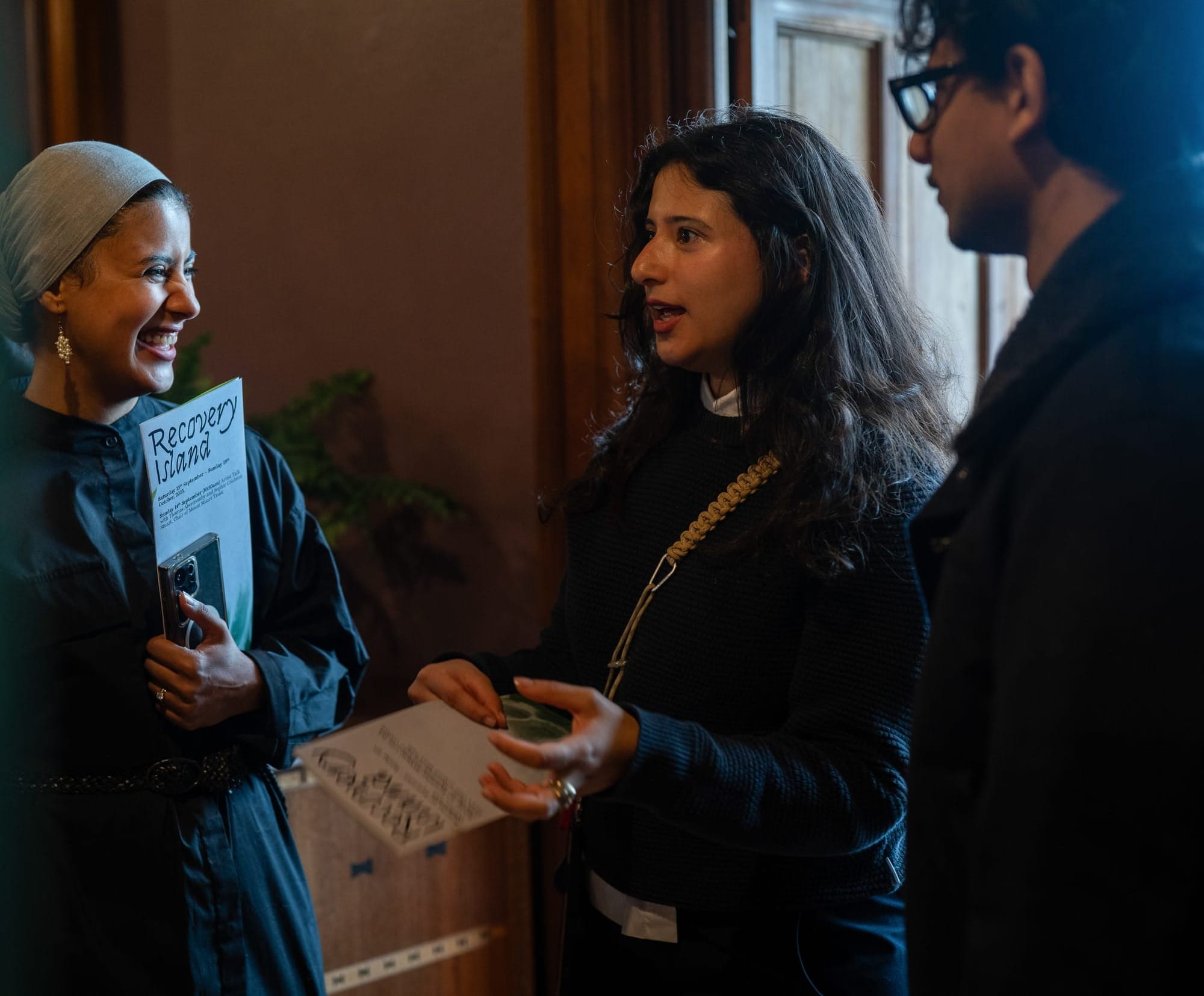
Afia Bin Taleb is a Jeddah-based independent cultural advisor and former director of ATHR Gallery. Her work focuses on institutional strategy, programming, and partnerships in contemporary art.
Can you describe a specific moment during the program when a conversation or interaction changed the way you think about the role of visual arts in society?
The roundtable discussions held at the end of each city visit, which brought together cultural practitioners, institutional leaders, and decision-makers, were among the most impactful aspects of the program. What struck me was that many of the challenges they are facing are remarkably similar to those we encounter in Saudi Arabia, ranging from operational constraints to audience engagement.
The openness with which these challenges were discussed was striking. There was a strong sense of transparency and collective responsibility. Cultural leaders were committed to sharing knowledge and learning from one another. This culture of exchange and mutual support was inspiring and instructive.
The collaborative approach was also reflected in the way institutions practically supported one another. Organizations openly shared insights into audience behaviour, programming successes and challenges, and other operational learnings. I was also impressed by collaborative agreements between institutions such as Dundee Contemporary Arts and Edinburgh Sculpture Workshop, which allow artists affiliated with either organization to access shared production facilities and resources.
The experience reinforced my belief that the arts sector thrives when institutions and practitioners view themselves as part of a broader ecosystem rather than as individual entities. When artists, institutions, funders, universities, and government agencies work collaboratively, they strengthen not only their own organizations but the cultural sector as a whole. It also left me wondering how we might foster similar spaces for dialogue in Saudi Arabia, whether through formal forums or informal gatherings, where cultural practitioners can discuss shared challenges, exchange ideas, and learn from one another’s successes and setbacks.
How did the program’s structure foster genuine exchange or collaboration, rather than a one-way presentation of ideas?
Before the visit, my knowledge of the Scottish art scene was relatively limited. Over the course of six days, the program provided a comprehensive overview of the sector through visits to institutions and galleries across Glasgow, Dundee, Edinburgh, the Isle of Bute, the Rosneath Peninsula, and surrounding areas. We visited 11 cultural institutions and participated in three sector meetings, which offered insights not only into each organization’s mission and programming, but also into their governance structures, operational models, and the day-to-day realities of leading cultural institutions.
What made the experience particularly meaningful was that it fostered a genuine two-way exchange. Conversations with practitioners such as Emma Nicolson, head of visual arts at Creative Scotland, Beth Bate, director of Dundee Contemporary Arts, Lucy Byatt, director of Hospitalfield, and Tessa Giblin, director of Talbot Rice Gallery, and many more, quickly moved beyond presentations and became open discussions about our respective cultural sectors. While we were eager to learn about their approaches to funding, governance, and cultural leadership, they were equally interested in understanding the rapid development of Saudi Arabia’s visual arts ecosystem.
Many explained that they had been following developments in Saudi Arabia from afar but wanted to better understand what was driving this transformation, how relationships between public and private institutions were evolving, and how practitioners envisioned the future of the sector. These conversations also revealed a genuine curiosity to visit Saudi Arabia and experience the art scene firsthand.
Rather than a one-way presentation of ideas, the program created a space for dialogue, reflection, and mutual learning, highlighting the value of cultural exchange as the foundation for lasting collaboration.
What most surprised you about the similarities or differences between the contemporary art ecosystems in Saudi Arabia and Scotland?
I observed a strong sense of connection to place in both the Scottish and Saudi art ecosystems. Despite our different cultural and historical contexts, artists in both countries are deeply engaged with their local environments, histories, identities, and the social changes shaping their communities. In both cases, art serves as a means of documenting, reflecting on, and questioning these transformations.
I was also struck by the role that many institutions play as community hubs rather than simply exhibition spaces. Across Scotland, we encountered organizations that were actively fostering dialogue, learning, and participation within their local communities. This resonated with many initiatives emerging in Saudi Arabia, where artists and cultural practitioners are equally committed to supporting and strengthening their local ecosystems.
The program reinforced my belief that the most meaningful cultural institutions are those that remain rooted in their communities while creating space for broader conversations and exchange.
Did any aspect of the Scottish art scene prompt you to reconsider how similar structures might evolve or be adapted within the growing Saudi visual arts context?
A key takeaway was the importance of a diversified support system. While public funding plays a crucial role, the role of patrons, individual donors, and community supporters is just as significant.
The institutions we visited demonstrated that a thriving cultural sector cannot rely on public funding alone. It also requires investment from the wider community—people who believe in the value of the arts and are willing to support it through philanthropy, advocacy, and active participation.
As Saudi Arabia’s visual arts sector continues to grow, I believe there is an opportunity to cultivate a stronger culture of patronage and individual giving alongside existing public support. Building this sense of shared ownership will be essential not only for the sustainability of individual institutions but also for the long-term resilience and development of the broader cultural ecosystem.
What do you see as the potential long-term impacts of the program?
I believe one of the most valuable outcomes is the network of relationships that was established between cultural practitioners in Saudi Arabia and Scotland. Through our visits and discussions with organizations including Creative Scotland, Dundee Contemporary Arts, Edinburgh Sculpture Workshop, Talbot Rice Gallery, Jupiter Artland, and others, we developed relationships built on openness, trust, and a shared commitment to strengthening our respective cultural sectors.
Many of our conversations naturally turned towards future institutional collaboration. There was genuine interest in strengthening relationships between cultural organizations in Saudi Arabia and Scotland through knowledge exchange, joint programming, professional exchanges, and opportunities for long-term institutional partnerships. We also discussed continued knowledge exchange around cultural leadership, funding models, the relationship between public and private institutions, and the development of sustainable contemporary art ecosystems. Several practitioners also expressed a strong interest in visiting Saudi Arabia to experience firsthand the transformation they had largely followed from afar.
Beyond specific projects, I think the program created something equally important: a deeper understanding of how different cultural ecosystems operate and what they can learn from one another. These kinds of exchanges broaden perspectives, challenge assumptions, and create the trust that is essential for meaningful long-term collaboration.
Reflecting on your experience, what is one question you wish to pose to the organizers, the hosts, or even to yourself about the future possibilities opened by programs like Art Bridges?
The question I pose to myself is: How can I help sustain and expand the connections created through this program so that they lead to meaningful opportunities for artists and cultural practitioners in both countries?
The true impact of the program will be measured by what happens next. The relationships, conversations, and ideas that emerged have the potential to evolve into future collaborations, exhibitions, exchanges, and professional partnerships.
For me, the challenge is to think about how these connections can be nurtured over time and translated into tangible opportunities for artists, institutions, and cultural practitioners in both Saudi Arabia and Scotland. Programs like Art Bridges are important because they create the foundation for dialogue; it is up to all of us (participants) to continue building on that foundation and ensure that the exchange remains active, relevant, and mutually beneficial.
This article is part of a special series exploring Art Bridges, the Visual Arts Commission’s international exchange program connecting Saudi and Saudi-based artists and cultural practitioners with peers in Scotland, South Korea, Japan, and Spain.