People
Inside the Self-Enclosed Universe of Henri Alexander Levy
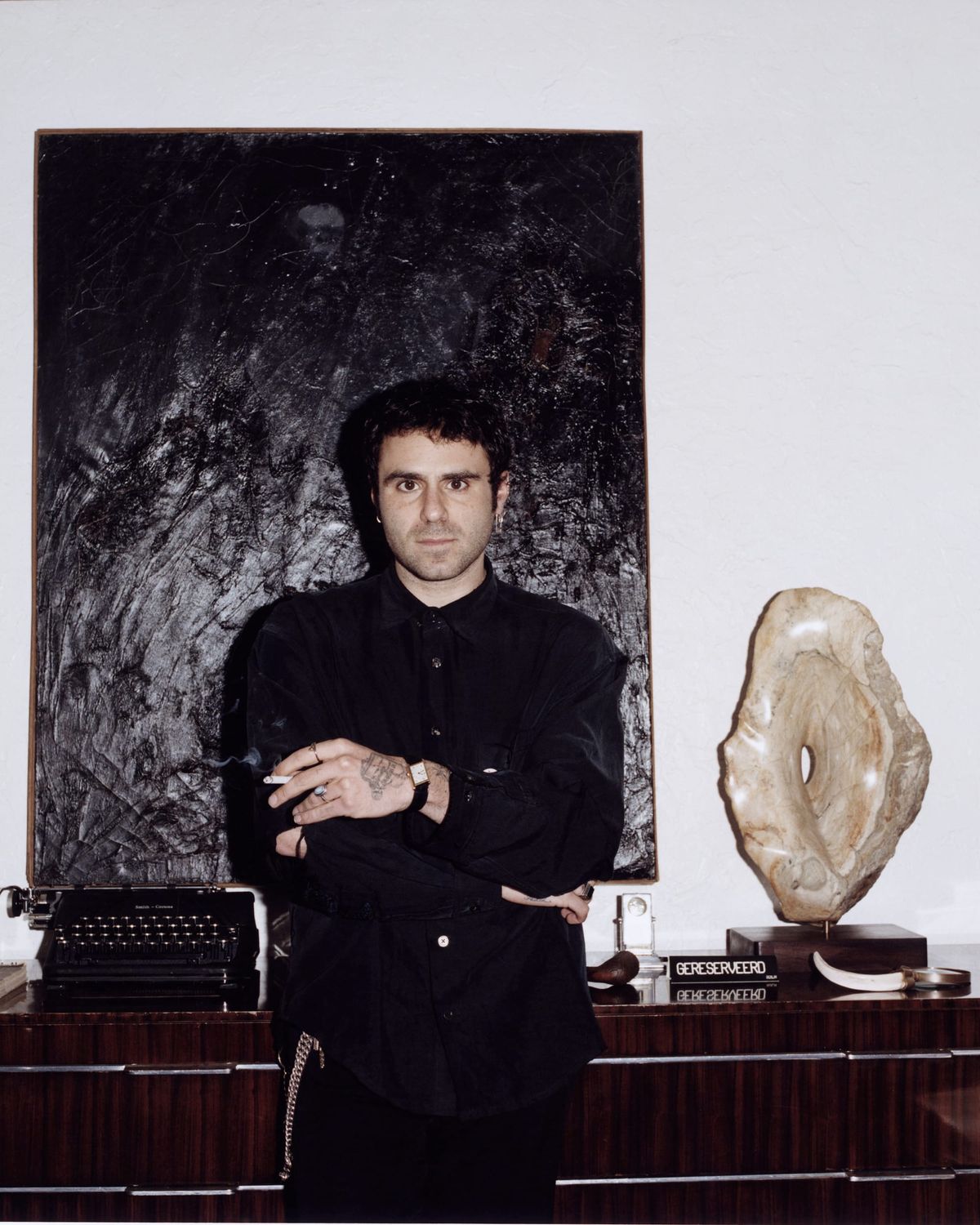
Henri Alexander Levy has spent the better part of a decade building a hermetic world. Since founding the cult fashion label Enfants Riches Déprimés (translated as “depressed rich kids”) in 2012, the American designer and artist has cultivated a following so devout it verges on the sectarian, drawn to garments made of hand-painted leather and distressed silk, often featuring cryptic slogans that seem lifted from a punk broadside. His is an aesthetic of romantic ruin and elegant menace.
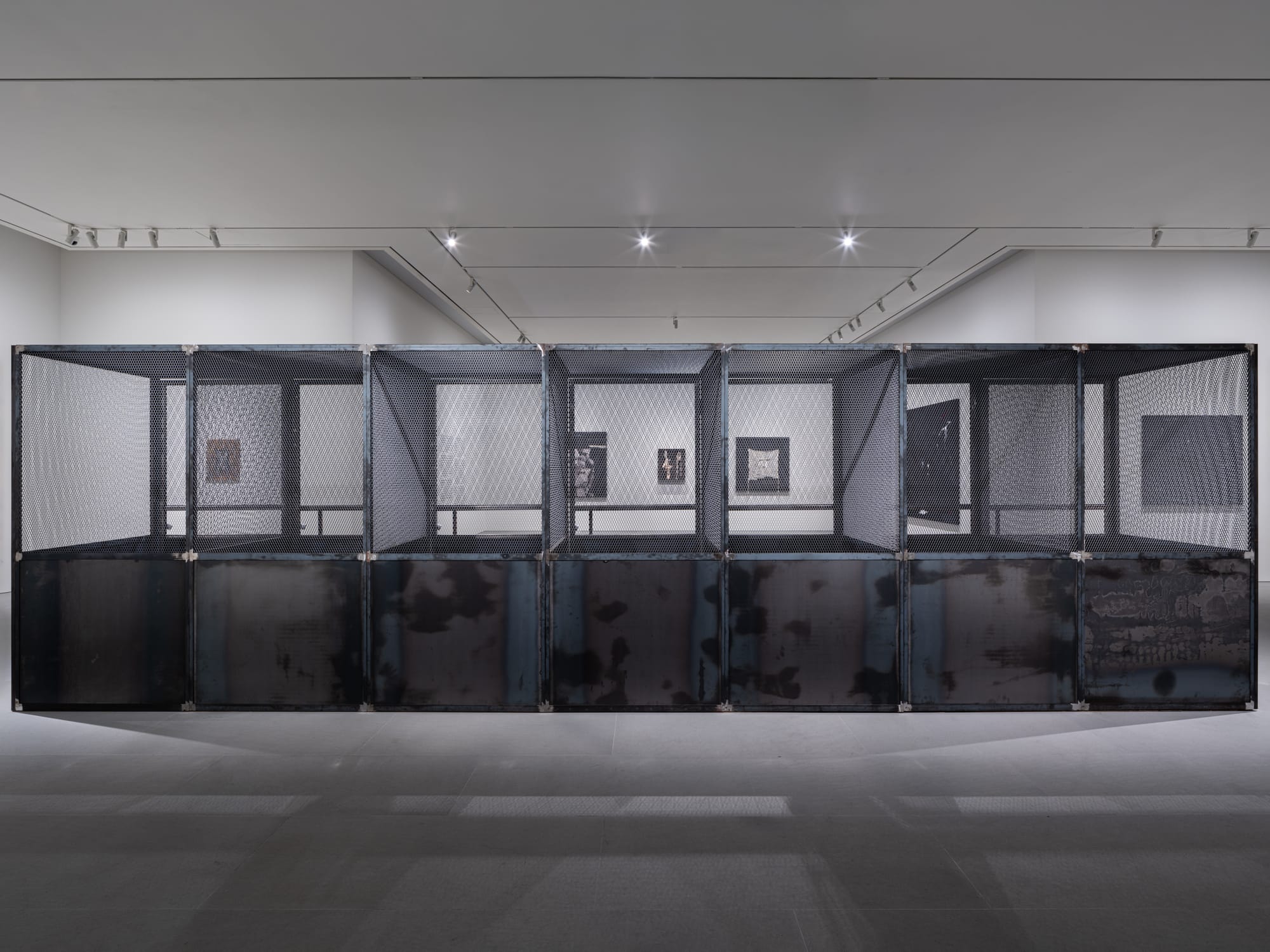
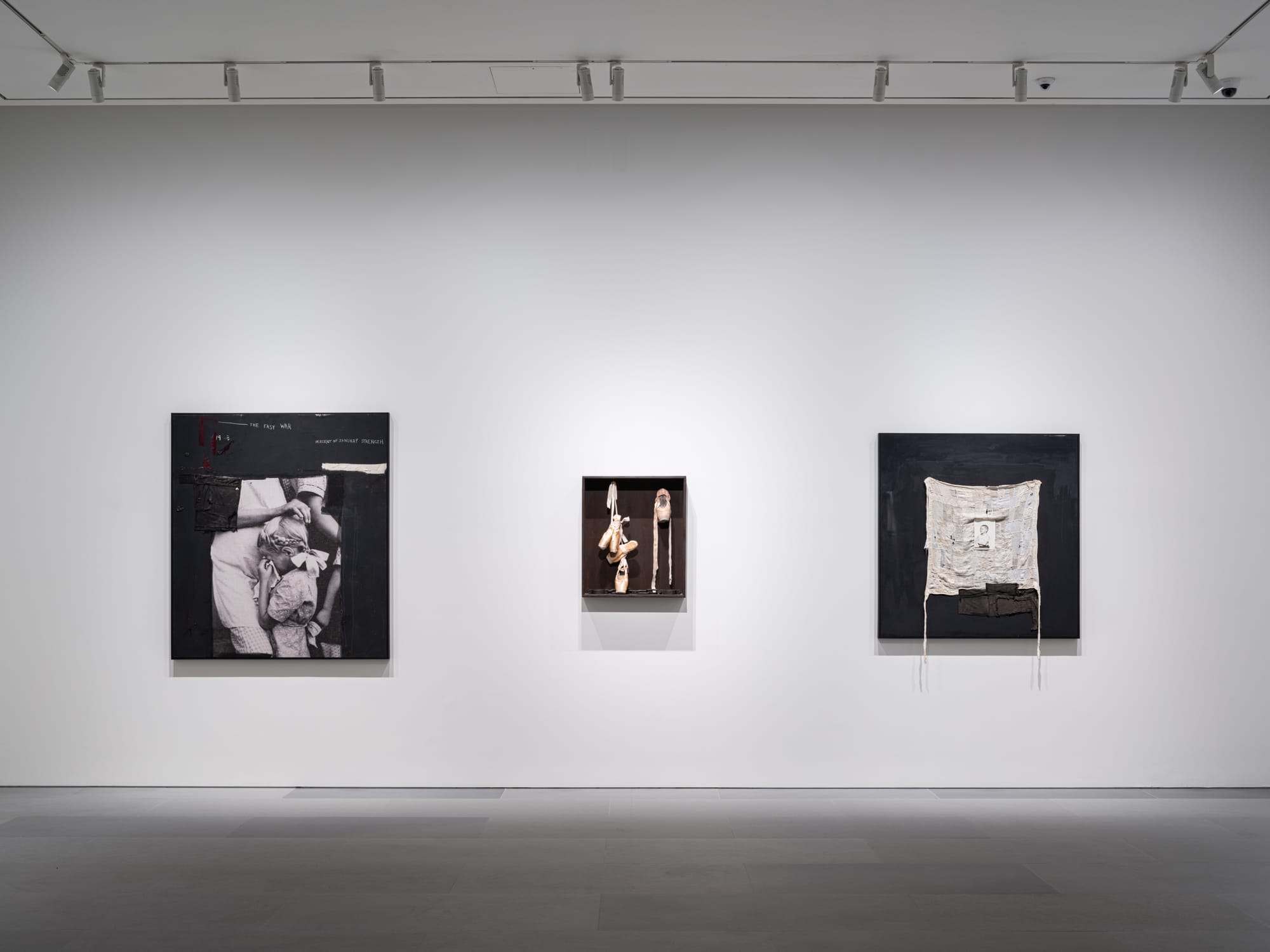
This September, during Seoul Art Week, Levy staged his first solo exhibition, “Final Achievement is Ruin,” at Shinsegae Gallery, presenting paintings, sculpture, and large-scale installations of metal cages. In conversation, he spoke about discipline, self-destruction, and why provocation, for him, was never the point.
I first came to your work the way a lot of people did—through the clothes, around 2019 to 2020. I still own several ERD pieces. I am curious whether you think of your fashion audience and your art audience as the same people. Is that a door you want open—for the two to converge, and eventually become one?
Honestly, my artistic practice is the core of ERD—it’s there in everything I do as a designer. So much of my time is spent as a graphicist. I design in a cinematic way: I might want a very particular cut on a pair of black trousers, a certain simplicity that I think matters, especially in menswear. But how I put together the look for a show is where the artistic practice really comes into play. In a way they’re very connected. I consider myself an artist first, even in the moments when I’m only designing.
The show’s title is “Final Achievement is Ruin.” Is the idea of “ruin” something you are actively thinking about right now, or has it always been there in the work?
There’s a very self-destructive nature in me that gets channeled into the work, in a very disciplined way. I take certain artistic risks that are intrinsic to my practice. The subversion in my work is second nature to me—it’s always been that way, and it gets refined and pushed through each season into different forms. Even when I make something incredibly romantic, there’s a certain feeling to it. As for the title, I think it comes from being so true and so free as an artist, because I refuse to apologize for my work or modify it to suit any political agenda. And there’s also a duality there, between achievement and ruin.
What does an ordinary day look like for you? You are running a fashion label and making art at the same time—how do the two share your day, your week, and by extension your mind? Do you have to become a different person to do each?
It’s about exercising an extreme amount of discipline. I get up very early and show up to the studio to give the work space. There’s no knowledge, before I arrive, of what’s going to be made that day—that’s the magic of it. Many days I’ll run first. I’m very fucked in the head, honestly, so there’s a lot I have to do just to feel right. Then I’ll start the process, maybe collaging or sketching. If something resolves there, I’ll move on to the next thing. I’m in the office pretty late; then I’ll eat dinner, watch a movie. Recently I’ve been working on architecture in the evenings, from around eight to 11. Then I pass out and do it all again. For this show, I made the space to work on the paintings and the sculptures in a very disciplined manner. And the space between leaving the studio and coming back matters. As an artist, you don’t always understand right away that what you made is truly great. Sometimes you know immediately; sometimes taking that distance is important.
You have said before that the brand grew out of an art practice, not the other way around. So why an art exhibition now? What can a work of art do that a garment can’t?
A garment has a function that’s very fixed—sometimes it needs to elongate the torso, the proportions have to be right. Stylistically there’s a sense of character that has to be there, and wearability matters in the way I design. I’m interested in making lifetime pieces. Whether it’s a button-down shirt, a trench coat, a T-shirt or a pair of boots, I want a piece for life. In a way the same could be said of fine art, but the function is taken out of the equation. And by dissolving the function, the process becomes more torturous. The piece has to stand alone, without any association to function.
Looking across the work, I kept noticing recurring motifs—ballet shoes, archival photographs of soldiers in uniform, guns, and some large-scale installations built from metal cages. What draws you to hold them together in the same body of work?
For me, it’s instinctual. What I’ve made, what I’ve arranged, what I’ve decided is in my world—and I’ve just as instinctively rejected everything that isn’t.
How do you understand provocation as an artistic gesture? You have folded all kinds of political symbols and loaded imagery into the practice over the years, and it extends past the images—you have also collaborated with polarizing artists. I wonder whether you would think of that as a kind of community-building: people gathered around a shared taste, a shared aesthetic.
In terms of what could be considered the provocation or subversion in my work—the way it resonates, the feeling in it—it comes very naturally to me, and it has been refined over time. My process is about entertaining myself. The viewer’s perception of how I reappropriate something is beyond my control. I’m working in a way where I’m pushed and I’m also entertained—essentially I’m mining whatever’s going on in my head. I couldn’t necessarily explain why I make the choices I make, but it’s incredibly natural to me, and that instinct has been refined over what you could almost call my whole life. It took my whole life to make one piece.
As for the people I work with, I’ve taken the opposite approach to most of the fashion industry. I work with people I respect, whose work matters to me. Whether that work matters to someone else, or is controversial to someone else, is irrelevant. I see true value in it. These are people I chose to work with because their work resonated with me, and there was a good understanding both ways.
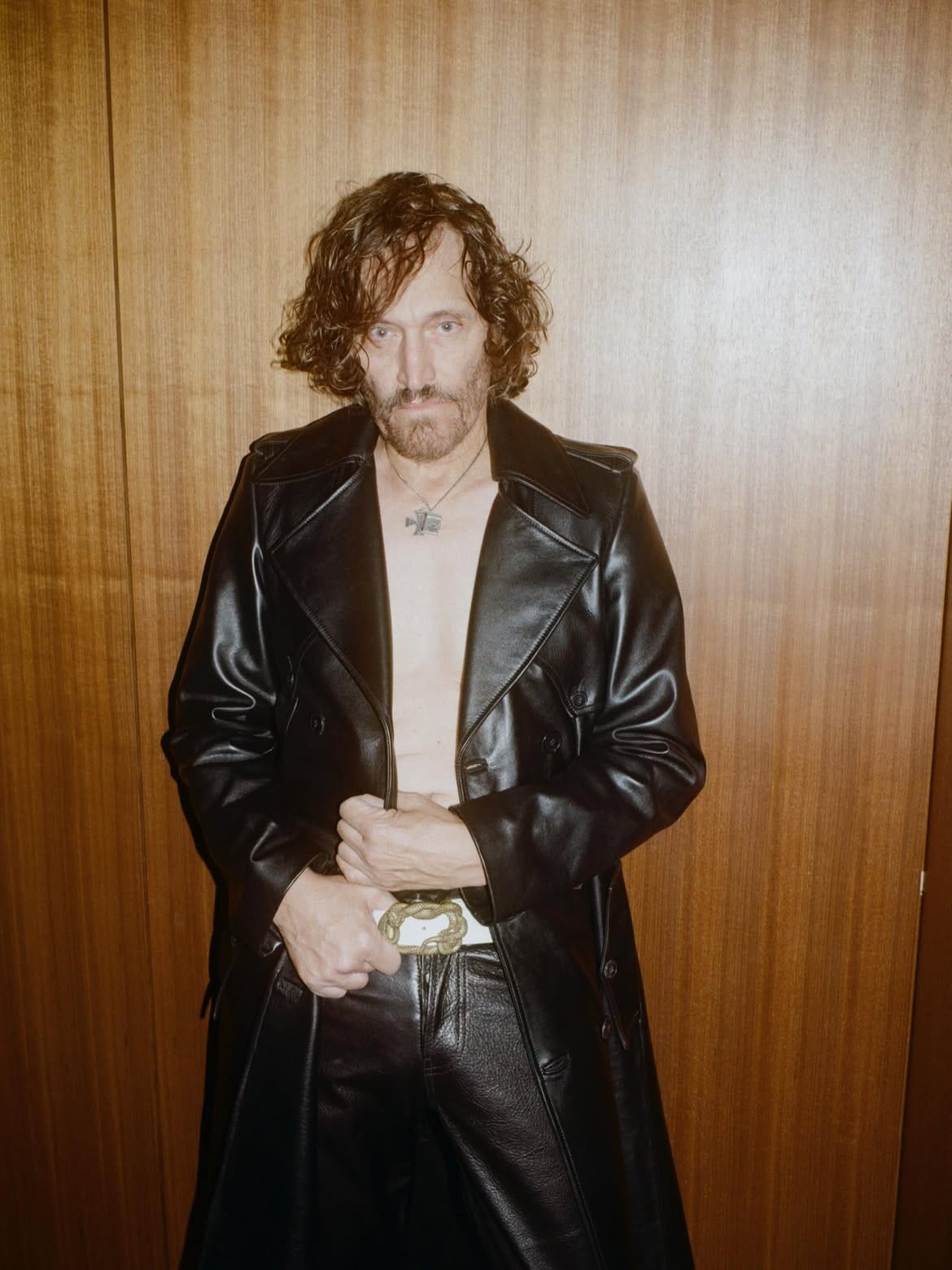
I have a very good relationship with [Vincent] Gallo—it’s very natural. And with his work, there’s no choice but to be subversive or provocative for its own sake; it’s just what the work honestly is. I think a lot of big brands look down on the public and the consumer, and eventually all their work gets regarded as the false-community McDonald’s bullshit that it is, because the root of it is false. It was decided in a boardroom. It wasn’t true. So I work with artists I consider to be true artists.
My honest read is that the work is more about a certain mood, an allure, than any political argument or commentary.
It’s an incredibly specific feeling. It’s why the work looks the way it does and feels the way it does. I’m attached to every part of the process. Whether it’s something as simple as a button-down shirt and why it fits the way it fits, or all the printed matter—an invitation, a book, a zine, a poster, a record—I couldn’t be any closer to the work than I am. I consider it my life’s work. There’s something twisted in my mind that I can’t quite explain about why I make the choices I do. That’s why, to your earlier question, I felt those other artists’ choices were honest too. But there’s something about why I arrange things the way I do that I take a certain pride in looking back on, and that is, in a way, supernatural. I couldn’t explain it. And I think there’s something I’m saying with fashion and art that is unique.
I want to ask about the “Anti Public Library” in Paris. The range is remarkably diverse—catalogs of traditional Japanese masks, Joseph Beuys, Diane Arbus, Nobuyoshi Araki, photobooks on the social unrest of 1960s Japan. Are these all direct inspirations that feed your practice? And is there a single thread you can feel running through all of it—the fashion, the art, the collecting?
Taste is developing and building every day. And style and taste can’t be purchased—they’re built through experience and understanding, through life experience as well. When I was putting the library together, I simply wanted a place that had a certain mood, where the service was a certain way, where everything was curated around what interested me. We live in an era where material can become incredibly meaningless. It felt natural to put the bookstore, the bar, and the record store next to the store in Paris, because it had meaning for me. I hold an incredible amount of reverence for certain books I’ve crossed paths with in my life. In designing for my own ends, it ends up serving and providing something special for the people who interact with it. So an incredibly selfish act became selfless by the end—which I think is also true of artmaking. It starts as a very egocentric practice, and then a way of working can inspire someone, leave the artist, and become selfless. But there are very hard guidelines about what can’t be in there—more so than what can. If I hate something, sometimes I don’t have an explanation for why; it just can’t exist in the world. And there was a specific arrangement I wanted. I wanted to be able to buy a Pierre Cardin book, a World War II book, a book on Clyfford Still, and a very crude little zine, all from the same place—instead of having to fish around for them.
Louis Lu is an associate editor at ArtAsiaPacific.