People
Rakyat Pasti Menang (The People United Will Never Be Defeated): Interview with Taring Padi, Part II

Part II of our interview series with Taring Padi delves into the second chapter of the Indonesian collective’s exhibition “Rakyat Pasti Menang (The People United Will Never Be Defeated),” currently on view at Ibraaz London until October 18. In this conversation, Alexander Supartono—a first-generation member of Taring Padi and an associate professor at Edinburgh Napier University—tells ArtAsiaPacific about the works in the second chapter, which address land justice and workers’ rights.
The interview about the first chapter of “Rakyat Pasti Menang” can be read here.
The second chapter of “Rakyat Pasti Menang” at Ibraaz features six banners and prints covering the period from 1997 to 2012. Can you tell us how Ibraaz and Taring Padi decided that this chapter should focus on land justice and workers’ rights? What were the main social and political agendas that Taring Padi was addressing with these works?
The decision simply came from observing our archive and looking at the topics we addressed frequently after the dust had settled following the 1998 Reformasi. We work extensively with laborers and peasant communities, as well as Indigenous groups. We don’t call ourselves artists but art workers. The association with and aspiration toward (as well as the idealization of) the working class is quite self-evident from this perspective, hence the recurrence of workers’ issues in our oeuvre.
Yogyakarta, where we are based, is largely agricultural compared to Jakarta. It’s also the second-most popular tourist destination in Indonesia after Bali. We’re surrounded by paddy fields and peasant communities who struggle to keep their land from being overrun by urbanization and the hospitality industry. This has played a role in the consistent presence of peasant iconography in our works.
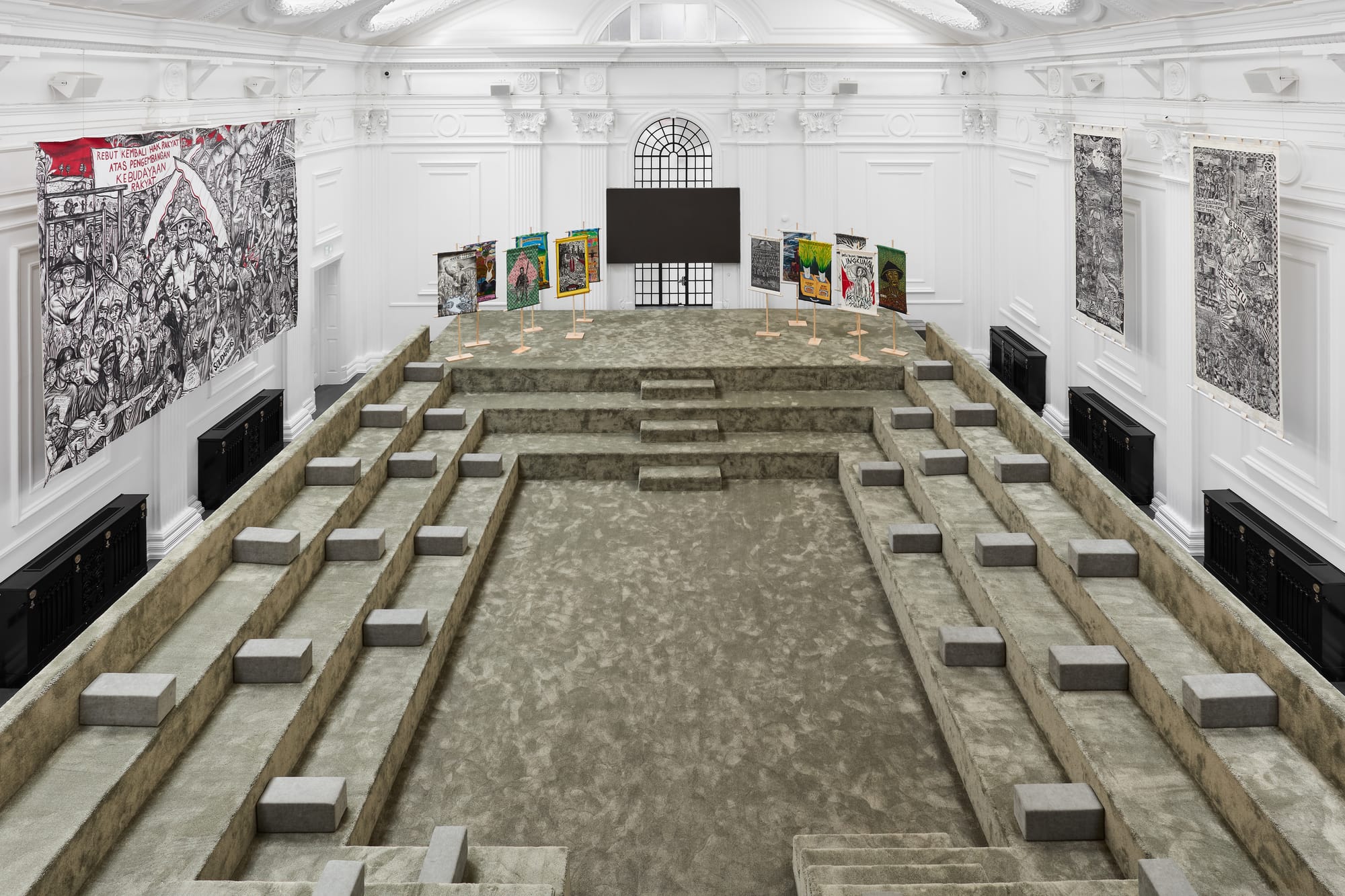
Installation view of TARING PADI’s “Rakyat Pasti Menang” at Ibraaz, London, 2026. Photo by Ollie Hammick. Courtesy the artists and Ibraaz.
The struggle for environmental justice is mentioned in our manifesto, which translates into our alliance with, and support for, the rights of Indigenous people to their land. They also come to us and invite us to join their efforts, and we respond accordingly by producing works that address their specific hardships. The political and activist subject matter comes from them, and our role is to be part of their struggles by doing what we are good at.
The second chapter of the show displays six banners from 1997 to 2012 along with 12 rontek (“small banners”) from 2023. The Rebut Kembali Hak Rakyat Atas Pengembangan Kebudayaan Rakyat (Reclaim People’s Right to Establish People’s Culture) banner is from 1999 and was remade in 2022 for Documenta 15. Because of their function as political tools, our banners are often borrowed for various events. Some of them never return, particularly those borrowed between 1998 and 2002. Documenta 15 encouraged us to remake three of the lost banners, including Rebut Kembali. We also recreated two banners for our exhibition at Ibraaz. In this sense, we use exhibitions as a way to rebuild our archive.
Marsinah (1997–98) commemorates Indonesia’s most famous trade unionist, a 24-year-old woman who was kidnapped and tortured to death in 1993. Last year, on November 10, she was declared a National Hero of Indonesia alongside Suharto, which many cynically wrote off as a political stunt by the Prabowo administration to gain trade union support. Can you tell us more about Marsinah through Taring Padi’s eyes?
We named the exhibition space in our Yogyakarta studio Bilik Marsinah (translated as “the Marsinah Room”), and she often appears in our works as a protagonist-figure. Suharto, meanwhile, is the most identifiable antagonist-figure in our work, representing the face of Indonesia’s military dictatorship. The regime’s interventions in workers’ rights disputes resulted, among many other incidents, in the brutal rape and murder of Marsinah in 1993.
These two contrasting figures tell you how we felt when we learned that Marsinah and Suharto had been declared National Heroes on the same day last year. What is more ironic is that both families attended the inauguration ceremony: the victim’s and the perpetrator’s families were in the same room at the Indonesian Presidential Palace to receive the same accolade.
For Taring Padi, this political stunt by the Prabowo government confirms that we need to continue our struggle to support genuine workers’ movements in Indonesia and around the world.
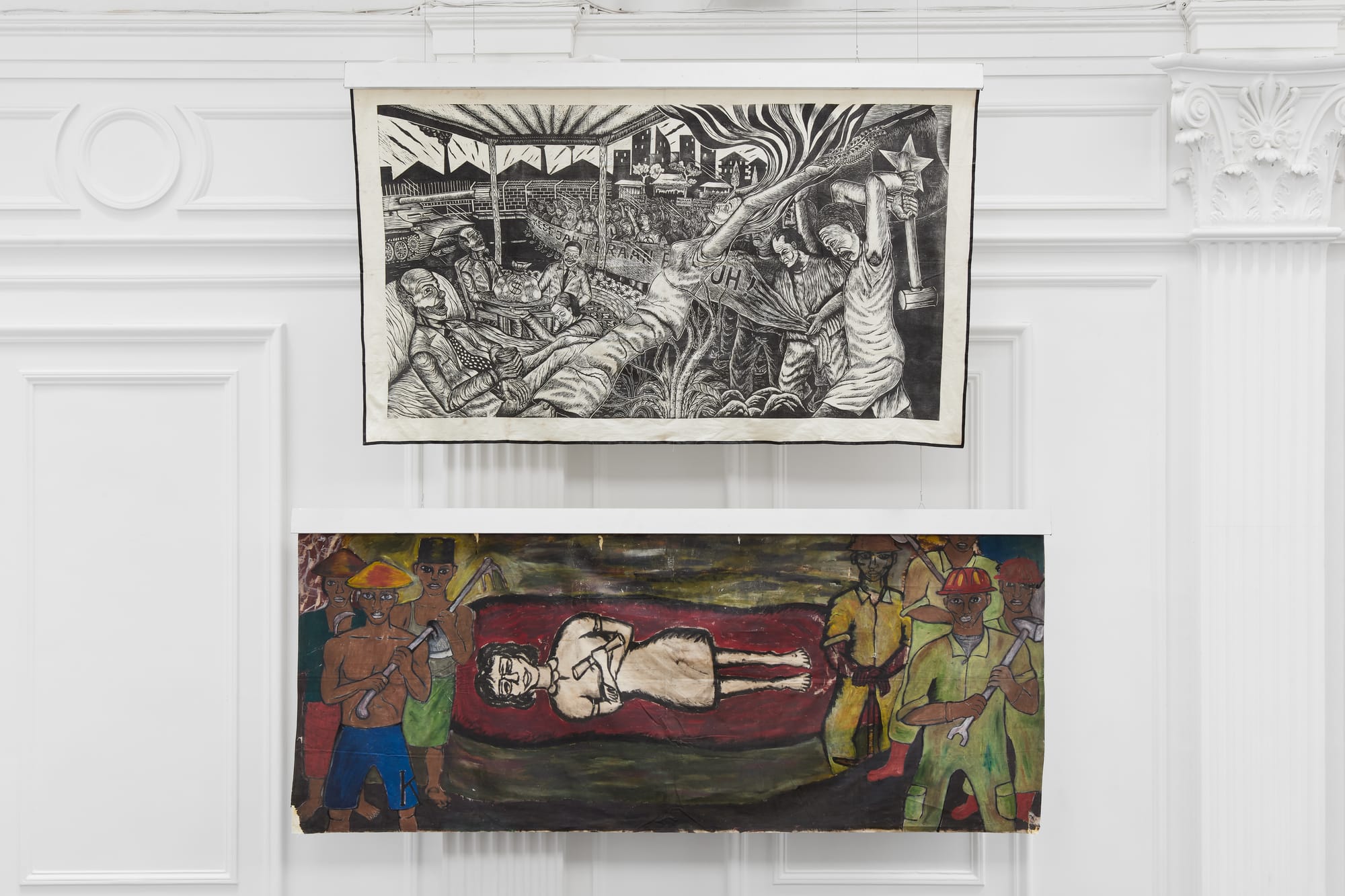
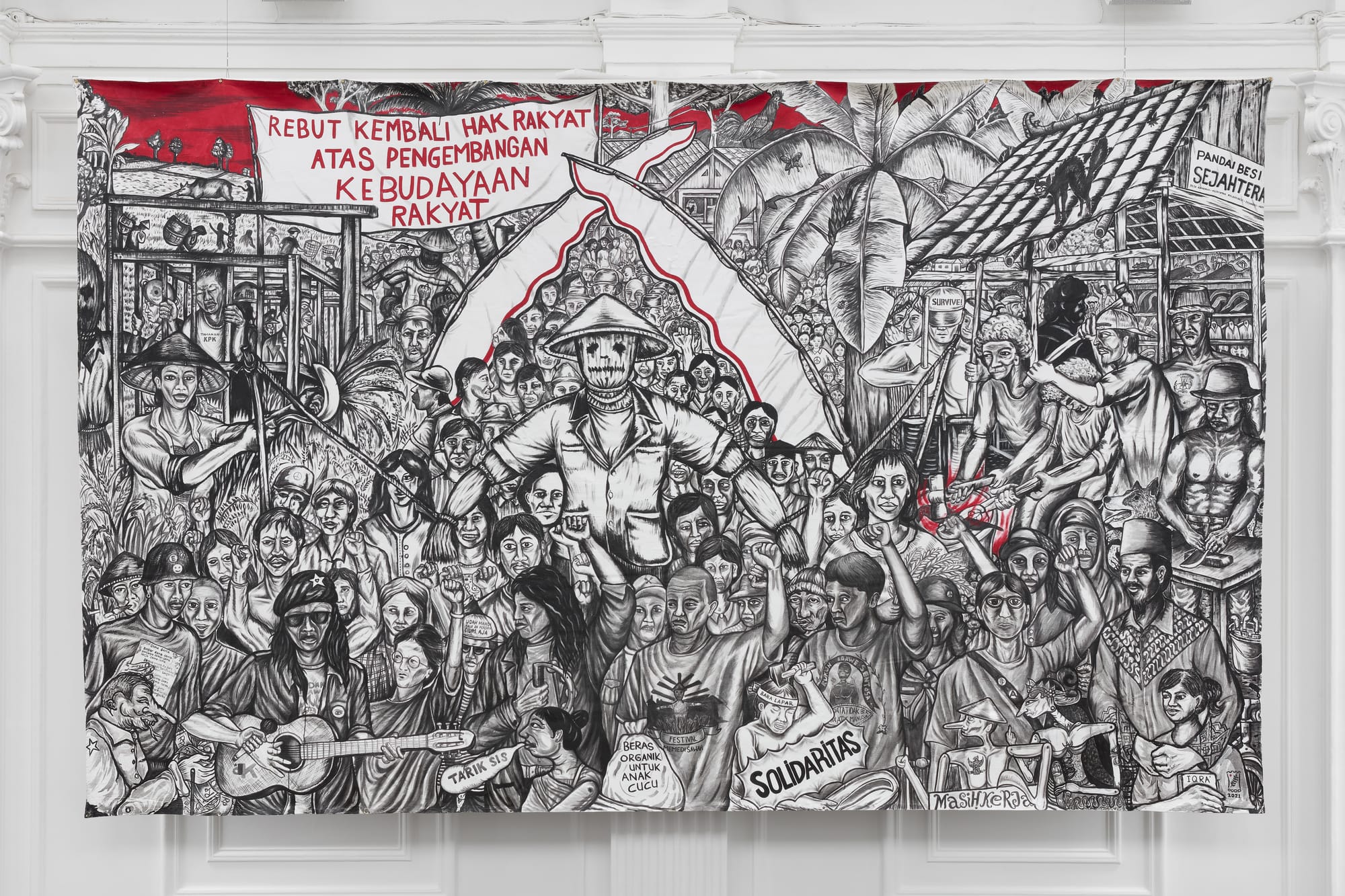
Installation views of TARING PADI’s “Rakyat Pasti Menang” at Ibraaz, London, 2026. Photos by Ollie Hammick. Courtesy the artists and Ibraaz.
Can you tell us more about Rebut Kembali Hak Rakyat Atas Pengembangan Kebudayaan Rakyat? How did you start working with this community in Delanggu and on what occasion was the banner displayed?
This is one of our earliest large-scale banners, created in 1999 as part of the Festival Memedi Sawah (“scarecrow festival”) in Delanggu, Central Java, which is a two-hour drive from our studio. It was made to campaign against pesticides and advocate for traditional and organic farming methods.
It started when we made cardboard puppets with an “anti-chemical pesticide” message for the opening of Sahani, an organic farmers’ shop, in Yogyakarta in October 1999. Three months later, we found ourselves living and working together with a youth organization in Kranggan village in Delanggu and Keliling, an environmental NGO. The banner was displayed on the village football field as a stage backdrop during a day of cultural activities. This followed a scarecrow competition where we invited farmers and artists to create scarecrows together. Since then, Taring Padi has maintained this collaborative and socially engaging method of working.
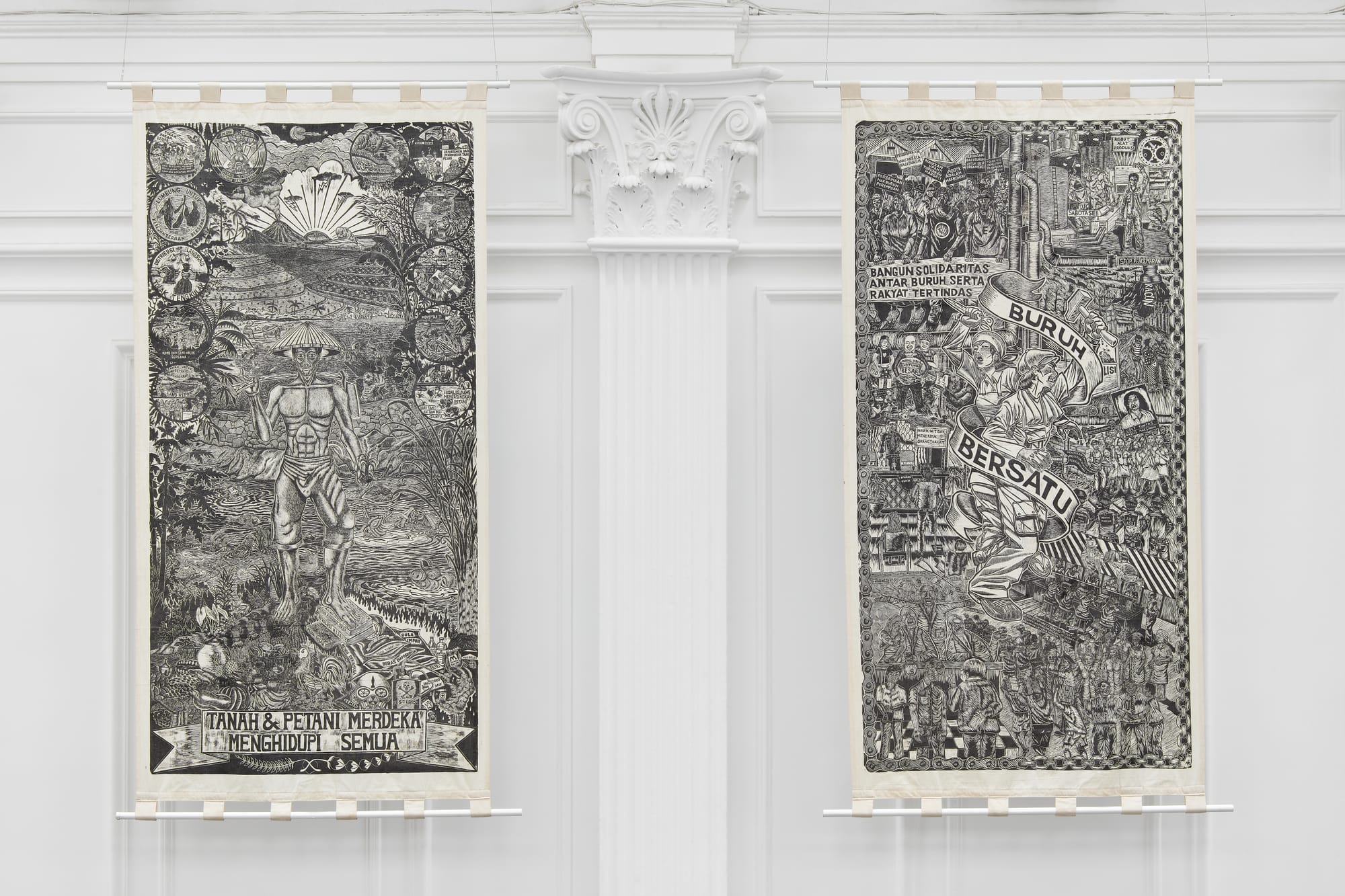
The exhibition features two of your first woodcuts. How did Taring Padi start working with woodcuts, in particular the three large-scale examples here? How did Taring Padi’s artistic language evolve with this new medium?
The woodcut banner diptych, Buruh Bersatu (Workers United) and Tanah & Petani Merdeka Menghidupi Semua (Farmers Give Life to All) (both 2003), are the first works we made collaboratively using the woodcutting technique. Naikkan Upah Buruh (Raise Workers’ Wages) was made in 2008 by one of our members.
Woodcut posters (typically in A3 or A4 format) are usually produced individually. Each member develops their own interpretation of a topic—for example, the rise in petrol prices or a general election—and then submits it as part of the collective’s body of work, without their name being mentioned. From time to time, when we decide to make large-scale woodcuts, such as those on display in this exhibition’s second chapter, we make them together.
Our visual language has evolved simultaneously and equally across our three main mediums: woodcut prints, cardboard puppets, and large-scale banners. You will see the same iconography and characters recurring across all three, including the figure of Marsinah.
As an art historian, I can see that Taring Padi’s visual language has always been dictated by the topic, by politics, and by the communities we work with, rather than the other way around. Our pictorial commonplace is the result of this process—I would also argue that this process has shaped each individual member’s visual vocabulary.
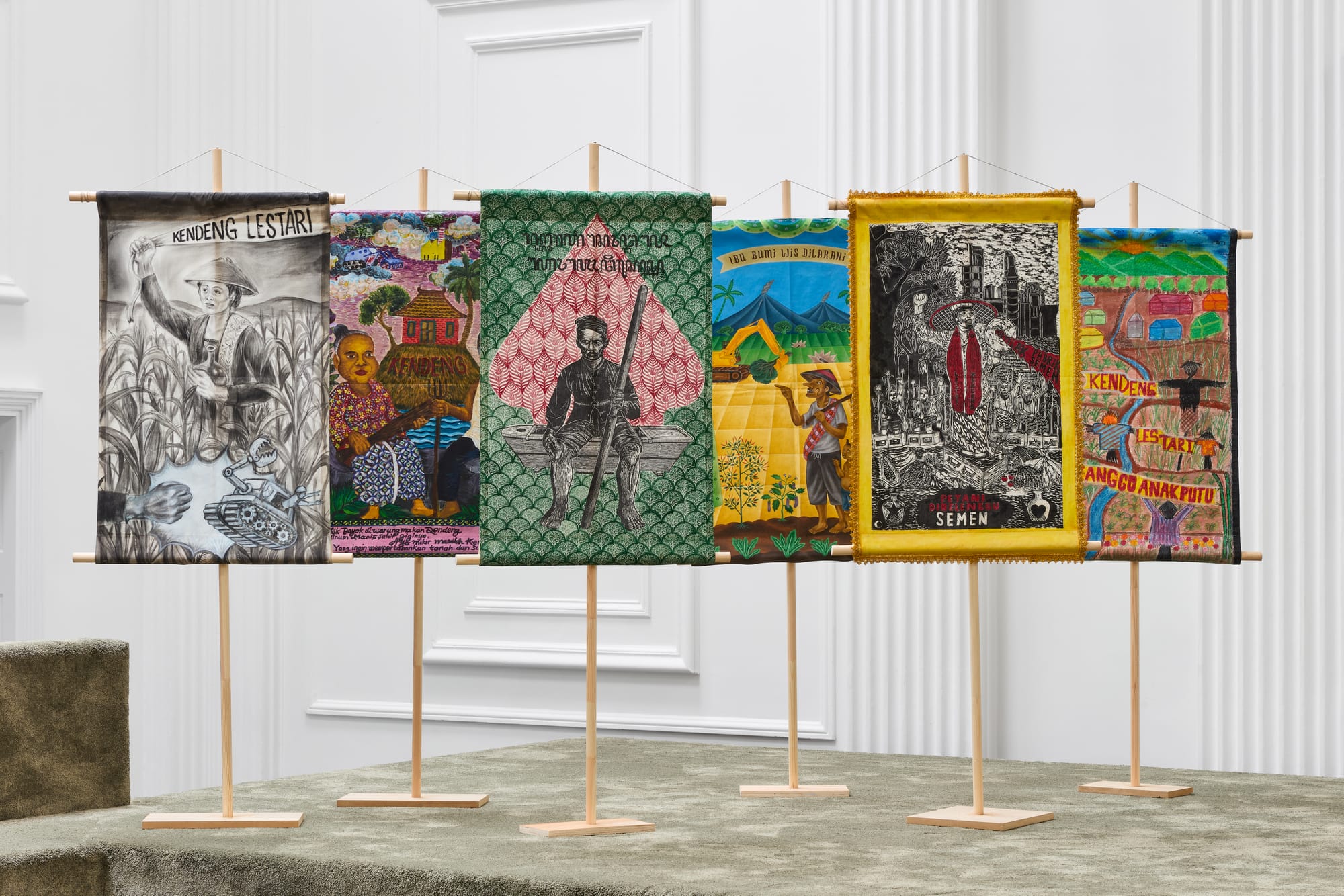
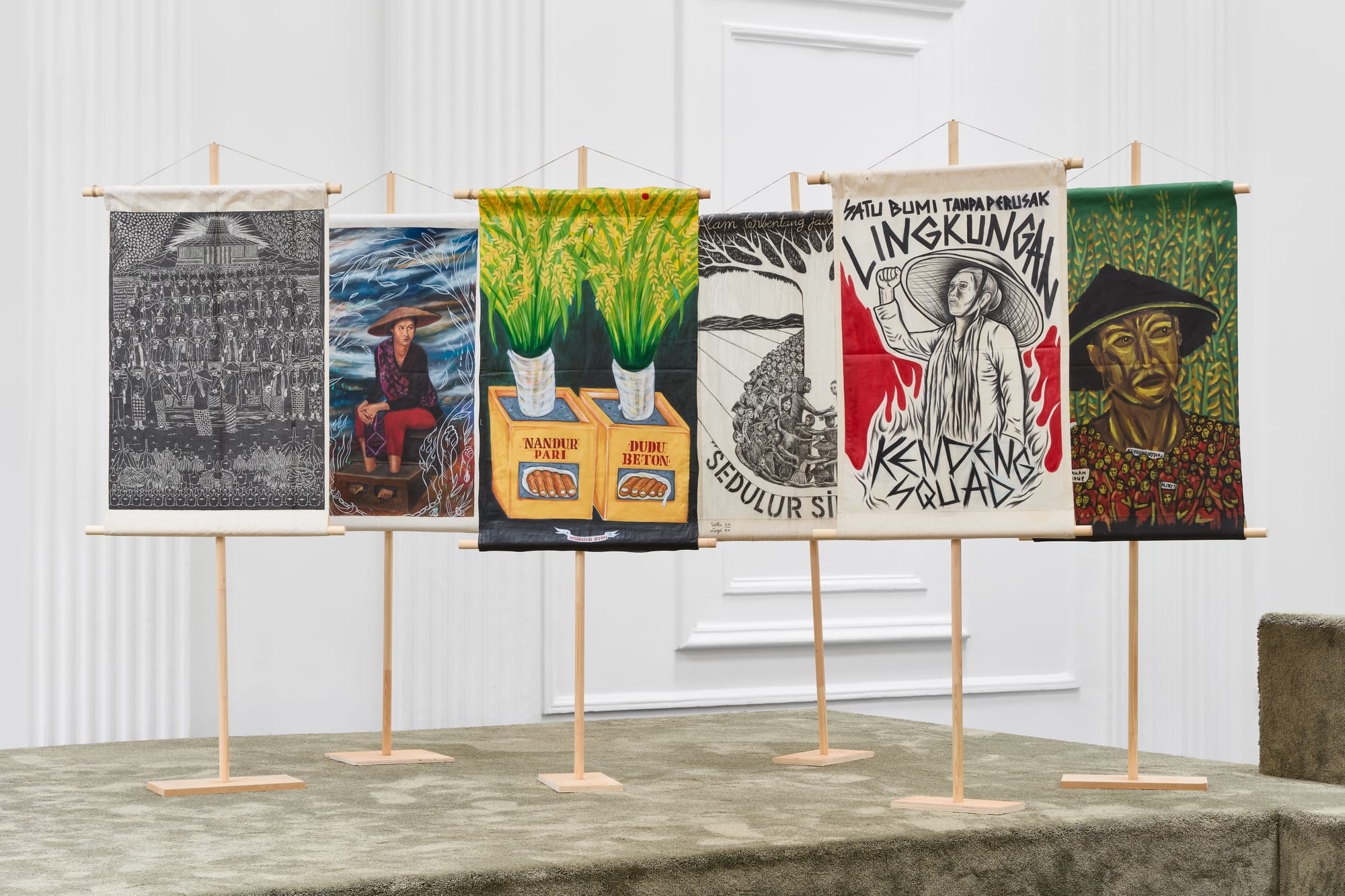
Installation views of TARING PADI’s “Rakyat Pasti Menang” at Ibraaz, London, 2026. Photos by Ollie Hammick. Courtesy the artists and Ibraaz.
Were any of these works specifically commissioned by organizations (e.g. trade unions), and if so, can you offer some insight into the collaboration process?
None of them. However, the earliest commission we received was in 1999 from the National Commission on Violence Against Women in Jakarta. They gave us a specific topic—a one-paragraph brief—and we made the banners. It was as simple as that in the beginning.
We made the banner for the scarecrow festival, Rebut Kembali, of our own volition, but the overall process was still collaborative. We discussed the issues that needed to be addressed in the banner with the villagers, and developed it from those conversations.
This changed considerably when we began working more internationally after Documenta 15. The third chapter will show banners from this period.
How has your work with trade unions developed in the international arena?
Our international profile has grown significantly in the past four years. After Documenta 15, we had solo shows in Amsterdam, Brisbane, and Venice; we’ve now been invited to participate in the 2027 Yokohama Triennale. Established art institutions have started to collect our works, including the Art Gallery of Western Australia in Perth and the Tate Modern in London. This kind of institutional patronage is—I don’t want to say “dangerous”—but it’s so seductive!
One of our strategies to deal with our increased visibility is to work with trade unions. I’ll tell you a story. Last year, in 2025, we worked with the Italian General Confederation of Labor (CGIL), specifically with the branch dealing with migrant workers in Rome (FLAI). We created a banner about Sikh migrant workers from India working in agricultural plantations around Rome. We visited their lodgings, their temples, we ate and drank with them. The banner, titled Basta Schiavitu (Stop Slavery), was exhibited at Rome’s Cantadora gallery. CGIL expressed their intention to purchase the banner, but the discussion went nowhere. In the end, the banner stayed in Rome and CGIL used it as a backdrop in their political actions and meetings, even during a court action for one worker who died in the field. We were glad that our work was able to contribute in this context, and had no problem with the banner staying in Rome as long as it realized its function as a political tool.
Last April, we were also part of Culture in Resistance at Wortley Hall, an 18th-century mansion in South Yorkshire acquired by trade unions in the 1950s, which now operates as a nonprofit co-operative venue for trade union and labor movement activists. Next year we will work with Masahat, an Oslo-based organization dedicated to Arab diasporic culture, and the Norwegian Confederation of Trade Unions to create a banner about migrant workers. We follow this trajectory as part of our objective of establishing progressive alliances.
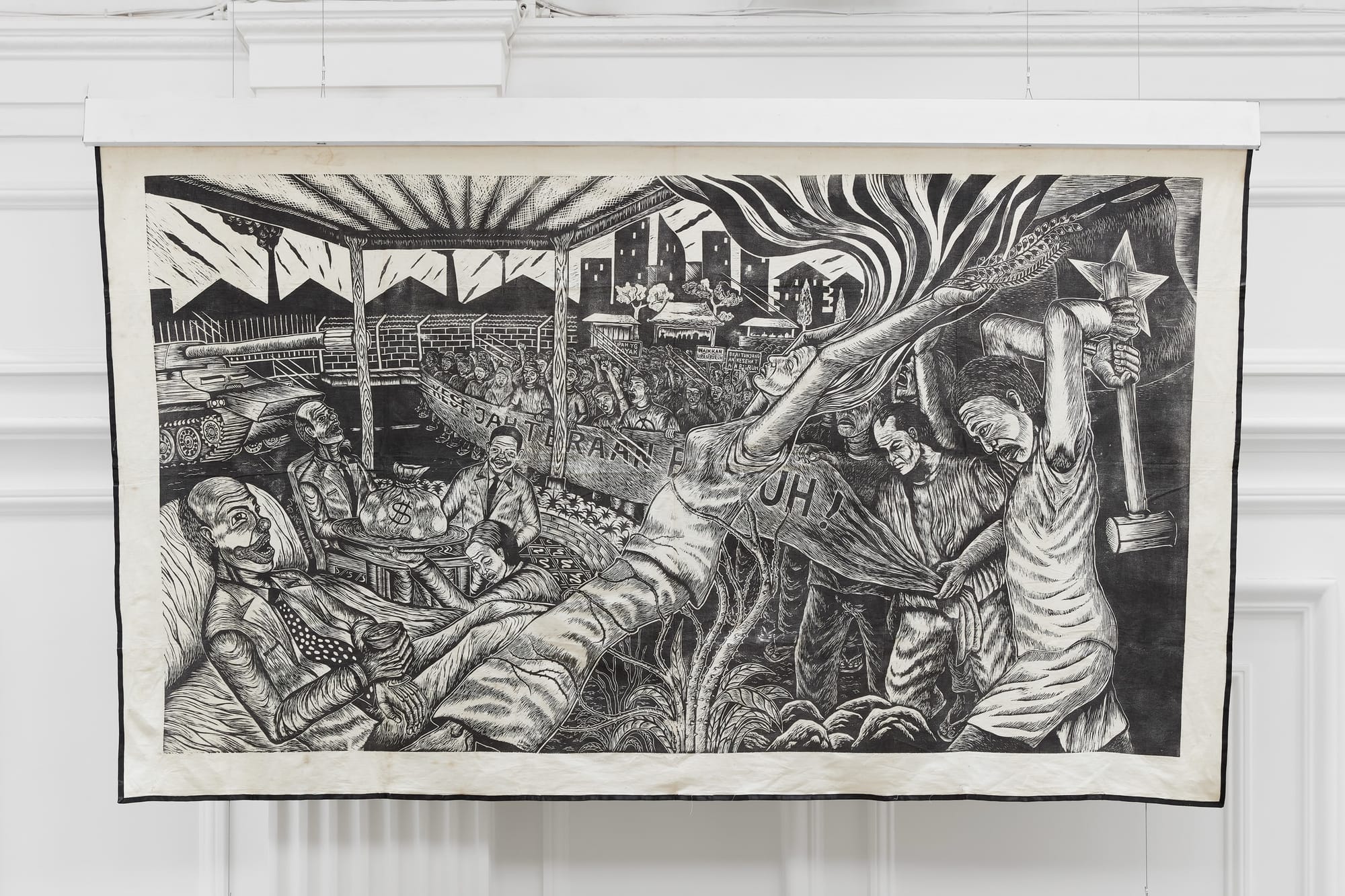
At the start of the millennium, we experienced cataclysmic events such as September 11, 2001, which ushered in decades of Islamophobia and the US-led “war on terror,” particularly in Iraq and Afghanistan. Although geographically removed, Indonesia has long shared Iraq’s curse of Western conglomerates’ exploitative resource extraction and, like Afghanistan, occupies a critical geopolitical position. How did Taring Padi react to the post-9/11 developments as artists and as activists for social justice concerned with anti-imperialism?
We see this from the perspective of class: the “war on terror” is part of a new imperialism in which military force is used alongside or as part of neoliberal economic policy. Our responses materialized in the appearance of the American flag and other stereotypical figures as antagonistic elements in our works.
We never saw it as a war against the Islamic world, but rather as a remapping of the capitalist world order. It is hardly coincidental that massive deforestation and the palm oil industry became major pillars of the Indonesian economy from 2002 onward. It is also hardly coincidental that, during that same period, we increasingly began working with environmental and Indigenous groups. This was also a time when Indonesian oligarchs consolidated their power and their collusion with the government.
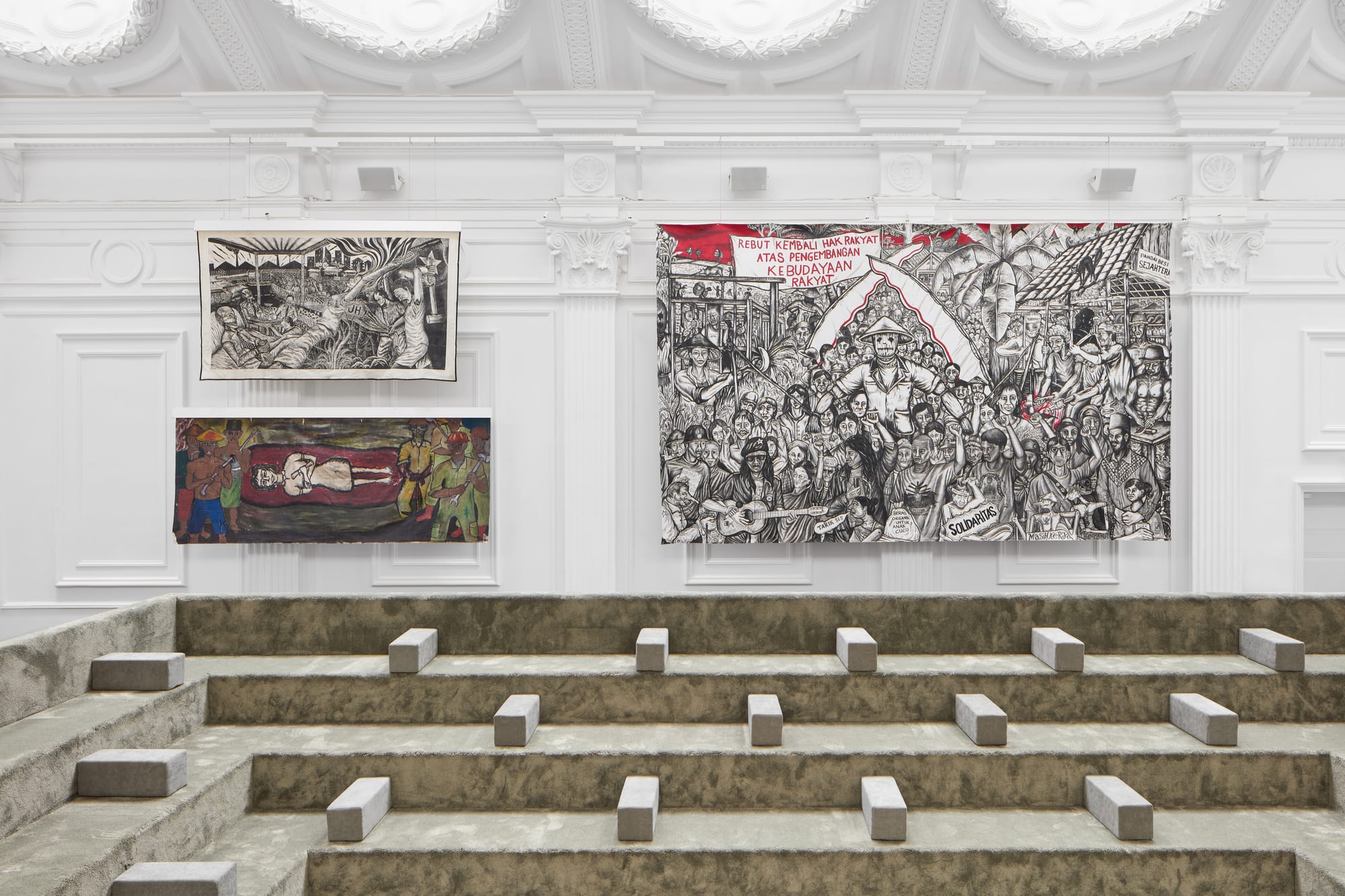
When Art Smashing Tyranny was published in 2012, you wrote about the diversity of perspectives and backgrounds “particularly from the younger generation that is now the driving force behind Taring Padi’s activities.” How would you generally describe the mindset of this younger generation? Approximately how many members were there in Taring Padi during this period? How did your artistic direction as well as your method of working evolve or change from 1997 to the early 2010s?
The younger generation’s experiences of the struggle against military dictatorship are different from the first generation’s. However, we share the same view that artistic practice should be involved in sociopolitical change.
Regarding their mindset, it’s noticeable that the younger generations are not dominated by art school students. This means that “art” is not the main condition influencing their decision to join Taring Padi, although they eventually learn “art” with us. Their non-art backgrounds have contributed significantly to our artistic direction. Yes, they learned lighting and coloring techniques from the art school members, but they also brought different patterns and styles.
When we say “learning and working together” is our operational principle, we apply that in the most literal way. Togetherness is the most crucial element, in my opinion. That’s when “collectivity” materializes in our day-to-day dynamics.
We don’t have an exact number of members. Membership is labor-oriented: you keep working with Taring Padi, and you gradually become a member through a slow and organic process of learning and working together. At the moment, we have 15 active members, although people can take a break and return whenever they want.
Chin-chin Yap is a Singaporean writer and filmmaker based in Lisbon, and a contributing editor for ArtAsiaPacific.