People
“Asia as Method”: Interview with Alexandra Munroe
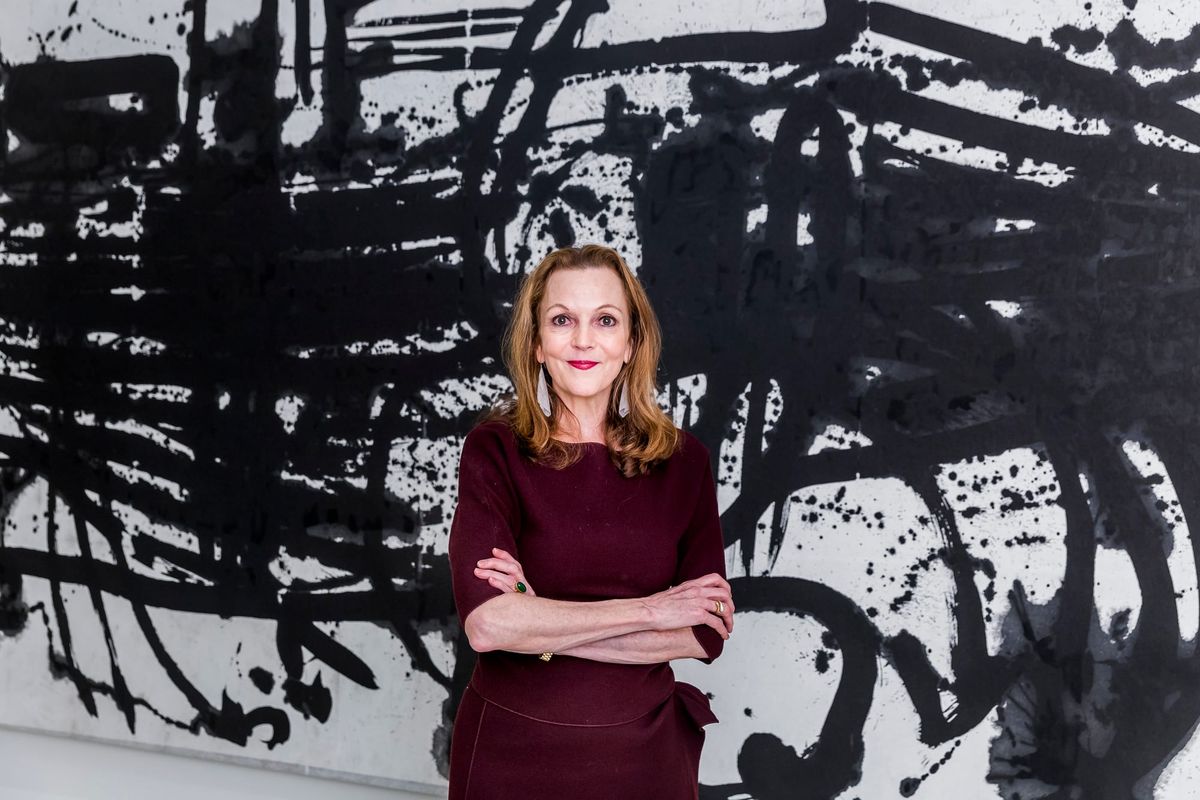
In 2006, Alexandra Munroe was appointed to a newly created position at the Solomon R. Guggenheim Museum: senior curator of Asian art, the first such role at any modern and contemporary art museum in the West. Over two decades, she significantly expanded the New York institution’s vision beyond Eurocentric frameworks, introducing seminal non-Western artists to American audiences through landmark exhibitions, research initiatives, and acquisitions. The driving force behind the museum’s Asian Art Initiative—which is dedicated to the presentation and collection of modern and contemporary Asian art—as well as the Asian Art Council, Munroe was also the first director of curatorial affairs (2018–23) for the Guggenheim Abu Dhabi, which is set to open in December on Saadiyat Island and marks the largest in the Solomon R. Guggenheim Foundation’s network of institutions.
As the Asian Art Initiative celebrates its 20th anniversary, Munroe sat down with ArtAsiaPacific to reflect on the program’s legacy, the limits of the “Asian art” category, and how museums might rethink their role in shaping global art histories.
The Guggenheim’s Asian Art Initiative was launched in 2006 as museums in the West began grappling with globalization, postcolonial reckonings, and Asia’s economic ascent. Looking back, how has the Initiative reshaped the museum’s priorities? Has it opened space for new frameworks, or largely fit Asian art into its existing modernist, universalist frame?
The question assumes a binary which I’d rather resist. The relevant change is not additive; it is methodological. From the outset, the Initiative’s curators—Sandhini Poddar, Xiaoyu Weng, X Zhu-Nowell, Kyung An, guest curators Ming Tiampo and Hou Hanru, and I—have worked toward a broader argument for what we have called “global art history” or “world art history.” Our approach presents artists, movements, and perspectives from Asia within an intersecting set of transcultural histories, grounded in regional positions, ontologies, and discourses. The goal is not simply to absorb certain artists into a Euro-American periodization; it is to interrogate—and even shock—the terms and assumptions of that periodization, to create an intellectually capacious culture that can sit alongside the museum’s founding Eurocentric identity. It requires building the scholarly infrastructure—the archival research, the untranslated primary sources, the historiography of movements unfamiliar to the canon—before a single work goes on the wall. Roberta Smith, reviewing “Gutai: Splendid Playground” (2013) in The New York Times, stated our case succinctly: “Accompanied by a terrific catalog, [Tiampo and Munroe’s] effort should permanently dislodge any notion of postwar modernism as a strictly Western phenomenon.”1
That is an epistemic shift.
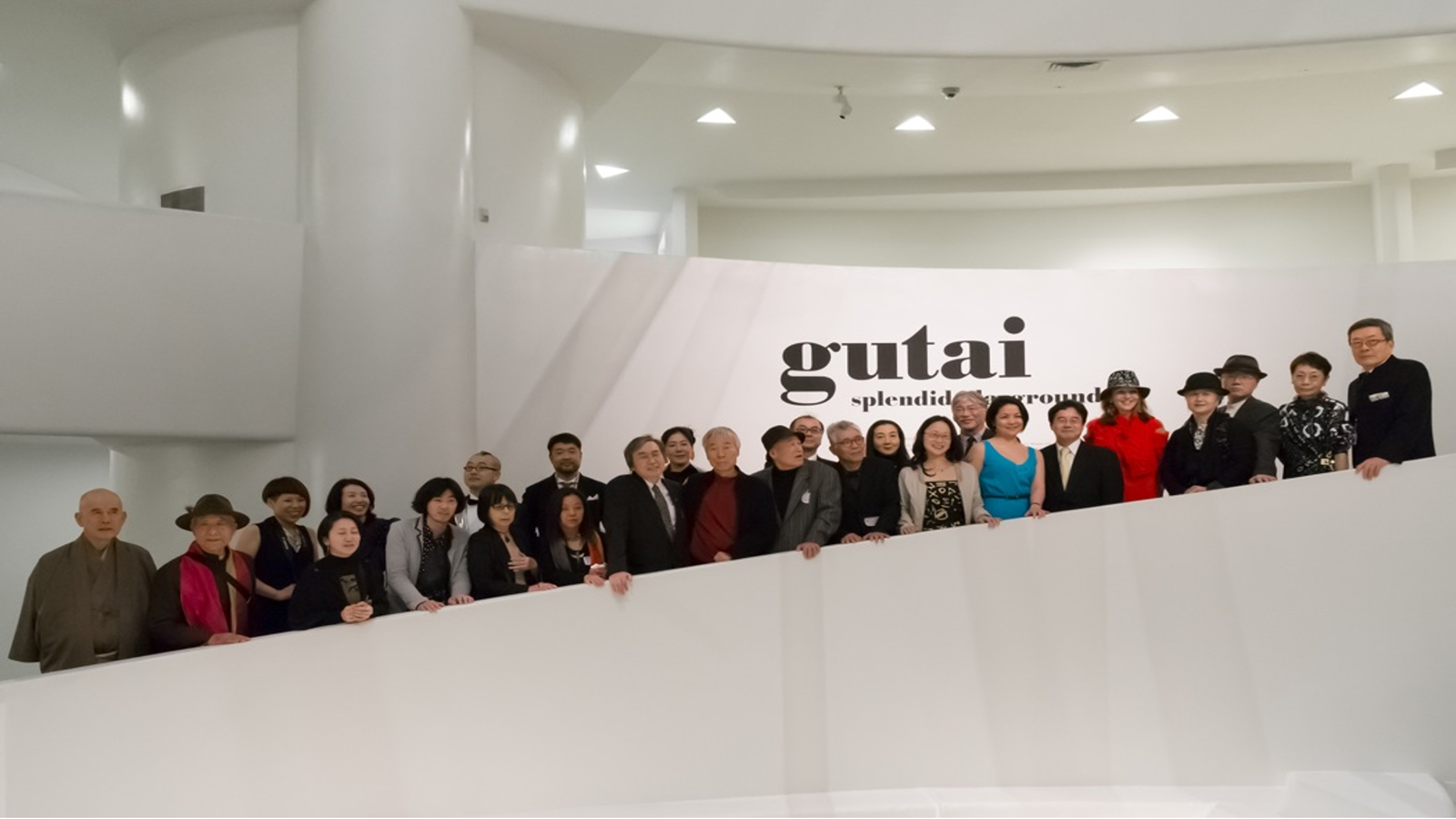
The Initiative was conceived as serving the field; the Guggenheim was never our end goal. I have always championed curatorial fellowship with peers around the world engaged with the urgency to expand, complicate, and critique entrenched narratives through a reorientation of our worldviews. The Asian Art Council exists to keep the debate open beyond the museum’s walls, and to campaign ideas with scholars and practitioners working across the region, not just New York. The Robert H. N. Ho Family Foundation Chinese Art Initiative—three commission-exhibitions with vital public programming, namely “Time Temple” (2014–15), “Tales of Our Time” (2016–17), and “One Hand Clapping” (2018)—treated contemporary Chinese art as a live theoretical problem rather than a national showcase; its commissioned works by Cao Fei, Wong Ping, and Sun Yuan and Peng Yu were acquired for the collection, and have since been featured in major international shows including the 58th Venice Biennale (2019). “No Country: Contemporary Art for South and Southeast Asia,” which opened the Guggenheim UBS MAP Global Art Initiative in 2013, did the same for the region that few American museums had yet registered. And “Art and China after 1989: Theater of the World” (2017–18) argued, at scale, that Chinese contemporary art had generated its own critical genealogy since Tiananmen and that its artists were central rather than peripheral to the rise of contemporary art as a global phenomenon.
Most impactfully, the Asian Art Initiative has helped shape the intellectual parameters defining the Guggenheim Abu Dhabi. Opening this December, the inaugural display will demonstrate a fresh set of stories mapping reciprocal, intersecting, and transcultural art practices since circa 1960 to the present, centered on and radiating from the region—West Asia, North Africa, and South Asia. For me, the last 20 years of collaborating with my Guggenheim colleagues and the Department of Culture and Tourism – Abu Dhabi to build a museum grounded in pluralism and inquiry have been the greatest opportunity of my career, manifesting an argument I’ve long fought to make.
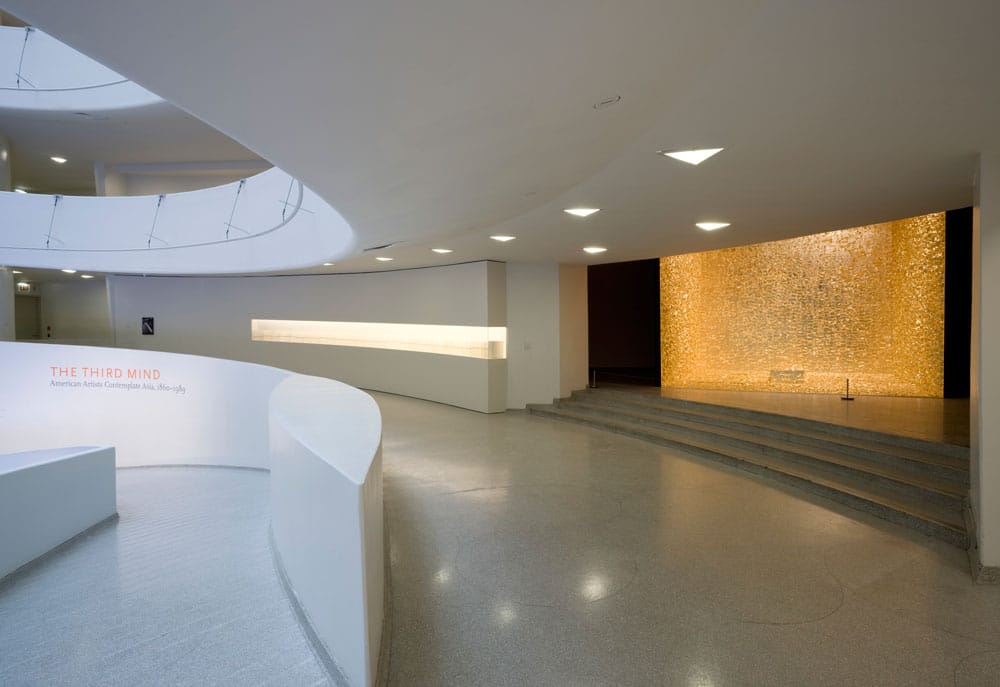
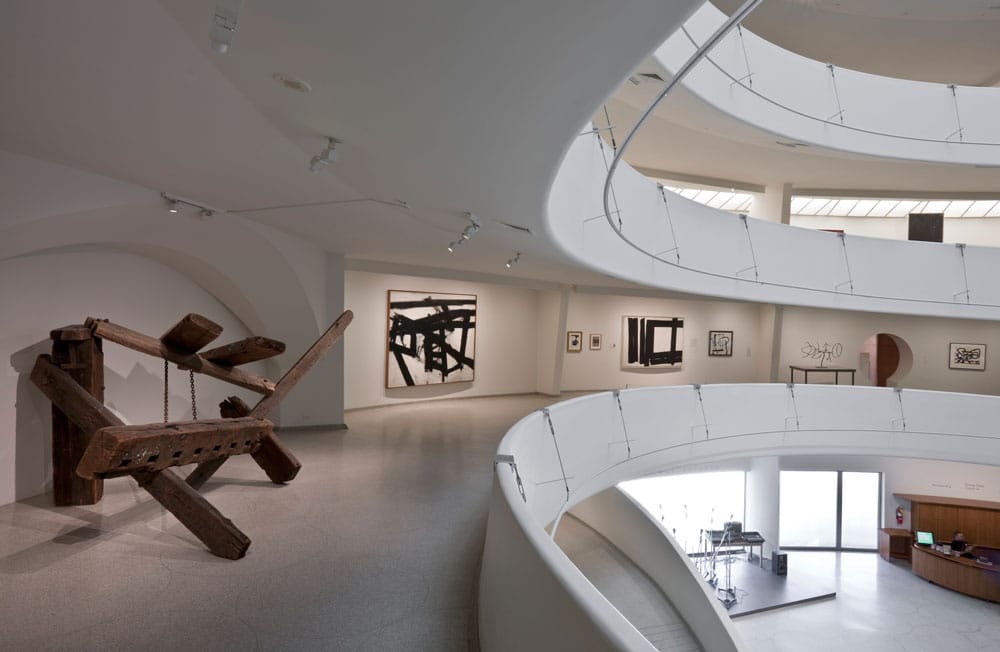
Installation views of “The Third Mind: American Artists Contemplate Asia, 1860–1989” at the Solomon R. Guggenheim Museum, New York, 2009. Photos by David Heald. Courtesy the Solomon R. Guggenheim Foundation, New York.
Over the past two decades, the Initiative has navigated Asia’s dramatic transformations: China’s rise, Japan’s stagnation, lingering historical traumas, and the commodification of contemporary art. In your view, has it successfully resisted framing Asian modernities through Western art historical categories and market expectations—or reproduced those patterns?
The question assumes resistance and reproduction as mutually exclusive, as if a museum could simply opt out of the market and the geopolitical conditions its objects circulate in. The more useful query is whether the Initiative treated those categories as fixed backdrop or as material to question, subvert, or change. From “The Third Mind: American Artists Contemplate Asia, 1860–1989” (2009) onward, my own method has been to trace influence and creative thought as subtle events in the life of an artist. It’s not a matter of choosing Asian modernities or Western art history, since neither is inviolable or stable: each is a construct in constant flux, each contingent upon reciprocal influences, and each a molten state born of wars, migrations, flows, translations, appropriations and misappropriations. Our work is to expose the facts, and to nurture a capacious mindset for meaningful encounters with art and ideas arising from Asian positions.
Our curatorial choices have, of necessity, been indifferent to market timing. The Guggenheim’s Asian Art Initiative was founded in 2006, seven years before Art Basel Hong Kong’s 2013 launch—so, contrary to the premise of your question, the market has more often followed us rather than led us. Our early exhibitions introducing V.S. Gaitonde, Amar Kanwar, Lee Seung-taek, Lee Ufan, Dansaekhwa, Gutai and Mono-ha, Wu Tsang, and Yu Hong all preceded the international market’s serious engagement with these artists and movements—engagement that followed in the form of broader gallery representation, greater visibility at auction and art fairs, and sharply rising prices. We do not court this attention, but we welcome it when curious dealers amplify artists whose importance we helped to illuminate. Our job is to keep looking and writing with conviction, regardless of whether the market takes notice.
The Initiative has raised the profile of postwar Japanese movements like Gutai (2013), and artists like Cai Guo-Qiang (2008) and Lee Ufan (2011), into wider visibility. Has this been selective canon-formation—privileging abstraction, performativity, and conceptualism while sidelining more politically charged or less easily assimilable traditions from Asia?
Every museum is unique. The conditions that have historically shaped the Museum of Modern Art, rooted in the formation of the Euro-American modern art canon, are fundamentally different from those governing the “world encyclopedic” Metropolitan Museum of Art, whose forays into modern and contemporary art are guided by its cross-civilizational context. Likewise, the Guggenheim was founded as a museum of “non-objective art,” and its collection, exhibition program, and DNA have revolved around a distinct set of ideas: abstraction and its legacies of conceptualism, minimalism, and performance art. These tendencies were often radical—politically as well as aesthetically. Internationalism was another one of the Guggenheim’s foundational tenets: an abstract painting by Takeo Yamaguchi was installed beside several Brâncuși sculptures on the rotunda floor for the opening of Frank Lloyd Wright’s “temple of spirit” in 1959. A third tenet has been a commitment to “the art of our time.”
Naturally, my initial approach was to program exhibitions that would both relate to and agitate these core institutional ideas; we have a loyal public to serve as well. The choice of Cai Guo-Qiang, Lee Ufan, Zarina, Anish Kapoor, Korean conceptualism, and Gutai was deliberate and strategic: these projects would productively de-center (Guggenheim’s version of) modernism while establishing and extending artistic connections that argue for a whole new relational, rhizomatic reading of “the art of our time.”
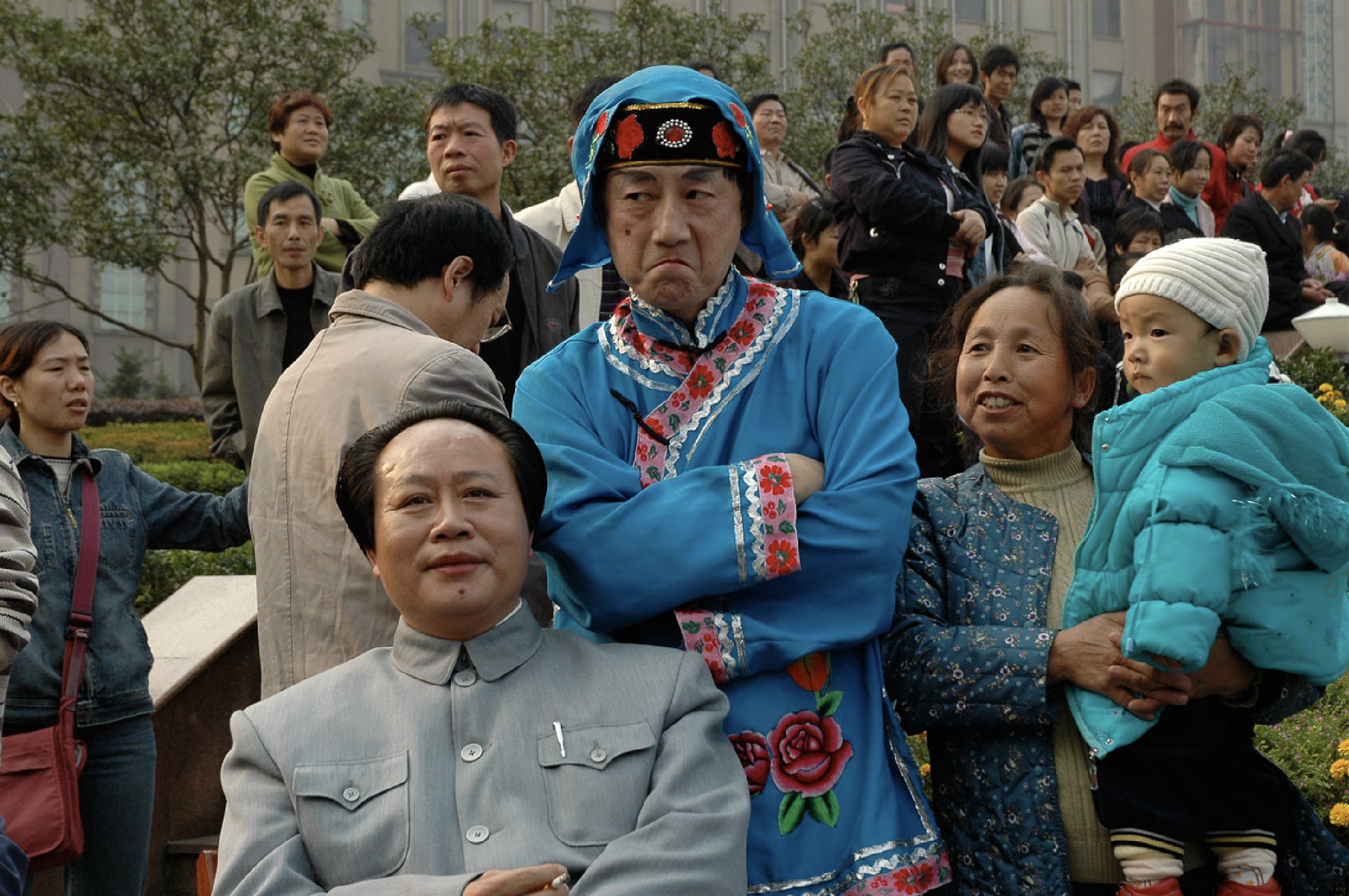
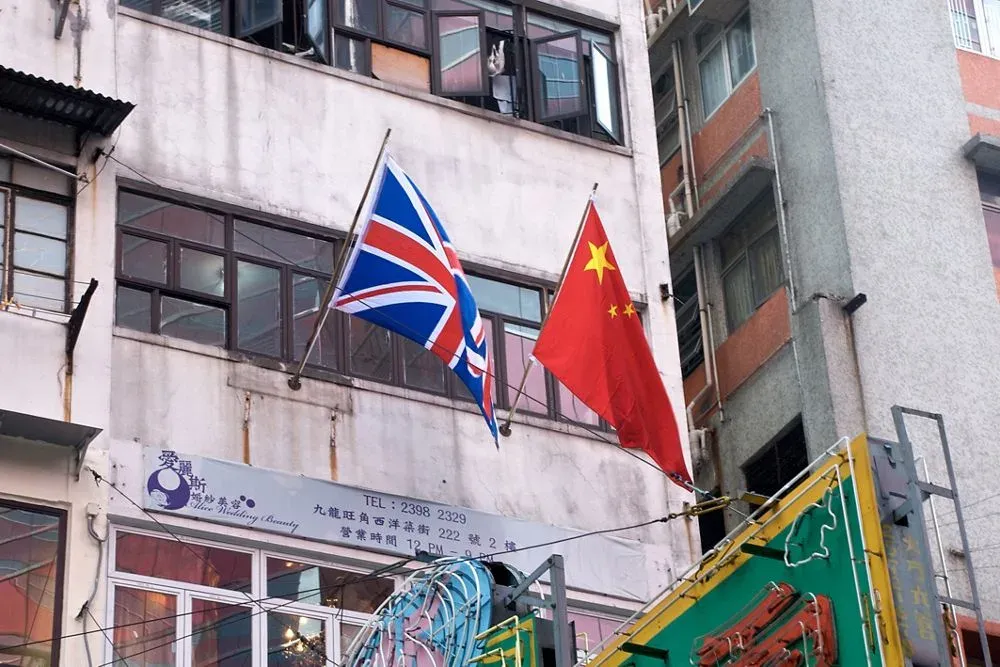
ZHANG BINGJIAN, Readymade, 2009, still from film: 79 min, screened at “Turn It On: China on Film, 2000–2017,” Solomon R. Guggenheim Museum, New York, 2017 (left); and KWAN SHEUNG CHI, A Flags-Raising-Lowering Ceremony at My Home’s Clothes Drying Rack, 2007, still from single-channel HD video with color and stereo sound: 1 min 47 sec. Copyright the artist. Courtesy M+, Hong Kong (right).
We have never shied away from politically-charged work or action; this too, is in our DNA. In 2011, I led the Guggenheim’s International Committee for Museums and Collections of Modern Art online petition to release Ai Weiwei. In 2017, he co-curated “Turn It On: China on Film, 2000–2017,” a documentary film series investigating the often-censored political and social conditions of contemporary China; many of the films were screened in the US for the first time. Another example is Kwan Sheung Chi’s video A Flags-Raising-Lowering Ceremony at My Home’s Clothes Drying Rack (2007), which was acquired through the “Art and China” exhibition. Created in 2007, marking the 10th anniversary of the establishment of the Hong Kong Special Administrative Region, the work stages a flag ceremony on the clothes drying rack outside Kwan’s parents’ home using the flags of Hong Kong, China, and the UK—the three contested states controlling Hong Kong; Lee Kit had hand-painted the Hong Kong one. As each flag is raised or lowered, its national anthem plays—and abruptly stops—creating a cacophony that mimics the ominous confusion of Hong Kong’s status.
Ink art, I would say, is the one field the Guggenheim has not managed to “assimilate”—and I am not sure assimilation was ever the right ambition. Luckily, the Met has made great acquisitions that resonate with its superb holdings of East Asian painting, and M+ has made this a keystone of its China-centric strategy. Guggenheim Abu Dhabi, with its more capacious mandate and deep holdings of global calligraphic abstraction, is gradually underway: we will see great works by ink artists from Japan and China on view in the inaugural display.
Showing Asian art in American museums requires mediating between contexts. How have you introduced practices and works without losing specificities of voice, history, and place, and without flattening them for international consumption?
When the National Gallery of Singapore presents a major survey of Minimalism, is it flattening it for international consumption? When the Mori Art Museum presents a Louise Bourgeois retrospective, is it flattening it for international consumption? The question assumes a parochial public; I prefer to think that people who go to museums—anywhere in the world—come to see, learn, and be inspired. Today, everyone is a global citizen of sorts, and more intelligent than that. Broadening the stories we tell is not an ideological exercise but an evolutionary one—a process of thinking more generously—that unfolds, everywhere, over generations.
Good shows are not perfect models or definitive declarations of their subject; they are thresholds of insight and inquiry. We may be a Western museum, but we don’t only use a Western lens. My approach is “Asia as method”—presenting artists in the context of the cultural discourses that shaped their practices, using thinkers and concepts from the region, and then linking them to broader contemporaneous currents. The curator’s job is to stage art and allow its power to elicit meaningful encounters; the art itself, not its framing, always resists flattening.
Beyond exhibitions and acquisitions, how has the Initiative shaped art historical writing? What revisions to the 20th- and 21st-century canon has it made possible, and what larger narrative battles remain unresolved?
Our activist work is not solely aimed at the Euro-American modernist canon as enshrined at the Guggenheim; Japan, India, and China each have their own national canon, often determined by systems of academic salons. My Cai show traveled to the National Art Museum of China during the Beijing Olympics; Kyung An’s “Only the Young” show was co-organized with the National Museum of Modern and Contemporary Art, Seoul. In these and other examples, our exhibitions and catalogs are developed in close intellectual partnership with the artists’ own community, institutions, and place. Without reciprocal reverberations in each other’s regional art historical writing, the Initiative’s achievements would be short-lived and short-sighted.
“The Third Mind” (2009) reversed the standard influence narrative, arguing that Asian thought shaped American modernism rather than merely being absorbed by it. “Art and China after 1989” replaced a Cold War periodization with one anchored in Chinese political history. What hasn’t moved is the survey textbooks. Art Since 1900: Modernism, Antimodernism, Postmodernism (2004) and its peers still treat these as regional supplements to a narrative whose mainline runs from Paris through New York. The mismatch between exhibition-level revisionism and pedagogy-level inertia is the unresolved battle—a museum can rewrite the show; it can’t yet rewrite the syllabus.
Whatever we have accomplished, we have not accomplished alone. The larger communal project has been to move beyond the singular historical narrative produced by Euro-American modernity toward an understanding of art histories as a plural. Since at least the fall of the Berlin Wall and the onset of globalization, this rethinking has animated art historical scholarship, biennials, and museums across the globe, opening historical discourse to endless, entangled trajectories. Our work has been part of this epistemological shift.
What’s left? There is so much work to do! There is lots of great research now on Asian American and Asian diasporic art, revolving around questions of how to surface those long-marginalized identities and conditions of exile, assimilation, and resistance into a more complex, critical understanding of “American art” and institutional histories. Regional studies have enormous potential for growth across the Arab world, Central Asia, and Africa; deep historical dives like the Tate’s brilliant “Nigerian Modernism” show (2025–26) should inspire more like it.
My forthcoming Mariko Mori retrospective, co-curated with the Mori Art Museum director Mami Kataoka, aims to position Mori as a prescient progenitor of technology-based art and its possibilities for shifting consciousness. Across three decades of practice, she has undone the opposition between nature and technology, proposing in its place a cosmological continuum—one in which the organic, the machinic, the spiritual, and the planetary are held as mutually constitutive rather than antithetical terms. Although she has eschewed theoretical or ideological framing, her work announces an adamantly pre-modern and non-Western worldview that corresponds to any number of contemporary decolonial critiques. Solo shows of overlooked artists like Mariko, and of themes like worldbuilding, offer new fields of research—and a few new battle fronts.
The Asian Art Council and its various partnerships have shaped the Initiative. How have conversations between artists, scholars, curators as well as its patrons from the Asia-Pacific steered the program? What unexpected insights or connections have emerged from these exchanges that surprised you most?
As I described above, the Initiative has thrived on conversation, collaboration, and community-building. I would not say any one constituency “shaped” the program as much as informed it, over time.
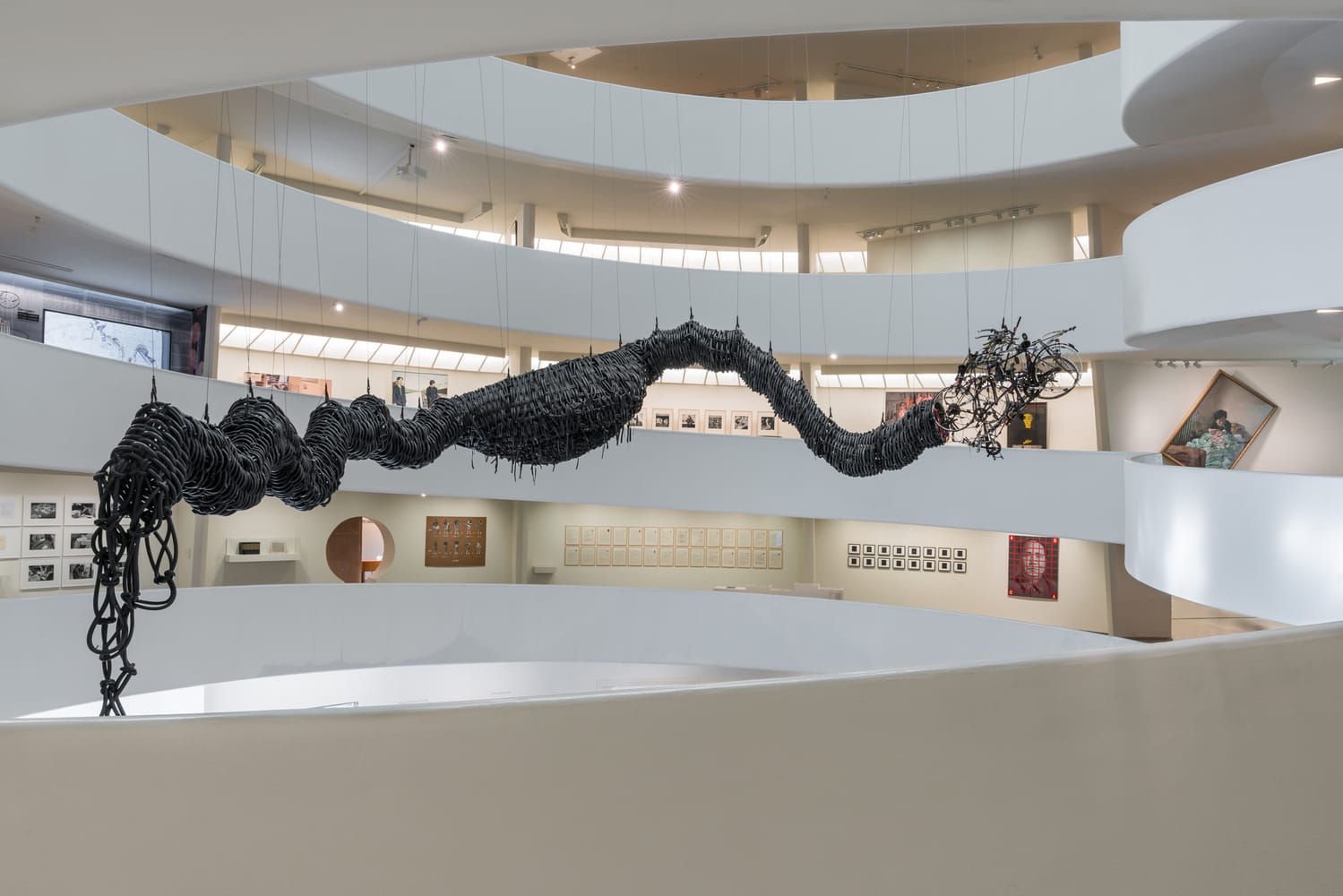
For me, Huang Yong Ping has been an abiding inspiration to the Guggenheim’s curatorial thinking. His cosmologies upend our worldviews; few artists so radically unsettled the certainties of Western modernity. As Hou Hanru writes: “Huang Yong Ping’s art is an entire ontology in itself . . . His art is powerful but intelligent, revealing the essence of existence: that the truth of the world is that there is no unique ontological truth. The world is an eternal dilemma and paradox. And it makes sense only when this paradox exposes itself.”2
After two decades of this work, what is your assessment? Can museums still foster genuine cross-cultural understanding—especially now as nationalism rises, identity politics harden, and states and markets weaponize culture?
What you describe relates to the current American culture wars. My answer: come visit Guggenheim Abu Dhabi. You will see other worlds with other concerns.
Asia’s cultural weight is shifting the global balance. Where does the Initiative risk becoming obsolete and where might it still matter?
It’s not a question of the Initiative becoming “obsolete,” but of when we feel our mission has been accomplished and when we need to pivot to address a new generation of questions. We are still a young field, and we still hold the future.
The entire premise of an American museum “introducing” Asian art depends on a mediating role that Asian institutions increasingly don’t need—the Mori Art Musuem in Tokyo, the M+ in Hong Kong, the expansion of national museums across East, South, and Southeast Asia, and the growth of regional biennials and fairs mean regional projects are outpacing what the Initiative was built to perform. The category “Asian art” itself is also increasingly hard to defend as a single frame; spanning Central and West Asia and diasporic communities, it’s always been a ludicrous conceit that any one museum or handful of curators could tackle it all. It was never our intention.
It matters that we ask the question—what now? We must keep on working, thinking, and campaigning together in support of the artists who sustain us, and whose work will outlast the tempest of our times. That matters.
1 Roberta Smith, “The Seriousness of Fun in Postwar Japan,” The New York Times, February 14, 2013. https://www.nytimes.com/2013/02/15/arts/design/gutai-splendid-playground-at-the-guggenheim.html
2 Hou Hanru, “Change Is the Rule,” Walker Reader, October 1, 2005. https://walkerart.org/magazine/change-is-the-rule.
Elaine W. Ng is editor and publisher of ArtAsiaPacific.