People
Dancing to Wesley Tongson: Chris Wan Feng on Asia Society Hong Kong’s “UNARCHIVED”
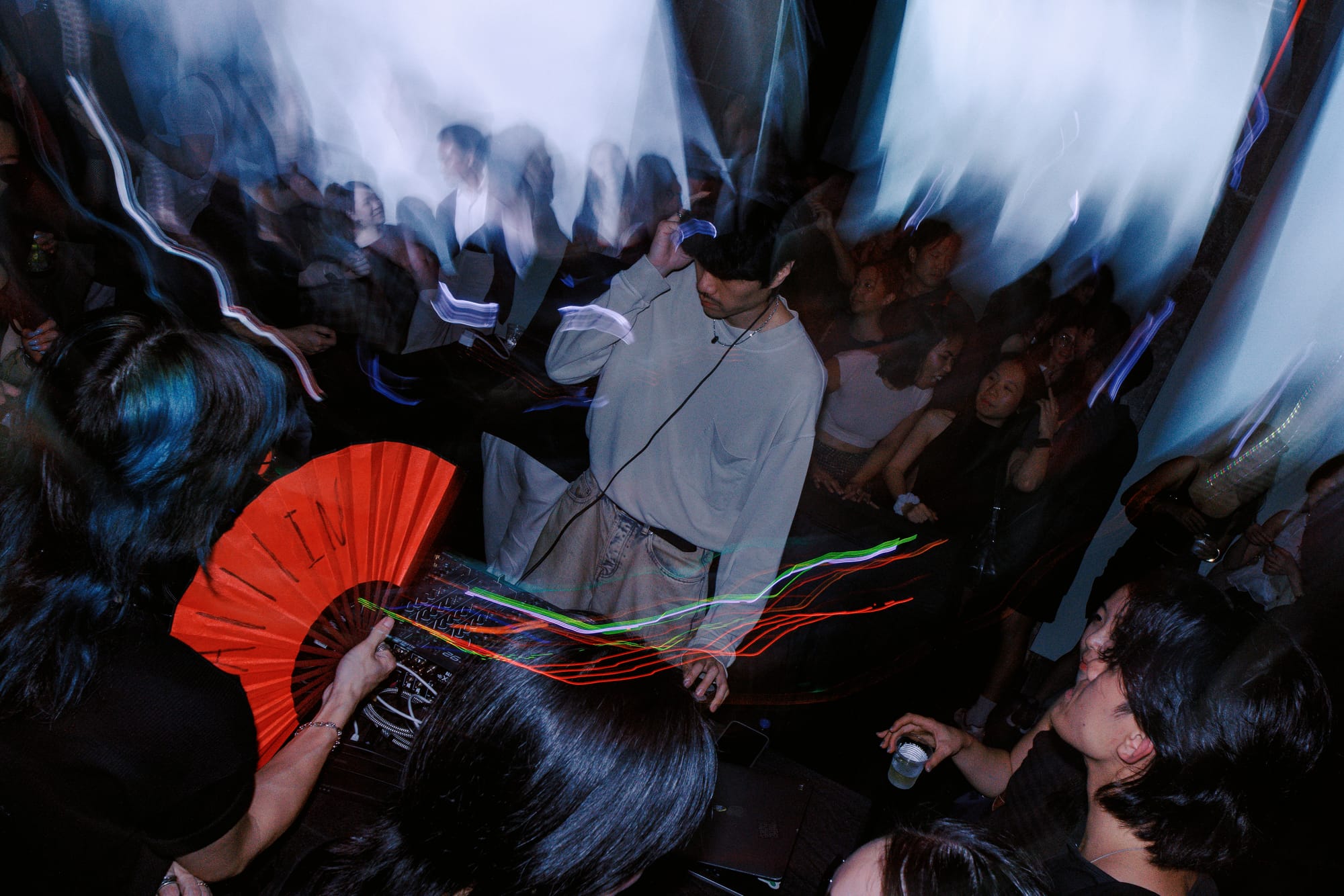
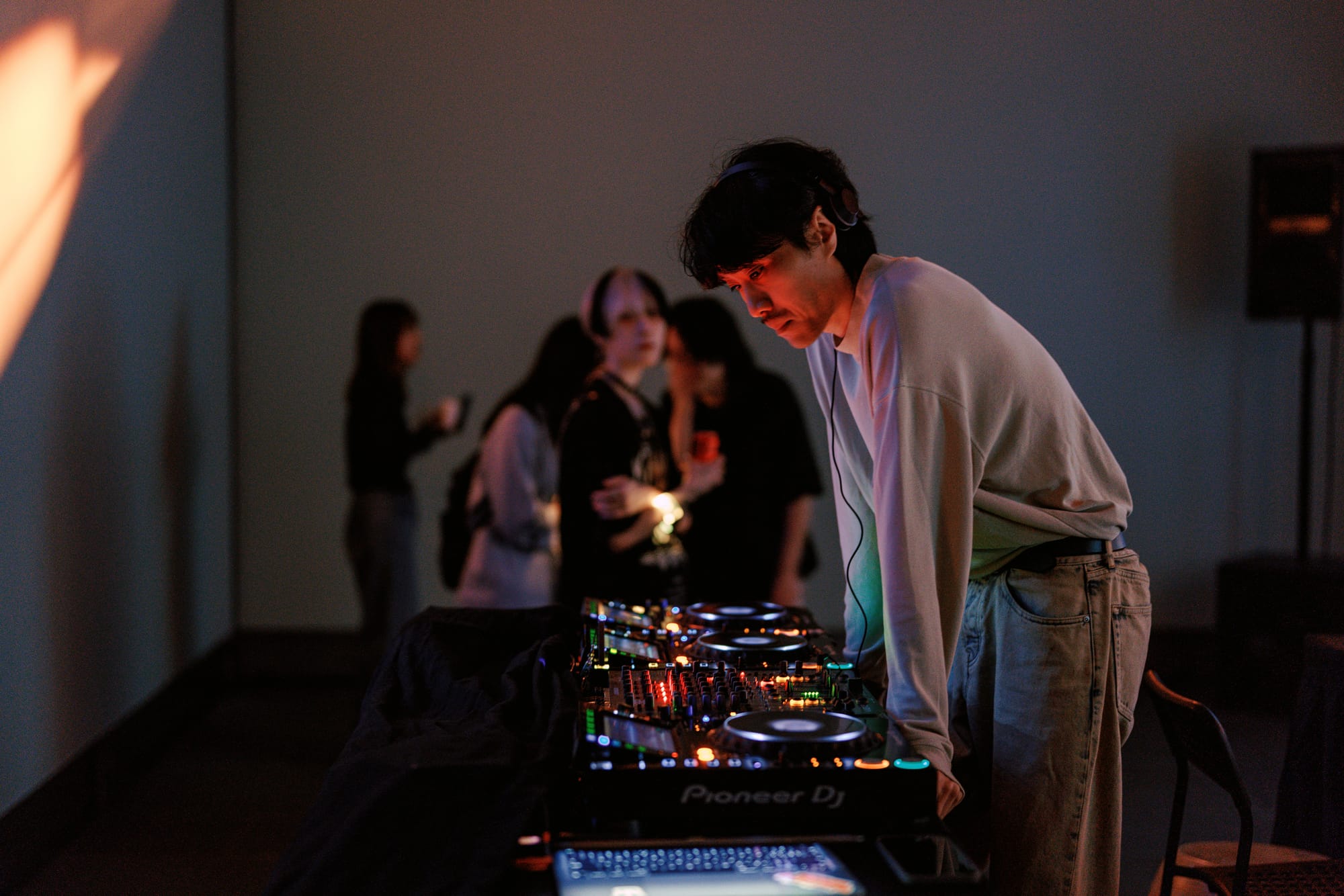
On October 30, a rave took over the Chantal Miller Gallery at Asia Society Hong Kong Center (ASHK). “UNARCHIVED: Techno & Impermanent Flux,” organized by ASHK’s curatorial team in collaboration with Hong Kong artist Wai Pongyu, followed “Singing and Dancing with Brush and Ink: The Art of Wesley Tongson” (Jul 15–Oct 11), a comprehensive exhibition of works by the late Hong Kong ink painter (1957–2012). Drawing on the Wesley Tongson Archive at Asia Art Archive, the evening combined archival displays with sets by DJ Knopha and visuals by VJ Gerry Li.
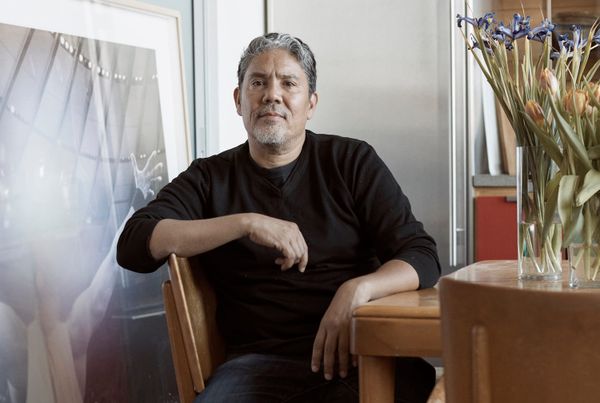
Chris Wan Feng, the center’s head of gallery and exhibitions, spoke with ArtAsiaPacific about the archive’s limits, the risks of the format, and what the night left behind.
A rave at Asia Society is, by any measure, a historic gesture for an institution known for lectures and scholarly exhibitions. How did the idea arise, and what prompted so radical a leap from Wesley Tongson’s ink, conventionally read through stillness and discipline, to the dance floor?
I certainly did not expect to curate something like this at Asia Society so soon. The project emerged through a series of coincidences. While researching the history of the Asia Society Hong Kong Center building, we discovered references to underground parties held here in the 1980s and ’90s. That forgotten history immediately opened up different ways of thinking about the building.
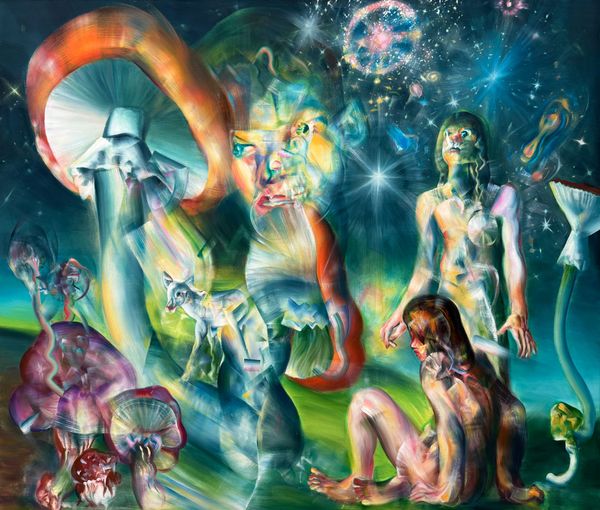
Around the same time, preparing the Tongson retrospective led to the establishment of the Wesley Tongson Archive at Asia Art Archive. The artist Wai Pongyu was invited to engage with the materials, and our conversations soon moved beyond the exhibition. We both felt that Tongson’s late works, especially the landscapes he made with his fingers instead of a brush, contain extraordinary emotional intensity. They are often discussed in terms of spirituality and transcendence, but we also found vulnerability, urgency, desire, and perseverance. The idea of a rave emerged from that intuition—not as an illustration of the paintings but as a response to the emotional energy resonating within them.
The title “UNARCHIVED” implies resistance to the archive as a site of containment. What did you mean by “unarchiving,” and how does the rave recast the archive as a repertoire to be enacted rather than preserved?
Unarchiving does not mean rejecting the archive. It means returning it to life. Archives preserve traces but never life itself: documents, images, letters, and artworks survive, while emotions, relationships, and lived experience disappear.
I often return to the idea that all history is contemporary history. We never encounter the past directly, only through the questions we ask in the present. Every encounter with an archive involves projection, since we inevitably bring our own experiences, desires, and questions to the reading. Rather than pretend to recover an objective truth, I am more interested in making that process visible.
That is why “UNARCHIVED” was never only about Tongson. It was equally about what happened when Wai Pongyu encountered Tongson from the perspective of the present. The rave let us move from preservation to activation, as the archive entered sound, moving image, bodies, and space. In that sense, unarchiving is not about recovering the past but about allowing historical materials to re-enter the present.
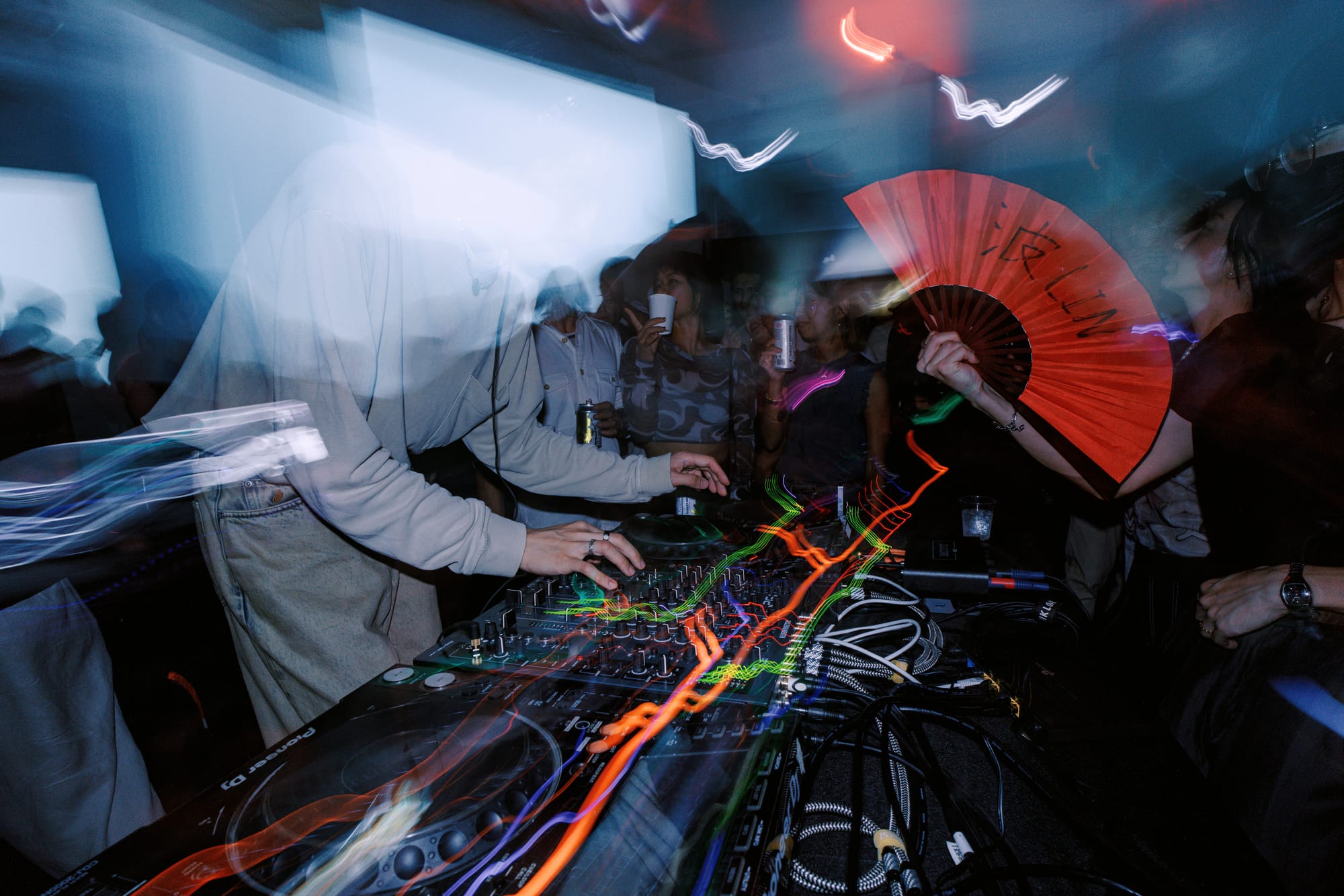
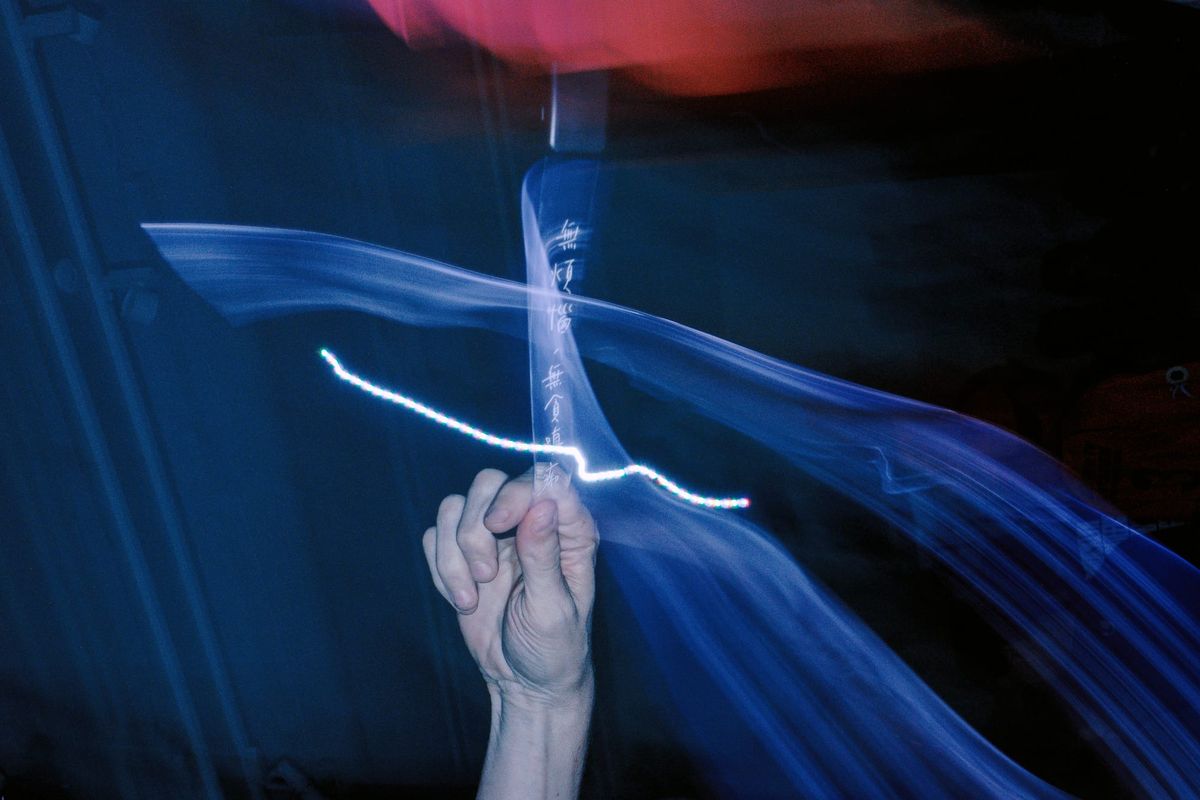
Event documentation of “UNARCHIVED: Techno & Impermanent Flux” at Asia Society Hong Kong Center (ASHK), October 30, 2026. Photo by Ziv Wei. Courtesy ASHK.
Tongson’s ink retains traces of the gestures that made it, whereas a rave leaves only duration, sound, and bodies in motion. What did you gain, and what did you have to forfeit, in moving from a medium that fixes movement to one defined by its disappearance?
We gained not a new object but a new experience. A central idea of the project was to bring together two radically different forms of knowledge: the rational structure of the archive and the emotional intensity of the dance floor. Their encounter generated something that neither could produce on their own.
For me, the most valuable outcomes resisted documentation: unexpected conversations, emotional shifts, and the temporary communities that formed over a single evening. In trying to understand Tongson, we were forced to rethink ourselves, and the project became a process of self-discovery for everyone involved.
Painting offers permanence, while a rave vanishes almost as soon as it happens. But that disappearance creates its own experience, because what cannot be preserved demands presence. The things that cannot be fully archived are what matter most to me.
Ink painting is often framed as a solitary, meditative encounter, while the dance floor is collective and messy. Did you wish to resolve that tension between contemplation and immersion, or leave it productively unresolved?
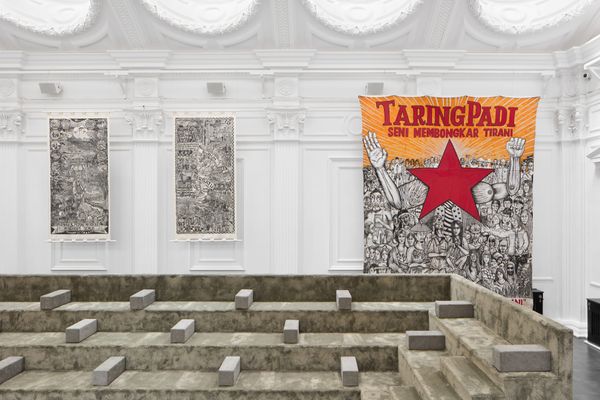
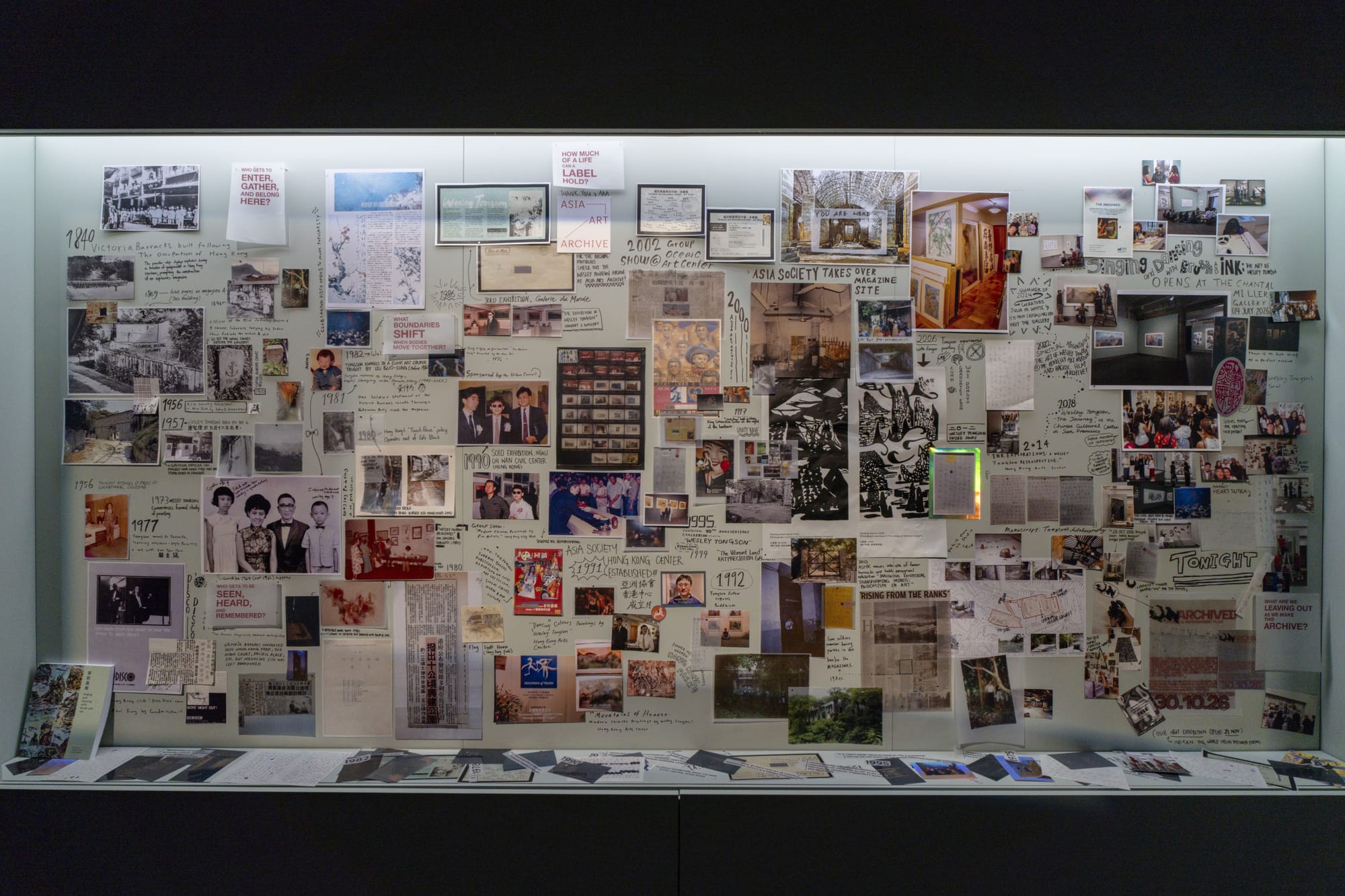
We never intended to resolve that tension. In fact, we designed the project around it. Visitors arrived expecting a rave, but the first thing they encountered was an archive wall, showing materials from Tongson’s life, the retrospective, the building’s history, and the making of the project itself. At the same time, we agreed from the start that the rave had to be a real rave, not simply a representation of one.
The exhibition had closed, but we intentionally kept its traces in the space. Exhibition texts remained on the walls, display cases became archival installations, and lights once used for artworks illuminated the bar and its staff. Throughout the evening, some people danced, some read documents, and many moved between the two. For me, that coexistence was the work.
The program ranged from nostalgic pop to heavy techno. How did you, Wai Pongyu, DJ Knopha, and VJ Gerry Li translate Tongson’s rhythm and the exhibition title “singing and dancing” into sound and projection?
“Singing and Dancing” was one of our starting points. It comes from a seal in Tongson’s work, and we turned it into a badge for everyone who attended. Ink painting and techno seem far apart, but we were never interested in translating visual forms directly into sound. We were interested in translating intensity.
What fascinated us was that things separated by history, culture, geography, and medium can still resonate. The greater the distance between references, the more interesting the encounter. We also tend to forget that artists like Tongson were not only producers of culture but participants in it. Hong Kong’s New Ink movement developed alongside popular music, nightlife, cinema, and rapid modernization. So the question was never whether techno was faithful to Tongson. It was whether contemporary audiences could meet his work through a language that is still alive today.
Few institutions would risk this format. In designing the practical logistics of the event, how did you negotiate the institution’s duty of care and the rave’s demand for abandon?
Taking risks is necessary. Planning can reduce risk but never eliminate uncertainty, and projects like this are hard to grasp until they happen. I do not think duty of care begins with control. It begins with trust in participants, artists, and the possibilities of collective experience. Intensity and collective release are often mistaken for disorder, which I do not think is necessarily true. Looking back, trust may have been the most important material in the entire project.
The exhibition addressed Tongson’s struggles with mental health and his questioning of gender identity. Club culture has its own history as a refuge for marginalized communities. To what extent did you conceive the rave as a space of care and release connected to his biography?
One achievement of the retrospective was that it let us speak more openly about Tongson’s struggles with mental health and gender identity. But I did not want the rave to become a therapeutic narrative. The project may have started with Tongson, but it quickly moved beyond him. Every act of interpretation involves a degree of projection, and every attempt to understand another life is necessarily incomplete. We chose to acknowledge that rather than deny it.
If there was one feeling we hoped to create, it was not healing in any simple sense but an awareness of the present moment. If there was an act of care, it was not in providing answers but in creating space for vulnerability, uncertainty, and coexistence.
How did audiences respond, whether regular Asia Society visitors, the club crowd, or those who knew Tongson? What is the event’s legacy for Tongson’s reception and for how Hong Kong institutions might respond to an artist’s archive?
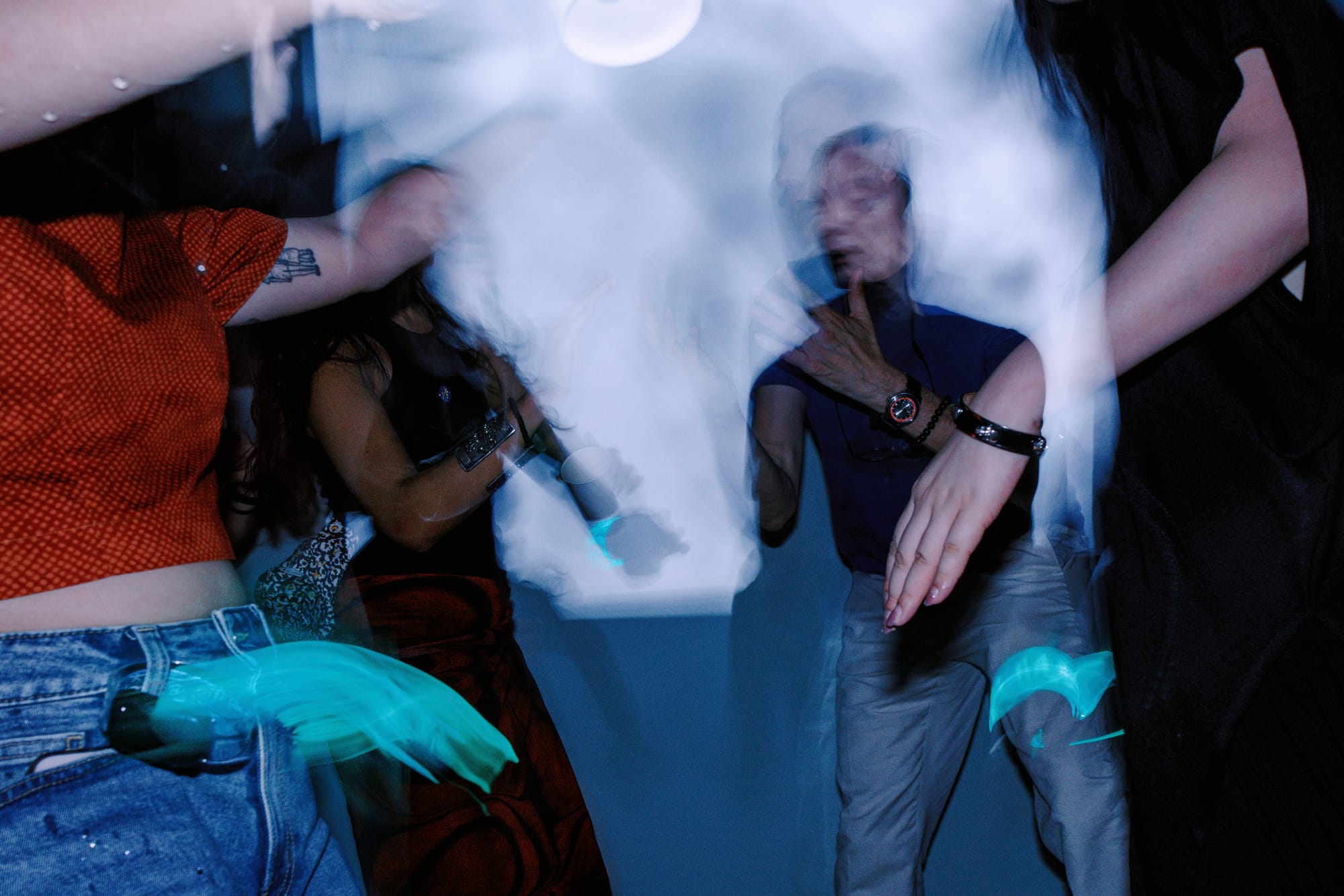
The response was overwhelming, and we received an unprecedented amount of support and feedback. From the beginning, we wanted the audience to be multiple and not a self-referential conversation within the art world. Art should speak to different people in different ways.
I also never expected everyone to have the same experience. What matters to me is that each person moves one step forward from where they began, whether through the archive or the party. Both are equally valid. This is an art project, but if someone simply had a great party, that is completely fine. I believe some of the deeper experiences we tried to create will stay with people in quieter, longer-lasting ways, and some may only reveal their significance much later.
On the night, I thanked everyone on social media and wrote, “We made history.” I don’t think that is an exaggeration. The project opened up a new possibility, showing that there are still many ways of thinking about archives, history, artistic encounters, and the future. More importantly, it reminded us that these conversations are still very much alive.
Michele Chan is managing editor at ArtAsiaPacific.