People
Memory and Stewardship: Notes from South Korea
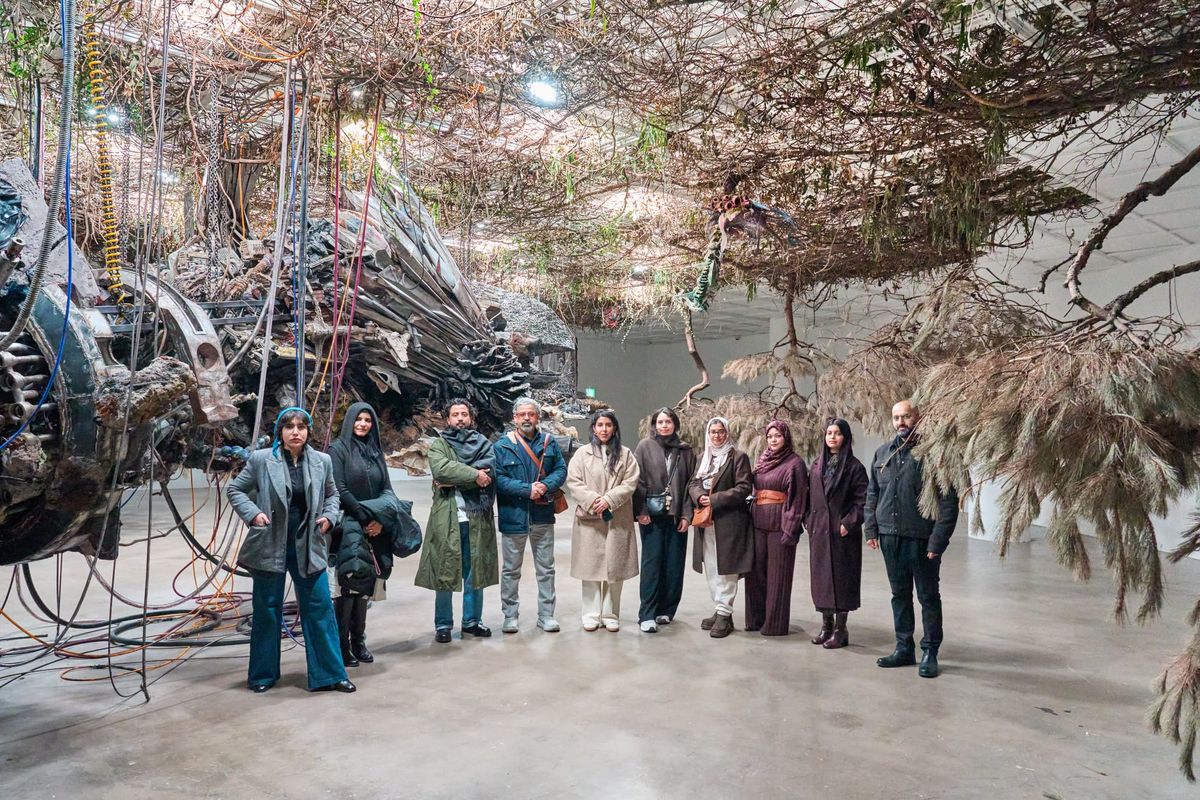
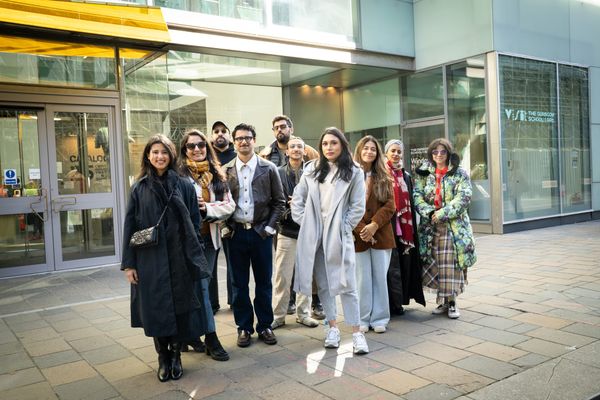
In February 2026, Saudi Arabia’s Visual Arts Commission sent a delegation of artists and cultural practitioners to South Korea as part of Art Bridges, a professional development initiative built around the theme “Identity Through Art and Community.” Participants visited artist studios and toured institutions including the National Museum of Modern and Contemporary Art, Korea (MMCA), the Seoul Museum of Art (SeMA), the ARKO Art Center, and Art Sonje Center.
Below, three participants—Zahrah Alghamdi, Sarah Orfali, and Raed Kadi—reflect on what the exchange revealed about the convergences and differences between two art ecosystems that are moving at different speeds, yet increasingly attentive to each other.
ZAHRAH ALGHAMDI
Zahrah Alghamdi is a Saudi visual and land artist and an associate professor of visual art and design at the University of Jeddah. Her work explores memory, history, and cultural identity through large-scale, site-informed installations.
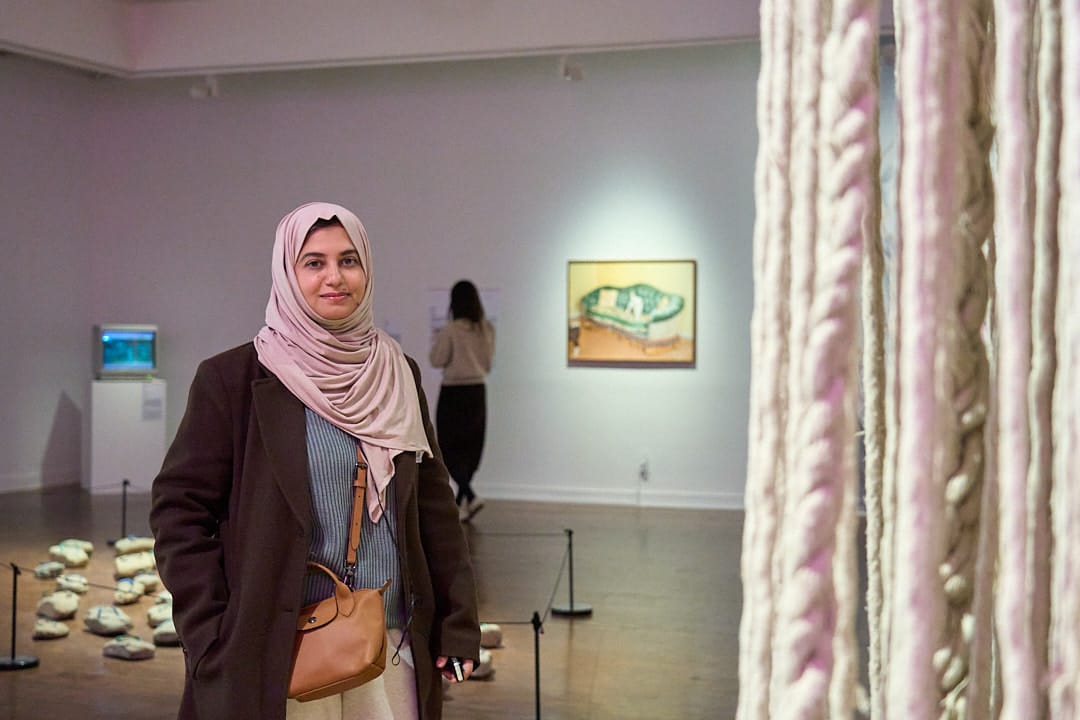
Can you describe a specific moment during the program that changed the way you think about your own practice or the role of visual art in society?
It was not just one moment, but a series of meaningful experiences. Visiting Park Seo-Bo’s studio was transformative both artistically and personally. It reaffirmed my belief that a true artist must trust their own voice even if recognition takes time. His dedication to his creative journey was as inspiring as the work itself.
How did the program’s structure—visiting institutions across South Korean cities and engaging with local creative communities—foster genuine exchange or collaboration?
The program was thoughtfully structured through carefully selected institutions and cultural spaces that offered us a genuine and immersive experience. I especially remember attending Adrián Villar Rojas’s exhibition, “The Language of the Enemy,” at Art Sonje Center. His use of wood, earth, and stone immediately reminded me of the desert soil, clay, and palm fronds I work with in Saudi Arabia. Although these materials come from different environments, they carry similar meanings of place, identity, and the passage of time. That kind of material dialogue made the cultural exchange feel truly mutual, not one-sided.
What most surprised you about the similarities or differences between the two contemporary art ecosystems?
The strong connection between Saudi and South Korean artists in their approach to memory, identity, nature, and society, despite different backgrounds. I experienced this most clearly during our visit to the Park Seo-Bo Foundation, where his studio has been preserved much as he left it. Although our artistic languages and materials are very different, standing in that space revealed a shared belief in patience, dedication, and allowing materials to carry memory and lived experience. I also found that discussions with Korean curators and artists often led to comparisons between my use of materials rooted in the Saudi landscape and their use of materials connected to the Korean environment. These exchanges became meaningful conversations rather than explanations, creating a genuine sense of mutual understanding.
Did any aspect of the South Korean art scene prompt you to reconsider how similar structures might evolve or be adapted within the growing Saudi context?
What impressed me most was the level of care South Korean museums and art institutions dedicated to artistic archiving—not only preserving artworks but also documenting artists’ processes and ideas. I realized that archiving is not simply about preserving information; it is about building cultural memory and safeguarding art history for future generations. We also reflected on the importance of institutional support for making these archives accessible for research and public engagement.
What did the program create, long-term?
As an artist, this program encouraged me to reflect on how cultural memory, materiality, and relationship with society co-exist across different contexts, with each environment maintaining its own unique identity. These encounters opened possibilities for future collaborations, projects, and artistic relationships. More importantly, they created a subtle yet profound shift in how we understand one another.
What question would you pose about the program’s future?
I hope the exchanges enabled by this program will evolve into a real collaboration through a joint exhibition of Saudi and South Korean artists, shown first in Korea, then in Saudi Arabia. I believe such a project would demonstrate the strength of the dialogue that began during the program and would embody the mutual understanding and artistic and human connections that were formed—a shared space that transcends geographical and cultural boundaries.
SARAH ORFALI
Sarah Orfali is a Saudi visual artist whose practice is rooted in drawing, painting, and gesture-driven markmaking. Her work explores emotion, memory, and storytelling through observation and world-building.
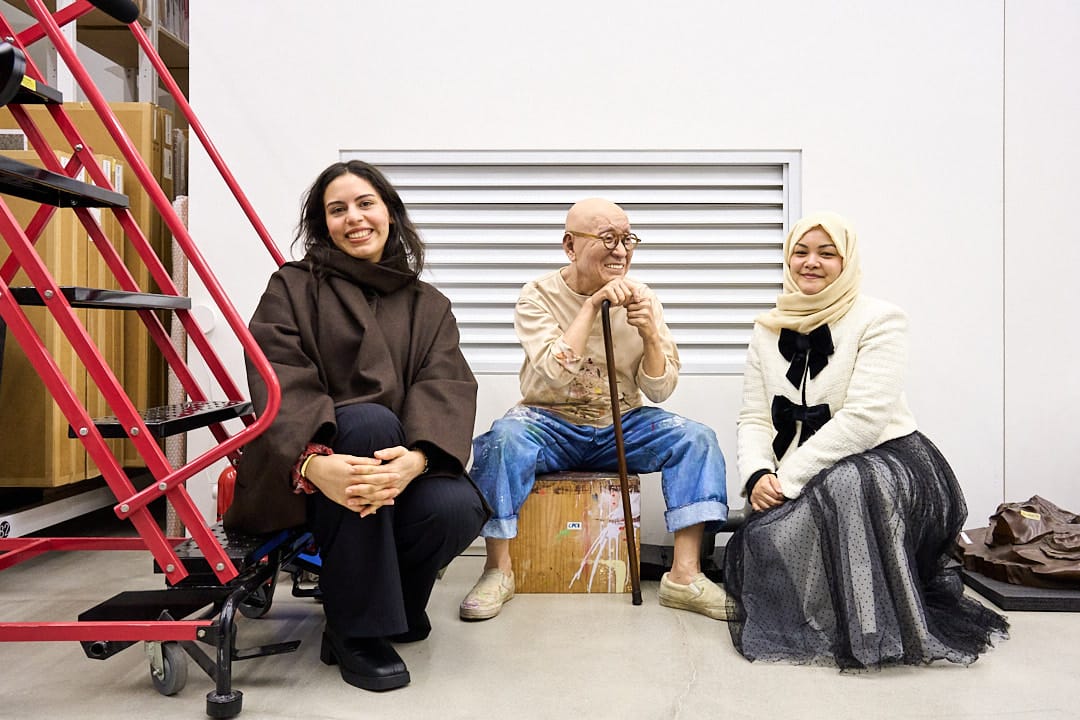
Can you describe a specific moment during the program that changed the way you think about your own practice or the role of visual art in society?
Learning about Park Seo-Bo’s practice at his foundation deeply affected how I think about dedication and process. His repetition, discipline, and physical labor carried real emotional weight. The sense of struggle, patience, and meditation within the work resonated with me, because my own practice is also rooted in emotion, memory, and lived experience.
Another experience that stayed with me was seeing Kimsooja’s installation To Breathe (2021) at the Leeum Museum of Art. It was one of the final works we encountered during the program and offered a quiet moment of reflection. I was fascinated by how the installation transforms with shifting natural light: as the weather changes and sunlight moves throughout the day, the work continuously changes with it. I found it beautiful that the artist embraces this lack of control, allowing nature and time to become active collaborators.
How did the program’s structure—visiting institutions across South Korean cities and engaging with local creative communities—foster genuine exchange or collaboration?
We were able to experience working processes, not just finished exhibitions. For example, visiting Kim Ayoung’s studio was especially memorable because it felt intimate and personal. In the small space where she lives and works, we were able to see where her ideas are researched, developed, and produced. This offered a deeper understanding of artistic practice beyond what is visible in exhibitions.
Throughout the program, there was space for open discussion and reflection between participants, artists, and institutions. It felt less like observation and more like the sharing of perspectives, experiences, and different ways of thinking about art and production.
What most surprised you about the similarities or differences between the two contemporary art ecosystems?
South Korean artists and institutions seemed focused on humanity’s relationship to technology and nature; there was strong attention toward how digital life affects human experience. Saudi Arabia’s current focus leans toward heritage, storytelling, memory, and cultural identity—visible in initiatives such as “Bedayat: Beginnings of Saudi Art Movement” and the work of artists such as Dana Awartani, Manal AlDowayan, and Ahmed Mater.
I was also struck by how integrated South Korean museums felt in public life. Institutions and art spaces felt welcoming and accessible, not only as exhibition spaces but also as places for gathering. I found that very inspiring to witness as an artist.
Did any aspect of the South Korean art scene prompt you to reconsider how similar structures might evolve or be adapted within the growing Saudi context?
Tours of ARKO, MMCA, SeMA, and ACC reshaped how I think about long-term artistic support. ARKO’s model—funding research trips, residencies, and networking, not just production—stood out. I found it especially valuable that artists could either apply to partnered residency programs or independently choose communities and spaces that suit their practices. Throughout the visit we asked directly about opportunities for residencies and exchanges; while there were no open opportunities at that time, we left with contacts and resources for future possibilities.
What did the program create, long-term?
A sense of connection, which continues to influence us after the program, between two different but rapidly developing art scenes. The program created possibilities for future collaboration, research, and exchange while encouraging more thoughtful conversations about how art can connect people.
The visit also made me think more critically about my relationship with technology. Seeing Adrián Villar Rojas’s installation at Art Sonje Center pushed me to reflect on the way daily life is changing. Since returning, I have become more interested in slowing down and returning to analog ways of recording ideas, through drawing and writing.
What question would you pose about the program’s future?
How Art Bridges can continue building long-term relationships rather than one-off exchanges. One of the most valuable aspects of the program was the opportunity to experience artists’ practices closely through studio visits and foundation visits. I would love to see these exchanges develop even further through short-term studio exchanges or shared projects, where artists work alongside each another. I think the real impact of these experiences shows up afterward, when artists carry new questions back to their own practices.
RAED KADI
Raed Kadi is a cultural and heritage practitioner specializing in placemaking, interpretation, and the protection of historic sites. He works as a world heritage site protection manager at the Diriyah Foundation.
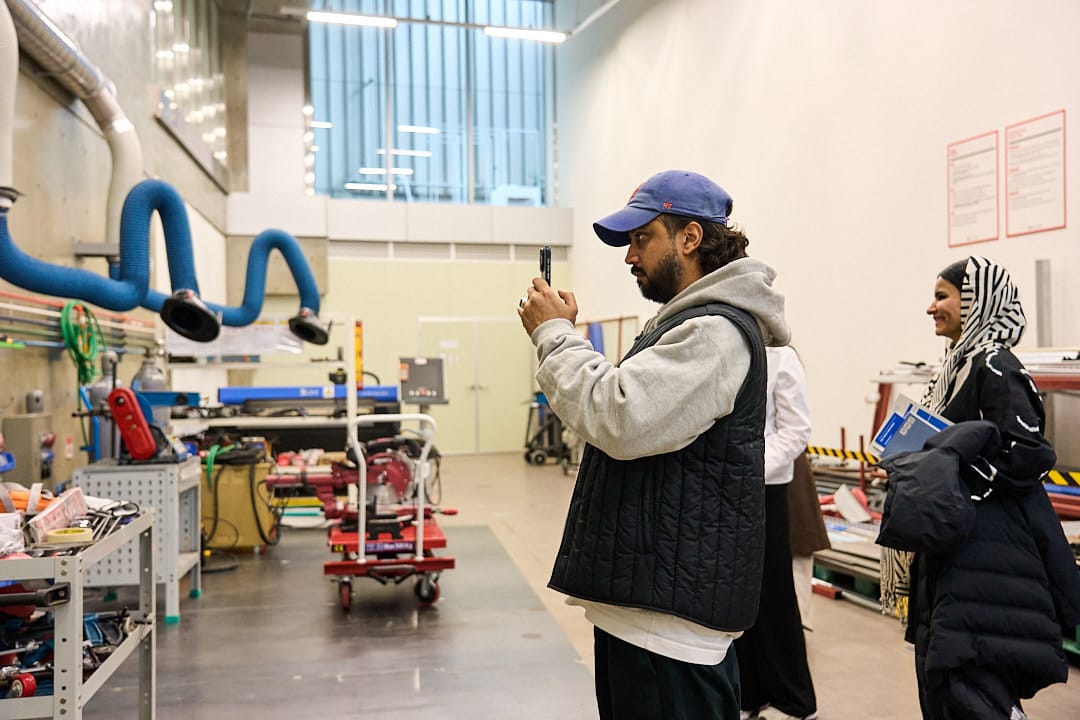
Can you describe a specific moment during the program that changed the way you think about your own practice or the role of visual art in society?
A conversation with a South Korean curator about institutional stewardship stayed with me. We were discussing how exhibitions are built around public memory, and she described how many South Korean spaces see themselves not only as places for display, but as long-term caretakers of social and emotional histories. That shifted something for me. Coming from a heritage background in Saudi, I often think about preservation as safeguarding physical sites and narratives. In Korea I started thinking more about how visual art can also preserve atmosphere, emotion, and collective experiences.
How did the program’s structure—visiting institutions across South Korean cities and engaging with local creative communities—foster genuine exchange or collaboration?
We were not merely moving through institutions as visitors; there was space for open dialogue, informal conversations, and honest discussion. South Korean artists and practitioners were just as curious about Saudi Arabia’s cultural transformation, heritage, and pace of institutional development, as we were about theirs. Some of the most valuable moments of the program happened outside formal presentations—over meals, during studio visits, or while discussing how artists navigate rapid social and urban change in both countries.
What most surprised you about the similarities or differences between the two contemporary art ecosystems?
What registered most strongly was how familiar the conversations felt despite the very different historical and cultural contexts. In both Saudi Arabia and South Korea, there seems to be an ongoing negotiation between tradition and contemporary expression. At Art Sonje Center, I was struck by artists who worked with local communities over extended periods, prioritizing the collaborative process over output. South Korean artists often engage communities through quieter, more process-based approaches; Saudi’s scene currently has a strong sense of momentum and visibility surrounding cultural production. Both have strengths, but it raised questions for me about sustainability as ecosystems mature over time.
Did any aspect of the South Korean art scene prompt you to reconsider how similar structures might evolve or be adapted within the growing Saudi context?
Yes, especially in the way museums and smaller institutions positioned themselves as active parts of everyday public life, rather than isolated cultural destinations. Many spaces felt accessible, both physically and socially. There seemed to be a strong culture of repeated engagement, not just event-driven attendance. It underscored for me the importance of long-term investment in research, archives, and public programming, not just exhibitions.
What did the program create, long-term?
Trust between people confronting similar questions in different contexts. The deeper value was conversations that moved beyond representation into something more personal and reflective—about identity, institutional responsibility, public memory, and cultural change. Those effects are not always immediately visible, but they shape future collaborations, exhibitions, and even cultural policy.
What question would you pose about the program’s future?
How can programs like this continue beyond a short-term visit into longer term collaborative relationships? The most meaningful exchanges happened in more intimate settings—like being welcomed into Kimsooja’s private studio. It felt less like a formal presentation and more like a genuine exchange of ideas about artistic practice, research, and cultural perspectives. These kinds of meaningful conversations often emerge only after people have had the opportunity to build trust and move beyond introductions. I would be interested in understanding how initiatives like Art Bridges can create continuity, whether through joint research, residencies, co-curated projects, or ongoing dialogue between institutions and practitioners.
This article is part of a special series exploring Art Bridges, the Visual Arts Commission’s international exchange program connecting Saudi and Saudi-based artists and cultural practitioners with peers in Scotland, South Korea, Japan, and Spain.