Issue
Ocean Vuong: Embalming Time
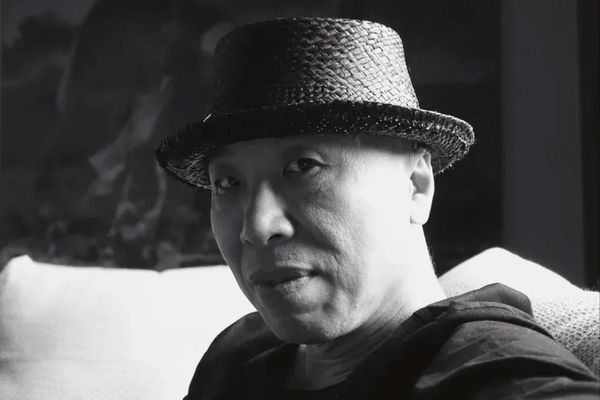
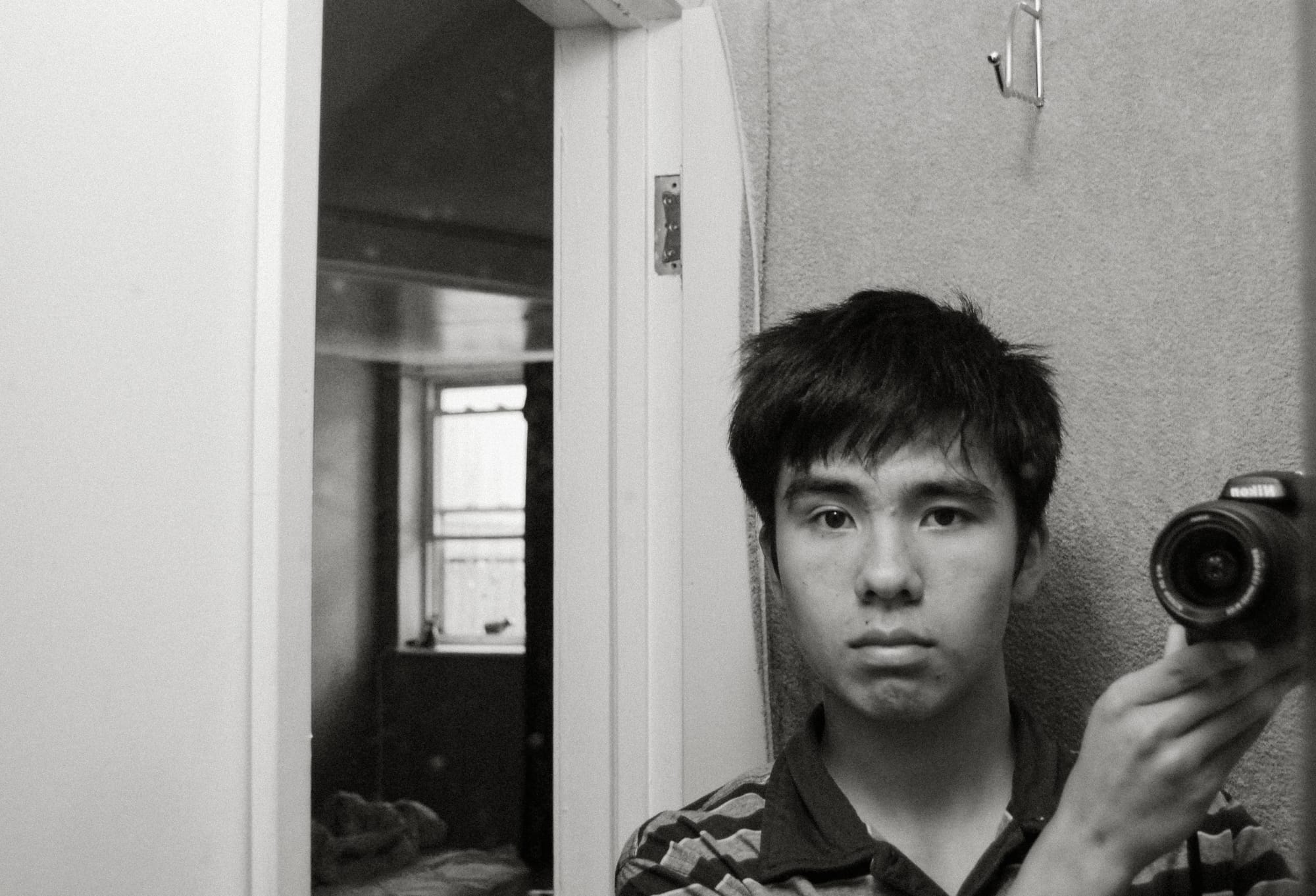
In 2006, following an inexplicable urge to seize a piece of time—to immortalize himself in a moment that would be irretrievable within the blink of an eye—Ocean Vuong turned a camera toward his reflection in the mirror. The result, shot on a borrowed Nikon D80, is a simple, black-and-white portrait: Vuong stares inscrutably back at the viewer, though one senses in his expression the latent uncertainty of youth. It was his 18th birthday; his mother had cut his hair.
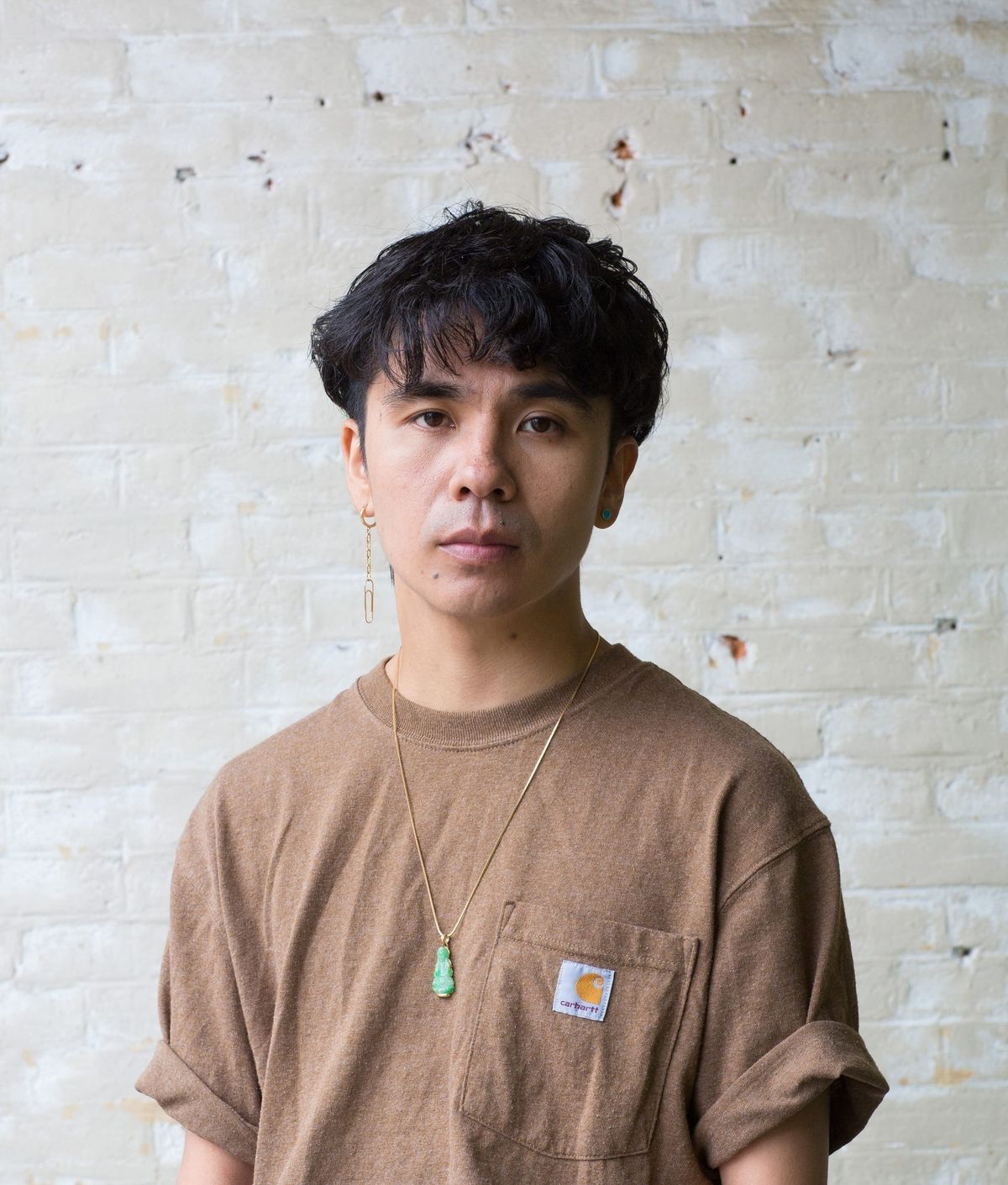
For those who know Vuong first through his writing, the tender melancholy in this snapshot feels familiar, as if lifted from the pages of his books. One might be reminded of Little Dog, the introspective lead in his debut novel On Earth We’re Briefly Gorgeous (2019), penning an achingly open-hearted letter to his immigrant mother who cannot read; or Hai from The Emperor of Gladness (2025), a troubled, lonely college dropout navigating the gritty fringes of post-industrial New England. In Vuong’s bildungsroman, the young Asian American male protagonist moves through the working-class environs of Connecticut—tobacco farms, nursing homes, factories, nail salons—while grappling with racial hostility, queerness, and the psychological residue of the American war in Vietnam. It is within this fraught milieu that Vuong grew up, and from which he continues to “snag” his inspiration, as he tells me over Zoom in mid-September.
Over the past decade, Vuong has enshrined himself in the literary world with his visceral, unflinching prose, but for him, images came before words. “Photography was my first art,” he says. Given the heavy, semi-autobiographical subject matter infusing his poetry and fiction, I half-expect him to bring a formal phraseology into our conversation, yet his speech is as easygoing as it is elaborate, buoyed by a particular levity. Somehow, it reinforces his earnestness. “I never even understood that one could be a photographer,” he continues. “I thought you needed permission or something.” To be an artist by profession was a foreign concept for someone living in the small-town working-class enclaves of Hartford, where jobs were low-wage and survival-based, more often than not limited to the service industry or the military. Yet the desire to create was always there, germinating. During his teenage years, a friend lent him the Nikon to take flash pictures of skateboarders at the park and punk bands performing in basements and dive bars. “When I looked at the images afterward, something like the poem started to come through in that, without plot or narration, there’s a dynamism. I felt like I was punching holes out of time and the pieces that came out of it had their own mythology.”
The thrill of capturing a story with a single press of a shutter heightened when Vuong found a small selection of photobooks at his community college library—Nan Goldin, Daido Moriyama, Judith Joy Ross, Alec Soth, and other lens-based greats. Then, browsing the “still life” section, he stumbled across an image of what looked like a shattered bust; upon closer inspection, it was the head of an unnamed northern Vietnamese soldier who had been shot in the mouth, photographed by Donald McCullin in 1968. In an essay for Cultured, Vuong describes the gut-wrenching impact of encountering that visual, asking, “Under what parameters, and by whom, does a racialized corpse get aestheticized as a still life?” Driven to correct and dignify the visual archive of Vietnamese American history—to push beyond the flattened tropes and brutal imagery that war journalism and Hollywood had seared into the national consciousness—he began documenting his loved ones carrying out their daily routines. Chief among them, and his most precious muse, was his late mother, Lê Kim Hồng.
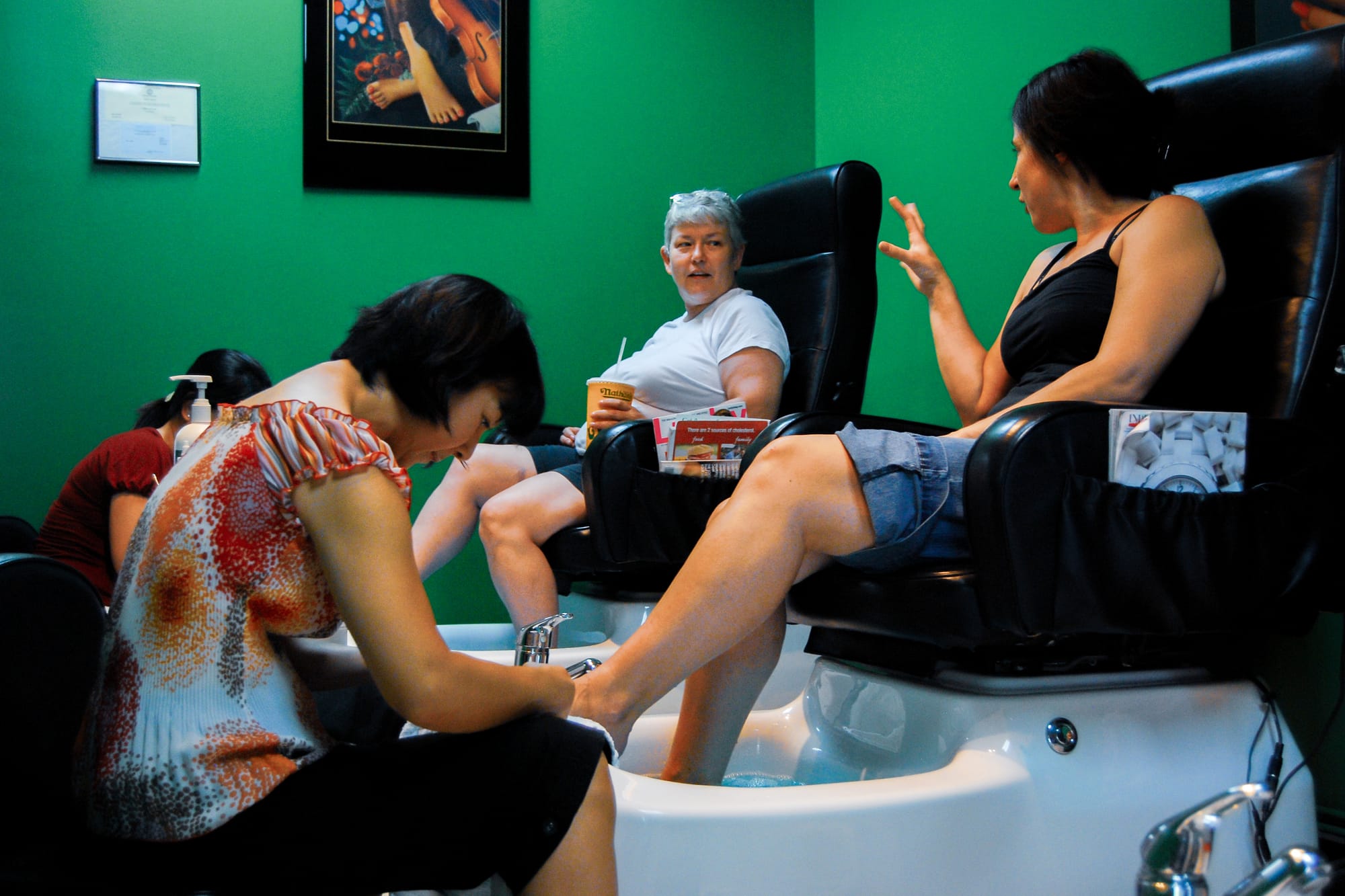
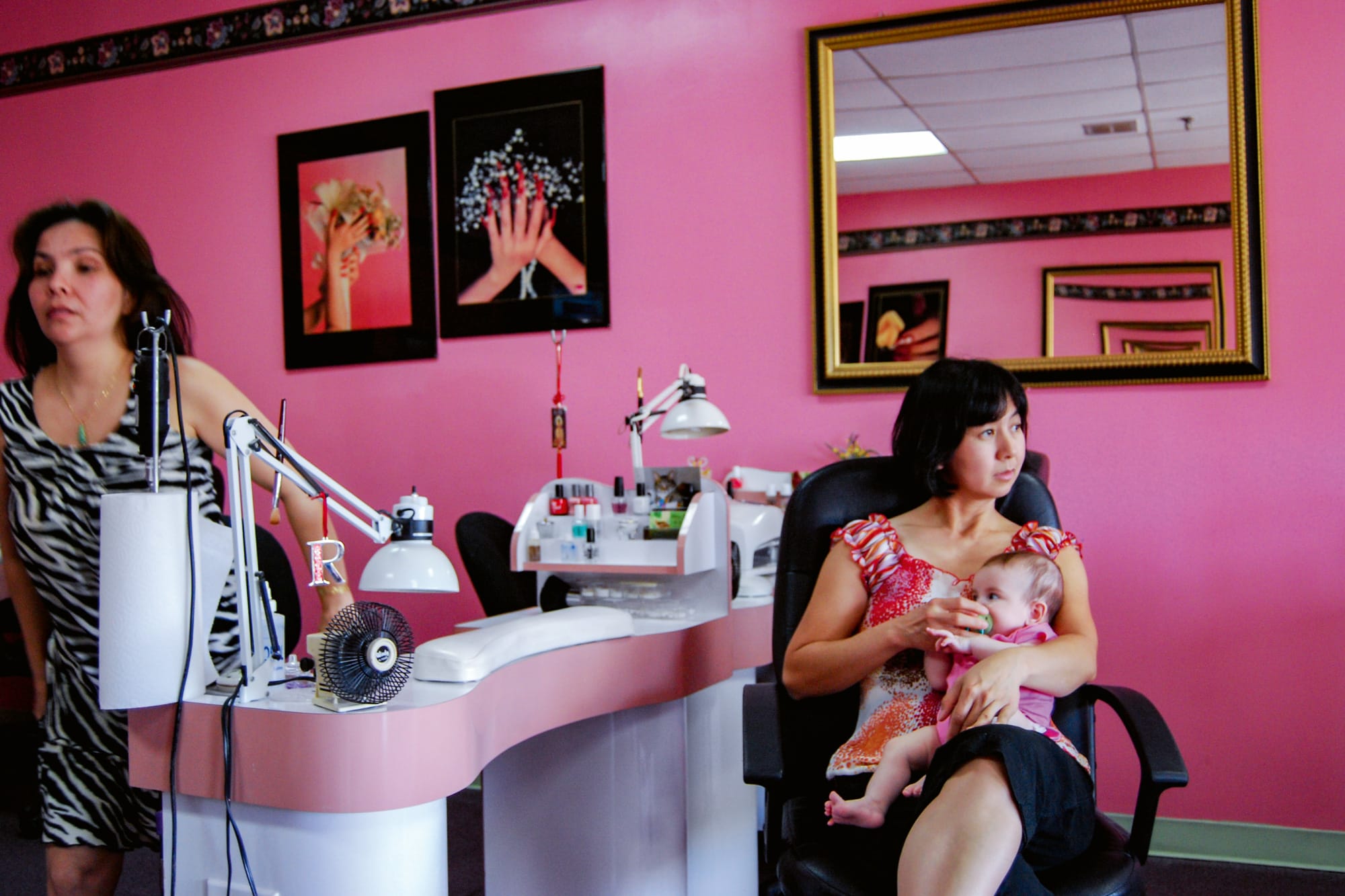
OCEAN VUONG, pedicures (left) and Phuong feeding Sara (right), both 2009, inkjet prints. Courtesy the artist.
Hồng (whose name translates as “pink” or “rose”) gave birth to Vuong in 1988 in Saigon. Her mother was Vietnamese; her father, a white American from Michigan, had served in the US Navy. The couple had three daughters but were separated after the 1975 fall of Saigon. In postwar Vietnam, tens of thousands of Vietnamese Amerasian children were severely ostracized, their mixed heritage tying them to the Western enemy that had razed the country. To escape discrimination, Hồng, baby Vuong, and five relatives fled to a refugee camp in the Philippines, where they waited for their US asylum application to be processed. The cover of Night Sky with Exit Wounds (2016), Vuong’s first poetry collection, is a bittersweet portrait of him at the camp, flanked by his mother and aunt—the photographs, taken by a fellow refugee, had cost them three rice rations.
I ask Vuong about a series he shot at the pink-walled nail salon where his mother worked. Rose and Phuong (i) (2009) is one of his favorites: in it, his mother is on the phone, lavender curlers in her hair, while her friend and co-worker stands behind her, one hand resting on her shoulder. Both women look dutifully at the camera, posed yet relaxed. Vuong had crouched down to shoot them: “I wanted to make them feel powerful, as powerful as they feel to me in my life—both in their material bodily presence, but also in their spirit and what they mean to me.” Other photographs from this project depict his mother and her colleagues laughing, doing their makeup, nursing their babies. “The Vietnamese American nail salon is such a pervasive site of labor,” Vuong notes. “But it’s not just beauticians; it’s children being raised there, diapers changed, phở being cooked in the back for hours. It’s a place of joy and heartbreak, birthdays, grief, and mourning.” It was also, he adds, “a place of matriarchal caretaking, because we have determined it to be so, because there was no one else who could tell us we couldn’t do that.”