Issue
One on One: Kimsooja on John Cage
It is difficult for me to identify a single artist as the source of my artistic inspiration, yet if I had to name someone whose thinking greatly inspired my understanding of what art could be, it would be John Cage.
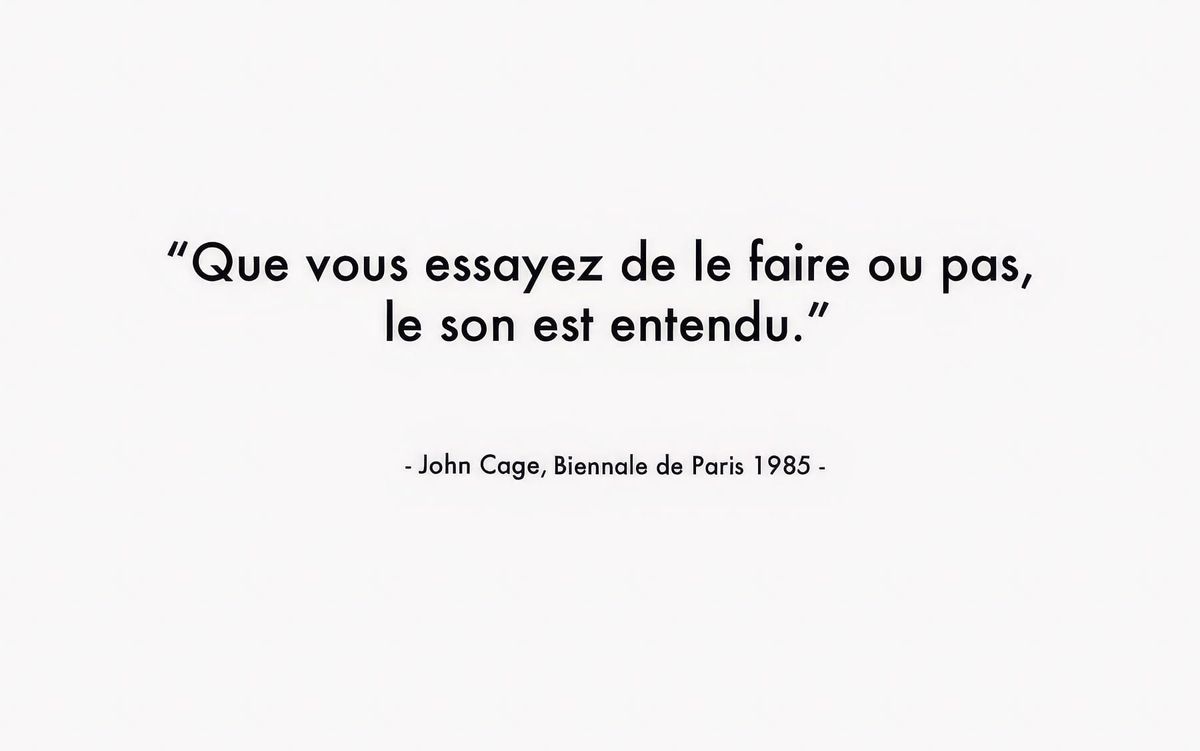
I first encountered Cage’s work at the Paris Biennale in 1985. I entered a white railway container expecting a sound installation; instead, I found an almost empty space and a statement, written in French along the corner of the floor: “Que vous essayez de le faire ou pas, le son est entendu (Whether you try to make it or not, the sound is heard).” The encounter was immediate, revealing, and profound. I recognized Cage as a master—not because I wanted to follow his artistic language, but because his proposition articulated something fundamental: the world does not wait for the artist to make it exist; the artist simply creates the conditions through which we become attentive to it.
This realization resonated deeply with questions that I was exploring in my practice, and later became central to my approach of “non-doing” and “non-making.” These ideas do not mean an abstinence from action or making. Rather, they involve minimizing the artist’s intervention so that phenomena already present—light, sound, gravity, movement, reflection, breathing, and the passage of time—can reveal themselves. In this sense, the artist’s role is less about producing something new than creating a state of heightened perception.