Issue
Keep Uncertainty Certain
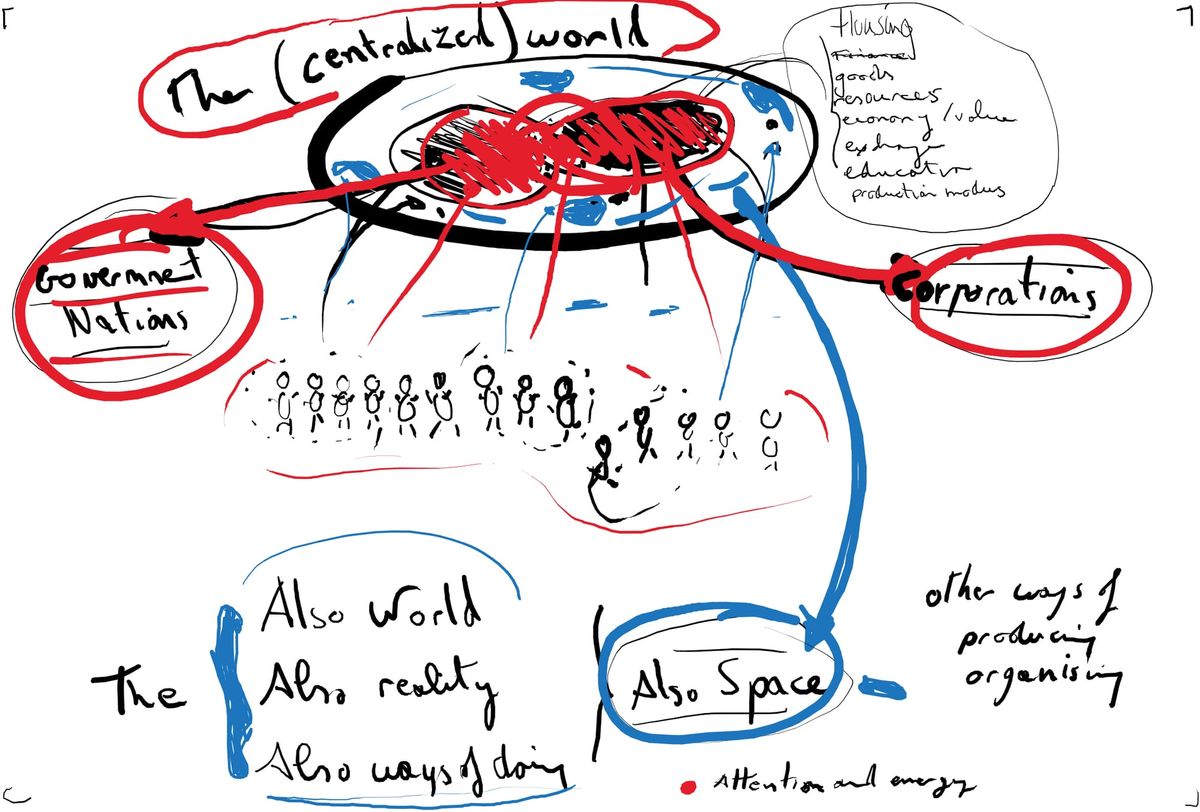
Today’s systems are built on the assumption of certainty—that the world can be predicted, organized, and controlled. Stability becomes a requirement for governance, markets, and growth. Within this logic, uncertainty is treated as a threat to be reduced or contained.
But that premise no longer holds. Uncertainty is not occasional; it is continuous. Crises overlap—economic, ecological, political—without sequence or resolution. Systems built for stable ground begin to fail. At the same time, something more fundamental is becoming visible. Across different contexts, states are increasingly unable to uphold the basic human values they claim to protect. Protection, welfare, and justice become uneven, conditional, and often absent when most needed. The language remains, but the structures behind it weaken.
To recognize this is not to romanticize scarcity, but to shift from deficit to capacity. What exists—relationships, knowledge, support—gains strength through circulation. What remains reliable are relationships that are built and sustained over time.