Issue
Editor’s Letter: Still, Listening
The Venice Biennale has long served as a stage for sweeping Eurocentric narratives, its major chords echoing the assurances of modernist progress. Too often, these dominant scores have drowned out subtler tonalities forged in the wake of empire, Indigenous cosmologies, and the resilience of the Global South. The 61st International Art Exhibition, opening in May under the curatorial vision of the late Koyo Kouoh, marks a deliberate shift. Titled “In Minor Keys,” it calls for listening to quieter frequencies: the relational, the improvisational, the abiding. Kouoh, the first African-born woman to helm the Biennale, eschewed spectacle in favor of emotional attunement. ArtAsiaPacific’s May/June issue honors her approach and the team—Gabe Beckhurst Feijoo, Marie Hélène Pereira, Rasha Salti, Siddhartha Mitter, and Rory Tsapayi—who carried her vision forward after her untimely passing in 2025.
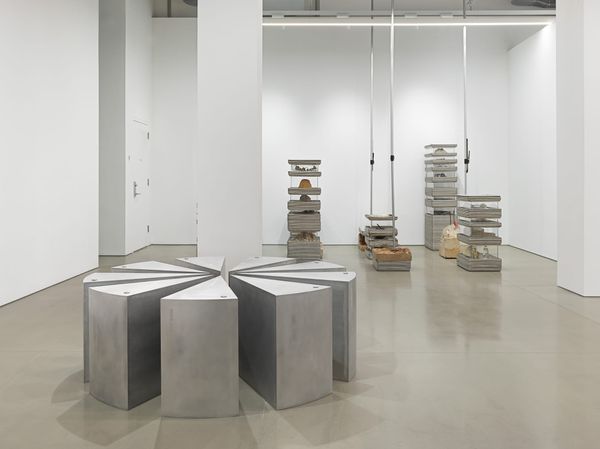
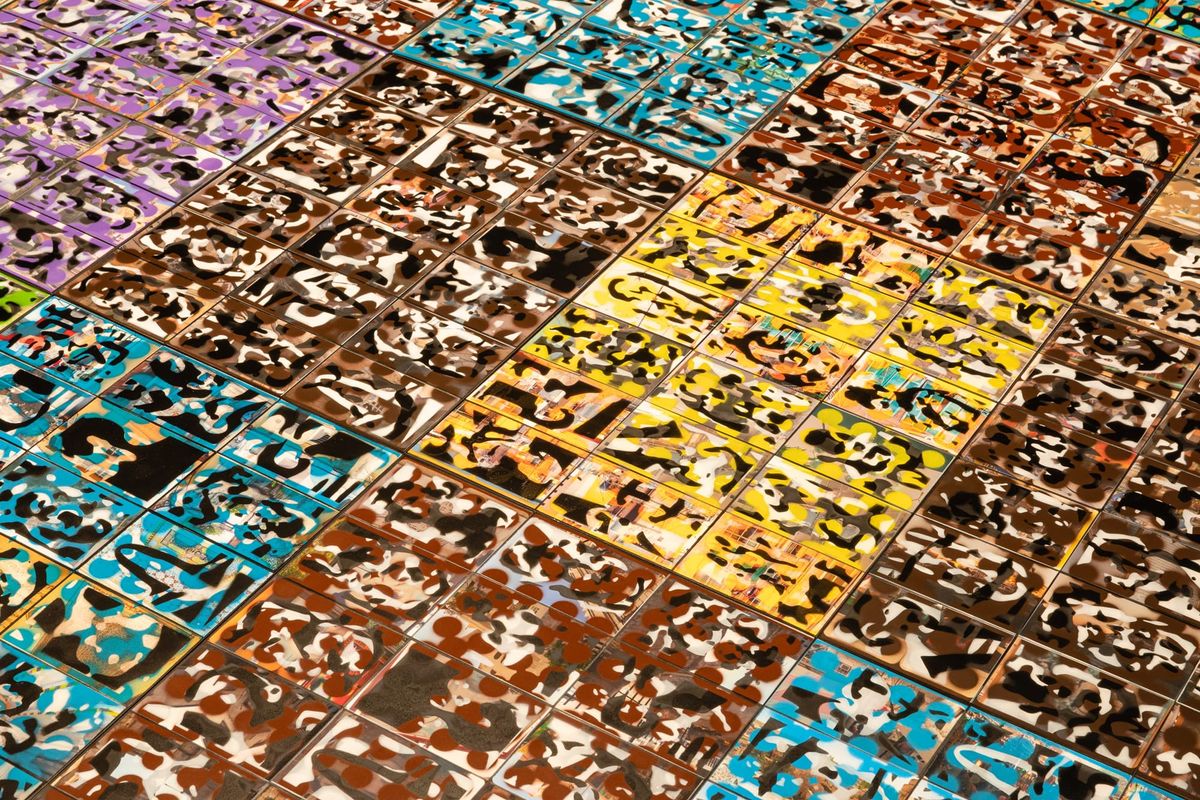
We begin with our cover Feature on Gala Porras-Kim, a recipient of the 2025 MacArthur Fellowship whose contribution to the Applied Arts Pavilion, developed with London’s Victoria & Albert Museum, gently unravels the extractive logic of the archive. Her drawings, sculptures, and subtle interventions remind us that care and conservation are not neutral, but practices historically bound to the classification and containment of material cultures—often of marginalized communities. Independent curator Valentina Buzzi observes, “Rather than delivering a universal thesis and applying it everywhere, Porras-Kim works case by case, letting each collection, building, and legal framework generate its own questions.”
Our second Feature highlights Khaled Sabsabi, who represents Australia in the Giardini and appears in Kouoh’s main exhibition—a double presence achieved after a turbulent selection process. AAP assistant editor Annette Meier traces the Lebanese-born artist’s path from the 1980s in Western Sydney, where he performed hip-hop under the pseudonym “Peacefender.” Alongside his creative practice, Sabsabi remains committed to public service through working in schools, refugee camps, hospitals, and detention centers—an ethos that shapes his view of art as repair. His oeuvre, Meier writes, “denotes an intrinsic quest to reconnect with and preserve his heritage; to suture his splintered memories of Lebanon.”
For Up Close, AAP editors extend this homage to “In Minor Keys” with a look at three artists’ recent projects that locate resonant strains in society: Liang Yuanwei’s im Kugelhagel Wh·YeGrUm·Br- (2025), Yuko Mohri’s Moré Moré (Leaky): Falling Water Given #7–9 (2026), and Mona Hatoum’s Web (2025). For Inside Burger Collection, Edward M. Gómez charts the decades-long career of the graphic designer and painter Tadanori Yokoo, known for his psychedelic imagery grappling with postwar Japanese identity.
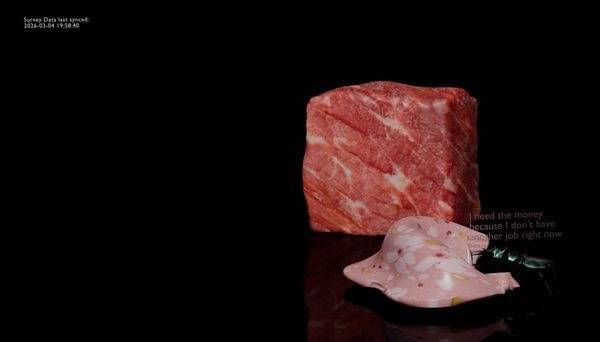
In Profiles, AAP met with Gayane Umerova, a key architect of Uzbekistan’s cultural renaissance and founding commissioner of the country’s national pavilion since its 2022 debut. Meanwhile, turning from nation-building to the digital psyche, AAP associate editor Louis Lu sat down with artist Li Yi-Fan, whose darkly humorous animations probing 21st-century anxieties are featured in Taiwan’s collateral event in Venice.
For Where I Work, Ho Won Kim visited Hyeree Ro in her Brooklyn studio as she put the final touches on her sculptures for the Korea Pavilion. Rooted in her own experience of migration, Ro creates ambiguous forms that double as shelters, holding tension between protection and displacement. In Essays, postwar art historian Reiko Tomii turns to Ei Arakawa-Nash, who, as a queer parent, reflects on artistic lineage and collectivity. Tomii examines his engagement with Shūsaku Arakawa and Madeline Gins to consider how creation can unsettle nationalism and patriarchy. In Previews, we spotlight national pavilions and collateral events from the Philippines and Singapore to the UAE and Saudi Arabia. Curator Huang Jiehua files a Dispatch from Beijing, tracing a capital in continual flux, while in One on One, Natasha Tontey discusses her admiration for filmmaker Riar Rizaldi and the affinities that shape her practice. For The Point, ruangrupa’s Ade Darmawan contemplates survival in fractured times, writing, “If systems are built on certainty, this is the moment to recognize and learn from ways of working that have long operated within uncertainty—not as a failure, but as a condition. . . . A space is used collectively, time is negotiated, knowledge passed between people. Continuity depends not on accumulation, but on movement.” With this issue, we have sought to follow Kouoh’s invitation to slow down and listen. In a world that demands volume, may these artists remind us of the power held in the understated, the connective, and the enduring.
Elaine W. Ng is editor and publisher of ArtAsiaPacific.