Issue
Inside Burger Collection: Tadanori Yokoo: A Visionary Renegade
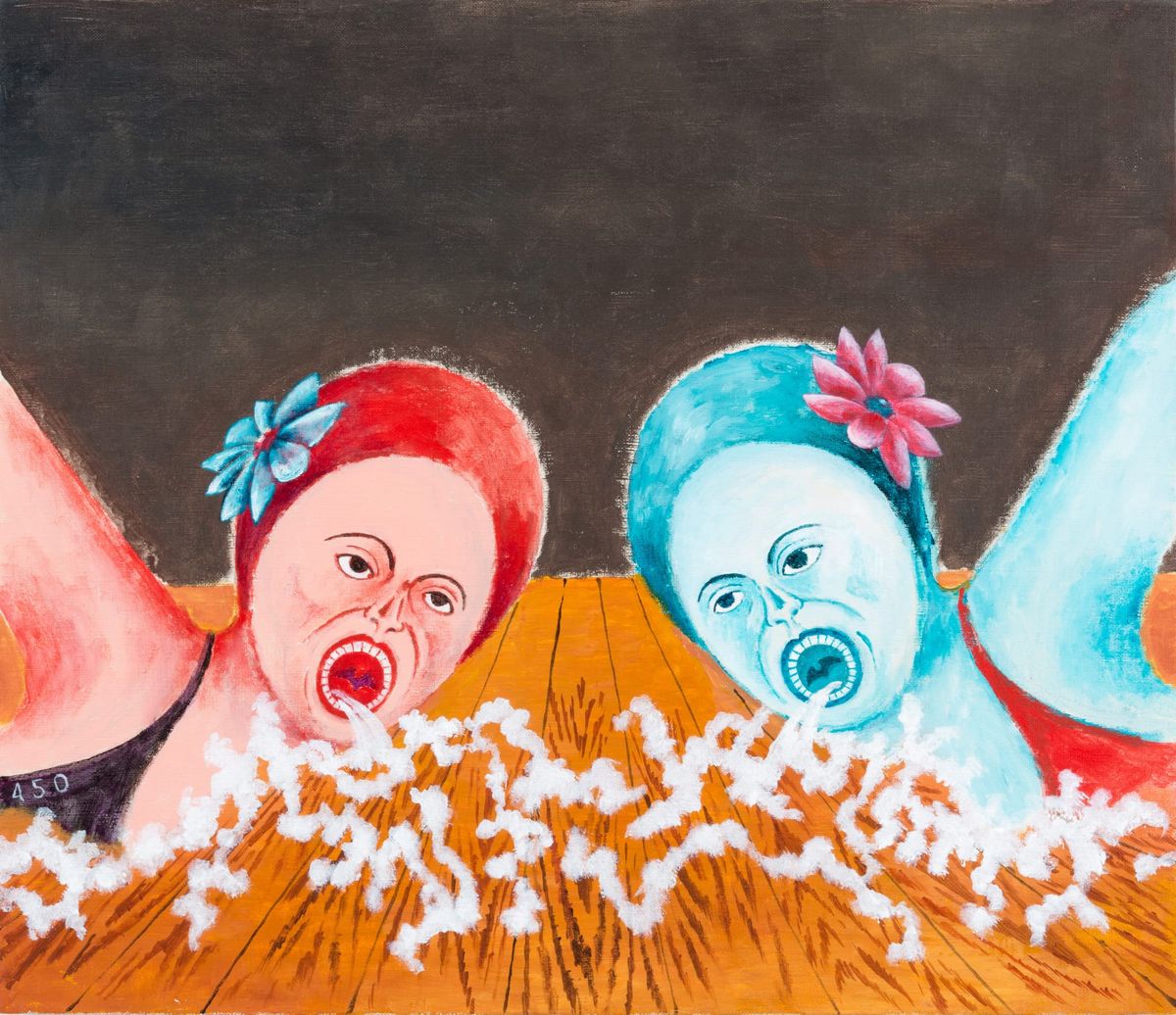
In Japan, Tadanori Yokoo has long been recognized as a leading cultural representative of his generation. At 89 years old, the artist is still active and was undeterred even by a bout of Covid-19 last year that slowed him down just as he was preparing to open his exhibition of all-new works at Tokyo’s Setagaya Art Museum.
Although nowadays the octogenarian tends to keep a low profile, he maintains a perpetual presence in Japan’s cultural world. Many institutions around the country hold his works in their collections: in Kobe, for example, the Yokoo Tadanori Museum of Contemporary Art, which opened in 2012, focuses on the artist’s accomplishments and legacy. Moreover, he has an online shop that sells a wide range of merchandise featuring his art (badges, stickers, books, tote bags, underwear, and even a Yokoo curry). Among younger creative types with knowledge of the history of Japanese modern art and pop culture, his reputation—that of a clever innovator who, in his heyday, upturned deeply entrenched norms in graphic design and, later, in painting—endures. Over the years, the establishment embraced the maverick: Yokoo has received distinguished, cultural-merit awards from the Japanese emperor as well as many other honors.
Still, Yokoo is something of an unwitting icon. He was born in 1936 in the small city of Nishiwaki in the hills north of Kobe, a large port and commercial hub in western Japan. Known for its textile industry and agriculture, Nishiwaki lies at the very center of the Japanese archipelago and bills itself as the country’s “navel.”
As a child, Yokoo displayed an artistic aptitude, copying the contents of picture books and submitting his drawings to one of his favorite manga (comic books) publisher. He was educated in public schools and became interested in oil painting thanks to the influence of a teacher who had studied at Musashino Art University. Although Yokoo initially attempted to enter the prestigious school on the outskirts of Tokyo himself, he ultimately abandoned that effort. As his teenage years came to a close, Yokoo, who had founded a friends-of-the-post-office club at his high school, set his sights on working for Japan’s postal service. That plan did not come to fruition either, and he instead took up a job at a printing company—an experience that allowed him to learn firsthand about the materials and technology of commercial printing, which would later serve him well in his work as a graphic designer.